Tag: machine learning

  • Anthropic Launches Claude Sonnet 5: Enhanced Coding, API Pricing, and Platform Availability

    Anthropic Launches Claude Sonnet 5: Enhanced Coding, API Pricing, and Platform Availability

    Anthropic has officially launched Claude Sonnet 5, the latest iteration of its AI model, designed to enhance productivity in everyday tasks rather than adding flashy features. The update focuses on improving coding, planning, debugging, and handling long tasks, providing more reliable answers for complex assignments.

    The launch arrives amid intense competition in the AI landscape, with OpenAI, Google, Meta, Microsoft, and xAI all refining their models. Claude Sonnet 5 represents Anthropic’s latest effort to build a dependable AI tool for daily use.

    Key Features and Improvements

    Claude Sonnet 5 is now available across Free, Pro, Max, Team, and Enterprise plans, making it accessible to both individual users and businesses. For Free and Pro plans, it will be the default model. Developers can access the model at a promotional price of $2 per million input tokens and $10 per million output tokens until August 31, 2026. After that, pricing will increase to $3 per million input tokens and $15 per million output tokens.

    According to Anthropic, Sonnet 5 can complete tasks more independently than previous versions. It can plan tasks, use various tools as needed, and continue working without continuous user input. This makes it particularly useful for developers, students, researchers, and office workers.

    The company notes that Sonnet 5 exhibits “lower rates of hallucination and sycophancy than Sonnet 4.6” and scores lower on automated behavioral audits for misaligned behaviors. While not specifically trained for cybersecurity tasks, the model can perform basic and harmless cyber-related work.

    Shift Toward Practical AI

    The AI industry is evolving from simply making models faster or larger to ensuring they are reliable and useful. Claude Sonnet 5 reflects this trend, prioritizing real-world utility over benchmark scores. As competition intensifies, companies are focusing on delivering better value to users rather than just technical records.

  • Apple Supercharges Creator Studio with AI Editing Tools for Video, Images, and Music

    Apple Supercharges Creator Studio with AI Editing Tools for Video, Images, and Music

    Apple has rolled out a significant software upgrade to its Creator Studio platform, embedding machine learning capabilities across its creative applications. The update introduces automated tools for video editing, image generation, and audio production, streamlining workflows by tightening integration between Apple’s professional software and its standard productivity apps.

    Most of the AI processing runs on Apple silicon, allowing creators to work faster with on-device intelligence while maintaining user control and privacy.

    Final Cut Pro Gets Faster AI-Powered Editing

    As announced by Apple in an official blog post, “Updates bring new integrations with Pixelmator Pro across Final Cut Pro, Keynote, Pages, and Numbers; even more intelligent tools in Final Cut Pro; the ability to generate shapes to further customize a project; and a new Producer Project in Logic Pro.”

    Final Cut Pro receives the most substantial set of upgrades in this release. The new Generate Captions feature uses AI to create captions from spoken audio, and editors can edit captions directly in the timeline. Apple has also introduced the Auto Mask feature, which detects and masks subjects against their backgrounds, significantly reducing time spent on manual masking.

    Apple has expanded Pixelmator Pro’s integration across Creator Studio. Users can now open, edit, and customize images directly from apps such as Final Cut Pro, Keynote, Pages, and Numbers. The update also adds:

    • AI-assisted image editing tools
    • Background removal
    • Object cleanup
    • Detail enhancement
    • The ability to generate custom shapes

    These features are designed to reduce repetitive editing tasks while giving creators greater flexibility.

    Apple Focuses on Connected Creative Workflows

    The update enhances intelligent music tools and enables producers to create and arrange tracks more efficiently. Apple says the upgrade is designed for both professionals and first-time users.

    Experts suggest that Apple has strengthened connections across its creative ecosystem. Assets can now be transferred easily among Final Cut Pro, Pixelmator Pro, and other productivity apps, simplifying creative workflows.

    With this release, Apple continues to push the boundaries of on-device AI, making professional-grade editing more accessible while preserving the privacy and performance that Apple silicon provides.

  • Top-Paying Tech Skills Employers Will Hire for in 2026

    Top-Paying Tech Skills Employers Will Hire for in 2026

    The demand for AI and machine learning professionals continues to grow across industries, making these skills among the most lucrative in 2026. Cybersecurity experts remain at the top of the pay scale as threats evolve and companies prioritize data protection.

    Cloud computing expertise on platforms like AWS, Azure, and Google Cloud is highly valued, with organizations migrating more operations to the cloud. Data engineers are earning competitive salaries as companies expand their AI initiatives and need robust data pipelines.

    Generative AI application development is creating new career opportunities worldwide, from content generation to automated workflows. DevOps and platform engineering roles continue to offer strong earning potential as businesses seek to streamline software delivery and infrastructure management.

    Blockchain and Web3 expertise remain valuable in specialized technology sectors, particularly in finance and supply chain. AI prompt engineering and automation consulting are emerging as fast-growing skill sets, with companies looking to optimize their use of large language models and robotic process automation.

    Continuous learning and certifications can help professionals stay competitive in the evolving tech market. Investing in these high-demand skills now can position you for top salaries and career growth in 2026.

  • Tripo Studio’s AI Tools Bring Data-Driven Precision to 3D Creation

    Tripo Studio’s AI Tools Bring Data-Driven Precision to 3D Creation

    For years, 3D modeling has been a painstaking, manual process prone to inconsistencies and human error. Tripo Studio aims to change that with an AI-powered platform that uses machine learning to automate and optimize the entire workflow. By relying on data rather than subjective manual judgment, Tripo Studio delivers high-fidelity 3D models that are accurate, repeatable, and production-ready.

    Core Features: AI-Powered Tools for Consistent 3D Assets

    Tripo Studio offers six core features built on advanced machine learning and computer vision, each designed to eliminate guesswork and reduce manual labor:

    • Text-to-3D Model – Generate precise 3D models from text prompts using natural language processing. Ideal for researchers and product developers who need rapid prototyping from descriptions.
    • Image to 3D Model – Convert 2D images into 3D models while preserving exact measurements, textures, and details. Computer vision ensures pixel-perfect accuracy.
    • AI Model Segmentation – Automatically divide a 3D model into editable parts by detecting object boundaries and relationships, saving hours of manual work.
    • AI Retopology – Clean and optimize 3D geometry to industry standards automatically, making models ready for animation, rendering, or AI training without extra cleanup.
    • AI Texturing – Apply realistic textures based on real-world material data, ensuring consistent and accurate surface appearance.
    • AI Rigging – Automatically create animation-ready rigs from model geometry, eliminating trial-and-error manual rigging.

    Practical Use Cases for Data-Driven Teams

    Tripo Studio integrates seamlessly into various professional workflows. AI research teams use it to generate high-quality 3D assets for training datasets. Product development teams create precise prototypes. Medical and scientific researchers model biological structures or devices with exceptional accuracy. Tech companies scale consistent 3D asset creation without needing large dedicated teams.

    Why Tripo Studio Stands Out

    Traditional 3D tools depend heavily on user skill, leading to variable results. Tripo Studio’s data-driven, machine-learning approach ensures consistent output regardless of operator experience. Models are generated in seconds, and tedious manual corrections are drastically reduced. This allows professionals to focus on high-level decisions rather than repetitive tasks.

    Quick Tutorial: Create a 3D Asset in 5 Steps

    1. Sign up for Tripo Studio’s free trial and log in.
    2. Choose “Text to 3D” and enter a detailed prompt (e.g., “mechanical gear with 5mm teeth and 20mm diameter”) or upload a 2D technical image.
    3. Click “Generate” – the AI creates a precise 3D model in about 5 seconds.
    4. Use AI Model Segmentation to split the model into editable parts and AI Texturing to apply data-backed textures.
    5. Export in industry-standard formats for research, product development, or AI training.

    Ready to transform your 3D workflow? Sign up for Tripo Studio’s free trial today and experience the precision of AI-powered 3D creation.

  • The Hardest IT Roles to Fill in 2026: AI, Cybersecurity, and the Rise of Hybrid Professionals

    The Hardest IT Roles to Fill in 2026: AI, Cybersecurity, and the Rise of Hybrid Professionals

    The IT hiring landscape has shifted dramatically. Open requisitions are no longer for generalists or entry-level specialists. Instead, positions that remain unfilled for six to nine months demand a rare combination: an engineer who writes strong code, navigates AI platforms, assesses risk exposure, and aligns technical decisions with business priorities. Three skills, one person, a small pool. This is the core talent challenge organizations face as they head into the second half of this decade.

    The 2026 State of the CIO survey from Foundry confirms the shift. AI and machine learning, along with cybersecurity, now share the top position as the hardest IT skills to hire for, with data science and analytics ranked third. What stands out is not the ranking itself but the nature of the shortage. Hiring teams are no longer struggling to find specialists—they are struggling to find professionals who operate across disciplines simultaneously, at speed, and with sound judgment under real constraints.

    AI and Machine Learning: From Prompt Engineers to Agentic Builders

    The role of the AI professional has evolved significantly over the past two years. Prompt engineering as a standalone function has largely faded. Organizations today need AI product engineers who can deploy agents, build testing frameworks, manage cost-latency-quality trade-offs, and govern model risk. They also need professionals filling governance and red-team roles that did not appear on org charts three years ago. The center of gravity has moved from people who build models to people who wield them. That is a very different resume, and the candidate pool remains thin.

    Approximately 50% of US employers report difficulty finding qualified AI candidates, and Gartner research consistently identifies this shortage as the single largest roadblock for data and analytics teams. The challenge compounds with the pace of change: skills acquired at one organization may not transfer to another, and knowledge from six months ago can already be obsolete.

    Cybersecurity: A Skills Crisis, Not a Headcount Problem

    Six in ten organizations now report that skills gaps outweigh staffing shortages as their primary workforce challenge—a 20-point shift from just a year ago. The consequences are measurable: 27% of cybersecurity leaders report breaches directly tied to capability gaps, while 61% say team stress has increased over the past two years. The shortage is concentrated at the senior architect level. Professionals who can make sound security trade-offs under real constraints, rather than just read a dashboard, are exceptionally difficult to find. Attack surfaces have expanded with every SaaS addition, API, and AI agent deployed. Security teams manage a faster-moving threat landscape with the same AI tools that adversaries now use to build and revise attacks in under an hour.

    74% of organizations say AI is already impacting the size of their cybersecurity teams and the roles within them. Entry-level SOC analyst positions—the traditional training ground for future security architects—are among the most likely to be displaced as AI reshapes security operations.

    Risk Management and Automation: The Rising Tier

    Both risk management and business/IT automation have climbed into the top five hardest-to-fill roles for the first time. The reason is the same for both: AI has expanded the surface area of risk and the complexity of process automation simultaneously. GRC functions built for SOX and PCI compliance are not well positioned to address model risk, prompt injection, or third-party AI exposure. Organizations are now hiring for a discipline that is roughly five years old against a job description that is twenty years old. That gap defines the problem.

    On the automation side, there is no need for additional robotic process automation developers—that work has become a commodity. What organizations need are professionals who can assess a workflow and decide what to automate, what to retire, and what to redesign entirely. That combination—business analyst, process engineer, and technologist in a single professional—is rare and commands a significant salary premium.

    Software Engineering, DevOps, and the Midlevel Squeeze

    AI coding tools have not reduced demand for software engineers; they have changed its shape. A strong engineer with solid AI tooling now produces roughly what three engineers accomplished just a few years ago. Hiring is bifurcating toward experienced leaders who bring judgment and ownership, and toward junior talent that is AI-native from day one. The professionals in the middle—those whose primary value was execution rather than architecture—are finding demand for their profile contracting. For DevOps specifically, platform engineering is emerging as the growth function. The generic DevOps title is being absorbed into platform or site reliability engineering, with consolidation likely to continue over the next two to three years.

    Why This Matters

    The talent shortage in these roles is not resolving through traditional hiring. The professionals who can bridge AI fluency with domain expertise, risk literacy, and system-level thinking are naming their price, and organizations competing for the same small candidate pool are losing ground. The more productive response, as several technology leaders have confirmed, is internal upskilling. Strong engineers trained deliberately on AI platforms and governance frameworks have outperformed externally hired AI specialists in productivity and retention at multiple large enterprises.

    The organizations closing this gap are not doing so primarily through external hiring. They are investing in internal capability development, redesigning job descriptions around skills rather than credentials, and building structured pathways for engineers to grow into hybrid roles. The gap between organizations that act with that kind of intention now and those that continue chasing the same external candidates will only widen from here.

  • IBM’s Sub-1nm Chip Breakthrough Paves the Way for Next-Generation AI

    IBM’s Sub-1nm Chip Breakthrough Paves the Way for Next-Generation AI

    IBM is pushing the boundaries of chip technology with a groundbreaking processor smaller than 1 nanometer. This achievement could redefine the performance and efficiency of artificial intelligence systems.

    Why Chip Size Matters

    Smaller chips deliver higher performance while consuming less power. For AI, this means faster processing and greater energy efficiency, enabling more complex models to run in real time.

    A Major Leap for AI

    IBM’s advanced chip research is designed to meet the growing demands of generative AI and machine learning workloads. The new architecture promises to handle massive data sets more quickly than existing technologies.

    Faster AI Processing

    By shrinking transistor dimensions below 1 nanometer, IBM has created a chip that can process information at unprecedented speeds. This directly benefits AI models that rely on rapid data analysis.

    Energy Efficiency and Sustainability

    Lower power consumption reduces operational costs and makes AI infrastructure more environmentally sustainable. Data centers, in particular, stand to gain from reduced energy use.

    Impact on Data Centers and Cloud Providers

    Cloud providers can deploy servers that handle AI tasks with far greater efficiency, leading to faster response times and lower overhead. This breakthrough positions IBM as a key player in next-generation computing.

    Beyond Today’s Processors

    The achievement highlights how semiconductor innovation continues to drive the future of computing. While commercial production may take years, IBM’s research points the way toward more powerful AI hardware.

    What It Means for Businesses

    Industries such as healthcare, finance, manufacturing, and research will benefit from faster, more affordable AI-powered applications. The sub-1nm chip could accelerate everything from drug discovery to autonomous systems.

    The road ahead is promising, and IBM’s breakthrough signals a new chapter in AI hardware development.

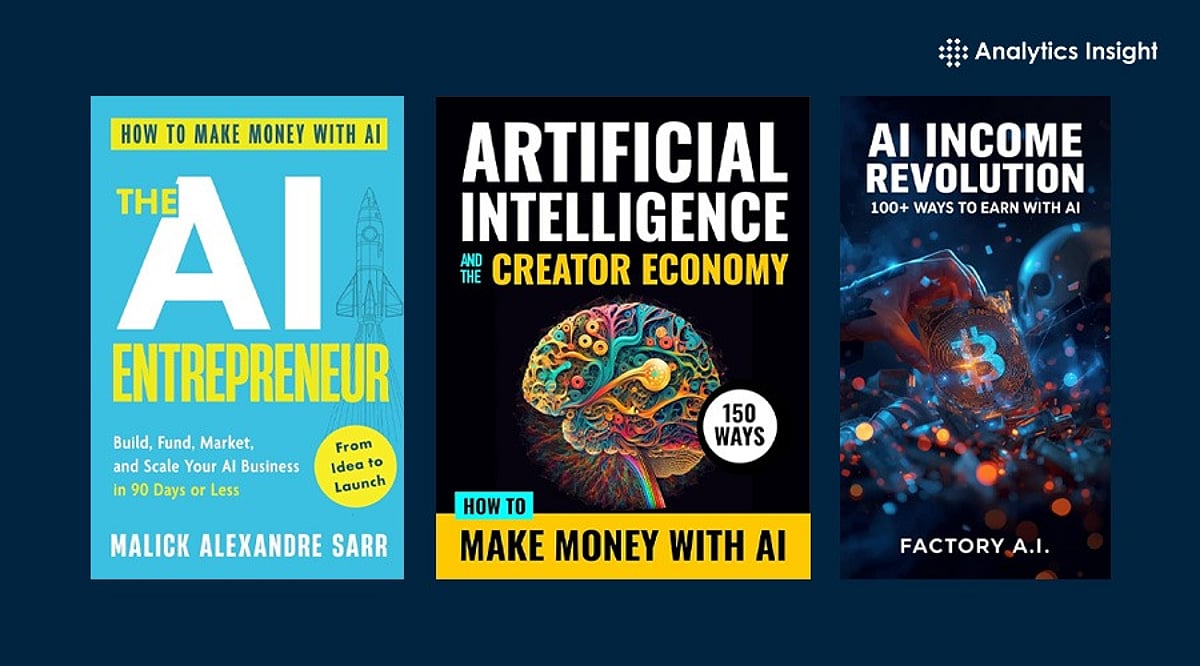
  • Top 10 AI Books to Boost Your Income in 2026: Expert Recommendations

    Top 10 AI Books to Boost Your Income in 2026: Expert Recommendations

    The world of artificial intelligence has expanded far beyond technologists and large corporations. Today, freelancers, entrepreneurs, marketers, and content creators are leveraging AI to work faster, save time, and increase their earnings. However, simply using AI tools isn’t enough—understanding how they work and how to apply them effectively is crucial.

    Reading well-chosen books remains one of the best ways to build that understanding. Whether you’re a beginner or an experienced professional, the right AI books can sharpen your skills and open new career opportunities. Here are 10 essential AI books that can help you make money in 2026.

    1. Zero to One-Person AI Agency – Abhishek Ashtekar

    This book is ideal for anyone looking to start an AI-powered business. It explains how a single individual can launch and run an AI agency without hiring employees. You’ll learn how to offer AI services, acquire clients, automate workflows, and scale operations. The focus is on practical, actionable advice for turning AI into income.

    Buy Now

    2. The AI Advantage – Thomas H. Davenport

    Davenport explores how organizations are using AI to boost efficiency, cut costs, and make smarter decisions. This book helps professionals and business owners identify where AI can create new opportunities and generate revenue.

    Buy Now

    3. Prediction Machines – Ajay Agrawal, Joshua Gans, Avi Goldfarb

    Written by economics and technology experts, this book explains that AI’s core value lies in its ability to make predictions. It shows how businesses can forecast consumer behavior, market trends, and outcomes—enabling entrepreneurs to discover profitable ventures.

    Buy Now

    4. Architects of Intelligence – Martin Ford

    A collection of interviews with leading AI researchers, this book offers insights into current advances and future developments. While not directly about making money, it helps readers anticipate AI trends that can inform career and investment decisions.

    Buy Now

    5. Machine Learning Yearning – Andrew Ng

    Ng focuses on the practical aspects of building machine learning projects, covering how to plan, refine, and manage AI initiatives. Entrepreneurs and developers will find principles here that help create commercially valuable AI solutions.

    Download Book

    6. Deep Learning – Ian Goodfellow, Yoshua Bengio, Aaron Courville

    This is a comprehensive technical guide to the technology behind modern AI tools. Though advanced, it provides a solid foundation for understanding AI, which can lead to better career opportunities and higher earning potential.

    Buy Now

    7. Superintelligence – Nick Bostrom

    Bostrom examines what might happen when AI surpasses human intelligence. The book discusses risks and benefits, encouraging readers to think about long-term AI trends that could shape business and investment strategies.

    Buy Now

    8. Life 3.0 – Max Tegmark

    Physicist Max Tegmark explores how AI could transform society and the economy. The book presents various future scenarios, helping readers understand upcoming industry changes and identify new job trends and opportunities.

    Buy Now

    9. Human Compatible – Stuart Russell

    As AI becomes more powerful, safety and ethics are critical. This book covers AI safety and its importance, a topic increasingly relevant for companies and governments. Knowledge in this area can lead to careers in AI consultancy and governance.

    Buy Now

    10. You Look Like a Thing, and I Love You – Janelle Shane

    For those who prefer a lighter read, this book explains AI in a fun, accessible way. It covers basic machine learning concepts without technical jargon, making it perfect for beginners.

    Buy Now

    Why Reading AI Books Matters

    The AI industry is growing rapidly, and while videos and online tutorials are helpful, books often provide a deeper, more structured understanding. Reading AI books helps you acquire new skills, stay current with industry trends, and discover innovative ways to leverage AI for profit.

    Final Thoughts

    AI is creating opportunities across nearly every sector. Those who understand AI are better positioned to seize these opportunities. The books listed above offer practical business advice, technical knowledge, and insights into AI’s future. For immediate action, start with Zero to One-Person AI Agency, The AI Advantage, and Prediction Machines. For deeper technical skills, Machine Learning Yearning and Deep Learning are excellent choices. These books will equip you with the skills needed to thrive in the coming years.

    Frequently Asked Questions

    1. Which AI engineering book is best for beginners?

    Beginners can start with Hands-On Large Language Models or AI Engineering: Building Applications with Foundation Models. They explain key concepts and provide hands-on guidance.

    2. Do I need coding experience to read AI engineering books?

    Some books require basic programming knowledge, while others focus on concepts. Familiarity with Python can help you follow examples and implement projects.

    3. Which books are best for learning large language models (LLMs)?

    Hands-On Large Language Models and Build a Large Language Model (From Scratch) are excellent choices, covering how LLMs work, training, and deployment.

    4. Can AI engineering books help me get a job in AI?

    Yes, they build valuable skills in machine learning, deployment, prompt engineering, and AI systems—skills highly sought by employers.

    5. What topics should AI engineers focus on?

    Focus on large language models, prompt engineering, retrieval-augmented generation (RAG), AI agents, MLOps, and deployment—these areas drive the latest AI developments.


  • EXL Acquires iMerit to Bolster Enterprise AI with Foundation Model Capabilities

    EXL Acquires iMerit to Bolster Enterprise AI with Foundation Model Capabilities

    EXL (NASDAQ: EXLS), a global data and AI company, has announced a definitive agreement to acquire iMerit, a leader in AI model training, evaluation, and reinforcement learning. The deal, valued at up to $310 million, is expected to close in the third quarter of 2026, subject to customary conditions.

    The acquisition positions EXL at the forefront of enterprise AI innovation by adding iMerit’s direct relationships with foundation model builders. iMerit specializes in helping clients train large language and multimodal models to improve accuracy, precision, and effectiveness. By integrating iMerit’s capabilities with its own AI platforms—including EXLerate.ai, EXLdata.ai, and EXLdecision.ai—EXL aims to create a comprehensive end-to-end AI solution that moves enterprises from experimentation to production-scale deployment.

    “As organizations reimagine their businesses with AI, success requires industry-specific data, rigorous evaluation and reinforcement learning to deliver reliable results in business-critical workflows,” said Rohit Kapoor, chairman and CEO of EXL. “The acquisition of iMerit strengthens EXL’s AI strategy and ability to help clients move from experimentation to production. By combining iMerit’s capabilities with EXL’s domain expertise and AI platforms, we are setting the standard for AI that is trusted, accountable and built to perform in the enterprise.”

    iMerit brings two key assets to EXL: the Ango platform and the Scholars network. Ango enables sophisticated data interactions with generative AI models, supporting chain-of-thought reasoning, red teaming, and multimodal evaluations. Scholars expands EXL’s domain expertise through a global network of specialists—including physicians, scientists, engineers, linguists, and other subject matter experts—who provide human intelligence-driven feedback for reinforcement learning.

    These offerings will be integrated with EXL’s agentic platforms to combine expert human judgment, model evaluation, and enterprise-scale execution. The acquisition also expands EXL into high-growth AI sectors such as high tech, mobility, autonomous systems, and physical AI, leveraging iMerit’s expertise across text, image, video, voice, and LiDAR data.

    “We see EXL as an ideal leader in this defining moment for AI. We can build on our work with AI innovators and bring those insights to companies seeking to unlock their proprietary data,” said Radha Ramaswami Basu, CEO and founder of iMerit. “Both companies share a belief that specialized high-quality data is the foundation of AI success. We are excited to multiply our impact through EXL’s industry expertise, complementary technology and trusted enterprise relationships.”

    The transaction includes upfront consideration of $170 million, with an additional $140 million in incentives and earnouts over two years contingent on meeting specified milestones. The acquisition is expected to close in the third quarter of 2026, subject to regulatory approvals.

  • MIT Chemical Engineering News: Recent Breakthroughs and Department Highlights

    MIT Chemical Engineering News: Recent Breakthroughs and Department Highlights

    MIT’s Department of Chemical Engineering continues to drive innovation across multiple fields, from healthcare and energy to materials science and machine learning. Below is a roundup of the latest news and research from the department.

    • QS ranks MIT the world’s No. 1 university for 2026-27 — For the 15th consecutive year, MIT tops the QS World University Rankings, placing first in 12 subject areas. (June 17, 2026)
    • Fluorescent nanosensor enables rapid, first-of-its-kind detection of key gut health biomarker — Researchers developed an optical nanosensor to detect a key gut biomarker, enabling faster, accessible screening. (June 15, 2026)
    • Q&A with an MIT dining influencer — Michaela Brown shares stories about food and friends as an MIT Dining Ambassador, from oxtail and ackee in Jamaica to Thanksgiving dinner at New Vassar. (June 11, 2026)
    • Developing innovative alternatives to conventional carbon capture methods — MIT researchers present a promising new approach to efficient, flexible carbon capture and removal. (June 4, 2026)
    • A new vaccine adjuvant could make it easier to eradicate polio — The adjuvant helps the injectable polio vaccine induce a strong immune response in the GI tract, critical to eradicating the virus. (June 3, 2026)
    • A new sensor could enable earlier detection of bladder cancer — Using a catheter coated with carbon nanotubes, researchers detect biomarkers produced by cancer cells in the bladder. (May 28, 2026)
    • Eleven from MIT accept 2026 Fulbright awards — Over half of MIT’s Fulbright applicants won awards; current students and alumni will embark on research and teaching abroad. (May 26, 2026)
    • Building AI models that understand chemical principles — Connor Coley works at the interface of chemistry and machine learning to discover and design new drug compounds. (May 20, 2026)
    • From technical solution to systems change: Tackling the problem of plastic waste — Akorfa Dagadu, a senior in chemical engineering, learns the importance of community-engaged research through the PKG Center. (May 14, 2026)
    • A new approach to cancer vaccination yields more powerful T cells — Using immune-remodeling mRNA molecules, researchers generated T cells that slow tumor growth and, in some cases, eradicate tumors. (May 13, 2026)
    • MIT School of Engineering faculty receive awards in winter 2026 — Faculty and researchers honored for scholarship, service, and overall excellence. (May 7, 2026)
    • Study: Gene circuits reshape DNA folding and affect how genes are expressed — When genes are transcribed, they suppress or activate their neighbors, coupling expression between genes. (April 30, 2026)
    • Three from MIT named 2026 Goldwater Scholars — Rising seniors Deeksha Kumaresh, Anna Liu, and Charlotte Myers honored for academic achievements. (April 23, 2026)
    • MIT affiliates elected to the American Academy of Arts and Sciences for 2026 — Four MIT faculty and 13 alumni among more than 250 new members. (April 22, 2026)
    • MIT faculty, alumni receive 2025-26 American Physical Society honors — Two faculty and six alumni win top APS awards; four faculty and 12 alumni named APS Fellows. (April 15, 2026)
  • Algorithms Research at MIT: Recent Breakthroughs and Developments

    Algorithms Research at MIT: Recent Breakthroughs and Developments

    MIT Algorithms News

    Massachusetts Institute of Technology continuously pushes the boundaries of algorithm research. Below are some of the latest stories from MIT News covering breakthroughs in AI, robotics, optimization, and theoretical computer science.

    • LLMs help robots understand vague instructions and focus on key details — A new approach uses one language model to clarify instructions and another to ignore irrelevant info. (June 26, 2026)
    • Improving the speed and energy-efficiency of AI agents — The Murakkab system optimizes multistep workflows for AI applications. (June 25, 2026)
    • Computer model could enable bridges and buildings that use less material — Approach generates more buildable structures, bridging optimized design and real-world construction. (June 24, 2026)
    • Exploring the societal impacts of AI — MIT researchers examine AI’s influence on employment and democracy. (June 23, 2026)
    • New chip could help tiny robots traverse complex environments — Efficient algorithm and dedicated hardware generate 3D maps for navigation. (June 23, 2026)
    • In game theory, generalists sometimes win out over specialists — Overlooked class of algorithms performs better than expected. (June 17, 2026)
    • Could AI tell you where you left your keys? — Spatial memory system for robots captures object details. (June 17, 2026)
    • When it comes to predicting preferences, it pays to consider “the power of three” — Upgrade to random utility models. (June 11, 2026)
    • NSF renews support for MIT-led AI and physics institute — IAIFI enters second phase. (June 4, 2026)
    • Teaching AI agents to ask better questions by playing “Battleship” — Small AI model outperforms larger ones at lower cost. (June 3, 2026)
    • New research enables a robot to chart a better course — MIGHTY system streamlines disaster recovery and delivery. (May 19, 2026)
    • Researchers “reprogram” materials by quickly rearranging their atoms — Method gives rise to exotic quantum properties. (May 13, 2026)
    • Method for stress-testing cloud computing algorithms helps avoid network failures — MetaEase technique predicts scenarios causing outages. (May 6, 2026)
    • Games people — and machines — play: Untangling strategic reasoning to advance AI — Gabriele Farina mines decision-making in multi-agent scenarios. (May 5, 2026)
    • The MIT-IBM Computing Research Lab launches to shape the future of AI and quantum computing — Convergence of AI, algorithms, and quantum computing. (April 29, 2026)

    For full articles, visit the MIT News Algorithms topic page.