Tag: machine learning

  • 5 Key Reasons Python Remains the Top Language for AI and Machine Learning

    5 Key Reasons Python Remains the Top Language for AI and Machine Learning

    Python has become the go-to programming language for artificial intelligence and machine learning due to its simplicity, readability, and rich ecosystem of libraries. Developers can build smart applications faster, test ideas quickly, and deploy models with minimal friction.

    Why Python Leads in AI Development

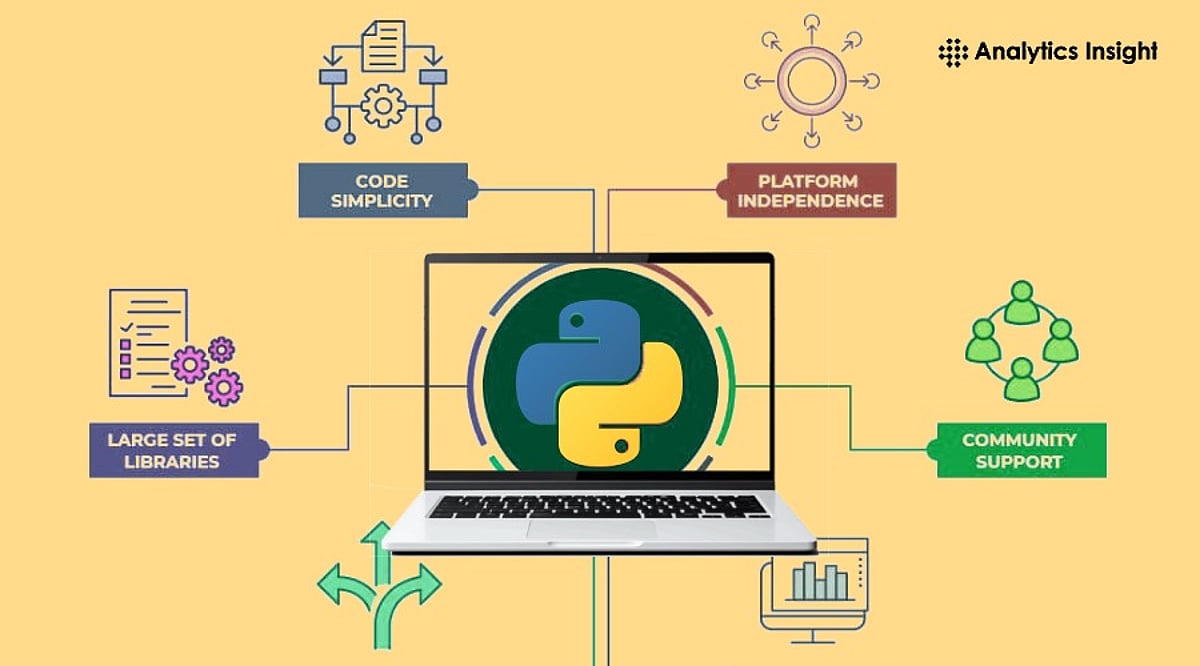
    Python’s clean syntax and minimal learning curve allow developers to focus on solving problems rather than wrestling with complex code. Its extensive library collection, strong community support, and flexibility across industries make it the trusted choice for AI projects, from startups to global enterprises.

    1. Simple, Readable Code Speeds Development

    Python’s syntax is intuitive and clean. Even when reading someone else’s project, the logic is easy to follow. This simplicity reduces the time spent debugging and improves collaboration—critical when AI models frequently need updates and iteration.

    2. Powerful Libraries Save Hours of Work

    Developers don’t have to build AI features from scratch. Python offers mature libraries for every task:

    • TensorFlow and PyTorch for deep learning
    • Scikit-learn for classical machine learning
    • Pandas and NumPy for data manipulation
    • OpenCV for computer vision

    These pre-built tools let developers focus on refining models instead of rewriting boilerplate code.

    3. A Thriving Community Offers Endless Support

    Python’s huge global community means help is always just a search away. Forums, tutorials, guides, and open-source projects ensure that even complex problems have documented solutions. This collective knowledge keeps Python evolving with regular updates and new features.

    4. Versatility Across Industries and Projects

    AI is no longer confined to tech companies. Python powers applications in healthcare, finance, retail, manufacturing, agriculture, and more. The same language can drive a chatbot, a fraud detection system, a recommendation engine, or an image recognition pipeline—eliminating the need to learn a new language for each domain.

    5. Seamless Integration with Modern Infrastructure

    Building an AI model is only half the battle; deploying it matters too. Python integrates smoothly with cloud platforms, databases, APIs, and web frameworks. Many cloud services run Python natively, so moving from training to production requires minimal changes.

    Why This Matters

    Python isn’t just another language—it’s the backbone of many AI tools used daily. As companies embed AI into their products, knowing Python gives developers a durable advantage. While Python may not be the fastest language, its clarity and rapid prototyping capabilities often matter more in AI. With continuous improvements and a growing ecosystem, Python is well-positioned to remain at the center of AI innovation.

    Frequently Asked Questions

    1. Why do most AI developers choose Python?
    Python’s readability, ease of learning, and vast library ecosystem enable faster development with fewer errors.

    2. Which Python libraries are popular for AI?
    TensorFlow, PyTorch, Scikit-learn, Pandas, NumPy, Keras, and OpenCV are widely used for machine learning, deep learning, and data analysis.

    3. Is Python good for AI beginners?
    Yes, its simple syntax and abundant free resources make it one of the best starting points.

    4. Do large companies use Python for AI?
    Yes, many tech giants rely on Python for AI, data science, and automation due to its reliability and strong ecosystem.

    5. Will Python remain important for AI?
    Almost certainly. Its community continues to grow, and new AI tools consistently support Python.
  • Best Python Frameworks for Autonomous AI Agents in 2026: A Comprehensive Guide

    Best Python Frameworks for Autonomous AI Agents in 2026: A Comprehensive Guide

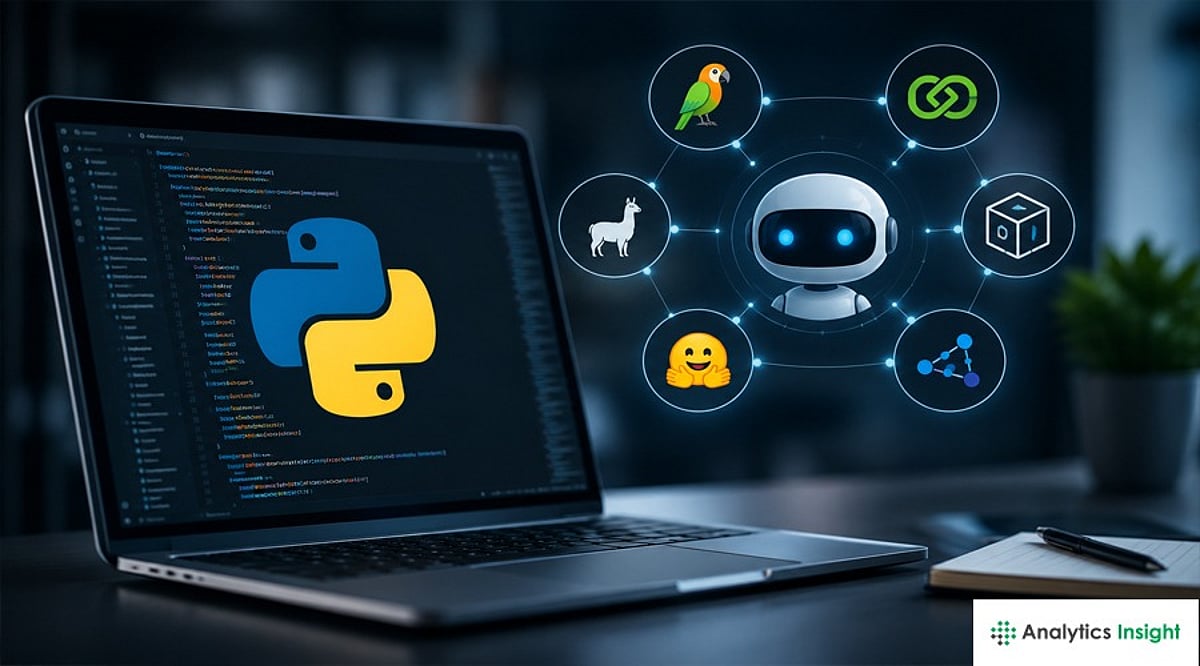
    The Python AI agent framework landscape has evolved rapidly in 2026, offering specialized tools for production orchestration, multi-agent collaboration, enterprise deployment, and retrieval-augmented generation (RAG) workflows. This guide compares the leading frameworks to help developers choose the right platform for scalable autonomous AI applications.

    LangGraph Leads on Production-Grade Control

    LangGraph, developed by LangChain, uses a directed graph model where each node represents an API call to an LLM, tool use, or logic, while edges handle interaction, conditional execution, and looping. It provides complete control over execution, making it popular for complex stateful applications like customer service chatbots with escalation paths. LangGraph gained general availability in October 2025 and saw further improvements in 2026, including per-node timeouts and durable streaming. The main drawback is the steep learning curve compared to more opinionated frameworks.

    CrewAI Remains the Fastest Path to Prototyping

    CrewAI models agents as a crew of specialists with unique purposes, goals, and background stories. Developers can get it operational in under 20 lines of Python code, making it the most straightforward framework. However, it trades off scalability due to less precise error handling and lower accuracy in inter-agent communication. Teams often start with CrewAI and migrate to LangGraph when they need complex state management. The project still attracts millions of monthly downloads and now supports Google’s A2A protocol.

    Microsoft’s Consolidation: AutoGen Gives Way to Agent Framework

    AutoGen, Microsoft Research’s multi-agent conversation platform, introduced agents having discussions to improve output. In April 2026, Microsoft unified AutoGen and Semantic Kernel into the Microsoft Agent Framework, integrating AutoGen’s conversational architecture with Semantic Kernel’s enterprise capabilities like session-based state and telemetry. AutoGen is now in maintenance mode, suitable for research and legacy code, while new Microsoft-stack projects should use Agent Framework.

    Vendor SDKs Are Squeezing Out Frameworks for Simple Agents

    For single agents calling one or two tools, the OpenAI Agents SDK or Anthropic’s Claude Agent SDK offer a faster path with built-in tool use, memory, and tracing, without the abstraction overhead of LangGraph or CrewAI. The Claude Agent SDK reportedly passed AutoGen in production deployment counts during early-to-mid 2026. The general guidance: use a full framework for multi-agent coordination or graph-shaped control flow; use a vendor SDK for a single well-tooled agent.

    Choosing the Right Framework for Your Project

    There is no universal winner. Teams building production systems with complex execution paths gravitate toward LangGraph, while those prototyping role-based workflows find CrewAI faster. Microsoft-stack teams consolidate around Agent Framework, GCP-native teams lean on Google ADK, and document-heavy RAG pipelines favor LlamaIndex Workflows. The safest approach is matching the framework to the specific coordination problem rather than defaulting to the most popular tool.

    As autonomous AI agents become central to enterprise software, selecting the right framework directly affects scalability, maintainability, and development speed. Understanding each framework’s strengths helps developers build more reliable AI applications while avoiding unnecessary complexity and costly migrations.

  • 10 Mind-Blowing AI Capabilities That Were Impossible Just Five Years Ago

    10 Mind-Blowing AI Capabilities That Were Impossible Just Five Years Ago

    Artificial intelligence has advanced at an astonishing pace. Here are some of the most impressive AI capabilities that seemed like science fiction just half a decade ago:

    • AI Writes Like a Human: AI can now draft emails, stories, reports, and scripts in seconds, naturally matching tone, style, and context.
    • AI Creates Stunning Images: Simple text prompts generate detailed artwork, product designs, portraits, and realistic scenes without requiring traditional drawing skills.
    • AI Talks and Listens Naturally: Modern AI understands speech, answers questions aloud, and holds conversations that feel surprisingly smooth, helpful, and humanlike.
    • AI Translates Languages Instantly: AI translates conversations, documents, and videos across many languages while preserving meaning, tone, and context with remarkable accuracy.
    • AI Helps People Code: Developers use AI to write code, fix bugs, explain functions, and build applications much faster than before.
    • AI Makes Videos From Text: AI can turn written prompts into short videos with motion, characters, backgrounds, and cinematic effects within minutes.
    • AI Understands Photos and Screens: AI identifies objects, reads text, explains screenshots, and answers questions about images with impressive accuracy across devices.
    • AI Becomes a Personal Tutor: Students can ask questions anytime, receive step-by-step explanations, practice problems, and personalized learning support from AI assistants.
    • AI Works Across Many Tasks: One AI assistant can research, summarize, plan trips, organize information, brainstorm ideas, and automate everyday tasks efficiently.

    Read More Stories

    Join our WhatsApp Channel to get the latest news, exclusives and videos on WhatsApp.

  • Top GPUs for AI and Machine Learning Workloads in 2026: A Comprehensive Guide

    Top GPUs for AI and Machine Learning Workloads in 2026: A Comprehensive Guide

    As artificial intelligence and machine learning continue to evolve, the demand for powerful graphics processing units (GPUs) has never been higher. In 2026, several new and updated GPUs are set to dominate the market, offering exceptional performance for training, inference, and deployment of AI models. Below is a curated list of the best GPUs for AI and machine learning workloads in 2026, covering options from NVIDIA, AMD, and Intel.

    NVIDIA RTX 6090

    The NVIDIA RTX 6090 delivers exceptional AI training performance, massive VRAM, advanced Tensor Cores, and outstanding capabilities for generative AI and deep learning projects. It is the top choice for researchers and developers who need maximum compute power.

    NVIDIA RTX 6080

    The RTX 6080 offers powerful AI inference, high-speed processing, efficient energy consumption, and excellent value for researchers and AI developers building modern applications. It strikes a strong balance between performance and cost.

    NVIDIA RTX Pro 7000 Blackwell

    Built for enterprise AI, the RTX Pro 7000 Blackwell features enormous memory capacity, workstation reliability, advanced ray tracing, and the ability to handle demanding machine learning workloads worldwide.

    NVIDIA H300 Tensor Core GPU

    Optimized for large-scale AI model training, inference acceleration, enterprise deployment, and high-performance computing, the H300 Tensor Core GPU is a powerhouse for modern data centers globally.

    AMD Instinct MI400

    AMD’s Instinct MI400 provides competitive AI acceleration, strong memory bandwidth, enterprise scalability, and efficient processing for machine learning and scientific computing applications worldwide.

    AMD Radeon AI Pro R9700

    The AMD Radeon AI Pro R9700 delivers workstation-grade AI performance, creative acceleration, efficient multitasking, and optimized support for professional AI development environments and workflows.

    Intel Gaudi 4 Accelerator

    Intel’s Gaudi 4 Accelerator focuses on cost-effective AI training, scalable infrastructure, efficient networking, and enterprise deployment for advanced machine learning applications across industries.

    NVIDIA L50 GPU

    Designed for AI inference, virtualization, graphics acceleration, cloud deployment, and efficient enterprise AI workloads, the NVIDIA L50 GPU offers balanced performance and flexibility consistently.

    AMD Radeon RX 9900 XTX

    The AMD Radeon RX 9900 XTX offers strong local AI performance, gaming capabilities, content creation acceleration, and affordability for enthusiasts experimenting with machine learning projects regularly.

    NVIDIA RTX 5080

    The NVIDIA RTX 5080 balances AI performance, gaming power, efficient Tensor processing, and competitive pricing for developers, creators, and AI enthusiasts building personal workstations.

    For the latest news, exclusives, and videos, join our WhatsApp Channel.

  • Best Data Mining Courses and Certifications to Master in 2026

    Best Data Mining Courses and Certifications to Master in 2026

    Data mining is growing fast as companies look for better ways to turn large volumes of data into useful decisions. Market estimates by Mordor put it at $1.66 billion in 2026, rising to $2.82 billion by 2031, which reflects an 11.25% CAGR. A different prediction suggests that the tools will be worth $1.2 billion by 2026, rising from $634.7 million in 2020, at a CAGR of 11.1%. Consistent growth proves high demand for skills like data cleaning, pattern detection, and predictive analysis.

    With data driving decisions across industries, the right training can help you build the skills needed to stay relevant, practical, and job-ready.

    Top 10 Courses to Build Data Mining Skills

    Professional Certificate in Data Mining: Coursera (University Specialization)

    A hands-on concentration that addresses preprocessing, association rules, clustering, classification, and modeling evaluation through Python and R. This degree involves a capstone project in which you apply what you have learned from real data sets and receive guidance from instructors.

    Data Mining and Business Intelligence: Indian Statistical Institute Certificate

    This course emphasizes statistical foundations and pattern discovery, with a strong focus on business workflows and decision support. It’s suited to analysts who want rigorous theory combined with applied business intelligence techniques.

    Advanced Data Mining Bootcamp: Simplilearn ProTrack

    A bootcamp course focused on scaling mining techniques, feature engineering, and deployment through the use of Spark and MLlib in the cloud.

    Data Mining with Python: DataMites Professional Course

    A brief, hands-on course focused on applying Python tools and packages like pandas and scikit-learn. This is an ideal choice for quick upskilling and preparation for technical interviews.

    Applied Data Mining: University Capstone on Coursera

    Hands-on project-based learning course taking students through the full process of working with raw data: cleansing, discovering patterns, making predictions, and presenting results.

    Certificate in Data Mining & NLP with R: Online Provider

    This combined course covers structured data mining plus text mining and NLP in R, including preprocessing, topic modeling, and sentiment analysis methods for unstructured datasets common in industry projects.

    Postgraduate Diploma in Big Data Science: University Programs (IIT-level)

    A diploma integrating data mining with big-data engineering and distributed algorithms. It’s tailored for professionals aiming to move into scalable analytics or data engineering roles that require both theory and systems knowledge.

    Data Mining Professional: Vendor-Neutral Certification

    A recognized credential focused on algorithmic understanding, evaluation metrics, and cross-industry case studies. This certification helps validate conceptual mastery independent of specific vendor tools.

    Full-Stack Data Science with Data Mining Specialization: Scaler / InterviewBit

    A curriculum combining software engineering best practices with mining tasks: production ML pipelines, feature stores, experiment tracking, and deployment. It’s ideal for engineers building end-to-end machine learning systems.

    Data Mining Essentials: Short Course (Knowledge Academy)

    A concise course on the basics of association rules, clustering, and classification. This will be a good starting point for those who want to go further into projects and more advanced courses.

    Choosing the Right Course

    Data mining is an essential skill for careers in data science, analytics, and machine learning. Whether you’re just starting out or looking to advance your expertise, choosing a course with hands-on projects, industry-relevant tools, and a recognized certification can help you stay competitive and prepare for real-world data challenges.

    FAQs

    Q1. What is a data mining course?

    A data mining course teaches techniques for collecting, cleaning, analyzing, and interpreting large datasets using statistical methods, machine learning, and programming tools like Python to uncover meaningful patterns and support decision-making.

    Q2. Who should enroll in a data mining certification?

    Data mining certifications are suitable for students, data analysts, software developers, business intelligence professionals, and anyone looking to build practical data analytics skills or transition into data science careers.

    Q3. Which programming language is best for learning data mining?

    Python is the most widely recommended language for data mining because of its extensive libraries, ease of use, and strong support for data analysis, visualization, machine learning, and automation.

    Q4. Are online data mining courses recognized by employers?

    Yes, reputable online courses from universities and established learning platforms are valued by many employers, especially when they include hands-on projects, industry-relevant tools, and recognized certification credentials.

    Q5. How do I choose the right data mining course?

    Choose a course based on your experience level, career goals, curriculum, practical projects, instructor expertise, certification value, and coverage of essential tools like Python, SQL, and machine learning frameworks.

  • AI-Powered Compliance: Enhancing Healthcare Claims and Payor Systems Regulation

    AI-Powered Compliance: Enhancing Healthcare Claims and Payor Systems Regulation

    Healthcare organizations are turning to artificial intelligence (AI) to modernize regulatory compliance as government oversight of medical claims and payor systems tightens. Professionals like Vivek Yadav, a Senior Business Systems Analyst with deep expertise in both healthcare operations and technology strategy, are leading efforts to deploy AI responsibly in highly regulated environments.

    The complexity of claims processing, patient eligibility verification, fraud prevention, and privacy laws has overwhelmed traditional manual review methods, which struggle to keep pace with high transaction volumes and rapidly evolving payer rules. AI offers a way to shift compliance from reactive audits to continuous, proactive oversight. By identifying discrepancies, improving claim accuracy, and enhancing audit readiness, AI can help build more sustainable regulatory frameworks.

    Yadav’s background includes degrees in Finance and Computer Information Sciences, along with certifications in Agile Systems Management and Medicare Fraud Prevention. His research, cited by hundreds of peers, spans AI ethics, cybersecurity, blockchain, and health economics. In a March 2026 study titled “Medicaid Algorithmic Unwinding Economics,” he showed that algorithmic errors in automated Medicaid eligibility redetermination could lead to improper termination of coverage, increasing uncompensated care costs for hospitals and harming public health equity. He proposed a governance structure based on transparency, human review, and protections against systemic bias.

    Yadav emphasizes that AI should serve as a governing layer, not a replacement for human judgment. Machine learning can monitor claims patterns, verify eligibility decisions, and flag potential issues for human reviewers, rather than making autonomous determinations. He has also warned that historical datasets used to train AI models may contain biases that adversely affect sensitive healthcare outcomes, advocating for explainable models, diverse training data, and interdisciplinary oversight.

    Beyond research, Yadav has explored integrating modern compliance tools into legacy payor platforms, which often rely on outdated hardware and software. He has developed middleware and secure data bridges to upgrade oversight capabilities without full system replacements. He has also published on using blockchain technology to improve auditability, data integrity, and secure information exchange between healthcare systems.

    The impact of these approaches is clear: AI-based compliance systems can lower administrative friction, speed up detection of billing anomalies and fraud, ensure adherence to privacy and reimbursement regulations, and promote fairness by continuously testing models for bias and performance drift. Such safeguards protect both financial stability and patient access to care.

    The future of healthcare claims compliance depends on responsible automation with human accountability. As regulatory demands evolve, the methods championed by experts like Vivek Yadav may set the standard for next-generation governance in healthcare.

  • How Explainable AI Restores Transparency in Insurance Underwriting

    How Explainable AI Restores Transparency in Insurance Underwriting

    Underwriting functions have experienced their highest level of transformation through artificial intelligence, which currently dominates the financial services sector. Insurers and financial institutions are increasingly relying on machine learning models to accelerate risk assessment processes while improving predictive accuracy and making decision-making more efficient. However, the growing complexity of these systems raises significant concerns about transparency, fairness, and regulatory compliance.

    Organizations face major reputational damage when automated systems fail to provide proper justifications for their results. Customers demand clear explanations behind negative outcomes, and regulators require businesses to maintain auditability. As a result, explainability systems have become essential for both business operations and ethical standards.

    Within this evolving landscape, Jalees Ahmed has been working at the intersection of AI innovation and governance, focusing on validating explainable AI systems in underwriting environments. While data scientists design models and business teams deploy them, his role ensures that automated decisions remain transparent, consistent, and defensible under regulatory scrutiny. His work centers on validating AI outputs so underwriting decisions can be clearly explained, audited, and trusted.

    “AI in underwriting cannot simply be accurate, it must be accountable,” Jalees explains. “If a customer receives an adverse decision, the organization must be able to clearly explain why, how, and based on which validated factors. Accuracy without transparency creates risk.”

    Recognizing that traditional QA approaches were insufficient for probabilistic machine learning systems, Jalees developed structured validation frameworks specifically tailored for AI-driven underwriting. These frameworks focus on feature attribution testing, decision traceability, explanation consistency, and reproducibility controls. Rather than merely verifying outputs, his approach examines behavioral stability, fairness metrics, and governance alignment to ensure models operate within ethical and regulatory boundaries.

    The measurable impact of this work has been significant:

    • Production defects in AI underwriting models reduced by 37% through structured explainability validation testing.
    • Zero major audit findings recorded by implementing traceability validation controls and strengthening documentation standards.
    • AI feature validation coverage expanded from 57% to 82%, reducing data-driven decision errors by 21%.
    • Automated explainability test scripts shortened model validation cycle time by 32%.
    • Improved clarity and consistency in adverse action explanations contributed to a 30% reduction in underwriting decision disputes.

    These improvements addressed one of the most persistent challenges in AI adoption: the “black box” problem. Machine learning systems often generate decisions that are difficult to interpret or validate, creating uncertainty for regulators and business leaders alike. Jalees responded by establishing structured validation controls for feature influence analysis and decision logging, transforming opaque systems into auditable and defensible solutions.

    He also confronted the absence of standardized AI testing practices. Traditional functional testing does not adequately address model drift, probabilistic variability, or fairness risks. By introducing repeatable governance strategies for model stability, bias testing, and explanation validation, he helped embed discipline and accountability into AI lifecycle management. Fairness testing and disparate impact analysis became ongoing processes rather than one-time compliance exercises, reducing ethical, legal, and reputational risks.

    Equally important was bridging communication gaps between data science teams, underwriting professionals, compliance officers, and IT stakeholders. By translating complex model outputs into business-aligned validation criteria, Jalees strengthened collaboration and decision accountability across departments.

    “Explainability is not purely technical,” he notes. “It requires alignment between engineering precision and business responsibility. If teams cannot understand or defend a model’s reasoning, innovation becomes a liability rather than an advantage.”

    From his perspective, the role of Quality Assurance in AI underwriting has evolved into a strategic function that safeguards trust. Data quality and feature integrity, he emphasizes, are often the hidden vulnerabilities in automated systems. Without rigorous validation, explainability can become superficial—technically present but practically insufficient.

    Looking ahead, he anticipates greater regulatory scrutiny, more advanced automated AI testing frameworks, continuous model monitoring, and deeper validation of human-AI decision interactions. As underwriting becomes increasingly automated, governance and transparency will define sustainable innovation.

    “The future of underwriting will not be defined by how quickly decisions are made,” Jalees concludes. “It will be defined by how responsibly they are made. Transparency is not slowing AI adoption—it is ensuring that it endures.”

    As financial institutions continue to integrate advanced AI into core decision-making processes, the importance of explainability and structured validation is becoming unmistakable. In reinforcing transparency and accountability within automated underwriting systems, Jalees Ahmed’s work reflects a broader industry realization: technological progress must be matched by governance discipline, or trust—the foundation of financial services—begins to erode.

  • Top Generative AI Certification Courses for 2026: From Beginner to Advanced

    Top Generative AI Certification Courses for 2026: From Beginner to Advanced

    Generative AI has become one of the most transformative technologies in today’s digital landscape. Businesses across industries are leveraging AI to enhance customer service, automate workflows, generate content, analyze data, and boost productivity. As demand for AI expertise grows, employers actively seek professionals who understand generative AI and can apply it effectively.

    Learning AI has never been more accessible. Numerous trusted platforms now offer certification programs tailored to both beginners and seasoned professionals. Some courses focus on foundational concepts, while others dive into advanced topics like large language models, prompt engineering, AI agents, and application development. Choosing the right certification depends on your career goals, current skill level, and the knowledge you need to succeed.

    Below are some of the best generative AI certification courses to consider in 2026.

    Coursera – Generative AI: Introduction and Applications

    This introductory course is ideal for anyone wanting to understand generative AI from the ground up. It explains core concepts in simple language and illustrates how different industries apply AI in real-world scenarios. Topics include popular AI tools, foundation models, prompt engineering basics, and responsible AI practices. Real-world examples make the material accessible even to non-technical learners.

    Coursera – Generative AI for Everyone Specialization

    Designed for business professionals, students, managers, and educators, this specialization emphasizes practical uses of generative AI in the workplace. It covers how organizations use AI to improve productivity and decision-making, along with prompt design, responsible AI, ethical considerations, and digital transformation. No programming knowledge is required.

    Coursera – Generative AI for Content Creation

    Content creation is one of the most common applications of generative AI. This course focuses on leveraging AI to produce blogs, marketing copy, social media posts, presentations, emails, and more. Lessons cover writing effective prompts, refining AI-generated content, maintaining quality, and the ongoing importance of human creativity.

    Udemy – Complete Generative AI Course with LangChain and Hugging Face

    This advanced, hands-on course is perfect for developers. It covers developing modern applications using LangChain and Hugging Face, including retrieval-augmented generation, vector databases, embeddings, prompt engineering, AI agents, and large language models. Numerous practical exercises help you build real AI-powered apps.

    BITS Pilani Digital – Generative AI and Agentic AI Course

    Offered by BITS Pilani Digital, this certification blends generative AI with the emerging field of agentic AI. The structured curriculum combines theory with practical business applications, covering foundation models, AI agents, autonomous workflows, prompt engineering, and enterprise AI solutions. Industry case studies and projects reinforce learning.

    FutureSkills Prime – Fundamentals in Generative AI and Machine Learning

    This beginner-friendly certification builds a solid foundation in machine learning and generative AI. It starts with simple concepts and gradually introduces more advanced topics like neural networks, foundation models, and responsible AI. The course prepares learners for future advanced certifications.

    Microsoft Learn – Generative AI for Beginners

    Microsoft provides a free, self-paced course featuring tutorials and learning materials for hands-on learners. Topics include large language models, prompt engineering, semantic search, vector databases, AI agents, and responsible AI. The course is regularly updated to reflect the latest trends.

    Great Learning – IIT Bombay Certificate in Generative AI

    This certification combines academic rigor with practical experience. It covers fundamentals before progressing to advanced topics like prompt engineering, large language models, and industry applications. Expert guidance, live sessions, and project-based learning help learners understand real-world AI use cases.

    How to Choose the Right Generative AI Certification

    The best certification depends on your career goals and background. Beginners may prefer introductory courses from Coursera, Microsoft Learn, or FutureSkills Prime. Business-oriented learners who want to understand AI’s impact may benefit from “Generative AI for Everyone.” Developers and technical professionals should consider courses covering LangChain, Hugging Face, and agentic AI. Before deciding, compare curricula, practical projects, instructor expertise, certification value, and how often content is updated.

    Final Thoughts

    Generative AI is now an essential skill across many industries. Certification programs provide a clear path to learning this technology, but hands-on projects are what truly build expertise. The demand for AI skills continues to grow, making now a great time to invest in your education.

    Frequently Asked Questions

    1. Which is the best Generative AI certification course for beginners? Courses from Coursera, Microsoft Learn, and FutureSkills Prime provide a strong foundation.
    2. Are Generative AI certifications worth it in 2026? Yes. They help build practical AI skills and improve career opportunities across many industries.
    3. Which course is best for developers? The Udemy course with LangChain and Hugging Face is a strong choice for developers seeking hands-on experience.
    4. Do these courses require coding knowledge? Not all of them. Many are suitable for non-technical learners, while others focus on programming and AI development.
    5. What should I consider before choosing a certification? Compare the curriculum, practical projects, certification value, instructor expertise, and how often the content is updated.
  • AI Aids Earthquake Rescue: NASA, Microsoft, and EU Technologies Deployed in Venezuela

    AI Aids Earthquake Rescue: NASA, Microsoft, and EU Technologies Deployed in Venezuela

    In the wake of devastating earthquakes, rapid and coordinated rescue efforts are critical. Now, artificial intelligence is playing a pivotal role in improving disaster response. NASA, Microsoft, and the European Union (EU) have deployed advanced AI-powered technologies to enhance earthquake rescue operations in Venezuela, demonstrating how cutting-edge tools can save lives and accelerate recovery.

    NASA Disaster Mapping

    NASA uses satellite imagery combined with AI to quickly identify damaged areas, blocked roads, and priority rescue zones after an earthquake. This technology enables responders to pinpoint where help is needed most, reducing time spent on manual assessment.

    Microsoft AI Cloud and Copilot for Relief Teams

    Microsoft AI Cloud offers cloud-powered analytics that rapidly process disaster data, helping rescue coordinators manage teams and allocate resources efficiently. Additionally, AI assistants called Copilot summarize incoming reports, organize emergency information, and cut response times during critical operations.

    EU Copernicus Programme

    The EU’s Copernicus Programme delivers satellite-based emergency mapping, providing authorities with accurate assessments of earthquake-affected communities and infrastructure damage. This supports informed decision-making for both immediate rescue and long-term rebuilding.

    AI Damage Assessment

    Computer vision algorithms analyze aerial imagery to estimate structural destruction and identify buildings requiring immediate search and rescue operations. This allows teams to prioritize the most dangerous sites first.

    Predictive Risk Models

    Machine learning models forecast aftershock risks and potential hazard zones, improving responder safety and evacuation planning during emergencies. By predicting where the next threat may emerge, teams can act proactively.

    Drone Surveillance Systems

    AI-powered drones capture real-time visuals, locate survivors, and inspect areas inaccessible to ground rescue personnel. These drones extend the reach of rescue teams, covering dangerous terrain without putting more lives at risk.

    Multilingual Communication Tools

    AI translation tools enable faster communication between international rescue agencies, volunteers, and affected local communities. Breaking language barriers ensures that critical information flows smoothly across all parties involved in the response.

    Future Emergency Collaboration

    Partnerships between governments, technology firms, and humanitarian agencies are expanding AI-powered disaster preparedness and rescue capabilities. The collaboration between NASA, Microsoft, and the EU in Venezuela serves as a model for future joint efforts to use AI for global good.

  • How AI and Data Analytics Are Reinventing Sleep Apnea Care

    How AI and Data Analytics Are Reinventing Sleep Apnea Care

    Roughly one billion people worldwide are estimated to live with obstructive sleep apnea, and a large share of them don’t know it. For those who do get diagnosed and treated, the experience of managing the condition looks nothing like it did a decade ago. Sleep medicine has quietly become one of the more compelling case studies in applied health data analytics, and the transformation offers a useful window into how AI is reshaping at-home healthcare more broadly.

    What was once a field defined by overnight lab studies, tangled wires, and manual chart review by a technician is now being reshaped by connected devices, real-time data streams, and machine learning models that can detect and respond to breathing irregularities as they happen. For an industry historically plagued by poor patient adherence, that shift matters enormously.

    From Overnight Labs to Continuous Data Streams

    For decades, diagnosing sleep apnea meant a night in a clinical sleep lab, wired to sensors, followed by a specialist manually reviewing hours of recorded data the next morning. It was accurate, but slow, expensive, and difficult to scale to the scope of the problem. Today, a growing share of that diagnostic and monitoring work happens at home, generating continuous streams of breathing, oxygen saturation, and movement data that machine learning models can analyze automatically rather than reviewed frame by frame by a human.

    This shift toward continuous, at-home data collection is exactly the kind of trend that tends to accelerate technology adoption once it takes hold. Sleep therapy providers are increasingly building products around it, and patients researching treatment options are now just as likely to compare data features and app connectivity as they are price when shopping for CPAP machines.

    Smarter Machines: AI-Driven Pressure Adjustment

    One of the more significant advances in sleep apnea therapy has been the move from fixed-pressure devices to auto-adjusting systems. Rather than delivering a static level of air pressure all night, modern devices use onboard algorithms to analyze breathing patterns in real time and adjust pressure automatically, responding to changes in sleep position, airway resistance, or apnea events as they occur, often hundreds of times over a single night.

    This is applied machine learning quietly improving a health outcome, one micro-adjustment at a time. These algorithms don’t make headlines, but they meaningfully improve therapy comfort and effectiveness, which in turn improves the single strongest predictor of treatment success: whether a patient actually keeps using the device. It’s also why compliance data, tracked automatically and often synced to a companion app, has become a core feature rather than an afterthought in newer machines.

    6 Ways Data and AI Are Reshaping Sleep Apnea Care

    • Automatic pressure titration. Algorithms adjust air pressure breath by breath, replacing the old model of a fixed setting determined once during a lab visit.
    • Cloud-synced compliance tracking. Machines now upload nightly usage data automatically, giving both patients and clinicians a clear picture of adherence without manual logs.
    • Predictive maintenance alerts. Connected devices can flag filter changes, mask leaks, or performance drift before they become a problem the patient notices on their own.
    • Facial-mapping-informed mask design. Manufacturers use aggregated fit and return data to refine mask shapes, reducing the trial-and-error patients used to face.
    • Remote clinician monitoring. Physicians can review a patient’s therapy data remotely between appointments, catching adherence drop-off or efficacy issues earlier.
    • Personalized therapy recommendations. As more usage data accumulates, some platforms are beginning to surface individualized comfort and setting suggestions rather than generic defaults.

    Personalization Extends to Fit, Not Just Function

    Data-driven design hasn’t stopped at the machine itself. Mask design has undergone a similar transformation, moving away from one-size-fits-most models toward options informed by facial mapping data, materials testing, and patient feedback loops that manufacturers use to refine fit and seal quality. Since mask leaks are one of the most common reasons patients abandon therapy altogether, this kind of iterative, data-informed design has a direct and measurable impact on outcomes.

    Patients today have considerably more choice when selecting a sleep apnea mask, with options tailored to sleep position, facial structure, and comfort preferences. That range of choice is itself a byproduct of manufacturers using real-world usage and return data to identify exactly where older, generic designs were failing patients.

    Why This Matters Beyond Sleep Medicine

    The broader lesson here extends well past sleep apnea treatment. It’s a case study in what happens when a chronic condition management category moves from episodic, clinic-based monitoring to continuous, data-rich, at-home tracking. Adherence goes up, personalization improves, and providers get a feedback loop they never had before. Similar shifts are playing out across diabetes management, cardiac monitoring, and remote patient care generally, all built on the same underlying pattern: more granular data, analyzed continuously, feeding back into better-designed devices and more responsive care.

    Sleep therapy providers navigating this shift are having to think less like traditional medical equipment suppliers and more like connected health companies. Local providers such as Rockingham CPAP reflect that broader trend, offering the newer generation of data-enabled machines and masks alongside the fitting and support services that continuous, at-home therapy increasingly depends on.

    Looking Ahead

    As wearable sensors get cheaper and machine learning models get better at parsing noisy, real-world physiological data, the line between “medical device” and “connected health platform” will keep blurring, in sleep medicine and well beyond it. For an industry that has spent decades trying to solve a stubbornly low patient adherence problem, that shift, driven by better data rather than dramatic new hardware, may end up being the more consequential story of the next few years.