Tag: Oil Prices

  • Wall Street Futures Edge Higher as Oil Retreats and Bond Yields Ease

    Wall Street Futures Edge Higher as Oil Retreats and Bond Yields Ease

    US stock futures edged higher on Tuesday as oil prices fell and Treasury yields eased from recent highs. Chip stocks recovered in premarket trading, while investors awaited US jobs and inflation data for clues about the Federal Reserve’s next rate decision.

    At 8:45 a.m. ET, Dow Jones Industrial Average futures were up 0.17%, S&P 500 futures rose 0.14%, and NASDAQ 100 futures gained 0.28%. The gains followed a weaker session on Monday, when rising oil prices and Treasury yields weighed on stocks. The S&P 500 recorded its largest one-day percentage decline since late August.

    The latest premarket moves remained small, and futures can change before regular trading begins. Traders continued to weigh the cost of energy and borrowing against a recovery in some chip stocks. They were also watching for news on the war with Iran, which has disrupted oil shipments from the Middle East.

    Brent crude futures fell more than 1% on Tuesday as attention turned to signs of stronger oil exports from the Gulf. The decline followed Monday’s rise in crude prices after President Donald Trump rejected an Iranian proposal linked to reopening the Strait of Hormuz. Oil prices remained elevated even after Tuesday’s pullback.

    The pause in oil’s rise coincided with a modest easing in Treasury yields. The benchmark 10-year yield closed Monday at 5.241%, its highest close since 2007. It climbed above 5.26% early Tuesday before falling back. One later morning reading put the yield near 5.220%, while the 30-year yield was around 5.542%. Yields move in the opposite direction from bond prices.

    The levels kept borrowing costs in focus. Higher yields can raise financing costs for companies and households, while expensive oil can add to inflation. Australia’s central bank raised its interest rate to a 15-year high on Tuesday. In the US, traders were looking to upcoming economic reports for clues about the Federal Reserve’s next move.

    Several chipmakers rose after Monday’s sector-wide selloff. Marvell Technology, Micron Technology and Broadcom each gained about 1% before the opening bell. NVIDIA advanced 0.7% after adding USD 150 billion to its share repurchase authorization on Monday.

    Investors also assessed an Anthropic prospectus seen by Reuters for a possible public offering. It showed rapid growth alongside wider losses, while the AI company is targeting a valuation of more than USD 2 trillion. That figure is a proposed valuation, not the price of a completed listing. Separately, investors were due to hear from OpenAI CEO Sam Altman at the company’s DevDay event later Tuesday.

    The August job openings report and the Conference Board’s consumer confidence reading were due Tuesday. Inflation and employment figures later in the week were also on the calendar. At least six Federal Reserve officials, including New York Fed President John Williams, were scheduled to speak during the day.

    Among individual stocks, Summit Therapeutics rose about 20% in premarket trading. AstraZeneca said it would invest USD 2 billion in the company, and the two drugmakers plan to study their cancer treatments together. PepsiCo fell 1.1% after JPMorgan cut its rating from overweight to neutral. CarMax also gained before the open following its quarterly results.
  • Bitcoin Drops to $83,000 as Oil Price Rally Triggers Widespread Crypto Selloff

    Bitcoin Drops to $83,000 as Oil Price Rally Triggers Widespread Crypto Selloff

    Bitcoin fell to $83,000 on Monday as a surge in oil prices above $100 per barrel triggered losses across both cryptocurrency and traditional financial markets. The leading cryptocurrency dropped 1.7% since midnight UTC and 2.1% over the past 24 hours, while altcoins suffered even deeper declines.

    Oil Rally Pressures Risk Assets

    The market downturn followed a continued rise in crude oil prices, with Brent crude returning above $100 to trade at $100.83, a 3.2% gain during the session. The move came after President Donald Trump rejected Iran’s latest terms for reopening the Strait of Hormuz, which included demands for access to frozen funds, relief from oil sanctions, and an end to the US naval blockade of Iranian ports.

    Traditional markets also weakened. Gold fell 3.3% to $4,144, silver dropped 5.1% to $61.00, while S&P 500 futures lost 0.44% and NASDAQ 100 futures declined 0.95%. The US dollar index edged up 0.06% to 101.09, indicating broad selling pressure across multiple asset classes rather than an isolated crypto decline.

    Altcoins Hit Harder

    The CoinDesk 100 index fell 2.6% to 1,874.56, with 91 of its 100 constituents trading lower. Total crypto trading volume surged 70% to $172 billion over 24 hours, yet market-wide futures open interest dropped 3% to $150 billion, suggesting traders closed positions even as activity accelerated.

    Altcoins recorded sharper losses. QNT dropped 16% since midnight after a 39% gain during Friday’s session. GRT fell 12%, and ONDO also declined 12%. The DeFi Select Index lost 6.4% during the session and 7.3% over 24 hours, while the CoinDesk Computing Index fell 3.2% and 5.0% over the same period.

    Bitcoin Futures Show Traders Reducing Leverage

    Bitcoin futures open interest declined to 650,000 BTC, its lowest level since March. Funding rates turned negative across major exchanges, indicating that remaining leveraged positions leaned bearish. As of September 22, leveraged funds increased their net Bitcoin futures short position by 1,599 contracts to a total of 7,953 contracts, while asset managers added 411 contracts to raise their net long position to 3,171 contracts.

    The broader derivatives market later showed leverage declining further. The 24-hour taker long-short split stood at 46.9% against 53.1% as of 09:50 UTC, giving aggressive sellers a modest advantage. Ether saw a similar decline in leveraged exposure, with ETH futures open interest falling to 12.85 million ETH from 13.95 million on July 1.

    XRP and HBAR Break from Broader Trend

    XRP futures open interest moved differently, reaching a four-week high of 2.46 billion XRP early in the session before easing to 2.37 billion. Whale positioning varied: Binance whales remained bullish on Bitcoin, though weaker than Friday, turned bearish on Ether, and remained bullish on Solana. XRP positioning returned to bearish territory but less so than Friday.

    HBAR recorded an even stronger increase in derivatives activity, with open interest surging to a record 2.30 billion HBAR while its spot price climbed 48% over 24 hours. However, its 24-hour open-interest-adjusted cumulative volume delta remained negative, and annualized funding stayed only slightly above zero, indicating aggressive buying did not dominate.

    Options Market Shows Mixed Sentiment

    On Deribit, the $84,000 Bitcoin put expiring September 30 became the most traded Bitcoin options contract over 24 hours, while the $2,850 Ether call expiring October 20 led ETH options activity. Bitcoin implied volatility increased slightly as Volmex’s BVIV rose to 37.4% after rebounding from below 36% last week. Wall Street’s VIX rose to 16 on Friday from below 14, reflecting broader market uncertainty.

    Separately, Pluang data showed only nine of 50 major cryptocurrencies rising as 40 declined. Harmony led the gainers with a 30.54% rise, while GRT gained 17.15% and BAL advanced 11.14%.

    Bitcoin’s decline to $83,000 came as oil returned above $100 and selling spread across cryptocurrencies and traditional assets. Futures data showed lower leverage, negative funding, and bearish taker activity, while XRP and HBAR recorded stronger open interest. Options activity showed demand for both downside protection and selective upside exposure.

  • Bitcoin Faces Pivotal $84K Test as PCE, Jobs, and ISM Data Loom

    Bitcoin Faces Pivotal $84K Test as PCE, Jobs, and ISM Data Loom

    Bitcoin Holds Above $82.5K Support Entering Data-Heavy Week

    Bitcoin entered a critical U.S. data week near $84,000 after dipping to $82,563 on September 28. A string of inflation, manufacturing, and labor market reports could reshape expectations for interest rates and risk assets.

    Rising Treasury yields, oil prices above $90 a barrel, and volatile bond markets are adding pressure. The week begins with August personal income and outlays on September 30, followed by the ISM manufacturing report on October 1 and the September employment report on October 2.

    Glassnode Levels Provide Key Reference Points

    Glassnode analysts have highlighted the $84,000 to $85,000 range as a dense cluster of long-term holder acquisition prices. Bitcoin briefly slipped below that zone during Monday’s drop, making a close back above it a constructive signal.

    Additional market levels include the True Market Mean near $77,000 and the mean MVRV reference around $96,700. Glassnode’s September 21 Market Pulse also noted net spot taker buying, rising trading volume, and elevated futures leverage, while weekly ETF flows remained negative.

    The quality of any bounce matters. Fresh spot demand, stronger volume, and renewed ETF buying would offer more durable support than a short-term futures-driven recovery.

    Will September Break Its Historical Pattern?

    Bitcoin has gained about 7% in September after rallying 25% in August. Historically, every positive August since 2013 has been followed by a negative September. With two days left in the month, a positive September would break that sequence and mark a third consecutive monthly gain.

    Oil and Supply Chain Risks Could Influence the Inflation Outlook

    Energy markets remain a wildcard. The Energy Information Administration estimated Brent spot crude averaged $91 a barrel in August, up $7 from July. The International Energy Agency also pointed to severe restrictions on Gulf diesel and gasoil exports during August, while shipping incidents near Hormuz were reported on September 21 and 23.

    Because the August PCE report lands on September 30, it will not fully reflect late-September changes in fuel, freight, or factory costs. The ISM manufacturing report on October 1 may therefore offer a timelier inflation signal. ISM’s August Prices Index stood at 71.1, while Supplier Deliveries reached 59.3. A higher September Prices Index, slower deliveries, or stronger cost comments would point to renewed pressure on manufacturers.

    Jobs Data and Fed Rate Expectations Take Center Stage

    Labor market data begins with the August JOLTS report on September 29, followed by September payrolls on October 2. The Federal Reserve raised its target range to 3.75% to 4% on September 16, citing elevated inflation and steady job gains.

    A moderate cooling in labor conditions could reduce pressure on the Fed. However, a sharply weaker employment report might shift attention from inflation toward growth risks.

    Bond Volatility and Q4 Liquidity Concerns

    The 10-year Treasury yield is above 5.2%, and the MOVE index has moved above 100, near its year-to-date highs. Oil above $90 adds another inflation worry, while gold fell about 3% on Monday to just above $4,000 an ounce.

    Despite these headwinds, Bitcoin’s quarter remains strong. A positive September would put Q3 2026 more than 40% higher and mark the first positive third quarter since Q3 2025. Historical CoinGlass data shows Bitcoin’s average fourth-quarter gain is around 77%, but Q4 could bring fresh tests for liquidity and risk appetite.

    Anthropic’s reported November IPO plans and the U.S. midterm elections could add further volatility. The clearest cross-market test may come from a soft August PCE reading followed by a higher September ISM prices reading. That sequence could initially ease Treasury yields before renewed cost concerns push rate expectations higher.

    This article is for informational purposes only and does not constitute investment advice. Always conduct your own research before making investment decisions.

  • FTSE 100 Opens Higher as Oil Prices Surge on Rejected Iran Truce; Aldi Plans £900M Expansion

    FTSE 100 Opens Higher as Oil Prices Surge on Rejected Iran Truce; Aldi Plans £900M Expansion

    The FTSE 100 opened 27.61 points higher at 10,722.86 on Monday, driven by a rise in oil prices after US President Donald Trump rejected an Iranian proposal for a seven-day truce that could have reopened the Strait of Hormuz. Brent crude futures climbed 2.48% to $106.9 per barrel, while US West Texas Intermediate (WTI) advanced 2.09% to $94.34 per barrel.

    Sterling strengthened to $1.3247 early Monday, up from $1.3238 at the London equities close on Friday. Against the euro, the pound rose to €1.1627 from €1.1616 a day earlier.

    Gainers and Losers

    On the upside, Barratt Redrow surged 14.01% to 352.30p after the government confirmed it would introduce a new equity-loan program for first-time buyers in next month’s Budget. Howden Joinery Group advanced 5.27% to 799.00p, and Kingfisher gained 4.54% to 343.30p. JD Sports Fashion rose 2.17% to 79.18p, Games Workshop Group added 1.94% to 17,910p, and Marks & Spencer Group increased 1.68% to 380.80p.

    On the downside, Fresnillo fell 5.29% to 2,737p, while Endeavour Mining declined 4.77% to 4,309p. Antofagasta dropped 3.78% to 3,589p, Anglo American slipped 3.34% to 3,907p, and Rio Tinto lost 2.22% to 6,931p. Computacenter also traded lower, falling 1.20% to 5,345p.

    Aldi to Invest £900 Million for New Stores

    Aldi announced plans to invest £900 million in opening new stores next year. The UK’s fourth-largest supermarket chain reported record sales growth of 5% to £19 billion in 2025, driven by a £340 million investment in price cuts on products such as butter, meat, and frozen fish. Chief Executive Giles Hurley said, “The cost of food remains one of the biggest pressures on households across the country. We’re working hard to make good food more affordable for every family.”

    Chrysalis Sells Stake in Klarna

    Chrysalis sold its remaining stake in buy now, pay later firm Klarna for £34 million after a stock decline over the past year. The investment trust said the exit price exceeded its recent valuation of the holdings, reversing some earlier drawdowns. Chrysalis will return £25 million to shareholders through a buyback program and retain £9 million as a prudent operating capital buffer for potential follow-on investments.

    Entain Predicts Earnings Decline

    Entain warned that its global earnings will suffer due to Brazil’s newly announced ban on online sports betting. The company said the ban pushes its full-year earnings to the lower end of its £910 million-to-£960 million guidance. In a statement, Entain said it is “disappointed by this sudden development without consultation with industry stakeholders regarding its significant adverse consequences,” but confirmed its Brazilian operations are complying with the provisional measure.

    Global Market Overview

    In the US, Dow Jones Industrial Average futures dropped 180 points (0.4%), S&P 500 futures lost 0.4%, and Nasdaq-100 futures fell 0.7%. In Asia, Tokyo’s Nikkei 225 declined 0.73% to 65,877.62, while China’s Shanghai Composite dipped 1.67%. Hong Kong’s Hang Seng rose 0.61%, and South Korea’s Kospi edged down 2.7%. In India, both the Nifty 50 and the Sensex fell by 1.34% and 1.38%, respectively.

  • FTSE 100 Opens Higher at 10,717.59 Despite Global Bond Sell-Off; Brent Crude Holds Above $106

    FTSE 100 Opens Higher at 10,717.59 Despite Global Bond Sell-Off; Brent Crude Holds Above $106

    The FTSE 100 opened Friday’s session 37.60 points higher at 10,717.59, shrugging off continued pressure from a global bond sell-off that pushed the 10-year gilt yield to its highest level in more than a week. Investor attention remains fixed on escalating tensions in the Middle East following fresh Houthi missile attacks on Saudi Arabia, while oil prices hovered near recent levels.

    Oil and currency movements

    Brent crude futures edged down 0.29% to USD 106.3 per barrel, while US West Texas Intermediate dropped 1.11% to USD 93.56. In currency markets, sterling was quoted at USD 1.3219 early Friday, up slightly from USD 1.3214 at the London equities close on Thursday. Against the euro, the pound eased to EUR 1.1620 from EUR 1.1628.

    Leading gainers and losers

    Computacenter led the FTSE 100 risers, climbing 3.15% to 5,405p. Smiths Group advanced 2.25% to 2,819p, while Standard Chartered gained 1.86% to 2,299p. Aberdeen Group rose 1.83% to 245.40p, followed by Endeavour Mining and Glencore, which each added 1.57%.

    On the downside, BP slipped 2.47% to 557.70p, British American Tobacco dropped 1.11% to 4,196p, and Unilever declined 1.00% to 4,661.50p. Reckitt Benckiser and Shell each fell 0.41%, while Admiral Group retreated 0.39%.

    Gilt yields hit multi-day high

    The 10-year gilt yield reached 5.38% on Thursday, its highest level in over a week, as bond markets around the world came under selling pressure. Higher bond yields tend to raise borrowing costs for companies and governments, and traders are closely watching whether the Bank of England will respond. Reuters reported that markets now expect at least one 25-basis-point rate hike from the BoE this year.

    FT and Bloomberg UK profits rise

    Company filings show that the UK operations of the Financial Times and Bloomberg posted higher profits in 2025. The Financial Times increased its profit by GBP 6 million to just under GBP 15 million for the year. Bloomberg Index Services, a UK subsidiary of the US firm that supplies data through the Bloomberg Terminal, saw profit rise by $12 million to around USD 125 million (GBP 94 million). Bloomberg attributed its 10% increase in turnover to ‘growth from new business and the expansion of existing customer relationships,’ while the FT cited growth in digital subscriptions and sales from live events.

    Harworth backs Peel Holdings takeover

    Land developer Harworth has recommended that shareholders accept a GBP 632 million takeover offer from its largest shareholder, Peel Holdings. The 187p-per-share bid represents a 30% premium over Harworth’s closing price on the day Peel first made its offer. The firm told investors the deal gives them the ‘opportunity to realise the entirety of their interests in cash against the current uncertainty presented by a weak macroeconomic backdrop.’

    Global markets mixed

    In the US, the Dow Jones fell 161.61 points, or 0.31%, to 51,349.98. The S&P 500 slipped 0.02% to 7,704.13, while the Nasdaq Composite edged up 0.01% to 26,939.37. In Asia, Tokyo’s Nikkei 225 gained 1.3% to 66,364.2. China’s Shanghai Composite declined 1.22%, Hong Kong’s Hang Seng fell 1.03%, and South Korea’s Kospi rose 0.9%. In India, both the Nifty 50 and the Sensex finished lower.

    This article is for informational purposes only and does not constitute investment advice.

  • US Stock Futures Decline as Traders Increase Bets on October Fed Rate Hike

    US Stock Futures Decline as Traders Increase Bets on October Fed Rate Hike

    US stock futures fell Thursday, September 24, as rising Treasury yields and oil prices renewed concerns about inflation and further Federal Reserve rate increases. A drop in Oracle shares added pressure on technology stocks before the opening bell.

    Why are US Stock Futures Falling?

    NASDAQ-100 futures fell about 1% in early trading. S&P 500 futures lost 0.6%, while Dow Jones Industrial Average futures declined 159 points, or 0.3%. The moves pointed to a second day of losses for the US stock market after all three major indexes closed lower on Wednesday.

    The S&P 500 ended Wednesday at 7,706.03, down 0.75%. The NASDAQ Composite fell 1.13% to 26,936.04, and the Dow dropped 352.10 points to 51,511.59. Thursday’s futures figures remained subject to change before regular trading began.

    Oracle shares fell more than 5% before the bell after Bloomberg reported that the company had cited force majeure in connection with a New Mexico data center project. According to the report, the provision could protect Oracle if construction faces delays. The reported step drew attention to the timing and cost of data centers used for artificial intelligence.

    How are Treasury Yields and Oil Prices Affecting Stocks?

    The 10-year Treasury yield rose to about 5.15%, near a level last reached in 2007. Meanwhile, the 30-year yield touched 5.446%, its highest level since 2004. Bond yields rise when prices fall, and higher yields can increase borrowing costs for households and businesses.

    Oil also moved higher. Brent crude futures gained approximately 1% to USD 105 a barrel, while West Texas Intermediate futures rose about 1% to around USD 93. Higher fuel and transport costs can feed into the prices companies charge customers.

    Traders increased their expectations for another Federal Reserve rate increase. CME FedWatch pricing put the chance of an October hike above 70%, compared with roughly 55% a week earlier. These figures reflect market positions and can change quickly; they do not indicate a decision by the Fed.

    UBS Global Wealth Management strategists said Thursday that they expected energy disruption to remain limited. They also cautioned that market volatility could continue as investors assessed inflation, government debt and spending on artificial intelligence.

    What Did the US Jobless Claims Report Show?

    The Labor Department reported 197,000 initial unemployment claims for the week ending September 19. That was 1,000 fewer than the previous week’s revised total of 198,000. The earlier figure had first been reported as 196,000, which explains why some accounts described the new total as an increase.

    Continuing claims reached 1.719 million for the week ending September 12, up 2,000 from the revised prior-week figure. The four-week average of initial claims fell to 202,250. Together, the figures showed that claims remained low even as investors watched for any change in hiring or layoffs.

    Investors also weighed strong readings from S&P Global’s US business surveys. In a Wednesday note, BMO Capital Markets strategist Vail Hartman said the data gave policy rates and Treasury yields room to move higher. He warned that stronger demand could add to inflation pressure, although that outcome remains uncertain.

    What Else are US Stock Market Investors Watching?

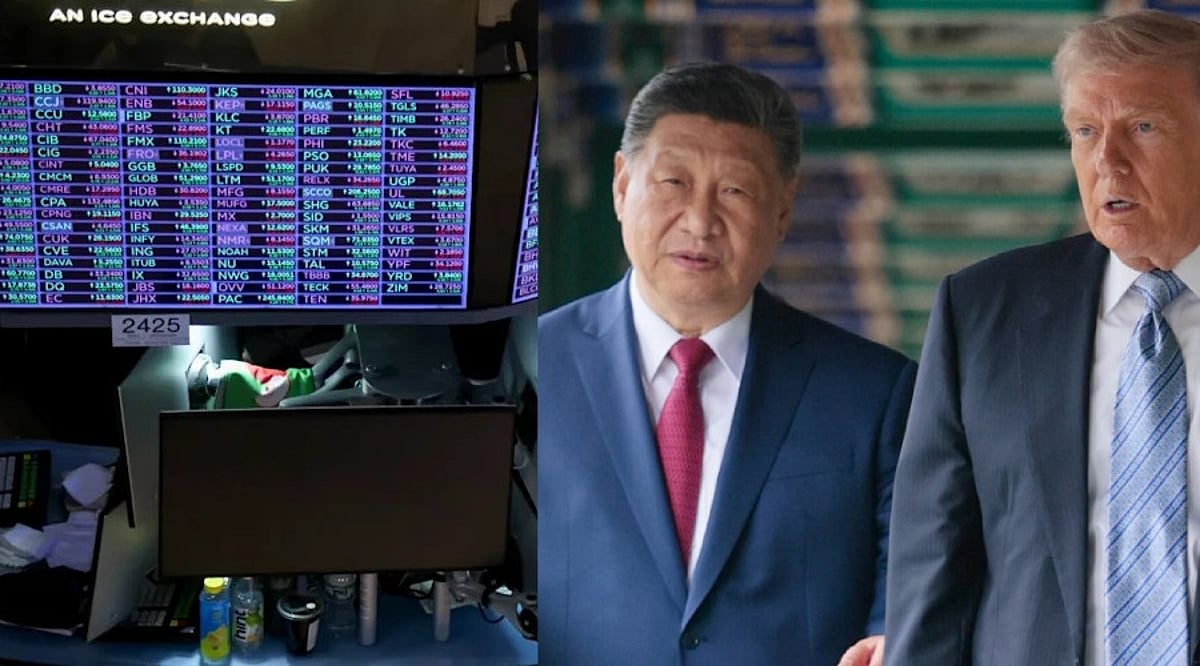
    President Donald Trump and Xi Jinping were due to meet Thursday in Washington. Trade, artificial intelligence, Taiwan and the Iran war were among the expected topics. US Treasury Secretary Scott Bessent said the countries had agreed to extend their trade truce through January 10, beyond its previous November expiry. Investors awaited further details from the meeting.

    Corporate results offered another focus. Darden Restaurants shares fell after its quarterly results missed expectations, while Costco was scheduled to report after Thursday’s closing bell. The combination of earnings, bond yields and oil prices gave investors several developments to assess as regular US trading approached.

    Disclaimer: Analytics Insight does not provide financial advice or guidance on cryptocurrencies and stocks. Also note that the cryptocurrencies mentioned/listed on the website could potentially be risky, i.e. designed to induce you to invest financial resources that may be lost forever and not be recoverable once investments are made. This article is provided for informational purposes and does not constitute investment advice. You are responsible for conducting your own research (DYOR) before making any investments. Read more about the financial risks involved here.

  • Bitcoin Slumps Below $84,000 as Surging Bond Yields and Oil Prices Deepen Crypto Sell-Off

    Bitcoin Slumps Below $84,000 as Surging Bond Yields and Oil Prices Deepen Crypto Sell-Off

    Bitcoin and Altcoins Tumble Amid Rising Bond Yields and Oil Prices

    The cryptocurrency market experienced a sharp decline on Thursday as global bond yields surged and oil prices climbed, pressuring risk assets across the board. Bitcoin fell to approximately $83,830 after trading near $87,000 earlier in the week. Ethereum dropped to around $2,670, while several major altcoins recorded double-digit losses.

    Treasury Yields and Oil Prices Fuel the Sell-Off

    The US 10-year Treasury yield rose above 5%, reaching levels not seen since 2007, as stronger economic data and hawkish Federal Reserve comments drove the move. The Fed’s recent 25-basis-point rate hike and commitment to returning inflation to 2% have reinforced expectations for further tightening. Meanwhile, crude oil prices added to inflation concerns, with gasoline and diesel prices rising sharply since January. Higher bond yields reduce the appeal of speculative assets like cryptocurrencies, as government debt offers more attractive returns.

    Altcoins Hit Hard as Profit-Taking Accelerates

    Tokens that had posted strong gains in recent weeks were among the hardest hit. Arbitrum fell more than 14% in 24 hours, trading about 15% below its weekly high after a 263% rally from August lows. Uniswap dropped 13.78% to around $9.25, following a 240% surge from its August low. Other tokens such as Pepe, Worldcoin, and Dogecoin also gave back gains. Technical indicators, including Relative Strength Index readings above 70, suggested many cryptocurrencies had entered overbought territory.

    Broader Market Retreat

    The selling extended beyond crypto. Gold and silver declined as rising interest rates made yield-bearing assets more competitive. US stock futures also weakened, with Dow Jones Industrial Average futures falling about 142 points and S&P 500 futures dropping around 25 points. Despite the losses, Bitcoin remained higher for September overall, supported by a more favorable US regulatory environment earlier in the month.

    Market participants now face uncertainty over whether the decline is a temporary pullback or the start of a broader bearish trend. With the Federal Reserve signaling further rate hikes and bond yields continuing to climb, the outlook for risk assets remains cautious.

  • FTSE 100 Opens Higher as US-Iran Talks Resume; JD Sports Profit Falls, Airtel Money Plans London IPO

    FTSE 100 Opens Higher as US-Iran Talks Resume; JD Sports Profit Falls, Airtel Money Plans London IPO

    The FTSE 100 opened 40.75 points higher at 10,749.08 on Wednesday, as investors welcomed signs of renewed diplomacy between the United States and Iran. The positive start came ahead of a fresh batch of flash PMI data from Europe, the UK, and the US.

    Market Movers

    Brent crude futures fell 0.43% to USD 98.82 per barrel, while U.S. West Texas Intermediate (WTI) advanced 0.99% to USD 89.62. Sterling rose to USD 1.3382 early Wednesday from USD 1.3372 late Tuesday, and edged up against the euro to EUR 1.1661 from EUR 1.1658.

    Gainers

    • Rentokil rose 2.40% to 324.20p
    • Sage Group advanced 1.41% to 1,003.50p
    • Standard Chartered gained 1.24% to 2,294p
    • InterContinental Hotels Group rose 1.14% to USD 155.85
    • London Stock Exchange Group added 1.10% to 8,244p
    • 3i Group increased 1.09% to 2,702p

    Losers

    • Smiths Group fell 1.11% to 2,752p
    • Spirax Group dropped 0.76% to 7,220p
    • Severn Trent declined 0.71% to 3,086p
    • Admiral Group slipped 0.54% to 3,686p
    • AstraZeneca fell 0.36% to 12,626p
    • Next edged 0.34% lower to 14,640p

    US-Iran Diplomacy

    US President Donald Trump said envoys held a ‘very good’ three-hour meeting with an Iranian delegation on the sidelines of the United Nations General Assembly in New York. Special Envoy Steve Witkoff confirmed talks took place through mediators who “shuttled between the two sides throughout the day,” describing the round as “successfully completed” and indicating a further meeting is expected within days. Iran’s conditions, communicated through Qatari mediators, include a halt to hostilities on all fronts, removal of the US naval blockade, and the return of frozen funds, according to Esmaeil Baghaei, spokesperson of the Ministry of Foreign Affairs of Iran.

    JD Sports H1 Profit Declines

    British sports and fashion retailer JD Sports reported a 19.7% decline in first-half profit, driven by weakness in its North American market. The group maintained its full-year earnings outlook. Shares are down 10% over the past year. Profit before tax and adjusting items was GBP 282 million, slightly above the GBP 279 million consensus estimate. Revenue fell to GBP 5.90 billion from GBP 5.94 billion a year earlier. Like-for-like sales fell 2.8%, while organic sales dipped 0.7%. JD Sports left its full-year profit before tax and adjusting items guidance at GBP 700 million to GBP 800 million and its free cash flow forecast unchanged at GBP 460 million to GBP 520 million.

    Airtel Money Confirms London IPO

    Airtel Money confirmed plans for a London IPO. The African mobile payments business is reportedly seeking a valuation as high as $9 billion (GBP 6.8 billion). The fintech, with more than 50 million active customers, aims to raise as much as $800 million. CEO Ian Ferrao said, “A London listing will underpin our next wave of growth. The opportunity ahead of us is substantial and, importantly, there are many demographic and digital tailwinds within the markets that we serve. This listing will give us the platform to continue transforming financial services across Africa and to keep building value for our customers, our partners, African governments and our shareholders.”

    Global Market View

    In the US, the tech-heavy Nasdaq climbed 0.45% to a record close of 27,244.28, supported by a nearly 7% gain in shares of SanDisk. The S&P 500 was marginally lower at 7,764.64, while the Dow Jones Industrial Average shed 0.36% to finish at 51,863.69. In Asia on Wednesday, Tokyo’s Nikkei 225 was closed, while China’s Shanghai Composite dipped 0.4%. Hong Kong’s Hang Seng declined 0.96%, and South Korea’s Kospi edged up 0.9%. In India, both the Nifty 50 and the Sensex rose by 0.53% and 0.52%, respectively.

    Disclaimer: This article is provided for informational purposes only and does not constitute investment advice. Readers are encouraged to conduct their own research before making any financial decisions.

  • Stock Futures Hold Near Flat Ahead of Trump-Xi Summit and Iran Negotiations

    Stock Futures Hold Near Flat Ahead of Trump-Xi Summit and Iran Negotiations

    U.S. stock futures were little changed early Wednesday, September 23, following a record close for the Nasdaq Composite. Investors kept their focus on oil price movements, ongoing U.S.-Iran discussions, and the anticipated meeting between President Donald Trump and Chinese President Xi Jinping.

    Futures Show Modest Declines

    At 7:50 a.m. ET, Dow futures slipped 31 points, or 0.31%, while S&P 500 futures gave back 0.13% and Nasdaq-100 futures fell 0.33%. All three contracts remained close to Tuesday’s closing levels as markets awaited fresh catalysts from geopolitics and economic data.

    The flat open followed a mixed session on Wall Street. The Nasdaq Composite rose 0.45% to 27,244.28 for its second consecutive record close, while the S&P 500 finished essentially unchanged at 7,764.64. The Dow Jones Industrial Average dropped 0.36% to 51,863.69. Chip stocks outperformed, with Micron advancing about 5% and SanDisk gaining nearly 7%.

    However, gains were uneven. Six of the S&P 500’s 11 sectors fell on Tuesday, led by financials. JPMorgan Chase and Wells Fargo each lost more than 3%. The divergence between tech strength and financial weakness remained a key theme on Wednesday.

    Oil Prices and U.S.-Iran Talks

    Brent crude traded below $100 per barrel during the morning, easing 0.40% to $98.83. Reports indicated that Saudi Arabia had restarted operations at its East-West Pipeline and might resume exports from the Red Sea port of Yanbu, helping to ease supply concerns.

    Market participants were also parsing the latest U.S.-Iran talks held on the sidelines of the United Nations General Assembly. President Trump described the meeting as “very good,” but his U.N. speech mentioned a choice between reaching a deal and “annihilating” the country, leaving traders uncertain about the path to an agreement. Oil prices are a key market driver because fuel costs influence business expenses and inflation readings.

    Trump-Xi Meeting on Trade and AI

    President Xi is scheduled to arrive in Washington on Wednesday ahead of a Thursday meeting with Trump. The agenda is expected to cover the U.S.-China trade truce, artificial intelligence regulation, and U.S. arms sales to Taiwan. Xi is also slated to meet executives from General Motors, Meta, Apple, Amazon, and Tesla.

    The talks come as AI-related stocks boost the Nasdaq. Strong interest in Meta’s Muse assistant has supported AI infrastructure providers, while some investors worry that task-performing assistants could disrupt consumer businesses, contributing to losses in financial and travel-related shares on Tuesday.

    Investors are watching the summit for any policy announcements, though no new agreement has been confirmed. The Nasdaq’s record close remains the most recent confirmed market result.

    Economic Data and Fed Speakers Ahead

    S&P Global’s September purchasing managers’ index is due Wednesday, with economists polled by Reuters expecting continued expansion in U.S. business activity. Federal Reserve Governor Michael Barr is also scheduled to speak, offering further clues on monetary policy after last week’s rate increase.

    Boston Fed President Susan Collins expressed support for the rate hike due to inflation concerns. According to CME Group’s FedWatch tool, futures traders currently price in a high chance of another 25-basis-point hike next month, a view that could shift with upcoming data and Fed commentary.

  • FTSE 100 Opens Higher as Middle East Tensions Push Brent Above $105, Treasury Yields Climb

    FTSE 100 Opens Higher as Middle East Tensions Push Brent Above $105, Treasury Yields Climb

    The FTSE 100 opened 20.23 points higher at 10,725.49 on Thursday, as ongoing tensions in the Middle East kept oil prices elevated above $105 per barrel, while surging US Treasury yields continued to weigh on risk appetite across European markets.

    Brent crude futures rose 2.46% to $105.6 per barrel, and US West Texas Intermediate (WTI) advanced 2.20% to $94.19 per barrel. Sterling traded at $1.3243 early Thursday, slightly lower than $1.3254 at the London equities close on Wednesday. Against the euro, sterling fell to €1.1628 from €1.1636.

    Gainers and Losers

    On the upside, JD Sports Fashion rose 2.18% to 75.84p, British American Tobacco advanced 1.91% to 4,278p, and Antofagasta gained 1.50% to 3,802p. Glencore rose 1.48% to 560.70p, Bunzl added 1.28% to 2,686p, and BP increased 1.26% to 564.20p.

    On the downside, Standard Life fell 3.83% to 890.50p, Computacenter dropped 1.37% to 5,405p, and Pershing Square Holdings declined 1.20% to 3,616p. Admiral Group slipped 0.71% to 3,646p, Games Workshop Group fell 0.62% to 17,620p, and AstraZeneca edged 0.40% lower to 12,380p.

    Vistry Shares Fall After Loss and Downsizing Plans

    Vistry shares slumped after the company reported a £661 million pre-tax loss and announced plans to downsize, spooking investors. The housebuilder fell by as much as 7% to 248p in early trade.

    Adam Vettese, market analyst at eToro, commented: “This morning’s sell-off is the market calling time on another year of moving goalposts. Adam Daniels is doing the unglamorous work of shrinking Vistry to 12,000 homes, exiting South East private sales and cutting a land bank that was too big for the returns it produced. That is the right diagnosis; it does not make the next twelve months any cleaner.”

    On the Beach Posts Record Bookings

    On the Beach recorded a 9% rise in bookings, pushing total transaction value to £1.3 billion, marking the fifth consecutive year of record highs. The growth was fueled by a summer booking rebound, with volumes 4% ahead of the prior year, as more customers purchased trips closer to departure dates.

    Chief executive Shaun Morton attributed the uptick to “strategic investments” in technology and the company’s expanded product offering. The firm estimates pre-tax profit of £28 million to £35 million in the next financial year but remains “mindful” of the impact the Iran war is having on consumer confidence.

    Halma Raises Margin Outlook

    Halma raised its outlook for the annual adjusted operating profit margin, citing strong first-half progress. The health and safety device maker now expects an adjusted EBIT margin of 23.5% to 24% for the year through March 2027, up from its previous guidance of around 22.7%.

    The company maintained its forecast for low double-digit percentage organic constant-currency revenue growth, including roughly five percentage points of premium growth from its photonics business.

    Global Market Overview

    In the US, the S&P 500 dropped 0.75% to close at 7,706.03, while the Nasdaq Composite fell 1.13% to 26,936.04. The Dow Jones Industrial Average was down 352.10 points, or 0.68%.

    In Asia on Thursday, Tokyo’s Nikkei 225 gained 0.76% to 65,513.99, while China’s Shanghai Composite dipped 1.22%. Hong Kong’s Hang Seng declined 0.29%, and South Korea’s Kospi edged up by 0.9%. In India, both the Nifty 50 and the Sensex fell by 1.61% and 1.60%, respectively.

    Disclaimer: This article is for informational purposes only and does not constitute financial advice. Investing involves risk. Always conduct your own research before making any investment decisions.