Tag: Oil Prices

  • FTSE 100 Opens Higher Amid Middle East Tensions; Brent Crude Surges Past $105

    FTSE 100 Opens Higher Amid Middle East Tensions; Brent Crude Surges Past $105

    The FTSE 100 opened 20.23 points higher at 10,725.49 as renewed geopolitical tensions in the Middle East pushed oil prices above $105 per barrel, while rising US Treasury yields continued to weigh on risk appetite across European markets.

    Brent crude futures rose 2.46% to $105.6 per barrel, and US West Texas Intermediate (WTI) advanced 2.20% to $94.19 per barrel. Sterling was quoted at $1.3243 early Thursday, slightly lower from $1.3254 at the London equities close on Wednesday. Against the euro, sterling fell to €1.1628 from €1.1636 the prior day.

    Gainers & Losers

    • Top Gainers: JD Sports Fashion rose 2.18% to 75.84p, British American Tobacco advanced 1.91% to 4,278p, Antofagasta gained 1.50% to 3,802p, Glencore rose 1.48% to 560.70p, Bunzl added 1.28% to 2,686p, and BP increased 1.26% to 564.20p.
    • Top Losers: Standard Life fell 3.83% to 890.50p, Computacenter dropped 1.37% to 5,405p, Pershing Square Holdings declined 1.20% to 3,616p, Admiral Group slipped 0.71% to 3,646p, Games Workshop Group fell 0.62% to 17,620p, and AstraZeneca edged 0.40% lower to 12,380p.

    Vistry Shares Slump After Loss and Downsizing Plan

    Vistry shares tumbled after reporting a £661 million pre-tax loss and announcing plans to downsize. The housebuilder fell as much as 7% to 248p in early trade. Adam Vettese, market analyst at eToro, commented, “This morning’s sell-off is the market calling time on another year of moving goalposts. Adam Daniels is doing the unglamorous work of shrinking Vistry to 12,000 homes, exiting South East private sales and cutting a land bank that was too big for the returns it produced. That is the right diagnosis; it does not make the next twelve months any cleaner.”

    On the Beach Posts Record Booking Increase

    On the Beach reported a 9% rise in bookings, bringing total transaction value to £1.3 billion, marking the fifth consecutive year of record highs. The summer booking rebound contributed to growth 4% ahead of the prior year, driven by customers purchasing trips closer to departure dates. Chief executive Shaun Morton attributed the uptick to strategic investments in technology and an expanded product offering. The company estimates pre-tax profit between £28 million and £35 million in the next financial year, but remains mindful of the impact the Iran war is having on consumer confidence.

    Halma Raises Margin Outlook

    Halma lifted its outlook for annual adjusted operating profit margin, citing strong first-half progress. The health and safety device maker now expects an adjusted EBIT margin of 23.5% to 24% for the year through March 2027, up from its previous guidance of around 22.7%. The company maintained its forecast for low double-digit percentage organic constant-currency revenue growth, including roughly five percentage points of premium growth from its photonics business.

    Global Market Overview

    In the US, the S&P 500 dropped 0.75% to close at 7,706.03, while the Nasdaq Composite fell 1.13% to 26,936.04. The Dow Jones Industrial Average was down 352.10 points, or 0.68%. In Asia on Thursday, Tokyo’s Nikkei 225 gained 0.76% to 65,513.99, while China’s Shanghai Composite dipped 1.22%. Hong Kong’s Hang Seng declined 0.29%, and South Korea’s Kospi edged up 0.9%. In India, both the Nifty 50 and the Sensex fell 1.61% and 1.60%, respectively.

    Disclaimer: This article is for informational purposes only and does not constitute financial advice. Always conduct your own research before making investment decisions.
  • Canadian TSX Surges Over 200 Points as Tech and Mining Stocks Rally

    Canadian TSX Surges Over 200 Points as Tech and Mining Stocks Rally

    Canada’s main stock index, the S&P/TSX Composite, climbed more than 200 points on Monday, driven by gains in technology and base metals stocks. The index rose 202.75 points, or 0.57%, to close at 36,009.40, recovering from Friday’s close of 35,804.86.

    Technology and Mining Lead the Advance

    The information technology sector led the rally with a 3.0% gain, while base metals advanced 1.6% and financial stocks added 1.4%. However, energy and telecommunications shares declined, with energy falling 2.5% and telecoms down 1%, as oil prices slipped.

    US Markets Also Move Higher

    In New York, the Dow Jones Industrial Average rose 366.19 points (0.7%) to 52,048.83, the S&P 500 gained 114.20 points (1.5%) to 7,764.70, and the NASDAQ Composite climbed 599.55 points (2.3%) to 27,122.09. Lower oil prices and falling Treasury yields supported US equities, with semiconductor stocks boosting the NASDAQ.

    Oil Prices and Currency Movements

    The November crude oil contract fell $3.71 to $92.37 per barrel, pressured by potential diplomatic progress between the US and Iran and signs of recovering Saudi oil shipments. The Canadian dollar weakened slightly to 71.32 US cents from 71.42 US cents on Friday. Gold also declined, with the December contract dropping $41 to $4,383.90 an ounce.

    Investors are also monitoring comments from Bank of Canada Governor Tiff Macklem and ongoing US-Canada trade tensions for clues on the economic outlook and interest rate path.

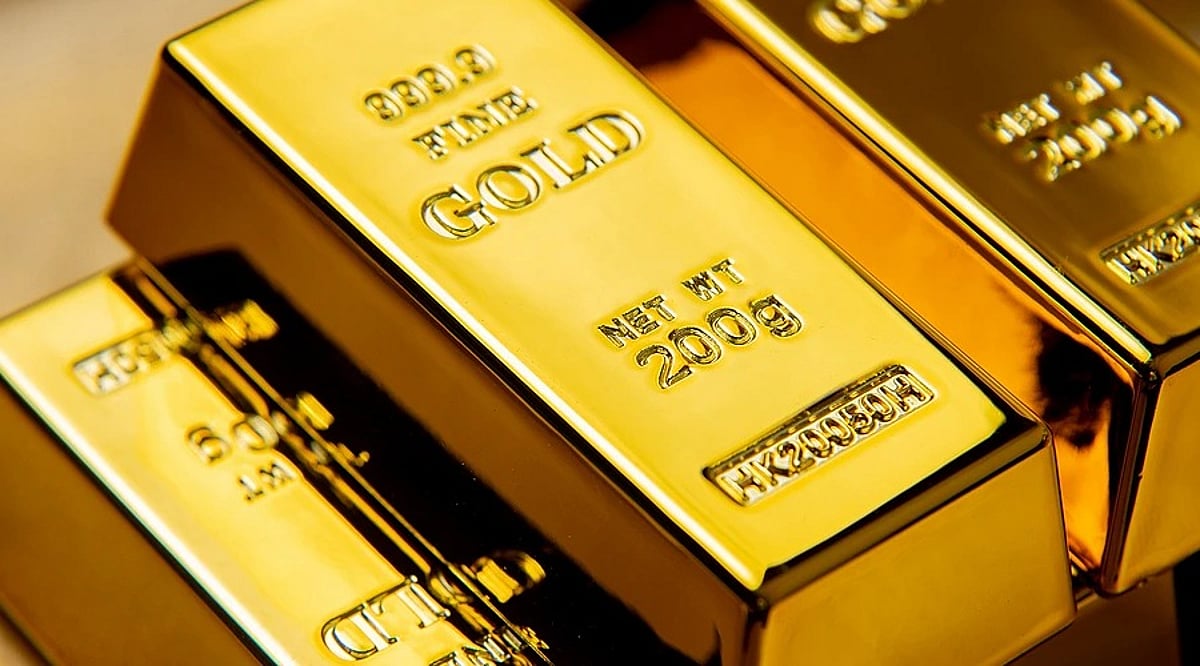
  • Gold Price Update: MCX Gold Holds Steady at Rs. 1,53,171 as Oil Prices Decline, Brent at $101.6

    Gold Price Update: MCX Gold Holds Steady at Rs. 1,53,171 as Oil Prices Decline, Brent at $101.6

    Gold traded flat on MCX on September 22 amid a continued decline in oil prices over the past few sessions, which reduced expectations of further interest-rate hikes by the Federal Reserve. October gold futures rose 0.05% to Rs. 1,53,171 per 10 grams, while September silver futures advanced 0.13% to Rs. 2,39,620.

    Meanwhile, Brent crude futures rose 1.25% to USD 101.6 per barrel. US West Texas Intermediate (WTI) edged higher by 0.96% to USD 93.26 per barrel.

    Domestic Gold Prices

    24K gold rose by Rs. 17 to Rs. 1,54,750 per 10 grams, while 22K gold also advanced by Rs. 15 to Rs. 1,41,850. By city, Mumbai and Kolkata mirrored prices at Rs. 1,54,750, while Delhi was at Rs. 1,54,900 and Chennai at Rs. 1,54,750.

    US Gold Prices

    US gold prices struggled for momentum on Tuesday as expectations of interest rates staying higher for longer weighed on sentiment, with investors awaiting comments from US Federal Reserve officials for policy clues. Spot gold declined 0.08% at USD 4,340.26 per ounce. US gold futures fell 0.18% at USD 4,376.20. Spot silver fell by 0.12% to USD 65.95 per ounce while platinum dipped 0.81% to USD 1,789.83 and palladium declined 0.94% at USD 1,295.78 per ounce.

    Key Levels to Watch

    With US economic data limited this week, investors will focus on comments from Fed officials for signs of whether the central bank is leaning toward another rate increase in October, as well as on crude oil prices, said Chris Weston, head of research at Pepperstone.

    “While crude has come modestly off its recent highs, a reversal higher that builds inflation expectations would only intensify the rates story, and gold would likely continue to face headwinds,” said Weston.

    XAU/USD traded around USD 4,340 on the daily chart, holding just above the medium-term moving averages. The 50-day simple moving average (SMA) at USD 4,300 and the 100-day SMA at USD 4,320 sit below price and suggest underlying trend support, while USD 4,400 acts as immediate resistance. The ongoing test of the rising support trendline around USD 4,340 keeps the broader uptrend intact, and a neutral near-term bias is supported by the Relative Strength Index (RSI) hovering close to the 50 line at 48.5.

    On the topside, immediate resistance emerges at USD 4,400, with a more significant barrier at the 200-day SMA around USD 4,542. On the downside, support clustered around USD 4,340 is the first level to watch; a daily close below it would expose USD 4,320.

  • MCX Gold Holds Steady at Rs.1,52,795 as Oil Prices Decline and Fed Rate Outlook Shifts

    MCX Gold Holds Steady at Rs.1,52,795 as Oil Prices Decline and Fed Rate Outlook Shifts

    Market Overview

    On September 23, MCX gold futures traded slightly higher, with October contracts rising 0.05% to Rs.1,52,795 per 10 grams. This modest gain came as oil prices continued their decline, reducing expectations of further interest-rate hikes by the Federal Reserve. September silver futures also advanced 0.47% to Rs.2,41,025.

    Oil Price Movement

    Brent crude futures fell 1.10% to USD98.16 per barrel, while US West Texas Intermediate (WTI) edged lower by 1.67% to USD89.01 per barrel.

    Domestic Gold Prices

    In India, 24K gold rose by Rs.87 to Rs.1,54,200 per 10 grams, and 22K gold advanced by Rs.80 to Rs.1,41,350. By city, Mumbai and Kolkata both quoted at Rs.1,54,200, Delhi at Rs.1,54,350, and Chennai at Rs.1,54,200.

    US Gold Prices

    US gold prices fell on Tuesday under pressure from hawkish Federal Reserve signals, reinforcing expectations of higher rates for longer. Spot gold declined 0.32% to USD4,344.51 per ounce, while US gold futures rose 0.12% to USD4,381.55. Other precious metals also slipped: spot silver fell 0.49% to USD66.68 per ounce, platinum dipped 0.89% to USD1,819.12, and palladium declined 0.68% at USD1,303.40 per ounce.

    Analst Views and Key Levels

    Standard Chartered highlighted firm demand, while Goldman Sachs retained its end-2027 gold forecast at USD5,400 per ounce, noting that tighter policy may slow the rally rather than derail the longer-term trend. Goldman Sachs warned that three additional rate hikes could push gold toward USD4,070 before recovering toward USD4,200 by end-2026, supported by continued central-bank purchases.

    On the daily chart, XAU/USD trades near USD4,345, hovering between the 50-day and 100-day simple moving averages at USD4,307.31 and USD4,313.57. Immediate upside pressure is around USD4,390, making the near-term bias neutral. Downside support is seen at the short- and medium-term SMAs near USD4,313-USD4,307, ahead of the rising trend-line base near USD3,999. A daily close above USD4,390 would be required for bulls to regain control.

  • Bitcoin Rally Targets $90,000 as Oil Declines and ETF Inflows Top $1 Billion

    Bitcoin Rally Targets $90,000 as Oil Declines and ETF Inflows Top $1 Billion

    Bitcoin traded near $86,000 on Monday, recovering from Asian-session lows around $85,000. The rally gained support from falling oil prices, strong ETF inflows, and a broader risk-on sentiment across global markets. The CoinDesk 20 Index rose 2.2% over 24 hours, signaling broad-based strength in digital assets.

    Falling Oil Prices Provide a Tailwind

    West Texas Intermediate crude futures dropped more than 2%, falling below $90 a barrel after briefly reaching $106. The decline followed reports that Iran was willing to reopen the Strait of Hormuz within seven days if the United States eased its blockade. Lower oil prices could reduce inflation pressure and weaken the case for further Federal Reserve interest-rate increases, creating a favorable macro backdrop for risk assets like Bitcoin.

    Alex Kuptsikevich, chief market analyst at FxPro, linked the crypto advance to stronger risk appetite, citing a sharp Nasdaq rise, falling oil prices, lower bond yields, stronger global equities, and optimism around US-China trade negotiations.

    ETF Inflows and Altcoin Momentum

    US-listed spot Bitcoin ETFs attracted nearly $1 billion on Monday, marking their strongest single-day inflow since October last year. Meanwhile, smaller cryptocurrencies such as PEPE, Dogecoin, and Shiba Inu ranked among the top performers over the previous 24 hours, often a sign of heightened speculative activity.

    Bitcoin has risen more than 8% over the past week and 34% over the past three months, though it remains below its October 2025 record above $126,000. Analysts at BTIG noted that bulls could target a move through $82,000 toward $90,000 as long as the $75,000 support holds.

    ‘Crypto Spring’ Debate Intensifies

    Bitwise Chief Investment Officer Matt Hougan told CNBC that the market has entered a “crypto spring,” pointing to increased blockchain transactions and major firms like BlackRock expanding their involvement during the downturn. Hougan expects prices to catch up with stronger fundamentals later this year and does not believe Bitcoin will remain below its all-time high next year.

    The rally has continued despite the US Senate blocking the Clarity Act, which would have created a comprehensive crypto framework. Hougan said the setback could leave the SEC and CFTC with greater influence over near-term rulemaking, and both agencies are currently seen as supportive of crypto under their leadership. He also suggested a potential rotation from AI stocks into digital assets as AI momentum levels off.

    With oil prices, bond yields, global equities, and ETF flows all aligning in Bitcoin’s favor, the market is now watching whether the cryptocurrency can extend its recovery toward $90,000 in the coming days.

  • Stock Futures Flat as Oil Prices Exceed $100, Fed Rate Hike Fears Intensify

    Stock Futures Flat as Oil Prices Exceed $100, Fed Rate Hike Fears Intensify

    US stock futures remained largely unchanged on Tuesday following a sharp rally on Wall Street Monday, as brent crude surged above $100 per barrel, stoking inflation concerns and reviving expectations of another Federal Reserve interest rate hike. Meanwhile, traders are monitoring Middle East tensions, President Donald Trump’s speech at the United Nations, and Alibaba’s unveiling of a new AI chip.

    Dow Jones Futures Flat

    Dow Jones futures were down by 25 points, or 0.1%, at 3:09 AM ET (7:09 GMT), while futures linked to the S&P 500 and NASDAQ 100 held largely steady. The flat start came after the S&P 500 posted its best performance since August on Monday, driven by gains in technology and artificial intelligence stocks. Meta Platforms advanced on its new AI model, and chipmakers like AMD and Intel rose as investors focused on AI processing technologies. The US 10-year Treasury yield slipped slightly on Tuesday.

    Oil Prices Cross USD 100

    Brent crude futures climbed about 1% to $101.36 a barrel, crossing the $100 threshold as investors worried about supply disruptions from ongoing tensions in the Middle East. The focus also remains on President Trump’s planned address to the United Nations General Assembly in New York, expected to cover international security, conflicts in the Middle East and Ukraine, and AI safety.

    Fed Rate Hike Fears Return

    Federal Reserve rate hike concerns added another layer of uncertainty. St. Louis Federal Reserve President Alberto Musalem said the central bank may need to raise interest rates again as higher energy prices add to inflation pressures. The Fed raised rates by 25 basis points last week, and updated projections from Chair Kevin Warsh hinted at the possibility of another increase before the end of 2026.

    Alibaba Unveils New AI Chip

    At its annual Apsara Conference in Hangzhou, Alibaba unveiled the Zhenwu V900 AI accelerator. CEO Eddie Wu said the chip delivers three times the performance of its predecessor, the Zhenwu M890. Alibaba noted that the V900 can be used in clusters of up to 500,000 chips for training advanced AI models.

  • Crypto in 2026: The Macro Forces Shaping Bitcoin and Ethereum Markets

    Crypto in 2026: The Macro Forces Shaping Bitcoin and Ethereum Markets

    Crypto stopped trading on its own terms a while back. Bitcoin and Ethereum now move with the same signals that shake stocks and bonds: interest rates, inflation, the dollar, and job numbers. The thread connecting all of it is liquidity. Fed policy shifts financial conditions, and financial conditions decide how much capital investors are willing to put into assets that don’t pay a yield.

    The Fed’s Rate Hike Resets Expectations

    On September 16th, the Federal Reserve raised its benchmark rate by 25 basis points to a range of 3.75% to 4.00%. It was the first hike in three years, and the vote was unanimous. For most of 2026, the conversation had centered on when rate cuts might arrive. That conversation flipped. The Fed’s updated projections showed roughly 16 of 18 officials expecting at least one more increase before the year ends.

    For crypto, this matters in a direct way. Low rates loosen liquidity and push investors toward riskier assets. High rates tighten it and pull money toward safer ground. A hiking cycle raises the cost of holding something like Bitcoin, which pays no interest while it sits in a wallet.

    Inflation and Jobs Data Set the Pace

    Inflation numbers don’t just move markets for a single trading session. They shift expectations around future rate decisions, and those expectations shape how funds position their crypto exposure for weeks or months afterwards. The Fed’s own statement pointed to inflation still running well above its 2% target, which was the core justification for the hike.

    Jobs data plays a similar role from a different angle. In August, US employers added 162,000 jobs, and unemployment held at 4.1%. A steady labor market gives the Fed room to keep policy tight if inflation stays sticky. Weaker numbers would pull in the opposite direction. Markets watch this release as closely as the rate decision itself.

    Dollar and Treasury Yields Quietly Set the Tone

    Bitcoin tends to weaken when the dollar strengthens, particularly when that strength reflects tighter financial conditions in the US. The link isn’t fixed or permanent, but it shows up often enough to matter.

    Treasury yields work through a similar mechanism. When government bonds pay more, they raise the bar for what a riskier asset needs to offer before it looks worth holding. That’s the opportunity cost at work: money doesn’t sit idle, but it goes wherever the return looks strongest relative to the risk.

    Oil Prices Add a Second Layer

    Oil doesn’t move Bitcoin on its own. It moves inflation first. Higher oil prices push inflation expectations up, which pushes the Fed toward holding rates or hiking further, which keeps liquidity tight, which then filters into how much capital flows into crypto. It’s a chain, not a straight line.

    Brent crude has traded above USD 100 a barrel through September, driven largely by supply disruptions tied to conflict in the Middle East. That pressure fed directly into the inflation numbers behind the Fed’s decision this month.

    Crypto Still Writes Its Own Chapters

    Macro conditions set the weather. What happens inside individual crypto assets is a separate story. Spot Bitcoin ETF flows, stablecoin liquidity, on-chain activity, protocol revenue, and regulatory moves all shape how a given token performs, sometimes independent of what the Fed just announced. A project with strong fundamentals can hold its ground even when the broader backdrop turns hostile, and a weak one can fall further even when conditions ease.

    Anyone tracking this space needs to watch several signals together rather than one in isolation. Fed decisions set the monetary tone. Inflation and jobs data shape what comes next. The dollar and Treasury yields reveal the state of financial conditions more broadly. Oil adds a layer of inflation risk that can arrive from outside the usual channels. And on the crypto side, ETF flows, stablecoin activity, and regulatory shifts explain why one asset can diverge sharply from the pack.

    Final Thought

    The next real test isn’t the September hike itself but whether the Fed follows through in December. A second increase would confirm a genuine shift in the rate cycle rather than a one-off correction, and that distinction will matter more to crypto positioning than any single headline number this year.

  • Oil Price Slide Lifts Wall Street Futures as Inflation Worries Cool

    Oil Price Slide Lifts Wall Street Futures as Inflation Worries Cool

    US stock futures moved higher on Friday, led by the NASDAQ 100, as falling oil prices helped ease inflation concerns after a volatile week for financial markets.

    Futures Rally at the Open

    At 7:00 a.m. ET, NASDAQ 100 E-minis were up 166.25 points, or 0.56%. S&P 500 E-minis rose 21.5 points, or 0.13%, while Dow E-minis added 83 points, or 0.16%. The gains followed Thursday’s rebound, when major US indexes recovered part of the losses triggered by the Federal Reserve’s latest rate increase.

    Oil Prices Ease for a Third Straight Session

    Brent crude and US West Texas Intermediate futures dropped nearly 2% each on Friday. Although tensions between Saudi Arabia and Yemen’s Iran-backed Houthis kept supply risks in focus, lower crude prices helped reduce pressure on inflation expectations. Energy costs are closely watched because higher fuel and transport expenses can feed into consumer prices.

    Oil had already weakened on Thursday, with US crude closing 0.51% lower at USD 101.91 per barrel and Brent falling 0.95% to USD 104.82. Reports that Saudi Arabia would make more crude cargoes available to Asian refiners also eased concerns about near-term supply.

    Treasury yields also retreated. The 10-year US Treasury yield fell more than seven basis points to 4.93% on Thursday after moving above 5% following the Fed’s rate decision.

    Tech Stocks Anchor the Recovery

    Technology stocks remained a key source of strength. NVIDIA rose about 1% in premarket trading on Friday, while Alphabet gained around 2%. Apple slipped 0.2%. On Thursday, NVIDIA and Amazon added more than 2% each, Microsoft advanced 1.5%, Intel jumped 7% and Qualcomm rose about 2%.

    The Dow Jones Industrial Average ended Thursday up 316.14 points, or 0.61%, at 51,778.04. The S&P 500 climbed 1.14% to 7,637.76, while the NASDAQ Composite rose 1.69% to 26,418.30.

    AI Spending and Earnings Concerns

    Investors continued to assess the outlook for artificial intelligence spending after several industry executives called for slower development of advanced AI systems. Goldman Sachs chief US equity strategist Ben Snider said concerns had emerged that strong corporate earnings could represent an “earnings bubble.” However, he wrote that the firm’s base case expects S&P 500 earnings growth to “decelerate, not collapse” in coming years.

    Mixed Fund Flows and Market Breadth

    Investor positioning presented a mixed picture. Bank of America data showed investors added a net USD 79.3 billion to stocks in the week through Wednesday, including USD 63.8 billion directed toward US equities. However, separate LSEG Lipper data showed global equity funds recorded USD 23.21 billion in net withdrawals in the week through September 16 — the largest weekly outflow in nine months. US equity funds recorded USD 31.44 billion in withdrawals.

    Technology, financial and consumer discretionary funds still attracted new money, with combined sector inflows helping equity sector funds record their strongest weekly demand in six weeks. Market breadth remained uneven: just over half of S&P 500 companies were trading below their 200-day moving averages, showing that gains in major indexes remained concentrated in a smaller group of stocks.

    Trading activity could also increase on Friday because of “triple witching,” the quarterly expiry of stock options, index options and futures contracts.

  • MCX Gold Edges Up 0.21% to ₹1,53,309 as Oil Prices Drop Over 1% – September 18 Update

    MCX Gold Edges Up 0.21% to ₹1,53,309 as Oil Prices Drop Over 1% – September 18 Update

    Gold traded higher on the Multi Commodity Exchange (MCX) on September 18, 2026, supported by a significant decline in crude oil prices. October gold futures rose 0.21% to ₹1,53,309 per 10 grams, while September silver futures advanced 0.55% to ₹2,39,522 per kilogram.

    The fall in oil prices was notable: Brent crude futures dropped 1.06% to $103.7 per barrel, and US West Texas Intermediate (WTI) fell 1.08% to $100.8 per barrel. Lower oil prices generally ease inflation pressures and reduce the opportunity cost of holding non-interest-bearing assets like gold, which supported the precious metal.

    Domestic Gold Prices

    In the domestic market, 24K gold rose by ₹154 to ₹1,54,420 per 10 grams, while 22K gold gained ₹145 to ₹1,41,50. Prices varied across cities: Mumbai and Kolkata recorded ₹1,54,420, Delhi at ₹1,54,570, and Chennai at ₹1,53,590.

    US Gold Prices

    Internationally, spot gold inched up 0.57% to $4,336.64 per ounce on Friday, aided by a subdued US dollar and falling oil prices. US gold futures gained 0.14% to $4,405.75 per ounce. Other precious metals also advanced: spot silver rose 1.38% to $66.11, platinum gained 1.46% to $1,798.36, and palladium climbed 2.38% to $1,313.50.

    Key Levels & Analyst Insight

    According to Ahmad Assiri, research strategist at Pepperstone, the link between gold and oil could weaken if oil corrects sharply, easing inflation and rate-hike expectations, or if extreme geopolitical tensions force global recession measures. Goldman Sachs maintained its end-2027 gold price forecast at $5,400 despite recent Fed rate increases, stating that tighter policy may slow bullion’s rally but not derail it.

    On MCX, gold has support at ₹1,51,650 and ₹1,50,500, with resistance at ₹1,53,800 and ₹1,55,000. For silver, support lies at ₹2,36,000 and ₹2,33,300, while resistance is at ₹2,40,400 and ₹2,43,000.

  • Fed Signals Tougher Inflation Fight: Markets Anticipate Short-Lived Rate Hikes

    Fed Signals Tougher Inflation Fight: Markets Anticipate Short-Lived Rate Hikes

    US stock futures crept higher on Monday as investors turned their focus to the Federal Reserve’s upcoming rate decision, weighing persistent inflation, rising Treasury yields, and the broader interest rate outlook.

    Market Moves Ahead of Fed Decision

    S&P 500 futures climbed 0.2%, Dow futures edged up 0.1%, and Nasdaq futures added 0.4%. The modest gains came as market participants braced for a possible rate hike. Inflation remains stubbornly above the Fed’s 2% target, keeping pressure on the central bank to act.

    The 10-year US Treasury yield hovered near 5% after briefly touching 5.04%, its highest level in years. Higher yields typically increase borrowing costs for businesses and households and make bonds more attractive relative to equities. Meanwhile, oil prices added another layer of concern: Brent crude traded at $107.61 a barrel and US crude at $103.70.

    At first glance, rising stocks alongside the prospect of higher rates may seem counterintuitive. However, investors had already priced in a rate increase, muting the immediate impact. Market attention is now shifting to what comes after the first move.

    The Real Question: Duration of Tightening

    A single rate hike does not reveal how long borrowing costs will remain elevated. If inflation stays sticky, the Fed could keep rates high for an extended period. If price pressures ease and economic growth slows, the tightening cycle could prove short-lived.

    Investors will focus on upcoming inflation reports, jobs data, oil price trends, and consumer spending figures. The immediate rate decision is only one piece of a larger puzzle. The bond market and inflation trajectory will ultimately determine whether this becomes a drawn-out phase or a brief adjustment.

    Also read: Crude Oil Prices Rise as US-Iran Escalation Revives Supply Fears, Brent Holds Above $70