Tag: OpenAI

  • OpenAI Names Former Uber India President Prabhjeet Singh as Managing Director for India

    OpenAI Names Former Uber India President Prabhjeet Singh as Managing Director for India

    OpenAI has appointed Prabhjeet Singh, the former President of Uber India and South Asia, as its Managing Director for India, signaling the company’s deepened commitment to one of its fastest-growing global markets. Singh will join the AI startup in September as the most senior executive in the country, tasked with leading operations, partnerships, and AI adoption.

    This strategic hire comes at a time when OpenAI is expanding its footprint in India, driven by surging demand for generative AI solutions from businesses, developers, and consumers. The company views India as a key market for scaling AI adoption and forging strategic alliances.

    Singh to Drive Growth and Partnerships

    In his new role, Singh will oversee OpenAI’s India operations, focusing on consumer growth, enterprise adoption, strategic partnerships, regulatory compliance, and overall business performance. He will collaborate with public and private sector organizations to accelerate AI adoption across the country. Singh will report to Kiran Mani, OpenAI’s Managing Director for the Asia-Pacific region, who was recently appointed to lead the company’s regional expansion.

    A Veteran of India’s Tech Industry

    Singh recently stepped down as President of Uber India and South Asia after more than a decade with the ride-hailing giant. During his five-year tenure starting in 2015, he was instrumental in expanding Uber’s presence, adding new mobility services, and building a strong footprint in India and neighboring regions. Before leading Uber, Singh worked in strategy and business development, earning recognition for driving growth in one of the company’s most challenging markets.

    India Crucial for OpenAI’s Expansion

    The appointment underscores OpenAI’s broader ambition to establish a stronger presence in India, as companies, startups, universities, and governments increasingly embrace generative AI. Analysts view the move as a deliberate effort to hire a leader with deep knowledge of India’s tech sector. Singh’s experience in scaling digital businesses will help OpenAI expand as AI technology gains traction among businesses and individuals.

    This development comes amid intense global competition in the AI industry, with major players making significant investments in India’s rapidly growing sector.

  • OpenAI Weighs IPO Delay to 2027 Amid $1 Trillion Valuation Skepticism

    OpenAI Weighs IPO Delay to 2027 Amid $1 Trillion Valuation Skepticism

    OpenAI is reportedly considering delaying its initial public offering until 2027, as financial advisers question whether current market conditions can support a $1 trillion valuation. The ChatGPT developer had been preparing for a possible listing in late 2026 after filing confidential paperwork with the U.S. Securities and Exchange Commission.

    The potential shift follows notable volatility in technology shares. SpaceX’s stock, which soared after its June 2026 IPO, has since fallen sharply, raising concerns about investor appetite for high-valuation tech offerings.

    Advisers Flag Concerns Over 2026 IPO Timing

    OpenAI has engaged bankers and legal teams to explore a public listing. CEO Sam Altman reportedly directed the team to target a $1 trillion market capitalization, exceeding OpenAI’s most recent private valuation of roughly $852 billion. However, advisers cautioned that public markets may not show sufficient enthusiasm for the deal under current conditions.

    According to sources familiar with the discussions, two paths were presented: wait until 2027 to pursue the full valuation, or accelerate the timeline in 2026 at a lower price. Altman described any valuation reduction as a “nonstarter.” OpenAI confirmed it has filed confidential IPO documents but emphasized it has not committed to any specific timeline.

    Financial Readiness and Spending Pressures

    OpenAI generated approximately $13 billion in revenue last year while reporting a net loss of about $21 billion. The company expects sustained heavy spending on computing infrastructure, chips, data centers, and hardware through 2030. CFO Sarah Friar has voiced concerns about whether OpenAI is prepared for the rigorous public reporting requirements, including regular financial statements, risk disclosures, and cost guidance.

    Meanwhile, OpenAI is exploring new revenue streams. It has tested advertising within ChatGPT and is pursuing commerce partnerships with Shopify and Stripe. The company has also scaled back spending on some loss-making projects, such as parts of its Sora video business, as part of a broader cost-review initiative.

    SpaceX Market Activity Reshapes IPO Sentiment

    SpaceX went public on June 12 in a record-breaking IPO that raised more than $85 billion. Shares initially surged above $225 but later dropped to around $153, demonstrating how quickly investor sentiment can shift after a high-profile debut. This volatility has become a key reference for OpenAI’s advisers, reinforcing that a strong first trading day does not guarantee sustained support at elevated valuations.

    Broader weakness in the technology sector has also made investors more cautious toward capital-intensive companies. Anthropic, another AI firm, has filed confidentially for its own IPO, and other companies like Discord, Kraken, Strava, and Oura have also entered the IPO pipeline, creating a crowded market.

    OpenAI has not made a final decision. The company could still list in late 2026 at a lower valuation, or postpone to 2027. Any update will depend on its financial performance, spending trajectory, market stability, and investor confidence in the $1 trillion target.

  • Morning Tech Roundup: OpenAI Debuts Jalapeño AI Chip, Leyden Labs Secures €40M, and More

    Morning Tech Roundup: OpenAI Debuts Jalapeño AI Chip, Leyden Labs Secures €40M, and More

    Good morning, tech enthusiasts! Here’s your quick roundup of the biggest stories making headlines today—from artificial intelligence and healthcare to careers, consumer technology, and cryptocurrency.

    OpenAI Unveils First In-House AI Inference Chip

    OpenAI has introduced its first self-developed AI inference chip, named Jalapeño, built in collaboration with Broadcom. The chip is designed to speed up AI responses while consuming less power, marking a strategic step toward reducing OpenAI’s reliance on Nvidia and lowering computing costs. Early tests have yielded strong results, and the company plans to deploy the chip for customer services later this year as part of its long-term hardware strategy.

    Leyden Labs Raises €40M for Broad Flu Protection Nasal Spray

    Dutch biotech firm Leyden Labs has secured €40 million to advance its PanFlu nasal spray through clinical trials. The spray delivers antibodies directly into the nose to block influenza viruses before they spread in the body. Unlike traditional flu vaccines, this approach may also benefit individuals with weakened immune systems. The funding will support further research, expand work on other respiratory viruses, and improve access in lower-income countries.

    Fresh Graduate Left Without Job After Campus Offer Revoked

    A recent engineering graduate has shared their distress online after the company that hired them through campus placements revoked its job offer following graduation. With no internship or work experience, the graduate now faces significant challenges in finding a new position. They have asked for guidance rather than sympathy, highlighting a growing concern among new graduates in a volatile job market.

    Tech Giants Look Beyond Phone Screens

    Major tech companies are increasingly focusing on screen-free devices such as smart glasses, AI earbuds, and AI pendants. The goal is to reduce reliance on smartphones for everyday tasks. However, privacy and public trust remain significant hurdles. While phones are not disappearing, screen-free tools may gradually reshape how people interact with technology.

    Bitcoin May Face More Weakness Before Recovery

    Bitcoin could remain under pressure for another quarter before reaching a major market bottom, according to analysts tracking its four-year cycle. Prices may stay weak through the third quarter, though long-term indicators—including market value, ETF demand, and global money supply—point to a potential rebound later in the year. Until then, caution is advised, especially if Bitcoin stays below key price levels.

    Stay tuned for more updates throughout the day.

  • Today’s Top Tech Roundup: OpenAI’s Model Delay, Apple and Microsoft Price Hikes, AI Washing Concerns, and Windows 10 Extended Support

    Today’s Top Tech Roundup: OpenAI’s Model Delay, Apple and Microsoft Price Hikes, AI Washing Concerns, and Windows 10 Extended Support

    The White House has reportedly asked OpenAI to delay the release of its next-generation AI model, citing potential risks and the need for more robust safety evaluations. This development marks a significant moment in the ongoing dialogue between tech giants and government regulators.

    In other major news, both Apple and Microsoft have announced price increases for several of their key products and services. Apple’s price hike affects its hardware lineup and iCloud+ subscriptions, while Microsoft is raising prices for Microsoft 365 and Azure services, citing inflationary pressures and increased operational costs.

    The phenomenon of ‘AI washing’—where companies overstate or misrepresent the role of artificial intelligence in their products—continues to grow. Regulators are taking note, and consumers are advised to scrutinize marketing claims more carefully. This trend highlights the importance of transparency in an era of rapid technological advancement.

    On the software front, Microsoft has extended support for Windows 10, providing businesses and consumers more time to transition to Windows 11. The extended support includes critical security updates, helping users stay protected while they plan their upgrade path.

    Additionally, the Moto Pad 70 Pro has been launched, offering a new mid-range tablet option with competitive features. For the latest updates, join our WhatsApp channel to receive exclusive news and videos.

  • JPMorgan Equips 250,000 Employees with AI Assistants from OpenAI and Anthropic

    JPMorgan Equips 250,000 Employees with AI Assistants from OpenAI and Anthropic

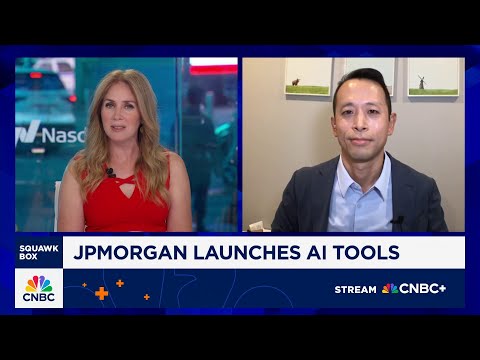
    JPMorgan Chase is taking a major step in integrating artificial intelligence across its operations by providing 250,000 employees with access to LLM Suite, a platform that connects staff to large language models from OpenAI and Anthropic. The initiative aims to move beyond simple chatbots toward autonomous AI agents that can handle complex tasks across multiple business functions.

    Derek Waldron, Chief Analytics Officer at JPMorgan, described the vision as one where the bank becomes a fully AI-connected enterprise. In a demonstration, Waldron showed how the platform can create an investment banking presentation in 30 seconds—work that previously required hours from junior bankers.

    Launched in 2023, LLM Suite initially offered OpenAI’s models for drafting emails and summarizing documents. It now incorporates Anthropic’s Claude model as well. About half of the 250,000 employees with access use it daily, and the platform is updated every eight weeks with new data from the bank’s business units.

    Key capabilities include drafting confidential merger and acquisition documents, providing personalized AI assistants for every employee, automating routine back-office processes, and using AI agents to handle complex multi-step tasks autonomously.

    Waldron acknowledged that while AI will empower some workers, others face displacement as processes no longer require human involvement. In May, the head of JPMorgan’s consumer banking division told investors that operations staff would fall by at least 10% over five years due to AI deployment. Senior Wall Street executives have discussed changing the ratio of junior bankers to senior managers from 6-1 to 4-1 as AI handles more work.

    Despite the rapid deployment, Waldron noted it will take years to fully connect AI models with the bank’s data and software, which has an annual technology budget of $18 billion. An MIT report from July found that most corporations had not generated returns on AI projects despite over $30 billion in investments.