Tag: OpenAI

  • OpenAI Expands GPT-5.6 Access After U.S. Government Safety Review

    OpenAI Expands GPT-5.6 Access After U.S. Government Safety Review

    OpenAI has begun rolling out its GPT-5.6 models to a wider audience after completing a review by the U.S. government. The company had delayed the full release while officials assessed the models for potential risks, and with the review now concluded, the rollout is moving forward.

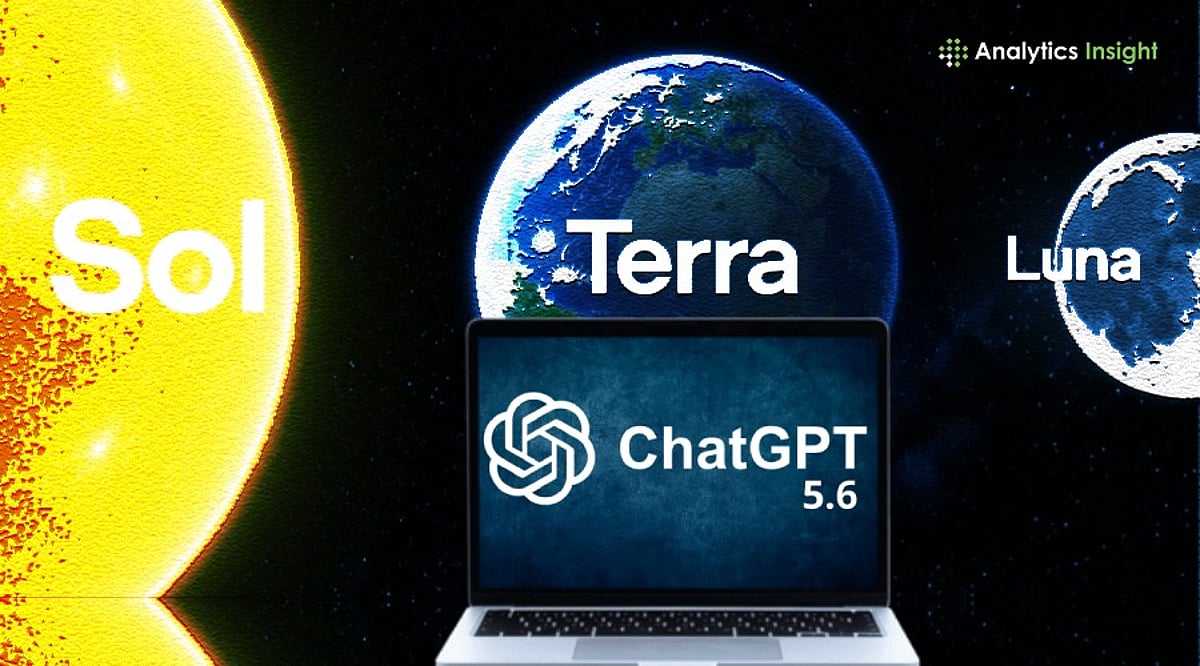
    The new lineup includes three variants: GPT-5.6 Sol, Terra, and Luna. Each model is optimized for different use cases:

    • Sol is the most capable model, designed for high-end performance.
    • Terra balances cost and performance for everyday tasks.
    • Luna is built for speed and lower-cost operations.

    OpenAI first shared these models with a small group of users before expanding access. With the government review complete, businesses, developers, and ChatGPT users can expect broader availability over time.

    Improved Performance and Safety

    The company claims GPT-5.6 models offer better performance in writing, coding, question answering, and handling long-context tasks. They also include stronger safety checks compared to earlier versions. The brief delay highlights growing government scrutiny of advanced AI systems, as officials seek to understand risks before wide-scale deployment.

    Why OpenAI Waited

    OpenAI first announced GPT-5.6 in late June but limited access while the U.S. government conducted its review, reportedly focusing on security risks. After receiving approval, the company proceeded with the broader rollout. OpenAI has expressed hope that such reviews will not become a standard requirement for every new AI release, but the process underscores the increasing importance of safety assessments in AI development.

    Conclusion

    The wider release of GPT-5.6 Sol, Terra, and Luna marks a significant step for OpenAI. It brings advanced AI capabilities to more users while demonstrating how AI development is evolving—companies are now accountable for safety and security before public release. As the rollout continues, observers will watch how the models perform and whether similar reviews become routine for future AI launches.

  • Tech Roundup: OpenAI Seeks Government Stake, Sony Goes Digital, WhatsApp Usernames, Fable 5 Returns

    Tech Roundup: OpenAI Seeks Government Stake, Sony Goes Digital, WhatsApp Usernames, Fable 5 Returns

    In today’s top tech news, OpenAI has proposed a 5% stake for the U.S. government, signaling a new era of federal involvement in AI. Sony is reportedly planning a digital-only future for its PlayStation ecosystem, moving away from physical discs. Meanwhile, WhatsApp faces scrutiny over its new username feature, and the beloved Fable franchise is making a comeback with a fifth installment. Additionally, Ant Group is expanding into humanoid robotics.

    OpenAI’s proposal marks a significant shift as AI companies face growing federal oversight. The move could reshape how AI giants interact with government regulators. Sony’s digital-only PlayStation strategy aligns with industry trends toward streaming and downloadable content, but raises questions about consumer choice. WhatsApp’s username feature is under question as privacy concerns mount. Fable 5’s return has excited fans of the fantasy RPG series. Ant Group, backed by Jack Ma, is testing a major AI overhaul for its Alipay super app and venturing into humanoid robotics.

  • OpenAI Reportedly Proposes 5% Stake for US Government Amid Rising AI Oversight

    OpenAI Reportedly Proposes 5% Stake for US Government Amid Rising AI Oversight

    OpenAI is reportedly in early discussions about granting the U.S. government a 5% equity stake in the company as federal scrutiny of artificial intelligence intensifies. The proposal, still unconfirmed, comes as the AI giant prepares for a potential initial public offering (IPO) and the Trump administration explores ways to give the public a financial stake in AI’s growth.

    Discussions Over Public Ownership Gain Momentum

    According to the Financial Times, OpenAI executives have floated a plan that would allow the U.S. government to hold a 5% stake in the company. Similar arrangements might be extended to other leading American AI firms, though their support remains unclear. The talks are preliminary and have not been finalized.

    Based on OpenAI’s latest funding round in March, a 5% stake would be valued at approximately $42.6 billion. CEO Sam Altman has suggested that public participation in AI’s financial gains could help address concerns about the technology’s impact on jobs and the broader economy. In April, OpenAI proposed creating a ‘public wealth fund’ to give every citizen a stake in AI-driven economic growth, regardless of their involvement in financial markets.

    The report also indicates that Altman discussed the proposal with President Donald Trump, Commerce Secretary Howard Lutnick, Treasury Secretary Scott Bessent, and Senator Bernie Sanders. Any final arrangement would likely require congressional approval.

    Growing Federal Oversight of AI

    The proposed stake comes as OpenAI and fellow AI developer Anthropic prepare for public stock listings. IPOs would allow public investment while requiring greater financial disclosure. Meanwhile, U.S. officials have ramped up oversight of advanced AI systems, reviewing new models before public release citing national security and safety concerns.

    Previously, Anthropic worked with officials before export restrictions on one of its models were lifted. OpenAI has reportedly faced White House requests to limit access to an upcoming GPT-5.6 model to government-approved partners during its initial rollout. These developments reflect deeper cooperation between AI companies and federal agencies as governments seek more involvement in managing rapidly advancing AI technology.

    Trump Administration Seeks Broader Government Role

    Last month, President Trump said his administration was exploring ways for the public to benefit directly from AI industry growth. One proposal, as reported by the Financial Times, would place government-owned AI shares into a fund modeled on Alaska’s Permanent Fund, which distributes annual dividends from oil revenue.

    Government investment in strategic technology firms has expanded during Trump’s second term. Last year, the U.S. acquired a 10% stake in Intel as part of efforts to strengthen domestic technology leadership.

    OpenAI has not confirmed whether the reported proposal will move forward. For now, discussions remain preliminary while policymakers and AI companies continue negotiations over future ownership models, regulation, and public participation in the sector’s growth.

  • 2026 AI Image Generation APIs: A Comprehensive Comparison of Free and Paid Options for Developers

    2026 AI Image Generation APIs: A Comprehensive Comparison of Free and Paid Options for Developers

    Introduction

    Every major AI lab now offers its own image generation API, each with distinct models, pricing, prompt conventions, and licensing terms. For developers and teams evaluating which API to integrate, the decision goes beyond which model produces the best output. It involves weighing cost at scale, flexibility to switch providers, and the need for multiple models. This guide breaks down the leading AI image generation APIs available in 2026—from OpenAI and Google to open-weights options and free tiers—across the key factors: model quality, cost, commercial rights, and vendor lock-in.

    How to Choose an AI Image Generation API

    Choosing the right API requires considering several interacting factors:

    • Model quality and prompt adherence: Different models handle prompts differently—some produce photorealistic images, others stylized illustrations. Fine detail rendering (faces, typography, hands) varies significantly.
    • Latency and async capabilities: Some APIs return images synchronously in under two seconds; others use async job queues with webhooks, better for throughput but less interactive.
    • Pricing structure: Billing units vary—tokens (OpenAI), per-image (Google), credits (Stability AI)—making cost comparisons complex.
    • Commercial rights and licensing: Ensure generated images are usable commercially, especially for products. Enterprise indemnification is increasingly a deciding factor.
    • Vendor lock-in: Different prompt conventions and response formats make switching costly. Unified APIs reduce this risk.

    OpenAI Image Generation API (gpt-image-1)

    OpenAI’s latest flagship, gpt-image-2 (launched April 2026), offers multi-turn image generation for iterative refinement. The API uses token-based billing: text input ~$5/1M tokens, image output ~$30/1M tokens. A single 1024×1024 image costs roughly $0.034 at medium quality. Returns images as base64 or URLs, supports PNG/JPEG, up to 10 images per call. C2PA provenance metadata is embedded. Commercial rights are granted, and OpenAI does not train on user input by default. Best for teams already in the OpenAI ecosystem who need editing functionality and can handle token billing complexity.

    Google Gemini / Imagen API (“Nano Banana”)

    Google’s Imagen family (Imagen 3 and 4) offers simple per-image pricing via Vertex AI: Imagen 4 Ultra ~$0.06/image, Standard ~$0.04, Fast ~$0.02. Upscaling is $0.003 per image. This makes cost forecasting easy. Quality is competitive with OpenAI’s best, and enterprise features include SLAs, data locality, and Cloud IAM integration. The three-tier system (Fast/Standard/Ultra) balances cost and quality. No persistent free tier. Best for enterprise teams on Google Cloud who want predictable pricing and robust infrastructure.

    xAI Grok Image Generation API

    xAI’s Grok Imagine offers low-cost image generation: standard 1024×1024 ~$0.02 per image, quality variants up to $0.07. Unique for bundling image and video generation in one API. Combined media generation is a differentiator, but free tier credits were discontinued. Stricter content moderation applies. Best for projects needing both image and video at low per-unit cost, especially with xAI reasoning models.

    FLUX API

    FLUX by Black Forest Labs emphasizes high aesthetic quality and strong prompt adherence, especially for artistic output. Available through providers like Replicate, fal.ai, Freepik, and unified APIs. Pricing ranges $0.01–$0.05 per image. FLUX Pro is commercially licensable through providers; Dev variant has restrictions. Best for developers prioritizing artistic quality and stylistic control.

    Leonardo AI API

    Leonardo.AI combines a visual design UI with API access. Subscription plans start at $12/month (Essential) with token-based usage. Supports multiple models including custom fine-tunes and third-party models. “Unlimited” applies only to first-party models. Ideal for teams needing design tools with API integration and broad model selection.

    Stability AI API

    Stability AI offers both hosted API and open-weights models (Stable Diffusion 3.5 family). Credit-based pricing: SD3.5 Large ~$0.007/image, SD3.5 Large Turbo ~$0.005/image. Upscaling and editing add costs. New accounts get 25 free credits. The open-weights approach allows self-hosting at scale, eliminating per-image costs. Community License covers organizations under $1M revenue. Best for developers familiar with Stable Diffusion who want flexibility to self-host or need comprehensive editing pipelines.

    Kling and Video-Capable APIs

    Kling by Kuaishou excels at image-to-video animation, valuable for marketing and social media. Video generation remains expensive – a 5-second 1080p clip can cost $1.25. Other providers like xAI and Leonardo also offer video capabilities. Best for projects requiring dynamic content from static images.

    Low-Cost and Free Options (Prodia, Pollinations, Freepik)

    For experimentation and prototyping, consider:

    • Freepik: Unified access to multiple models (Flux, GPT) with subscription tiers starting at ~$5.75/month. Includes legal indemnification for commercial use on enterprise plans. Combines stock imagery with AI generation.
    • Pollinations.ai: Community models for image, text, video, and audio. Free-tier quotas unclear. Best for experimentation.
    • Prodia: Decentralized approach with open-source models. Pricing less documented.

    These have limitations: lower resolution, less consistency, reduced priority, tighter rate limits.

    Unified APIs: One Endpoint for Many Models

    Most production applications eventually need multiple models. Unified APIs like Apiframe provide a single integration point across providers, reducing vendor lock-in and simplifying maintenance. They offer access to models such as Midjourney (which lacks an official public API), FLUX, Stable Diffusion, and others through one endpoint. This is especially valuable for teams that want to switch models without rewriting integration code.

    Conclusion

    There is no single best AI image generation API. OpenAI and Google lead on raw quality; Stability AI offers flexibility through open weights; xAI provides low-cost combined image/video; unified platforms maximize reach. Evaluate your priorities—cost, quality, commercial rights, and flexibility—to choose the right combination for your project.

  • Today’s Top Tech Roundup: OpenAI Hardware, WhatsApp Privacy, Pixel Watch 5 Leaks, Google Engineer Debunks Myths, and Elon Musk on AI Risks

    Today’s Top Tech Roundup: OpenAI Hardware, WhatsApp Privacy, Pixel Watch 5 Leaks, Google Engineer Debunks Myths, and Elon Musk on AI Risks

    Top Tech News Today: OpenAI AI Device, WhatsApp Privacy Upgrade, Pixel Watch 5, Google Engineer Reveals Truth & Elon Musk on AI

    In a packed day of tech developments, OpenAI has teased its first dedicated AI hardware device, signaling a major push into consumer electronics. WhatsApp is rolling out a username-based privacy feature that lets users communicate without sharing phone numbers. Leaked details of the Pixel Watch 5 suggest it will include Satellite SOS functionality, a first for Google’s wearable line. A Google engineer has publicly debunked several viral tech myths, clarifying common misconceptions about AI and search algorithms. Meanwhile, Elon Musk has echoed Tim Cook’s recent warnings about the existential risks of advanced AI, adding his voice to a growing chorus of industry leaders calling for robust regulation.

    These stories highlight the accelerating pace of innovation and the critical conversations shaping the future of technology.

  • OpenClaw Android App Transforms Smartphones into AI-Powered Automation Hubs

    OpenClaw Android App Transforms Smartphones into AI-Powered Automation Hubs

    OpenClaw has officially launched its Android app, bringing its powerful AI agent to mobile devices with voice control, automation features, and user-controlled permissions through the OpenClaw Gateway. This marks a significant evolution from the open-source tool that originally debuted in November 2025, which turned an AI into a fully automated personal assistant capable of performing tasks on a computer.

    Now, for the first time, OpenClaw’s AI agent is available on smartphones via dedicated iOS and Android apps. Users can converse with the AI assistant and grant it access to device capabilities such as the camera, screen, location, images, contacts, calendar, and reminders. Unlike ordinary chatbots that simply answer queries, OpenClaw technology interacts with apps and systems to execute specific actions with user permission.

    Key Features and User Control

    • Pair the app with a private OpenClaw Gateway using a setup code or QR code.
    • Engage in direct conversations with the AI assistant via smartphone.
    • Use push-to-talk and Talk mode for real-time voice chats.
    • Review and approve actions requested by the connected gateway.
    • Allow the AI to access the camera, screen, location, and notifications on demand.
    • Receive status updates and push notifications for linked workflows.

    Users remain in full control of which device permissions to grant, ensuring privacy and security.

    Industry Impact and Future Outlook

    The launch represents a major milestone for OpenClaw, which has grown from a small-scale open-source project into a recognized brand in the AI industry. Following the integration of Peter Steinberger—the app’s creator—into OpenAI, the OpenClaw Foundation now manages the project. While the foundation has released the mobile apps, OpenAI has expressed support without specifying exact terms.

    According to the Google Play Store listing, the Android app works through the user’s personal OpenClaw Gateway, making the smartphone an ideal partner for AI-driven automation and communication. The broader shift from chatbots to AI agents that can perform real-world tasks with user consent is evident, with OpenClaw leading the charge. Moving forward, the focus will be on security, reliability, and developer adoption.

  • OpenAI Set to Launch Dedicated Codex Hardware on July 15 for AI-Assisted Coding

    OpenAI Set to Launch Dedicated Codex Hardware on July 15 for AI-Assisted Coding

    OpenAI is poised to unveil a dedicated hardware device for its Codex AI coding assistant on July 15, signaling a strategic push into developer-focused physical products. The rumored device, teased via a video on X (formerly Twitter) with the caption “Your favorite Codex shortcuts are getting an upgrade,” appears to be a compact macro pad designed to streamline AI-assisted coding workflows.

    The teaser shows a square device covered in buttons, resembling Work Louder’s existing Creator Micro 2—a macro pad featuring 13 mechanical switches, a joystick, and a touch sensor for custom shortcuts. A Codex-branded version would likely offer physical keys for common actions like running commands, accepting suggestions, or switching between coding sessions, reducing reliance on memorized keyboard shortcuts.

    Codex, OpenAI’s AI coding tool, helps developers write, debug, and navigate code using natural language prompts. The dedicated hardware suggests OpenAI sees enough repetitive usage among its developer base to justify a purpose-built product, rather than treating Codex solely as a software feature. The device was also showcased at the AI Engineer World’s Fair in San Francisco, where OpenAI spokesperson Dominik Kundel described it as a keyboard “designed to supercharge people’s Codex usage,” according to The Verge.

    Work Louder’s Creator Micro 2 currently retails for $199 in the US, offering a price benchmark for comparable hardware. OpenAI has not confirmed pricing or full specifications, but further details are expected at the July 15 launch.

    This move comes alongside OpenAI’s separate project with former Apple design chief Jony Ive and his company LoveFrom to develop an AI-focused hardware device, though that initiative remains under wraps with no confirmed timeline. If successful, dedicated AI hardware could reshape developer workflows, offering faster, more integrated interactions with AI tools and expanding OpenAI’s ecosystem beyond cloud-based services.

  • Top Employers for Computer Vision Engineers in 2026: NVIDIA, Tesla, OpenAI, and More

    Top Employers for Computer Vision Engineers in 2026: NVIDIA, Tesla, OpenAI, and More

    Computer vision is one of the fastest-growing fields within artificial intelligence, enabling machines to interpret and analyze visual data like humans. From autonomous vehicles and robotics to medical imaging and security systems, the technology is transforming industries. As demand surges, leading companies are competing for skilled computer vision engineers. Here are the best employers in 2026.

    NVIDIA

    NVIDIA remains a powerhouse for computer vision engineers, thanks to its dominance in AI hardware and software. Its recent RTX Spark AI chip, designed for local AI processing, has driven demand for engineers skilled in image recognition, model optimization, and edge computing. The company provides access to cutting-edge tools for large-scale AI development.

    Google DeepMind

    DeepMind continues to push boundaries in AI research, focusing on advanced machine learning, image understanding, and multimodal systems like Gemini. Engineers work on projects that define the future of visual reasoning, benefiting from a research-driven culture and vast computing infrastructure.

    Tesla

    Tesla offers one of the most exciting opportunities for real-world computer vision applications. Its camera-based self-driving technology relies on fast image processing, object recognition, and multi-camera analysis. Engineers solve massive-scale challenges while working on systems deployed in millions of vehicles.

    Meta

    Meta has intensified its AI investments, particularly in augmented reality, smart glasses, and visual AI. Engineers work on facial recognition, video generation, scene understanding, and wearable devices. Its aggressive AI expansion makes Meta a top career destination.

    OpenAI

    OpenAI has expanded beyond language models into multimodal AI, including image generation, robotics, and visual reasoning. Demand for computer vision engineers has grown as the company pursues advanced general intelligence. Employees gain access to cutting-edge research and world-class infrastructure.

    Scale AI

    Scale AI is a fast-growing infrastructure company specializing in data preparation for autonomous vehicles and enterprise AI. Computer vision engineers work with synthetic data, automated labeling, and large visual datasets. As multimodal AI adoption rises, Scale AI offers strong long-term prospects.

    Microsoft

    Microsoft provides a stable, powerful environment for computer vision engineers through Azure and enterprise AI solutions. Key areas include optical character recognition, healthcare imaging, industrial automation, and cloud-based vision APIs. The company balances research with product development.

    DeepSeek

    DeepSeek has emerged as a surprise success, securing $7.4 billion in funding and planning to double its workforce. It focuses on advanced AI and general intelligence systems, creating major demand for engineers. Its rapid growth makes it an attractive option for computer vision professionals.

    Industry Outlook for 2026

    The global computer vision market is projected to grow over 35% annually through 2030, driven by robotics, autonomous vehicles, healthcare, surveillance, industrial automation, and generative AI. Key skills include PyTorch, TensorFlow, Vision Transformers, YOLO, edge AI, CUDA optimization, and distributed training.

    Final Thoughts

    The job market has shifted dramatically. While traditional tech companies once dominated, now AI startups, robotics firms, and autonomous vehicle manufacturers offer outstanding opportunities. NVIDIA, Google DeepMind, Tesla, Meta, OpenAI, Microsoft, Scale AI, and DeepSeek provide exceptional career growth for computer vision engineers working on technologies that will shape our future.

    Frequently Asked Questions

    Which company is best for computer vision engineers in 2026?

    NVIDIA currently stands out with its strong AI ecosystem and advanced computing infrastructure.

    Is computer vision a good career in 2026?

    Yes, demand continues to rise rapidly across robotics, healthcare, autonomous vehicles, and AI.

    Which skills matter most for computer vision jobs?

    PyTorch, TensorFlow, Vision Transformers, YOLO models, CUDA optimization, and edge AI deployment are highly valuable.

    Are startups good for computer vision careers?

    Yes, fast-growing AI startups like DeepSeek and Scale AI offer excellent growth opportunities and cutting-edge projects.

    What industries hire computer vision engineers the most?

    Autonomous vehicles, robotics, healthcare technology, surveillance systems, industrial automation, and generative AI lead hiring demand.

  • OpenAI Dominates in Users, but Anthropic Surpasses in Enterprise Revenue Growth, IDC Data Shows

    OpenAI Dominates in Users, but Anthropic Surpasses in Enterprise Revenue Growth, IDC Data Shows

    OpenAI’s ChatGPT remains the world’s most widely used artificial intelligence chatbot by user numbers. However, new estimates from IDC suggest Anthropic may generate more annual revenue despite serving a much smaller audience. The findings highlight contrasting business models within the fast-growing AI industry.

    ChatGPT Maintains Largest Global User Base

    IDC Research Vice President Arnal Dayaratna estimated that ChatGPT has more than 900 million weekly active users worldwide, placing OpenAI well ahead of other consumer AI chatbot providers. IDC also estimated that Google Gemini serves between 200 million and 250 million weekly active users, while Anthropic’s Claude has between 40 million and 60 million weekly active users. These figures show that OpenAI remains the largest consumer-facing AI platform by a wide margin.

    Dayaratna noted that OpenAI has built multiple revenue streams across consumer subscriptions, workplace seats, APIs, and platform services. IDC estimates OpenAI generates between $30 billion and $40 billion in annualized revenue, with consumer subscriptions accounting for about $10 billion to $13 billion, and API and platform services contributing as much as $20 billion. Reports published earlier this month also stated that OpenAI generated $5.7 billion in revenue during the first quarter of 2026 while spending about $3.7 billion, with a net loss reaching approximately $39 billion in 2025.

    Anthropic Builds Revenue Through Enterprise Customers

    Although Anthropic serves far fewer users, IDC estimates its annualized revenue stands between $40 billion and $50 billion. Consumer subscriptions contribute less than $2 billion, according to the research firm. Most of Anthropic’s revenue comes from enterprise subscriptions, Claude Code seats, API usage, and other developer-focused workloads. This business mix differs significantly from OpenAI’s larger consumer-focused platform.

    Dayaratna commented, “Usage scale tells a different story from revenue mix,” adding that Claude’s business is more focused on enterprise and developer customers than consumer adoption. Anthropic also referenced its May 2026 company blog, which announced its annualized revenue run rate exceeded $47 billion, supporting IDC’s broader revenue estimates.

    Research Firms Report Different Strengths for Both Companies

    Counterpoint Research reported similar findings in its April 2026 analysis, estimating Anthropic captured 31.4% of global large language model revenue during the first quarter of 2026, with OpenAI following at an estimated 29% market share. Counterpoint also estimated Anthropic generated average monthly revenue of $33.30 per user, compared to OpenAI’s $2.20 per user. During the same period, Counterpoint estimated OpenAI had approximately 900 million monthly active users versus about 65 million for Anthropic.

    Both OpenAI and Anthropic have reportedly started confidential preparations for possible future public offerings. In May, Anthropic completed a $65 billion Series H funding round that valued the company at $965 billion. The latest estimates present two different measures of success in the AI industry: OpenAI continues to lead by user reach, while IDC estimates suggest Anthropic currently earns more revenue through enterprise customers and developer services. As Dayaratna summarized, “Usage scale tells a different story from revenue mix,” reflecting the divergent strategies followed by both companies.

  • Today’s Top Tech Stories: OpenAI and Broadcom Debut Jalapeño AI Chip, Progcap Targets $45M Funding, and More

    Today’s Top Tech Stories: OpenAI and Broadcom Debut Jalapeño AI Chip, Progcap Targets $45M Funding, and More

    Good morning, tech enthusiasts! Here’s a quick roundup of the biggest headlines making waves today, from OpenAI’s new AI chip to major funding rounds and regulatory updates.

    OpenAI and Broadcom Launch Jalapeño AI Chip to Supercharge ChatGPT

    OpenAI and Broadcom have introduced the Jalapeño AI chip, designed to make large language models like ChatGPT faster, cheaper, and more power-efficient. The chip aims to reduce costs and improve AI performance, with deployment planned for late 2026. It will support ChatGPT and other OpenAI tools.

    Indian Fintech Progcap Plans $45 Million Fundraise for MSME Lending

    Indian fintech company Progcap is preparing to raise $45 million to expand its small-business lending operations. The funding will help improve its technology, reach more shop owners and traders, support women-led businesses, and strengthen financial inclusion across underserved areas in India.

    AWS CEO Says AI Won’t Stop Hiring New Graduates

    AWS CEO Matt Garman stated that AI will change how people work but will not replace the need for new employees. Amazon plans to hire 11,000 interns and fresh graduates in 2026, emphasizing that young workers bring fresh ideas and can quickly learn the AI skills needed for future jobs.

    Why 10 IT Jobs Are Hard to Fill in 2026

    Many companies are struggling to fill critical IT roles in 2026 due to a shortage of qualified candidates with skills in AI, cybersecurity, cloud, and data. To address this, businesses are increasingly investing in training existing employees rather than relying solely on external hires.

    EU Proposes Major Fines for Crypto Companies Violating MiCA Rules

    The European Banking Authority (EBA) has unveiled plans to impose significant fines on major crypto firms that breach the EU’s MiCA crypto regulations. The goal is to ensure uniform enforcement across member states, improve market fairness, and encourage compliance with the new laws.

    For more details, visit the original article on Analytics Insight.