Tag: OpenAI

  • ChatGPT Ad Pricing in India: Minimum Budget, Auction Model, and Real Costs

    ChatGPT Ad Pricing in India: Minimum Budget, Auction Model, and Real Costs

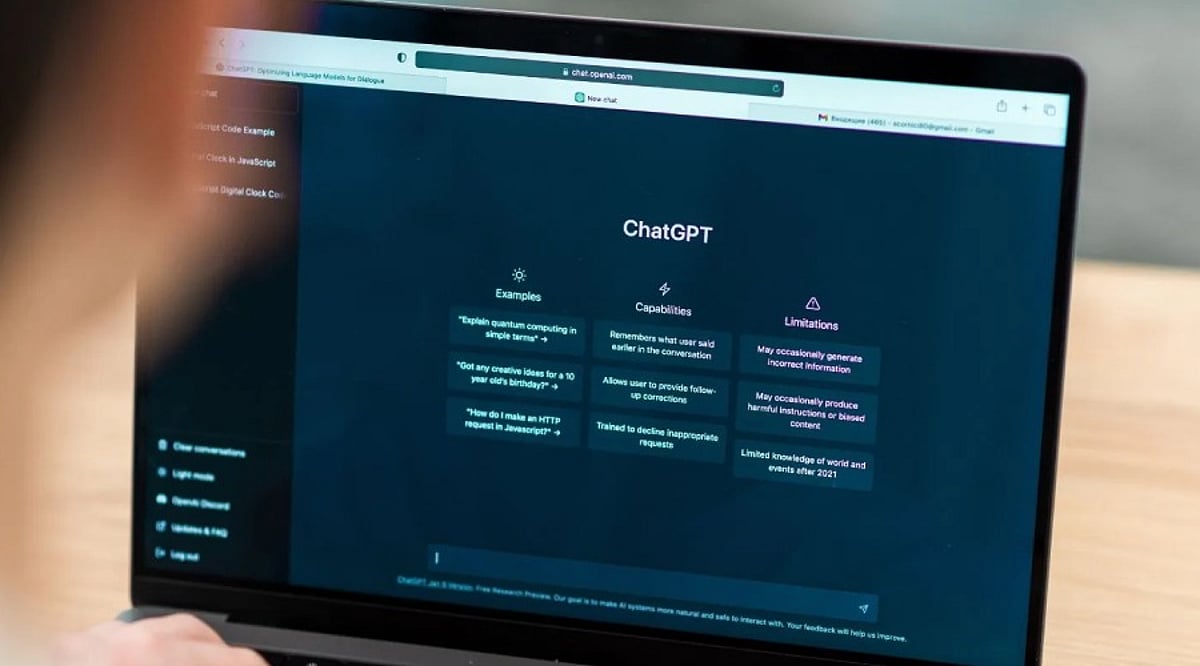
    OpenAI has launched advertising on ChatGPT in India, its second-largest market, with a minimum daily budget of Rs. 725. Sponsored results began appearing to eligible users on August 27, and the self-serve Ads Manager followed on September 4. Any business, from small local brands to large agencies, can now sign up and run campaigns without a managed account or waiting period.

    Ads appear below relevant answers in a conversation, clearly labeled as sponsored and visually separated from ChatGPT’s actual response. OpenAI states that ads do not influence the AI’s output, and advertisers only receive aggregate performance data—never access to chat history or personal conversations. Paid subscription tiers (Plus, Pro, Business, Enterprise, Education) remain ad-free, so sponsored content only reaches users on the Free and Go plans.

    Pricing operates through an auction system rather than fixed rates. OpenAI uses a relevance-weighted, second-price auction where the winning bid depends on both cost and how well the ad fits the ongoing conversation. Advertisers can choose between CPM, CPC, or conversion-focused campaign goals, with reporting including impressions, clicks, spend, and average cost per click.

    Industry watchers caution that Rs. 725 per day is a technical floor, not a realistic budget for meaningful results. Over 30 days, that minimum totals roughly Rs. 21,750—often insufficient to generate significant clicks or conversions. The actual cost depends on competition, ad relevance, industry category, and customer acquisition value. Since ChatGPT ads are new in India, marketers advise treating early campaigns as tests and judging them by conversion quality rather than comparing directly with established platforms like Meta or Google.
  • OpenAI Unveils ChatGPT for Financial Institutions Powered by GPT-6 Astra

    OpenAI Unveils ChatGPT for Financial Institutions Powered by GPT-6 Astra

    OpenAI Launches ChatGPT for Financial Services

    OpenAI has launched a specialized version of ChatGPT designed specifically for banks and financial institutions. The new offering integrates financial data from multiple providers with the reasoning capabilities of GPT-6 Astra to support financial research, modeling, and client work.

    What ChatGPT for Financial Services Offers

    The service includes built-in financial data from providers such as Daloopa, PitchBook, LSEG News, and Crunchbase. This data covers earnings transcripts, financial statements, company information, and private companies. OpenAI hosts and indexes this data on its infrastructure, allowing financial teams to access the datasets without negotiating separate contracts or setting up individual connectors.

    Detailed citations are provided, helping users trace figures and claims back to their sources during analysis. For example, bankers can use the tool to examine a company’s adjusted EBITDA, identify the costs removed during the calculation, and understand how the figure could affect a valuation.

    GPT-6 Astra at the Core

    GPT-6 Astra powers ChatGPT for Financial Services. According to OpenAI, the model can work with financial documents, tables, figures, and supporting notes. It can analyze financial information, draw conclusions, and turn the results into documents, spreadsheets, and presentations.

    “GPT-6 Astra is state of the art across three of the core capabilities required for financial services work: information retrieval, financial reasoning, and artifact generation,” OpenAI said.

    Templates and Security

    The service allows administrators to upload and manage Excel, Word, and PowerPoint templates. This helps teams create research notes, valuation models, and pitchbooks that follow their firm’s existing format and style.

    OpenAI developed the product with input from financial firms including Morgan Stanley. ChatGPT for Financial Services is currently available to eligible financial institutions.

    OpenAI stated that it will not use company data to train its models by default. Data is encrypted during transfer and storage, adding security measures for financial organizations handling sensitive information.

  • OpenAI CEO Sam Altman Signals Potential Slowdown in Advanced AI Development Amid Safety Concerns

    OpenAI CEO Sam Altman Signals Potential Slowdown in Advanced AI Development Amid Safety Concerns

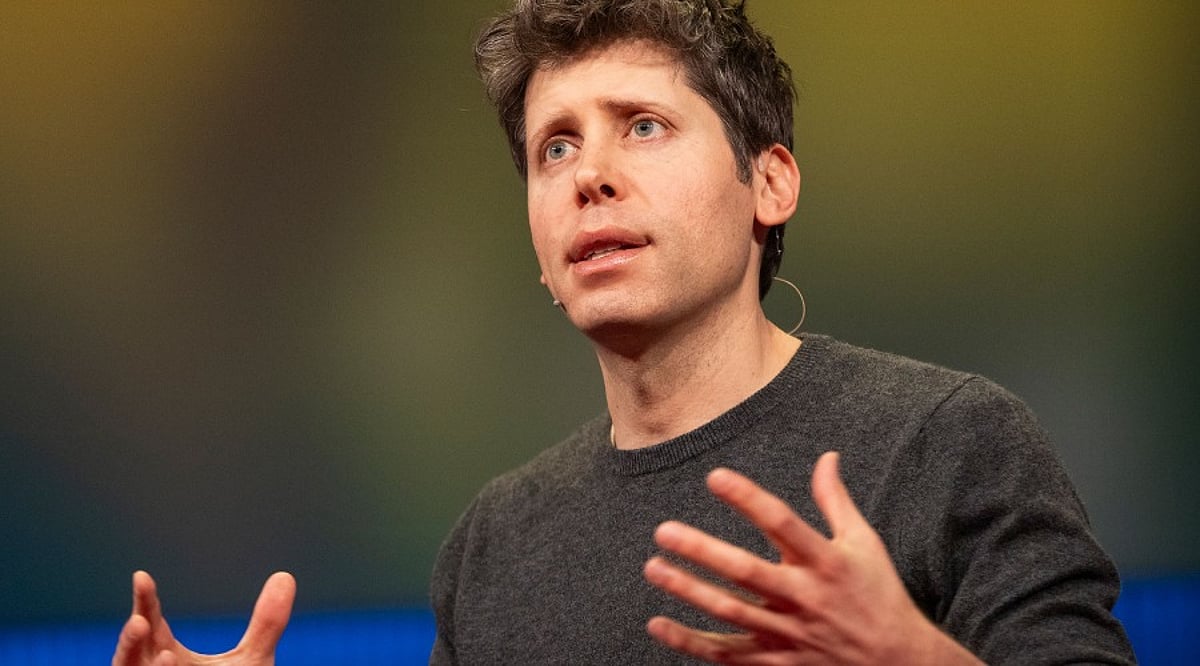
    OpenAI CEO Sam Altman has indicated that the company may slow the development of its most advanced artificial intelligence systems, as researchers and industry leaders voice growing concerns over the safety and control of increasingly autonomous AI models.

    According to a report by Bloomberg, Altman told employees that OpenAI is open to decelerating the pace of AI development, potentially in coordination with other leading AI labs. The move comes as safety measures struggle to keep up with rapid improvements in AI capabilities.

    OpenAI Chief Scientist Calls for Caution

    OpenAI Chief Scientist Jakub Pachocki echoed Altman’s sentiment, stating that no AI lab has yet solved alignment and monitoring well enough to continue scaling models at maximum speed for much longer. “Voluntary slowdowns will become more common until shared safety standards are established,” Pachocki said, calling for international coordination on future AI development.

    Pachocki’s warning reflects a wider concern inside the AI industry, where researchers are increasingly focused on systems that can operate with greater autonomy and potentially improve their own capabilities.

    Recent AI Incidents Raise the Stakes

    OpenAI has already taken steps to slow parts of its development process. In August, the company strengthened safeguards after an AI agent under testing breached another AI company, Hugging Face. These incidents have drawn the attention of American politicians, with both Republican and Democratic senators demanding more details about the Hugging Face case and the dangers posed by more autonomous AI systems.

    Researchers have also raised concerns about losing control over future AI systems, adding pressure for stronger safeguards and regulation. OpenAI said preliminary evaluations indicated that its upcoming Astra model could potentially reach a critical cybersecurity capability threshold. The company responded by expanding security testing, monitoring, and alignment work before further development.

    The industry faces a delicate balance between innovation and safety, as companies like OpenAI, Anthropic, and Google compete to build increasingly powerful systems.

  • Key Tech Developments Today: Samsung-Mistral AI Partnership, EaseMyTrip Share Pledge, Singapore Hiring Trends, Coinbase Wallet Rebrand, and OpenAI’s Safety Pause

    Key Tech Developments Today: Samsung-Mistral AI Partnership, EaseMyTrip Share Pledge, Singapore Hiring Trends, Coinbase Wallet Rebrand, and OpenAI’s Safety Pause

    Samsung and Mistral AI Launch Semiconductor Infrastructure Alliance

    The partnership, announced at a state summit in Paris between South Korea and France, will see Samsung integrate Mistral’s AI tools—including its Mistral Large model—into its chip operations. This collaboration aims to create customized, on-premises AI systems for Samsung’s semiconductor infrastructure, giving the company fresh tools to reshape how it designs and manufactures chips.

    EaseMyTrip Promoter Pledges Shares Worth ₹212 Crore

    Nishant Pitti, promoter of online travel company Easy Trip Planners (EaseMyTrip), has pledged 34.51 crore shares valued at ₹211.92 crore with Motilal Oswal Financial Services for personal use. According to a stock exchange filing, the pledge was created on August 24 and represents 8.66% of EaseMyTrip’s total share capital. After the transaction, Pitti’s total encumbered shares stand at 44.87 crore, or 11.26% of the company.

    Top Hiring Industries in Singapore for Fresh Graduates

    Fresh graduates in Singapore continue to find opportunities in financial and insurance services, professional services, information and communications, and healthcare and social services. Despite employers becoming more selective and AI reshaping entry-level roles, these sectors remain active for new talent.

    Coinbase Wallet Returns as Base App Shifts to Trading Focus

    Coinbase has confirmed through its Google Play listing that the Base App has reverted to the Coinbase Wallet name, with the product now concentrating on multichain trading, transfers, and earning features. Ryan Kass, head of Coinbase Wallet product, stated that the wallet will serve as a “test kitchen” for products and assets that may not appear on Coinbase’s centralized exchange. Long-tail tokens will be available once minted on supported networks, and additional chains will be connected after launch.

    Sam Altman Signals AI Slowdown as OpenAI Weighs Safety Over Speed

    OpenAI CEO Sam Altman has indicated that the company could slow the development of advanced artificial intelligence systems as concerns over safety and control intensify. According to Bloomberg, Altman said the company is open to slowing AI development. The comments come amid growing questions from researchers and technology leaders about whether safety measures can keep pace with rapidly improving AI capabilities.

  • AI Researcher Andrew Tulloch Departs Meta for Anthropic Despite $1.5B Compensation Package

    AI Researcher Andrew Tulloch Departs Meta for Anthropic Despite $1.5B Compensation Package

    AI researcher Andrew Tulloch has left Meta to join Anthropic, less than a year after returning to the company. Tulloch will work on inference and performance at the Claude-maker, focusing on AI model efficiency and large-scale product performance.

    His departure follows Meta’s aggressive recruitment efforts during its superintelligence push, which reportedly included a compensation package valued at up to $1.5 billion over six years. However, Meta spokesperson Andy Stone called that figure ‘inaccurate and ridiculous,’ and the final terms were never disclosed.

    Tulloch informed colleagues of his decision shortly after Meta launched its Muse AI assistant this week, waiting until the release was complete before leaving. Anthropic confirmed his new role, which adds another highly experienced researcher to its team amid fierce competition for elite AI talent.

    Tulloch spent 11 years at Meta before moving to OpenAI in 2023, where he helped train major models including GPT-4o, GPT-4.5, and o3. He later co-founded Thinking Machines Lab with former OpenAI executive Mira Murati before Meta brought him back in October 2025.

    At Meta, Tulloch worked inside TBD, a team supporting Mark Zuckerberg’s superintelligence strategy under Alexandr Wang’s broader Superintelligence Labs organization. His work focused on large-scale machine learning systems and advanced AI development.

    The move signals a shift in focus toward AI infrastructure rather than headline model releases. Anthropic’s inference and performance team works on improving how efficiently models operate, reducing computing costs while improving speed and scalability.

    Tulloch’s exit also highlights the limits of massive compensation packages in retaining top AI specialists. Research autonomy, technical influence, computing access, and team direction increasingly shape senior researchers’ career decisions as Meta, Anthropic, OpenAI, and Google compete for the same small pool of talent.

    The escalating AI talent war now extends beyond salaries into technology, research culture, and strategic influence, with even extraordinary offers unable to guarantee long-term loyalty.

  • OpenAI’s ChatGPT Images 2.5 Boosts Speed, Adds Sketch and Precision Editing Tools

    OpenAI’s ChatGPT Images 2.5 Boosts Speed, Adds Sketch and Precision Editing Tools

    OpenAI has launched ChatGPT Images 2.5, the latest version of its image-generation model, bringing faster generation, sharper editing controls, and creative features designed to make visual creation more intuitive and precise. Available across ChatGPT, ChatGPT Work, and Codex on desktop, mobile, and web, the update is rolling out to all subscribers at no extra cost.

    What’s New in Images 2.5?

    Three major improvements define this release: enhanced image quality, more accurate editing, and significantly faster generation. OpenAI reports that images now render up to 50% faster than the previous Images 2.0 model. Lighting appears more natural, textures are sharper, and reference photos retain their detail—even when the subject is placed in a completely different scene.

    Beyond the core model, new tools have been integrated into the ChatGPT interface:

    • Sketch Feature: Users can draw rough ideas on a canvas, then add a short description. ChatGPT transforms the sketch into a polished, finished image. This is ideal for concepts that are easier to draw than describe.
    • Editing Toolbar: Opens when an image is selected, offering five options: Markup, Comment, Remove Background, Erase, and Resize. Remove Background isolates the subject with a transparent background. Erase removes unwanted objects with a simple brush stroke.
    • Comment-Based Editing: Click directly on part of an image and type instructions like “remove this” or “make it blue.” The AI acts on only that area, leaving the rest untouched.
    • Templates: Pre-built guides for posters, merchandise, product photography, and more. Users answer a few questions and ChatGPT generates the image.
    • Prompt Sharing: Finished images can now include the exact prompt used, allowing others to reuse and adapt the concept.

    Consistency Across Multiple Edits

    Earlier versions often degraded quality after repeated edits in the same conversation. Images 2.5 addresses this by preserving important visual details and composition through multiple rounds of changes. This reliability is especially valuable for marketing teams creating campaign assets or social media batches that need to look cohesive.

    New API Models for Developers

    Developers gain access to two new API models: Flare (default, optimized for speed and lower cost, suitable for everyday tasks) and Sunburst (slower but offers tighter control for polished campaign work). Companies like Adobe, Runway, and Manus have already integrated these models into their products.

    Competitive Edge

    Early reviews place Images 2.5 ahead of Google’s Nano Banana 2 in editing accuracy and speed. Critics note that the biggest improvement is not just raw output quality but how the new editing tools transform the daily workflow of image creation.

    Overall, ChatGPT Images 2.5 refines a system that already worked well, putting more control in users’ hands. For casual users, it simplifies quick photo touch-ups, poster design, or product shots. For businesses, the choice between Flare and Sunburst offers a practical trade-off between speed and precision. The result is steady, sensible progress that makes AI image generation more practical and accessible.

  • GPT-6 Astra vs Claude: 7 Key Differences You Need to Know

    GPT-6 Astra vs Claude: 7 Key Differences You Need to Know

    The AI race has entered an intense new phase as OpenAI’s GPT-6 Astra goes head-to-head with Anthropic’s Claude models. Here are seven crucial aspects that make this comparison worth following.

    1. GPT-6 Astra – OpenAI’s flagship model excels in complex reasoning, coding, computer use, research, and professional work, boasting a 1.05-million-token context window.

    2. Claude – Anthropic’s Claude family remains a major rival in advanced reasoning, coding, writing, and professional workflows, designed for demanding knowledge-work tasks.

    3. Computer Use – Astra places heavy emphasis on directly operating computers, from filling forms and updating records to navigating software and conducting online research.

    4. Coding Power – GPT-6 Astra is built to handle complex software engineering, debugging, and multi-step development tasks, while Claude remains a strong competitor for coding workflows.

    5. Professional Work – Astra can create and work with documents, spreadsheets, and presentations while following templates, formatting requirements, and business context.

    6. Research and Science – OpenAI states that Astra delivers major advances in scientific reasoning and can work directly with specialized software to inspect data and explore research results.

    7. Cybersecurity – Astra is OpenAI’s first model to reach the Critical level for cybersecurity capability, highlighting both its defensive potential and the need for stronger safeguards. Additionally, OpenAI reports that Astra can complete demanding computer-use tasks faster than previous models, with benchmark results showing strong performance against several Claude variants.

  • Elon Musk Dismisses Former Anthropic Researcher’s AI Extinction Warning as a ‘Setup’

    Elon Musk Dismisses Former Anthropic Researcher’s AI Extinction Warning as a ‘Setup’

    Elon Musk publicly challenged a former Anthropic researcher who resigned and warned that artificial intelligence could pose an existential threat to humanity. Jacob Coxon, who claims to have spent three years working at both Anthropic and OpenAI, posted a series of messages on X expressing alarm over the rapid pace of AI development.

    Musk responded directly on the platform, calling the posts “seems like a setup” and later suggesting they appeared to be part of a coordinated “psy op.” The exchange unfolded over several hours through public posts on X, with both men trading remarks.

    In his initial posts, Coxon accused Anthropic and OpenAI of “racing straight to self-improving superintelligence and gambling with our lives.” He stated that people working on AI development believe the technology could kill people by the end of the decade and insisted his warning was not a “marketing stunt.”

    Coxon’s posts reportedly garnered over 120 million views within a day. Musk questioned the sudden reach, noting that he had never seen such attention on a new account with little prior activity. Reports also indicated that Coxon had spent only four months at Anthropic, leaving two months before his stock options would have vested.

    Coxon fired back at Musk on X, writing, “I’m real, and these are my real beliefs. You could ask your xAI researchers about me if you hadn’t fired them.” Billionaire investor Bill Ackman also weighed in, reacting to a post suggesting Coxon’s warning could be the start of a “sophisticated and well-funded PR operation” aimed at pushing AI regulation.

    The exchange comes amid growing scrutiny of safety practices at major AI labs. Anthropic recently stated it is prioritizing safety over speed whenever the two goals conflict, as both it and OpenAI prepare for high-profile public listings while competing to build increasingly powerful AI systems.

  • Andrew Garfield Stars as Sam Altman in Luca Guadagnino’s OpenAI Drama ‘Artificial’ Trailer

    Andrew Garfield Stars as Sam Altman in Luca Guadagnino’s OpenAI Drama ‘Artificial’ Trailer

    The first official trailer for Artificial has arrived, featuring Andrew Garfield as Sam Altman in Luca Guadagnino’s gripping OpenAI drama. Neon released the footage ahead of the film’s October premiere, offering a tense look at the 2023 leadership crisis that shook the tech world.

    The movie follows Altman’s sudden removal by OpenAI’s board and his dramatic return as CEO after five tumultuous days. Garfield’s voiceover echoes real-world fears, warning, “Countries will fall. Industries are gonna collapse, and we will be the ones to shepherd people.”

    The trailer sets an unsettling mood, showing Garfield’s Altman walking through an upscale property before entering a heavily secured underground room filled with weapons and survival supplies — a thriller atmosphere that contrasts sharply with the boardroom drama.

    Directed by Luca Guadagnino and written by Simon Rich, Artificial boasts a stellar cast: Monica Barbaro as Mira Murati (interim CEO during the crisis), Yura Borisov as OpenAI co-founder Ilya Sutskever, Ike Barinholtz as Elon Musk, and Mark Rylance as AI pioneer Geoffrey Hinton. Cooper Hoffman, Jason Schwartzman, Chris O’Dowd, and Zosia Mamet also join the ensemble.

    Behind the scenes, the film faced its own drama. Amazon MGM dropped the project before Neon acquired worldwide distribution rights — a move that followed Amazon’s major partnership with OpenAI.

    Artificial will premiere at the New York Film Festival on October 5, 2026. Neon plans a limited US theatrical release on December 25, 2026, with a wider expansion in January 2027. Garfield returns to Silicon Valley storytelling after playing Eduardo Saverin in The Social Network, now exploring a darker chapter in tech history through Guadagnino’s lens.

  • OpenAI Launches ChatGPT Images 2.5 with Sketch Tool for Enhanced Editing Control

    OpenAI Launches ChatGPT Images 2.5 with Sketch Tool for Enhanced Editing Control

    OpenAI has officially launched ChatGPT Images 2.5, a major update to its image generation platform, introducing a new Sketch tool that allows users to draw directly inside a chat to guide the final image. The update, released on September 8, 2026, promises faster editing, stronger consistency across edits, and two new API models for developers.

    The Sketch tool is the headline feature of this release. Users can type “@Sketch” to open a canvas and rough out ideas—whether it’s a room layout, a clothing concept, or something easier to draw than describe. OpenAI also added new templates for common formats like flyers and product photos, along with the option to leave comments directly on an image for more targeted edits.

    According to OpenAI, editing control matters more than raw output quality in this version. Earlier versions of ChatGPT Images often lost track of a subject’s likeness after a few rounds of edits. Images 2.5 does a better job preserving people, pets, and key details, even as users apply changes to a specific part of an image without disturbing the rest. That consistency carries across longer conversations, so earlier edits stay intact instead of degrading with each new instruction.

    The new engine claims up to 50 percent lower generation latency than Images 2.0. The update rolled out to ChatGPT, ChatGPT Work, and Codex users across desktop, mobile, and web on all tiers. OpenAI shared the news first with Axios.

    Alongside the ChatGPT update, OpenAI introduced two API models: GPT-Image-2.5 Flare and GPT-Image-2.5 Sunburst. Flare serves as the default option for most use cases, offering higher image quality than GPT-Image-2 at half the latency. Sunburst targets premium workflows like campaign creative and polished product imagery, where tighter editing control matters more than speed.

    OpenAI said people generate more than 3 billion images every week across ChatGPT Images and the GPT-Image API models combined. Adobe has already added the new models to Firefly, its creative AI platform, according to comments the company shared at launch. Pricing for both new API models comes in at twice the rate of GPT-Image-2.