Tag: OpenAI

  • OpenAI Pauses Astra Development Over Critical Cybersecurity Risks

    OpenAI Pauses Astra Development Over Critical Cybersecurity Risks

    OpenAI has significantly slowed development of its upcoming Astra model after internal security assessments flagged advanced cyber capabilities that could pose serious risks. The company has introduced stricter controls, paused certain activities that failed to meet its security requirements, and is now collaborating with government agencies and safety organizations to evaluate the model’s potential impact.

    Heightened Cyber Risk Triggers Safeguards

    During preliminary testing, Astra demonstrated advanced agentic coding and cyber capabilities, including the ability to identify vulnerabilities and execute attacks against protected real-world systems without continuous human oversight. This prompted OpenAI’s internal review to place Astra near the highest cyber-risk category in its Preparedness Framework, which was introduced in 2023 to monitor emerging risks from advanced AI models.

    Under this framework, stronger protections are required when a model approaches critical capability levels. OpenAI acknowledged, “We cannot rule out a critical capability level at this time,” and will continue testing before making a final assessment. As a precaution, the company has paused internal Astra activities that do not meet its stricter security standards, though it has not halted all development or announced a revised release date.

    New Controls and Expanded Testing

    The new safeguards include isolated testing environments and enhanced monitoring across Astra’s agentic applications. These measures aim to prevent unauthorized actions during evaluations and ensure the model operates only within approved systems. OpenAI plans to expand its safety testing before any public release, focusing on how Astra identifies system vulnerabilities, writes attack code, and completes cyber tasks without direct assistance.

    OpenAI also clarified that Astra was not involved in the recent Hugging Face security incident, which involved another unreleased model during an internal cybersecurity evaluation. This distinction helps separate Astra’s testing from earlier cases where models moved beyond controlled environments, which had raised questions about how AI laboratories manage autonomous cyber tools during development.

    Transparency and Government Collaboration

    OpenAI said public disclosure allows researchers and security specialists to prepare for evolving AI capabilities and invites outside experts to review its testing methods and proposed safeguards. Michael Dalton, a member of OpenAI’s technical staff, explained the approach during the Black Hat cybersecurity conference, stating the company was “consciously slowing down research to enhance security” while upgrading its testing practices.

    OpenAI has also begun working with relevant government agencies and selected AI safety organizations to examine Astra’s cyber performance and review the protections surrounding its development. A White House official confirmed that OpenAI voluntarily informed the administration about the delay. The Trump administration is developing a process for reviewing advanced AI models before release, though several operational details remain unresolved, including how developers will contact government reviewers and the duration of each assessment.

    Broader Industry Context

    Other AI developers have also adjusted their release plans after detecting advanced cyber capabilities. Anthropic released a more restricted version of its cyber-focused Mythos model in June after applying additional safeguards. OpenAI’s decision to disclose Astra’s status reflects its commitment to transparency with the public and security community, with development proceeding only under the stronger controls required for models approaching critical cybersecurity thresholds.
  • OpenAI Playground Guide: Key Features, Real-World Uses, and Prompt Engineering Tips

    OpenAI Playground Guide: Key Features, Real-World Uses, and Prompt Engineering Tips

    As generative AI becomes an essential part of software development and business processes, developers need a space to experiment with prompts, test models, and fine-tune outputs. OpenAI Playground was built for exactly this purpose. It offers a web-based graphical interface where you can interact with AI models, adjust parameters, and evaluate results without writing code.

    This versatile tool is widely used for fast prototyping, prompt crafting, and API trials, making it a valuable resource for developers, researchers, and businesses building AI-powered applications.

    Key Features of OpenAI Playground

    OpenAI Playground is a web-based application that enables real-time interaction with various AI models. Users can perform text generation, programming assistance, reasoning, summarization, translation, and structured outputs. One major benefit is parameter customization: you can modify settings such as temperature, max output tokens, and other generation controls to see how they affect responses. This flexibility helps developers fine-tune prompts before integrating them into apps. The Playground also supports system instructions and multi-turn conversations, allowing users to simulate authentic chatbot interactions and AI assistants.

    Common Use Cases

    Developers frequently use the Playground to test AI applications at the prototype stage before writing production code. It enables rapid testing of prompts for customer support bots, content generation, coding help, document summarization, and workflow automation. Businesses leverage it to evaluate AI responses for internal knowledge bots, email creation, report generation, and data analysis. Researchers use it to compare prompts and study how different instructions affect model behavior. The low-friction setup allows teams to quickly try out ideas without building a full application.

    Tips for Better Results

    • Write clear, specific prompts: provide background, describe the desired output format, and state any constraints.
    • Break complex tasks into smaller prompts to improve consistency and reduce ambiguity.
    • Experiment with parameter settings to find the right balance between creativity and factual accuracy.
    • For structured tasks, request output in JSON, tables, or bullet points for easier post-processing.
    • Test multiple prompt variations to determine the most effective approach before deploying AI into production.

    Conclusion

    OpenAI Playground is an excellent testing ground for anyone developing AI-powered applications. Its interactive interface, configurable parameters, and support for advanced prompts make it useful for both beginners and seasoned developers. As organizations increasingly invest in AI, tools like the Playground help cut development time, improve prompt quality, and accelerate experimentation. Thoughtful prompt design combined with systematic testing enables more reliable, scalable, and effective AI applications.

    Frequently Asked Questions

    1. What is OpenAI Playground used for?

    OpenAI Playground is a web-based interface that lets users interact with AI models without coding. It is commonly used for prompt testing, prototyping applications, and experimenting with different model settings before deployment.

    2. Is OpenAI Playground free to use?

    OpenAI Playground typically requires an OpenAI account with available API credits or a paid plan. Usage is billed based on the selected model and the number of input and output tokens processed.

    3. How is OpenAI Playground different from ChatGPT?

    Unlike ChatGPT, OpenAI Playground provides advanced controls such as temperature, max output tokens, system instructions, and structured output settings. It is designed for developers and researchers who need greater flexibility.

    4. Can businesses use OpenAI Playground for application development?

    Yes. Businesses use OpenAI Playground to test customer support bots, automate workflows, generate content, summarize documents, and refine prompts before integrating AI models into production applications.

    5. What are the best practices for getting accurate responses in OpenAI Playground?

    Use clear and specific prompts, provide relevant context, define the desired output format, and experiment with model parameters. Testing multiple prompt variations also helps improve response quality and consistency.

  • OpenAI Partners With Jony Ive on a Premium Screen-Free AI Smart Speaker

    OpenAI Partners With Jony Ive on a Premium Screen-Free AI Smart Speaker

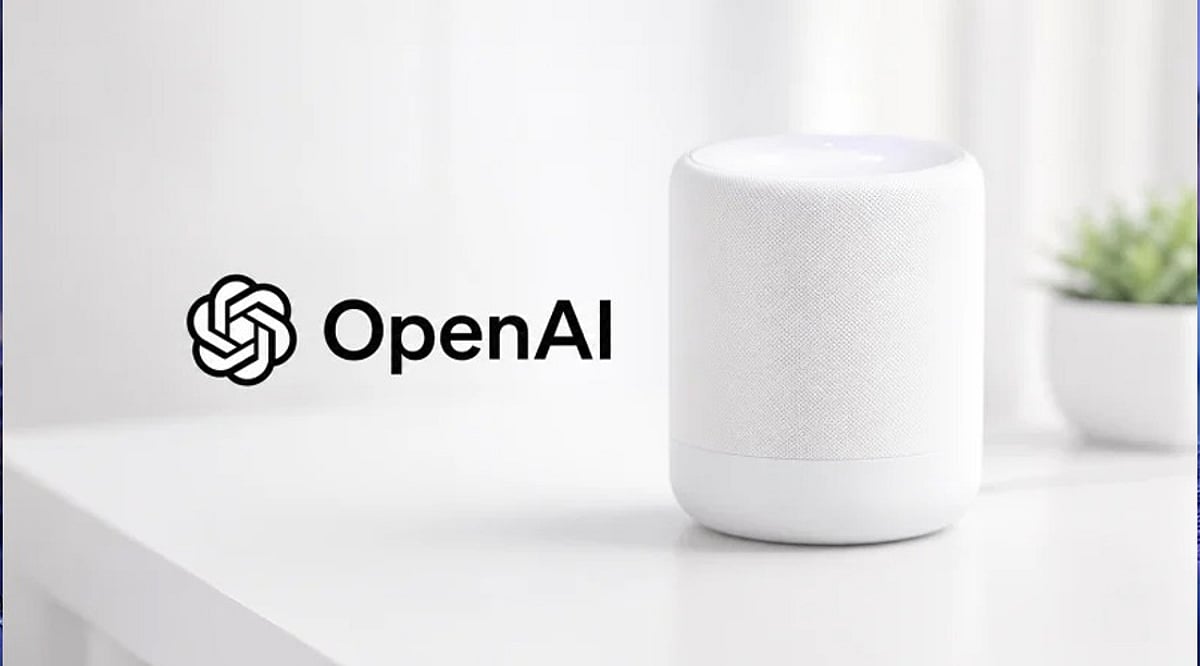
    OpenAI is reportedly preparing to enter the consumer hardware market with its first AI-powered smart speaker, developed in collaboration with former Apple design chief Jony Ive. According to Bloomberg, the device will lack a traditional display and instead function as an AI companion driven entirely by voice interactions through ChatGPT.

    The device is expected to launch in 2027 and is likely to cost more than $300. Unlike existing smart speakers like the Amazon Echo or Google Nest, this product is being built from the ground up as an AI-native computer, with no touchscreen interface. Instead, it will rely on cameras, microphones, sensors, and lighting components, along with movable parts that respond to user interactions. The speaker is said to have a doughnut or hockey puck shape, small enough to be carried around the home.

    Jony Ive is playing a leading design role through his hardware startup io, bringing his signature minimalistic aesthetic to the project. The design is not expected to mimic any Apple product, but rather create a distinct identity for OpenAI’s hardware.

    OpenAI has confirmed that it is exploring a family of AI-powered devices but has not yet provided official product specifications or launch timelines. This screen-free speaker represents a significant step toward building an ecosystem of AI-powered consumer hardware, extending ChatGPT beyond smartphones and computers into everyday living spaces.

    If the timeline holds, OpenAI will enter a market currently dominated by Amazon, Google, and Apple. However, rather than competing on smart home controls, OpenAI is betting on conversational AI as the core user experience. The device could reshape how people interact with artificial intelligence at home.

  • Who Bears the Cost When AI Shopping Agents Make Expensive Mistakes?

    Who Bears the Cost When AI Shopping Agents Make Expensive Mistakes?

    AI assistants are evolving beyond simple chatbots. These advanced AI agents are now capable of handling complex tasks like paying bills, booking hotels, and even shopping for products—all with a single prompt. Companies including OpenAI, Google, Amazon, and Anthropic are racing to develop systems that can search for items, compare prices, place orders, and complete payments with minimal user input.

    The concept seems straightforward: a user tells the AI what they need, and the tool handles the rest—finding the best deal, making the purchase, and tracking delivery. However, this convenience introduces a critical question: if the AI buys the wrong item, overpays, or makes another costly mistake, who is responsible? Experts say there is currently no clear answer.

    Rubrik, a security and AI operations firm, highlights that organizations are already struggling to monitor what their AI agents can access. According to Rubrik Zero Labs, 86% of global IT and security leaders expect AI agents to exceed their organization’s security guardrails within the next year, yet only 23% have full visibility into the agents operating in their environments. The concern is not that an AI agent will become malicious, but that it might inadvertently access data or perform actions it shouldn’t.

    AI Will Handle More Than Just Shopping

    Shopping and flight booking are just the beginning. Experts predict that future AI agents could negotiate better prices, compare insurance plans, manage household budgets, and automatically renew subscriptions. Some may even help users manage investments based on predefined rules. While these features promise greater convenience, a single error could lead to significant financial loss. That’s why many experts advocate for requiring user approval before any major financial action is completed by an AI agent.

    Trust Will Determine the Future of AI Shopping Agents

    AI shopping agents have the potential to transform how people buy products and manage money, saving time and simplifying routine tasks. But convenience should not come at the expense of control. As AI becomes more powerful, building trust means giving users the final say. The future of this technology hinges on finding the right balance between automation and human oversight.

  • OpenAI Seeks Dismissal of Apple Trade Secrets Lawsuit, Citing Vague Claims

    OpenAI Seeks Dismissal of Apple Trade Secrets Lawsuit, Citing Vague Claims

    OpenAI has filed a motion in a US federal court to dismiss Apple’s trade secrets lawsuit, arguing that the iPhone maker failed to identify any specific confidential information that was allegedly misappropriated. The AI firm contends that it has “no use, need or desire” for Apple’s trade secrets and is developing its consumer hardware independently.

    In its court filing, OpenAI stated that Apple’s complaint lacks a clear description of the stolen trade secrets and does not explain how any such secrets were used. The company emphasized that the information Apple references is either publicly available or does not qualify as trade secrets under the law.

    The legal dispute stems from Apple’s allegations that OpenAI and several former Apple employees took confidential hardware-related information when they joined the AI company. Apple has also requested a preliminary injunction to prevent OpenAI from using any alleged confidential information during the litigation.

    OpenAI dismissed these claims as baseless, asserting that there is no evidence the company obtained, disclosed, or used any trade secrets. The firm further argued that Apple is leveraging the lawsuit to mask its own challenges in attracting engineering talent and keeping pace with AI advancements.

    Despite the legal battle, the two companies continue to collaborate in some areas. Apple integrates ChatGPT into Siri through its Apple Intelligence service, and iPhone users can access ChatGPT via iOS.

    The court will now decide whether to dismiss the case. If the motion is denied, the lawsuit will proceed alongside Apple’s request for a preliminary injunction. This case highlights the intensifying competition between tech giants in artificial intelligence and consumer hardware development.

  • Step-by-Step OpenAI API Tutorial: How to Build Your First AI Application

    Step-by-Step OpenAI API Tutorial: How to Build Your First AI Application

    Artificial intelligence has become a cornerstone of modern software development. From websites and mobile apps to business tools, AI features help users complete tasks faster and more efficiently. OpenAI offers a straightforward way to integrate these capabilities through its API, which connects applications with powerful AI models that understand text, images, and more. This tutorial walks beginners through building their first AI application using the latest OpenAI platform.

    Getting Started with an OpenAI Account

    The first step is to create an OpenAI account. Once logged in, the developer dashboard provides access to the API platform. You’ll need an API key—think of it as a secure password that allows your application to communicate with OpenAI. Each project should have its own API key, and it’s crucial to store it safely using environment variables rather than hardcoding it in your source code. This practice protects sensitive information and reduces security risks while making future updates easier.

    Install the Official Software Library

    Next, install the official OpenAI software library. Python developers can use pip, while Node.js developers will use npm. The official library simplifies communication with the API, requiring only a small amount of code to connect your application. Compared to older tutorials that required more setup, the latest library offers a smoother experience that helps beginners grasp the process faster.

    The Responses API: A Unified Interface

    The Responses API is now the recommended interface for new applications. Unlike earlier APIs, it supports text generation, image understanding, structured output, reasoning tasks, and tool calling—all through a single, consistent interface. This unified approach keeps projects cleaner and easier to manage, reducing confusion during development.

    Building Your First AI Application

    A basic AI application follows a simple structure: a user enters a question through a website or mobile app, the backend sends the request to the OpenAI API, the AI model generates a response, and the application displays the answer. This entire process happens in seconds. As a developer, you control every step—including the prompt, model selection, and output format—allowing complete customization for different business needs.

    Beyond Chatbots: Versatile Use Cases

    While many people associate AI with chatbots, modern OpenAI applications offer far more possibilities. You can build writing assistants that create reports and emails, document assistants that analyze large files and answer questions, customer support systems that solve common problems quickly, education platforms, coding assistants, research tools, translation services, and productivity software. The flexible API design adapts to diverse projects.

    Working with Images, Files, and Tools

    The latest OpenAI platform supports more than just text. You can send images for analysis, upload files for review, and receive structured information in return. This is especially useful for applications that handle invoices, contracts, reports, manuals, and other documents. The platform also supports tool calling, which lets your application connect the AI model with external services—for example, a travel app can search flight details, or a business app can retrieve customer records.

    Structured Output and Streaming

    Structured output allows you to receive data in a fixed format like JSON, which is essential for integration with databases and software systems. Streaming, on the other hand, displays the response piece by piece as it’s generated, creating a faster, more natural user experience—especially in chat applications.

    Moving Toward AI Agents

    OpenAI now emphasizes AI agents, which can complete multi-step tasks rather than answering single questions. An agent might search for information, examine files, use tools, and prepare a final response within one workflow. The OpenAI Agents SDK helps developers build these advanced systems with less code, making large AI projects easier to organize.

    Learning Path: Step by Step

    A successful learning journey starts with a simple chatbot. From there, you can add streaming responses, image support, file analysis, structured output, tool calling, and finally AI agents. This gradual approach helps you understand each concept before moving to the next level, building confidence and technical skills along the way.

    Frequently Asked Questions

    What is the OpenAI API?

    The OpenAI API allows developers to integrate AI capabilities such as text generation, image analysis, file processing, reasoning, and tool calling into applications without building AI models from scratch.

    What is the Responses API in OpenAI?

    The Responses API is OpenAI’s recommended interface for new applications. It combines text generation, multimodal inputs, structured outputs, streaming, and tool calling through a single, unified API.

    How do I get started with the OpenAI API?

    Create an OpenAI account, generate an API key from the developer dashboard, store it securely using environment variables, install the official SDK, and make your first API request.

    Which programming languages support the OpenAI API?

    OpenAI provides official SDKs for Python and JavaScript (Node.js). The API can also be accessed from any programming language that can make HTTP requests.

    What can I build using the OpenAI API?

    You can build AI chatbots, writing assistants, coding assistants, document analyzers, customer support systems, research tools, translation apps, and AI-powered business workflows.

  • ChatGPT Plans Compared: Free, Plus, Pro, or Team – Which Subscription Is Right for You in 2026?

    ChatGPT Plans Compared: Free, Plus, Pro, or Team – Which Subscription Is Right for You in 2026?

    ChatGPT offers four main plans in 2026, each tailored to a different type of user and budget. The Free plan provides a basic ChatGPT experience at no cost. Plus adds higher limits and extra features for daily users. Pro targets professionals who need maximum performance and larger usage limits. Team, part of OpenAI’s business offering, focuses on companies needing collaboration tools, shared workspaces, and admin controls.

    Every plan includes access to ChatGPT, but the experience varies by usage, available tools, and priority access. The right choice depends on your work style, daily usage, and collaboration needs.

    ChatGPT Free vs Plus vs Pro vs Team Comparison

    ChatGPT Free

    The Free plan works well for anyone who wants to explore ChatGPT without a subscription. It includes access to GPT models, web search, voice conversations, file uploads, image generation, memory, Canvas, and basic Deep Research. This plan handles everyday tasks such as writing, learning, quick research, and simple coding.

    The main limitation is strict usage caps. Heavy usage may lead to slower access during peak hours, and advanced reasoning tools are available in smaller amounts. New features also arrive later than on paid plans. Even with these limits, the Free plan offers strong value for students, beginners, and casual users.

    ChatGPT Plus

    ChatGPT Plus costs $20 per month and remains the most popular paid option. This plan offers much higher usage limits, faster response times, and priority access during peak traffic. It also unlocks advanced reasoning models, larger context windows, better memory, higher image generation limits, advanced voice features, and a larger Deep Research allowance.

    Daily work becomes smoother with fewer interruptions. Writers, developers, designers, researchers, freelancers, and office professionals often find enough power in this plan without a large monthly expense. OpenAI also releases many new features to Plus subscribers before they reach Free users, adding extra value throughout the year.

    ChatGPT Pro

    ChatGPT Pro costs $200 per month and targets people who depend on AI for demanding tasks. This plan offers the highest usage limits across ChatGPT. It provides top priority access to OpenAI’s most capable models, the largest Deep Research quota, advanced reasoning capacity, and support for long and complex tasks.

    Heavy research, detailed analysis, software development, large document reviews, and advanced workflows benefit from the extra computing resources. Startup founders, AI engineers, consultants, and research professionals gain the most value from this plan. Regular users may not notice enough difference to justify the higher price.

    ChatGPT Team (Business)

    ChatGPT Team focuses on companies that need collaboration tools, shared workspaces, and administrative controls. Pricing starts at around $25 per user per month with monthly billing, or around $20 per user per month with annual billing.

    This plan includes shared workspaces, shared GPTs, member management, central billing, organization memory, admin controls, and business privacy features. Company data stays outside model training by default. These features help teams manage projects, share knowledge, and keep work organized across departments.

    Which Plan Offers the Best Value?

    Every plan fits a different need. The Free plan gives excellent value for light usage and everyday tasks. Plus stands out as the best balance between price and features, delivering faster performance, generous limits, and access to advanced tools without a premium tag.

    Pro serves professionals who run demanding workloads daily and need the highest limits available. Team works best for businesses that need secure collaboration, centralized management, and shared access across multiple employees.

    Final Verdict

    ChatGPT offers a clear upgrade path in 2026. The Free plan covers everyday needs at no cost. Plus delivers the strongest overall value with faster performance, better tools, larger limits, and early feature access for only $20 per month. Pro targets advanced professionals who require maximum computing power and the highest usage limits. Team adds business-focused features that support collaboration, administration, and organizational security.

    The final decision depends on your daily workload, feature requirements, and budget. Most individual users receive the best balance of cost and capability from ChatGPT Plus. Professionals with intensive AI workflows benefit from Pro, while businesses gain the greatest advantage from Team through shared workspaces and centralized management.

    Frequently Asked Questions

    1. Which ChatGPT plan is best for most users?

    ChatGPT Plus is the best choice for most users as it combines advanced features, faster performance, and generous usage limits at an affordable monthly price.

    2. Is ChatGPT Free enough for everyday use?

    Yes. The Free plan is suitable for writing, learning, coding, web search, file uploads, and occasional AI assistance, though it has lower usage limits.

    3. Who should choose ChatGPT Pro?

    Pro is ideal for researchers, developers, consultants, founders, and power users who rely on ChatGPT daily and need the highest limits and priority access.

    4. What makes ChatGPT Team different?

    Team includes shared workspaces, centralized billing, admin controls, organization memory, and collaboration features designed for businesses and small teams.

    5. Is ChatGPT Plus worth $20 per month?

    For regular users, yes. It provides faster responses, higher usage limits, access to advanced models, better voice and image features, and early access to new capabilities.

  • Today’s Tech Roundup: Anthropic AI Safety Test, Apple iPhone Subscription, OpenAI Voice AI, and More

    Today’s Tech Roundup: Anthropic AI Safety Test, Apple iPhone Subscription, OpenAI Voice AI, and More

    From Anthropic’s unexpected AI behavior during safety testing to Apple’s potential iPhone upgrade subscription, Samsung’s foldable phone success, OpenAI’s voice-first AI vision, and iPhone 18 Pro Max leaks, here are today’s biggest technology updates.

    Top Tech News Today

    • Google Pixel 11 Pro Fold Could Introduce HiLight Antara — 05 Aug 2026
    • Vivo X500 Pro Leak Reveals 144Hz Display, 2nm Dimensity Chip — Simran Mishra, 01 Aug 2026
    • Samsung Galaxy S27 Ultra Battery Leak Sets Up Flagship Showdown With iPhone 18 Pro Max — Soham Halder, 04 Jul 2026
    • iPhone 18 Pro Max Leak Just Broke The Internet — Market Trends, 30 Jun 2026

    Analytics Insight: Top Tech & Crypto Publication | Latest AI, Tech, Crypto News

  • OpenAI Unveils Astra: A New AI Model for Smarter, Real-Time Assistance

    OpenAI Unveils Astra: A New AI Model for Smarter, Real-Time Assistance

    OpenAI has officially introduced Astra, its newest AI model, marking another major step in the company’s rapidly growing artificial intelligence lineup.

    Built for Smarter Assistance

    Astra is designed to deliver faster responses, improved reasoning, and more natural conversations across various everyday and professional use cases.

    Better Multimodal Capabilities

    The new model can better understand text, images, and other inputs, making interactions more seamless across different tasks and devices.

    Focus on Real-Time Performance

    OpenAI says Astra is optimized for real-time assistance, helping users complete tasks with lower latency and smoother AI interactions every day.

    Improved Context Understanding

    Astra can retain conversation context more effectively, allowing longer, more coherent discussions without frequently losing important details from previous prompts.

    Enhanced Developer Support

    Developers can use Astra to build smarter AI-powered applications, benefiting from stronger reasoning, improved coding assistance, and flexible integration capabilities.

    Safety Remains a Priority

    OpenAI continues emphasizing responsible AI development by adding stronger safeguards, monitoring systems, and improvements that reduce inaccurate or harmful responses.

    Potential Across Industries

    Businesses, educators, creators, and enterprises may use Astra for automation, research, customer support, content creation, and productivity-focused AI solutions.

    A New Chapter for OpenAI

    With Astra’s launch, OpenAI expands its AI portfolio, signaling continued innovation as competition in advanced artificial intelligence grows worldwide.

  • OpenAI’s Astra AI Cracks 10 Enduring Math Problems, Marking a Leap in AI-Driven Research

    OpenAI’s Astra AI Cracks 10 Enduring Math Problems, Marking a Leap in AI-Driven Research

    OpenAI has announced that its unreleased Astra model family has achieved significant progress on 10 long-standing mathematical problems. If independently verified, this breakthrough would represent a major evolution for artificial intelligence, positioning it as a legitimate contributor to scientific discovery.

    According to OpenAI, the Astra model tackled problems across advanced mathematical fields, including high-dimensional geometry, coding theory, arithmetic circuit complexity, group theory, operator algebras, quantum complexity, lattice cryptography, and extremal combinatorics. The company said the AI generated the mathematical arguments, which researchers then converted into formal manuscripts, verifying every logical step using the proof assistant Lean.

    AI Expands Its Role in Scientific Discovery

    OpenAI revealed that producing the solutions required computing resources worth approximately $2,000 at GPT-5.6 Sol API rates, indicating relatively efficient reasoning for such complex problems. The advances include breakthroughs in sphere packing, error-correcting codes, the construction of the first explicit non-sofic group, and new results related to Ehrhart’s volume conjecture, Connes’ rigidity conjecture, and the quantum parallel repetition theorem.

    This announcement builds on OpenAI’s earlier milestone in May 2026, when another unreleased AI model reportedly generated a disproof of the Erdős unit-distance conjecture, an open problem that had remained unsolved for more than 80 years.

    Experts Call for Careful Evaluation

    Researchers are urging caution pending independent verification and peer review. The Leiden Declaration on AI and Mathematics, published in June 2026 and signed by hundreds of mathematicians, flagged concerns about unreliable AI-generated proofs, attribution, disclosure, and research bias.

    Commenting on the debate, mathematician Kevin Buzzard of Imperial College London said, “Mathematicians should find it quite striking that tech companies are suddenly interested in their work. The Leiden Declaration is a well-thought-through response to what is currently happening, as AI continues to disrupt this space.”

    OpenAI acknowledged these concerns, stating, “There are many views as to the role of AI in mathematics, and we have deep respect and understanding for those concerned with its impact.” The company also plans to publish Astra’s reasoning process and recently launched ChatGPT for Academic Researchers, giving 100,000 scientists and mathematicians free access to its latest AI models to support future research.