Tag: predictive analytics

  • Key AI Innovations Transforming Healthcare Today

    Key AI Innovations Transforming Healthcare Today

    Artificial intelligence is rapidly reshaping the healthcare landscape, offering unprecedented speed and accuracy in diagnostics, treatment planning, and administrative workflows. Below are the most impactful AI trends driving change across the industry.

    AI-Powered Diagnostics

    AI systems analyze medical images and clinical data far faster than traditional methods, helping healthcare professionals detect diseases, identify abnormalities, and support accurate diagnoses with greater confidence.

    Generative AI

    Generative AI tools create clinical summaries, draft documentation, organize patient information, and reduce repetitive administrative work, freeing up clinicians to focus on patient care.

    AI Healthcare Agents

    AI agents manage multi-step workflows, coordinate appointments, support follow-ups, and complete routine healthcare tasks with minimal human intervention, improving operational efficiency.

    Personalized Treatment

    By combining patient records, genetic information, and clinical data, AI helps doctors develop more individualized treatment strategies tailored to each patient’s unique profile.

    Predictive Analytics

    Predictive AI identifies potential health risks by analyzing large datasets, enabling earlier interventions and supporting better-informed clinical decisions that can save lives.

    AI Drug Discovery

    Pharmaceutical companies leverage AI to analyze molecules, identify promising compounds, and accelerate the research processes involved in developing new medicines.

    Remote Patient Monitoring

    AI analyzes data from wearable devices and connected medical equipment, helping clinicians detect concerning changes and monitor patients remotely, improving access to care.

    AI-Assisted Surgery

    AI-powered surgical technologies support planning, precision, and decision-making, helping surgeons perform complex procedures while maintaining essential human oversight throughout.

    Responsible AI Governance

    Healthcare organizations increasingly prioritize privacy, bias management, transparency, security, accuracy, and human oversight when implementing artificial intelligence systems, ensuring ethical and safe deployment.

  • How AI-Driven Learning Systems Are Transforming Raw Data into Lasting Knowledge

    How AI-Driven Learning Systems Are Transforming Raw Data into Lasting Knowledge

    Executive Overview

    In the age of big data, the real challenge for professionals and universities isn’t collecting information—it’s making sense of it. With technical documentation, academic papers, and online courses growing exponentially, traditional study methods fail to turn data into true understanding. Advances in NLP, vectorization, and predictive learning analytics now enable intelligent tools that convert static texts into dynamic learning engines.

    1. The Data Ingestion Bottleneck in Modern Learning

    While data science has revolutionized business analytics, personal knowledge management still lags. Engineers, doctors, and software developers consume gigabytes of unstructured text each year, but human memory faces three critical bottlenecks:

    • Unstructured Information Overload: Technical manuals, PDFs, and articles lack standardized structures for quick memory encoding.
    • The Decay of Static Knowledge: Without periodic retrieval, memory follows a steep exponential decay curve—up to 70% of technical data is lost within days.
    • Manual Processing Overhead: Extracting concepts, creating self-assessment questions, and scheduling reviews imposes prohibitive operational drag on learners.

    Modern EdTech architectures solve this by applying data-driven parsing directly to learning materials, shifting the burden of content structuring from users to intelligent algorithms.

    2. The Mechanics of AI-Powered Knowledge Extraction

    The convergence of Large Language Models (LLMs) and Retrieval-Augmented Generation (RAG) enables a new paradigm in educational data processing. Instead of treating documents as static assets, modern learning engines treat them as structured knowledge graphs. The automated active-learning pipeline operates in three stages:

    1. Semantic Parsing and Chunking: NLP algorithms break lengthy technical documents into distinct contextual units, isolating core concepts, formulas, and relationships.
    2. Automated Synthesis of Retrieval Cues: Generative models convert semantic chunks into active-recall prompts, transforming passive text into targeted Q&A pairs and conceptual flashcards.
    3. Algorithmic Repetition Scheduling: Machine learning models track user response performance, latency, and confidence scores to calculate optimal spacing intervals for each flashcard.

    By continuously analyzing user interaction data, these platforms adjust review difficulty and frequency in real time, maximizing memory consolidation while minimizing redundant study time.

    3. Practical Implementation: Algorithmic Memory via LongTerMemory

    A prime example of this data-centric approach to study optimization is LongTerMemory. Designed to streamline knowledge acquisition for complex materials, the platform shows how intelligent parsing and automated workflows optimize the learning pipeline:

    • Instant Document Conversion: Raw study materials are converted in seconds into structured, high-yield flashcard decks.
    • Data-Driven Spaced Repetition: Algorithms calculate exact review intervals based on historical recall accuracy, reinforcing weak concepts precisely before memory decay.
    • Unified Cross-Platform Analytics: Mobile and desktop synchronization enables micro-learning sessions while gathering continuous data on overall mastery progression.

    Through this automated workflow, learners bypass the administrative burden of card creation and focus exclusively on active cognitive retrieval, significantly accelerating mastery over complex domains.

    4. The Horizon of Predictive Learning Analytics

    As NLP and personalized analytics advance, future educational technology will go beyond simple flashcard algorithms. Next-generation knowledge platforms will use predictive analytics to identify memory retention vulnerabilities before they cause performance drops. By unifying cognitive neuroscience principles with real-time data science, AI-driven learning tools are transforming passive digital content into actionable knowledge assets—setting a new benchmark for continuous professional development and intelligent learning infrastructure.

  • How Data Analysis Tools Have Evolved: Then vs. Now

    How Data Analysis Tools Have Evolved: Then vs. Now

    Excel vs. AI-Powered Spreadsheets

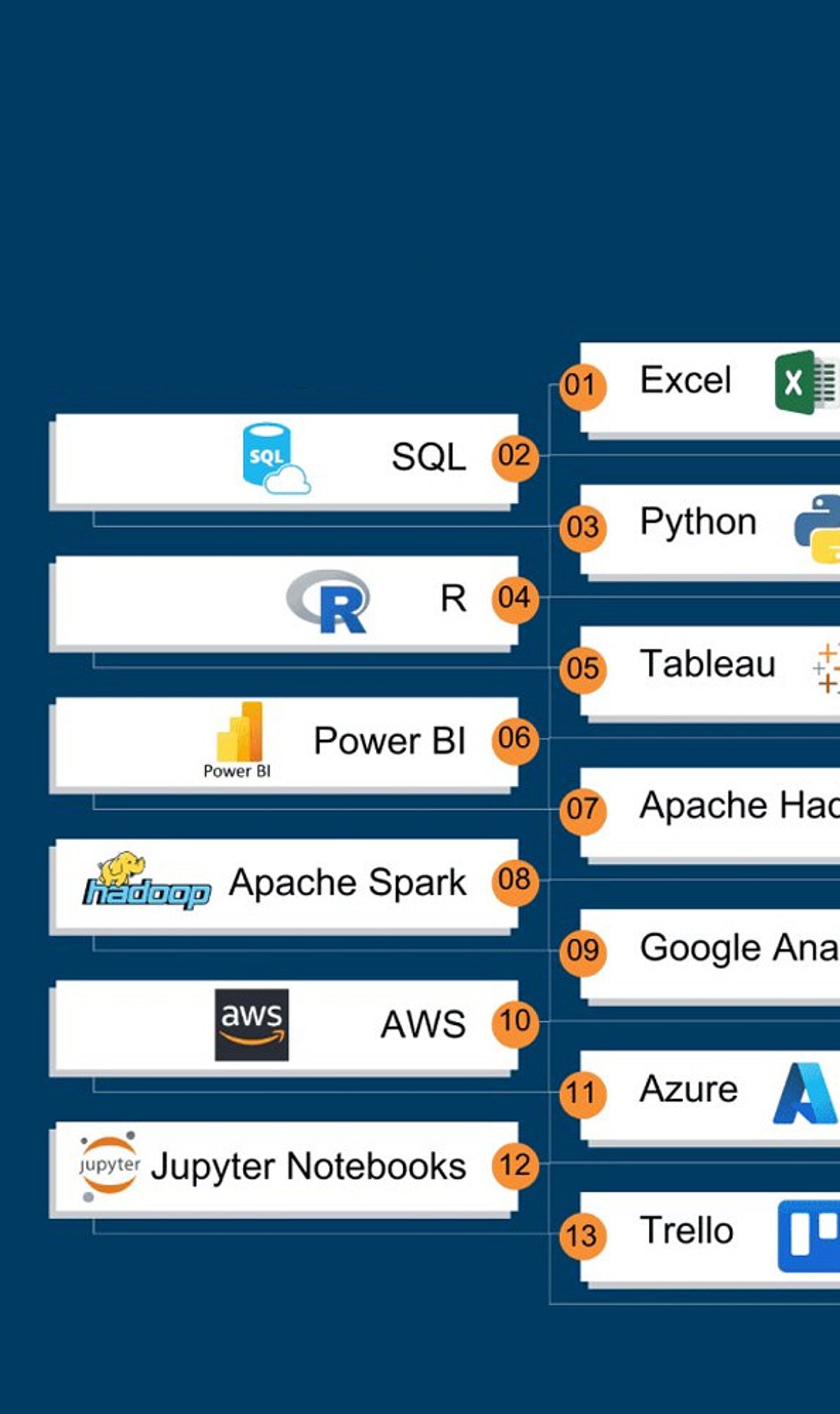
    A decade ago, Microsoft Excel was the undisputed king of data analysis. Today, modern spreadsheets integrate AI assistants, automation, predictive formulas, and real-time collaboration—transforming how analysts work with numbers.

    Traditional SQL vs. AI SQL Assistants

    Analysts used to write every SQL query by hand. Now, AI-powered tools generate, optimize, and explain complex database queries in seconds, dramatically cutting the time spent on data retrieval.

    Static Dashboards vs. Interactive BI

    Basic, static reports have given way to interactive dashboards in Power BI, Tableau, and Looker. These platforms offer real-time visualization and self-service analytics, putting insights into the hands of decision-makers instantly.

    Local Databases vs. Cloud Data Warehouses

    On-premise databases were once the norm. Organizations now rely on cloud platforms like Snowflake, BigQuery, and Redshift for scalable analytics, faster processing, and lower maintenance overhead.

    Manual ETL vs. Automated Data Pipelines

    Data preparation used to involve manual effort for extraction, transformation, and loading. Automated ETL platforms now streamline the entire pipeline, handling data from multiple sources with validation and error-checking built in.

    Basic Python Scripts vs. AI Coding Assistants

    Python remains an essential tool, but AI coding assistants accelerate script creation, debugging, documentation, and workflow automation—enabling analysts to focus on insights rather than syntax.

    Historical Reporting vs. Predictive Analytics

    Analysts once focused on reporting what had happened. Now, machine learning models forecast trends, customer behavior, and business performance with remarkable accuracy, enabling proactive decision-making.

    Desktop Collaboration vs. Cloud Workspaces

    Emailing spreadsheets back and forth is a thing of the past. Cloud-based collaboration allows simultaneous editing, data governance, and secure enterprise-wide sharing in real time.

    Manual Insights vs. Generative AI Analytics

    Modern analytics platforms summarize datasets, generate reports, recommend visualizations, and answer natural-language questions—all powered by generative AI, making data exploration faster and more accessible than ever.

  • AI in Logistics: Maersk’s Resham Sahi on Moving from Visibility to Decision Intelligence

    AI in Logistics: Maersk’s Resham Sahi on Moving from Visibility to Decision Intelligence

    Artificial intelligence is reshaping the logistics industry, helping organizations move beyond reactive supply chain management toward intelligent, connected, and data-driven operations. As global trade becomes increasingly complex amid geopolitical uncertainty, demand volatility, and evolving customer expectations, AI is enabling businesses to make faster, more informed decisions that improve resilience, efficiency, and operational agility.

    The convergence of AI with Digital Twins, predictive analytics, cloud computing, Internet of Things (IoT), and intelligent Control Towers is creating a new generation of supply chains capable of anticipating disruptions before they occur. From demand forecasting and inventory optimization to real-time shipment visibility, network simulation, and proactive risk management, these technologies are helping organizations optimize every stage of planning, execution, and fulfillment while reducing operational costs and improving customer outcomes.

    Industry leaders believe the future of logistics lies in connected intelligence, where data flows seamlessly across transportation, warehousing, customs, and fulfillment. By integrating AI-powered insights with digital infrastructure, businesses can move beyond monitoring operations to predicting challenges, automating decisions, and building supply chains that are both resilient and future-ready.

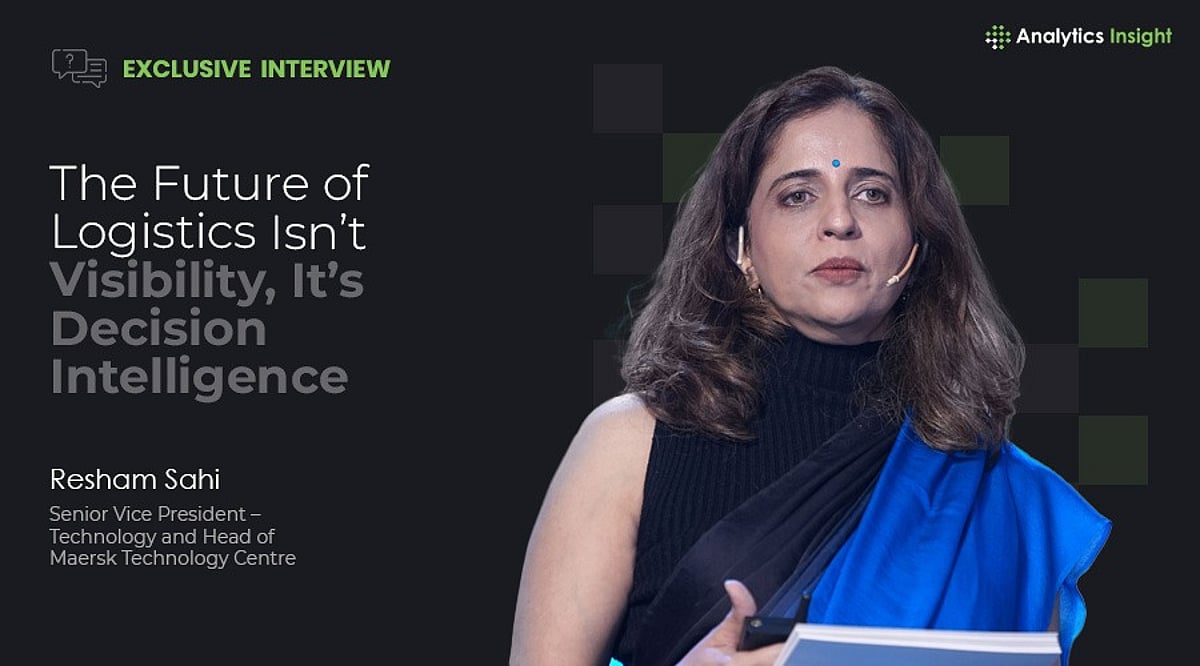
    In an exclusive interview with Analytics Insight, Resham Sahi, Senior Vice President – Technology and Head of Maersk Technology Centre, Bangalore, discusses how AI, Digital Twins, predictive analytics, cloud technologies, and intelligent logistics solutions are transforming global supply chains, strengthening operational resilience, and helping Indian businesses build smarter, more connected logistics ecosystems.

    From Visibility to Decision Intelligence

    According to Sahi, the notable trend is that companies are moving from visibility to decision intelligence. “In today’s environment of demand volatility, geopolitical uncertainty, and evolving trade patterns, resilience increasingly determines how quickly organizations can turn operational data into informed decisions. Companies can generate significant volumes of operational data through their supply chains; however, real value lies in translating data into actionable insights that enable improved planning and execution.”

    Through AI, companies are becoming better at forecasting demand, optimizing inventory, improving ETA, and managing exceptions. For example, Digital Twins allow companies to test different scenarios and assess how operational decisions may affect transportation, warehousing, and inventory positioning before changes are implemented in the physical supply chain. Using AI, Digital Twins can predict certain disruptions before they occur, helping make more informed decisions while reducing operational risk.

    “The true value comes through integration,” Sahi emphasized. “According to our recent Trade Momentum APAC research, although 74% of companies have operationalized their AI capabilities, only 47% have integrated it with their trade compliance and customs platforms, suggesting that many companies still keep their digital initiatives separate.”

    Maersk believes in the connected intelligence future, where decision intelligence will be built across the entire process of planning, execution, and fulfillment.

    AI-Powered Control Towers

    The function of Control Towers is moving from providing visibility to enabling intelligence, helping organizations move from simply monitoring supply chains to making better decisions. “In today’s environment, it is not enough to know the location of a shipment; it is more valuable to be aware of possible risks and implications and to be able to make a decision based on that information,” Sahi said.

    AI-powered Control Towers deliver this by connecting data from all sources—transportation, warehousing, customs, IoT assets, and enterprise systems—into a single view. This information is constantly analyzed through AI, identifying exceptions, forecasting delays, and proposing the optimal next step for operations, such as changing the route, reallocating inventory, or adjusting warehouse capacity.

    “The real value of a Control Tower lies not in aggregating more data, but in enabling faster, more confident decisions across the supply chain,” Sahi noted. By bringing together operational insights in real time, organizations can respond proactively to disruptions instead of reacting after they occur.

    Digital Twins for Smarter Network Optimization

    One of the most significant advantages of Digital Twins is that they can help make better decisions before any changes to the physical logistics network. This is even more important when reacting to disruptions yet to be encountered. For example, using weather data, Digital Twins can identify several vessel berthing options at ports and recommend the best scenarios for maximizing operational efficiency.

    “With increasing interconnectivity within our logistics network, we require more confidence in our decisions when it comes to logistics such as inventory positioning, transportation flows and warehouse capacity, and Digital Twins allow us to do scenario planning in a virtual environment,” Sahi explained.

    Digital Twins can be transformed from being merely simulation tools into intelligent decision support systems once integrated with AI and operational data. Organizations will be able to run different scenarios of the network, optimize asset use, and spot potential bottlenecks before they affect operations. In line with this, Gartner predicts that by 2027, more than 40% of large enterprises will combine simulation, Digital Twins, and AI to optimize operational processes.

    Building Future-Ready Supply Chains in India

    The rising importance of India in international manufacturing is contributing to the increasing requirement for intelligent and interconnected supply chains. As per the Economic Survey 2025-26, Manufacturing GVA increased by 7.72% in Q1 and 9.13% in Q2 of FY26, highlighting the country’s industrial strength. As businesses diversify supply chains and expand their participation in global value chains, logistics is becoming a strategic enabler of growth rather than simply a support function.

    At Maersk, the company is helping customers connect transportation, warehousing, customs, and fulfillment through integrated digital solutions. AI, cloud, and IoT strengthen that connected ecosystem by improving visibility, planning, and execution across the logistics journey. Cloud-based platforms enable customers to unify transportation, warehousing, customs, and fulfillment into one cohesive digital platform, making faster, better decisions possible.

    “AI represents a once-in-an-era shift that can tackle complex problems, provide faster insights, enable proactive, data-driven decisions, and drive effective execution,” Sahi said. “We are putting AI to use by streamlining how frontline teams serve customers by reducing complexity, redesigning workflows, and improving customer access to insights.”

    At the end of the day, Maersk’s focus is on helping customers build connected and resilient supply chains by integrating data across every stage of the logistics journey, rather than optimizing individual functions in isolation. This will help both Maersk and its customers improve cost efficiency, reliability, and outcomes.

  • How AI Is Transforming Education: Personalized Learning, Virtual Tutors, and the Future of Teaching

    How AI Is Transforming Education: Personalized Learning, Virtual Tutors, and the Future of Teaching

    Artificial intelligence is reshaping the educational landscape, influencing how students learn, how teachers work, and how institutions manage their operations. From personalized learning platforms to automated grading and virtual tutors, AI is making education more adaptive, accessible, and data-driven.

    The Shift in Skills Demand

    This transformation aligns with changing workforce needs. According to the World Economic Forum’s Future of Jobs Report 2025, 39% of core skills required by workers will change over the next decade, with AI and big data among the fastest-growing skill areas. This underscores the urgent need for schools, universities, and training providers to redesign curricula around digital literacy and lifelong learning.

    Personalized Learning at Scale

    Traditional classrooms follow a one-size-fits-all curriculum. AI-powered platforms can analyze each student’s responses, learning pace, and specific difficulties to adjust lessons and practice problems in real time. A student struggling with math might receive additional explanations and simpler exercises, while an advanced learner can move on to more challenging material. This allows institutions to cater to diverse learning levels without requiring separate programs for each student.

    AI tutors and chat-based learning assistants provide immediate feedback outside class hours. They can explain concepts, solve practice questions, summarize chapters, and offer editing advice. However, their outputs still need supervision, as generative AI can sometimes produce inaccurate or misleading information.

    Supporting Teachers and Institutions

    AI is increasingly used to automate repetitive tasks such as attendance tracking, basic grading, timetable creation, and handling routine student inquiries. This frees up teachers to focus on lesson planning, mentoring, and direct student interaction.

    Predictive analytics helps identify students at risk of falling behind by analyzing attendance, assessment scores, and engagement patterns. Administrators can intervene before a student drops out. The technology also influences curriculum design: the WEF found that 86% of employers expect AI and information-processing technologies to transform their businesses by 2030. Education providers must therefore prepare students for careers in AI, cybersecurity, data analysis, and digital transformation.

    Expanding Access to Education

    AI can deliver content in multiple languages through translation, and assist students with language barriers or disabilities via speech recognition and text-to-speech tools. Virtual classrooms and automated support systems can bring learning opportunities to regions lacking qualified teachers.

    Yet access remains uneven. Not everyone has the necessary devices, internet connectivity, or digital skills to benefit from AI-supported learning. UNESCO has acknowledged that while AI can enhance access and personalization, it may also deepen inequalities and raise concerns about privacy, safety, and governance.

    The Road Ahead

    AI will not replace teachers, but it will change what they do. The most successful education systems will combine AI’s power with human insight and creativity. Effective implementation requires robust privacy protections, transparent algorithms, and teacher training to ensure AI does not undermine equity or student confidence.

    Frequently Asked Questions

    • How is artificial intelligence changing education? AI makes education more personalized, accessible, and data-driven by adapting lessons to individual needs, providing instant feedback, and automating routine tasks like grading and attendance.
    • Can AI replace teachers in the classroom? No. Education requires empathy, judgment, creativity, and personal interaction. AI supports teachers by reducing administrative work and improving lesson planning.
    • What is personalized learning through AI? AI-powered platforms analyze student performance, learning speed, and areas of difficulty, then recommend suitable lessons, explanations, and practice questions tailored to each learner.
    • How can AI improve access to education? AI-powered translation, speech recognition, and text-to-speech tools help learners with language barriers or disabilities. Virtual classrooms can reach students in areas with limited access to qualified teachers.
    • What are the risks of using AI in education? Risks include inaccurate information, data privacy concerns, algorithmic bias, and unequal access to devices or internet. Strong governance, transparency, and teacher supervision are essential.
  • 9 Key Digital Advertising Trends to Watch in 2026

    9 Key Digital Advertising Trends to Watch in 2026

    As we move into 2026, digital advertising continues to evolve rapidly. Brands are leveraging cutting-edge technologies and shifting consumer behaviors to create more effective, personalized campaigns. Here are the nine biggest trends shaping the future of digital advertising.

    AI-Generated Ad Campaigns

    Brands increasingly use artificial intelligence to create personalized ads, visuals, videos, and copy. This helps campaigns launch faster while improving audience targeting and overall performance.

    Hyper-Personalized Marketing

    Advertisers rely on real-time customer data to deliver highly relevant ads based on preferences, browsing habits, location, and purchase behavior. This level of personalization boosts engagement and conversion rates.

    Retail Media Networks Grow

    Retailers are expanding their advertising platforms, allowing brands to reach shoppers directly on online marketplaces. This trend drives measurable campaign performance and higher conversions.

    Privacy-First Advertising

    With third-party cookies disappearing, businesses adopt first-party data strategies and privacy-focused tools. This shift ensures effective digital advertising while respecting user privacy and regulatory requirements.

    Short-Form Video Dominance

    Short videos across social platforms continue to attract massive audiences. Engaging, bite-sized content is essential for maximizing reach, engagement, and advertising success.

    Connected TV Advertising

    Streaming platforms are attracting larger advertising budgets as Connected TV delivers targeted, measurable campaigns that reach audiences beyond traditional television.

    Voice and Conversational Ads

    Voice assistants and AI chatbots create new advertising opportunities through natural conversations, product recommendations, and interactive customer engagement experiences.

    Creator-Led Brand Collaborations

    Influencers and content creators remain powerful marketing partners. They help brands build trust through authentic storytelling and highly engaged digital communities.

    Predictive Analytics for Better ROI

    Advanced analytics help marketers forecast campaign performance, optimize spending, identify trends early, and maximize advertising returns with data-driven decisions.

  • New AI Predictive Model Aims to Shift Cybersecurity from Reactive to Proactive for Critical Infrastructure

    New AI Predictive Model Aims to Shift Cybersecurity from Reactive to Proactive for Critical Infrastructure

    For most public institutions, cybersecurity follows a predictable sequence: an incident occurs, a tool detects it, an alert is generated, and a team responds. According to Dr. Naga Venkata Aswini Pavan Kumar Inguva, a researcher and senior software developer at a U.S. state government agency, that order fundamentally puts organizations behind attackers from the start.

    Inguva argues that while this reactive approach may work for private companies, the stakes are far higher for public utilities such as water systems, hospitals, transit authorities, and power grids. In these sectors, a breach doesn’t just cost data or money; it disrupts essential services that people rely on with no alternative. He believes cybersecurity must move beyond rapid response toward anticipation.

    To address this, Inguva developed a conceptual framework for AI-driven predictive cyber threat intelligence. Unlike traditional detection systems that look for known attack patterns, his framework emphasizes contextual analysis—understanding the sequence and relationships between events to predict where an attack is heading. The research, which is a structured foundation rather than a deployed product, focuses on enterprise and critical infrastructure environments. It analyzes which machine learning techniques are genuinely applicable to threat prediction and provides recommendations for implementation.

    Public institutions, Inguva notes, present the hardest case: they often run aging technology, operate under tight budgets, and carry obligations private firms don’t. Their security spending tends to focus on monitoring, which produces volume but not foresight. His prescription is for a proactive, intelligence-driven, and context-aware posture paired with secure architecture, continuous monitoring, employee awareness, and proactive risk management.

    Inguva emphasizes that this is not solely a technical challenge. Protecting critical infrastructure requires shared responsibility across researchers, industry, and policymakers. His broader research record includes published work on generative adversarial networks, deep learning for threat detection, and machine learning for attack classification, some of which earned best paper awards. He is also a published author and co-founder of Thaapasi Smart Infratech Pvt. Ltd.

    Looking ahead, Inguva expects advances in artificial intelligence, graph analytics, threat intelligence, and automation to help organizations recognize attack progression earlier and prioritize genuine threats. But he stresses that these tools will not eliminate the need for skilled personnel, sound governance, and continuous learning.

    The core idea is a shift in sequence: a system built to react will always answer the attacker’s question first. Changing that order, Inguva argues, is the work worth doing.

  • How Predictive AI Can Reduce Healthcare Costs and Improve Patient Care: Expert Insights from Sachin Bajpai

    How Predictive AI Can Reduce Healthcare Costs and Improve Patient Care: Expert Insights from Sachin Bajpai

    Healthcare systems around the world are increasingly turning to artificial intelligence to improve patient outcomes and reduce costs. During the recent AI Impact Summit in New Delhi, India’s Ministry of Health and Family Welfare unveiled a national strategy to deploy AI in medicine “that works for every patient, in every region, regardless of income, language, or geography.” To understand how these technologies can make healthcare more accessible and affordable, we spoke with Sachin Bajpai, an experienced healthcare AI leader who has worked with major medical organizations through companies including PwC, Deloitte, and CitiusTech.

    Bajpai believes that one of the biggest opportunities for AI lies in early intervention. “AI systems can analyze medical and behavioral patterns early, allowing healthcare providers to identify high-risk patients before their conditions become critical or require expensive emergency and intensive care,” he explains.

    One example of this approach is a predictive AI system Bajpai developed while at PwC, a global professional services firm operating in more than 150 countries. The model focused on elderly patients covered by U.S. government-sponsored insurance programs and identified those at risk of requiring costly skilled nursing facility care—one of the most expensive forms of long-term treatment. During a six-month pilot involving over 300,000 patients, the system identified around 20,000 high-risk cases and reduced medical spending by nearly $10 million. The program later expanded across 21 U.S. states.

    Bajpai’s approach is especially valuable in countries with large populations and overstretched healthcare systems, such as India. “The earlier healthcare providers can identify risk, the more effectively they can intervene,” he says.

    Beyond prediction, AI can fundamentally change how healthcare systems manage resources. “Having spent many years in India, I know hospitals and doctors often work under enormous pressure because of the sheer number of patients they see every day,” Bajpai notes. “AI can reduce some of that operational burden, improve coordination, and give medical professionals more time to focus on patient care.”

    Much of Bajpai’s work has focused on solving large-scale operational challenges. Before joining PwC, he led the development of a cloud-based clinical reporting platform at CitiusTech, a global healthcare technology company. The solution earned certification from the National Committee for Quality Assurance (NCQA), allowing healthcare providers to use it for official quality reporting in the U.S. healthcare system. Within two years, the product expanded to a portfolio of 15 customers.

    At PwC, where he now serves as Managing Director leading healthcare AI and data transformation, Bajpai has helped expand the company’s healthcare AI operations tenfold across the U.S., India, China, Poland, and Mexico. During his tenure, PwC’s healthcare AI solutions received major industry recognition, including Microsoft Partner of the Year awards.

    Still, Bajpai emphasizes that technology alone is not enough. “For AI to work effectively in medicine, both doctors and patients need to trust the systems they use,” he explains. Building that trust requires transparency, regulatory compliance, data security, and a clear understanding of how AI-generated recommendations are produced and validated in clinical settings.

    As AI adoption accelerates, experienced specialists like Bajpai play a crucial role in evaluating medical technology systems and advising healthcare clients and startup founders on technical strategy, scalability, and long-term performance. His cross-regional experience has given him a close view of how differently medical environments operate. “Healthcare systems in India operate across different languages, regions, and levels of infrastructure,” he says. “Developers need to train AI models on diverse and representative data so the systems can work reliably at scale.”

    Despite these challenges, Bajpai believes India is well-positioned to become a major market for practical healthcare AI solutions, thanks to its strong engineering talent and rapidly growing digital infrastructure.

  • PowerPlay CEO Iesh Dixit on How AI and Digital Platforms Are Building Smarter Infrastructure in India

    PowerPlay CEO Iesh Dixit on How AI and Digital Platforms Are Building Smarter Infrastructure in India

    India’s construction sector is embracing digital transformation as builders turn to software, artificial intelligence, and data-driven tools to enhance project management. Traditionally reliant on manual processes, the industry is now leveraging smartphones and cloud-based platforms to streamline operations, track progress, and minimize delays.

    In a recent episode of the Analytics Insight Podcast, Iesh Dixit, Co-founder and CEO of PowerPlay, discussed how his company is digitizing construction sites across India. He shared his entrepreneurial journey, the role of AI and predictive analytics, the future of digital twins and IoT, and how technology can help achieve India’s ambitious infrastructure goals.

    From Construction Sites to Startup Founder

    Dixit explained that his childhood was spent on construction sites, where he worked as a site supervisor. After graduation, he was determined to start a company. By 2020, he focused on building something for the construction industry, recognizing a gap in digitization and data centralization. PowerPlay began as bulky software for contractors’ back offices, but the team soon realized they needed to solve problems for on-site users. Today, PowerPlay has over a million users across platforms, all from construction sites.

    Practical Impact of AI in Indian Construction

    According to Dixit, the widespread adoption of smartphones has been a game-changer. He emphasized that construction site workers are not primarily focused on digitization—it’s only 10–20% of their job. Therefore, any digital tool must not interfere with their core tasks. PowerPlay focuses on making adoption seamless so that site teams can continue their main work while benefiting from digital insights.

    Predictive Analytics for Cost and Delay Reduction

    Dixit noted that digitization has broken down silos in construction. Previously, even large companies had projects that rarely communicated with finance except at milestones. Now, predictive analytics can link baseline plans, progress data, material usage, labor, and assets together. This integration helps forecast delays, optimize resource allocation, and improve operational efficiency.

    Digital Twins and IoT

    IoT is essential for collecting accurate data points, while digital twins allow stakeholders to compare planned progress with actual site conditions without visiting the site. Dixit shared that he previously built an AR/VR company and understands the potential, but technology maturity is still a barrier for widespread adoption, particularly among smaller players. Larger firms can afford digital twin implementations now, and they offer significant benefits.

    AI as a Core Enabler for India’s Infrastructure

    PowerPlay’s mission is to support the infrastructure India needs over the next decade, including roughly 90 million homes. Dixit believes AI will help bring new talent into the industry and drive innovation. He called for more entrepreneurs to build solutions that address construction’s unique challenges.

    For the full conversation, listeners can tune into the Analytics Insight Podcast.

  • How AI and Automation Are Transforming Workforce Management at Scale

    How AI and Automation Are Transforming Workforce Management at Scale

    Automation is reshaping how large enterprises manage their workforce, moving beyond traditional scheduling and staffing to intelligent, data-driven systems. These platforms now offer shift optimization, regulatory compliance, and real-time adjustments, enabling managers to focus on strategic decisions while employees benefit from fairer, faster processes. One key figure driving this change is Rohini Tirumalaraju, an automation expert who spent eight years at a leading company implementing transformative solutions.

    From Spreadsheets to Smart Algorithms

    Rohini began by overhauling core scheduling algorithms, replacing error-prone spreadsheets with dynamic systems. The results were striking: a 25% reduction in overtime expenses and a 40% increase in on-time task completion. Teams gained real-time dashboards that flagged issues before they escalated, marking a shift from reactive to proactive management.

    Predictive Analytics and AI Integration

    Building on this success, she introduced predictive analytics to forecast staffing shortages, reducing absenteeism disruptions by 30% during peak periods. “It’s not about speed—it’s about giving people time to focus on what matters,” she explains. These experiments evolved into company-wide tools that scaled seamlessly as the organization grew.

    Overcoming Integration Challenges

    Legacy systems and data silos posed significant hurdles. Rohini worked closely with legal and IT teams to ensure compliance while maintaining speed. Her efforts cut compliance errors by 35% and halved hiring times. A mobile-first approach further streamlined operations, allowing employees to request shift swaps via user-friendly apps, saving 15,000 administrative hours annually.

    Global Platform Customization

    One of her largest projects involved tailoring the platform for international teams, handling diverse regulations and time zones without friction. The result was coordinated efficiency, with measurable gains in compliance and onboarding. She also created an open-source library for shift optimization, now used by other organizations, and trained over 50 staff members on best practices.

    Impact Beyond Metrics

    The cost savings funded new training initiatives, and morale scores improved by 20%. Peers credit her with fostering a people-centered tech culture. During a supply chain crisis, she creatively redistributed staff to prevent millions in losses. Looking ahead, Rohini envisions ethical AI checks to avoid bias, ensuring systems learn with users without overstepping.