Tag: software development

  • Software Architects and Tech Leads: 7 Essential Books for 2026

    Software Architects and Tech Leads: 7 Essential Books for 2026

    Software architecture isn’t just about designing systems anymore. Today’s architects are expected to make decisions that affect scalability, security, cloud adoption, AI integration, and even business outcomes. As companies continue to modernize their technology stacks, experienced software architects and tech leads are becoming harder to find. According to the Stack Overflow Developer Survey 2025, more than 84% of developers already use or plan to use AI tools in their workflows, making strong architectural thinking more valuable than ever. If you’re planning to step into an architecture role or simply want to become a better technical leader, these seven books deserve a place on your reading list.

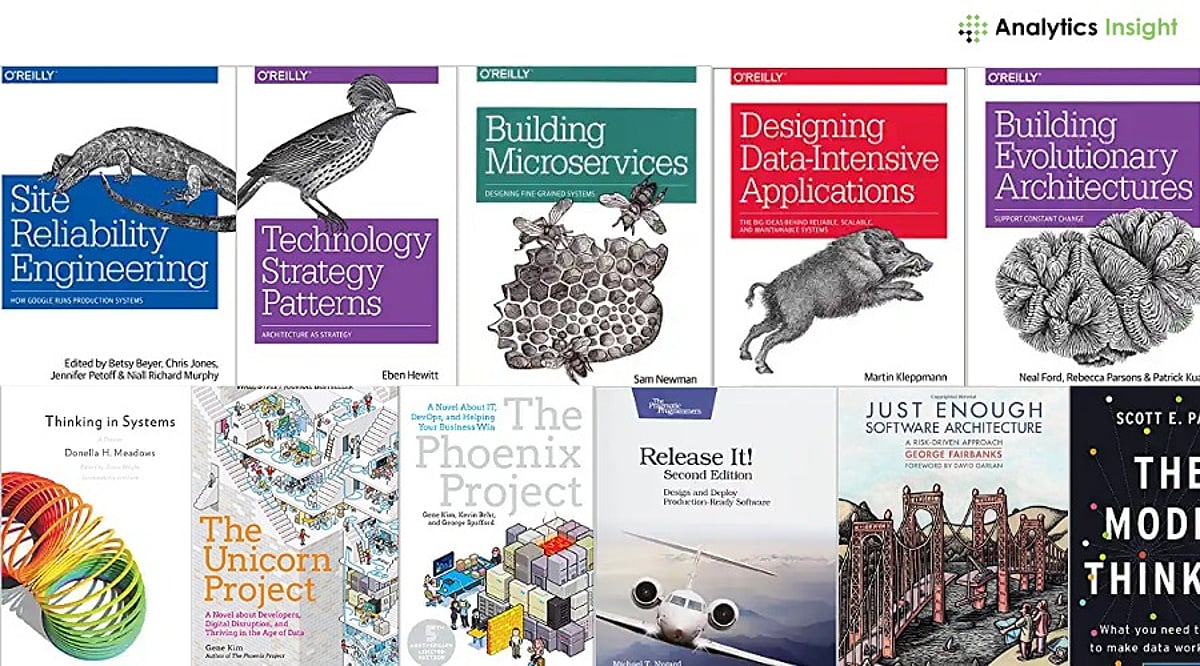
    1. Designing Data-Intensive Applications

    Martin Kleppmann’s classic explains distributed systems, databases, replication, and scalability in an understandable way. Essential for cloud-native and large-scale data systems.

    2. Fundamentals of Software Architecture

    Mark Richards and Neal Ford cover architecture patterns, trade-offs, and decision-making for developers transitioning to leadership roles.

    3. Software Architecture: The Hard Parts

    Neal Ford, Mark Richards, Pramod Sadalage, and Zhamak Dehghani explore real-world trade-offs in distributed transactions, event-driven systems, and evolutionary architecture.

    4. Clean Architecture

    Robert C. Martin emphasizes separating business logic from dependencies to build maintainable, long-lasting software.

    5. Software Engineering at Google

    Titus Winters, Tom Manshreck, and Hyrum Wright share Google’s engineering culture insights on code reviews, testing, documentation, and technical debt—applicable anywhere.

    6. Building Microservices (Second Edition)

    Sam Newman provides practical guidance on microservices boundaries, API management, and cloud-first architecture.

    7. Head First Software Architecture

    Raju Gandhi and Mark Richards offer a visually engaging introduction to architecture fundamentals for aspiring architects.

    Looking Ahead

    The role of a technical leader today involves having good judgment, communicating ideas well, and knowing system design. Technologies will change, but the principles in these books will remain valid for years.

    FAQs

    Which book is best for beginners? Head First Software Architecture is excellent for transitioning developers.

    Why should software architects read books in 2026? To stay current with AI, cloud, and distributed systems best practices.

    Is Clean Architecture still relevant? Yes, its principles of maintainability and separation of concerns endure.

    Which book is best for distributed systems? Designing Data-Intensive Applications is the go-to resource.

    Can these books help developers become tech leads? Absolutely, they build technical knowledge and leadership skills.

  • Rami Fahim: The CEO Driving AI-Powered Transformation at FlairsTech

    Rami Fahim: The CEO Driving AI-Powered Transformation at FlairsTech

    Rami Fahim is a technology executive recognized for shaping global IT service delivery and innovation. As Chief Executive Officer of FlairsTech, he leads an international organization that provides software development and customer operations services to businesses worldwide. Known for championing innovation, talent, and operational excellence, Fahim has helped position the company as a trusted technology partner for thousands of organizations.

    Early Life and Education

    Rami Fahim built his career on a strong combination of technical expertise and business insight. He earned a Bachelor of Engineering in Computer Engineering from Concordia University in 2000, developing a solid foundation in technology. Later, he pursued a Master of Business Administration from McGill University in 2007, strengthening his leadership, strategy, and global business management capabilities.

    Professional Career

    Rami Fahim assumed the role of Chief Executive Officer at FlairsTech, where he oversees global strategy, operations, and innovation. He leads teams delivering software development and customer operations services to organizations worldwide. His leadership focuses on building high-performing teams, expanding international reach, and creating technology-driven solutions that help businesses improve efficiency and customer experience.

    Business Intervention in AI

    FlairsTech uses AI-driven solutions to help organizations transform their operations through automated processes combined with workflow optimization and decision support systems which improve efficiency and decrease operational expenses while enabling teams to deliver results that meet organizational goals in all areas of their work.

    • Smart Operations: AIMY uses artificial intelligence to conduct automated quality checks while it retrieves information immediately and it helps users make faster decisions by combining artificial intelligence with human knowledge to enhance precision and provide consistent customer service.
    • Workflow Intelligence: The AI platform analyzes workflows to decrease manual work while it delivers practical insights which help organizations boost their operational performance and efficiency and their teams achieve quicker and more precise business results.
    • PMO Optimization: AIMY-powered PMO Services enable organizations to optimize their project workflows while they achieve better resource management and make informed decisions which help them complete projects on schedule and within budget while they meet their strategic goals.
    • Intelligent Monitoring: It uses artificial intelligence to forecast application problems while it carries out repetitive work and decreases false alarm notifications which results in better operational efficiency and lower expenses and lets teams work on important strategic projects.
    • Intelligent Automation: It uses artificial intelligence to streamline IT operations, customer experience management, project management office functions and business processes which helps teams work more efficiently while reducing their operational costs and producing measurable effects on all service areas.
    • AI-Driven Finance: It uses artificial intelligence to automate all aspects of bookkeeping and invoice processing and dispute resolution which results in better accuracy and faster work processes and lower expenses and complete financial compliance and the ability to grow business operations.

    Business Achievements

    FlairsTech has established international offices in Egypt and Poland and Canada under Rami Fahim’s leadership. The company now supports more than 2,500 organizations through a team of over 600 professionals. Fahim has developed the company through his dedication to innovation and his commitment to developing talent and operational excellence. The company’s software development services and customer operations services have established it as a trustworthy global provider.

    Controversies

    Rami Fahim currently lacks any public personal controversies which he needs to address. He has gained recognition for his role in developing FlairsTech because he successfully led the company’s expansion while driving innovation through managed services and AI-based business solutions and his dedication to ethical professional practices and value-based technology implementation.

  • Top Java Books to Master Programming and Software Development in 2026

    Top Java Books to Master Programming and Software Development in 2026

    Java remains one of the most versatile and widely used programming languages in the world. Whether you’re a beginner looking to build a strong foundation or an experienced developer aiming to deepen your expertise, the right books can make all the difference. Here are the best Java books for 2026 that cover everything from best practices and concurrency to algorithms and enterprise development.

    • Effective Java – Joshua Bloch: Covers Java best practices, design patterns, generics, concurrency, and performance optimization through practical examples for professional developers.
    • Head First Java – Kathy Sierra & Bert Bates: Uses visual explanations and interactive exercises, making Java concepts easy for beginners while building strong programming fundamentals quickly.
    • Core Java Volume I – Cay S. Horstmann: Explains Java syntax, object-oriented programming, collections, exceptions, and modern language features with detailed examples and practical exercises.
    • Core Java Volume II – Cay S. Horstmann: Focuses on advanced Java topics including networking, databases, XML, security, modules, and enterprise-level application development for experienced programmers.
    • Java: The Complete Reference – Herbert Schildt: Provides comprehensive coverage of Java language features, APIs, libraries, multithreading, networking, and application development in one authoritative resource.
    • Java Concurrency in Practice – Brian Goetz: Helps developers understand multithreading, synchronization, thread safety, and concurrent programming techniques for building efficient Java applications.
    • Clean Code – Robert C. Martin: Teaches developers to write readable, maintainable, scalable, and efficient code using software engineering principles applicable across Java projects.
    • Spring in Action – Craig Walls: Introduces Spring Framework fundamentals, dependency injection, Spring Boot, REST APIs, security, and enterprise application development with practical implementation guidance.
    • Grokking Algorithms – Aditya Bhargava: Simplifies algorithms and data structures using illustrations, helping Java developers improve logical thinking and coding interview preparation with confidence.

    These books are essential additions to any Java developer’s library in 2026, offering both foundational knowledge and cutting-edge techniques to excel in software development.

  • 10 Innovative ChatGPT Uses in 2026 Beyond Simple Conversations

    10 Innovative ChatGPT Uses in 2026 Beyond Simple Conversations

    ChatGPT has evolved into a powerful AI assistant in 2026, helping users with much more than answering questions. Here are ten amazing ways to leverage ChatGPT beyond its basic chatbot function.

    1. Summarize Long Documents: Turn lengthy reports, PDFs, and meeting notes into concise summaries within seconds to save valuable time.
    2. Brainstorm and Create Content: Use ChatGPT to brainstorm business ideas, create marketing content, and generate social media posts for different platforms.
    3. Personalized Learning: Students can use ChatGPT for personalized learning, exam preparation, language practice, and step-by-step explanations of complex topics.
    4. Assist in Software Development: Developers rely on ChatGPT to write code, debug programs, explain errors, and accelerate software development workflows.
    5. Plan Schedules and Itineraries: Create travel itineraries, meal plans, fitness routines, and personalized schedules tailored to your preferences and goals.
    6. Generate Images and Analyze Data: ChatGPT now supports advanced image generation, document analysis, voice interactions, and workflow automation for eligible users.
    7. Enhance Customer Support: Businesses are using AI assistants to improve customer support, automate repetitive tasks, and increase team productivity.
    8. Automate Workflows: Integrate ChatGPT to streamline repetitive processes and boost efficiency across teams.
    9. Verify Information Carefully: As AI becomes more capable, users should always verify important information and avoid sharing sensitive personal data.
    10. Stay Updated: Join our WhatsApp Channel to get the latest news, exclusives, and videos on WhatsApp.
  • Programming Languages That Excel in the AI Era: Python, TypeScript, and More

    Programming Languages That Excel in the AI Era: Python, TypeScript, and More

    Artificial intelligence has fundamentally changed how software is built, but it hasn’t made programming languages obsolete. According to the GitHub Octoverse 2025 report, TypeScript became the top language for GitHub projects in August 2025, while Python remained the dominant choice for AI and data science tasks. The volume of public repositories also grew significantly year-over-year, with developers contributing to over 1.1 million public repositories. Here are the programming languages that thrive alongside AI.

    Python

    Python continues to anchor the AI landscape. Instead of writing core algorithms from scratch, developers leverage its massive ecosystem to handle complex data processing and model training. The language’s dominance is clear: it attracted 2.6 million contributors in 2025 alone, cementing its status as the standard for data science and automation.

    TypeScript

    TypeScript’s rise mirrors the explosion of AI-generated code. By bringing static typing to JavaScript, it catches errors early and secures large codebases. This utility pushed TypeScript past both Python and JavaScript in August 2025 to become the most-used language on GitHub. The milestone followed a 66% surge in its user base, adding 1 million contributors in a single year, underscoring a major shift toward typed languages for building AI software.

    JavaScript

    JavaScript remains strong because most AI products require user interfaces. It is frequently used in chatbots, AI dashboards, browser extensions, SaaS tools, and web-based automation platforms. JavaScript was used by 66% of all respondents on GitHub, making it highly relevant for developing AI-powered web applications.

    Java

    Enterprise adoption of Java is holding steady in AI. It is still used for backend systems, APIs, Android apps, and high-volume platforms at banks, insurance companies, telecom firms, and large corporations. The language is important for use cases beyond AI—many companies are augmenting their existing apps with AI capabilities rather than replacing legacy systems. Java experienced steady enterprise-driven growth, bringing the total number of contributors to approximately 174,705 over the past year, according to GitHub.

    C++

    C++ is crucial in AI where performance is key. It is applied in inference engines, robotics, embedded systems, games, computer vision, and high-performance computing. When speed, memory control, and hardware-level optimization are required, C++ is invaluable. In July 2026, TIOBE named C++ as one of the three most popular programming languages in the world, trailing only Python and C. This indicates that performance-oriented languages remain in high demand even in the AI era.

    C#

    C# is used in enterprise software, cloud apps, desktop apps, and game development, and continues to grow. It leverages Microsoft’s ecosystem, including Azure, .NET, Visual Studio, and AI tools. In 2025, C# brought in approximately 136,735 contributors and saw a 22.22% increase compared to the previous year, according to GitHub. It is a useful language for enterprise and interactive products relying on artificial intelligence, particularly in business applications and game engines.

    Final Thoughts

    The programming languages that will thrive alongside AI are not only those used to build models. Python dominates AI development, while TypeScript and JavaScript dominate modern AI applications. Java is well-suited for enterprise use, C++ for systems requiring performance, and C# for Microsoft-backed and interactive systems.

    Frequently Asked Questions

    1. Which programming language is best for AI development?

    Python is widely considered the best language for AI development due to its simple syntax and strong ecosystem. Libraries like TensorFlow, PyTorch, Pandas, NumPy, and Scikit-learn make it useful for machine learning, data science, and automation.

    2. Why is TypeScript growing in the AI era?

    TypeScript is growing because AI-generated code needs structure, type safety, and easier maintenance. Its static typing helps developers reduce bugs and manage large AI-powered applications more efficiently.

    3. Is JavaScript useful for AI applications?

    Yes, JavaScript is useful as most AI tools need web-based interfaces. Chatbots, AI dashboards, browser extensions, SaaS platforms, and automation tools often rely on JavaScript frameworks and runtime environments.

    4. Why does C++ remain important with AI?

    C++ remains important because it offers high performance, memory control, and hardware-level optimization. It is commonly used in robotics, inference engines, computer vision, gaming, embedded systems, and high-performance computing.

    5. Should beginners learn Python first for AI?

    Yes, beginners interested in AI should usually start with Python as it is easier to learn and has strong AI libraries. After Python, they can learn JavaScript, TypeScript, Java, C++, or C# depending on their career goals.

  • Top 10 Java Certifications to Advance Your Career and Salary in 2026

    Top 10 Java Certifications to Advance Your Career and Salary in 2026

    10 Best Java Certifications to Boost Your Career and Salary in 2026

    Java remains one of the most in-demand programming languages globally. Earning a recognized certification can significantly enhance your technical credibility, employability, and earning potential. Here are the top 10 Java certifications to consider in 2026:

    • Oracle Certified Professional Java SE — Industry-recognized certification validating advanced Java programming expertise, improving employability, technical credibility, and long-term software development career prospects.
    • Oracle Certified Associate Java SE — Ideal beginner certification covering Java fundamentals, object-oriented programming concepts, and core development skills for aspiring professionals entering technology.
    • Oracle Certified Foundations Associate — Introduces essential Java programming principles, syntax, and logical thinking, creating a strong foundation for advanced certification pathways.
    • Spring Professional Certification — Demonstrates expertise in Spring Framework development, dependency injection, microservices, and enterprise Java applications widely used across industries.
    • Oracle Java EE Certification — Focuses on enterprise application development, web technologies, APIs, and scalable Java solutions for professional software engineering environments worldwide.
    • Apache Kafka for Java Developers — Validates event-driven programming skills using Java and Kafka, supporting careers in distributed systems and modern data-intensive applications.
    • Jakarta EE Developer Certification — Covers enterprise Java standards, cloud-ready applications, RESTful services, and modern backend development for large-scale business software solutions.
    • Java Multithreading Certification — Strengthens concurrent programming expertise, improving performance optimization skills required for complex enterprise and high-performance Java applications.
    • Maven and Gradle Certification — Demonstrates proficiency in Java build automation, dependency management, project configuration, and efficient software development workflow optimization.

    Join our WhatsApp Channel to get the latest news, exclusives and videos on WhatsApp.

  • Claude Code in Your Browser: A Step-by-Step Guide to AI-Powered Coding

    Claude Code in Your Browser: A Step-by-Step Guide to AI-Powered Coding

    Claude Code is transforming AI-powered software development by allowing developers to run coding workflows directly in their browser. This guide explains how to get started and maximize its potential.

    Getting Started with Browser-Based Claude Code

    To use Claude Code in your browser, connect it to a supported repository. Once linked, it analyzes your project structure and assists with a variety of coding tasks—no heavy local setup required. This makes starting a project easy from any device with a modern browser.

    What You Can Do with Claude Code

    • Generate code across multiple programming languages.
    • Explain complex functions to understand legacy or unfamiliar code.
    • Fix bugs and receive suggestions for improvements.
    • Edit files and write comprehensive documentation.
    • Review pull requests and automate repetitive tasks like formatting or testing.
    • Integrate with Git workflows to speed up debugging, code reviews, and feature development.

    Best Practices and Security

    While Claude Code is a powerful assistant, always review its output for security, correctness, and compatibility before deploying to production. Security measures should include limiting repository access, protecting API credentials, and manually verifying sensitive code changes. Many teams use the tool alongside Git to accelerate development without sacrificing quality.

    The Future of AI-Assisted Development

    As we move through 2026, browser-based coding tools like Claude Code are becoming essential in modern software engineering. They lower the barrier to entry and enable rapid iteration, making AI assistance an integral part of everyday development workflows.

  • Top 10 Essential Spring Boot Libraries for Developers in 2026

    Top 10 Essential Spring Boot Libraries for Developers in 2026

    Spring Boot remains one of the most popular frameworks for building Java applications, but creating robust software requires more than the framework alone. Developers rely on libraries to simplify security, testing, API documentation, logging, database access, and monitoring. Choosing the right libraries saves time, reduces effort, and improves application performance. Below are the ten most essential Spring Boot libraries for developers in 2026.

    Why Spring Boot Libraries Matter

    A typical Spring Boot application does more than serve HTTP requests. It connects to databases, secures APIs, validates user input, logs events, monitors performance, and integrates with cloud services. Instead of building these features from scratch, developers use well-tested, actively maintained libraries supported by the Java ecosystem.

    Best Practices for Using Spring Boot Libraries

    Adding more libraries does not always improve an application. Developers should select libraries that solve specific problems and avoid including multiple tools with overlapping functions. Keeping dependencies updated is critical, as newer versions often include security patches, bug fixes, and performance improvements. Reviewing library documentation before integrating new features into production is also recommended. Using trusted, well-maintained libraries reduces compatibility issues and simplifies long-term maintenance. A clean dependency structure makes applications easier to debug, upgrade, and scale as project requirements evolve.

    Trends Shaping the Spring Boot Ecosystem in 2026

    Spring Boot development continues to evolve alongside cloud-native technology and AI. Current trends include microservices architecture, event-based applications, and AI-powered APIs, which demand higher observability, enhanced security, and increased resiliency. Containerization support, cloud monitoring, automatic API generation, and automated testing are critical capabilities for modern application development. Additionally, native compiling and Kubernetes integration have influenced Java application design. As enterprise software becomes more distributed, developers increasingly focus on performance and maintainability when choosing Spring Boot libraries.

    Top Spring Boot Libraries at a Glance

    • Spring Data JPA – Simplifies database access and CRUD operations with ORM support.
    • Spring Security – Provides authentication, authorization, OAuth2, JWT, and protection against common threats.
    • Springdoc OpenAPI – Generates interactive API documentation automatically.
    • Lombok – Reduces boilerplate code with annotations for getters, setters, and constructors.
    • MapStruct – Simplifies object mapping between layers.
    • Logback – A reliable logging framework for production environments.
    • Testcontainers – Enables integration testing with disposable databases and services.
    • Resilience4j – Adds fault tolerance with circuit breakers, retries, and rate limiters.
    • Micrometer – Provides metrics collection for monitoring and observability.
    • Flyway – Manages database schema migrations safely.

    How to Choose the Right Libraries

    Not every project requires every library. The best approach is to select libraries based on application requirements. For example:

    • Database-driven applications benefit from Spring Data JPA and Flyway.
    • REST APIs typically require Spring Security and Springdoc OpenAPI.
    • Microservices often use Resilience4j and Micrometer.
    • Large enterprise projects usually combine MapStruct, Lombok, Logback, and Testcontainers to improve development speed and software quality.

    Choosing actively maintained libraries also ensures compatibility with future Spring Boot releases.

    Final Thoughts

    Spring Boot is an excellent framework for Java development, but libraries are essential for simplifying modern application development. Whether building RESTful APIs, enterprise-grade platforms, or cloud-native microservices, these libraries solve common development problems without adding unnecessary complexity. By selecting the right tools, developers can boost efficiency and productivity. As enterprise Java applications become increasingly cloud-native and distributed, choosing the right Spring Boot libraries is critical for performance, security, and long-term maintainability.

  • Top 10 GitHub Repositories for Mastering Claude Code in 2026

    Top 10 GitHub Repositories for Mastering Claude Code in 2026

    Claude Code has evolved far beyond a terminal novelty. Today, developers use it to read entire codebases, run commands, and manage multi-step engineering workflows. However, out-of-the-box capabilities only scratch the surface. The real power lies in the ecosystem built around it: skills, subagents, hooks, and reusable workflows that transform Claude Code from a helpful assistant into a structured development system. Here are ten GitHub repositories worth exploring if you’re serious about mastering Claude Code in 2026.

    Start with Anthropic’s Official Repositories

    The most reliable starting point is Anthropic’s anthropic/skills repository. It contains ready-made SKILL.md files for common tasks such as working with PDFs, spreadsheets, and presentations. Pair it with claude-code-action, Anthropic’s official GitHub Actions integration for automating Claude Code inside CI/CD pipelines. Another newer addition from Claude Code Skills 2.0 is Skill Creator, which lets you build, evaluate, and benchmark your own custom skills — no more guessing whether they actually work.

    Discover the Wider Ecosystem

    Before installing anything, it helps to know what exists. hesreallyhim/awesome-claude-code is a curated index of slash commands, CLAUDE.md files, hooks, and workflow tools — essentially a table of contents for the entire ecosystem. For a different angle, x1xhlol/system-prompts-and-models-of-ai-tools collects exposed system prompts and tool definitions from Claude Code and comparable agentic tools. This is especially useful for anyone studying how these systems are structured behind the scenes.

    Frameworks That Enforce Better Engineering Habits

    Two repositories stand out for imposing real discipline on how Claude Code writes software. Superpowers encodes a strict development methodology: brainstorm, spec, plan, test-driven development, review, and finalize. Notably, it refuses to keep any code written before tests exist. Everything Claude Code (ECC), built by hackathon-winning developer Affaan Mustafa, takes a broader approach, shipping dozens of specialized subagents, reusable skills, and security scanning tools that work across Claude Code and several other AI coding tools. Both are open source and free. Most experienced users pick a handful of components that fit their workflow rather than use every feature.

    Utilities That Solve Everyday Friction

    Some repositories exist purely to fix common pain points. Repomix packs an entire codebase — folder structure, documentation, and all — into a single AI-readable file, solving the problem of Claude Code losing context on larger projects. Claude Mem addresses a related issue: by default, Claude Code forgets everything between sessions. This tool gives it persistent memory of past decisions and project quirks.

    Advanced Setups for Teams

    For developers curious about running Claude Code as a coordinated team rather than a single assistant, the gstack repository documents Garry Tan’s setup. It assigns opinionated roles — Engineering Manager, Release Manager, QA — through reusable skills and slash commands. This is not a beginner’s starting point, but it’s a useful reference for structuring multi-agent workflows.

    Choosing Where to Start

    With so many options, star count alone isn’t a reliable filter; usefulness depends on what you’re trying to solve. Beginners are better served starting with Anthropic’s official repositories and the awesome-claude-code index before layering in frameworks like Superpowers or utilities like Repomix as specific needs arise. Building a stack gradually, rather than installing everything at once, tends to produce a far more stable and productive Claude Code setup.

    Why This Matters

    Claude Code is rapidly becoming a key AI development platform for software engineers. Understanding its ecosystem of GitHub repositories enables developers to automate workflows, improve coding efficiency, build custom AI skills, and integrate Claude into real-world engineering pipelines — making it an increasingly valuable tool for modern software development.

    Frequently Asked Questions

    What is Claude Code?

    Claude Code is Anthropic’s AI-powered coding assistant that helps developers understand codebases, write code, debug applications, execute terminal commands, automate workflows, and perform complex software engineering tasks. It supports both individual developers and teams working on modern software projects.

    Why should developers use GitHub repositories to learn Claude Code?

    GitHub repositories provide practical examples, reusable skills, automation workflows, documentation, and open-source tools that extend Claude Code’s capabilities. They allow developers to learn from real implementations instead of relying only on official documentation or theoretical tutorials.

    Which GitHub repository is best for beginners learning Claude Code?

    Anthropic’s official anthropic/skills repository is the best starting point for beginners. It contains ready-made skills for common development tasks and helps users understand how Claude Code executes structured workflows before exploring more advanced community-built repositories.

    Can Claude Code be integrated into CI/CD pipelines?

    Yes. Anthropic’s claude-code-action repository enables Claude Code to integrate with GitHub Actions and CI/CD pipelines. Developers can automate reviews, documentation, testing, and other engineering tasks directly within continuous integration and deployment workflows.

    Should developers install every Claude Code repository?

    No. The best approach is to start with official Anthropic repositories and gradually add tools that solve specific problems. Installing too many extensions at once can create unnecessary complexity and make workflows harder to maintain over time.

    Is the Claude Code ecosystem expected to grow in 2026?

    Yes. As Anthropic continues expanding Claude Code and enterprise adoption increases, the open-source ecosystem is expected to grow significantly. Developers can expect more GitHub repositories focused on automation, custom skills, AI agents, testing, memory management, and collaborative development workflows.

  • 10 Undiscovered AI Businesses Poised to Transform Industries in 2026

    10 Undiscovered AI Businesses Poised to Transform Industries in 2026

    Artificial intelligence is moving far beyond chatbots and image generators. While industry heavyweights like OpenAI, Google, Microsoft, and Anthropic continue to dominate the conversation, a new crop of AI startups is quietly building technologies that could reshape industries over the next decade.

    From accelerating drug discovery and transforming legal services to simplifying software development and improving enterprise productivity, these companies are tackling highly specialized problems with AI-first solutions. Although these companies have yet to enter the mainstream, their rapid innovation, expanding customer base, and growing investor confidence position them as potential leaders of the next AI wave.

    Emerging AI Startups Quietly Reshaping Industries Across the Global Economy

    Here are 10 AI businesses that deserve far more attention:

    Exonic

    Healthcare innovation can take years of costly research work, but Exonic is trying to change that. They use AI to study biological data, make predictions about protein interactions, and find drug candidates in the early stages of their research. This way, Exonic helps to make advanced biotechnological technologies available even for research organizations and young biotech companies.

    Spring Health

    Mental healthcare is now being influenced by an increasing amount of data, and Spring Health is driving this change. With its AI-based solution, it analyzes patient data to make recommendations for personalized mental treatment solutions. It also connects patients with the best-suited therapists and delivers effective, efficient outcomes for employers and healthcare organizations that provide such services.

    EvenUp

    Legal professionals spend countless hours reviewing medical records, calculating damages, and preparing case documentation. EvenUp streamlines these repetitive processes through generative AI, enabling law firms to prepare personal injury claims more efficiently. By automating administrative work without compromising accuracy, the platform allows lawyers to devote more time to legal strategy and client advocacy.

    Baseten

    Building an AI model is just the first step, but actually deploying that model is still one of the biggest challenges in the field. Baseten offers the services companies require to deploy, manage, and scale machine learning models for enterprise usage. By providing this platform, Baseten removes much of the operational complexities involved in deploying AI technology.

    Hebbia

    Organizations have been creating massive amounts of data that have made the task of gaining insights from them more challenging. This is because Hebbia provides an AI-powered research assistant that can be used to analyze multiple files at once. Whether it’s a legal agreement, financial statement, or research paper, Hebbia will provide context-based answers within minutes.

    Harvey

    Artificial intelligence is increasingly becoming an integral part of the legal field, and one of its leading innovators is Harvey. The platform has been designed to benefit lawyers, who can use it for legal research, contract drafting, compliance reviews, and document analysis. Rather than making lawyers’ work redundant, it saves them time on mundane tasks.

    Cognition AI

    Cognition AI became known internationally when it launched Devin, an independent AI software engineer capable of writing, testing, debugging, and optimizing code. This illustrates how AI can help with software development in ways beyond providing code recommendations. As businesses continue adopting AI in software development, Cognition AI is playing an instrumental role in redefining the future of software engineering.

    Lovable

    Software development is increasingly user-friendly for people without technical expertise, and Lovable is leading this trend. Using the platform, users can develop software just by writing down what they need in plain English. By simplifying software development processes by removing the need for coding skills, Lovable is speeding up product development for entrepreneurs and startups.

    Replit

    Replit has evolved from an online code editor into a full-fledged AI-powered software development environment. Users can code, test, deploy, and work together on their applications using just their browser while enjoying the benefits of AI coding assistants at every step of the process.

    Poolside

    The development of enterprise software goes beyond mere code generation and requires considerations such as security, privacy, and reliability. Poolside focuses on AI models designed specifically for organizations developing mission-critical applications. By emphasizing security and enterprise-level performance, Poolside is tackling one of the major challenges with using AI in corporate software engineering.

    Why These AI Businesses Matter

    The next phase of artificial intelligence will not be defined solely by general-purpose chatbots. Increasingly, innovation is coming from specialized companies building AI solutions for healthcare, legal services, biotechnology, software engineering, and enterprise operations. Although they are not yet widely known beyond tech communities, these firms are addressing industry challenges through real-world solutions that have commercial potential. With ongoing investment in AI transformation by organizations, many of these startup firms will likely play significant roles in the global technology landscape. Keeping an eye on these companies today may offer an early glimpse into the future of artificial intelligence.