Tag: stablecoin

  • Solana Hits Record Activity With 1B Weekly Transactions, Yet SOL Price Stalls Below Key Resistance

    Solana Hits Record Activity With 1B Weekly Transactions, Yet SOL Price Stalls Below Key Resistance

    Key Takeaways

    • Solana processed over 1 billion non-vote transactions in one week.
    • Tokenized assets on Solana have reached around $3.3 billion.
    • SOL remains below a major resistance zone despite strong network growth.

    Solana has entered another period of strong network expansion. Fresh blockchain data shows that user activity, transaction volume, and adoption continue to rise at a fast pace. The network has become one of the busiest blockchain ecosystems in the crypto market, thanks to its fast transaction speed and low fees. While these achievements have improved confidence in the project, the price of SOL has not matched the pace of this growth. Instead, the token continues to face heavy resistance on the price charts.

    This gap between network performance and market value has become one of the biggest talking points among crypto investors. Many believe the blockchain looks stronger than ever, but the token still needs a major push before it can start a sustained rally.

    Record Transaction Numbers Show Higher Adoption

    One of the biggest highlights is Solana’s transaction count. The blockchain recently processed more than 1 billion non-vote transactions in just one week, one of the highest weekly totals in its history. This number matters as it shows real activity across the network instead of transactions created only to support blockchain operations. More people now use Solana for decentralized exchanges, blockchain games, NFT platforms, payment services, and other applications. The rise in active wallet addresses also supports this trend, which suggests that new users continue to join the ecosystem while existing users remain active. These figures show that demand for Solana’s network continues to grow even during periods when the broader crypto market remains uncertain.

    Tokenized Assets Become a Major Growth Driver

    Another important development comes from tokenized real-world assets. Solana now hosts around $3.3 billion worth of tokenized assets on its blockchain. The network also handles almost 97% of all on-chain tokenized equity trading. This is a major achievement since tokenized assets allow traditional financial products, such as company shares, to move onto blockchain networks. Solana has become a preferred choice for these projects as transactions settle quickly and cost very little. As more financial companies explore blockchain technology, this sector could become one of Solana’s strongest long-term advantages.

    Stablecoin Supply Continues to Rise

    The rise in stablecoin activity is a growing trend in the Solana network. The increased supply of stablecoins means that there is an increased pool of capital from which to trade, lend, borrow, and utilize decentralized finance services. Higher liquidity allows for easier movement of funds between different platforms. This also creates a better trading environment on decentralized exchanges. Stablecoin activity has always been resilient even when there were considerable fluctuations in the markets.

    Institutional Interest Remains Strong

    Large investors also continue to watch Solana closely. Optimism around possible spot Solana exchange-traded products has helped improve long-term market sentiment. Although these expectations have not yet pushed SOL into a major rally, they show that institutional interest continues to build. Many investment firms now see Solana as one of the leading blockchain networks given its ability to process large numbers of transactions without high costs. This growing attention could become an important factor if broader market conditions improve.

    SOL Price Struggles Below Major Resistance

    Despite all these positive developments, SOL has not managed to break above an important resistance level. The token continues to trade below its 100-day exponential moving average, which many traders consider a key technical barrier. Each attempt to move higher has attracted selling pressure. This has limited the token’s ability to build strong upward momentum even as network activity reaches new highs. The contrast between strong blockchain growth and weak price action has surprised many market participants.

    Technical Indicators Show Mixed Signals

    The Relative Strength Index (RSI) remains below levels that usually signal strong buying pressure. At the same time, the Moving Average Convergence Divergence (MACD) points to weaker bullish momentum. These indicators suggest that buyers have not yet taken full control of the market. Until stronger demand returns, resistance levels could continue to slow any price recovery.

    Important Price Levels to Watch

    Analysts believe the $78 to $79 range remains the most important resistance zone for SOL. A successful move above this area could open the door for a rally toward the mid-$90 range. However, another rejection could send the price back toward support between $73 and $74. These levels may decide the next major move for the token over the coming weeks.

    Strong Network Does Not Always Lift the Token Price

    One reason behind this difference is Solana’s fee structure. The network charges very low transaction fees, which makes it attractive for developers and users. However, higher blockchain activity does not always create enough buying demand for SOL itself. As a result, network growth alone cannot guarantee immediate price gains. Investors often wait for stronger market demand before the token begins a sustained upward move.

    Why This Matters

    This divergence proves that record-breaking blockchain adoption does not automatically increase token price. Solana’s massive scaling wins show it is a primary hub for financial activity, but its low-fee model struggles to generate enough token demand to easily shatter major market resistance.

    Long-Term Outlook Remains Positive

    Despite the short-term challenges faced by SOL, the network is continuing to improve in various aspects. Developer activity remains good, validator participation keeps growing, transaction volumes are high, and user adoption is increasing. These indicators make Solana one of the leading Layer-1 blockchains in the industry. Its increasing importance in DeFi, payment software, gaming, NFTs, and tokenized assets means the ecosystem has many possibilities for future growth. At the moment, the blockchain continues to achieve new milestones, but the token still has to reach a point of stable breakthrough from its resistance level before the price performance will fully reflect the network’s potential.

    FAQs

    1. Why is Solana’s network growing? The ecosystem is expanding due to high user transaction counts, low fees, rapid developer adoption, and massive growth in tokenized assets and decentralized finance infrastructure.
    2. How many transactions did Solana recently process? The blockchain achieved a massive performance milestone by processing more than 1 billion non-vote transactions within the span of a single week.
    3. How large is Solana’s tokenized asset market? Real-world tokenized assets built directly on the network have climbed to an aggregate value of approximately $3.3 billion, claiming dominant sector share.
    4. Why is SOL facing resistance? Despite immense network activity, the token remains stuck under key moving averages because low fees mean high throughput does not translate into enough buying pressure.
    5. What could support the next SOL rally? A sustained upward push requires buyers to clear the $78 to $79 resistance zone, backed by broader market volume and spot ETF developments.
  • Bitcoin ETF Inflows Hit $79M, Visa Launches Stablecoin Platform, Polygon Adds 107K Holders in a Month

    Bitcoin ETF Inflows Hit $79M, Visa Launches Stablecoin Platform, Polygon Adds 107K Holders in a Month

    The crypto market saw a flurry of activity as Bitcoin spot ETFs recorded $79.15 million in net inflows, Visa introduced its Stablecoin Platform for financial institutions, and Polygon added over 107,000 new holders in just one month. Meanwhile, BitPay secured regulatory approval under the EU’s MiCA framework, and prediction market platform Kalshi hit a record $217.98 million in daily crypto contract volume.

    Bitcoin Spot ETFs See $79.15 Million in Inflows

    According to data from SoSoValue, Bitcoin spot ETFs recorded a total net inflow of $79.15 million on July 16. BlackRock’s IBIT led the pack with $33.44 million in daily net inflows, bringing its historical net inflow to $60.35 billion. Fidelity’s FBTC followed with $30.73 million, pushing its total historical net inflow to $9.97 billion. The combined net asset value of all Bitcoin spot ETFs now stands at $77.72 billion, with an ETF net asset ratio of 6.04% and historical cumulative net inflows reaching $51.22 billion.

    Visa Launches Stablecoin Platform for Institutions

    On July 16, Visa announced the Visa Stablecoin Platform (VSP), a new enterprise offering designed to help banks, fintechs, and payment providers integrate on-chain settlement without building their own infrastructure. The platform provides access to OpenUSD, a stablecoin launched by Open Standard with participation from over 140 institutions. VSP addresses the operational challenge of stablecoin adoption by offering pre-built wallet infrastructure via a Wallet-as-a-Service model, direct minting and burning of OpenUSD, and seamless connectivity to Visa’s settlement and treasury systems.

    Polygon Holders Surge 78% in One Month

    Polygon (POL) saw its holder count jump from 138,000 to 245,000 in just 30 days, adding more than 107,000 new wallets—a 78% increase. This growth was driven by rising payment activity on the network. Monthly Crypto Card Volume surged over 122% to a record high, with more than $30.5 million processed so far, compared to $13.69 million in June.

    BitPay Receives MiCA Approval in the Netherlands

    BitPay has secured authorization under the European Union’s Markets in Crypto-Assets (MiCA) framework through its Dutch subsidiary, BitPay B.V., from the Dutch Authority for the Financial Markets (AFM). This approval allows BitPay to offer regulated digital asset services—including payment acceptance and stablecoin transactions—across all EU member states via MiCA’s passporting rules. Thom de Jong, BitPay’s Chief Compliance Officer for Europe, emphasized that the authorization strengthens the company’s ability to serve EU businesses and consumers while reinforcing its compliance-focused approach.

    Kalshi Crypto Contract Volume Hits Record $217.98 Million

    Kalshi’s crypto event contracts set a new single-day volume record on July 15, reaching $217.98 million, according to Artemis data. Volume on the platform has been steadily climbing since May, rising from roughly $5 million daily on January 1 to the current record—a 44x increase in about seven months. Kalshi now controls roughly 84% of crypto-prediction volume, having overtaken Polymarket in the space.

    Frequently Asked Questions

    How much inflow did Bitcoin spot ETFs record?

    Bitcoin spot ETFs recorded $79.15 million in net inflows. BlackRock’s IBIT led with $33.44 million, followed by Fidelity’s FBTC at $30.73 million.

    What is Visa’s Stablecoin Platform?

    Visa’s Stablecoin Platform is an enterprise offering for banks, fintechs, and payment providers. It supports wallet infrastructure, OpenUSD minting and burning, and integration with Visa settlement systems.

    How many new holders did Polygon add?

    Polygon added more than 107,000 holders in one month. Its holder count rose from 138,000 to 245,000, marking a 78% increase.

    What MiCA approval did BitPay receive?

    BitPay secured authorization under the EU’s MiCA framework through its Dutch subsidiary. This allows it to offer regulated crypto payment and stablecoin services across EU member states.

    Why is Kalshi’s crypto contract volume important?

    Kalshi’s crypto event contracts hit a record $217.98 million in daily volume. The surge shows rising demand for regulated prediction-market exposure to crypto-related events.

  • Bitcoin ETFs See $107M Inflows, XRP Whales Accumulate 70M Tokens, and Flex Raises $70M: Crypto News Roundup

    Bitcoin ETFs See $107M Inflows, XRP Whales Accumulate 70M Tokens, and Flex Raises $70M: Crypto News Roundup

    The crypto market saw several key developments today, with Bitcoin spot ETFs recording significant inflows, XRP whales making a major purchase, and stablecoin banking platform Flex closing a substantial funding round. Here’s a detailed look at the latest crypto news.

    Bitcoin Spot ETFs See $107.80 Million in Net Inflows

    According to data from SoSoValue, Bitcoin spot exchange-traded funds (ETFs) recorded a total net inflow of $107.80 million yesterday. BlackRock’s IBIT led the pack with a daily net inflow of $80.82 million, bringing its historical total to $60.32 billion. Fidelity’s FBTC followed with a net inflow of $16.94 million, accumulating a historical net inflow of $9.94 billion.

    The total net asset value of Bitcoin spot ETFs now stands at $78.47 billion, with an ETF net asset ratio of 6.02%. The historical cumulative net inflow has reached $51.14 billion.

    XRP Whales Scoop Up 70 Million Tokens

    XRP whale wallets holding at least 1 million tokens have been actively accumulating over the past seven days, despite a sell-off from U.S. spot ETF issuers. Between July 9 and July 15, these whales purchased 70 million XRP tokens, according to data from Santiment shared by analyst Ali Martinez on July 16.

    At press time, the purchased XRP was valued at over $77 million. XRP whales now hold approximately 3.8 billion tokens, worth about $4.18 billion. This accumulation comes amid rising bullish sentiment, with technical analysis suggesting XRP could be forming an inverse head and shoulders pattern, a potential reversal indicator.

    Volvo Group Tests Proprietary Cryptocurrency

    Volvo Group has tested a proprietary cryptocurrency as part of an internal blockchain project aimed at simplifying transactions with its suppliers. Ivan Branco, Head of Information Management, AI and Analytics at Volvo Group, discussed the project in a recent interview with the Cardano Foundation.

    The experiment focused on a closed blockchain environment connecting Volvo with material and transport suppliers, rather than creating a publicly traded cryptocurrency. Branco explained that Volvo explored whether blockchain could create a shared transaction system for its supply chain partners.

    Flex Raises $70 Million for Stablecoin Banking Expansion

    California-based fintech company Flex raised $70 million in a Series B1 funding round led by Halo Fund, according to Forbes. The company plans to use the funds to expand its stablecoin-based cross-border banking platform, Flex Global, which offers multi-currency accounts supporting 32 currencies across 170 countries and regions.

    Flex’s core customers have annual revenues ranging from $3 million to $200 million and are primarily concentrated in the construction, wholesale, and import/export industries.

    CoinGecko Q2 2026 Report: Market Cap Declines

    CoinGecko’s Q2 2026 Crypto Market Report revealed that the total cryptocurrency market capitalization declined by 12.6% in the quarter, reaching $2.1 trillion by the end of June. The stablecoin market capitalization fell by 1.6% to $30.51 billion, marking the first quarterly decline since Q3 2023.

    Nominal trading volume is projected to rise 48.7% quarter-on-quarter to $113.8 billion. However, centralized exchange (CEX) spot trading volume dropped 27.9% to $1.95 trillion, hitting a monthly low of $620 billion in May. CEX perpetual contract trading volume also declined 10.0% quarter-on-quarter to $12.7 trillion.

  • XRP Bullish Sentiment Surges as XRP Ledger Exceeds 8 Million Active Accounts

    XRP Bullish Sentiment Surges as XRP Ledger Exceeds 8 Million Active Accounts

    The XRP Ledger (XRPL) has achieved a significant milestone, surpassing 8 million activated accounts for the first time. This growth comes amid rising bullish sentiment, increased DeFi activity, and a notable shift in stablecoin liquidity toward alternative Layer-1 networks.

    Market Rotation Fuels Altcoin Interest

    Current market data indicates conditions typical of an altcoin season. While Bitcoin dominance has risen above 59% for three consecutive weeks, Ethereum dominance has also gained, lifting the ETH/BTC ratio by over 10% in the past three weeks. This suggests capital is rotating beyond Bitcoin, spreading to other major cryptocurrencies.

    According to AMBCrypto, fear of missing out (FOMO) surrounding XRP and Ethereum has reached its highest level in five weeks, while Bitcoin sentiment remains neutral. XRP currently leads Ethereum in bullish discussions, with a 3.02-to-1 bullish-to-bearish comment ratio compared to Ethereum’s 2.31-to-1.

    On-Chain Activity Strengthens

    The XRP/BTC ratio has been consolidating around the 0.000015 level for nearly 10 weeks, indicating potential long-term accumulation rather than short-term speculation. Meanwhile, on-chain metrics are improving. DeFiLlama data shows total value locked (TVL) on XRPL increased by over 3% in the last 24 hours, while stablecoin supply on the network grew by more than 6%, bringing nearly $1 billion back into the ecosystem.

    In contrast, over $2 billion in stablecoins left the Ethereum network during the same period, suggesting liquidity is shifting toward XRPL and other Layer-1 alternatives. If this trend continues, XRP could benefit from stronger network participation beyond mere sentiment.

    XRPL Crosses Historic User Milestone

    The XRP Ledger has officially exceeded 8 million activated accounts, reaching 8,000,688 wallets. According to XRPScan, these wallets collectively hold 67.526 billion XRP, representing the token’s circulating supply. Unlike previous reports that counted all ever-created wallets (including deleted ones), this milestone counts only activated accounts, marking the first official time the network has achieved this level of active participation.

    With improving DeFi metrics, growing stablecoin liquidity, and extended XRP/BTC consolidation, the network is drawing increased attention. Investors will watch closely to see if these fundamentals translate into sustained market strength.

  • Solana’s Stablecoin Supply Surges 15x Since 2025, Fueling Liquidity and DeFi Expansion

    Solana’s Stablecoin Supply Surges 15x Since 2025, Fueling Liquidity and DeFi Expansion

    Solana’s stablecoin supply has experienced a remarkable 15-fold increase since 2025, propelling network growth through enhanced liquidity, surging DeFi activity, and rising institutional adoption. The total stablecoin supply on Solana now exceeds $13 billion, with non-USDC and non-USDT stablecoins alone reaching approximately $3.8 billion by mid-2026. This dramatic expansion underscores the blockchain’s growing appeal among users, developers, and financial institutions seeking scalable digital payment and decentralized finance solutions.

    Key Takeaways

    • Solana’s non-USDC and non-USDT stablecoin supply has grown nearly 15x since 2025.
    • Total stablecoin supply on Solana surpasses $13 billion, boosting network liquidity.
    • Institutional interest and DeFi expansion remain key drivers of long-term ecosystem growth.

    Diversification of Stablecoin Assets

    While USDC continues to dominate Solana’s stablecoin landscape, the market has witnessed a significant rise in alternative digital dollar tokens such as PayPal USD (PYUSD), Ethena’s USDe, and several emerging projects. This diversification reduces reliance on single issuers, enhances liquidity, and provides developers with greater flexibility—creating a more resilient and attractive ecosystem.

    Liquidity Fuels Trading and Lending

    The influx of stablecoins has deepened liquidity across Solana’s decentralized exchanges (DEXs) and lending platforms. Transaction volumes have surged, and Solana now competes closely with Ethereum and other leading smart contract chains in DEX trading volume. Fast transaction speeds and low fees continue to attract both retail and institutional participants.

    Total Value Locked (TVL) Surpasses $7.5 Billion

    Solana’s total value locked (TVL) climbed above $7.5 billion in 2025, reflecting sustained user confidence in the network’s DeFi ecosystem. Despite typical market fluctuations, TVL remains significantly higher than in previous cycles, signaling enduring trust in Solana’s infrastructure.

    Popular Applications Drive User Adoption

    Leading Solana applications—including Jupiter, Raydium, Kamino Finance, Orca, Meteora, Drift, Marginfi, and Jito—have seen increased user activity thanks to stablecoin-powered liquidity. These platforms benefit from Solana’s high throughput and low costs, making them attractive for traders and developers alike.

    SOL Price Reflects Network Health

    As of mid-July 2026, SOL trades near $80, recovering alongside the broader crypto market. The token previously reached an all-time high of nearly $294 in early 2025 before a market correction. The stabilisation of stablecoin supply has contributed to SOL’s price resilience.

    Institutional and Real-World Asset Adoption

    Institutional interest is growing, with asset managers developing Solana-based investment products and financial institutions leveraging the blockchain for faster payments and settlements. Real-world asset (RWA) tokenization is also gaining traction, as firms explore placing treasury products on-chain, drawn by Solana’s speed and low costs.

    Infrastructure Improvements Support Future Growth

    Solana’s technical foundation continues to strengthen. Validator participation remains robust, and developers are building across DeFi, gaming, AI, consumer services, and digital payments. Enhanced developer tools and institutional custody solutions are lowering barriers for new projects, sustaining long-term ecosystem expansion.

    Why This Matters

    Solana’s 15x stablecoin surge marks a pivotal shift from reliance on single asset issuers to a diversified capital base. This liquidity boost solidifies its position as a leading institutional-grade DeFi hub, directly supporting sustained network growth.

    Stablecoins: The Core Growth Driver

    Stablecoins do more than provide liquidity—they amplify transaction activity, improve lending markets, support decentralized trading, and create new opportunities for payments and yield generation. Each new dollar entering the ecosystem strengthens overall network activity. Solana now ranks as the third-largest blockchain by stablecoin supply, behind only Ethereum and TRON, underscoring its rapid ascent.

    If current trends continue, stablecoins will remain a central catalyst for Solana’s expansion, with increasing payment services, institutional participation, RWA tokenization, and DeFi innovation drawing more users and capital to the network.

    Frequently Asked Questions

    Why has Solana’s stablecoin supply grown so quickly?

    Higher DeFi adoption, low transaction fees, fast processing speeds, and increasing institutional participation have driven strong stablecoin growth.

    How much has Solana’s total stablecoin supply reached?

    The network’s total stablecoin supply has exceeded $13 billion, marking more than 150% annual growth during 2025.

    Which stablecoins are expanding on Solana?

    USDC remains the largest, while PYUSD, USDe, and several newer stablecoins have also seen significant growth.

    How does stablecoin growth benefit the Solana network?

    It improves liquidity, supports decentralized trading and lending, increases transaction activity, and attracts more developers and institutions.

    What is Solana’s current position among blockchain networks?

    Solana ranks as the third-largest blockchain by stablecoin supply, behind Ethereum and TRON, highlighting its rapid ecosystem expansion.

  • Bitcoin ETFs See $181M Inflow, US Freezes $130M in Iran-Linked USDT, and BitMine Earns $45.7M from ETH Staking

    Bitcoin ETFs See $181M Inflow, US Freezes $130M in Iran-Linked USDT, and BitMine Earns $45.7M from ETH Staking

    The crypto market witnessed several major developments today, including significant Bitcoin ETF inflows, a US government action against Iran-linked USDT wallets, and BitMine’s massive Ethereum staking revenue.

    Bitcoin ETFs Attract $181 Million in Net Inflows

    According to data from SoSoValue, Bitcoin spot ETFs recorded a total net inflow of $181.08 million yesterday. BlackRock’s IBIT led the charge with a daily net inflow of $138.91 million, bringing its historical cumulative net inflow to $60.24 billion. Fidelity’s FBTC followed with $21.07 million, accumulating a total net inflow of $9.93 billion. The combined net asset value of all Bitcoin spot ETFs now stands at $77.96 billion, representing a 6.02% net asset ratio, while the historical cumulative net inflow has reached $51.03 billion.

    US Freezes $130 Million in Iran-Linked USDT Wallets

    On Tuesday, Treasury Secretary Scott Bessent confirmed that the United States has frozen over $130 million worth of cryptocurrency tied to Iran. The action targeted four Tron wallets holding approximately $131 million in Tether (USDT). Blockchain investigator Specter first identified the wallets on-chain, and Bessent later confirmed their connection to the Central Bank of Iran. In a statement shared on X, Bessent reiterated the Treasury Department’s commitment to preventing Iran from using digital assets to support illicit financial activities.

    FTX Allegations Against Justin Sun

    FTX Trading Ltd. has alleged that Justin Sun moved $10 million in Bitcoin from customer accounts at the Poloniex exchange. The claim was detailed in an adversary proceeding court document published on July 14, 2026. FTX is seeking to recover these funds as part of its ongoing bankruptcy proceedings, highlighting the continued efforts to reclaim assets following the exchange’s collapse. The allegations add another layer to the complex legal landscape surrounding FTX.

    Stablecoin Treasury Platform Velocity Raises $38 Million

    Velocity, a stablecoin treasury platform, has raised $38 million in a Series A funding round co-led by Dragonfly and FirstMark. The company plans to expand its infrastructure, enabling companies and financial institutions to use digital assets for cross-border settlement and treasury operations. The new funds will also focus on expanding its banking and payments network, developing new products, and strengthening global regulatory capabilities. Founded in 2025, Velocity develops software that connects stablecoin networks with banking, custody, compliance, and settlement systems, targeting corporate finance teams, payment providers, fintech firms, and financial institutions.

    BitMine Earns $45.7 Million from ETH Staking

    BitMine Immersion Technologies generated $45.7 million from Ethereum staking and validation during the three months ended May 31. This figure represents 98% of the company’s total quarterly revenue of $46.5 million, according to its latest 10-Q filing with the SEC. A year earlier, BitMine reported total quarterly revenue of just $2.05 million, with machine leasing contributing $1.08 million and Bitcoin self-mining generating $813,000. The latest results underscore the company’s dramatic shift toward Ethereum after building one of the world’s largest corporate ETH treasuries.

    FAQs

    1. How much inflow did Bitcoin spot ETFs record?
    Bitcoin spot ETFs recorded total net inflows of $181.08 million. BlackRock’s IBIT led with $138.91 million, while Fidelity’s FBTC followed with $21.07 million.

    2. What happened to the Iran-linked USDT wallets?
    The United States froze four Tron wallets holding around $131 million in USDT. Treasury Secretary Scott Bessent confirmed the wallets were linked to the Central Bank of Iran.

    3. Why is BitMine’s ETH staking revenue important?
    BitMine generated $45.7 million from Ethereum staking and validation during the quarter, representing 98% of its total quarterly revenue, showing a major shift toward Ethereum.

    4. How much did Velocity raise in funding?
    Velocity raised $38 million in a Series A funding round co-led by Dragonfly and FirstMark to expand stablecoin treasury, payments, and settlement infrastructure.

    5. What did FTX allege against Justin Sun?
    FTX alleged that Justin Sun moved $10 million in Bitcoin from customer accounts at Poloniex, as part of FTX’s ongoing bankruptcy-related recovery efforts.

  • Circle Wins $49M Arbitration Case Against Tether-Linked Heka Funds

    Circle Wins $49M Arbitration Case Against Tether-Linked Heka Funds

    Circle has won an arbitration dispute against Heka Funds, defeating a $49 million damages claim linked to a 2023 platform suspension, according to a report. Circle suspected trading patterns that favored Tether’s USDT and removed the fund’s access. The outcome became public on July 14, 2026.

    None of the parties has issued an official statement. Therefore, the report remains the only public account of the dispute and ruling.

    Circle Defeats Claim After Platform Suspension

    Circle operates the USDC stablecoin and controls access to its platform services. In late 2023, the company suspended Heka Funds after reviewing its trading activity. According to the report, the fund’s trading patterns allegedly favored USDT in a targeted manner. Circle viewed the conduct as close to market manipulation.

    The company considered the activity a threat to USDC’s market integrity. It then withdrew the fund’s access to its platform and related services. Heka Funds challenged the suspension through arbitration in 2024. It demanded $49 million for profits it claimed to have lost after losing platform access.

    The fund relied on Circle’s issuance, redemption, and trading channels. Therefore, the suspension reduced the number of routes available for its arbitrage strategy.

    Heka Built its Business Around Stablecoin Arbitrage

    The arbitrator dismissed the damages claim and ruled in Circle’s favor. As a result, Circle did not have to pay the requested amount. The report did not disclose the ruling date or the arbitrator’s detailed reasoning. Arbitration proceedings usually keep financial disputes outside public courtrooms.

    A privately appointed arbitrator decides the case. Both parties must generally follow the ruling and have limited options to challenge it. Heka Funds operates through Heka Funds SICAV p.l.c. in Malta. Its Elysium Global Arbitrage Fund uses a strategy managed by London-based Abraxas Capital Management.

    The fund began operating in late 2018 and focused on stablecoin and Tether arbitrage. It targeted small price differences across exchanges and digital tokens. These strategies depend on large transaction volumes and fast settlement. Losing a major trading partner can reduce available opportunities and lower potential returns.

    Platform Access Shapes Stablecoin Competition

    A 2021 Protos investigation said the fund held up to €540 million, or about $570 million, across USDC and USDT. The investigation also reported cumulative gains above 100% since the fund’s launch. In 2021, the fund recorded about €49 million in annual profit. That amount resembles the later arbitration claim. However, the figures relate to separate matters from different years.

    Access decisions directly affect arbitrage funds since their strategies depend on issuer redemption channels and several trading routes. Circle and Tether lead the global stablecoin market, while USDT holds the larger market value. Circle has traded on the NYSE since June 2025.

    The company uses the ticker CRCL. Its public listing also places its operations under greater market and regulatory scrutiny. Meanwhile, the United States is developing federal stablecoin rules through the GENIUS Act. The proposed framework covers reserves, audits, disclosures, and issuer requirements. No official response has emerged from Circle, Tether, Heka Funds, or Abraxas Capital. The detailed basis for the arbitrator’s ruling therefore remains undisclosed.

    What’s Next?

    Circle defeated Heka Funds’ $49 million damages claim after suspending the fund over trading patterns that allegedly favored USDT. Although the arbitrator backed Circle, the reasoning remains undisclosed. Market participants should watch for official statements that may clarify the case and its impact on stablecoin platform access.

  • Thailand Intensifies Monitoring of Large USDT Transactions Amid Surging Stablecoin Demand

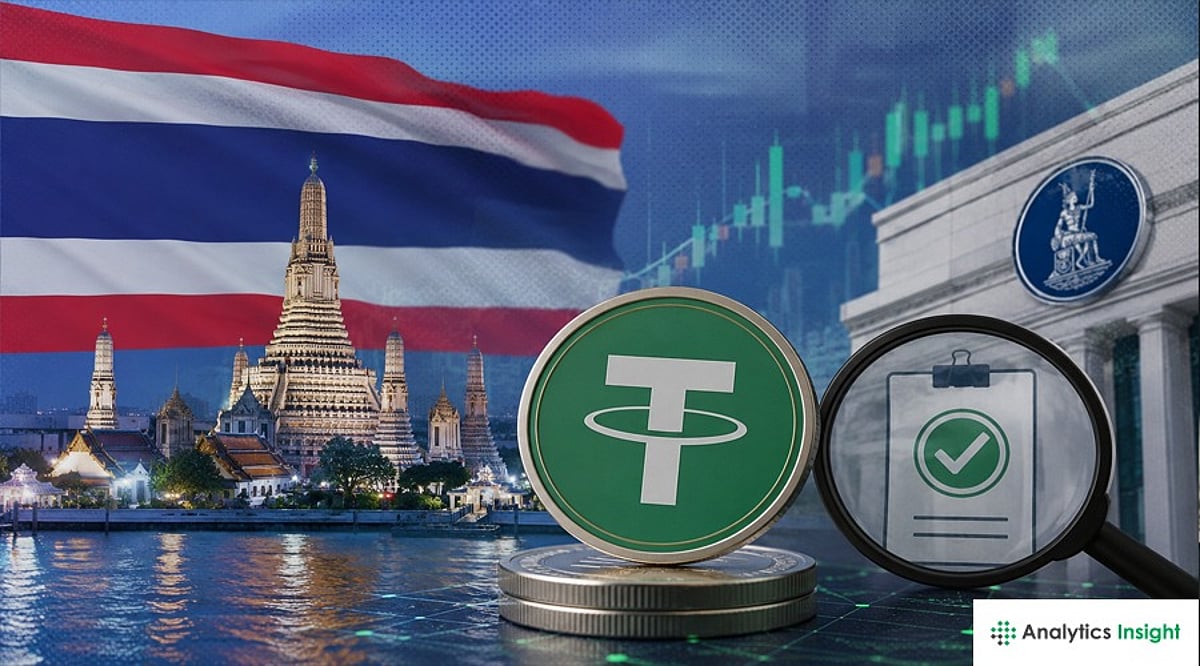
    Thailand Intensifies Monitoring of Large USDT Transactions Amid Surging Stablecoin Demand

    Thailand’s central bank is joining forces with the Securities and Exchange Commission to tighten oversight of large Tether (USDT) transfers, responding to a sharp rise in stablecoin adoption worldwide. The move targets potential gray-economy flows as businesses increasingly turn to crypto for everyday payments.

    Stablecoin Demand Expands Across Global Markets

    Market data shows USDT usage reached 35.1% by July 2026, surpassing the 29.0% recorded in the same period of 2021 and far exceeding 2024 levels. This shift reflects growing investor preference for stability over speculative assets.

    Blockchain activity further confirms the trend: ERC-20 stablecoin addresses have climbed sharply since 2025, with daily active addresses ranging between 400,000 and 700,000 across supported networks.

    Corporate adoption is also accelerating. Visa, Mastercard, PayPal and Stripe now integrate stablecoins into cross-border payment systems, enabling businesses to settle transactions more efficiently. The stablecoin market has grown to nearly $312 billion, signaling demand that extends beyond crypto-native users into mainstream commercial activity.

    Thailand Targets USDT in Gray Economy Crackdown

    The Bank of Thailand will work closely with the Securities and Exchange Commission to monitor large stablecoin transfers, foreign exchange transactions and high-value cash movements. Authorities aim to reduce activity linked to the country’s gray economy, which operates outside formal regulatory systems and often facilitates money laundering, tax evasion and other financial crimes.

    USDT remains a primary focus as the world’s largest stablecoin by market capitalization. Its cross-border accessibility and widespread use make it attractive for remittances, trading and value storage, but regulators believe those same features allow significant fund transfers to bypass traditional banking oversight.

    New Reporting Rules Increase Compliance Requirements

    Thailand introduced cryptocurrency regulations in 2018, but stablecoins have largely remained outside direct regulatory attention until now. Under the new initiative, crypto exchanges and financial institutions must report large USDT transfers and suspicious transaction patterns. Authorities will also monitor high-value cash deposits, withdrawals and qualifying foreign exchange transactions.

    Consequently, businesses and individuals using USDT in Thailand will face stronger transparency requirements. Exchanges may strengthen know-your-customer procedures and transaction reporting standards. The approach mirrors similar regulatory developments in the United States, Europe and Japan.

    Thailand has previously raised concerns about the gray economy’s effect on tax revenue and financial stability. If the monitoring program proves effective, neighboring Southeast Asian countries may consider adopting similar measures as stablecoin use continues expanding across regional payment networks.

  • Sony Bank Secures Preliminary OCC Approval for Connectia Stablecoin Trust

    Sony Bank Secures Preliminary OCC Approval for Connectia Stablecoin Trust

    Sony Bank has received preliminary conditional approval from the U.S. Office of the Comptroller of the Currency (OCC) to establish Connectia Trust, National Association — a national trust bank focused exclusively on issuing and managing U.S. dollar stablecoins. This approval places Sony alongside major digital asset firms such as Circle, Ripple, and Paxos that have pursued federal trust charters.

    Connectia will operate as a wholly owned subsidiary of Sony Financial Group with an initial capital of $40 million (approximately ¥6.4 billion). The company targets a 2027 launch, but cannot begin operations until it secures final authorization from U.S. regulators and additional approvals from Japanese authorities.

    Connectia Trust Focuses Only on Stablecoin Operations

    Sony Bank confirmed that Connectia will serve a single purpose: issuing and managing dollar-denominated stablecoins. The trust will not offer traditional banking services such as deposit-taking, lending, or payment processing. Instead, its activities will be strictly limited to stablecoin issuance, custody, management, transfer, and redemption.

    No commercial activities will commence until all regulatory approvals are obtained. Sony stated that stablecoin issuance will remain on hold until the OCC grants final approval and every required authorization becomes effective.

    As part of the disclosure, Sony Financial Group noted that it plans to invest more than 10% of its capital in this venture, as reported under Japan’s Financial Instruments and Exchange Act. Additionally, Sony partnered with California-based Bastion Platforms in December 2025. Bastion is expected to act as issuer, custodian, and reserve manager after the token launches, while also seeking its own national trust charter.

    Federal Charter Expands Sony’s Role

    Roman Goldstein, director at Klaros Group and a former OCC regulator, described Sony’s project as the first commercial-conglomerate ecosystem bank. He noted that the charter would make Sony the issuer of record, enabling direct communication with regulators and oversight of its own compliance program. The charter would also allow Sony to earn income from reserve assets.

    Goldstein added that this structure could position Sony to qualify under the GENIUS Act in the future. Without its own charter, Sony would have to rely on another company’s license and assume that firm’s regulatory risks.

    Evey Guo, principal at FS Vector, said the federal charter would allow Sony to manage issuance, custody, transfers, and redemption under one federal supervisor instead of depending on third-party providers and money-transmitter licenses.

    Sony plans to integrate the stablecoins into its own ecosystem. According to American Banker, the company expects to use the tokens for treasury management, cross-border payments, and purchases across its gaming, anime, movie, and music businesses — reducing payment processing costs.

    Critics Raise Banking and Regulatory Concerns

    The proposal has faced scrutiny since October 2025. The Bank Policy Institute questioned whether the charter could blur the longstanding separation between commerce and banking. The Independent Community Bankers of America argued that the trust would not carry deposit insurance and warned that regulators had not tested this framework for an institution of Sony’s size.

    The National Community Reinvestment Coalition also argued that approving Connectia could create a two-tier chartering system by granting digital asset firms federal status without equivalent public obligations.

    Despite criticism, the OCC moved forward under its current legal interpretation. Goldstein suggested that regulators may also require Connectia to appoint a full-time chief financial officer before operations begin. Sony still needs final OCC approval, clearance from Japanese regulators, and leadership for the new trust before Connectia can launch its stablecoin business in 2027.

  • Stablecoin Transaction Volumes Hit All-Time High of $1.79 Trillion in June, USDC Leads Growth

    Stablecoin Transaction Volumes Hit All-Time High of $1.79 Trillion in June, USDC Leads Growth

    Stablecoin Transaction Volume Reaches Record $1.79 Trillion in June

    Stablecoin transaction volume hit a record $1.79 trillion in June, marking the highest monthly level ever recorded. According to Visa’s stablecoin analytics dashboard, which uses Allium data, the figure represents a 63% increase from May’s $1.1 trillion total. The June total also surpassed the previous record of $1.78 trillion set in February 2026. On an annual basis, stablecoin transaction volume rose 125%, reflecting broader adoption of dollar-pegged crypto assets across payments, DeFi activity, and cross-border transfers.

    Record Monthly Volume Driven by Real User Activity

    Visa’s on-chain analytics dashboard reported $1.79 trillion in adjusted stablecoin transaction volume for June. The dashboard filters out inorganic activity, including bot-driven transfers and wash transactions, providing a clearer view of genuine user and institutional activity. The latest reading comes as stablecoins play an increasingly central role in crypto market infrastructure, being widely used for trading, lending, settlement, and payments. They also act as a bridge between traditional money and blockchain-based services.

    “June 2026 was another record month for stablecoin transaction volume, slightly ahead of February 2026,” said Grayscale Head of Research Zach Pandl, highlighting the narrow gap between the two record months. Notably, stablecoin usage grew even as the broader crypto market faced weaker price action, suggesting that stablecoins are used for more than just trading. Their role in payments and transfers has expanded as blockchain networks offer faster settlement and lower costs for certain use cases.

    USDC Leads Monthly Stablecoin Activity

    USDC accounted for the largest share of stablecoin transaction volume in June, processing about $1.21 trillion — nearly 67% of total adjusted volume. USDT, issued by Tether, ranked second with approximately $576 billion, or about 32% of the monthly total. PayPal’s PYUSD followed in third place with $2.42 billion in June volume.

    Although USDT still holds the largest stablecoin market capitalization, the June volume data shows stronger transaction activity for USDC. Regulatory conditions in Europe, particularly the Markets in Crypto-Assets (MiCA) rules, have added pressure on some stablecoins, leading several European platforms to reduce or end support for tokens that do not meet the new requirements. Circle has positioned USDC for regulated markets, including Europe, making the token more attractive for exchanges, payment firms, and institutions seeking clear compliance standards. Meanwhile, Tether has increased USDT supply, including a recent $2 billion mint on Ethereum.

    Base, Ethereum, and Tron Carry Most Stablecoin Transfers

    Base, Coinbase’s Ethereum Layer 2 network, processed the largest share of stablecoin transaction volume in June at approximately $565 billion (31.5% of the total). Ethereum followed closely with around $562 billion in volume. Tron ranked third among networks, with about $320 billion (close to 18% of the monthly total). Solana also saw strong activity, supported by low fees and fast settlement times.

    The network data reveals that stablecoin usage is spread across multiple blockchain systems. Ethereum remains central, while Base has grown rapidly as a major rail for USDC transfers. Tron continues to serve users moving stablecoins across borders and between exchanges. The broader stablecoin market has expanded, with total market capitalization crossing $322 billion. Visa’s dashboard shows about $10.2 trillion in adjusted stablecoin volume over the past 12 months. Additionally, Visa has expanded its stablecoin settlement pilot across several blockchain networks, with an annualized run rate of about $7 billion as of April.

    The June record underscores that stablecoins have become a fundamental part of digital asset activity, driven by payments, DeFi use, exchange transfers, and cross-border flows.