Tag: stablecoin

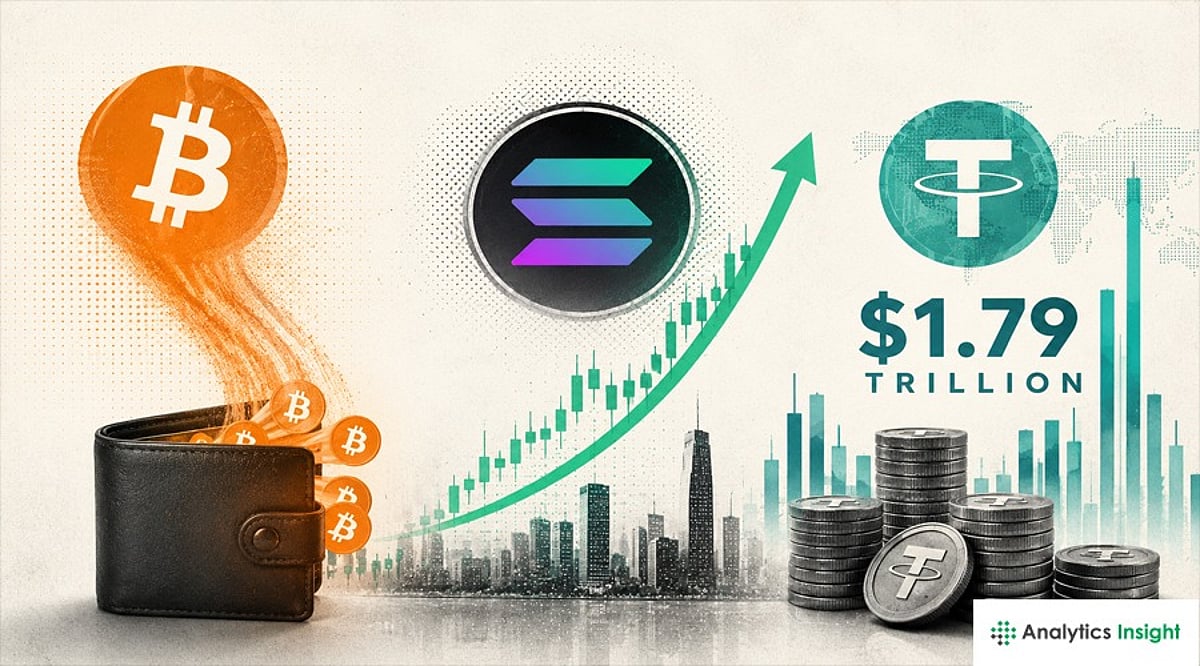
  • Bitcoin ETFs See $527M Weekly Outflow, Solana Rallies 14%, Stablecoin Volume Hits $1.79T – Crypto News Roundup

    Bitcoin ETFs See $527M Weekly Outflow, Solana Rallies 14%, Stablecoin Volume Hits $1.79T – Crypto News Roundup

    Bitcoin ETF Outflows Continue

    Bitcoin spot ETFs recorded a net outflow of $527 million last week, marking the eighth consecutive week of withdrawals. BlackRock’s IBIT saw $773 million exit, while Grayscale Bitcoin Trust (GBTC) reported $27.69 million in outflows. However, the Ark & 21 Shares ETF (ARKB) bucked the trend with $102 million in net inflows. Cumulative net inflows for IBIT remain strong at $59.99 billion, and the total net asset value of spot Bitcoin ETFs stands at $74.37 billion.

    Solana Maintains Momentum After 14% Rally

    Solana (SOL) surged over 14% last week and is currently trading around $80.89. While it has stalled below a key resistance level, indicators point to growing bullish momentum. Spot Solana ETFs attracted $5.75 million in net inflows, reversing the previous week’s outflows. Additionally, tokenized asset spot trading volume on the Solana network reached $5.7 billion in Q2, more than doubling from Q1’s $2.69 billion.

    Stablecoin Transaction Volume Reaches Record $1.79 Trillion

    According to Visa, stablecoin transaction volume hit an all-time high of $1.79 trillion in June, up 63% from May’s $1.1 trillion. USDC led with $1.21 trillion (67% of the total), while USDT accounted for $576 billion (32%). PayPal’s PYUSD ranked third with $2.42 billion.

    CLARITY Act Faces Key Senate Deadline

    The CLARITY Act, a major US crypto market structure bill, missed its July 4 target but still has a chance before the Senate’s summer break on August 7. The bill has passed the House and cleared the Senate Banking Committee. Senator Cynthia Lummis urged lawmakers to advance it, calling it “the foundation for the financial services of the 21st century.”

    Ethereum Plans Its ‘Biggest Rebuild’

    Ethereum co-founder Vitalik Buterin outlined “Lean Ethereum,” a multi-year plan to replace almost every major protocol component over three to four years while minimizing disruption to existing applications. This third major iteration follows the 2022 Merge. Quantum safety has been elevated as a top priority.

    Disclaimer: This article is for informational purposes only and does not constitute financial advice. Always conduct your own research before investing in cryptocurrencies.
  • Binance Records $213M USDT Inflow in 24 Hours: What It Means for Traders

    Binance Records $213M USDT Inflow in 24 Hours: What It Means for Traders

    Binance, the world’s leading cryptocurrency exchange by trading volume, registered a net inflow of $213 million in USDT (Tether) during the past 24 hours, according to data from CoinGlass. The sharp increase in stablecoin deposits has drawn attention from market participants, who are closely monitoring whether the fresh capital will be deployed into crypto purchases or remain idle.

    Understanding Net Inflows and Trading Capacity

    Net inflow measures the difference between assets entering and leaving an exchange. A positive figure indicates that more capital arrived than was withdrawn. USDT, the largest stablecoin by market capitalization, is widely used for settlement across centralized exchanges and serves as a base currency in spot and derivatives markets. Large deposits are often viewed as “dry powder” — available trading capital that can be quickly converted into Bitcoin, Ethereum, or other digital assets.

    Why Binance Attracts Large Transfers

    Binance dominates the cryptocurrency exchange landscape in both spot and derivatives trading volume. Its deep liquidity and extensive product range make it a preferred platform for traders seeking efficient execution. Many traders also deposit USDT as collateral for USD-margined perpetual contracts. Thus, rising balances can support either spot purchases or leveraged derivatives activity. While a concentrated inflow may indicate trader preference for Binance’s liquidity, the exchange’s dominant market share naturally directs a large portion of industry transfers toward it.

    Interpreting a One-Day Surge

    A single 24-hour inflow does not automatically translate into immediate crypto buying. Whales may move funds between wallets, institutions may use Binance for settlement or treasury management, and market makers often rebalance inventory across exchanges. Funds transferred between hot and cold wallets also do not generate new trading demand. The key question is whether the deposited USDT will enter crypto positions, support lending, serve as collateral, settle over-the-counter transactions, or be withdrawn shortly after arrival.

    Earlier monitoring data identified a separate transfer of 40.54 million USDT out of Binance. Market participants track both directions because each movement offers limited information without supporting indicators. Exchange flow data becomes more useful when spot volume rises alongside deposits, and increasing derivative open interest can confirm whether traders are building larger positions.

    What to Watch Next

    Binance’s $213 million net USDT inflow increased available trading capital, but it does not confirm immediate crypto purchases. Traders should monitor continued deposits, changes in spot volume, and derivatives activity over several sessions. Repeated inflows across multiple days would provide stronger evidence of sustained capital movement, helping distinguish broad market positioning from routine institutional or exchange operations.

  • Elizabeth Warren Pushes for Stricter Crypto Rules Following Trump’s $1.4 Billion Digital Asset Income

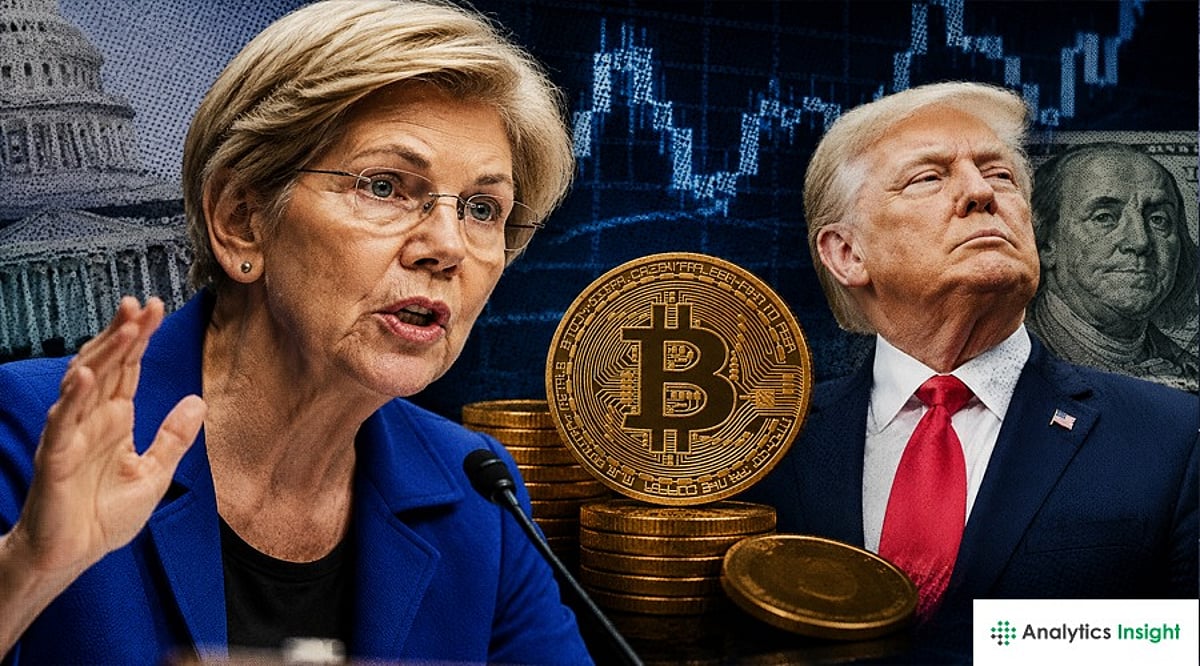
    Elizabeth Warren Pushes for Stricter Crypto Rules Following Trump’s $1.4 Billion Digital Asset Income

    Senator Elizabeth Warren has renewed her call for stronger cryptocurrency regulations after President Donald Trump’s 2025 financial disclosure revealed over $1.4 billion in income from digital asset ventures. The disclosure has intensified debates over potential conflicts of interest and the need for oversight of crypto-related earnings by public officials.

    Warren Targets Crypto Legislation

    Warren urged Congress to tighten the CLARITY Act, arguing that the legislation should prevent sitting presidents and their families from profiting from cryptocurrency businesses while in office. She stated that the bill must stop Trump and his family from benefiting from crypto ventures, highlighting concerns about self-dealing and ethical breaches.

    Several public figures have also weighed in. Wall Street financier Steve Rattner criticized the Trump family’s involvement, while investment manager Lawrence Lepard warned that the disclosure could trigger political backlash against the crypto industry. Former White House lawyer Ty Cobb described the situation as ‘the greatest onslaught of corruption in the history of mankind,’ according to media reports.

    Details of the Financial Disclosure

    The annual filing with the U.S. Office of Government Ethics listed cryptocurrency as a major income source for Trump in 2025. The report showed that his crypto ventures generated between $1.2 billion and $1.4 billion. Key components included:

    • Over $520 million from token sales linked to World Liberty Financial, a venture co-founded by Trump and his sons.
    • Approximately $635 million in royalties from the Official Trump memecoin.
    • About $1.8 million in Ethereum validator rewards from staking.
    • Bitcoin holdings worth over $50 million stored in a cold wallet.

    The White House did not immediately respond to requests for comment.

    Crypto Policy Under Scrutiny

    Since returning to office in January 2025, Trump has implemented crypto-friendly policies, including plans for a national strategic cryptocurrency reserve and the first White House crypto summit. The SEC dropped its enforcement case against Coinbase, and Congress approved the GENIUS Act, which mandates stablecoins to maintain one-to-one backing with U.S. dollars.

    Warren and four other Democratic senators have requested hearings on the administration’s crypto activities, citing investments from the United Arab Emirates into World Liberty Financial and potential national security risks. They have called for administration officials to testify under oath as Congress continues reviewing digital asset legislation.

  • May Stablecoin Volume: Polygon Records $80 Billion, Tops Solana and BNB Chain

    May Stablecoin Volume: Polygon Records $80 Billion, Tops Solana and BNB Chain

    Polygon processed nearly $80 billion in stablecoin transfer volume during May, recording 198 million transactions and surpassing both Solana and BNB Chain in transaction count. The milestone marks the network’s second-highest monthly stablecoin volume on record.

    According to Polygon’s data, the network handled approximately $79.25 billion in stablecoin transfers during the month. Cumulative stablecoin transfer volume on Polygon has now exceeded $2.4 trillion. Average transaction fees remain around $0.002, with settlement times of about two seconds. The network also reports more than seven billion lifetime transactions and 99.99% uptime.

    The vast majority of activity came from USDC and USDT transfers, reflecting the growing use of stablecoins for blockchain-based payments and settlement. Polygon has continued to strengthen its payment infrastructure through acquisitions and partnerships. Earlier this year, Polygon Labs acquired Coinme and Sequence in deals valued at a combined $250 million, aimed at expanding consumer payments and developer services.

    Visa added Polygon to its stablecoin settlement pilot in April, a program that has reportedly reached a $7 billion annualized run rate. Meta also introduced USDC payouts on Polygon and Solana for eligible creators. Payment-focused applications built on Polygon generated about $9.9 billion in transaction volume during the first half of 2026, exceeding the network’s total payment-related volume for all of 2025.

    In emerging markets, Polygon processed approximately $309 million in Latin American stablecoin transfers during May, with an increasing focus on cross-border payments. Despite these growing on-chain metrics, the POL token has not mirrored the surge in usage, trading broadly in line with broader cryptocurrency market conditions.

    Solana also posted strong on-chain data during the same period, generating about $2.17 million in daily application revenue. Derivatives data showed SOL funding rates turning positive and the long-to-short ratio rising above one, indicating bullish positioning among traders. However, institutional demand remained weaker, with spot Solana ETFs recording about $3.8 million in net outflows during the previous week.

    SOL traded around $71.82, remaining below its 50-day, 100-day, and 200-day exponential moving averages. Analysts noted resistance near $74.75 and $75.14, while support sits near $69.16 and the recent cycle low around $60.13. Singapore Gulf Bank also announced a limited-time waiver of gas and banking fees for stablecoin minting and redemption on Solana, aiming to encourage greater use of stablecoins on the network.

    Competition remains intense, with Ethereum and Tron holding the largest stablecoin balances. Polygon recently reported about 28 million weekly USDC transactions, placing it ahead of Solana in that category. Both blockchains continue to expand payment services while vying for a larger share of stablecoin settlement activity.

  • USDGO Stablecoin Supply Crosses $500M as Institutional Adoption Surges

    USDGO Stablecoin Supply Crosses $500M as Institutional Adoption Surges

    USDGO, an enterprise-focused US dollar stablecoin, has surpassed $500 million in circulating supply within four months of its launch, signaling rapid institutional adoption. The token is issued by Anchorage Digital Bank, the first federally chartered crypto bank in the United States, with branding and distribution managed by Hong Kong-listed OSL Group.

    Enterprise Demand Drives Expansion

    Unlike stablecoins that initially grew through cryptocurrency trading, USDGO targets corporate treasury operations, cross-border payments, international transfers, and institutional liquidity. The token crossed $100 million roughly two months after its February launch, and the new $500 million milestone reflects accelerating enterprise demand.

    OSL Group reports partnerships with payment providers and financial infrastructure firms across developed and emerging markets, supporting large-value transfers and commercial payment flows. The ecosystem also includes fiat on- and off-ramp services, digital asset trading, and blockchain and custody partners for secure asset management and high-volume settlement.

    Tokenized Funds Bolster Reserves

    USDGO maintains one-to-one backing through high-quality liquid assets including cash and short-term US government securities. Its reserve structure now incorporates tokenized money market funds from major financial institutions:

    • JPMorgan’s JLTXX tokenized money market fund
    • BlackRock’s BUIDL tokenized liquidity fund
    • Goldman Sachs’ STBXX reserve fund

    These funds connect USDGO’s reserve management with traditional finance products, demonstrating how legacy institutions are increasingly participating in blockchain-based settlement systems. Tokenized money market products alongside cash deposits and Treasury securities enhance liquidity, transparency, and operational efficiency for institutional users.

    Stablecoins Enter Mainstream Finance

    USDGO’s growth reflects a broader trend of stablecoins expanding beyond crypto markets into payments, settlement, treasury management, and liquidity operations. A larger circulating supply enables more transactions and deeper market liquidity, which is critical for enterprise users processing commercial payments and managing international fund transfers.

    Regulatory clarity and institutional participation are intensifying competition among stablecoin issuers. Enterprise-focused projects like USDGO aim to become preferred settlement assets for corporations and payment networks, combining fixed-value stability with regulated issuance and tokenized reserve assets.

    What’s Next?

    With supply growth exceeding $500 million, USDGO is positioned to play a key role in digital finance. Businesses should monitor adoption across treasury management, cross-border transfers, and institutional liquidity as regulated blockchain settlement gains traction.

  • USDT Premium in India Surges 8.5% After Regulatory Crackdown on Crypto Payments

    USDT Premium in India Surges 8.5% After Regulatory Crackdown on Crypto Payments

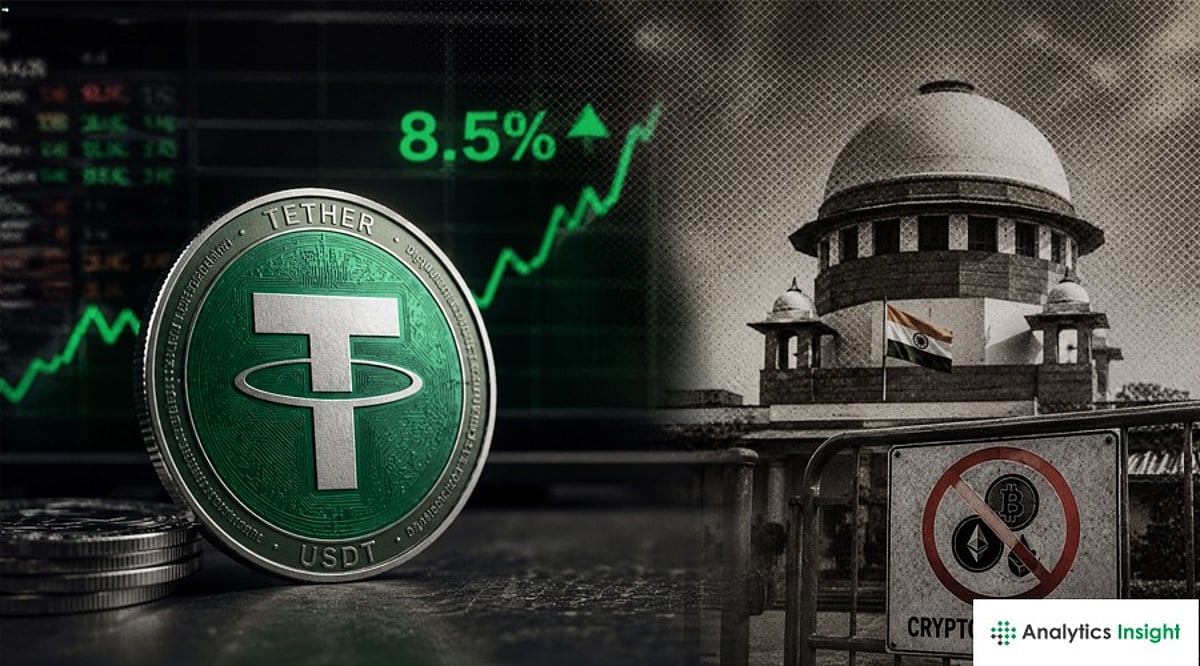
    Tether’s USDT is commanding an 8.5% premium in India following intensified enforcement actions against unregulated crypto payment networks. The premium, observed on peer-to-peer and over-the-counter platforms, reflects a sharp supply-demand imbalance that is impacting traders, businesses, and freelancers reliant on the stablecoin for cross-border transactions.

    Supply Tightens After Enforcement Action

    Market participants report that the crackdown has severely restricted the availability of USDT in India’s OTC and P2P markets. These channels have long been used for cross-border payments, settlement, and crypto trading. With multiple payment platforms under scrutiny, users are finding it increasingly difficult to access the token, pushing its local price well above the global benchmark of $1.

    It is important to note that the premium stems from local market conditions, not from any issues with Tether’s reserves or the stablecoin’s underlying mechanism.

    Businesses Feel the Impact

    The scarcity is expected to hurt importers, exporters, freelancers, and crypto traders who rely on USDT for fast, low-cost cross-border transfers without the delays typical of traditional banking. Analysts observe that despite the high premium, demand for stablecoin transactions remains strong, underscoring the efficiency of stablecoins for international remittances. At the same time, the situation highlights the dependence of certain segments of India’s crypto community on unregulated liquidity sources.

    Premium Expected to Ease Over Time

    Crypto market experts believe the premium will gradually decline as liquidity is restored through compliant exchanges or alternative regulatory payment methods. However, until sufficient liquidity materializes, USDT is likely to trade at a premium to its global price in India. This event underscores how swiftly regulatory actions can reshape the crypto landscape in a major economy.

  • SBI Holdings’ ¥46.7B Bitbank Acquisition Targets Japan’s Stablecoin Market and Crypto Growth

    SBI Holdings’ ¥46.7B Bitbank Acquisition Targets Japan’s Stablecoin Market and Crypto Growth

    SBI Holdings has agreed to acquire Japanese crypto exchange Bitbank for ¥46.7 billion (approximately $289 million) through investment vehicle SBICAH GK. The financial group expects to complete the transaction by October 2026, pending clearance from the Japan Fair Trade Commission.

    SBI signed binding agreements on June 24 and 25. The acquisition provides access to 960,000 customer accounts and ¥570 billion in digital assets under custody.

    Bitbank Adds a Regulated Yen Stablecoin Gateway

    SBI has been developing a digital asset platform covering trading, custody, tokenization, and payments. Bitbank adds a regulated retail exchange and a direct entry point into Japan’s crypto market. The ¥46.7 billion price equals about eight times Bitbank’s revenue, despite the exchange reporting a net loss in its latest fiscal year, drawing scrutiny.

    People familiar with SBI’s strategy say the price reflects more than Bitbank’s revenue or customer base; the exchange provides a licensed distribution channel for yen-denominated stablecoins. SBI Shinsei Trust Bank issues JPYSC, a stablecoin linked to the Japanese yen. Wider circulation requires a registered exchange with established compliance systems, strong security, and direct customer access.

    Acquiring Bitbank allows SBI to expand JPYSC faster than building and licensing a new exchange. Bitbank holds Kanto Local Finance Bureau registration No. 00004 and operates within Japan’s self-regulatory framework through the Japan Virtual and Crypto Assets Exchange Association.

    Two-Stage Deal Separates the Share Purchases

    SBI will complete the acquisition in two phases. In August, the group will buy shares from individual investors, including Bitbank founder and CEO Noriyuki Hirosue. By the end of October, Bitbank plans to repurchase and retire shares owned by MIXI and Ceres, which together control about half of the exchange.

    The second stage uses a company buyback rather than a direct purchase by SBI, so the acquisition involves two completion events with separate conditions. SBI expects the transaction to have only a minor effect on its consolidated fiscal 2027 results, indicating a focus on strategic platform development rather than immediate earnings growth.

    The group stated that the acquisition would create new business opportunities in stablecoins, digital assets, and on-chain finance, with Bitbank’s infrastructure providing an operating base for that expansion.

    Japan’s Compliance Shift Drives Consolidation

    The acquisition comes as Japan prepares to place crypto assets under the Financial Instruments and Exchange Act. The lower house passed the relevant legislation on June 11. The proposed framework raises capital, custody, and disclosure standards for crypto exchanges while lowering the crypto gains tax to 20%.

    The legislation also creates a possible route for spot Bitcoin, Ether, and XRP exchange-traded funds. Rising compliance costs could pressure smaller operators. Architect Partners estimates that about 90% of Japan’s 27 licensed crypto exchanges remain unprofitable, with as many as half expected to merge or leave the market.

    If the deal closes, SBI projects that the combined group will control about ¥1.1 trillion in crypto assets across 2.9 million accounts, surpassing bitFlyer and Coincheck by asset value. The enlarged operation would include Japan Digital Asset Trust, Bitbank’s retail platform, and its altcoin trading business. SBI plans to retain Bitbank as a separate exchange brand.

    What’s Next?

    SBI Holdings’ ¥46.7 billion Bitbank acquisition strengthens its regulated crypto infrastructure, expands customer access, and supports wider yen stablecoin distribution. As Japan raises compliance standards, the deal positions SBI for further growth across trading, custody, payments, and on-chain finance.

  • Ripple’s RLUSD Stablecoin Debuts in Japan: What XRP Holders Need to Know

    Ripple’s RLUSD Stablecoin Debuts in Japan: What XRP Holders Need to Know

    On June 24, 2026, Ripple officially launched its RLUSD stablecoin in Japan after receiving full regulatory approval from the country’s Financial Services Agency. This milestone marks a significant expansion for Ripple beyond its traditional cross-border payment network and into the fast-growing stablecoin market, which now exceeds $300 billion globally.

    RLUSD is a 1:1 US dollar-pegged stablecoin, fully backed by cash reserves, short-term US government bonds, and dollar deposits. Unlike volatile cryptocurrencies such as Bitcoin or XRP, RLUSD maintains a stable price, making it ideal for banks, corporations, and financial institutions that require predictable digital payments. Within a short period, RLUSD has reached a market capitalization of approximately $1.59 billion, with an annual growth rate close to 271%.

    Why Japan?

    Japan has long been one of Ripple’s strongest markets, thanks in part to a decade-long partnership with SBI Holdings, one of the country’s largest financial firms. The launch became possible after Japan introduced new regulations allowing foreign stablecoins to enter under strict compliance rules. Japan’s clear legal framework provides a safe and predictable environment for regulated crypto assets, giving Ripple a strategic foothold in Asia.

    Ripple Expands Beyond XRP

    With RLUSD, Ripple is diversifying its business model. Instead of relying solely on XRP for crypto transfers, the company can now offer stablecoin payments, asset settlement, corporate treasury systems, and digital banking services. This does not replace XRP; XRP remains the primary bridge asset for high-speed cross-border currency transfers on Ripple’s payment network. RLUSD provides an alternative for institutions that need zero price volatility.

    What This Means for XRP Investors

    Some investors initially worried that RLUSD might diminish XRP’s role. However, the opposite appears true. By drawing more traditional financial institutions into the Ripple ecosystem, RLUSD increases overall network activity. Higher transaction volume on the XRP Ledger can drive stronger demand for XRP over the long term. The launch positions Ripple to compete directly with major stablecoins like USDT and USDC, while emphasizing regulatory compliance—a key advantage for institutional adoption.

    Competition and Outlook

    The global stablecoin market is dominated by USDT and USDC, but Ripple’s focus on regulatory compliance sets RLUSD apart. Japan’s approval is a strong signal to other markets. With over 50% of Ripple’s On-Demand Liquidity volume already coming from Asia, RLUSD could expand into Singapore, South Korea, and other regional hubs, cementing Ripple’s position as a leading blockchain payment company.

    For XRP holders, this development is positive in the long run. RLUSD strengthens Ripple’s overall financial ecosystem, driving broader institutional adoption and network utility. Japan may be just the first step in a global stablecoin expansion that could become a major growth driver for Ripple and XRP.

    FAQs

    1. What is RLUSD?
    RLUSD is Ripple’s 1:1 US dollar-pegged stablecoin, fully backed by cash reserves and short-term US government bonds, designed for banks and institutions needing stable digital payments.

    2. Why did Ripple launch RLUSD in Japan?
    Japan offers clear crypto regulations and a strong partnership with SBI Holdings, enabling a compliant rollout approved by Japan’s Financial Services Agency.

    3. Does RLUSD replace XRP?
    No. RLUSD serves institutions requiring zero volatility, while XRP remains the high-speed bridge asset for cross-border transfers in Ripple’s payment network.

    4. How big is RLUSD right now?
    RLUSD has a market cap of about $1.59 billion with nearly 271% annual growth.

    5. Why does this matter for XRP investors?
    RLUSD attracts more traditional finance into the Ripple ecosystem, increasing network activity and potentially strengthening long-term demand for XRP.

  • Ripple’s RLUSD Stablecoin Gains Japan Approval, First Foreign Stablecoin Under New Regulations

    Ripple’s RLUSD Stablecoin Gains Japan Approval, First Foreign Stablecoin Under New Regulations

    Ripple’s dollar-backed stablecoin RLUSD has secured approval from Japan’s Financial Services Agency (JFSA), marking the first time a foreign-issued stablecoin has entered the Japanese market under the country’s new regulatory framework. SBI VC Trade, a licensed Electronic Payment Instruments Exchange Service Provider, has begun distributing RLUSD through its VCTRADE platform to both retail and institutional users.

    Japan Opens New Path for Foreign Stablecoins

    Japan has historically maintained strict rules for foreign stablecoins. RLUSD became the first stablecoin to enter through the newly established Electronic Payment Instrument (EPI) classification under the Payment Services Act (PSA). The approval process focused on regulatory alignment rather than direct acceptance. Ripple had to demonstrate that RLUSD operates under rules in its home jurisdiction that match Japan’s standards for reserve backing and user protection.

    This achievement gives RLUSD an early position in a market that foreign stablecoin issuers have found difficult to access. It also provides an initial test case for Japan’s new regulatory structure, and its performance may shape expectations for future entrants.

    Ripple and SBI Build on a Decade of Cooperation

    Ripple leveraged its long-standing partnership with SBI Group, which dates back to 2016, to establish the launch. Ripple and SBI announced a memorandum of understanding in August 2025, and nearly ten months later, RLUSD became available to users in Japan. The timeline reflected the compliance work required to satisfy regulatory obligations.

    Jack McDonald, Ripple’s Senior Vice President of Stablecoins, stated that RLUSD will support payments, tokenization, and collateral management while connecting Japanese users to global liquidity. For the initial phase, RLUSD in Japan operates on the Ethereum network rather than the XRP Ledger.

    RLUSD Targets Payments and Institutional Use Cases

    Ripple and SBI have positioned RLUSD as infrastructure for financial services rather than a speculative asset. Business-focused applications include programmable trade settlement, collateral management for settlement and margin activities, and supply chain finance to enable faster, more transparent payments across trade networks.

    Tomohiko Kondo, Chief Executive Officer of SBI VC Trade, described the launch as a major milestone in the companies’ ongoing collaboration and digital finance initiatives.

    Since its initial launch, RLUSD has reached roughly $1.7 billion in market capitalization, with a growth pattern marked by steady increases rather than sharp speculative surges. The Japan rollout now places RLUSD inside one of the most tightly regulated digital asset markets, where its performance will help shape expectations for future foreign stablecoin entrants.

  • RLUSD Supply on XRP Ledger Surpasses Ethereum as XRP Utility Prospects Improve

    RLUSD Supply on XRP Ledger Surpasses Ethereum as XRP Utility Prospects Improve

    Ripple USD (RLUSD) has achieved a significant distribution milestone, with the XRP Ledger (XRPL) overtaking Ethereum as the stablecoin’s largest native network. On-chain data shows approximately $801.8 million in RLUSD on XRPL, compared to about $795.6 million on Ethereum, giving Ripple’s blockchain a narrow lead in the $1.6 billion RLUSD market.

    However, the shift is largely attributed to Ethereum token burns rather than a surge in new demand on XRPL. About three-quarters of the RLUSD removed over the past month came from Ethereum through redemptions and burns, making the ‘flippening’ partly a result of treasury operations rather than a clear migration of users or trading activity.

    RLUSD now ranks among the ten largest stablecoins, with daily trading volume reaching approximately $166 million. The stablecoin’s activity on XRPL can involve XRP directly, as users pay transaction fees in XRP and the network can route trades through XRP when direct markets between two assets lack liquidity. This could create additional XRP use across payments, exchange transfers, and decentralized trading, provided users actively move the stablecoin and create active markets.

    Meanwhile, RLUSD has expanded into Japan through SBI VC Trade after receiving regulatory clearance, with Ethereum serving as the initial network for the Japanese rollout. An XRPL Foundation representative noted that Ethereum’s early role was expected and that XRPL-based RLUSD could join the Japanese market later, though no fixed timetable has been confirmed.

    The central question remains whether RLUSD on XRPL will generate sustained trading, payment, and liquidity activity to drive XRP demand, or if the supply shift will remain a technical milestone without lasting external volume.