Tag: staking

  • Ethereum Liquid Supply: How Much ETH Is Truly Tradable in 2026?

    Ethereum Liquid Supply: How Much ETH Is Truly Tradable in 2026?

    Ethereum lacks a fixed maximum supply like Bitcoin, but the headline circulating supply figure does not reveal how much ETH is genuinely available for immediate trading. Staking, corporate treasuries, exchange-traded products, and long-term custody arrangements are increasingly absorbing ETH that would otherwise circulate through exchanges.

    Total Supply Overview

    As of September 8, 2026, Ethereum’s total supply stood at approximately 122.02 million ETH, up about 1% from a year earlier.

    Over 42 Million ETH Is Staked

    Ethereum staking remains one of the largest constraints on readily available supply. Lido’s H1 2026 report showed total staked ETH rising 19%, from 36.3 million at the start of the year to 43.1 million by June 30, including the entry queue and excluding the exit queue. Institutional staking’s share increased from 25.9% to 35.3% during the same period. More recent Beaconcha.in data show approximately 42.99 million ETH currently staked across more than 909,771 active validators.

    Staked ETH is not permanently locked — validators can exit — but it is less immediately available for sale than ETH held in liquid wallets, and withdrawals can be delayed when validator exit queues expand.

    Exchange ETH Balances Remain a Key Indicator

    Centralized exchange balances provide another gauge of how much ETH is positioned for immediate trading. Glassnode currently estimates that approximately 15.65 million ETH are held on identified exchange addresses, slightly below the 15.76 million figure reported earlier in September. This represents roughly 13% of Ethereum’s total supply.

    Exchange balances are not a perfect measure of liquidity, as investors can trade through decentralized exchanges, institutional custodians, and over-the-counter markets. Glassnode also warns that recent figures can change as exchange address labels are updated. Still, falling exchange inventory can become critical when demand increases, as fewer tokens may be immediately available to meet buying pressure.

    Corporate Treasuries Hold Nearly 8 Million ETH

    Corporate accumulation has become another major supply factor. CoinGecko currently tracks 34 public companies holding 7,914,466 ETH, worth roughly USD 19.63 billion and representing about 6.49% of Ethereum’s total supply. BitMine Immersion remains the largest holder with 5,901,112 ETH (about 4.836% of supply). SharpLink holds 868,699 ETH, while The Ether Machine owns 496,712 ETH.

    These categories cannot be simply added to staking balances, as some treasury companies also stake portions of their holdings, creating overlap.

    ETFs Remove More ETH From Direct Crypto Trading

    Exchange-traded products form another source of economically restricted supply. BlackRock’s iShares Ethereum Trust ETF (ETHA) held USD 8.605 billion in net assets as of September 4. Its staking-focused ETHB product held approximately USD 963.7 million and reported a 30-day staking rewards rate of 1.63%. ETF investors can trade shares easily, but the underlying ETH remains in institutional custody rather than constantly circulating through crypto exchanges.

    Why Liquid Supply Matters

    Lower liquid supply means fewer ETH may be immediately available for sale when demand rises. This can amplify price moves, making staking balances, ETF holdings, and treasury activity increasingly important for investors. While validator withdrawals, ETF flows, or corporate selling can return supply to the market, the current dynamics suggest that a significant share of Ethereum’s 122 million ETH is tied up in staking, corporate treasuries, and investment products.

    Frequently Asked Questions

    1. How much Ethereum is currently in circulation? Ethereum’s total supply stood at approximately 122.02 million ETH as of September 8, 2026. Unlike Bitcoin, Ethereum does not have a fixed maximum supply.

    2. How much ETH is currently staked? Around 42.99 million ETH is currently staked across more than 909,000 active validators. Staked ETH can eventually be withdrawn, but it is less immediately liquid than ETH held on exchanges.

    3. How much ETH is held on centralized exchanges? Glassnode estimates that roughly 15.65 million ETH is held on identified centralized exchange addresses. This represents about 13% of Ethereum’s total supply.

    4. How much ETH do public companies hold? CoinGecko tracks 34 public companies holding about 7.91 million ETH. BitMine is the largest corporate holder with approximately 5.90 million ETH.

    5. Why does Ethereum’s liquid supply matter? Lower liquid supply means fewer ETH may be immediately available for sale when demand rises. This can amplify price moves, although validator withdrawals, ETF flows, or corporate selling can return supply to the market.
  • BlockDAG’s 10 Billion Staked and 135X ROI Potential Outshines Aave and Bittensor

    BlockDAG’s 10 Billion Staked and 135X ROI Potential Outshines Aave and Bittensor

    Every market cycle, investors search for the next cryptocurrency poised for explosive growth. Most finds are noise—flashy roadmaps with little substance. BlockDAG breaks that pattern with hard data. Batches 1 through 7 are live with claims, staking is operational, and over 10 billion BDAG tokens are already locked by holders. This is the result of two years of disciplined, no-shortcut development now translating into real numbers.

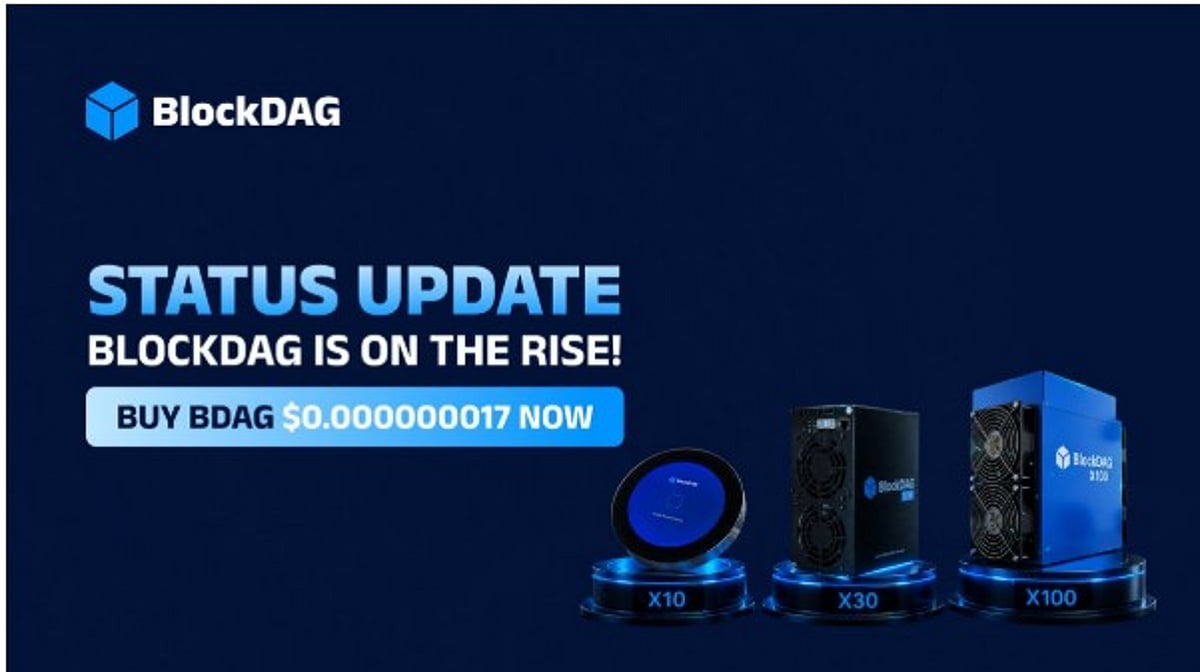
    Meanwhile, traders tracking Aave price movements and Bittensor TAO price charts are monitoring tokens that captured their early gains years ago. BlockDAG still sits at $0.000000017, with a 22% live swap discount and a $0.025 buyback price pointing toward a staggering 135X ROI.

    Two Years of Building Now Paying Off

    BlockDAG is not pitching a future—it’s showing receipts from one already in motion. The mainnet is live with EVM-compatible smart contracts, GHOSTDAG consensus, and an explorer processing over 4 million on-chain transactions across 374,400+ holders in more than 130 countries. Physical miner deliveries are underway, with X30 production at full scale, a first delivery wave within 45 days, and over 3.6 million X1 app miners active worldwide. BlockDAG.com Casino is a live commercial product with over $200 million wagered and 100+ games running—real revenue, not a whitepaper promise.

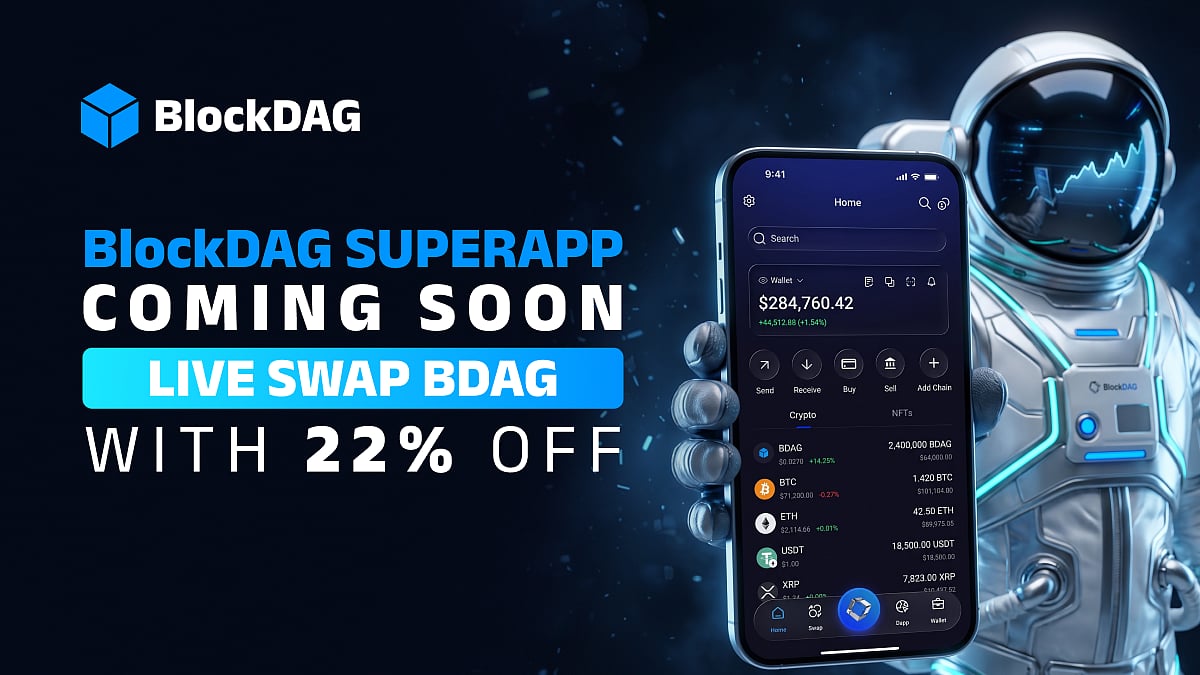
    Upcoming milestones include the BlockDAG Exchange (a company-owned trading platform offering spot and multi-asset markets) scheduled for August 2026, followed by the Super App in September, unifying mining, staking, trading, swaps, casino access, and a RedotPay-powered payment card. With claims live, staking live, over 10 billion BDAG locked, and a presale price of $0.000000017 backed by a $0.025 buyback pointing toward 135X ROI, it’s clear why many traders call this the next crypto to explode before the Exchange even opens its doors.

    Aave Price Reflects a Fully Matured Market

    Aave remains a respected DeFi lending protocol, and current Aave price action reflects a project that has matured into its valuation. AAVE trades near $97, inside a tight $96.87–$101.83 range, with a market cap around $1.5 billion and total value locked at $14.3 billion. However, circulating tokens sit at 15.4 million against a hard-capped 16 million max—almost the entire supply is already unlocked and priced in. Aave’s $50 million annual buyback program and pending Grayscale ETF filing are strong fundamentals, but this maturity means most easy multiples were captured years ago, unlike a presale-stage token still building its base.

    Bittensor TAO Price Faces a Long Climb Back

    Bittensor has built a credible AI-crypto story, and TAO currently trades near $193, with roughly 70% of total supply staked and subnet capacity doubled to 256 slots under the “Robin τ” upgrade. A Grayscale spot TAO ETF filing is pending, and Kraken’s addition of TAO spot trading in July added liquidity. Still, Bittensor TAO price sits nearly 75% below its all-time high near $758, and has fallen about 28% over the past year even as the AI narrative remained strong. BlockDAG’s presale-stage entry offers a different risk profile: ground-floor pricing instead of a token working to reclaim old highs.

    The Best Bet in a Choppy Market

    The wider market has spent months chopping sideways, grinding down portfolios. Against that backdrop, the case for BlockDAG grows stronger. Aave price strength and Bittensor TAO price resilience prove those projects are legitimate, mature players, but their easy upside is largely behind them. BlockDAG is still at ground level: claims live, staking live, over 10 billion BDAG locked, and an Exchange and Super App both landing within weeks. For anyone hunting the next crypto to explode this cycle, a proven presale with a real delivery record and a $0.000000017 entry price may be the best bet in the market right now.

    Disclaimer: Analytics Insight does not provide financial advice or guidance on cryptocurrencies and stocks. Cryptocurrencies mentioned may be risky and could result in loss of capital. This article is for informational purposes only and does not constitute investment advice. Always do your own research before making any investment decisions.

  • BlockDAG 2026 Review: A Comprehensive Look at the 5-Star Crypto Ecosystem Transforming Digital Finance

    BlockDAG 2026 Review: A Comprehensive Look at the 5-Star Crypto Ecosystem Transforming Digital Finance

    This BlockDAG 2026 review examines a project that has evolved far beyond a typical layer-one network. In August 2026, the team released its Execution Whitepaper, outlining a major strategic pivot. BlockDAG is transforming itself into a full digital economy, seamlessly integrating mining, trading, staking, and everyday spending into a unified user journey. The team consistently hits its milestones, earning this project a top-tier rating.

    The network operates on a Directed Acyclic Graph (DAG) design, enabling the simultaneous production of multiple blocks and achieving 7,000 transactions per second. The GHOSTDAG consensus algorithm orders these parallel blocks, preventing double-spending while maintaining decentralization. Additionally, BlockDAG is fully compatible with the Ethereum Virtual Machine (EVM), allowing developers to quickly port existing tools and accelerate development.

    One App for Everything: The RedotPay Super App

    BlockDAG has partnered with RedotPay to create the unified BlockDAG Super App, launching in September 2026. The app consolidates mining, staking, and trading in one place. Users can securely hold stablecoins alongside BDAG and access the BlockDAG Casino directly from their mobile device. The app also issues virtual and physical payment cards for daily use. Balances can be instantly converted to stablecoins, with the card handling merchant payments seamlessly, removing friction from everyday spending.

    Real Utility: The Exchange and the Casino

    The native BlockDAG Exchange launches in August 2026, offering spot and futures markets to users worldwide. It lists Bitcoin, Ethereum, and other digital assets. Fee payments in BDAG earn significant trading discounts. The BlockDAG Casino is already operational, giving active users a practical outlet to spend their coins. Players use BDAG to unlock exclusive games and premium tournaments, earning BDAG rewards and generous cashback. Both the exchange and the casino generate commercial revenue that is reinvested into network development and security.

    Miners Shipping Around the World

    Mining is a primary channel for distributing BDAG globally. Entry-level rigs are designed for home use, while enterprise units target professional data centers. Physical miner deliveries are already underway worldwide. Full-scale production of the X30 miner has just begun, with the first wave shipping within 45 days. The more powerful X100 model will follow shortly. Each miner shipped increases active participation and strengthens network security, turning buyers into long-term ecosystem users.

    Entry Price, Buyback, and Staking

    For those reading this BlockDAG 2026 review seeking entry, the current window is attractive. The promotional price is $0.000000017, and buyers receive a 22% swap discount on live exchanges. The project has set a buyback price of $0.025, which the team frames as a 135x return on investment. Token claims are proceeding without delays; batches 1 through 7 are all live. Staking is fully operational, with 10 billion coins already locked up, keeping a significant portion of supply off the market.

    The Numbers Behind the Network

    Live usage figures are impressive. The chain has processed 4 million on-chain transactions, with over 374,400 holders worldwide. The X1 mobile app supports 3.6 million miners, and the community has grown to more than 390,000 people across 130 countries. Maximum supply is capped at 150 billion coins. Treasury and liquidity figures are publicly verifiable, and all token allocations use transparent vesting contracts. This openness builds long-term trust with retail buyers, and ecosystem growth directly feeds BDAG’s market value.

    The Bottom Line

    This BlockDAG 2026 review awards a five-star rating for one key reason: consistent execution. The team prioritizes real utility over hype. Mining, trading, and spending are interconnected within one system, with every product strengthening the underlying chain. The technology solves real problems at high speed, and reinvested revenue continually improves the products. Users can mine, swap, and spend without leaving the ecosystem. For anyone tracking full-stack crypto projects, this is one to watch closely.

    Aftersale: https://purchase.blockdag.network
    Website: https://blockdag.network
    Telegram: https://t.me/blockDAGnetworkOfficial
    Discord: https://discord.gg/Q7BxghMVyu

    Disclaimer: Analytics Insight does not provide financial advice or guidance on cryptocurrencies and stocks. Cryptocurrencies mentioned are potentially risky; you should conduct your own research before investing.

  • BlockDAG’s Multi-Use Ecosystem Gains Momentum as Tron and XRP Prices Stall

    BlockDAG’s Multi-Use Ecosystem Gains Momentum as Tron and XRP Prices Stall

    The latest Tron price prediction shows TRX locked between $0.30 and $0.34, with Tron DAO relying on stablecoin strength to support patience. At the same time, XRP price movement remains under $1.10, affected by a weak August and a CLARITY Act decision delayed to September. Both projects are stable and well known, but stability alone does not define the best crypto to buy right now.

    BlockDAG (BDAG) appears stronger because it is not focused on one single use case waiting for a trigger; instead, it keeps adding multiple working parts. Mining supports the network, the Casino builds user activity, the Exchange improves access, and everything connects through one Super App, a layered setup similar to what helped Solana and Hyperliquid gain massive attention over time.

    BlockDAG: Multi-Use Ecosystem Driving Long-Term Growth

    Many whitepapers describe future ideas. BlockDAG’s Execution Whitepaper explains a working system, including a live mainnet with GHOSTDAG consensus and EVM smart contracts, plus an explorer tracking more than 4 million on-chain transactions across over 374,400 holders in 130+ countries, hardware miners already shipping with X30 in full production and over 3.6 million X1 app miners active globally, along with BlockDAG Casino generating over $200 million in wagers across 100+ games.

    Add claims active from Batches 1 to 7, staking live with more than 10 billion BDAG locked, and a presale price of $0.000000017 supported by a $0.025 buyback aiming at 135X ROI, it becomes clear why many see this as the best crypto to buy for those looking for real 1000x potential from early-stage projects.

    The final parts are coming soon. BlockDAG Exchange, a company-owned multi-asset platform, is planned for August 2026, followed by the Super App in September to connect mining, staking, trading, swaps, casino features, and a RedotPay-backed payment card in one system. This combined use case is growing step by step, similar to patterns seen in Solana and Hyperliquid, and after two years of steady work, BlockDAG now shows this full structure, making it a strong option for the best crypto to buy during this cycle.

    Tron Price Outlook Suggests Continued Sideways Movement

    The Tron price prediction for August needs to consider a coin that is pausing rather than moving strongly. TRX is staying near a key support area built over recent weeks, with resistance close to $0.334 and support near $0.309. Tron DAO highlights network expansion, growing institutional use, and stablecoin leadership, with over $84 billion in USDT on the network, while Nasdaq-listed Tron Inc. holds 681.7 million TRX as treasury assets.

    Even with these positives, most Tron price prediction views expect TRX to stay within range through August instead of breaking higher. This reflects an asset maintaining its current level rather than moving into a new growth phase, very different from a presale project like BlockDAG still priced at early levels.

    XRP Price Holds Position While Waiting for New Triggers

    Current XRP price levels show a coin lacking short-term momentum. XRP starts August near $1.06 and struggles to break above $1.10, with both the CLARITY Act decision and a Federal Reserve rate update now expected in September. Adding pressure, August has ended lower for XRP for four straight years, and ETF desks reported zero flows on 10 out of 17 trading days in July.

    There are still some positives: exchange supply is at a seven-year low, and the XRP Ledger v3.3.0 upgrade aims to improve institutional access for banks. For now, though, the XRP price stays between $1.01 and $1.05 without a clear near-term push. BlockDAG, on the other hand, shows active progress, with an Exchange and Super App both expected soon and a presale price still very low.

    Final Call

    Most Tron price prediction insights and XRP price analysis this month point to the same idea: strong projects waiting for delayed catalysts expected in September. BlockDAG shows a different situation. Two years of progress have led to live claims, active staking, over 10 billion BDAG locked, a Casino already producing revenue, and both an Exchange and Super App launching soon. With multiple use cases growing together and a presale price of $0.000000017 still open, BlockDAG currently stands out for anyone searching for the best crypto to buy right now.

  • On-Chain Activity Surges for Ethereum, Solana, and Avalanche Despite Steep Token Price Declines

    On-Chain Activity Surges for Ethereum, Solana, and Avalanche Despite Steep Token Price Declines

    Ethereum, Solana, and Avalanche have recorded significantly higher on-chain activity and lower transaction costs over the past year, even as their native tokens lost roughly half or more of their value. A new staking report from Bitwise attributes the improvement to larger blockspace, cheaper transactions, and rising institutional participation. However, token prices remain far below their 2025 peaks, signaling that blockchain performance and market sentiment are no longer moving in lockstep.

    More Activity at Lower Cost

    Bitwise found that activity expanded while user fees declined across all three proof-of-stake networks. The report attributes this shift mainly to protocol upgrades rather than weaker demand. Ethereum, Solana, and Avalanche increased network capacity to process more transactions at lower cost. As a result, users gained cheaper access while developers received more room to build applications.

    Previous market cycles often treated congestion and expensive transactions as signs of strong demand. Now, greater capacity allows networks to handle heavier use without creating the same fee pressure. Lower costs also reduced protocol revenue because the networks earn much of their direct income from transaction fees. Developers accepted that trade-off to improve scalability and encourage wider adoption.

    Institutional Staking, Declining Yields

    Proof-of-stake networks depend on validators who lock digital assets to secure transactions and receive staking rewards. Institutional investors drove much of the additional Ethereum entering validator pools during the second quarter. Exchange-traded products, corporate treasuries, and other large holders increased their staking exposure.

    More than 40 million ETH—roughly one-third of Ethereum’s circulating supply—had entered staking by the end of the period. BitMine, the largest public Ethereum treasury company, reported staking nearly 4.9 million ETH from total holdings of about 5.8 million ETH.

    However, staking yields continue to decline because rewards now reach a larger group of validators. More participants share the available token issuance and transaction-fee income. Bitwise estimates that about 93% of Ethereum staking rewards and more than 90% of Solana rewards came from newly issued tokens.

    That structure increases token supply and dilutes holders who do not stake. Meanwhile, lower fee revenue raises further questions about long-term staking economics.

    Liquid staking products also continue attracting attention because they let holders earn rewards while retaining usable tokenized assets. Investors can deploy those assets as collateral, supply them to lending markets, or place them in liquidity pools. Institutions can therefore combine staking income with broader capital use.

    Token Market Performance

    Developers continue launching applications, institutions add staked assets, and users remain active across decentralized finance platforms despite weaker token valuations. The trend suggests that practical blockchain use now plays a larger role in network activity. Meanwhile, token prices remain tied to market sentiment and wider economic conditions.

    For developers, lower fees and greater capacity support broader adoption. For investors, falling yields, inflation-funded rewards, and weaker fee income create different measures for assessing returns.

    Ethereum, Solana, and Avalanche processed more activity at lower costs despite sharp token-price declines. Institutional staking also expanded, although yields and protocol revenue fell. The data show that investors must evaluate network usage, token issuance, fee income, and staking returns separately from short-term market performance.

  • BlockDAG Surges as Ethereum and Shiba Inu Stumble: Top Crypto Pick for July 2026

    BlockDAG Surges as Ethereum and Shiba Inu Stumble: Top Crypto Pick for July 2026

    The crypto market is sending mixed signals right now, leaving traders uncertain about which direction to take. Ethereum price remains stuck below a heavy resistance zone, struggling to hold ground even after a solid bounce from June lows. Meanwhile, Shiba Inu price continues to slide as exchange reserves shrink and momentum fades. Both major coins are giving buyers reason to pause before committing fresh capital.

    That’s exactly why many are searching for the best crypto to buy today — something with real momentum instead of stalled charts. BlockDAG (BDAG) is stepping into that gap, with claiming and staking now live, a 7,000 TPS mainnet already running, and a limited-time entry price that has the community moving fast.

    Ethereum Price Faces a Tough Wall Near $2,000

    Ethereum is trading close to $1,880 after bouncing back from June lows around $1,796. It touched a recent high near $1,955 before sellers pushed it down again. The main problem now is the heavy supply zone between $1,980 and $2,080. Many holders bought ETH in this range, so they may sell at breakeven, adding extra pressure on any recovery attempt.

    If buyers can push through and close daily above $2,080, the next targets sit near $2,406 (a CME gap) and $2,773. But if Ethereum price gets rejected again, support at $1,733 comes into play, with $1,510–$1,600 as the deeper safety net. For anyone hunting the best crypto to buy today, ETH still needs a clear breakout before it can prove itself.

    Shiba Inu Price Slips as Exchange Reserves Near $400M

    Shiba Inu is trading around $0.0000048, sitting close to its 20-day and 50-day EMAs. The bigger story is that SHIB’s exchange reserves in dollar value are about to fall below the $400 million mark. Reserves are already near $414 million, and another small drop could break that level.

    This isn’t because whales are pulling coins off exchanges. It’s mostly because each SHIB token is worth less than before. The 100-day EMA at $0.0000050 is the first resistance, while the 200-day EMA near $0.0000060 is the bigger wall. The recent bounce in Shiba Inu price looks more like short-term relief than a real trend change, making it a wait-and-watch pick for buyers scanning for the best crypto to buy today.

    BlockDAG (BDAG): Claiming, Staking, and 7,000 TPS Are All Live

    BlockDAG is quickly turning into the best crypto to buy today, and the timing could not be sharper. Claiming and staking are now live. The wait is finally over, and the next phase of BlockDAG starts today. Holders can claim their BDAG, stake their holdings, and start earning rewards right away. Claims are already open for Batches 1 to 6, while Batch 7 (covering purchases made up to 19 July) goes live tomorrow morning. Everything is moving forward at once, and the community can feel it.

    To mark this launch, the team has unlocked a limited-time community offer that has buyers scrambling. BDAG is available at just $0.00000015, an entry point that feels almost unreal at this stage of the project. The Live Swap is running at 30% below the CoinMarketCap price, giving fresh buyers a chance to grab BDAG at a level well under open-market rates.

    On top of that, BlockDAG X pre-registration is now live. Anyone who registers early locks in a $1,000 credit at launch, ready to use the moment the exchange goes live. It is the kind of stacked opportunity that rarely lines up like this.

    BlockDAG’s 7,000 TPS mainnet is now live, giving it the raw speed that most Layer 1 chains can only talk about. The community is not just watching; almost 10 billion coins have already been staked, showing serious long-term conviction in where this network is going.

    The clock is ticking on this offer, and buyers are rushing in before the window shuts. Between the entry price and a mainnet already firing at 7,000 TPS, it is easy to see why BDAG stands out as the best crypto to buy today.

    Final Word

    The current market is testing patience on both sides. Ethereum price is stuck below tough resistance, and Shiba Inu price keeps sliding as momentum fades, leaving short-term buyers unsure and long-term holders waiting. Meanwhile, BlockDAG is moving in the opposite direction. Claiming and staking are live at just $0.00000015, and the community is stacking positions fast with more than 9.8 billion coins staked.

    On top of that, its 7,000 TPS mainnet is fully running, putting BDAG ahead of most Layer 1 chains in raw speed. The buzz is real, the window is tight, and buyers are rushing in, making BDAG the best crypto to buy today.

    Disclaimer: This article is for informational purposes only and does not constitute investment advice. Cryptocurrency investments are risky and may result in loss of capital. Always do your own research before investing.

  • Ethereum Surges Past Bitcoin Amid Record ETF Inflows and Surging Staking Demand

    Ethereum Surges Past Bitcoin Amid Record ETF Inflows and Surging Staking Demand

    Ethereum extended its July rally as ETF inflows and staking demand reduced available supply. ETH outperformed Bitcoin and moved toward $2,000. Traders now watch institutional flows, network upgrades, and key technical levels for further direction.

    ETF Demand and Staking Tighten Ethereum Supply

    Ethereum gained 2.5% to $1,911 as institutional ETF demand and staking activity supported its July advance. The asset has jumped nearly 20% this month, ahead of Bitcoin’s 11.7% gain. Bitcoin remained between $64,000 and $66,500 as traders assessed Federal Reserve rate uncertainty.

    BlackRock’s Ethereum funds recorded $99.2 million in net inflows during the five days ending July 24. Meanwhile, cumulative inflows into US spot Ethereum ETFs moved above $11 billion. On-chain data also showed exchange reserves falling to 15.1 million ETH. At the same time, Ethereum’s staking entry queue reached 2.53 million ETH, showing continued demand for validator participation.

    The validator exit queue fell to zero for the first time since September 2025. As a result, validators can process unstaking requests without the earlier backlog of more than 2.6 million ETH.

    Major staking providers, including Lido and Coinbase, help users enter and exit staking. The empty exit queue reduces immediate pressure from delayed withdrawals while the large entry queue limits available market supply.

    BitMine also plans to target 5% of Ethereum’s supply. Together, ETF purchases, exchange outflows, and staking demand show sustained accumulation across institutional and on-chain channels.

    Ethereum Breakout Shifts Attention Toward $2,000

    Ethereum moved above its recent consolidation range and traded above its seven-day and 30-day moving averages. Its 14-day relative strength index reached 56.01, indicating positive momentum without overbought conditions. The Altcoin Season Index climbed 7.84% during the past week. That move suggested some capital had rotated away from Bitcoin as Ethereum outperformed the largest cryptocurrency.

    Can Ethereum sustain its lead if ETF inflows slow before the next network upgrade? Near-term direction depends on institutional demand and developer updates for Glamsterdam, scheduled for September or October 2026.

    The market now faces support near $1,850 and resistance around $1,920. A daily close above the 23.6% Fibonacci retracement at $1,850.21 would maintain the breakout structure.

    Continued demand could send ETH toward the recent swing high near $1,955 and then the $2,000 level. Still, weaker ETF flows or softer market sentiment could trigger a retest of the 50-day exponential moving average near $1,823.

    Traders will monitor the next ETF flow figures, changes in staking queues, and updates to the Glamsterdam schedule. Those data points will shape Ethereum’s near-term position against Bitcoin and the wider altcoin market.

  • Ethereum Fees Plunge 51% as Transactions and Staking Reach All-Time Highs

    Ethereum Fees Plunge 51% as Transactions and Staking Reach All-Time Highs

    Ethereum’s quarterly fee revenue dropped 51% year-over-year to approximately $64 million in Q2 2026, even as transaction volumes and staking activity hit new records, according to a report from Bitwise. The decline stems from cheaper and more abundant blockspace rather than weakening demand.

    Revenue measured in ETH actually rose for the first time in over a year. Ethereum generated roughly $131 million in fee revenue during Q2 2025, but that figure fell to nearly $64 million one year later.

    Cheaper Blockspace Drives Higher Ethereum Usage

    Ethereum processed 203.9 million transactions during the quarter, up sharply from 121.1 million a year earlier. Network throughput also improved to 26 transactions per second from 15. The network increased its block gas limit to 60 million, creating more room for transactions and reducing user costs even as activity expanded.

    Bitwise described rising usage and falling fees as the quarter’s dominant trend. Researchers attributed the gap to protocol changes that expanded blockspace across blockchain networks. In ETH terms, quarterly revenue increased from 27,670 ETH in Q1 to 31,166 ETH in Q2, though the weaker token price reduced the dollar total.

    Active staking reached a record 40.2 million ETH, representing about 33% of the total supply. Institutional inflows continued as more tokens entered staking contracts. The question remains whether rising usage and record staking can offset weaker dollar revenue as Ethereum faces broader market pressure.

    The same pattern appeared on other networks. Solana processed 9.8 billion non-voting transactions near its record, while its dollar revenue declined. Avalanche handled 236 million C-Chain transactions, compared with 58 million a year earlier. Lower congestion reduced fees even as network use expanded.

    ETH Price Faces Oil, Rates, and Technology Pressure

    Ethereum traded near $1,927 on July 23 after reaching an intraday high of $1,941, according to crypto.news data. The token recovered more than 27% from its June low near $1,514. However, repeated failures near $1,955 kept ETH below the psychological $2,000 level.

    Oil prices added pressure as Middle East tensions pushed crude higher for a fifth session. West Texas Intermediate moved above $90 per barrel. Attacks by Iran-aligned Houthis on Saudi oil tankers raised supply concerns. Higher energy costs could lift inflation and narrow the Federal Reserve’s policy options.

    CME FedWatch data showed the probability of a September rate hike rising to 79% from 68%. Traders still expected no change at the July meeting. Technology shares also weakened after Alphabet lifted its 2026 capital-spending forecast to between $195 billion and $205 billion.

    Alphabet reported negative free cash flow of $5.9 billion as quarterly spending doubled to $44.9 billion. Its shares fell during premarket trading. Meanwhile, US spot Ethereum ETFs recorded $72.64 million in net inflows on July 22, according to SoSoValue.

    BlackRock’s iShares Ethereum Trust led with $53.47 million. The regulated products continued attracting capital while ETH remained below $2,000. BitMEX also announced plans to stop operations on September 23 following a strategic review by parent company HDR Global Trading.

    The exchange told customers to close positions and withdraw funds before the deadline. BitMEX has served more than two million professional and institutional traders since 2014. Position transfers could shift leverage to rival platforms. Binance, Bybit, OKX, and other exchanges still operate larger Ethereum derivatives markets.

    Ethereum fee revenue fell 51% even as transactions, throughput, and staking reached record levels. Cheaper blockspace reduced user costs, while ETF inflows supported demand. Still, oil prices, rate expectations, and weaker technology shares could continue influencing ETH’s attempt to reclaim $2,000.

  • Ethereum Supply Tightens as Exchange Reserves Drop and Staking Locks More ETH

    Ethereum Supply Tightens as Exchange Reserves Drop and Staking Locks More ETH

    Ethereum’s available market supply continues to shrink as exchange reserves fall and staking participation rises. According to CryptoQuant data, exchanges now hold approximately 15.1 million ETH, while staking covers roughly 33.6% of total supply. ETH remains near $1,900, though weak spot demand has delayed a clear price breakout.

    Ethereum Staking Locks More Supply

    Ethereum’s staking rate has climbed to about 33.6%, up from approximately 28% at the start of 2025. This steady increase reflects a consistent transfer of ETH into staking contracts. Recent staking inflows reached about 62,200 ETH. Although that figure remains below earlier peaks, it shows that holders continue moving tokens away from immediately tradable markets.

    As a result, more ETH remains committed to the network rather than available for sale. This trend reduces the amount of liquid supply that can reach exchange order books.

    Exchange Reserves Drop to 15.1 Million ETH

    Centralized exchanges now hold about 15.1 million ETH, down from over 21 million ETH previously, according to CryptoQuant data. Recent exchange net flows stood near negative 46,300 ETH, meaning withdrawals continued to exceed deposits. This further reduces the number of tokens available for immediate trading.

    The decline has persisted during both market rallies and price corrections. CryptoQuant analysts view this consistency as a structural supply reduction rather than a temporary withdrawal cycle. More ETH now enters staking contracts as fewer tokens remain on exchanges. This combined movement restricts the supply that holders can quickly sell through secondary markets.

    However, lower supply does not automatically create higher prices. Ethereum still requires sustained spot purchases, stronger network activity, or institutional inflows to convert reduced liquidity into a price squeeze.

    Spot Demand Remains the Deciding Factor

    ETH has rebounded toward $1,900, but the market has not recorded enough buying activity to support a decisive bullish breakout. Token scarcity alone cannot produce sustained upward movement. Network activity and institutional flows also show moderate buyer interest. Therefore, reduced exchange liquidity may increase volatility without determining whether ETH moves higher or lower.

    Fresh spot capital or renewed decentralized application activity could strengthen demand. In that case, thinner exchange order books could cause faster price movements as buyers compete for fewer available tokens.

    CryptoQuant analysts identified $2,000 as an important confirmation level. A sustained move above that price would support the supply-squeeze scenario and show that demand has started absorbing limited liquidity.

    By contrast, renewed deposits to exchanges would weaken the setup. Rising exchange balances would increase the available selling supply and reduce pressure created by staking and persistent withdrawals.

    Institutional demand or stronger application activity could still activate the restricted supply conditions. Without those catalysts, lower reserves may remain a passive market factor rather than a direct price driver.

  • Ethereum Supply Tightens as ETF Inflows and Staking Demand Surge

    Ethereum Supply Tightens as ETF Inflows and Staking Demand Surge

    Ethereum traded near $1,915 on July 22 as staking demand, spot ETF inflows, and network activity contrasted with continued price weakness. ETH remains about 60% below its August 2025 record near $4,950. However, more than one-third of its supply now supports network validation. Can tightening supply and renewed institutional demand offset Ethereum’s prolonged market weakness?

    Validator Demand Locks More ETH from Circulation

    Ethereum’s validator exit queue has fallen to zero, with almost no waiting period for participants seeking to withdraw staked ETH. The queue previously reached about 2.67 million ETH in September 2025.

    By contrast, the entry queue holds approximately 2.49 million ETH. New validators face waiting periods of about 43 days before joining the network. The gap reflects stronger demand to stake ETH than to leave.

    Ethereum now has about 885,000 active validators securing more than 40.9 million ETH. That amount represents nearly 33.56% of the circulating supply. The staking annual percentage rate stands near 2.64%.

    As more ETH enters staking, less supply remains immediately available for exchange activity. Ethereum also removes transaction fees from circulation through its EIP-1559 burning system during periods of stronger network use.

    Corporate treasuries and staking-focused institutions have also increased deposits into the entry queue. Their participation reduces liquid supply while allowing holders to receive staking income during uncertain market conditions.

    Spot Ethereum ETFs Record Renewed July Inflows

    US spot Ethereum ETFs returned to positive flows during July after earlier losses and eight consecutive weeks of outflows. SoSoValue recorded about $38.09 million in inflows on July 20. The products received another $37.47 million on July 21, followed by further positive sessions. BlackRock’s ETHA fund frequently accounted for a large share of the renewed demand.

    Cumulative net inflows into US spot Ethereum ETFs have reached about $10.48 billion since launch. Meanwhile, total assets across the products recently exceeded $13 billion. These products provide regulated ETH exposure for institutions, advisers, and retirement portfolios. Several funds also offer staking-linked yields, which allow investors to combine asset exposure with recurring returns.

    ETF issuers often purchase and hold ETH to support their products. Therefore, sustained inflows can remove more tokens from open markets and add steady demand during periods of limited supply.

    Builders Remain Active as Retail Sentiment Weakens

    Retail sentiment has remained cautious throughout 2026 as Ethereum lagged Bitcoin and faced competition from faster blockchain networks. Social data has also shown low visibility and high levels of negative commentary.

    However, Ethereum’s active-address and network-use figures remain close to levels recorded during earlier expansion periods. Stablecoins and decentralized finance applications continue to generate activity across Ethereum and its Layer-2 networks.

    Developer participation also remains among the industry’s strongest. Teams continue working on upgrades that target higher capacity, lower costs, improved efficiency, and stronger network security.

    Ethereum also retains deep liquidity, established development tools, and broad application compatibility. Its network supports decentralized markets, stablecoins, and tokenized real-world assets across several financial sectors. ETH recovered after falling near $1,566 in late June. The asset has posted double-digit gains during July, although it continues to underperform Bitcoin and remains far below its record price.

    The $1,936 to $2,000 region now forms the nearest resistance zone. A sustained break could improve the technical structure, while the $1,800 level remains the main support area for buyers.

    Conclusion

    Ethereum’s rising staking demand, zero validator exit queue, renewed ETF inflows, and steady network activity point to strong underlying fundamentals. Although ETH remains far below its record high, tightening supply and institutional participation could support recovery. Investors should monitor ETF flows and the key $2,000 resistance level.