Tag: staking

  • Leading Non-Custodial Crypto Neo Banks Reshaping Digital Finance in 2026

    Leading Non-Custodial Crypto Neo Banks Reshaping Digital Finance in 2026

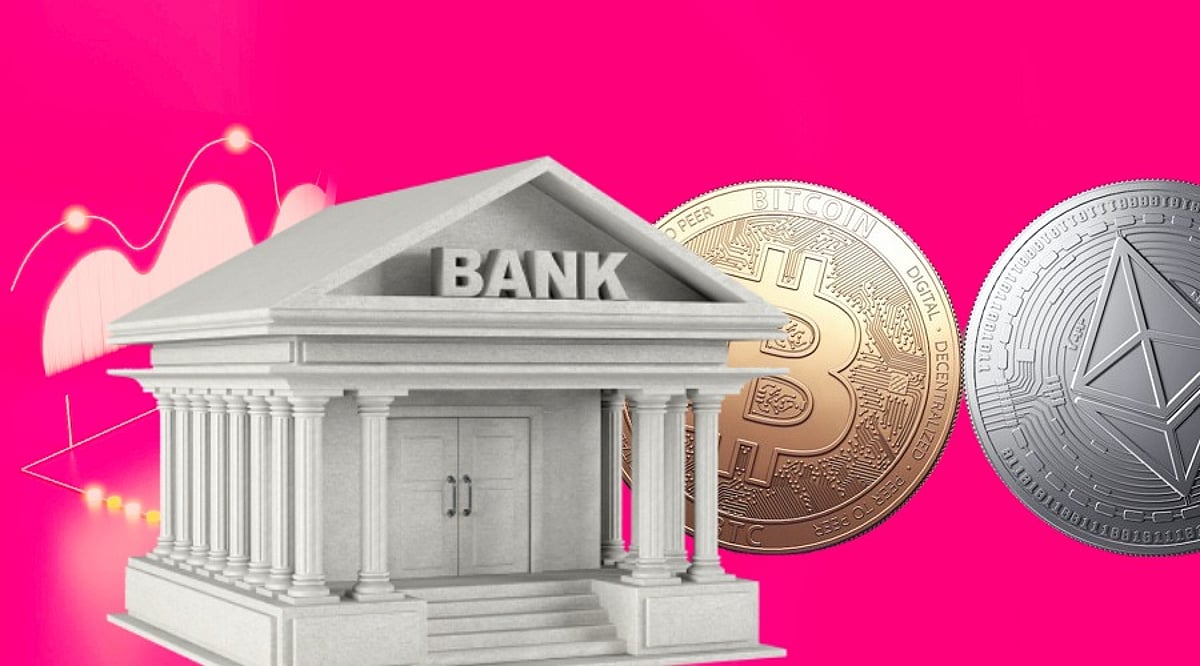
    Non-custodial crypto neo banks are gaining momentum as more users demand full control over their digital assets. These platforms blend traditional banking features with self-custody, offering services such as crypto payments, DeFi access, staking, and debit cards — all while keeping private keys in the user’s hands. With over 700 million crypto users worldwide and the self-custody market growing at 20–25% annually, these banks are set to become a cornerstone of digital finance. Here are the top platforms to watch in 2026.

    Bitwala: Banking Meets Self-Custody

    Based in Germany, Bitwala combines a traditional bank account with a non-custodial Bitcoin wallet. Users can save, spend via a Visa debit card, and transfer funds via SEPA, all while retaining control of their private keys. The platform serves 29 EEA countries and has raised approximately €42 million.

    Argent: Simplified Crypto Banking

    Argent simplifies the wallet experience with social recovery instead of seed phrases, reducing the risk of losing assets. It offers direct access to DeFi, stablecoin payments, and Ethereum Layer-2 networks. With over 2 million app downloads, it’s a favorite among newcomers.

    Safe: Enterprise-Grade Multi-Sig Security

    Formerly Gnosis Safe, Safe is trusted by businesses and DAOs for multi-signature security. The ecosystem protects over $100 billion in digital assets, making it one of the largest self-custody platforms globally.

    Ledger Live: Beyond Hardware Wallets

    Ledger’s Ledger Live app now offers buying, swapping, staking, and NFT management. With over 7 million hardware devices sold, it leverages a vast user base to expand into crypto financial services.

    Trust Wallet: Largest Self-Custody Community

    Trust Wallet supports over 100 blockchains, thousands of tokens, NFTs, and staking. With more than 220 million users, it’s the most widely used non-custodial wallet, offering a comprehensive mobile experience.

    Coinbase Wallet: Full Ownership Within the Coinbase Ecosystem

    Coinbase Wallet is a fully non-custodial wallet that integrates with the Coinbase exchange while supporting DeFi, NFTs, and multiple blockchains. Users get exchange services without sacrificing control.

    Blockchain.com Wallet: A Trusted Veteran

    Blockchain.com has evolved from a blockchain explorer to a full crypto platform with self-custody, trading, and rewards. With around 39 million verified wallets, it remains a reliable choice.

    Rabby Wallet: DeFi Power User’s Choice

    Rabby Wallet excels for DeFi enthusiasts, offering seamless network switching, transaction previews, and security alerts. Though smaller, it’s rapidly gaining traction in the DeFi community.

    Best Wallet: Rapidly Growing Newcomer

    Best Wallet launched recently but already offers portfolio management, token discovery, cross-chain swaps, and staking. Upcoming features like MEV protection and gas optimization aim to challenge larger players.

    Ctrl Wallet: Multi-Chain Compatibility

    Ctrl Wallet focuses on cross-chain operations, including swaps, NFT management, and dApp access via browser extensions and mobile. Its broad compatibility suits users who move assets across ecosystems.

    The Road Ahead

    Future innovations like account abstraction, MPC security, stablecoin payments, and regulatory frameworks (e.g., MiCA) will drive growth. With a $300 billion stablecoin market and $150–200 billion locked in DeFi, non-custodial crypto neo banks are poised to lead global digital finance.

    FAQs

    1. What is a non-custodial crypto neo bank? A digital platform where users control their private keys while accessing banking-like services.
    2. Why are they popular? Users prefer full ownership over trusting third parties.
    3. Which has the largest user base? Trust Wallet with over 220 million users.
    4. Can they handle everyday payments? Yes, many offer debit cards, stablecoin payments, and fiat transfers.
    5. What trends will shape them in 2026? Account abstraction, MPC security, stablecoin adoption, and stronger regulation.
  • Solana Price Recovery Gains Steam as Morgan Stanley Files Updated ETF Proposal

    Solana Price Recovery Gains Steam as Morgan Stanley Files Updated ETF Proposal

    Solana (SOL) extended its recovery on Wednesday, climbing above its 50-day Exponential Moving Average (EMA) as retail trading activity picked up, even as institutional demand through exchange-traded funds remained subdued. The token gained approximately 4% in the previous session, buoyed by improving sentiment across the broader cryptocurrency market.

    Technical indicators show Solana reclaiming the 50-day EMA at $76.82 and moving above the 50% Fibonacci retracement level at $76.92. These levels are critical for sustaining the current rebound. However, SOL faces immediate resistance from a descending trendline near $81.50. A daily close above that level would confirm a break from the existing downtrend and open the path toward the next resistance at $88.56, with the 200-day EMA at $94.52 serving as the next major barrier.

    The Relative Strength Index (RSI) sits near 54, indicating moderate buying pressure without overbought conditions. Meanwhile, the Moving Average Convergence Divergence (MACD) is approaching a bullish crossover near its signal line, which could signal improving momentum if confirmed.

    Retail Activity Strengthens, Institutional Caution Persists

    Data from CoinGlass shows Solana futures open interest holding steady near $4.91 billion over the past 24 hours, suggesting traders are maintaining leveraged positions. Futures trading volume rose 15% to approximately $6.90 billion, reflecting stronger market participation. Solana’s funding rate remained positive at about 0.0040%, meaning long-position holders are paying shorts to keep positions open.

    In contrast, institutional demand remains weak. SoSoValue data indicates Solana ETFs recorded zero net inflows for two consecutive trading sessions this week, highlighting a cautious approach from traditional investors despite the retail-driven recovery.

    Morgan Stanley Revises Solana ETF Filing

    In a significant development, Morgan Stanley has filed its third round of amendments for proposed spot Ether and Solana ETFs. The updated S-1 registration statements name Coinbase as custodian and staking facilitator, with BNY Mellon serving as joint custodian for both trusts.

    The Solana ETF, proposed to list on NYSE Arca under the ticker MSOL, may stake up to 100% of its SOL holdings, though a portion will remain liquid for redemptions and expenses. Staking providers and custodians would receive 5% of generated staking rewards, with the remaining 95% accruing to the trust. Earlier filings also listed Figment, Galaxy Blockchain Infrastructure, and Coinbase Canada as staking service providers.

    What to Watch

    Solana’s recovery has gained traction after reclaiming its 50-day EMA and seeing improved futures activity. However, weak ETF inflows underscore continued institutional caution. Morgan Stanley’s revised ETF filing could bolster future interest, while the $81.50 resistance level remains the key technical threshold for traders to monitor.

  • Ethereum Phishing Scam Drains Nearly $1M as BitMine Nears 5% of Total Supply

    Ethereum Phishing Scam Drains Nearly $1M as BitMine Nears 5% of Total Supply

    A cryptocurrency user lost nearly $1 million after unknowingly approving a malicious Ethereum transaction that allowed attackers to drain almost the entire wallet balance. Blockchain security platform Scam Sniffer reported that the victim lost 999,999 Tether (USDT) after signing a fraudulent token approval request on Wednesday.

    On-chain records show the attackers first attempted to transfer a rounded $1 million, but the transaction failed since the wallet held slightly less. Moments later, the attackers recalculated the available balance and successfully withdrew every remaining token. Meanwhile, Ethereum treasury company BitMine disclosed that it now controls more than 5.74 million ETH, placing it close to its stated goal of owning 5% of Ethereum’s total token supply.

    Phishing Attack Exploits Token Approval

    Scam Sniffer said the attackers relied on a phishing approval request rather than stealing private keys. The malicious approval granted permission to move the victim’s tokens without requiring another signature. According to the platform, the attackers initially failed when they tried withdrawing as much as $1 million through multicall transactions. Soon afterward, their script recalculated the balance and transferred the exact amount left in the wallet.

    Security researchers continue to identify approval phishing as one of the most common social engineering threats in crypto. Victims often believe they are confirming routine transactions while unknowingly granting unlimited spending permissions.

    According to blockchain security firm CertiK, phishing scams caused $723 million in losses across 248 incidents during 2025. In those cases, attackers convinced users to approve malicious token permissions that later enabled unauthorized transfers.

    Earlier this month, another crypto holder reportedly lost about $1.65 million after connecting to a fake exchange and signing a malicious smart contract. Researcher Ryan Coleman said the approval gave attackers unlimited wallet access, allowing an automated sweeper to drain the assets.

    Separate On-Chain Loss Shows Different Threat

    Besides phishing attacks, researchers recently reported another major on-chain loss involving transaction routing. A trader lost nearly $2 million after a decentralized exchange routed an Ether swap through a low-liquidity pool.

    GoPlus Security said the incident resulted from transaction routing instead of phishing. The routing allowed a same-block arbitrage trade to capture most of the transaction’s value.

    Following the incident, Scam Sniffer advised users to review every signature request carefully. The platform also recommended avoiding rushed approvals and using scam detection tools or browser extensions before signing wallet transactions.

    BitMine Nears Five Percent Ethereum Ownership

    At the same time, BitMine disclosed that it holds 5,742,237 ETH, representing about 4.8% of Ethereum’s 120.7 million token supply. The company now sits only 0.2 percentage points below its stated ownership target.

    The company reported total crypto assets, cash, marketable securities, and strategic holdings worth $11.1 billion as of June 28. It also said 4,879,157 ETH remained staked as of July 5, representing about 85% of its Ethereum holdings.

    Based on an ETH price of $1,800, BitMine valued its staked assets at approximately $8.8 billion. Furthermore, the company projected current annualized staking revenue of $235 million and estimated annual rewards of $277 million if all holdings remain fully staked through MAVAN and its staking partners.

    CryptoSlate’s Ethereum market data listed Ethereum’s total supply at about 120.68 million ETH and its market capitalization near $209 billion on July 6. Consequently, BitMine’s growing treasury has entered the broader discussion surrounding exchange liquidity, institutional treasury demand, staking participation, and large-holder activity.

    What’s Next?

    An Ethereum phishing scam drained nearly $1 million after a victim approved a malicious transaction, while separate on-chain losses exposed transaction routing risks. Meanwhile, BitMine expanded its Ethereum treasury to 5.74 million ETH, bringing its holdings close to 5% of the network’s total supply. Users should carefully verify every wallet approval before signing.

  • Best Trust Wallet Clone Script Providers to Watch in 2026

    Best Trust Wallet Clone Script Providers to Watch in 2026

    As the cryptocurrency ecosystem expands, businesses are increasingly seeking ready-made solutions to launch their own branded digital wallets. Trust Wallet clone scripts offer a fast, cost-effective way to enter the market with feature-rich, secure platforms. Here are the top providers to consider for 2026.

    Top Trust Wallet Clone Script Providers

    • Suffescom Solutions: Develops customizable Trust Wallet clone scripts supporting multiple cryptocurrencies, NFT storage, staking, and enterprise-grade security features.
    • Antier Solutions: Offers scalable crypto wallet development with DeFi integration, multi-chain compatibility, biometric authentication, and robust security architecture.
    • Blockchain App Factory: Delivers feature-rich wallet clone solutions supporting token management, staking, decentralized applications, and advanced encryption technologies.
    • Coinsclone: Builds customizable cryptocurrency wallet scripts with fast deployment, multi-currency support, and secure transaction management capabilities for businesses.
    • Maticz Technologies: Provides white-label crypto wallet solutions featuring NFT compatibility, staking functionality, and blockchain integration for digital asset management.
    • Inoru: Develops blockchain wallet software with customizable interfaces, token support, multi-platform compatibility, and enterprise-level security infrastructure.
    • Osiz Technologies: Creates Trust Wallet-inspired applications offering decentralized wallet features, crypto asset storage, and cross-platform mobile compatibility.
    • TurnkeyTown: Delivers ready-to-launch crypto wallet clone solutions featuring secure authentication, token management, and simplified blockchain integration tools.
    • Code Brew Labs: Specializes in customized crypto wallet development with modern interfaces, scalable architecture, and support for multiple blockchain ecosystems.

    These providers cater to a growing demand for secure, customizable, and multi-chain wallet solutions, helping businesses capitalize on the crypto boom without building from scratch. For more stories and updates, join our WhatsApp Channel to get the latest news, exclusives, and videos on WhatsApp.

  • Ethereum Surges as Fed Rate Worries Subside: Institutional Demand and Network Upgrades Fuel Rally

    Ethereum Surges as Fed Rate Worries Subside: Institutional Demand and Network Upgrades Fuel Rally

    Ethereum has been gaining momentum as concerns over prolonged high U.S. interest rates fade. Cooling inflation has shifted expectations toward a softer Federal Reserve stance, prompting investors to rotate capital into higher-growth assets like ETH. This macroeconomic tailwind, combined with strong institutional demand, ongoing network upgrades, and expanding Layer-2 adoption, is bolstering Ethereum’s long-term outlook.

    Lower Interest Rate Concerns Support Ethereum

    Interest rates heavily influence financial markets. Recent inflation data has eased fears that the Fed will maintain elevated rates for an extended period. This shift in sentiment has drawn fresh money back into risk assets, including Ethereum.

    Institutional Investors Continue to Show Interest

    Growing institutional demand is a key driver of Ethereum’s price movement. Major investment firms are increasing their exposure through spot Ethereum ETFs. While weekly inflows fluctuate, the overall trend points to rising institutional backing.

    Ethereum Network Remains Strong

    Ethereum maintains its position as the largest smart contract blockchain. Thousands of decentralized finance (DeFi) platforms, blockchain applications, and stablecoin projects rely on its network daily. Developers continue building new products on Ethereum, drawn by its robust infrastructure and large user base. This steady growth supports long-term demand for ETH.

    Staking Reduces Supply

    Ethereum’s proof-of-stake system allows holders to lock their coins to secure the network and earn rewards. As more investors stake their ETH, fewer coins remain available for trading. This supply reduction often supports prices when demand stays strong, giving Ethereum an advantage over many other cryptocurrencies.

    Network Upgrades Improve Performance

    Years of upgrades have boosted processing efficiency, validator performance, wallet security, and transaction speeds. These technical improvements attract developers, enterprises, and financial institutions, making Ethereum a more attractive long-term investment.

    Layer-2 Networks Help Ethereum Grow

    The rapid growth of Layer-2 networks makes transactions faster and cheaper. Lower costs encourage broader use of DeFi platforms, blockchain games, digital collectibles, and other services. Since these Layer-2 systems rely on the main Ethereum blockchain, increased network activity benefits ETH directly.

    Strong Market Position Supports Price Growth

    Ethereum’s total market capitalization exceeds $214 billion, with a circulating supply of about 120.7 million ETH. Daily trading volume regularly surpasses $10 billion, indicating strong engagement from both retail and institutional participants. This liquidity attracts major investment firms.

    Better Economic Outlook Helps Risk Assets

    U.S. Treasury yields have stabilized compared to the period of aggressive rate hikes, reducing pressure on growth-focused investments. Anticipation of a less restrictive Fed posture, assuming inflation trends toward target, typically fuels gains in tech stocks and crypto tokens. Ethereum has historically performed well under such conditions.

    Tokenization Creates New Opportunities

    Real-world asset tokenization is gaining traction. Banks and financial institutions are exploring ways to place traditional assets like bonds and funds on blockchain networks, opening new use cases for Ethereum.

    Risks Still Remain

    Despite the rally, Ethereum remains volatile. Economic reports, Fed statements, ETF flows, and sentiment changes can cause sharp price swings. However, the easing of interest rate concerns has created a more favorable environment for cryptocurrencies.

    Final Thoughts

    Ethereum’s recent rise reflects a convergence of factors: easing Fed rate fears, strong institutional participation via spot ETFs, network upgrades, Layer-2 growth, expanding blockchain adoption, and tokenization. With a market cap above $214 billion and daily trading volume over $10 billion, Ethereum remains a dominant digital asset. While short-term volatility persists, the combination of improved economic conditions and solid network fundamentals supports its long-term growth.

  • Ethereum Price Prediction: Could ETH Hit $10,000 by 2030?

    Ethereum Price Prediction: Could ETH Hit $10,000 by 2030?

    Key Takeaways

    • Ethereum remains the dominant blockchain for DeFi, stablecoins, and NFTs despite current market weakness.
    • Institutional adoption and staking mechanisms continue to strengthen Ethereum’s long-term growth prospects.
    • A $10,000 ETH price by 2030 is considered feasible if market conditions remain favorable.

    Ethereum, the second-largest cryptocurrency by market capitalization, continues to be a cornerstone of the blockchain ecosystem. Despite trading around $1,550–$1,650 in July 2026—well below its 2021 all-time high of $4,891—many analysts maintain a bullish long-term outlook. The central question remains: Can Ethereum reach $10,000 by 2030?

    Ethereum’s Current Market Position

    2026 has been a challenging year for Ethereum. High interest rates, economic uncertainty, and a broad crypto market downturn have kept prices under pressure. However, market weakness does not diminish Ethereum’s network dominance. It remains the backbone of decentralized finance (DeFi), hosts the premier NFT platforms, and handles massive stablecoin volume daily.

    Institutional Interest Could Push Prices Higher

    Rising institutional interest is a major factor behind positive analyst sentiment. Large financial firms are exploring crypto investments through ETFs and regulated products. Standard Chartered has issued one of the most aggressive forecasts, projecting Ethereum could reach $40,000 by 2030 under favorable conditions. Such predictions underscore the strong institutional belief in Ethereum’s future.

    Network Upgrades Continue to Improve Ethereum

    Developers are actively working on upgrades to improve transaction speed, reduce gas fees, and increase scalability. These technical improvements aim to address historical issues like high fees during periods of high demand. Successful upgrades could strengthen Ethereum’s position relative to newer, faster blockchains.

    Staking Creates Supply Pressure

    Ethereum’s transition to Proof-of-Stake has locked a significant portion of ETH in staking contracts, reducing circulating supply. When supply is limited and demand rises, prices tend to increase. This reduced supply is a key long-term advantage that could support price growth.

    Stablecoins and Real-World Assets Add Value

    Ethereum leads in stablecoin infrastructure, with USD Coin and Tether processing billions in transactions daily. Additionally, tokenization of real-world assets—bonds, real estate, traditional financial products—is gaining traction, and Ethereum remains the preferred network for many such projects, adding utility and demand.

    Risks That Could Slow Growth

    Despite the positive outlook, Ethereum faces challenges. Competition from newer blockchains like Solana and Sui, which offer lower fees and faster transactions, continues to attract developers. Regulatory uncertainty also looms, with governments worldwide debating crypto laws, taxation, and investor protections. Strict regulations could dampen adoption and market sentiment.

    Can Ethereum Reach $10,000 by 2030?

    For Ethereum to hit $10,000, its price would need to rise nearly sixfold from current levels. While ambitious, many market forecasts consider this target realistic if favorable conditions develop. Conservative estimates place ETH between $5,000 and $7,000 before 2030, while more bullish predictions exceed $10,000. Some institutional forecasts even suggest $40,000 during a strong crypto cycle.

    Why This Matters

    The disconnect between Ethereum’s depressed price and its unrivaled dominance in stablecoins, staking, and asset tokenization creates a unique market anomaly. This utility floor keeps banking giants bullish on a long-term structural recovery to $10,000.

    Final Outlook

    Ethereum remains a strong long-term investment option in the crypto space. Despite weak short-term performance, its fundamentals—leadership in DeFi, growing institutional adoption, stablecoin usage, and ongoing network upgrades—make it a viable candidate for future growth.

    FAQs

    1. What is Ethereum’s current price status in July 2026?

    Ethereum is trading under heavy pressure in the $1,550–$1,650 range, far below its historical peaks.

    2. Is a $10,000 target for Ethereum by 2030 realistic?

    Yes, many institutional analysts view it as structurally feasible, contingent on network upgrades, institutional inflows, and regulatory clarity.

    3. Why do financial institutions maintain a bullish long-term outlook despite the current slump?

    Ethereum processes over 50% of the world’s stablecoins, serves as the premier layer for tokenizing real-world assets, and has over 30% of its total supply locked in staking contracts.

    4. What are the main risks that could derail Ethereum’s long-term growth?

    Primary risks include competition from faster blockchains like Solana and Sui, macroeconomic pressures from high interest rates, and shifting international regulatory frameworks.

    5. What is the highest institutional price prediction for Ethereum?

    Standard Chartered has forecasted Ethereum could reach $40,000 by 2030, drawing comparisons to Amazon’s post-dot-com recovery.

    Disclaimer: This article is for informational purposes only and does not constitute investment advice. Cryptocurrency investments are risky; always conduct your own research.

  • Ethereum on Track for Historic Three-Quarter Losing Streak as Institutional Strategies Diverge

    Ethereum on Track for Historic Three-Quarter Losing Streak as Institutional Strategies Diverge

    Ethereum is approaching its first three-quarter losing streak as prices continue to weaken, institutional strategies diverge, and staking absorbs supply amid persistent negative sentiment. The world’s second-largest cryptocurrency by market capitalization fell below $1,800 after failing to break through the key $2,400 resistance level.

    Ethereum Approaches a Historic Quarterly Decline

    CoinGlass quarterly return data shows that Ethereum closed the fourth quarter of 2025 in negative territory and has continued falling through the first and second quarters of 2026. Another negative quarterly close would mark three consecutive losing quarters for the first time, extending a downturn that has lasted longer than previous corrections. While Ethereum has faced major price declines before, recoveries typically followed within one or two quarters. This time, sustained selling has kept pressure on bullish traders for an extended period.

    BlackRock and BitMine Follow Opposite Paths

    Large institutions have not moved in unison during Ethereum’s decline. According to market updates, BlackRock sent additional Bitcoin and Ether to Coinbase Prime while reducing its Ether exposure. The asset manager sold Ether for seven consecutive trading days, with its most recent purchase occurring about two weeks before the latest report.

    In contrast, Tom Lee’s BitMine continued buying the asset despite broader market weakness. The firm added 27,084 ETH—worth approximately $42.5 million—to its corporate holdings, raising its total position to 5.7 million ETH. That holding represents about 4.72% of Ethereum’s total supply.

    Staking Absorption Complicates Market Positioning

    Analytics firm CryptoQuant notes that Ethereum now faces a collision between negative sentiment and supply absorption through staking. The firm describes this combination as a precarious environment, particularly for short-sellers. Staking reduces the amount of organic supply available for active trading, while weak sentiment can increase volatility as buyers and sellers react to changing support levels.

    The question remains: Can staking absorption contain further selling while major institutions continue taking opposite positions? Traders are watching whether Ethereum can hold key support areas after its move below $1,800. Trading volume has remained subdued during the latest phase, showing cautious participation across the market. This reduced activity adds another layer of uncertainty around Ethereum’s near-term price direction.

    What’s Next?

    Ethereum faces a possible third consecutive negative quarter as weak sentiment and selling pressure continue. BlackRock has reduced exposure while BitMine expands its holdings, and staking absorbs available supply. Market participants are advised to monitor support levels, institutional activity, and trading volume before making trading decisions.

  • SharpLink Acquires $62.4M in Ethereum After 8-Month Pause, Boosting Holdings to 870K+ ETH

    SharpLink Acquires $62.4M in Ethereum After 8-Month Pause, Boosting Holdings to 870K+ ETH

    SharpLink has re-entered the cryptocurrency market with a significant purchase of $62.4 million worth of Ethereum, ending an eight-month period of inactivity. The acquisition signals sustained corporate confidence in the digital asset despite ongoing market weakness and substantial unrealized losses on its existing position.

    Blockchain records indicate that SharpLink acquired approximately 39,196 ETH during the final week of June 2026. The initial transactions occurred on June 25 and June 26, when the company bought 5,000 ETH valued at about $7.85 million through digital asset broker FalconX. Subsequent purchases pushed the total investment above $62 million.

    Ethereum Holdings Rise Above 870,000 ETH

    With this latest purchase, SharpLink’s total Ethereum reserves have reached somewhere between 870,000 and 876,000 ETH, currently worth around $1.3 billion to $1.4 billion at prevailing market prices. That positions SharpLink as the second-largest corporate Ethereum holder globally, trailing only Bitmine Immersion Technologies, which holds over 5.6 million ETH.

    The company now commands close attention from market participants, who view its strategy as a bellwether for the adoption of cryptocurrency as a corporate treasury asset.

    Ethereum Price Remains Under Heavy Pressure

    SharpLink’s purchase comes at a time when Ethereum prices are languishing near $1,550–$1,600, representing a nearly 50% decline since the start of 2026. Over the past month alone, ETH has fallen by roughly 23%. Many analysts were surprised that the company chose to accumulate during such a downturn rather than wait for a recovery.

    Company Faces Large Unrealized Losses

    Despite the additional acquisition, SharpLink is sitting on substantial paper losses. Market experts estimate the company’s average purchase price for its total Ethereum hoard is around $3,609 per ETH. Given current prices, unrealized losses are estimated between $1.7 billion and $1.8 billion.

    Instead of reducing exposure amid those losses, SharpLink has taken the opposite approach, increasing its Ethereum allocation—a move that runs counter to typical corporate caution.

    SharpLink Changed its Business Strategy

    SharpLink, formerly known as SharpLink Gaming, pivoted in 2025 to focus on building a large Ethereum treasury. The company raised nearly $425 million to fund its purchases, drawing comparisons to the Bitcoin-heavy strategy of MicroStrategy. The key difference: SharpLink has committed solely to Ethereum.

    Staking Creates Additional Rewards

    SharpLink hasn’t simply stored its Ethereum; it has staked virtually all of its holdings. Staking rewards have already generated more than 22,000 ETH for the company, providing a stream of value independent of price appreciation. Institutional ownership in SharpLink has reached nearly 46%, reflecting broad support for the strategy despite the bearish crypto climate.

    Broader Ethereum Market Still Looks Weak

    Even as SharpLink accumulates, the broader Ethereum market faces headwinds. Spot Ethereum ETFs in the U.S. have reported several weeks of outflows, with nearly $13 million exiting in a single week. BlackRock’s Ethereum trust has been a primary source of those withdrawals, indicating short-term investor caution.

    SharpLink’s latest move underscores a longer-term perspective: major corporations view deep market corrections as opportunities to accumulate. The company’s willingness to absorb over $1.7 billion in paper losses while continuing to buy—and earning staking rewards in the process—offers a resilient model that stands in contrast to the outflows seen in institutional ETF products.

    SharpLink has also extended support to Ethlabs, a nonprofit research group focused on Ethereum infrastructure development, backed by Ethereum co-founder Joseph Lubin. The initiative aims to prepare Ethereum for large-scale institutional use.

  • Why Ethereum Stays a Leading Crypto Investment in 2026 Amid Rising Rivals

    Why Ethereum Stays a Leading Crypto Investment in 2026 Amid Rising Rivals

    Ethereum maintains its position as the second-largest cryptocurrency by market cap, even as newer blockchains like Solana, Avalanche, and NEAR Protocol offer faster transactions and lower fees. Despite these challenges, a combination of institutional demand, continuous network upgrades, dominance in decentralized finance (DeFi), and emerging AI use cases keeps Ethereum at the forefront of the crypto market.

    Institutional Confidence Remains Strong

    Major companies continue to accumulate Ethereum despite broader market weakness. BitMine Immersion Technologies purchased 71,179 ETH in a single week, pushing its total holdings above 4.7 million ETH (worth approximately $9.8 billion). Similarly, SharpLink resumed buying after an eight-month pause, signaling long-term institutional conviction.

    Constant Network Upgrades

    Ethereum’s development roadmap remains active. The upcoming Glamsterdam upgrade focuses on speed, efficiency, and validator improvements, while the earlier Pectra upgrade enhanced staking rewards and validator systems. These regular enhancements ensure Ethereum evolves faster than most competitors.

    Unmatched DeFi Dominance

    Ethereum remains the backbone of decentralized finance. Billions of dollars in value are locked across Ethereum-based lending platforms, decentralized exchanges, NFT marketplaces, and stablecoin systems. Other blockchains have built DeFi ecosystems but none have matched Ethereum’s liquidity and developer tooling.

    Security and Staking

    With over 920,000 active validators, Ethereum’s proof-of-stake network is highly decentralized and secure. Staking reduces circulating supply and provides yield for holders, further supporting long-term value.

    Future Innovation: AI and Beyond

    Ethereum is poised to benefit from emerging technologies like decentralized AI. The ERC-8004 standard for autonomous AI agents and networks could create new demand for ETH as the underlying settlement layer.

    Technical Outlook

    As of late June 2026, ETH trades between $1,550 and $1,650. Analysts watch the $1,668 level closely; sustained holding above this point could signal a recovery, while a break below may lead to further downside. Short-term volatility persists, but long-term fundamentals remain intact.

    Conclusion

    Institutional buying, regular upgrades, DeFi leadership, and a massive developer base make Ethereum irreplaceable in the crypto ecosystem. While faster rivals attract retail attention, Ethereum’s deep liquidity, strong security, and innovative pipeline keep it among the top crypto assets to watch in 2026.