Tag: Stock Market

  • Wall Street Poised for Best Quarter in Years as Tech Stocks Rebound Amid Geopolitical Calm

    Wall Street Poised for Best Quarter in Years as Tech Stocks Rebound Amid Geopolitical Calm

    Wall Street is on track to close the second quarter with its strongest performance in years, even as ongoing US-Iran tensions continue to create geopolitical uncertainty. Investors have maintained buying momentum, buoyed by optimism over the upcoming earnings season and easing concerns about Middle East hostilities. Major indexes posted solid gains, with technology shares staging a recovery after a challenging June.

    Major US Indexes Target Strongest Quarterly Gains

    The S&P 500 and NASDAQ Composite are heading toward their best quarterly gains in six years, while the Dow Jones Industrial Average is on pace for its strongest quarter since 2022. In Tuesday trading, the S&P 500 rose 0.34%, the NASDAQ gained 0.76%, and the Dow traded nearly flat. These gains reflect continued investor confidence despite earlier volatility driven by semiconductor weakness.

    The Dow is also on track for its best first-half performance since 2021. The S&P 500 has posted more than an 8% gain during the first six months of 2026, while the NASDAQ has advanced over 11%. The Russell 2000 has outperformed larger indexes, climbing more than 21% in the same period.

    Technology Stocks Recover as Earnings Season Approaches

    Technology stocks helped lift markets after suffering sharp losses earlier in June. Investors are now shifting focus to the upcoming corporate earnings season, expecting strong results to support current valuations. Chipmakers led Tuesday’s rally: NVIDIA gained more than 1%, Advanced Micro Devices advanced about 3%, and Intel climbed roughly 4%.

    Semiconductor exchange-traded funds also delivered record quarterly gains. The VanEck Semiconductor ETF surged around 70% during the second quarter, while the iShares Semiconductor ETF gained approximately 94%. Micron was among the sector’s strongest performers, rising about 240% during the quarter.

    Despite Tuesday’s rebound, June remained challenging for several technology stocks. The S&P 500 and NASDAQ are still on track to end two consecutive months of gains as investors reassess AI-related valuations.

    Geopolitical Developments and Interest Rates Remain in Focus

    Investors continue monitoring US-Iran developments. Recent signs of reduced hostilities have improved market sentiment after both countries agreed to halt attacks and allow commercial shipping through the Strait of Hormuz. Oil prices remained relatively stable, with Brent crude trading near $73 per barrel and West Texas Intermediate around $70. Stable energy prices have helped ease concerns about additional inflation pressure.

    Markets are also focused on monetary policy expectations. Traders now anticipate at least one Federal Reserve rate hike before the end of 2026, following stronger economic data that shifted expectations away from earlier forecasts for rate cuts. Investors are awaiting comments from Federal Reserve Chair Kevin Warsh after fresh job openings and consumer confidence reports.

    Individual Stocks Post Mixed Performance

    Several individual companies recorded notable moves during Tuesday’s session. Concentrix shares fell more than 20% after lowering its full-year revenue and adjusted profit forecasts, pushing the stock to a record low. In contrast, AeroVironment surged about 22% after reporting a strong increase in quarterly revenue. Morgan Stanley slipped around 1% after Oppenheimer downgraded major Wall Street investment banks and encouraged investors to consider alternative asset managers.

    European markets also ended higher on the final trading day of June, with technology stocks leading regional gains. Major indexes in Germany, France, Italy, and the United Kingdom all closed in positive territory. Although analysts continue monitoring geopolitical developments and interest rate expectations, strong corporate earnings and resilient investor demand have kept Wall Street positioned for one of its strongest quarters in recent years.
  • Big Tech’s Magnificent 7 Stocks Plunge $2.3 Trillion as AI Investment Doubts Mount

    Big Tech’s Magnificent 7 Stocks Plunge $2.3 Trillion as AI Investment Doubts Mount

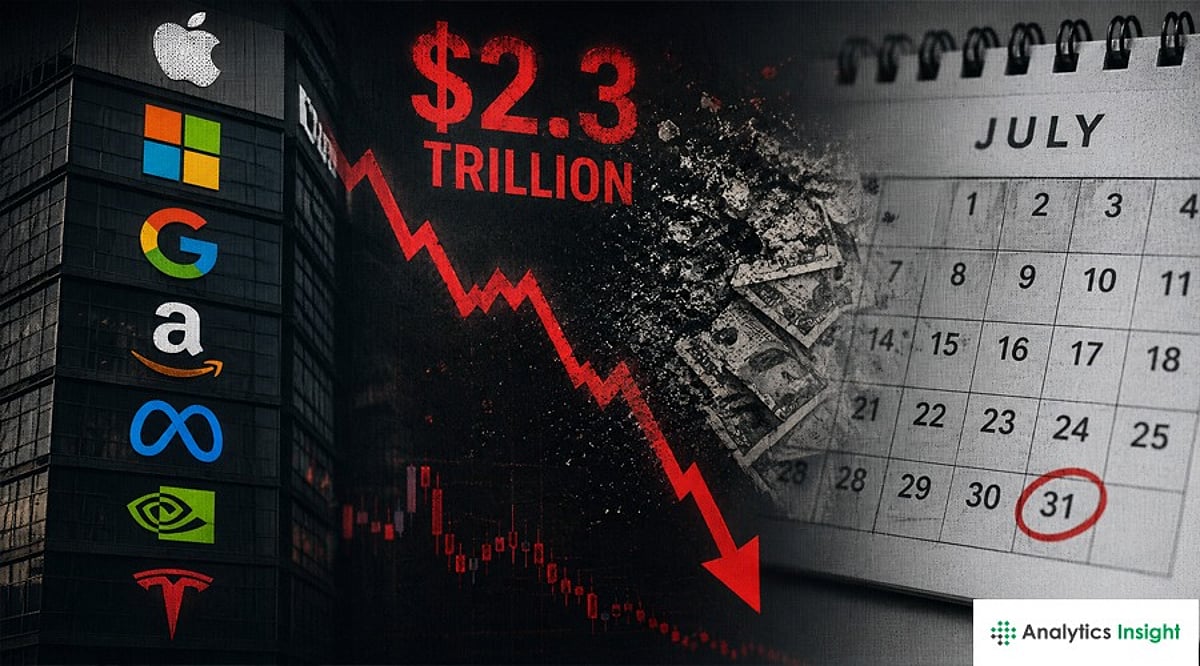
    June proved disastrous for the Magnificent 7 stocks as investor anxiety over massive AI spending and uncertain returns triggered a selloff that erased nearly $2.3 trillion in market value. The decline ranks among the steepest monthly losses ever recorded for Big Tech.

    The group—comprising Microsoft, NVIDIA, Apple, Alphabet, Amazon, Meta, and Tesla—had led the market for months on AI enthusiasm. However, June brought a sharp reversal as attention shifted from future promise to current spending and profitability.

    The Magnificent 7 Index fell roughly 10% in June, extending its decline to more than 13% from a mid-May peak. Investors now demand concrete evidence that billions poured into AI infrastructure will translate into higher earnings.

    Microsoft suffered the steepest drop among the seven, with its stock tumbling about 20% in June. NVIDIA lost nearly 13%, while Apple and Amazon each declined around 8%. The broad selloff reflects growing caution around companies investing heavily in AI without clear financial payoffs.

    Big Tech continues to pour capital into AI. Microsoft, Amazon, Alphabet, and Meta are expanding data centers and purchasing advanced AI chips to support future growth. Industry analysts estimate AI-related spending could exceed $700 billion in 2026. Such outlays have depressed free cash flow expectations, undermining investor confidence in valuations.

    Analysts believe the upcoming earnings season will be pivotal. Investors want to see that AI investments are boosting revenue rather than simply inflating costs. Wedbush analyst Dan Ives noted that the next earnings reports could clarify whether the AI investment cycle is on the right track.

    Recent market moves suggest a preference for tangible results over ambitious promises. Companies that successfully convert AI spending into stronger earnings may recover investor trust more quickly.

    Capital has also rotated toward AI hardware makers. Semiconductor and memory companies have outperformed the Magnificent 7 this month. The Philadelphia Semiconductor Index gained about 6% in June and is still up more than 90% year-to-date, indicating that investors currently favor businesses directly benefiting from AI demand.

    Many experts argue that the selloff does not signal the end of the AI story. Instead, the market is demanding clearer proof that expensive AI projects will generate improved profits. The coming round of earnings reports will be crucial in determining whether the Magnificent 7 rebound or remain under pressure for the rest of the year.

  • Indian Stock Market Today: Sensex Drops 155 Points, Nifty Slips to 23,886 as IT Stocks Drag; Small Caps Advance

    Indian Stock Market Today: Sensex Drops 155 Points, Nifty Slips to 23,886 as IT Stocks Drag; Small Caps Advance

    Indian benchmark indices ended lower on Tuesday, June 30, 2026, after a positive start gave way to caution over global geopolitical developments. The Sensex slipped 155.87 points to close at 76,572.50, while the Nifty50 fell 59.45 points to settle at 23,886.80. Weakness in IT, auto, and metal sectors dragged the market down, but small-cap stocks managed to stay in positive territory.

    Key Takeaways

    • Nifty50 falls 59.45 points to 23,886.80; Sensex drops 155.87 points to 76,572.50.
    • Nifty IT declines over 2%, becoming the worst-performing sector, with Infosys among top losers.
    • Five new IPOs open today, while Aastha Spintex, Adon Agro, Twinkle Papers, and Crazy Snacks continue subscriptions.

    Global Tensions Weigh on Investor Sentiment

    The primary trigger for today’s decline was uncertainty surrounding US–Iran negotiations. Investors adopted a cautious stance as the outcome of these talks could influence global trade, oil prices, and overall economic stability. Early morning gains evaporated as traders reacted to the risk-off mood.

    Top Losers: Eicher Motors, Tata Consumer, Infosys

    Several heavyweight stocks came under selling pressure. Eicher Motors and Tata Consumer Products were among the worst performers on the Nifty50. Infosys also recorded sharp losses, reflecting the broader weakness in the technology sector.

    Mixed Performance in Broader Market

    The broader market presented a contrasting picture. The Nifty MidCap index edged down 0.05%, indicating mild selling in mid-sized companies. In contrast, the Nifty SmallCap index rose 0.37%, showing selective buying interest in smaller names despite the overall market decline.

    Sectoral Roundup: IT Worst Hit, Chemicals and Realty Shine

    The Nifty IT index plunged more than 2%, making technology the day’s worst-performing sector. The Nifty Auto and Nifty Metal indices also traded lower. On the positive side, the Nifty Chemical and Nifty Realty indices outperformed, closing higher.

    Busy Day in the IPO Market

    Six new initial public offers opened for subscription on Tuesday: Kratikal Tech, Vinit Mobile, Sampark India Logistics, Seemax Resources, Atharva Polyplast, and Teja Engineering Industries. Meanwhile, ongoing IPOs for Aastha Spintex (targeting ₹170 crore), Adon Agro Commodities (₹44.03 crore), Twinkle Papers (₹27.52 crore), and Crazy Snacks (₹31.47 crore) entered their second day of subscription.

    Outlook

    Market participants remain focused on the US–Iran talks for near-term direction. Until clarity emerges, volatility is likely to persist. However, strength in select sectors and active primary market issuance could provide pockets of opportunity.

    FAQs

    1. Why did the stock market fall today?
    The market declined due to caution ahead of US–Iran negotiations, which dampened global sentiment and erased early gains.

    2. What is the Nifty50 level today?
    The Nifty50 fell 59.45 points (0.25%) to close at 23,886.80.

    3. Which sector performed the worst today?
    The technology sector (Nifty IT) dropped over 2%, making it the worst-performing sector.

    4. Which stocks were the top losers?
    Eicher Motors, Tata Consumer Products, and Infosys were among the biggest losers on the Nifty50.

    5. Which IPOs opened for subscription today?
    Six IPOs opened: Kratikal Tech, Vinit Mobile, Sampark India Logistics, Seemax Resources, Atharva Polyplast, and Teja Engineering Industries.

    Disclaimer: This article is for informational purposes only and does not constitute investment advice. Always conduct your own research before making investment decisions.

  • TCS Stock Drops Below Rs 2,050 as Nifty IT Hits Two-Year Low Amid Global Demand Worries

    TCS Stock Drops Below Rs 2,050 as Nifty IT Hits Two-Year Low Amid Global Demand Worries

    Tata Consultancy Services (TCS), India’s largest software exporter, saw its shares fall below the Rs 2,050 mark on Monday, extending a sharp correction from January highs. The decline reflects growing investor anxiety over slowing global enterprise technology spending and a cautious earnings outlook.

    The sell-off was not limited to TCS. Infosys, Wipro, HCLTech, Tech Mahindra, and LTIMindtree also traded lower, dragging the Nifty IT index to its lowest level since April 2023. The index’s heavy reliance on overseas clients makes it particularly vulnerable to global economic headwinds.

    TCS Sets the Tone for the IT Sector

    TCS is widely regarded as a barometer for India’s IT industry. Its performance often dictates investor sentiment toward the sector. The current correction stems from fears that corporations in the US and Europe are delaying technology spending. While major deals are still being announced, experts note that execution timelines have lengthened due to clients’ conservative stance.

    For investors, the focus has shifted from signing deals to converting them into revenue.

    Global Macroeconomic Headwinds Dominate

    The downward pressure on Indian IT stocks is largely external. Persistently high inflation in advanced economies increases the likelihood that the US Federal Reserve will keep interest rates elevated for an extended period. Higher rates typically prompt companies to delay investments in non-essential technologies, such as consulting engagements and digital transformations—areas that fuel Indian software exports. Demand in key foreign markets remains highly unpredictable heading into the quarter.

    Sector’s Dependence on Global Clients Amplifies Risks

    Unlike manufacturing and financial services firms, which are driven by domestic demand, Indian software companies rely heavily on a few foreign sectors. Banking, financial services, and insurance (BFSI) account for the largest share of revenue, followed by retail, technology, and manufacturing. A slowdown in any of these sectors directly affects Indian IT companies’ income, explaining why developments in the US economy impact domestic IT shares more than local events do.

    June-Quarter Earnings Could Decide the Sector’s Next Move

    The upcoming quarterly results will provide the clearest picture of the current demand environment. Along with financial numbers, investors will focus on management commentary about discretionary spending, order books, large deal closures, hiring, and the pace of AI monetization. A positive shift in client spending could spark a rally, but if management issues conservative guidance again, the sector’s earnings turnaround will likely be prolonged.

    Lower Valuations Alone May Not Attract Buyers

    The sharp retracement has improved valuations across large-cap IT stocks compared with earlier this year. However, analysts caution that attractive valuations do not guarantee a revival. Institutional investors are now favoring industries with greater visibility into domestic earnings, such as banking, defense, capital goods, and infrastructure. The export-dependent technology sector will continue to lag until global demand improves.

    Outlook

    TCS remains a barometer for the Indian tech sector. The prolonged decline stems from the global growth slowdown and concerns about enterprise tech investments and earnings visibility. For a recovery, the sector needs three things: clarity on US monetary policy, an improvement in global corporate technology budgets, and positive commentary from companies during the June-quarter earnings season. If discretionary spending improves in the second half of the fiscal year, India’s tech majors may regain investor confidence.

  • FTSE 100 Rises 29 Points to 10,513 as UK GDP Growth Beats Expectations, Miners Lead Gains

    FTSE 100 Rises 29 Points to 10,513 as UK GDP Growth Beats Expectations, Miners Lead Gains

    The FTSE 100 opened 29 points higher at 10,513 on Tuesday, as fresh data showed the UK economy grew faster than expected in the first quarter. The rally was led by mining stocks amid a broader global market uplift, even as uncertainty lingers over the US-Iran peace deal.

    Brent crude futures fell 1.04% to $72.39 a barrel, while US West Texas Intermediate (WTI) rose 0.78% to $70.20.

    Gainers and Losers

    On the upside, Antofagasta jumped 3.12% to £3,864, and Anglo American advanced 3.09% to £3,739. Polar Capital Technology Trust gained 2.55% to £703, Glencore rose 2.43% to £523.40, Sainsbury’s added 2.34% to £323.20, and Rio Tinto climbed 1.94% to £7,213. On the downside, Persimmon fell 2.87% to £1,051, Coca-Cola HBC slipped 1.01% to £4,884, 3i Group declined 1% to £2,471, Coca-Cola Europacific Partners dropped 0.91% to £7,615, Severn Trent eased 0.61% to £2,948, and Games Workshop edged down 0.18% to £21,880.

    Smarter Web Company Posts £72 Million Loss

    The crypto firm reported a £72 million loss as Bitcoin fell below $60,000. The company, which once had a market cap of around £1 billion, has now fallen below £100 million. Despite the setback, the firm said it remains confident in Bitcoin’s long-term prospects, noting that volatility is a historical feature of the asset.

    Sainsbury’s Sales Jump 3.1%

    Sainsbury’s total sales rose 3.1% year-on-year to £8 billion, driven by strong demand for berries, barbecue, and deli products during record heat. Grocery sales increased 3.6% to £7.6 billion, but the company warned that the long-term impact on business and customers remains uncertain. General merchandise and clothing sales declined 3.7% to £438 million. Argos continued to struggle due to subdued consumer spending, with sales falling 0.5% to £1.1 billion, though a late spike in TV sales came as the World Cup began.

    UK Economic Growth Revised

    The UK economy grew 0.6% in the first quarter compared to the previous quarter, unrevised from the earlier estimate. However, year-on-year growth was revised down to 0.9% from 1.1%. Business investment rose 0.9% on the quarter, imports jumped 1.4%, household consumption grew 0.6%, and government spending increased 1.3%. Liz McKeown of the ONS said growth in Q1 was unchanged, but the 2025 growth figure was revised downward.

    Global Market View

    In the US, the Dow Jones added 0.6% to close above 52,000 for the first time, the Nasdaq rose 2.1%, and the S&P 500 gained 1.2%. In Asia, South Korea’s Kospi rose 0.97%, Japan’s Nikkei 225 gained 0.86%, and Taiwan’s TAIEX advanced 2.5%. India’s Nifty 50 and Sensex both fell slightly, by 0.04% and 0.15% respectively.

    Disclaimer: This article is for informational purposes only and does not constitute investment advice. Cryptocurrencies and stocks carry risk; readers should conduct their own research before investing.

  • Knack Packaging IPO: Rs. 439.50 Crore Issue Opens July 1 – Price Band, GMP, Lot Size & Key Dates

    Knack Packaging IPO: Rs. 439.50 Crore Issue Opens July 1 – Price Band, GMP, Lot Size & Key Dates

    The initial public offering (IPO) of Knack Packaging Ltd will open for subscription on July 1, 2026, and close on July 3, 2026. The company aims to raise approximately Rs. 439.50 crore through a book-built issue comprising both a fresh issue and an offer for sale (OFS). The equity shares are expected to list on the BSE and NSE on July 8, 2026.

    Knack Packaging IPO GMP (Grey Market Premium)

    In the grey market, Knack Packaging shares are currently trading at a premium of Rs. 5 to Rs. 9 per share. Based on the upper price band of Rs. 170 and a GMP of Rs. 5, the estimated listing price is around Rs. 175, implying a potential listing gain of approximately 2.9%. Investors should note that the GMP is not an official figure and may change before listing.

    IPO Size, Structure & Reservation

    The issue is a combination of a fresh issue of 2.24 crore shares aggregating Rs. 380 crore and an OFS of 0.35 crore shares aggregating Rs. 59.50 crore.

    • Price Band: Rs. 161–170 per share
    • Lot Size: 88 shares
    • Minimum Investment (Retail): Rs. 14,960
    • sNII (Small Non-Institutional Investors): 14 lots (1,232 shares) – Rs. 2,09,440
    • bNII (Big Non-Institutional Investors): 67 lots (5,896 shares) – Rs. 10,02,320
    Category Reservation
    Qualified Institutional Buyers (QIB) Not more than 50%
    Retail Investors Not less than 35%
    Non-Institutional Investors (NII) Not less than 15%

    The basis of allotment is expected to be finalized on July 6, 2026 (July 4 being a Saturday). Systematix Corporate Services Ltd. is the book-running lead manager, and MUFG Intime India Pvt. Ltd. is the registrar for the issue.

    About Knack Packaging

    Founded in 2013, Knack Packaging is a one-stop packaging solutions provider specializing in printed and laminated woven polypropylene (PLWPP) bags. The company serves the food, pet food, agriculture, fertilizers, cement, chemicals, and other industries. It holds approximately 10.1% market share in India’s flexible bulk PLWPP bag market as of Fiscal 2025. The firm serves over 1,950 customers across 68 countries and has created more than 73,000 printing cylinders.

    Financial Performance

    • Total Income (FY26): Rs. 843.77 crore (up 13% from Rs. 747.38 crore in FY25)
    • Profit After Tax (FY26): Rs. 92.72 crore (up 26% from Rs. 73.59 crore in FY25)
    • EBITDA (FY26): Rs. 172.29 crore

    The IPO presents investors an opportunity to participate in the growth of a leading packaging player with a strong financial trajectory and a large international client base.

  • Indian Stock Market Wrap: Nifty Closes Below 23,900 as IT Drags; Realty and Pharma Outperform

    Indian Stock Market Wrap: Nifty Closes Below 23,900 as IT Drags; Realty and Pharma Outperform

    Indian benchmark indices ended lower on June 30, with the Nifty closing below 23,900 amid selling pressure in IT, auto, and FMCG stocks. The Sensex dropped 168 points in early trade but recovered some losses to settle near 76,560. Despite the overall weakness, realty, pharma, and consumer durables sectors posted gains, led by stocks like Maruti Suzuki, Titan, and Adani Enterprises.

    Key Market Movers

    Yes Bank Approves Rs 16,000 Crore Fundraising

    Yes Bank’s board approved raising up to Rs 16,000 crore through a mix of equity (Rs 7,500 crore) and debt (Rs 8,500 crore). The stock slipped about 1% to Rs 24.84 despite the announcement, as investors await details on capital deployment.

    Adani Ports Gains on Vizhinjam Port Deal

    Adani Ports rose over 1% after MSC’s Terminal Investment Limited (TiL) agreed to invest Rs 12,000 crore for a 49% stake in the Vizhinjam Port, India’s first deep-draft mega transshipment port, which has an annual capacity of 1.6 million TEUs.

    Suzlon Wins 105 MW Wind Energy Order

    Suzlon Energy secured a 105 MW wind power order from Sunsure Energy, marking the commercial debut of its S175 5.0 MW turbine platform. The stock traded modestly higher.

    IT Sector Hits Two-Year Low

    The Nifty IT index dropped to its lowest level since April 2023, with TCS, Infosys, and Wipro leading the selloff. Concerns over prolonged high US interest rates, weak discretionary tech spending, and AI-led disruption weighed on sentiment.

    Ola Electric Surges Over 10%

    Ola Electric Mobility rallied more than 10%, recording its strongest single-day gain in 11 weeks, driven by heavy buying volumes. The stock remains well below its 52-week high but has doubled from its yearly low.

    Maruti Suzuki Jumps on Broker Upgrade

    Maruti Suzuki shares surged 5.23% to Rs 14,114 after a bullish brokerage outlook, citing strong passenger vehicle demand, easing input costs, and improved earnings growth.

    Other Notable Developments

    • Industrial Output: India’s IIP rose 5.1% YoY in May 2026, supported by strong electricity generation.
    • Rupee Weakens: The Indian rupee closed 13 paise lower at 94.66 against the US dollar, pressured by safe-haven demand for the greenback.
    • Stocks at 52-Week Highs: Capri Global Capital, Ather Energy, GMR Airports, Gland Pharma, and Phoenix Mills among BSE 500 stocks hitting new highs.
    • Sterling & Wilson Secures $560 Million Egypt Solar Project: The company, in a joint venture with Hassan Allam Construction, won a contract for the West Minya Solar Power Project.
    • Godrej Properties Acquires Chennai Land: The company bought a 47-acre parcel in South Chennai with an estimated Rs 500 crore revenue potential.

    Market Summary

    On the expiry day of June futures and options, the Nifty closed at 23,904.60, down 0.17%, while the Sensex settled at 76,560.26, down 0.22%. Sectorally, Nifty IT, FMCG, and auto indices declined, while realty, pharma, and consumer durables emerged as gainers. The broader market saw mixed activity, with midcap and smallcap stocks showing selective strength.

    Disclaimer: This article is for informational purposes only and does not constitute investment advice. Please conduct your own research before making any investment decisions.

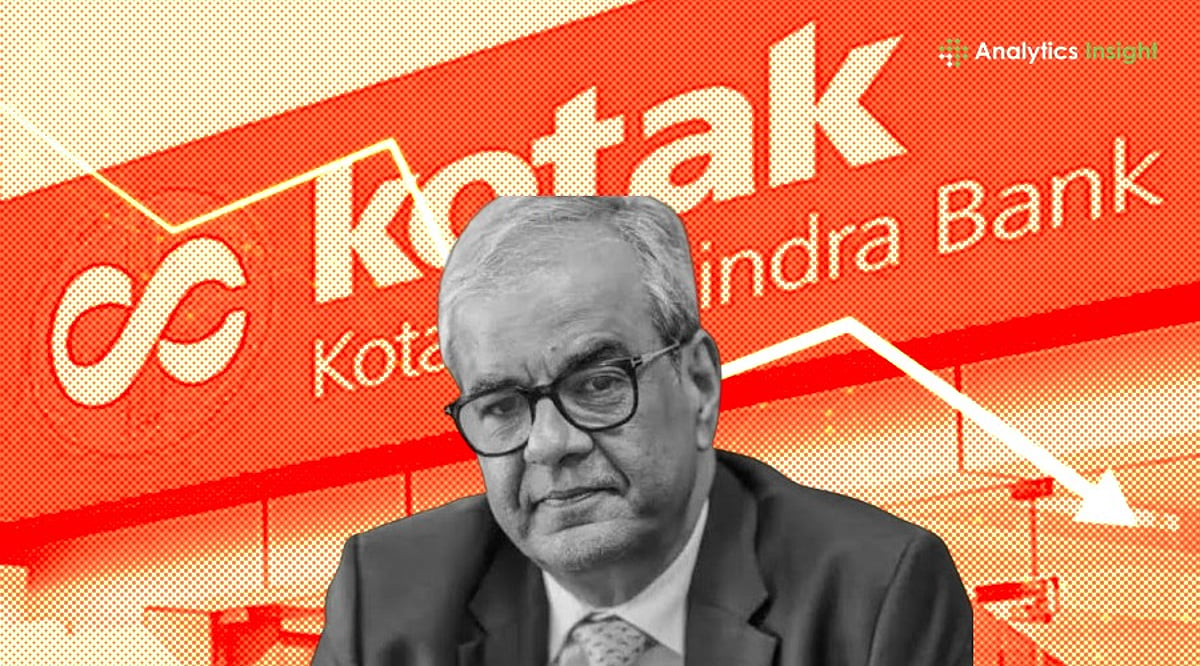
  • Kotak Mahindra Bank Shares Decline as CEO Ashok Vaswani Plans Departure by Late 2026

    Kotak Mahindra Bank Shares Decline as CEO Ashok Vaswani Plans Departure by Late 2026

    Kotak Mahindra Bank shares experienced a dip on Monday, trading near Rs. 398.95 on the NSE after CEO Ashok Vaswani confirmed he will step down at the end of his tenure on December 31, 2026. The stock touched an intraday high of Rs. 410.95 and a low of Rs. 398.95, reflecting investor caution over the leadership transition.

    Leadership Transition Sparks Selling Pressure

    The announcement that Ashok Vaswani will not seek another term as Managing Director and CEO raised concerns among investors about the future leadership of one of India’s largest private lenders. The bank’s management clarified that Vaswani will remain in his role until the end of his tenure and will collaborate closely with the board to ensure a smooth succession. Succession planning is already underway, subject to regulatory approval.

    Investors Eye Succession Clarity

    While the bank has reiterated its unchanged long-term strategy, the unexpected news has affected market sentiment. A leadership change often brings uncertainty, especially as Vaswani had been driving the company’s transformation. Investors are now focused on the board’s selection process for a new CEO, which will be critical in restoring confidence in the coming months.

    Analysts See Temporary Impact

    Despite the sharp decline, several brokerages maintain a positive outlook on Kotak Mahindra Bank, viewing the downturn as temporary. Nomura and Jefferies, among others, remain bullish on the stock, citing strong capitalization and solid fundamentals. Analysts believe that once the board identifies a suitable successor, attention will shift to profitability and growth. Such management changes are common in the banking industry.

    Growth Strategy Remains Intact

    Vaswani’s departure comes as the bank accelerates its growth strategy following the removal of regulatory restrictions on its digital business. Over the past year, the company has enhanced its technology framework, compliance systems, and focused on expanding retail lending. The bank continues to explore opportunities in consumer banking, wealth management, commercial lending, and digital financial services. With one of the strongest balance sheets in the private banking sector, Kotak Mahindra Bank is open to organic and inorganic growth avenues, including loan portfolio acquisitions. These strategic initiatives are institutionally supported and likely to continue irrespective of the leadership change.

    Smooth Succession as Key Catalyst

    From an investor perspective, a successful succession process will be the primary catalyst for rebuilding confidence and removing current uncertainties surrounding the share price. Analysts expect share price movements to remain tied to succession-related news. However, most market professionals view the bank’s capital adequacy, technological advancements, growing credit book, and high profitability as strong indicators for long-term investment. While the leadership announcement has introduced volatility, the underlying business remains robust.

  • FTSE 100 Opens Lower at 10,495 as Oil Prices Climb and BoE Warns on Inflation

    FTSE 100 Opens Lower at 10,495 as Oil Prices Climb and BoE Warns on Inflation

    The FTSE 100 opened 13 points lower at 10,495 amid easing US-Iran tensions, while the Bank of England’s chief economist warned against complacency on inflation. Labour leadership frontrunner Andy Burnham is also set to unveil a major devolution plan. Meanwhile, Brent crude futures rose 0.67% to $72.47 a barrel. US West Texas Intermediate (WTI) advanced 1.80% to $70.05 a barrel.

    Gainers & Losers

    On the upside, Lion Finance Group rose 3.22% to £11,220, while Entain advanced 2.70% to £593.40. BT Group gained 1.59% to £198.10, and Scottish Mortgage Investment Trust moved higher by 1.56% to £1,433. Pershing Square Holdings added 1.22% to £3,812, while Computacenter climbed 0.89% to £4,292.

    On the downside, Endeavour Mining declined 2.36% to £3,761, while British American Tobacco slipped 1.37% to £4,686. Next edged lower by 0.27% to £14,575, and AstraZeneca fell 0.28% to £14,278. Unilever moved lower by 0.87% to £4,560.50, while 3i Group eased 1.58% to £2,492.

    CPI Above BoE’s Target

    Bank of England’s chief economist Huw Pill told the Press Association that policymakers “should not be complacent” about inflation, after the Consumer Prices Index remained above the Bank’s 2% target in May, at 2.8%. “I think it should be seen as problematic, because our mandate is very clear; inflation at 2% at all times. I do fear a little bit that, because we saw inflation go to 11%, policy discussion becomes, oh, inflation at 3% is not so bad.” Pill was one of two policymakers to vote for a rate hike when the Bank’s monetary policy committee split 7-2 to hold rates earlier this month.

    AstraZeneca Secures EU Approval for Breast Cancer Drug

    AstraZeneca has secured EU approval for its breast cancer drug Datroway after studies found it was able to improve survival rates for patients. The drug targets the especially aggressive form of cancer known as metastatic triple-negative, and was able to improve the average survival of the disease by five months. Today, only 15% of patients with metastatic triple-negative breast cancer survive beyond five years, making the disease one of the hardest to treat. AstraZeneca had already secured approval for the drug in the US in May.

    Bridgepoint Group Shares Rose

    Bridgepoint Group shares jumped 7.9% in early trade, hovering at £251, but shares remain down 10.2% since January. The group is acquiring real estate investment platform Kayne Anderson for $1.4 billion (£1 billion), comprising $759 million in cash and roughly $189 million in newly issued Bridgepoint shares. The deal is anticipated to “strengthen Bridgepoint’s position” in global private markets and increase the group’s assets under management (AUM) to $117 billion. This includes $40 billion in private equity, $30 billion in infrastructure and $22 billion in real estate.

    Global Market View

    In the US, the tech-heavy Nasdaq closed 0.24% down. The S&P 500 was nearly flat at 7,354.02, while the Dow declined 0.09%. In Asia, South Korea’s Kospi fell 0.2% to 8,394.65. Japan’s Nikkei 225 rose 0.15% to 69,468.11 points. Taiwan’s TAIEX dipped 0.96%. India’s Nifty 50 and Sensex both fell 0.41% and 0.5%, respectively.

    Disclaimer: Analytics Insight does not provide financial advice or guidance on cryptocurrencies and stocks. Also note that the cryptocurrencies mentioned/listed on the website could potentially be risky, i.e. designed to induce you to invest financial resources that may be lost forever and not be recoverable once investments are made. This article is provided for informational purposes and does not constitute investment advice. You are responsible for conducting your own research (DYOR) before making any investments.

  • India Stock Market Wobbles: Sensex Sinks 372 Points, Nifty Drops Below 24,000 as Profit Booking Deepens

    India Stock Market Wobbles: Sensex Sinks 372 Points, Nifty Drops Below 24,000 as Profit Booking Deepens

    Indian equity markets ended Monday’s session sharply lower, reversing early gains as broad-based profit booking and IT stock weakness dragged benchmarks. The Sensex plunged 372 points to close at 76,728.37, while the Nifty slipped below the crucial 24,000 mark, settling at 23,978. Persistent Systems led the losers, tumbling nearly 8% after announcing its $1.14 billion acquisition of Germany’s Nagarro.

    Market Overview

    Markets opened on a positive note after a long weekend, but selling pressure accelerated through the morning. The Sensex turned negative within the first hour, losing over 200 points, and continued to slide as the session progressed. The Nifty tested the 24,050 level early on but failed to hold support, closing below 24,000 for the first time in several sessions.

    Key Movers

    • Persistent Systems crashed nearly 8% after announcing its proposed $1.14 billion acquisition of Nagarro. Analysts noted long-term strategic benefits but flagged near-term integration costs.
    • HDFC Bank recovered above Rs. 800 after months of selling pressure, providing some support.
    • Ajanta Pharma hit a fresh all-time high above Rs. 3,400, extending its bullish momentum.
    • Anubhav Plast surged over 623%, leading the gainers list amid extreme volatility.

    Broader Market

    The Nifty Smallcap index fell for a second consecutive session, reflecting continued selling in mid- and small-cap stocks. Volatility was elevated, with stocks like Uhm Vacation, IITL Projects, and Euphoria Infotech witnessing sharp swings.

    Key Triggers This Week

    Investors are closely monitoring:

    • First-quarter earnings season
    • Progress of the monsoon
    • Crude oil prices and US-Iran tensions
    • Foreign institutional investor (FII) flows
    • Reserve Bank of India measures
    • Global economic data

    Analyst Views

    Shrikant Chouhan of Kotak Securities highlighted key support at 24,000 for Nifty and 76,800 for Sensex. A break below could trigger further weakness, while sustained trade above may push indices toward 24,200 and 77,500. LKP Securities’ Rupak De recommended a buy-on-dips strategy, with short-term trend remaining positive above 23,800.

    Other Market Developments

    • GIFT Nifty traded marginally higher at 24,098.50, indicating a flat-to-positive start for Tuesday.
    • The Indian rupee opened nearly flat at 94.35 per US dollar.
    • Gold prices declined, while crude oil edged higher amid geopolitical uncertainty.
    • Delhi Cabinet approved a new Electric Vehicle Policy, effective July 1.
    • Adani Energy Solutions board will meet on July 1 to consider fundraising.
    • Power Grid revoked a ban on KEC International, allowing fresh bids.

    The session ended with broad-based weakness, and market participants now await fresh domestic and global cues for direction.