

Tag: Stock Market

  • Alphabet to Replace Verizon in Dow Jones Industrial Average on June 29

    Alphabet to Replace Verizon in Dow Jones Industrial Average on June 29

    Alphabet, the parent company of Google, will join the Dow Jones Industrial Average on June 29, replacing Verizon Communications in the 30-stock benchmark. S&P Dow Jones Indices announced the change on June 23, placing Google’s parent company alongside other major technology groups already in the index.

    The decision comes after a difficult trading session for Alphabet stock. Its shares fell 5% on June 22 as technology stocks weakened and two senior artificial intelligence researchers prepared to join rival firms. The decline put fresh attention on Google’s ability to keep leading AI researchers.

    The change also expands the Dow’s exposure to businesses tied to cloud computing, digital advertising, and AI. It follows the additions of Amazon and NVIDIA in 2024, which moved the benchmark further toward large technology companies.

    Alphabet Replaces Verizon in the Dow

    The index provider said the change will take effect before trading opens on June 29. Alphabet will join under its Class A ticker, GOOGL, while Verizon will leave the index after holding a place since 2004.

    S&P Dow Jones Indices said Alphabet’s market value, share price, and broad business mix made it a “more representative Communication Services constituent.” Its operations cover digital advertising, cloud services, AI, hardware, healthcare technology, autonomous vehicles, and media distribution.

    Price-Weighted Structure Drives the Change

    Unlike the S&P 500, the Dow uses share prices to set each company’s weight. A company with a higher stock price has more influence on the index, regardless of its total market value.

    Verizon accounted for about 0.5% of the Dow with a lower share price. Alphabet’s higher share price will give it a larger role in daily index moves. The index provider will also adjust the Dow divisor to prevent the membership change from creating an artificial move in the benchmark.

    AI Researcher Exits Pressure Alphabet Shares

    Meanwhile, Alphabet shares closed 5% lower on June 22, marking their steepest daily fall since May 2025. The stock had fallen 6% earlier in the session and was on track to erase more than $256 billion in market value.

    John Jumper, a senior Google DeepMind scientist and 2024 Nobel Prize winner, said he would leave for Anthropic. Noam Shazeer, a Google engineering vice president and co-lead of the Gemini models, also said he would join OpenAI. Both departures came within days of each other.

    The moves added to investor concerns over competition for AI researchers. Google has invested heavily in Gemini, cloud infrastructure, and AI tools across Search, YouTube, and other services. Alphabet’s Dow entry therefore arrives as the company gains index recognition while managing changes within its AI leadership.

    Honeywell Keeps its Dow Position

    Additionally, Honeywell International will stay in the Dow after completing the planned spinoff of Honeywell Aerospace on June 29. The remaining parent company will change its name to Honeywell Technologies.

    Honeywell Aerospace will trade as a separate company but will not enter the Dow. The index will keep 30 members after the Alphabet-Verizon swap and Honeywell separation.

    Funds that track the Dow will need to adjust their portfolios before the change takes effect. They will add Alphabet shares and remove Verizon shares to match the updated index. Alphabet will join Apple, Microsoft, Amazon, NVIDIA, and Salesforce among the benchmark’s major technology-related companies.
  • Qualcomm Stock Surges 12% on $40 Billion AI Revenue Target Beyond Smartphones

    Qualcomm Stock Surges 12% on $40 Billion AI Revenue Target Beyond Smartphones

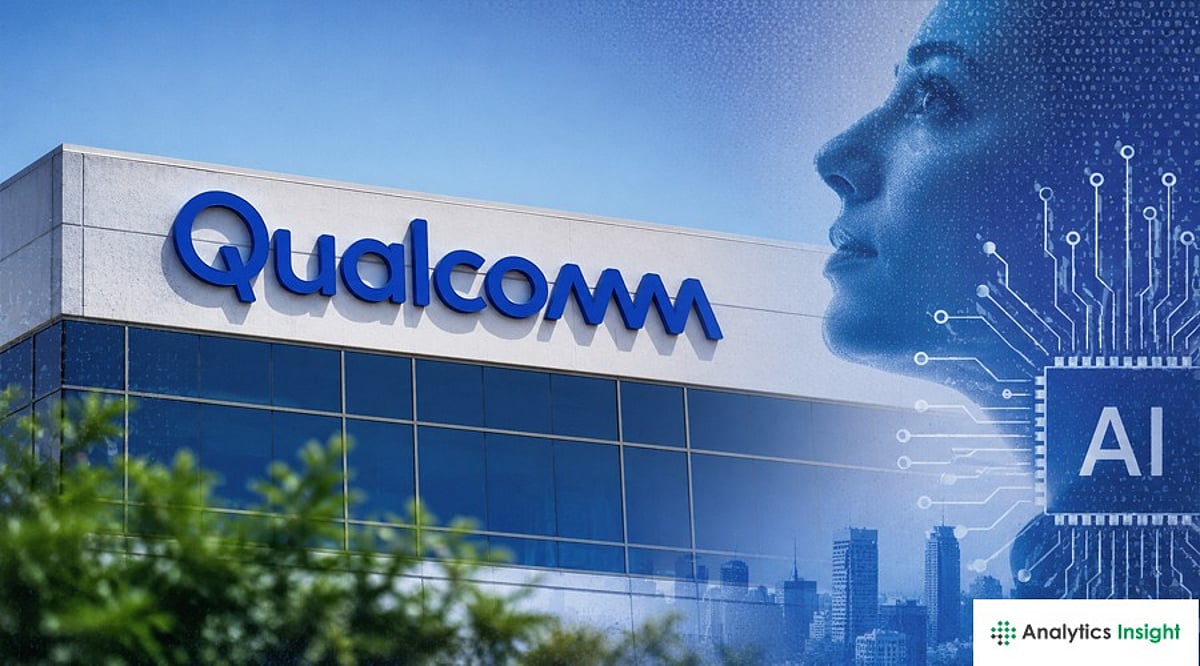
    Qualcomm stock rose more than 12% in premarket trading on Thursday after the chipmaker raised its long-term revenue target outside smartphones. The company now expects its non-handset businesses to generate $40 billion in revenue by fiscal 2029, twice its previous goal.

    The revised target includes $15 billion from data center products and $10 billion from the automotive business. Qualcomm presented the plan at its investor day in New York, where executives outlined a broader shift into artificial intelligence infrastructure, servers, personal computers, and connected devices.

    Qualcomm Targets $15 Billion in Data Center Revenue

    Qualcomm plans to offer several products for AI data centers, including processors, server systems, software, and custom chips. The company expects these operations to generate $15 billion in annual revenue by fiscal 2029. Its strategy places the business in direct competition with NVIDIA and AMD.

    Chief Executive Cristiano Amon said cloud and AI companies have shown interest in having more chip suppliers. “I have not met a single one of those cloud and AI companies that have not said to me how excited they are,” Amon said. Nevertheless, the revenue target depends on Qualcomm winning customers in a market where established suppliers hold strong positions.

    China Forms Part of Qualcomm’s AI Expansion

    Qualcomm also plans to market its data center products in China, although US export rules may limit access to advanced technology. “Everything that we’re building for the data center, you should assume that China is going to be a target market,” Amon said.

    However, the company faces doubts over which processors it can legally sell in the country. The US government has changed its approach to AI chip exports several times over security concerns. While certain NVIDIA processors received clearance for sale, Chinese authorities have not approved all of them for import.

    Smartphone Dependence Falls Under Wider Growth Plan

    The data center push forms part of Qualcomm’s effort to reduce its reliance on mobile phone chips. The company expects its automotive business to produce $10 billion in fiscal 2029. It is also expanding its computer chip business, where it competes with Intel and AMD.

    Additionally, Qualcomm has agreed to acquire AI software company Modular. The deal gives the company access to tools that help developers build and run AI programs across different processors. Qualcomm aims to create a software system that can compete with NVIDIA’s CUDA platform, which developers widely use for GPU-based computing.

    Micron Results Support Semiconductor Stock Rally

    Qualcomm’s investor update arrived as Micron reported quarterly results that exceeded market forecasts. Micron said customers had committed about $22 billion toward chip purchases. It also reported that its high-bandwidth memory supply for 2026 had already sold out.

    Micron shares gained more than 15% in extended trading, while Qualcomm rose about 12% before Thursday’s opening bell. The updates supported gains across semiconductor stocks and helped push US stock index futures higher.

    Meanwhile, investors are assessing whether Qualcomm can meet its fiscal 2029 targets while competing with NVIDIA, AMD, and custom processors developed by large cloud companies. Its $15 billion data center forecast reflects management’s plan, but actual sales will depend on customer orders, product performance, export rules, and the pace of global AI infrastructure spending.