Tag: Stock Market

  • Sensex Holds 77,000, Nifty Targets 24,500 – Key Levels and Market Outlook

    Sensex Holds 77,000, Nifty Targets 24,500 – Key Levels and Market Outlook

    The Indian equity benchmarks are expected to open on a flat note Monday, tracking weakness in global markets amid renewed Middle East tensions. GIFT Nifty traded at 24,093, a discount of 9 points from the previous Nifty futures close, signaling a cautious start.

    Friday’s Market Wrap

    On Friday, the Sensex gained 109.25 points (0.14%) to end at 77,100.47, while the Nifty 50 rose 34.35 points (0.14%) to settle at 24,056. The rupee opened marginally stronger at ₹94.35 per dollar versus Thursday’s close of ₹94.40.

    Foreign Institutional Investors (FIIs) turned net buyers in Indian equities after five consecutive sessions of selling. On June 25, 2026, FIIs net sold shares worth ₹384 crore, while Domestic Institutional Investors (DIIs) net bought ₹5,748 crore.

    Sensex Outlook

    The Sensex formed a High Wave candle on the weekly chart for the second straight week, signaling indecision among traders. However, the index held above the 77,000 mark, keeping the near-term tone positive.

    Resistance: 77,800–78,000 — a clean break above this zone would strengthen the bullish case, according to Aakash Shah, Research Analyst at Choice Equity Broking.

    Support: 76,200–76,400 — expected to attract buying interest from positional investors. A sustained move below this band could trigger consolidation and short-term profit-booking.

    Nifty 50 Outlook

    The Nifty 50 formed a small bearish candle with a long upper shadow on the daily chart, indicating profit booking after a strong intraday rally.

    • Immediate resistance: 25,250–25,300 (confluence of last week’s high and the gap-down area of May 8, 2026).
    • Immediate support: 23,900–23,800 — Bajaj Broking advises using dips as buying opportunities.
    • Key short-term support zone: 23,500–23,600.
    • Major resistance: 24,600.

    The brokerage expects the Nifty to gradually move toward the 24,500–24,600 range over the coming weeks, supported by a positive overall market structure.

    Bank Nifty Outlook

    Bank Nifty rose 26.70 points (0.05%) to close at 58,177.05 on Friday, forming a small-bodied candle with an upper wick, suggesting profit booking at higher levels.

    Target: 59,200 — the 138.2% external retracement of the previous decline from 57,456 to 52,783.

    Support: 57,000 — the cluster of last two weeks’ lows. As long as the index holds above this level, the short-term trend remains favorable.

    Disclaimer: This article is for informational purposes only and does not constitute investment advice. Readers should conduct their own research before making any investment decisions.

  • Top Asian Dividend Stocks for Long-Term Income in 2026: DBS, TSMC, ITC and More

    Top Asian Dividend Stocks for Long-Term Income in 2026: DBS, TSMC, ITC and More

    Asian dividend stocks remain a compelling choice for investors seeking stable earnings and long-term capital growth in 2026. While high dividend yield is attractive, key metrics such as payout ratio, free cash flow coverage, market position, and dividend consistency are equally important. Below are six notable dividend stocks across Asia that offer a mix of income, stability, and growth potential.

    1. DBS Group Holdings

    DBS Group Holdings offers an estimated dividend yield of 5.4% to 6.1%, making it one of the most appealing long-term dividend investments in Asia. Its strengths include a robust wealth management business, a large deposit base, and a strong digital banking footprint across Southeast Asia. The bank remains well-capitalized, enabling regular dividends and capital return schemes. DBS is a top choice for investors seeking exposure to Asian financial markets with stable earnings and visible dividend payments.

    2. Taiwan Semiconductor Manufacturing Company (TSMC)

    TSMC provides a lower dividend yield of 1.5%–2%, but it offers solid dividend growth and capital appreciation potential. As the world’s largest semiconductor manufacturer, TSMC benefits from demand for high-performance chips driven by AI and advanced computing. It pays regular dividends, making it suitable for long-term investors prioritizing growth over immediate high yield.

    3. ITC Limited

    ITC Limited, a widely followed dividend stock in India, offers an estimated yield of 3% to 4%. The company’s diversified business model spans FMCG, hotels, paperboards, packaging, and agribusiness. ITC generates strong free cash flow and consistently pays dividends. Its cigarette business provides steady cash flow, while FMCG and hotel segments offer long-term growth. ITC remains a reliable income pick for India-focused investors.

    4. Anhui Heli Co. Ltd.

    Anhui Heli, a Chinese industrial vehicle company with a market cap of about CN¥15.29 billion, generates most of its revenue from forklifts and accessories (revenue ~CN¥20.39 billion). The stock yields around 3.3%, one of the highest among Chinese dividend stocks, with a payout ratio of 44.1% and a cash payout ratio of 54%. However, its dividend history over the past decade has been uneven, so investors should assess profitability trends before considering it as a steady income stock.

    5. Shibusawa Logistics Corporation

    Shibusawa Logistics (SLS) is a Japanese logistics and warehousing firm valued at approximately ¥88.36 billion, with revenue of ¥73.97 billion from physical distribution and ¥6.15 billion from real estate. The dividend yield is around 4.47%, but the cash payout ratio of 110.3% of free cash flow raises sustainability concerns. The company has announced a ¥2.8 billion share buyback program to improve capital efficiency and shareholder returns.

    6. Rheon Automatic Machinery

    Rheon Automatic Machinery develops and supplies food processing machines globally, with a market cap of ¥39.53 billion. It offers a dividend yield of 4%, placing it in the top 25% of Japan’s market. Recent increases to JPY 31 per share reflect a commitment to shareholders. The payout ratio of 40.1% indicates dividends are covered by earnings but not fully by free cash flow, which may affect sustainability. Its dividend history has been volatile over the past decade.

    Conclusion

    Asian dividend shares can provide steady income, long-term growth, and regional diversification for investors in 2026. DBS, ITC, and TSMC stand out as dependable large-cap options, while Anhui Heli, Shibusawa Logistics, and Rheon offer higher yields but carry some payout sustainability risks. Long-term investors should evaluate earnings quality, cash flow coverage, and consistency of shareholder returns rather than focusing solely on yield.

    FAQs

    1. Which are the best dividend stocks in Asia for 2026? Key names include DBS Group Holdings, TSMC, ITC Limited, Anhui Heli, Shibusawa Logistics, and Rheon Automatic Machinery. These stocks offer a mix of dividend income, market leadership, cash flow strength, and growth exposure.
    2. Which Asian dividend stock has the highest estimated yield? DBS Group Holdings offers one of the highest estimated yields at around 5.4% to 6.1%. Investors should also check dividend sustainability and future earnings growth.
    3. Is TSMC a good dividend stock despite its lower yield? Yes, TSMC’s lower yield (1.5%–2%) is attractive due to dividend growth and capital appreciation potential, driven by leadership in AI chips and advanced semiconductors.
    4. Why is ITC considered a strong dividend stock in India? ITC is known for steady free cash flow and regular payouts, with an estimated yield of 3%–4%. Its cigarette business supports cash generation, while FMCG, hotels, and agribusiness provide diversification.
    5. What risks should investors watch in high-yield dividend stocks? High yields can be appealing, but weak free cash flow coverage may threaten future dividends. For example, Shibusawa Logistics has a cash payout ratio of 110.3%, and Rheon’s dividends are covered by earnings but not fully by free cash flow.

    Disclaimer: This article is for informational purposes only and does not constitute investment advice. Always conduct your own research before making any investment decisions.

  • SpaceX to Join NASDAQ 100 on July 7 Following New Index Entry Rules for Large IPOs

    SpaceX to Join NASDAQ 100 on July 7 Following New Index Entry Rules for Large IPOs

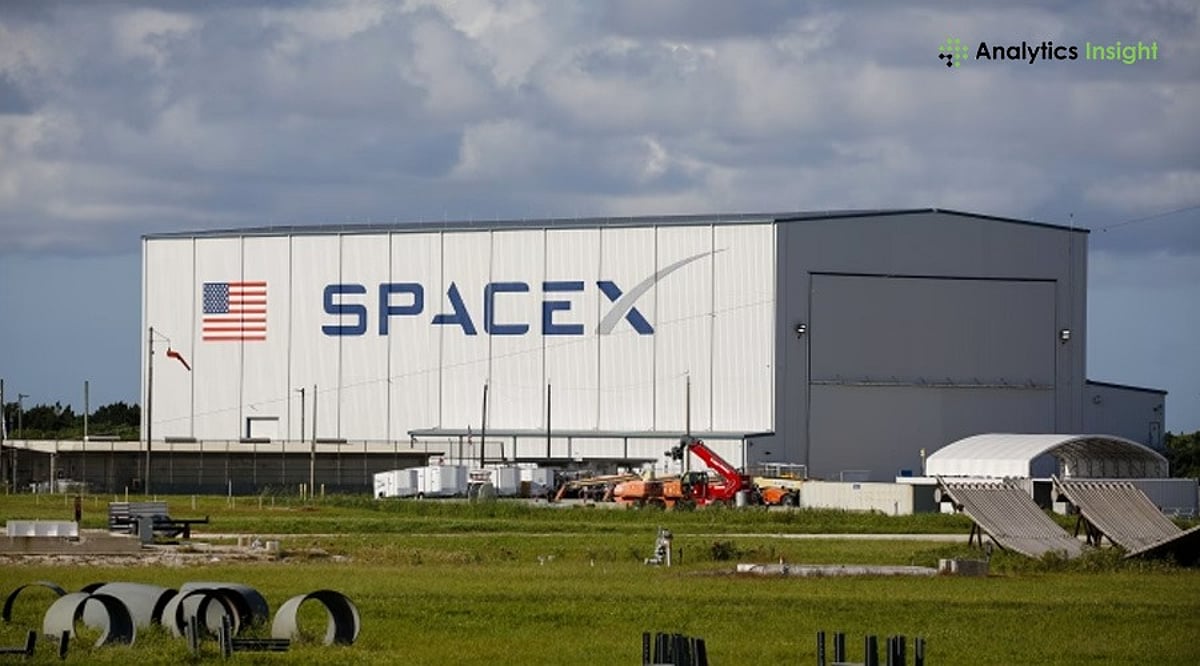
    SpaceX will officially enter the NASDAQ 100 index before the market opens on July 7, 2026, less than a month after its public debut on June 12. The addition, confirmed by NASDAQ on Friday, places the rocket, satellite, and artificial intelligence company among the exchange’s largest non-financial firms.

    JP Morgan estimates that the inclusion could trigger approximately $4.3 billion in passive inflows from index-tracking funds. However, skeptics like Morningstar have raised valuation concerns, noting the company’s limited trading history and recent net losses.

    Index Funds Prepare for Rebalancing

    Funds that replicate the NASDAQ 100, including Invesco QQQ and QQQM, will need to purchase SpaceX shares according to its assigned weight. The NASDAQ 100 tracks 100 large non-financial companies listed on NASDAQ, and its membership influences retirement accounts, brokerage portfolios, and other savings vehicles. NASDAQ reports that over 200 investment products track the index, with more than $800 billion in assets under management worldwide. This could create a large block of price-insensitive demand when the change takes effect.

    Faster Index Rules Pave the Way

    SpaceX began trading under the ticker SPCX on June 12, pricing its IPO at $135 per share. The swift entry into the NASDAQ 100 reflects revised rules that ease conditions on profitability, public float, and trading history for newly listed companies. NASDAQ, FTSE Russell, and MSCI have all relaxed some of these criteria to accommodate large, high-valuation firms. SpaceX reported a $4.9 billion net loss for 2025, though revenue grew as the company expanded Starlink, launch services, and AI operations.

    Valuation Debate Persists

    Despite the expected buying, concerns about SpaceX’s valuation remain. Morningstar chief equity market strategist Michael Field commented, “We think the stock is overvalued,” citing the company’s short public record and heavy spending needs. Meanwhile, S&P Global maintains stricter entry requirements for the S&P 500, including a 12-month trading history and profitability tests, meaning SpaceX cannot be considered for that index until at least June 2027.

    The divergent approaches create separate timelines for index-linked buying. NASDAQ 100 trackers will adjust in July, while S&P 500 funds will not purchase SpaceX under current rules. Other high-profile tech companies like OpenAI and Anthropic may face similar index questions if they proceed with public listings in 2026 or 2027 at valuations above $1 trillion.

  • Indian Stock Market Set to Open Higher as Brent Crude Drops 1.80% to $72.41 – Nifty, Sensex Outlook

    Indian Stock Market Set to Open Higher as Brent Crude Drops 1.80% to $72.41 – Nifty, Sensex Outlook

    The Indian stock markets are expected to open higher on Thursday, supported by mixed global cues and a sharp decline in oil prices. GIFT Nifty was trading at 24,133.5, indicating a gap-up start with a premium of 110.5 points over the previous Nifty futures close.

    Brent crude futures fell 1.80% to $72.41 a barrel, while US West Texas Intermediate (WTI) dropped 1.59% to $69.22 a barrel. The fall in crude prices is seen as a positive for India, a major oil importer, as it helps reduce input costs and inflation pressures.

    Previous Session Recap

    On Wednesday, the Sensex surged 790.54 points, or 1.04%, to close at 76,991.22, while the Nifty 50 advanced 197.55 points, or 0.83%, to settle at 24,021.65. Foreign Institutional Investors (FIIs) remained net sellers, offloading shares worth Rs. 1,843 crore. Domestic Institutional Investors (DIIs) net bought Rs. 3,637 crore, providing support to the market.

    Sector-wise, Realty and IT indices outperformed, rallying over 2%, whereas the Defence index was the worst performer, shedding over 2%.

    Sensex Technical Outlook

    Technically, the Sensex formed a promising reversal pattern on intraday charts and a bullish candle on daily charts. Shrikant Chouhan, Head of Equity Research at Kotak Securities, said, “We are of the view that as long as the market is trading above 76,700, the pullback formation is likely to continue. On the higher side, the rally could extend to 77,500-77,700. On the flip side, below 76,700, sentiment could change. Below this level, the market could retest 76,400-76,200.”

    Nifty 50 Technical Outlook

    The Nifty 50 staged a strong rebound on Wednesday and managed to close above the psychologically important 24,000 level. On the daily chart, the index formed a bullish piercing line candlestick pattern, indicating strong buying demand near the support zone around 23,800. This support area is significant as it coincides with the previous gap zone and the confluence of the 20-day and 50-day exponential moving averages (EMAs).

    Bajaj Broking Research noted, “Nifty managed to hold above the support area of 23,800 and witnessed a pullback. Going ahead, bias remains positive and the index is expected to head higher towards last week’s high of 24,190 levels in the coming session. Dips, if any, towards 23,900 should be used as a buying opportunity.” Immediate support is seen around 23,900, while stronger short-term support is placed in the 23,500-23,600 zone. On the upside, the next major resistance is near 24,600.

    Bank Nifty Technical Outlook

    The Bank Nifty rose 966.60 points, or 1.69%, to close at 58,150.35, forming a bullish engulfing pattern on the daily chart. Bajaj Broking said, “Going ahead, bias remains positive and the index is expected to gradually head towards 59,200 levels in the coming sessions, being the measuring implication of the recent range breakout and the 138.2% external retracement of the previous decline 57,456-52,783.” Technical indicators continue to support the positive outlook. The lows recorded over the past two weeks near 57,000 remain a crucial support zone, and the index is expected to maintain its bullish bias as long as it holds above this level.

    Disclaimer: This article is for informational purposes only and does not constitute investment advice. Readers are encouraged to conduct their own research before making any investment decisions.

  • Indian Stock Market Rally: Sensex Surges 527 Points, Nifty Rises on Auto and Realty Strength

    Indian Stock Market Rally: Sensex Surges 527 Points, Nifty Rises on Auto and Realty Strength

    The Indian stock market traded sharply higher on Thursday, June 25, 2026, driven by robust buying in auto and realty shares. Positive cues from Asian markets further bolstered investor sentiment, pushing benchmark indices into positive territory for the entire session.

    Benchmark Indices Climb

    The Nifty50 rose 0.69% or 166.85 points to settle at 24,187.45, while the Sensex gained 526.77 points or 0.68% to reach 77,517.99. Both indices remained in the green throughout the day, reflecting broad-based buying activity and positive market mood.

    Auto and Realty Lead the Rally

    The Nifty Auto index emerged as a top performer, buoyed by strong buying in automobile stocks. Optimism around demand and solid quarterly performance drove the sector higher. The Nifty Realty index also outperformed, driven by positive sentiment around housing demand and business expansion. These two sectors were instrumental in lifting the overall market.

    Top Gainers: Shriram Finance, Mahindra & Mahindra, InterGlobe Aviation

    Among individual stocks, InterGlobe Aviation, Shriram Finance, and Mahindra & Mahindra led the gains on the Nifty50. InterGlobe Aviation attracted strong buying on growth optimism, while Shriram Finance benefited from investor confidence in the financial sector. Mahindra & Mahindra rode the broader auto rally to emerge as a key contributor.

    Broader Markets Also Positive

    Broader market indices also showed strength. The Nifty MidCap index rose 0.39%, and the Nifty SmallCap index gained 0.25%. This indicates that investor confidence was not limited to large-caps but spread across mid- and small-cap segments, signaling healthy market participation.

    Metal and Media Underperform

    Not all sectors fared well. The Nifty Metal index underperformed due to weak buying interest, while the Nifty Media index remained under pressure as traders stayed cautious. Despite these drags, strong gains in auto and realty helped the market maintain its upward momentum.

    Overall, the session reflected steady strength, supported by global cues and domestic buying. The market’s positive trend remains intact, with auto and realty leading the charge.

  • BPCL Stock at Rs 313.80: Should You Buy Oil Stocks After Brent Crude Decline?

    BPCL Stock at Rs 313.80: Should You Buy Oil Stocks After Brent Crude Decline?

    Bharat Petroleum Corporation Ltd. (BPCL) was trading at Rs. 313.80 on the NSE during Thursday’s session, down 0.60 percent after touching an intraday high of Rs. 320.85. Despite the marginal decline, the stock remains one of the biggest beneficiaries of Brent crude slipping below its pre-Iran conflict levels, with the global benchmark hovering around USD 72 per barrel. The decrease in geopolitical risks in the Middle East has eased fears of supply disruptions, creating positive sentiment toward oil marketing companies in India.

    Low oil prices are economically beneficial for India, since the country meets about 85 percent of its crude oil needs through imports. In other words, it reduces import costs and helps prevent price levels from jumping. Moreover, lower oil prices tend to boost profits for downstream operators, as production costs fall and margins improve for refineries and oil marketing outfits. Among the public-sector OMCs, BPCL has been getting more investor focus lately, mainly because its execution has improved.

    Why Brent Crude’s Decline Matters

    There was an initial surge in Brent crude earlier this year amid heightened geopolitical tensions in the Middle East, raising concerns about disruptions to crude oil flows through the Strait of Hormuz, a crucial passageway for global crude exports. With improved diplomacy and stable crude oil flows, these worries have been addressed. Brent crude is currently trading below pre-Iran conflict levels, thereby reducing the geopolitical risks associated with oil prices. This news will be favorable for India’s downstream petroleum industry, as falling crude oil prices reduce their procurement costs and help them plan their profits well in advance.

    BPCL’s Chart Signals a Recovery in Progress

    BPCL’s one-year daily chart shows a stock gradually rebuilding momentum after a sharp correction. Earlier this year, BPCL climbed close to Rs. 390 before geopolitical tensions and rising crude prices triggered heavy selling across the sector. The stock eventually slipped below Rs. 280 during March and April as investors worried about shrinking refining margins and rising input costs. The trend has changed over the past two months. A wide trading range has been created for BPCL between Rs. 285 and Rs. 315, and buyers have consistently emerged when the stock has touched the lower end of the range. The presence of lower lows suggests a considerable reduction in the selling pressure. The increase in volume suggests an accumulation of institutions.

    Although BPCL was trading at Rs. 313.80 in the last session, it has touched a higher level of Rs. 320.85. It signifies buying interest near an important resistance level. A breakout above Rs. 320-321 will strengthen the uptrend and pave the way towards Rs. 340-350, with Rs. 300 as the important support level. From a technical perspective, BPCL is shifting its posture from correction to recovery.

    Lower Crude Prices Could Boost BPCL’s Profitability

    BPCL is among the major gainers when crude oil prices drop, given its downstream nature. While upstream businesses tend to benefit from higher crude oil prices, BPCL is more focused on refining crude and bringing its petroleum products to market. So when Brent crude is lower, BPCL usually sees reduced production costs, which tends to improve refinery and fuel margins, as long as fuel prices stay roughly where they are. That part happens because inventory costs can be down, working capital needs become lighter, and the operating cash flow picture tends to look cleaner. Should Brent crude remain below USD 75 per barrel, then the company is expected to perform well in future quarters.

    Other Oil Stocks Also Benefited

    The positive sentiment extended across India’s oil marketing sector as investors anticipated stronger profitability from lower crude prices. Hindustan Petroleum Corporation Ltd. (HPCL) advanced 0.9 percent to Rs. 416.85, supported by expectations of improving refining spreads and lower input costs. Indian Oil Corporation (IOC) edged 0.1 percent higher to Rs. 146.47, as investors anticipated better inventory management and stronger cash generation from its integrated refining and fuel retailing operations. The rally was also visible beyond the oil sector. InterGlobe Aviation, the parent company of IndiGo, climbed 4.49 percent to Rs. 5,443, benefiting from expectations that lower aviation turbine fuel (ATF) costs would improve operating margins.

    Low Oil Prices Provide Broad Economic Advantages

    The advantages of falling crude prices go well beyond oil marketing firms. Falling oil prices help reduce India’s import expenditure, thereby narrowing its current account deficit and easing inflationary pressures. Falling oil prices will also cut costs for companies operating in sectors such as aviation, logistics, chemicals, manufacturing, and transportation, leading to improved bottom lines. A benign crude situation also gives the authorities room on the monetary policy front, thus creating a conducive environment for economic growth and equities.

    Risks that Could Alter Outlook

    Even with the optimistic mood, investors need to watch out for international events. Geopolitical risks in the Middle East, supply disruptions via the Strait of Hormuz, or a sudden reduction in production from the OPEC+ coalition can turn the situation around very rapidly. Local factors such as changes in fuel price structures, excise duties, or government intervention in fuel prices may also influence BPCL’s profitability.

    Investment Outlook

    Brent crude oil prices are currently correcting again, and it is bringing investors’ focus back to the Indian oil marketing industry, sort of like BPCL, as the one stock to watch. Even with its current share price of Rs. 313.80 in the latest trading session, BPCL has bounced back strongly from the recent April lows, especially as crude prices have been easing. In the meantime, BPCL should be in a position to benefit from better refining margins and marketing upside as long as crude stays under USD 75, and there is no geopolitical risk hanging over. Sure, both HPCL and IOC will also benefit if crude prices rise, however, BPCL still looks like the stock to watch given its technical strength and earnings visibility.

  • FTSE 100 Edges Up 12 Points to 10,474 as Oil Slips Below $73; 3i Group Leads Gains

    FTSE 100 Edges Up 12 Points to 10,474 as Oil Slips Below $73; 3i Group Leads Gains

    The FTSE 100 opened 12 points higher at 10,474 on Thursday, buoyed by optimism surrounding US-Iran diplomatic talks and a decline in oil prices that pressured energy giants BP and Shell. Brent crude futures dropped 1.32% to $72.70 per barrel, while US West Texas Intermediate (WTI) fell 0.97% to $69.66.

    Gainers & Losers

    3i Group surged 9.11% to £2,480, Barratt Redrow advanced 4.70% to £294.20, and SSE climbed 2.81% to £2,414. Aberdeen Group gained 2.67% to £238.20, Persimmon rose 2.47% to £1,119.50, and Polar Capital Technology Trust added 2.42% to £719.50.

    On the downside, London Stock Exchange Group fell 2.34% to £8,086, Endeavour Mining dropped 2.03% to £3,678, Experian slipped 1.88% to £2,503, and Fresnillo declined 1.44% to £2,733. Shell eased 0.58% to £2,929.50, while BP edged lower by 0.83% to £476.05.

    Halfords Returns to Profit

    Halfords posted a pre-tax profit of £43.6 million for the year to April, beating analyst forecasts of £40.3 million and reversing last year’s £30 million loss. Revenue grew 5% to £1.8 billion, with autocentre operations seeing like-for-like sales jump 6% to £740 million.

    3i Reports Slower Growth for Action

    3i Group noted that its largest portfolio company, European discount retailer Action, delivered like-for-like sales growth of 3.3% in the year to 21 June, down from 3.6% in the first quarter and below the full-year guidance of 4%–5%. Despite the slowdown, the company remains on track for a good second quarter.

    Serco Revenue Expected to Rise

    Serco anticipates a 3% revenue increase to around £2.5 billion, with underlying operating profit climbing to roughly £155 million as margins improve above 6%. CEO Anthony Kirby highlighted the company’s global footprint and sector diversity as core strengths amid geopolitical tensions. Shares were flat in early trading.

    Global Market Roundup

    In the US, the tech-heavy Nasdaq fell 0.4% for a third straight session, the S&P 500 slipped 0.1%, but the Dow Jones gained 0.4%. South Korea’s Kospi surged 6.3% above 9,000 points, led by SK Hynix (up 15.6%) and Samsung Electronics (up 4.7%). Japan’s Nikkei 225 rose 4.6% to 72,403.2 points, Taiwan’s TAIEX added 0.4%, and India’s Nifty 50 and Sensex both advanced 0.7%.

  • Dow Hits Record High as Apple Slump Drags NASDAQ Lower; Micron Earnings Boost Semiconductors

    Dow Hits Record High as Apple Slump Drags NASDAQ Lower; Micron Earnings Boost Semiconductors

    The US stock market showed a sharp divergence on Thursday as investors rotated away from large-cap technology stocks. Apple led the decline, falling nearly 5% after announcing price increases on several MacBook and iPad models, which dragged the NASDAQ Composite into negative territory. In contrast, the Dow Jones Industrial Average surged 598 points (1.1%) to a record close, supported by gains in financial, healthcare, and industrial shares.

    The S&P 500 managed a modest 0.4% gain, reflecting broader market resilience outside the tech sector. Apple’s price hikes—attributed to rising memory and storage chip costs driven by AI data-center demand—raised concerns about margin pressure across the technology industry. Alphabet, Meta Platforms, NVIDIA, Amazon, and Microsoft also declined, while SpaceX shares fell about 1%.

    Micron Technology provided a bright spot, reporting fiscal third-quarter earnings above expectations and issuing a strong outlook. The memory-chip maker’s shares initially jumped over 15% before paring gains, briefly pushing its market value above $1.4 trillion. Qualcomm also gained after raising its long-term revenue forecast for non-smartphone businesses to $40 billion by fiscal 2029. Other semiconductor stocks such as Sandisk, Western Digital, KLA, and Applied Materials advanced, but these gains were insufficient to offset the losses among the largest tech names.

    The Dow’s record performance was fueled by strong moves in Johnson & Johnson, JPMorgan Chase, and Caterpillar. Additionally, Alphabet is set to join the Dow Jones Industrial Average on June 29, replacing Verizon Communications. This sector rotation indicates investors are not fleeing equities but rather reallocating capital based on earnings, product costs, and valuations.

    On the macroeconomic front, May’s Personal Consumption Expenditures (PCE) price index rose 0.4% month-over-month, slightly below the expected 0.5%. Annual headline inflation reached 4.1%, matching forecasts and marking its highest level in over three years. Core PCE increased 0.3% monthly and 3.4% annually, both in line with estimates. Consumer spending grew, and first-quarter GDP was revised up to an annualized 2.1%. Treasury yields edged lower, with the 10-year yield falling to about 4.37%.

    Brian Jacobsen of Annex Wealth Management noted that the worst of inflation and consumer angst may be behind us, but cautioned that inflation expectations depend on gasoline prices trending lower. The data keeps questions about future Federal Reserve policy open.

  • Dalal Street Closed for Muharram: Key Support and Resistance Levels for Sensex, Nifty, and Bank Nifty Ahead of June 29 Trading

    Dalal Street Closed for Muharram: Key Support and Resistance Levels for Sensex, Nifty, and Bank Nifty Ahead of June 29 Trading

    The Indian stock markets are closed today in observance of Muharram, with no trading on the BSE and NSE across equity, equity derivatives, securities lending and borrowing (SLB), currency derivatives, and interest rate derivatives segments. The commodities markets will remain closed for the morning session (9:00 AM to 5:00 PM) but will operate as usual for the evening session (5:00 PM to 11:30 PM / 11:55 PM).

    On the last trading day before the holiday, the Sensex gained 109.25 points, or 0.14%, to close at 77,100.47, while the Nifty 50 rose 34.35 points, or 0.14%, to settle at 24,056. However, both indices gave up most of their intraday gains as investors booked profits late in the session. The rupee strengthened by 25 paise against the US dollar, closing at ₹94.40, compared to the previous close of ₹94.65.

    Sensex Outlook

    Technically, the Sensex formed a bearish candle with a long upper wick, indicating weak momentum after a strong opening. Immediate support is seen at 76,933; a break below this level could invite a deeper correction toward 76,000 in the short term. The 77,500 level will act as a crucial resistance, and a sustained break above this could push the index toward 78,000.

    Nifty 50 Outlook

    The Nifty 50 has immediate support at 23,950 for Monday. Positive weekend global cues and a resolution to the Iran-US situation could help the index hold above 24,000 at the open, targeting 24,200 as the first resistance. However, the monthly expiry of the Sensex on Monday could create cross-index volatility, particularly in the afternoon session, potentially pushing the Nifty below 24,000 temporarily even if broader predictions remain positive.

    Bank Nifty Outlook

    The Bank Nifty closed the week at 58,177.05, following a 1.68% surge on the previous Wednesday’s expiry and subsequent consolidation. Unlike the Sensex, the Bank Nifty has no direct expiry event on Monday. However, the Sensex monthly expiry on June 29, 2026, directly impacts HDFC Bank and ICICI Bank, which could create indirect volatility in the Bank Nifty. Support is at 57,900, with an upside target of 58,500 if global cues improve over the weekend.

    All eyes are now on the June 29 trading session as traders reposition after the holiday break.

  • FTSE 100 Opens Lower as Geopolitical Tensions and Apple Price Hike Weigh on Markets

    FTSE 100 Opens Lower as Geopolitical Tensions and Apple Price Hike Weigh on Markets

    The FTSE 100 opened 27 points lower at 10,503 on Friday, as an Iranian strike on a vessel in the Strait of Hormuz and a tech selloff in Asia weighed on European markets. Brent crude futures fell 2.25% to $73.51 per barrel, while US West Texas Intermediate declined 2.38% to $70.20 per barrel.

    Gainers and Losers

    On the upside, Imperial Brands rose 2.35% to £2,830, British American Tobacco advanced 1.94% to £4,789, and Burberry Group gained 1.52% to £1,099.50. Tesco moved higher by 1.34% to £461.10, Sainsbury’s added 1.22% to £314.70, and British Land climbed 1.15% to £422.40.

    On the downside, London Stock Exchange Group declined 1.67% to £7,894, Lion Finance Group slipped 1.09% to £10,880, Computacenter fell 2.40% to £4,146, and Diploma dropped 1.12% to £7,070. Croda International moved lower by 2.30% to £3,102, while Antofagasta eased 1.71% to £3,728.

    Heathrow Forecasts Profit Decline

    Heathrow Airport forecasts a £147 million decline in 2026 adjusted core profit from 2025, citing weaker traffic expectations due to Middle East-related travel uncertainty and higher employment costs. In a bi-annual report to bondholders, Heathrow Airport Limited said passenger volumes for the first five months of 2026 rose 0.7% despite the regional conflict. The airport now expects a traffic range of 80.1 million to 84.5 million, with a base case of 83.6 million, representing a 1.1% year-on-year fall.

    Apple to Hike Prices

    Apple announced that memory chip shortages driven by the AI boom have forced the company to raise MacBook and iPad prices by 20% globally. The company stated, “The rapid expansion of AI data centres has created an extraordinary surge in demand for memory and storage.” Apple shares slid 6.1% on Thursday’s close, trading at $287.4, with volatility spreading to Asian markets.

    Wise Profit Declines

    Money transfer firm Wise reported a profit decline in its latest financial year. The UK fintech’s profit before tax fell 8% to $660 million (£500 million), down from $717.5 million in its first results since downgrading its listing on the London Stock Exchange. This came despite revenue surging to $2.5 billion as customer numbers increased by 21% to 19 million. However, performance was squeezed by rising costs, which rose nearly 40% to $1.9 billion, outpacing revenue growth twice as fast.

    Global Market View

    In the US, stocks remained mixed on Thursday, with a decline in Apple shares dragging on the tech-heavy Nasdaq, which closed down 0.5%. The S&P 500 was nearly flat, while the Dow added 0.1%. In Asia, South Korea’s Kospi fell 5.81% to 8,411.21, Japan’s Nikkei 225 declined 4.15% to 69,360.88, and Taiwan’s TAIEX dipped 3.64%. India’s Nifty 50 and Sensex were closed on account of Muharram.

    Disclaimer: Analytics Insight does not provide financial advice or guidance on cryptocurrencies and stocks. This article is for informational purposes only and does not constitute investment advice. Always conduct your own research before making any investments.