Tag: Supply Chain

  • 7 Key Semiconductor Manufacturing Trends Driving the Industry in 2026

    7 Key Semiconductor Manufacturing Trends Driving the Industry in 2026

    Semiconductor manufacturing is entering a transformative era, driven by soaring demand for AI and the need for more powerful, efficient chips. In 2026, the industry is moving beyond traditional transistor scaling to embrace a broader set of innovations. Here are the seven key trends reshaping chip production.

    1. 2nm Chips and GAA Transistors

    Chipmakers are advancing toward 2nm-class process technology with gate-all-around (GAA) transistors. These designs deliver higher performance and better power efficiency, but they also increase manufacturing complexity significantly.

    2. Advanced Packaging and Chiplets

    As shrinking individual dies becomes prohibitively expensive, chiplets and 2.5D/3D packaging are gaining traction. By integrating multiple chip components into a single package, manufacturers achieve higher performance and flexibility without relying solely on node shrinks.

    3. High-Bandwidth Memory for AI

    AI workloads demand enormous amounts of fast memory. High-bandwidth memory (HBM) places stacked memory close to powerful processors, enabling faster data movement and reducing processing bottlenecks in AI systems.

    4. Silicon Photonics and Optical Data

    Electrical connections face growing bandwidth and power challenges. Silicon photonics uses light to transmit data at high speeds, making it a critical technology for future AI data centers, networking, and high-performance computing.

    5. SiC and GaN Take on New Roles

    Silicon carbide (SiC) and gallium nitride (GaN) can handle high voltage, heat, and power demands. These materials are becoming essential in electric vehicles, fast chargers, renewable energy systems, and advanced data-center infrastructure.

    6. AI-Powered Smart Factories

    AI is moving inside semiconductor fabs. Machine learning monitors equipment, detects defects, improves yields, predicts maintenance needs, and optimizes production processes in real time, making factories smarter and more efficient.

    7. Chip Supply Chains Are Going Regional

    Geopolitical tensions and supply risks are pushing companies and governments to diversify semiconductor production. New fabs and packaging capacity are being developed across multiple regions to reduce dependence on concentrated manufacturing hubs.

    The semiconductor race is no longer solely about making transistors smaller. Advanced packaging, memory, new materials, optical connectivity, AI-driven production, and regional manufacturing are becoming equally important for the industry’s future.

  • How COOs Are Using AI Agents to Build Truly Autonomous Operations

    How COOs Are Using AI Agents to Build Truly Autonomous Operations

    Modern Chief Operating Officers (COOs) are moving beyond traditional automation by integrating AI agents into core business processes. These intelligent software systems can analyze data, make decisions, and execute multi-step tasks across supply chains, finance, customer service, and IT operations—all with minimal human intervention. The shift from simple automation to autonomous workflows is redefining how enterprises operate, enabling faster decisions, stronger governance, and more resilient business models.

    From Automation to Autonomous Workflows

    Traditional automation tools follow fixed instructions. AI agents, by contrast, process data in real time, determine the next best action, and execute tasks across different enterprise systems. For example, in supply chain management, an AI agent can monitor inventory, forecast demand, detect shortages, place orders, and only alert managers when approval is needed. This integrated approach streamlines processes that were previously handled in silos.

    Where Companies Are Deploying AI Agents

    Organizations are already applying AI agents in several high-impact areas:

    • Supply Chain: AI agents track stock levels, predict demand, flag supplier issues, and recommend purchases—responding faster than humans and reducing waste.
    • Finance: Departments use agents for invoice processing, account reconciliation, anomaly detection, and report generation, cutting manual steps while maintaining control.
    • Customer Service: Agents handle routine inquiries, categorize tickets, and escalate complex issues, freeing human teams for higher-value interactions.
    • IT Operations: Technology teams deploy agents to monitor networks, detect failures, and even prevent outages before they affect customers.

    The Evolving Role of the COO

    As AI becomes integral to daily operations, COOs are shifting focus from pure efficiency to designing a collaborative human-AI operating model. This requires investments in data quality, governance, cybersecurity, and employee training. The key question is no longer which tasks to automate, but which business processes can run autonomously with sufficient human oversight. Successful adoption demands an enterprise-wide approach rather than isolated departmental implementations.

    Building Autonomous Operations: A Phased Approach

    Most organizations take a step-by-step path:

    1. Identify repetitive, high-volume workflows with clear business value.
    2. Improve data quality and establish governance policies.
    3. Define when human intervention is required.
    4. Ensure AI agents can integrate with existing enterprise applications, cloud platforms, and databases.

    Companies that treat AI as a strategic, enterprise-level initiative are more likely to succeed than those deploying it in silos.

    Why This Matters

    The shift to autonomous operations is revolutionizing how businesses manage daily workflows. COOs who combine AI-driven processes with strong governance, reliable data, and human oversight will gain competitive advantages in efficiency and adaptability.

    The Challenges Ahead

    Despite the promise, risks remain. Poor data quality, outdated IT infrastructure, and siloed architecture can undermine even sophisticated AI agents. Governance is critical—especially for decisions involving finance or customer interactions. Firms must develop transparent methods to explain AI-driven decisions, or they risk compounding problems rather than solving them.

    Frequently Asked Questions

    What are AI agents in business operations?

    AI agents are intelligent software systems that analyze data, make decisions, and execute multi-step tasks with minimal human intervention.

    How do AI agents help COOs?

    They automate routine workflows, improve operational efficiency, support faster decisions, and allow COOs to focus on strategic priorities.

    Which departments benefit most from AI agents?

    Supply chain, finance, customer service, procurement, and IT operations are among the earliest and biggest adopters.

    Can AI agents replace human employees?

    No. They handle repetitive tasks, while humans continue overseeing critical decisions, governance, compliance, and complex problem-solving.

    What is the biggest challenge in adopting AI agents?

    Ensuring high-quality data, strong governance, cybersecurity, and seamless integration with existing enterprise systems remains the biggest challenge.

  • India’s Manufacturing PMI Drops to Lowest Since 2021 Amid Slowing Domestic Demand

    India’s Manufacturing PMI Drops to Lowest Since 2021 Amid Slowing Domestic Demand

    India’s manufacturing sector expanded at its slowest pace in nearly five years during July, as domestic demand weakened and hiring slowed, according to the latest S&P Global HSBC India Manufacturing Purchasing Managers’ Index (PMI).

    The headline PMI fell to 53.5 in July, down from 54.2 in June, marking its lowest level since August 2021. The reading came in below the earlier estimate of 53.9. Despite the decline, the index remained above the 50 threshold, indicating continued growth in factory activity.

    July’s data revealed a clear divergence between domestic and overseas demand. Export orders improved after a sharp slowdown in June, rising at their fastest pace since April, driven by stronger demand from countries including Canada, Egypt, Indonesia, Kenya, Nepal, South Africa, Thailand, and the United Arab Emirates. In contrast, new orders increased at the second-slowest rate in more than four years, with manufacturers attributing the slowdown to weaker client interest and challenging market conditions.

    Factory output continued to grow in July, with the pace of expansion little changed from June, though it remained near the weaker levels seen since mid-2022. Consumer goods producers faced softer conditions, while intermediate and capital goods manufacturers recorded better performance.

    Employment increased for the 29th consecutive month, but hiring grew at the slowest pace in that period, weakening for a third straight month. The trend suggests manufacturers became more cautious as order growth lost momentum. Companies also reduced the pace of input buying during July, though they continued to build inventories as supply conditions improved. Stocks of raw materials and finished goods both increased.

    Supplier delivery times shortened at one of the fastest rates recorded by the survey, indicating that supply chain delays continued to ease. However, renewed tensions in the Middle East have raised doubts about the durability of these improvements. Pranjul Bhandari, chief India economist at HSBC, noted, “The suppliers’ delivery times index rose in July, an encouraging sign that supply chain delays are continuing to unwind. However, renewed tensions in the Middle East have raised fresh doubts about how durable these improvements will be.”

    Input cost inflation slowed to a five-month low in July, with price increases for several raw materials becoming less severe, though transportation costs remained high. Selling prices rose only modestly, as softer demand and strong competition limited manufacturers’ ability to raise prices more sharply. Bhandari added, “Meanwhile, output and new export orders strengthened, pointing to resilient demand, particularly from overseas markets. Input costs eased while output charges increased as firms sought to protect margins.”

    Business confidence improved from June’s recent low, with manufacturers expecting demand, infrastructure projects, and new client enquiries to support activity. The survey covered approximately 400 manufacturing companies across India, measuring output, orders, employment, costs, and business expectations.

  • AI in Logistics: Maersk’s Resham Sahi on Moving from Visibility to Decision Intelligence

    AI in Logistics: Maersk’s Resham Sahi on Moving from Visibility to Decision Intelligence

    Artificial intelligence is reshaping the logistics industry, helping organizations move beyond reactive supply chain management toward intelligent, connected, and data-driven operations. As global trade becomes increasingly complex amid geopolitical uncertainty, demand volatility, and evolving customer expectations, AI is enabling businesses to make faster, more informed decisions that improve resilience, efficiency, and operational agility.

    The convergence of AI with Digital Twins, predictive analytics, cloud computing, Internet of Things (IoT), and intelligent Control Towers is creating a new generation of supply chains capable of anticipating disruptions before they occur. From demand forecasting and inventory optimization to real-time shipment visibility, network simulation, and proactive risk management, these technologies are helping organizations optimize every stage of planning, execution, and fulfillment while reducing operational costs and improving customer outcomes.

    Industry leaders believe the future of logistics lies in connected intelligence, where data flows seamlessly across transportation, warehousing, customs, and fulfillment. By integrating AI-powered insights with digital infrastructure, businesses can move beyond monitoring operations to predicting challenges, automating decisions, and building supply chains that are both resilient and future-ready.

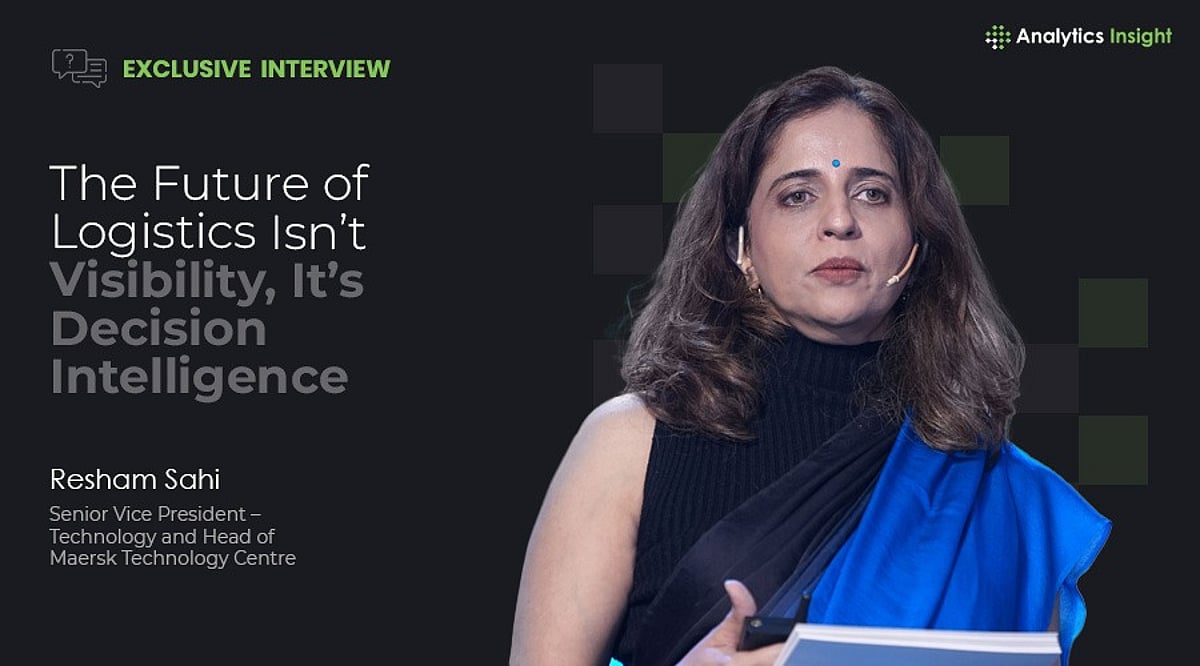
    In an exclusive interview with Analytics Insight, Resham Sahi, Senior Vice President – Technology and Head of Maersk Technology Centre, Bangalore, discusses how AI, Digital Twins, predictive analytics, cloud technologies, and intelligent logistics solutions are transforming global supply chains, strengthening operational resilience, and helping Indian businesses build smarter, more connected logistics ecosystems.

    From Visibility to Decision Intelligence

    According to Sahi, the notable trend is that companies are moving from visibility to decision intelligence. “In today’s environment of demand volatility, geopolitical uncertainty, and evolving trade patterns, resilience increasingly determines how quickly organizations can turn operational data into informed decisions. Companies can generate significant volumes of operational data through their supply chains; however, real value lies in translating data into actionable insights that enable improved planning and execution.”

    Through AI, companies are becoming better at forecasting demand, optimizing inventory, improving ETA, and managing exceptions. For example, Digital Twins allow companies to test different scenarios and assess how operational decisions may affect transportation, warehousing, and inventory positioning before changes are implemented in the physical supply chain. Using AI, Digital Twins can predict certain disruptions before they occur, helping make more informed decisions while reducing operational risk.

    “The true value comes through integration,” Sahi emphasized. “According to our recent Trade Momentum APAC research, although 74% of companies have operationalized their AI capabilities, only 47% have integrated it with their trade compliance and customs platforms, suggesting that many companies still keep their digital initiatives separate.”

    Maersk believes in the connected intelligence future, where decision intelligence will be built across the entire process of planning, execution, and fulfillment.

    AI-Powered Control Towers

    The function of Control Towers is moving from providing visibility to enabling intelligence, helping organizations move from simply monitoring supply chains to making better decisions. “In today’s environment, it is not enough to know the location of a shipment; it is more valuable to be aware of possible risks and implications and to be able to make a decision based on that information,” Sahi said.

    AI-powered Control Towers deliver this by connecting data from all sources—transportation, warehousing, customs, IoT assets, and enterprise systems—into a single view. This information is constantly analyzed through AI, identifying exceptions, forecasting delays, and proposing the optimal next step for operations, such as changing the route, reallocating inventory, or adjusting warehouse capacity.

    “The real value of a Control Tower lies not in aggregating more data, but in enabling faster, more confident decisions across the supply chain,” Sahi noted. By bringing together operational insights in real time, organizations can respond proactively to disruptions instead of reacting after they occur.

    Digital Twins for Smarter Network Optimization

    One of the most significant advantages of Digital Twins is that they can help make better decisions before any changes to the physical logistics network. This is even more important when reacting to disruptions yet to be encountered. For example, using weather data, Digital Twins can identify several vessel berthing options at ports and recommend the best scenarios for maximizing operational efficiency.

    “With increasing interconnectivity within our logistics network, we require more confidence in our decisions when it comes to logistics such as inventory positioning, transportation flows and warehouse capacity, and Digital Twins allow us to do scenario planning in a virtual environment,” Sahi explained.

    Digital Twins can be transformed from being merely simulation tools into intelligent decision support systems once integrated with AI and operational data. Organizations will be able to run different scenarios of the network, optimize asset use, and spot potential bottlenecks before they affect operations. In line with this, Gartner predicts that by 2027, more than 40% of large enterprises will combine simulation, Digital Twins, and AI to optimize operational processes.

    Building Future-Ready Supply Chains in India

    The rising importance of India in international manufacturing is contributing to the increasing requirement for intelligent and interconnected supply chains. As per the Economic Survey 2025-26, Manufacturing GVA increased by 7.72% in Q1 and 9.13% in Q2 of FY26, highlighting the country’s industrial strength. As businesses diversify supply chains and expand their participation in global value chains, logistics is becoming a strategic enabler of growth rather than simply a support function.

    At Maersk, the company is helping customers connect transportation, warehousing, customs, and fulfillment through integrated digital solutions. AI, cloud, and IoT strengthen that connected ecosystem by improving visibility, planning, and execution across the logistics journey. Cloud-based platforms enable customers to unify transportation, warehousing, customs, and fulfillment into one cohesive digital platform, making faster, better decisions possible.

    “AI represents a once-in-an-era shift that can tackle complex problems, provide faster insights, enable proactive, data-driven decisions, and drive effective execution,” Sahi said. “We are putting AI to use by streamlining how frontline teams serve customers by reducing complexity, redesigning workflows, and improving customer access to insights.”

    At the end of the day, Maersk’s focus is on helping customers build connected and resilient supply chains by integrating data across every stage of the logistics journey, rather than optimizing individual functions in isolation. This will help both Maersk and its customers improve cost efficiency, reliability, and outcomes.

  • Apple’s Q3 Earnings Beat Estimates: Tim Cook Highlights AI Investments and iPhone Growth Amid Supply Concerns

    Apple’s Q3 Earnings Beat Estimates: Tim Cook Highlights AI Investments and iPhone Growth Amid Supply Concerns

    Apple reported stronger-than-expected fiscal third-quarter earnings, driven by record iPhone sales and robust Mac demand. The company posted revenue of $109.42 billion, up 16% year-over-year, and net profit of $29.79 billion. However, a cautious outlook for the upcoming quarter and ongoing supply constraints tempered investor enthusiasm, sparking discussions about Apple’s AI strategy and future growth trajectory.

    Record Quarter Powered by iPhone Demand

    iPhone sales reached an all-time high of $54.25 billion, reflecting strong global demand despite a competitive smartphone market. Mac sales surged nearly 29% as consumers responded positively to the latest product lineup. Apple described the June quarter as its best ever, with double-digit growth across most product lines and geographic regions, beating analysts’ projections by a wide margin.

    Supply Constraints Temper Growth Outlook

    Despite the strong quarter, Apple projected revenue growth of 9% to 11% for the September quarter, below market expectations. CEO Tim Cook attributed the conservative outlook to ongoing shortages of advanced memory components used in Apple-designed chips. The company is working to diversify suppliers, but executives cautioned that component availability could remain a challenge in the near term, leading to a dip in Apple’s share price after the earnings release.

    Services Slow, AI Strategy Under Scrutiny

    Apple’s services division underperformed relative to analyst expectations, generating $30.74 billion in revenue. Weakness in the App Store and growing competition in digital services weighed on the segment. The earnings report also reignited debate about Apple’s artificial intelligence strategy, with investors comparing the company’s pace of AI development to that of competitors who have made significant strides in generative AI. While Apple has rolled out AI-based features across its ecosystem, shareholders want clearer evidence of revenue potential from these investments.

    Cook Highlights Long-Term Confidence

    In what was likely one of his final earnings calls as CEO, Tim Cook reiterated that Apple’s long-term fundamentals remain strong. An expanding user base, consistent customer demand, and a robust innovation pipeline are expected to sustain the company’s competitive advantage. However, the market reaction suggests investors are increasingly focused on Apple’s ability to navigate supply disruptions while keeping pace in the rapidly evolving AI landscape. Balancing hardware growth with emerging technologies will be a central challenge as the company transitions to new leadership.

  • Apple iPhone Shipments in India See First Quarterly Decline in Over Four Years Amid Chip Shortage

    Apple iPhone Shipments in India See First Quarterly Decline in Over Four Years Amid Chip Shortage

    Apple has recorded its first decline in iPhone shipments in India in more than four years, according to a new market report. Shipments fell by 3% year-on-year in the April to June quarter of 2026, a sharp reversal from the 12% growth seen at the start of the year.

    The drop is primarily attributed to a shortage of memory chips, which has constrained Apple’s ability to supply new devices. CEO Tim Cook described the supply disruption as a “hundred-year flood,” calling it one of the biggest challenges he has faced during his decades at Apple. Analysts note that customer demand remains steady, but the company has not been able to ship enough phones to meet it.

    India’s overall smartphone market contracted 10% year-on-year in the second quarter, one of the steepest declines in the last six years. In that context, Apple’s 3% decline appears relatively mild.

    Other Smartphone Brands’ Performance in Q2 2026

    Not all brands faced similar headwinds. Samsung’s shipments grew by 2% in the same quarter, while the fastest-growing smartphone brand in India was Nothing, which posted a remarkable 105% growth. Xiaomi, however, struggled with continuously rising prices in the Indian market. Its wider range of devices helped it gain popularity, but higher prices made competition more challenging.

    What Comes Next for Apple?

    The latest shipment drop does not indicate waning demand for iPhones. Rather, it highlights that higher component costs and supply issues are making it harder for Apple to maintain adequate stock in the market. If memory chip prices remain elevated, Apple may adjust its inventory management strategy in India and could review its pricing for future models. Even so, India remains one of Apple’s key markets, and the company is expected to continue investing in the country as demand grows.

  • Trump’s Phased Tariff Plan on Generic Drugs Threatens India’s Pharma Export Dominance

    Trump’s Phased Tariff Plan on Generic Drugs Threatens India’s Pharma Export Dominance

    US President Donald Trump has announced a phased tariff plan for imported generic medicines, offering a two-year window before imposing sharply higher duties. The proposal, aimed at encouraging pharmaceutical companies to shift manufacturing to the United States, could have significant implications for India’s export-driven generic drug industry.

    Under the plan, imported generic medicines will face zero tariffs for the next two years. Beginning in August 2028, the US will levy a 100 percent tariff for one year, followed by a 200 percent tariff thereafter. The policy is scheduled to take effect from August 1, 2026.

    Why India Has Most at Stake

    India is one of the major exporters of cheap generic drugs across the globe and holds an important place in the healthcare sector of the United States. Generic drug companies in India are responsible for almost 40 percent of generic drugs sold in the United States by volume, making them highly susceptible to any restrictions on their exports.

    According to the Global Trade Research Initiative (GTRI), India exported pharmaceuticals worth US$9.7 billion to the US during FY2024-25. This accounted for 38 percent of India’s total pharmaceutical exports.

    Industry Braces for Long-Term Impact

    Though the two-year grace period will give firms some breathing space, industry watchers feel that the new tariff structure will change the landscape of the pharmaceuticals business. Companies might be forced to think about increasing production facilities in America or rethinking their export strategy.

    The development is also likely to have an impact on the stock markets, with the stocks of certain Indian pharmaceutical giants facing pressure.

    Part of Trump’s Manufacturing Push

    This tariff idea is one of the latest attempts made by President Trump to ensure the production of pharmaceuticals in the US again. It is believed that such actions will result in lower dependence on imported drugs and help to make supply chains more secure. However, it may become another point of discussion regarding increased healthcare expenses and the international generic drug trade.

  • Apple Might Turn to Chinese Supplier CXMT for iPhone Memory Chips

    Apple Might Turn to Chinese Supplier CXMT for iPhone Memory Chips

    Apple is reportedly considering a major shift in its supply chain by exploring an agreement with Chinese memory chip manufacturer CXMT (ChangXin Memory Technologies). If finalized, this move could see future iPhones equipped with memory chips sourced from a Chinese supplier for the first time, potentially reducing costs and altering the dynamics of global semiconductor politics.

    Industry insiders suggest that Apple is evaluating CXMT as a partner for DRAM or NAND flash memory, categories historically dominated by South Korean giants like Samsung and SK Hynix, as well as U.S.-based Micron. The motivation appears to be twofold: first, to diversify the supply chain and reduce dependency on a few key players; second, to lower component costs, which could enhance profit margins or allow for competitive pricing.

    However, the prospective partnership is not without controversy. CXMT, despite being a relatively young player in the memory market, has faced scrutiny over intellectual property disputes and allegations of technology theft. Additionally, geopolitical tensions between the U.S. and China have made any technology collaboration between American and Chinese firms a sensitive subject. Apple would need to navigate potential security concerns, quality assurance issues, and the risk of supply chain disruptions due to trade restrictions.

    For consumers, the biggest question is whether CXMT’s memory chips can match the performance and reliability of established suppliers. Early reports indicate that CXMT’s products have improved significantly, but they are still perceived as trailing behind industry leaders. If Apple can integrate these chips without compromising iPhone performance, it could signal a new era of cost-efficient manufacturing.

    This bold strategy, if implemented, would redefine Apple’s sourcing relationships and could have ripple effects across the entire electronics industry. Competitors may follow suit, further reshaping the global memory market. Whether this move will ultimately benefit or backfire on Apple remains to be seen, but it is a development worth watching closely.

  • India Unveils Rs 1.27 Lakh Crore Semicon 2.0 Program to Build Global Chip Ecosystem

    The Union Cabinet has approved Semicon 2.0, a massive Rs 1.27 lakh crore program aimed at transforming India into a global hub for semiconductor design and production. This marks the country’s largest investment yet in chip manufacturing.

    Unlike the initial phase of the India Semiconductor Mission, which focused primarily on fabrication and packaging, Semicon 2.0 expands support across the entire value chain. The program is built around six pillars: chip design, semiconductor equipment and materials, fabrication plants, packaging and testing, research and development, and talent creation.

    It also introduces incentives for companies producing critical inputs such as specialty chemicals, gases, and manufacturing equipment. The government expects international firms to manufacture chips in India while boosting domestic capabilities amid surging demand from artificial intelligence, electric vehicles, smartphones, electronics, telecommunications, and defense sectors.

    This initiative follows the successes of Semicon 1.0, which secured several chip manufacturing and packaging projects in India. Industry experts believe Semicon 2.0 will ensure supply chain resilience, create skilled jobs, and attract increased investments. As global competition for reliable chip supplies intensifies, the program anchors India’s long-term ambition to become a dominant force in the semiconductor industry.

  • How Artificial Intelligence Is Transforming Product Development and Global Sourcing for Brands

    How Artificial Intelligence Is Transforming Product Development and Global Sourcing for Brands

    Building a product requires creativity, planning, strong supplier relationships, smart pricing, and meticulous quality control. For growing brands, this process can be both exciting and overwhelming. Finding the right manufacturer, comparing quotes, managing samples, and keeping production on track are time-consuming tasks. Artificial intelligence is now streamlining these workflows, making them more efficient and data-driven.

    Global Product Sourcing Becomes Data-Driven

    Global product sourcing is a critical component of a successful product line. The right supplier can enhance quality, reduce costs, and ensure timely production. Conversely, a poor supplier can cause delays, inconsistent products, and financial losses. AI tools enable brands to compare suppliers faster and identify better matches based on specific needs. While AI does not replace human judgment—brands must still assess quality, ethics, and shipping regulations—it reduces guesswork and accelerates decision-making with data-backed insights.

    Better Communication Reduces Production Problems

    Most sourcing errors stem from miscommunication. A supplier may misinterpret specifications, overlook material choices, or misunderstand quality standards. These small mistakes can lead to delays, rejected samples, or subpar final products. Clear communication from the outset prevents many of these issues. AI tools help structure specifications, organize supplier responses, and track production details, ensuring both parties work from consistent notes. This is especially valuable when brands operate across different countries and time zones. While not a cure-all, clearer communication significantly increases the likelihood of smooth production runs.

    AI Accelerates the Journey from Idea to Sample

    The early stages of product development are often uncertain. Brands may have a great concept but struggle to translate it into detailed specifications and samples. AI tools assist by clarifying requirements and enabling brands to communicate ideas to suppliers in straightforward terms. This reduces confusion and speeds up the transition from concept to sample. Fast sampling is crucial for brands chasing trends or seasonal opportunities. AI helps teams compare supplier capabilities, estimate costs earlier, and refine product details, giving brands a better chance of launching at the optimal time.

    Supplier Discovery Becomes More Efficient

    Traditionally, finding suppliers involved networking, attending trade shows, or browsing directories—slow processes that often miss viable options. AI sourcing tools scan broader networks, matching suppliers to a brand’s specific needs. This benefits both new brands and established companies expanding into new product categories. Speed matters because finding a supplier is about more than just production capability; it involves meeting quality standards, price targets, order volumes, and delivery schedules. A larger pool of suppliers provides more choice and reduces dependence on a single factory or region.

    Cost Control Begins Before Production

    Most product costs are determined long before manufacturing begins. Material choices, design, packaging, order size, shipping, and supplier location all influence the final cost. AI tools help brands evaluate these factors early, allowing adjustments before costs become fixed. Even small decisions in design or sourcing can significantly impact profit margins. Cost control does not mean always choosing the cheapest supplier—a low-cost supplier with poor quality or missed deadlines can be more expensive in the long run. Smart sourcing balances price against reliability and quality. AI can analyze the numbers, but the final decision rests with the brand and its strategic goals.