
Tag: sustainability

  • MIT Sloan School of Management: Latest Research, News, and Insights

    MIT Sloan School of Management: Latest Research, News, and Insights

    The MIT Sloan School of Management continues to drive forward-thinking research and education, as highlighted by recent news from the Massachusetts Institute of Technology. From energy efficiency in data centers to the societal impacts of artificial intelligence, MIT Sloan is at the forefront of management science and innovation.

    How Data Centers Can Better Manage Energy Use

    A new study from MIT Sloan suggests that flexibility in the timing of electricity consumption could lower consumer costs. The research emphasizes the potential for data centers to adjust their energy usage patterns, reducing strain on the grid and saving money.

    Exploring the Societal Impacts of AI

    During the AI and Society Forum, leading MIT researchers examined critical questions about AI’s influence on employment and democracy. The event brought together experts to discuss ethical considerations and the future of work in an AI-driven world.

    The Ripple Effect of Learning at MIT

    MIT Professional Education helped Ignacio Vazquez SM ’22 bridge technical mastery and strategic insight, leading to his role as MIT System Design and Management industry and certificate director. This story highlights the transformative power of MIT’s educational programs.

    QS Ranks MIT the World’s No. 1 University for 2026-27

    Ranking at the top for the 15th year in a row, the Institute also places first in 12 subject areas. This achievement underscores MIT’s continued excellence in research and education across disciplines.

    MIT’s Initiative for New Manufacturing Builds Momentum

    In its first year, INM has worked across research, workforce development, and industry engagement to help accelerate new manufacturing technologies and their real-world deployment.

    The Consequences of Relying on AI for Accurate News

    A Media Lab study shows that, much like how GPS has weakened our navigation skills, AI can make us worse at detecting fake news. This research raises important questions about the role of AI in information consumption.

    The Crucial Human Component in Computing and AI

    The MIT Ethics of Computing Research Symposium brought together experts and researchers working at the heart of ethical and social impact in technology.

    PATH to Boost AI Training and Career Opportunities

    MIT RAISE and Georgia State University announce an initiative to connect universities, community colleges, industry, and government to expand industry-aligned AI training and career pathways.

    Eleven from MIT Accept 2026 Fulbright Awards

    This year, over half of MIT’s Fulbright applicants won awards. The current students and alumni will embark on research projects and teaching abroad in 2026-27.

    A Day in the Life of MIT Sloan Fellow Alecia Asiamigbe

    The MBA student and entrepreneur is learning to lead a more resilient future with her renewable energy company.

    MIT Affiliates Elected to National Academy of Sciences for 2026

    Six MIT faculty, along with 10 additional alumni, are recognized by their peers for their outstanding contributions to research in the natural and social sciences.

    MIT Asia Real Estate Initiative Expands Its Footprint

    The initiative plans to engage industry leaders and MIT alumni with hubs in Tokyo, Dubai, and Hong Kong.

    A Day in the Life of MIT MBA Student Patrick Yeung

    MIT Sloan’s Sustainability Initiative provides opportunities to lead in ways that will help build a more sustainable future.
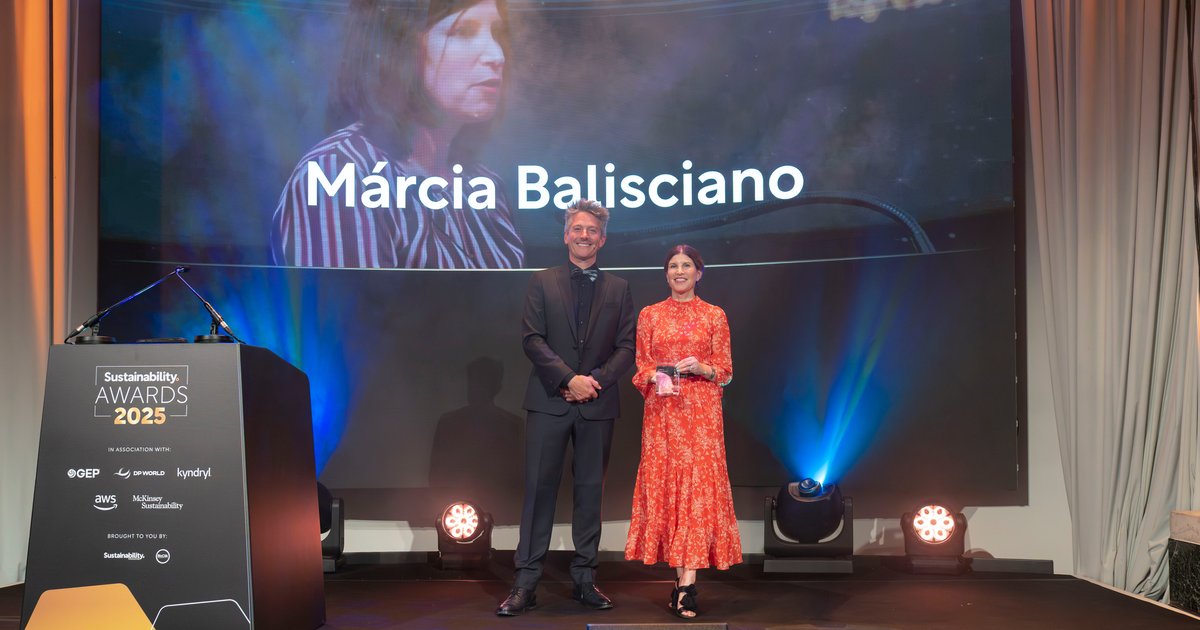

  • AI and Tech Innovation Take Center Stage at the 2026 Global Awards

    AI and Tech Innovation Take Center Stage at the 2026 Global Awards

    The 2026 Global Awards are set to celebrate the brightest minds in sustainability, procurement, and supply chain, with a strong emphasis on AI-led innovation and digital solutions. The event will take place on September 8 at the JW Marriott Grosvenor House in London, following Day 1 of The London Summit.

    This black-tie gala unites three major ceremonies: The Global Sustainability Awards, The Global Procurement Awards, and The Global Supply Chain Awards. It recognizes organizations and individuals driving responsible, efficient, and forward-thinking operations.

    Key AI and Tech Categories

    The Global Sustainability Awards – Tech & AI Award
    This award honors initiatives that leverage digital innovation, emerging technologies, and AI to accelerate sustainability. Judges evaluate how effectively technology addresses specific environmental or social challenges, with measurable outcomes like resource efficiency or emissions reduction.

    The Global Procurement Awards – AI in Procurement Award
    Celebrating organizations using AI to transform procurement, this category looks for smarter decision-making through AI integration. Entries are assessed on improvements in efficiency, forecasting, supplier management, cost optimization, and risk reduction.

    The Global Procurement Awards – Procurement Technology Award
    Recognizing innovative digital solutions that enhance procurement performance, this award emphasizes technology that improves visibility, automates processes, and drives business value.

    The Global Supply Chain Awards – Digital Supply Chain Award
    This category showcases digital innovation for smarter, more agile supply chains. It highlights the use of data, automation, and advanced technologies to boost visibility, connectivity, and resilience.

    Entries close June 29, 2026. Judging takes place in July, with the shortlist announced that same month. For more details, visit the official awards page.

  • MIT Startup Spotlight: Breakthroughs in AI, Sustainability, and Engineering

    MIT Startup Spotlight: Breakthroughs in AI, Sustainability, and Engineering

    MIT continues to drive innovation through its vibrant startup ecosystem, with recent ventures spanning cooling systems for data centers, real-time retail tracking, reusable emergency housing, and AI-driven protein design. Here are the latest developments from the Institute’s entrepreneurial community.

    Sustainable Data Center Cooling

    Ferveret, a startup founded by two MIT researchers, uses a nuclear-inspired cooling system to reduce the energy and water required for AI chips in data centers.

    Real‑Time Retail Tracking

    Cartesian, based on MIT‑invented technology, helps retailers track products in real time, with potential applications in manufacturing, logistics, and robotics.

    Reusable Emergency Housing

    Uplift Microhome won the MIT $100K competition with modular housing units that provide their own power and water, enabling faster disaster response.

    AI‑Driven Protein Design

    OpenProtein.AI, co‑founded by MIT alumni, offers open‑source models and tools for protein engineering, making advanced design accessible to biologists everywhere.

    These stories are just a glimpse of how MIT’s research and entrepreneurial initiatives continue to solve real‑world problems across industries.

  • MIT Researchers Unveil Ways to Cut Data Center Energy Use and Boost Sustainability

    MIT Researchers Unveil Ways to Cut Data Center Energy Use and Boost Sustainability

    A new study from MIT suggests that flexibility in the timing of electricity consumption at data centers could lower consumer costs. The research highlights how adjusting when energy is used can help manage demand and reduce strain on the grid.

    In related work, MIT researchers have developed a system called Murakkab that improves the speed and energy-efficiency of AI agents. This innovation optimizes the design and deployment of multistep workflows powering AI applications.

    Another project introduces a computer model that enables bridges and buildings to use less material while remaining buildable. The approach bridges the gap between optimized design and real-world construction constraints.

    MIT Professor Susan Solomon was named a 2026 Tang Prize laureate for her groundbreaking work on atmospheric chemistry, which helped lay the foundation for ozone layer recovery and demonstrated the lasting impacts of carbon emissions on climate.

    The MIT Environmental Solutions Journalism Fellowship has expanded climate reporting through local messengers, reaching nearly 3 million readers and listeners with community-centered coverage.

    A startup co-founded by two MIT researchers, Ferveret, uses a nuclear-inspired cooling system to reduce energy and water needed for cooling chips that power AI, making data centers more sustainable.

    Other MIT projects explore low-cost personal cooling and emissions-free air conditioning to address extreme heat, while researchers develop innovative carbon capture methods and a low-cost technique to extract lithium from rocks.

    A study on wetlands preservation shows that tradeoffs between conservation and development can be less stark with a policy featuring tradeable offsets and taxes. The MIT Asia Real Estate Initiative expands into booming Asian cities, and MIT Sloan fellows share insights on leading a sustainable future.

    For most U.S. drivers, electric vehicles offer emissions benefits and cost savings, with individual driving patterns and regional electricity mix playing key roles.