Tag: Technology

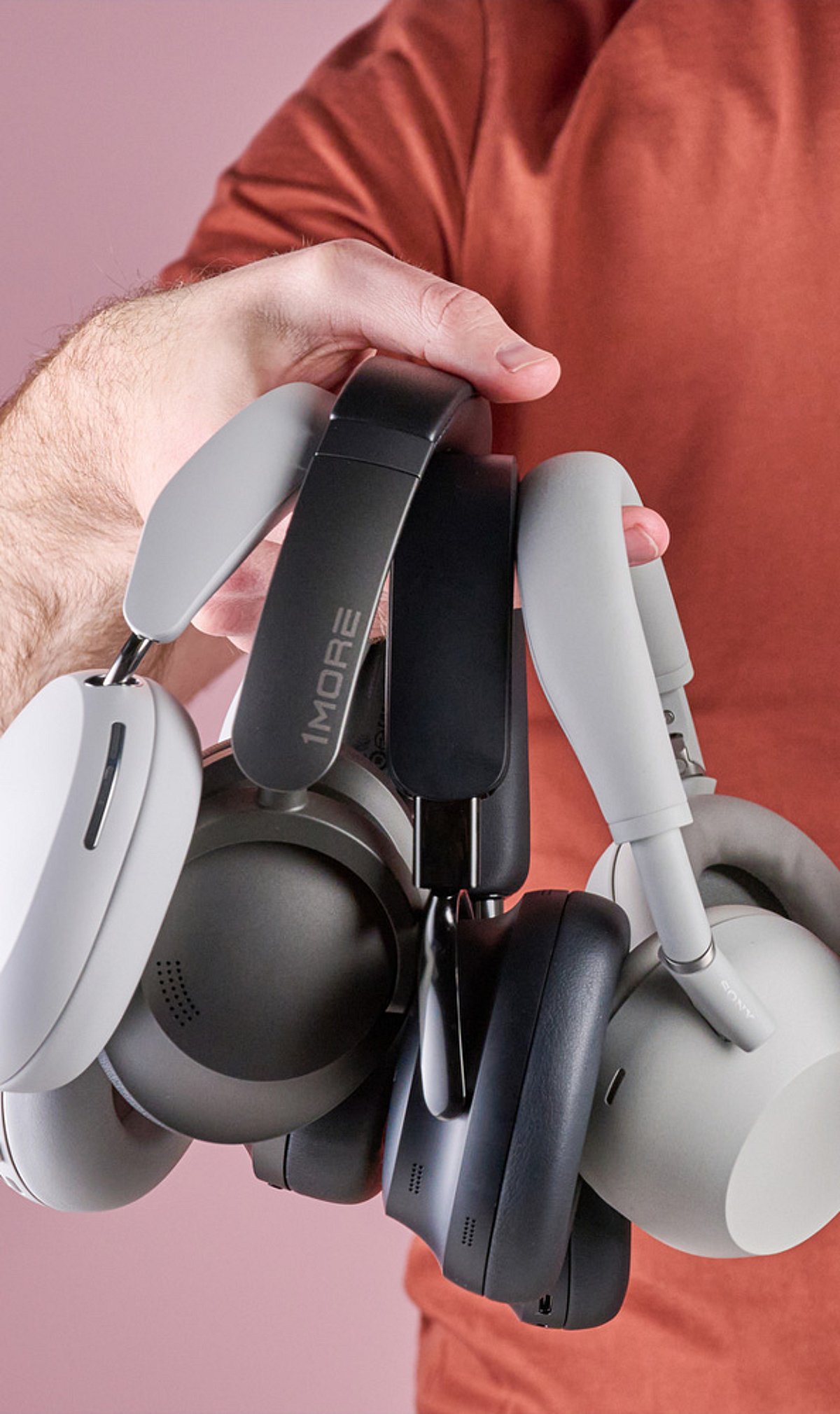
  • From Wired to Wireless to AI: The Complete Evolution of Headphones

    From Wired to Wireless to AI: The Complete Evolution of Headphones

    Headphones have come a long way since their early days as bulky, cable-bound devices. Today, they are intelligent wearables that adapt to our hearing, environment, and even our health. This article traces the key milestones in headphone technology, from the first wired models to the AI-driven smart headphones of the future.

    Wired Beginnings

    Early headphones delivered reliable stereo sound through cables, becoming essential for music, broadcasting, gaming, and professional audio applications worldwide.

    Portable Music Revolution

    Walkman and MP3 players popularized lightweight headphones, making personal music listening convenient, affordable, and accessible for millions everywhere daily.

    Bluetooth Connectivity

    Wireless technology removed cables, offering greater mobility, seamless device pairing, improved battery efficiency, and freedom during workouts, commuting, and travel.

    True Wireless Earbuds

    Compact earbuds eliminated connecting wires entirely, combining portability, charging cases, touch controls, and premium sound into everyday listening experiences effortlessly.

    Active Noise Cancellation

    Advanced microphones reduce surrounding noise, creating immersive listening environments that improve focus, travel comfort, productivity, and entertainment in busy locations.

    Spatial Audio Technology

    Three-dimensional sound positioning enhances movies, games, and music by creating realistic audio depth and immersive surround listening experiences naturally.

    Voice Assistant Integration

    Built-in AI assistants enable hands-free calls, reminders, navigation, music control, and smart home management using simple voice commands efficiently.

    Personalized AI Audio

    Artificial intelligence adapts sound profiles based on hearing preferences, environment, and listening habits, delivering customized audio experiences for every user.

    Future Smart Headphones

    Next-generation devices combine AI translation, health monitoring, adaptive noise control, and contextual awareness for intelligent, personalized, and connected listening experiences.

  • Microsoft Beats Q4 Estimates as Azure Revenue Tops $100 Billion, Stock Jumps 8%

    Microsoft Beats Q4 Estimates as Azure Revenue Tops $100 Billion, Stock Jumps 8%

    Microsoft (MSFT) shares surged more than 8% in premarket trading after the company reported stronger-than-expected fiscal fourth-quarter earnings, driven by robust cloud demand and AI services. The tech giant posted adjusted earnings per share of $4.74, surpassing analyst expectations of $4.24, while revenue reached $90.01 billion, above the $87.62 billion consensus.

    Net income rose to $35.77 billion, up from $27.23 billion in the same period last year, as growth accelerated across key business segments. The Intelligent Cloud segment generated $39.31 billion in revenue, exceeding the $38.16 billion forecast, with Azure revenue growing 43% year over year on a constant currency basis. Notably, Azure revenue exceeded $100 billion for the first time during fiscal 2026.

    “AI is transforming every layer of the technology stack,” said Microsoft CEO Satya Nadella, as the company continues to embed artificial intelligence across its product portfolio. Microsoft 365 Copilot paid seats climbed to more than 30 million, up from 20 million in April, while GitHub Copilot reached 50 million users, reflecting surging demand for AI-powered coding tools.

    The Productivity and Business Processes segment, which includes Office, Dynamics, and LinkedIn, generated $37.85 billion in revenue, up 14.3% year over year and above analyst estimates. Meanwhile, the More Personal Computing segment, encompassing Windows, Surface, Bing, and Xbox, brought in $12.85 billion, a slight decline year over year but still ahead of market expectations.

    Microsoft maintained its fiscal 2026 capital expenditure outlook at approximately $175 billion, primarily allocated to AI infrastructure and data center expansion. CFO Amy Hood noted that “demand signals across our portfolio” support continued investment. The company also issued a positive revenue forecast for the first quarter of fiscal 2027, projecting revenue between $89.85 billion and $90.95 billion, compared with the analyst estimate of $89.66 billion. Azure growth is expected to remain strong, with constant currency growth of 45% projected for the quarter.

    Commercial remaining performance obligations reached $678 billion, reflecting expanding enterprise commitments. Microsoft also returned $10.2 billion to shareholders through dividends and stock buybacks during the quarter.

    Microsoft’s results come as major technology companies ramp up AI investments, underscoring the strategic importance of cloud and AI capabilities in driving enterprise growth.

  • Apple Hits $5 Trillion Market Cap, Becoming Second Company to Reach the Milestone

    Apple Hits $5 Trillion Market Cap, Becoming Second Company to Reach the Milestone

    Apple has crossed the $5 trillion market value mark after a steady rise in its share price, becoming only the second company to reach the historic milestone. The iPhone maker’s market capitalization surged past the $5 trillion threshold, making it the world’s most valuable company, surpassing NVIDIA.

    The jump came after Apple’s shares rose 0.2 percent to $337.7, bringing its market capitalization to $4.96 trillion. With a session high of $342.89, Apple’s market value stood at $5.036 trillion. Including session gains, Apple stock has jumped 24% so far this year, outperforming the other six of the ‘Magnificent 7,’ which include Microsoft, Amazon, Alphabet, Meta Platforms, Tesla, and Nvidia.

    Apple is ready to report its third-quarter earnings after the market close on Thursday. Analysts expect the company will jump more than 15% from the previous year.

    Staying on top will be the real test. The Cupertino-based tech giant has struggled for years to build its own AI models. More recently, Google has used its technology to roll out new services, such as a revamped Siri, that have saved it from the massive infrastructure spending that tech investors so often fear. Dipanjan Chatterjee, vice president and principal analyst at Forrester, said, “Apple has resisted the AI spending race, betting that customer experience – not infrastructure investment – will ultimately determine the winners.”

  • How AI Is Reshaping Engineering Work: From Simple Automation to Deep Collaboration

    How AI Is Reshaping Engineering Work: From Simple Automation to Deep Collaboration

    Artificial intelligence is now part of the daily routine for an engineer. It is no longer used to answer simple questions; it is now used to help developers write code, test software, find bugs, and even suggest better ways to solve problems.

    The first wave of AI in engineering introduced copilots in the form of generative assistants. These systems helped write code, generate scripts, or answer queries based on documentation. Here, the issue was that these assistants could follow prompts, but they never understood the workflow.

    As the engineering complexity increased, the limitations of these models became clear. Engineers work in a connected network where isolated tasks don’t work. A tool that generates code is definitely helpful, but it still can’t resolve bigger issues. This brings the next stage, where AI gets embedded in the entire problem-solving lifecycle.

    This has made many companies change the way their engineering teams work. AI handles repetitive tasks, while engineers focus on planning, design, and decision-making. However, it’s still the people who have the judgment ability that AI lacks. So, AI co-pilots should be embedded in a way that enhances productivity without compromising reliability.

    Almost all the bigger names in the tech industry, including Google, Meta, Anthropic, and everyone, are investing largely in AI. Google, for example, has invested heavily in Gemini, AI chips, and data centers. As AI capabilities expand, the relationship between engineers and AI is shifting from assistance to collaboration.

    Engineers’ roles have now moved from task execution to intent definition. They guide workflows, validate outcomes, and manage trade-offs across complex systems. However, this doesn’t make the expertise less valuable. They are equally crucial.

    So, the future of engineering will not be AI replacing human roles, but more likely human and AI working as co-workers, where engineers combine their judgment with machine intelligence.

  • Sony Files Patent for Advanced Cooling System, Fueling PlayStation 6 Speculation

    Sony Files Patent for Advanced Cooling System, Fueling PlayStation 6 Speculation

    A newly uncovered Sony patent has sparked fresh speculation about the next-generation PlayStation console, often referred to as the PlayStation 6. The patent details an innovative heat pipe cooling design that could significantly improve thermal management in gaming hardware.

    While Sony has not officially confirmed that the technology is destined for the PlayStation 6, the filing has drawn attention for its focus on a critical aspect of console performance: keeping internal components cool during intense gaming sessions.

    Redesigned Heat Pipe System

    This patent describes a new type of heat pipe that transfers heat more efficiently from the processor. Like conventional heat pipes, it uses a sealed fluid that evaporates when heated and condenses after releasing heat. Sony’s design incorporates changes to the internal structure that improve the transfer of cooling fluid, ensuring the system remains effective whether the console is used in vertical or horizontal orientation.

    Why Cooling Matters for Next-Gen Consoles

    Modern consoles require robust cooling due to their powerful processors and increasing performance demands. The PlayStation 5 currently uses a custom AMD processor cooled with liquid metal. This latest patent suggests Sony is exploring new ways to enhance cooling as hardware demands continue to rise.

    Patent ≠ Product Announcement

    While the patent has excited PlayStation enthusiasts, it should not be taken as a definitive sign that this design will appear in the final PlayStation 6. It is common for tech companies to file patents for innovations that may never reach the market. However, the patent does offer a glimpse into Sony’s research direction, especially as thermal management becomes increasingly critical with higher performance and graphics requirements.

    Until Sony makes an official announcement, this patent provides an early look at possible future innovations.

  • ImVivo Review: A Deep Dive into the Technology-First Multi-Asset Trading Platform

    ImVivo Review: A Deep Dive into the Technology-First Multi-Asset Trading Platform

    Most platform reviews lead with adjectives. A more useful ImVivo review starts with a harder question: when you strip away the framing, does the technology, the security, and the structure actually stand up? ImVivo describes itself as a home for informed, structured multi-asset trading, and for an analytics-minded reader, the framing only matters if the engineering underneath earns it. What follows works through the stack, the trust signals, and the way the platform is organized.

    Reading the Technology, Not the Tagline

    The engine here is branded “The Edge,” and it is where live pricing, charting, technical indicators, and configurable dashboards converge into one workspace. The number of features isn’t the thing to fixate on. The sharper test is how efficiently a platform turns a noisy stream of market data into a picture a person can act on. On that measure, ImVivo reads as competent rather than gimmicky.

    Reporting is where that shows. Rather than leaving users to assemble their own summaries, the platform produces rolling portfolio breakdowns and performance analytics, with adaptive models tightening the output as conditions change. For a reader who cares about method, that adaptive layer is more interesting than any static indicator, because it means the analysis keeps responding to the market rather than sitting still.

    Orders clear on low-latency infrastructure, and the interface stays coherent across laptop, tablet, and phone—so nothing breaks when a session moves from desk to pocket. None of these pieces is rare in isolation. The part worth noting is the integration, with data, analysis, and reporting living together instead of being welded from separate tools. As individual participation in markets keeps climbing, that consolidation has moved from a nicety to something users simply expect.

    Where Legitimacy Is Won

    For a discerning audience, an honest ImVivo review lives or dies on the trust signals, because that is the part marketing cannot fake for long. On paper, the stack is solid: 256-bit encryption, two-factor authentication, and cold storage, with ongoing monitoring and tightened transaction controls sitting underneath. These are not exotic selling points—they are the defaults a serious operator is expected to build in. The reassuring thing is that ImVivo presents them as defaults rather than dressing them up as innovations. The tiered account model and the steady reporting cadence add a second kind of credibility: transparency. Users can see exactly where they stand rather than being asked to trust a sealed box.

    Structure That Signals Intent

    The asset menu is genuinely wide. Digital assets sit in the same environment as currencies, commodities, public companies, market benchmarks, and store-of-value holdings, which lets a user read several markets side by side rather than in scattered fragments across apps. The account ladder climbs from Bronze to VIP, with education, analyst contact, and monitoring deepening at each step. Help is reachable through several channels, and the deliberate pairing of human guidance with the technology is one of the platform’s more telling design decisions. For readers who treat structure and support as evidence of intent, that combination says as much about seriousness as any single tool on the dashboard.

    Funding sits alongside all of this, and for a legitimacy-minded reader, it is the quiet part that matters most. Deposits and withdrawals are laid out as a defined, repeatable process, and a platform that makes retrieving money as clear as depositing it earns a kind of trust no feature list can substitute for.

    The Verdict

    Weighed on its engineering rather than its language, ImVivo reads as a professional, technology-forward multi-asset platform—not a thin skin stretched over a price chart. The real-time data layer, the security posture, and the tiered structure all point to something designed for users who prize order over noise. The caveats are honest ones: the entry tiers can feel light until you build up, and the fullest conditions live higher on the ladder. Even so, this ImVivo review lands on a favorable read: an environment that holds up to scrutiny rather than one that only sounds good in a pitch deck.

  • Best Smart Glasses 2026: AI, AR Display, and Standalone Models Compared

    Best Smart Glasses 2026: AI, AR Display, and Standalone Models Compared

    Smart glasses now split into three distinct categories: AI camera and audio glasses, tethered AR display glasses, and standalone AR glasses with a built-in HUD. The category matters more than the model. Once the use case is clear, the shortlist narrows fast.

    Every spec here comes from manufacturers or retailers, including weight, battery, and connection type, not just headline features.

    A pair of smart glasses is sold every ninety seconds somewhere in the world, and the surprising part is not the sales figure. It is that three completely different products now share the same shelf. One pair replaces a phone call. Another replaces a monitor. A third tries to replace both at once and pays for it in battery life.

    That split is the real story behind the buying decision. Meta’s Ray-Ban line proved AI glasses could sell at scale, pulling Google, Samsung, and Warby Parker into a competing Android XR platform launching later this year. Meanwhile, the AR display category, led by Xreal, Viture, and RayNeo, moved past prototype status into something people actually use for a workday or a long flight. Anyone shopping this category for the first time needs to understand the split before comparing a single spec.

    Types of Smart Glasses in 2026: AI, AR Display, and Standalone AR Explained

    AI camera and audio glasses (led by Ray-Ban Meta Gen 2) skip the display entirely. They record video, take calls, and run an AI assistant through bone-conduction audio, pairing over Bluetooth rather than a cable. They look like ordinary glasses, which is the point.

    AR display glasses (including the Xreal, Viture, and RayNeo Air series) tether to a phone, laptop, or console over USB-C and project a large virtual screen through micro-OLED panels. Most carry no camera and no battery of their own; power and video come from the connected device.

    Standalone AR glasses (represented here by RayNeo’s X3 Pro) combine a lightweight HUD, a camera, and onboard AI in one frame with their own battery. That independence is the trade for shorter runtime, and the comparison table below shows exactly how much shorter.

    Best Smart Glasses for Work, Travel, Gaming, and Everyday Use

    Compatibility, comfort, and what to check before buying smart glasses:

    Tethered AR glasses need a source device with USB-C video output, often called DisplayPort Alt Mode. Xreal, Viture, RayNeo’s Air line, and Rokid Max 2 work with recent iPhones, most Android phones, Macs, Windows laptops, the Steam Deck, the ROG Ally, and the Nintendo Switch 2. Older phones without Alt Mode need an HDMI-to-USB-C adapter. Ray-Ban Meta Gen 2 pairs over Bluetooth instead, with no cable or Alt Mode requirement. RayNeo X3 Pro connects over Wi-Fi and Bluetooth as a standalone device rather than a tethered display.

    Weight alone does not decide comfort. RayNeo distributes the Air 4 Pro’s 76g at roughly 47 percent in the front and 53 percent in the rear to ease nose pressure, a design choice that matters more over a long session than the raw number on a spec sheet. The VITURE Luma Pro, the heaviest tethered pair here at close to 90g, offsets that with two frame sizes for different IPD ranges. Anyone who wears prescription lenses should confirm exact diopter support directly with the brand before buying, since ranges shift between hardware revisions.

    Best Smart Glasses to Buy in 2026

    Ray-Ban Meta Gen 2

    Ray-Ban Meta Gen 2 carries no screen and no cable, unlike every AR display pair on this list. Battery life roughly doubled over the first generation, and the camera now shoots 3K video. Giving up a private screen is the exchange for a frame that wears like ordinary sunglasses.

    Xreal One

    Xreal One suits a routine built around a laptop and a train seat. Its 50° field of view and 147-inch perceived screen sit below the Pro model’s numbers, though the gap rarely shows up during document work.

    Xreal One Pro

    Xreal One Pro pairs a 57° field of view with a 171-inch perceived screen through Sony’s 0.55-inch micro-OLED panel and X-Prism optics that hold sharpness at the edges. At 87g and a $150 premium over the standard One, it targets people who sit in front of the screen for hours, not casual users.

    VITURE Luma Pro

    VITURE Luma Pro stays visible in bright rooms where most AR glasses wash out, thanks to a 1,000-nit panel. Built-in myopia adjustment removes the need for a lens insert for milder prescriptions. Fixed tint, rather than electrochromic dimming, is the compromise.

    RayNeo Air 4 Pro

    RayNeo Air 4 Pro balances 76g of weight toward the rear of the frame, making it the most wearable tethered pair here over long flights. HDR10 support, rare in this category, is clearly visible during movie playback. It functions as a personal cinema rather than a work display.

    RayNeo X3 Pro

    RayNeo X3 Pro is the only pair here with a true waveguide HUD, a 12MP camera, and onboard AI in one 76g titanium frame. The 245 mAh battery caps active use at roughly three hours, a real limit for anyone expecting a full workday from it. Short navigation stretches or quick capture suits it better than sustained wear.

    Rokid Max 2

    Rokid Max 2 delivers a 215-inch perceived screen and 600-nit brightness in a 75g package, a strong match for Steam Deck and ROG handheld gaming. Without a camera or onboard AI, it stays focused on watching and playing rather than capturing.

    Final Thoughts

    AI glasses have reached a point where they can replace real phone interactions, not just supplement them, while AR display glasses now offer a workable substitute for carrying a second monitor. The category a buyer picks will shape daily use far more than any single spec inside it. Checking a workplace’s camera policy before wearing anything with a lens built in is worth doing before the purchase, not after.

  • 5 Essential SSD Upgrade Tips to Revitalize Your Laptop’s Speed

    5 Essential SSD Upgrade Tips to Revitalize Your Laptop’s Speed

    Why Upgrade to an SSD?

    Upgrading to a solid-state drive (SSD) is one of the most impactful enhancements you can make to your laptop. Unlike traditional hard disk drives (HDDs), SSDs use flash memory, delivering faster boot times, quicker application launches, improved multitasking, and overall snappier responsiveness. Even an older laptop can feel like new with this simple upgrade.

    1. Check SSD Compatibility

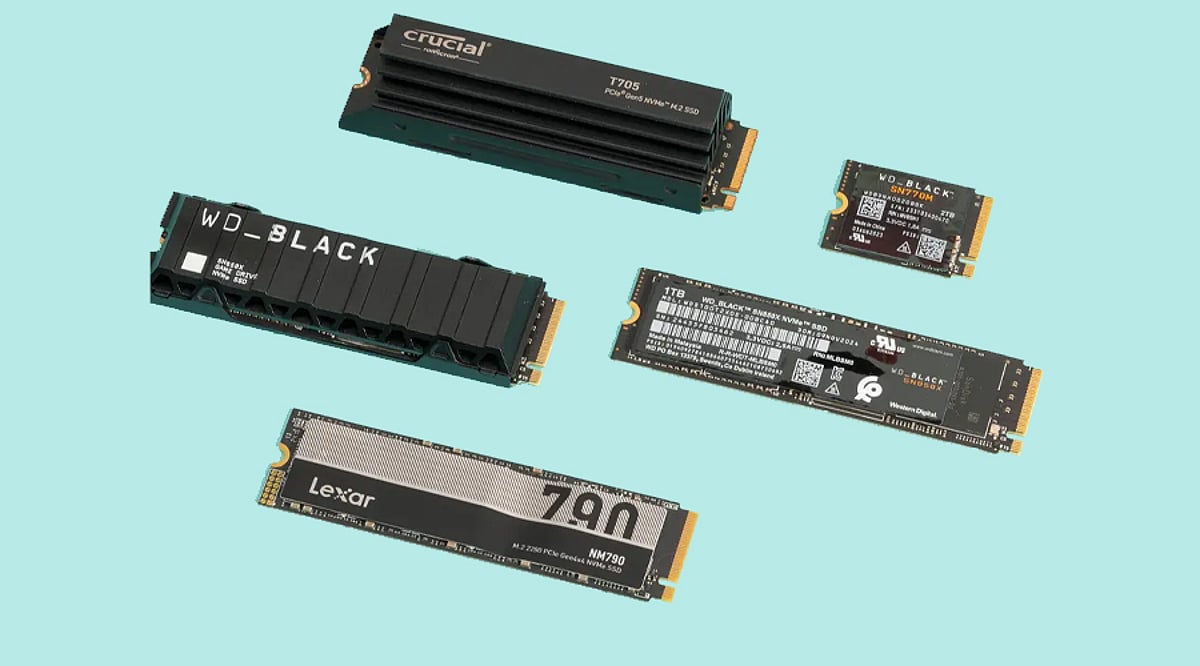
    Before purchasing an SSD, ensure your laptop supports the correct interface and form factor. Older laptops typically require 2.5-inch SATA SSDs, while modern models often accommodate M.2 NVMe drives. Consult your laptop’s specifications or service manual to confirm the maximum storage capacity supported.

    2. Choose the Right SSD Type

    Selecting the appropriate SSD depends on your device and performance needs. SATA SSDs offer excellent value for older systems, while NVMe SSDs provide significantly higher read and write speeds for current laptops. If your laptop supports NVMe, opt for it to enjoy faster boot times, smoother multitasking, and quicker file transfers.

    3. Clone Your Existing Drive

    Rather than reinstalling Windows and all applications, clone your current hard drive to the new SSD. Cloning preserves your operating system, software, settings, and personal files, making the upgrade seamless and time-efficient. Use reliable cloning software and a compatible USB adapter or external enclosure for a safe migration.

    4. Optimize SSD Performance

    After installation, optimize your SSD for long-term performance. Enable TRIM support, update the SSD firmware, and keep at least 10–20% of storage free. These practices help maintain high read/write speeds, improve reliability, reduce performance degradation, and extend the drive’s lifespan.

    5. Buy a Trusted SSD Brand

    Invest in SSDs from reputable manufacturers such as Samsung, Western Digital, Crucial, Kingston, or SK hynix. Reliable brands offer consistent performance, higher endurance ratings, better firmware support, and longer warranties. Choosing a quality SSD ensures dependable operation, especially for users handling large files or intensive workloads.

    Key Takeaways

    An SSD upgrade is a cost-effective way to make your laptop faster and more efficient. Check compatibility, choose the right SSD type, clone your existing drive, optimize system settings, and invest in a trusted brand. Following these five practical tips ensures a smooth upgrade and delivers lasting improvements in speed and productivity.

  • IBM Stock Plunges 25% After CEO Krishna Admits Company Was Too Slow on AI

    IBM Stock Plunges 25% After CEO Krishna Admits Company Was Too Slow on AI

    IBM shares posted their steepest one-day drop in decades after the company reported disappointing preliminary second-quarter results, with CEO Arvind Krishna acknowledging that the company failed to adapt quickly enough to the artificial intelligence spending boom. The selloff erased billions of dollars in market value and sent shockwaves through the technology sector.

    Revenue Miss and Profit Warning

    The technology giant reported revenue of $17.2 billion for the quarter ended June, up just 1% from the same period last year but below analysts’ expectations. Adjusted earnings per share also missed estimates, triggering a sharp market reaction. IBM shares fell about 25% in a single trading session, marking the steepest stock decline for the company in decades.

    CEO Admits Execution Failures

    In a letter to investors, Krishna said IBM underestimated how rapidly enterprise customers would redirect technology budgets toward AI infrastructure such as servers, storage systems, and memory hardware.

    “These conditions require our teams to execute perfectly, and this quarter we faltered. We did not adapt and move quickly enough,” Krishna wrote.

    He added that several large deals also failed to close within the expected timeline, further weighing on the company’s performance. IBM had anticipated supply-chain constraints would limit demand, but instead customers accelerated purchases of AI infrastructure, reducing spending on software and mainframe-related products.

    Spending Shift Hurts Software Business

    IBM’s infrastructure division posted a 7% decline in revenue, while software revenue grew 5%, slower than market expectations. Consulting revenue remained largely flat, reflecting cautious enterprise spending.

    The results highlight a broader industry shift: businesses are prioritizing investments in AI hardware and data center infrastructure over traditional software deployments. Analysts warn the trend could pressure other enterprise software companies in the coming quarters.

    Bright Spots in the Quarter

    Despite the overall disappointment, certain parts of IBM’s business performed well. Red Hat recorded 11% revenue growth, while recently acquired companies HashiCorp and Confluent delivered strong results. IBM also noted that its Distributed Infrastructure business achieved record performance, supported by demand for Power servers and storage systems, with a backlog of approximately $500 million exiting the quarter.

    IBM maintained that its long-term AI strategy remains intact, but the latest results underscore how rapidly changing enterprise priorities are reshaping the technology industry as companies race to build AI infrastructure.

  • Indian Brands Making Waves Globally in 2026: Tech, Auto, Fashion & More

    Indian Brands Making Waves Globally in 2026: Tech, Auto, Fashion & More

    Indian brands are expanding rapidly in 2026, building global recognition across technology, automobiles, fashion, food, and consumer industries. Companies like Tata Group continue strengthening their international presence through businesses in automobiles, technology services, steel, and consumer products.

    Reliance Industries is expanding its global footprint through digital services, retail, entertainment, and new energy investments. Indian technology companies are gaining worldwide attention by providing software solutions, cloud services, and artificial intelligence capabilities to global businesses.

    Automobile brands are reaching international customers with electric vehicles, affordable models, and advanced mobility solutions designed for changing markets. Indian fashion and lifestyle brands are entering global markets by combining traditional designs with modern products and international retail strategies.

    Food and beverage companies from India are growing overseas by introducing regional flavors and packaged products to new consumers. Indian startups are attracting global investors and expanding into areas such as fintech, health technology, artificial intelligence, and digital platforms.

    Government initiatives, manufacturing growth, and stronger global demand are helping Indian companies compete in international markets.