Tag: Technology

  • IBM Revenue Warning Sparks Widespread Decline in Software Stocks

    IBM Revenue Warning Sparks Widespread Decline in Software Stocks

    IBM shares plunged more than 22% in premarket trading Tuesday after the company issued a preliminary second-quarter earnings warning, citing weaker software and infrastructure results as customers redirected spending toward AI hardware. The warning triggered a broad sell-off across major software stocks, including Microsoft, ServiceNow, Salesforce, and Intuit, which fell between 3% and 5%.

    IBM expects second-quarter revenue of $17.2 billion, up 1% year-over-year but below the analyst consensus of $17.86 billion compiled by LSEG. Adjusted earnings are projected at $2.93 per share, compared to the forecast of $3.02 per share. The company attributed the shortfall to a significant shift in customer spending during the final weeks of June, as businesses accelerated capital expenditures on servers, storage, and memory chips for artificial intelligence systems ahead of anticipated price increases and supply constraints.

    CEO Arvind Krishna acknowledged that while IBM anticipated some supply-chain pressure, it “did not anticipate the magnitude” of the spending shift. He also noted that rapidly evolving cybersecurity concerns distracted clients and impacted purchasing decisions. Preliminary figures show software revenue rose 5% in the quarter, consulting revenue remained flat, and infrastructure revenue declined 7%, driven by weaker Z mainframe performance and related transaction-processing software.

    Despite the overall miss, several business areas posted gains. Red Hat revenue increased 11%, while recent acquisitions HashiCorp and Confluent delivered stronger results. Distributed infrastructure revenue rose 37%, supported by demand for Power systems and storage products. The z17 mainframe program reached nearly 130% of the comparable z16 stage, and the distributed infrastructure backlog stood at approximately $500 million at quarter-end.

    IBM reported a GAAP gross profit margin of 57.7%, down one percentage point year-over-year, and an adjusted gross margin of 59.4%, down 0.7 percentage points. GAAP earnings were $2.27 per share, while adjusted earnings rose 5% to $2.93. Operating cash flow through June totaled $7.8 billion, and free cash flow reached $4.8 billion.

    The earnings warning pressured the broader software sector before Tuesday’s market open. The iShares Expanded Tech-Software Sector ETF dropped more than 4%. Analysts noted that IBM’s update reflects a broader shift in corporate technology budgets toward data centers, chips, storage, and networking equipment, leaving less quarterly spending available for traditional software purchases.

    IBM plans to release its complete second-quarter financial results on July 22, with an earnings call scheduled for 5 p.m. Eastern Time. Management stated that current figures are preliminary and may differ slightly from the final numbers. The company will provide further detail and discuss full-year expectations during the call.

  • 10 Mind-Blowing AI Capabilities That Were Impossible Just Five Years Ago

    10 Mind-Blowing AI Capabilities That Were Impossible Just Five Years Ago

    Artificial intelligence has advanced at an astonishing pace. Here are some of the most impressive AI capabilities that seemed like science fiction just half a decade ago:

    • AI Writes Like a Human: AI can now draft emails, stories, reports, and scripts in seconds, naturally matching tone, style, and context.
    • AI Creates Stunning Images: Simple text prompts generate detailed artwork, product designs, portraits, and realistic scenes without requiring traditional drawing skills.
    • AI Talks and Listens Naturally: Modern AI understands speech, answers questions aloud, and holds conversations that feel surprisingly smooth, helpful, and humanlike.
    • AI Translates Languages Instantly: AI translates conversations, documents, and videos across many languages while preserving meaning, tone, and context with remarkable accuracy.
    • AI Helps People Code: Developers use AI to write code, fix bugs, explain functions, and build applications much faster than before.
    • AI Makes Videos From Text: AI can turn written prompts into short videos with motion, characters, backgrounds, and cinematic effects within minutes.
    • AI Understands Photos and Screens: AI identifies objects, reads text, explains screenshots, and answers questions about images with impressive accuracy across devices.
    • AI Becomes a Personal Tutor: Students can ask questions anytime, receive step-by-step explanations, practice problems, and personalized learning support from AI assistants.
    • AI Works Across Many Tasks: One AI assistant can research, summarize, plan trips, organize information, brainstorm ideas, and automate everyday tasks efficiently.

    Read More Stories

    Join our WhatsApp Channel to get the latest news, exclusives and videos on WhatsApp.

  • Wall Street Today: NASDAQ Declines as DeepSeek Chip Ambitions and Samsung Selloff Weigh on Sentiment

    Wall Street Today: NASDAQ Declines as DeepSeek Chip Ambitions and Samsung Selloff Weigh on Sentiment

    U.S. stocks opened mixed on Tuesday, with weakness in chip stocks dragging down the NASDAQ Composite and S&P 500. The Dow Jones Industrial Average hovered near record levels, buoyed by gains in healthcare, financials, and select large-cap names.

    Investor attention returned to the AI trade after reports emerged that China’s DeepSeek is developing its own AI chip. The news introduced fresh uncertainty about demand for U.S.-linked semiconductor names, even as Samsung posted a strong profit update.

    NASDAQ Falls as Chip Stocks Retreat

    The NASDAQ Composite opened 161 points lower, or 0.62%, at 25,960.13. The S&P 500 fell 20.8 points, or 0.28%, to 7,516.63. The Dow Jones Industrial Average rose 48.1 points, or 0.09%, to 53,104.06 at the opening bell. Later in the morning, the Dow gave back part of its early gain and traded near the flat line. The blue-chip index had earlier touched a new all-time intraday high. The S&P 500 declined 0.5%, while the NASDAQ lost 1.3% as chip selling intensified.

    DeepSeek AI Chip Report Roils Semiconductor Sentiment

    According to reports, DeepSeek is working on its own AI chip, a move that could reduce its reliance on suppliers such as NVIDIA and Samsung. NVIDIA shares traded more than 1% lower as investors assessed the implications. The selling spread across major chip names: Micron fell about 7%, while KLA, Marvell Technology, Broadcom, and AMD also posted losses. The VanEck Semiconductor ETF dropped more than 5%, reflecting broad weakness across the sector.

    Samsung Reaction Adds to Doubts About AI Earnings Bar

    The pressure originated in Asia-Pacific markets before reaching Wall Street. South Korea’s Kospi dropped nearly 5% after Samsung Electronics fell close to 7%. Samsung reported a sharp rise in second-quarter profit, but the market focused on spending plans and demand concerns. Adam Crisafulli of Vital Knowledge noted that the Samsung reaction highlights one of the biggest risks heading into earnings season: “Q2 earnings results are likely to be quite robust on an absolute basis … but unlike with the Q1 season, expectations are presently very bullish.” His comment pointed to uncertainty about whether strong earnings alone can support AI-linked stocks, given that the S&P 500 has moved significantly higher since the first-quarter reporting season.

    Dow Holds Near Record as Investors Rotate

    While chip stocks came under pressure, investors rotated into other parts of the market. Eli Lilly gained more than 2%, while JPMorgan Chase and Microsoft also advanced. Walmart added more than 2% after announcing price cuts on products such as ground beef and Coca-Cola. The rotation helped the Dow stay near 53,000 even as the NASDAQ weakened, showing that selling was concentrated in AI- and chip-linked shares rather than across the full market.

    Apple, Rivian, Amazon, and Trade Data in Focus

    Apple drew attention after JPMorgan raised its price target to $345 from $325, maintaining an Overweight rating. Analyst Samik Chatterjee said Apple’s revenue and earnings could be better than feared, even after a 20% price increase on iPads and Macs. Rivian shares fell more than 13% in morning trading after the electric vehicle maker announced a public offering of 75 million Class A shares. The drop followed a 8.1% rise on Monday and a 19% gain last week. Amazon also stayed in focus after sources said the company planned to raise $25 billion through a bond sale; its shares gained 0.8% in premarket trading.

    Meanwhile, the U.S. trade deficit widened sharply in May. The Commerce Department reported a deficit of $77.6 billion, up from a revised $54.6 billion in April. Exports fell 3.2%, while imports rose 3.3%. Economists polled by Dow Jones had expected a deficit of $78.08 billion.

    The market now shifts its attention to upcoming corporate earnings, which will determine whether the recent rotation out of AI chip stocks is temporary or the start of a broader change in investor sentiment.

  • Understanding Algorithms: A Beginner’s Guide to How They Work in 2026

    Understanding Algorithms: A Beginner’s Guide to How They Work in 2026

    Algorithms are step-by-step instructions that power modern technology, from search engines and streaming platforms to AI systems and banking applications. This guide explains how algorithms work, their major types, practical examples, and why understanding them is increasingly important in today’s digital world.

    Most people use algorithms from the moment they wake up. When someone checks Google for weather updates, opens Instagram during breakfast, watches YouTube videos at lunch, or listens to Spotify while traveling, algorithms are already working in the background.

    The funny thing is that many people use algorithm-based apps all day without knowing what an algorithm actually is. The word sounds technical and difficult at first. But the basic idea is very easy to understand. An algorithm is simply a list of steps followed to complete a task. That is all.

    Think about making instant noodles. First, boil water. Then add noodles. After that, mix the tastemaker. Finally, cook for a few minutes and serve. Those instructions form a process. That process is similar to an algorithm. Computers also follow instructions step by step. The difference is that computers can do it much faster than humans.

    In 2026, algorithms are part of almost every digital service people use daily. Search engines use them to show results. Shopping apps use them to suggest products. Streaming apps use them to recommend movies and songs. Banks use them to detect fraud. AI tools use them to answer questions. Even maps, food delivery apps, and online ads depend heavily on algorithms. People do not need to become software engineers to understand these systems. Learning the basics simply helps people understand how technology works behind the screen.

    What is an Algorithm? Meaning, Definition, and Real-World Examples

    An algorithm is a set of instructions used to solve a problem or complete a task. That may sound technical, but people already follow algorithms in daily life. A recipe is one of the easiest examples. Suppose someone wants to make tea. They follow steps:

    • Boil water
    • Add tea leaves
    • Add milk
    • Add sugar
    • Pour into a cup

    If the steps are followed properly, the result will usually be correct. Computers work in a very similar way. They follow instructions carefully.

    GPS navigation is another simple example. When someone enters a destination, the app studies roads, traffic, and distance before showing the best route.

    ATMs also depend on algorithms. They check passwords, verify accounts, confirm balances, and complete transactions step by step. Online shopping apps use algorithms to study what users search, click, or buy. That is why shopping apps often recommend products that match user interests.

    Even washing machines use basic algorithms. Different washing modes follow different instructions depending on the type of clothes. Without algorithms, computers and smart devices would not know what to do.

    How Computer Algorithms Work Step by Step for Beginners

    Most algorithms work in three simple stages:

    • Input
    • Processing
    • Output

    Input means the information given to the computer. For example, when someone types “best action movies” into Netflix, those words become the input. Processing is the stage where the system studies the information.

    Netflix may check:

    • Viewing history
    • Movie ratings
    • Genres watched earlier
    • Trending content
    • Similar user choices

    After studying all this information, the app gives results. That final result is called the output. Algorithms also help computers make decisions. Imagine searching for a contact on a phone. The phone checks names until it finds the correct match.

    Some algorithms also organize information properly. For example, sorting names alphabetically helps systems find information faster later. At the core, computers simply follow instructions one step at a time.

    Types of Algorithms in Computer Science Explained Simply

    There are many different types of algorithms. Each one solves a different kind of problem.

    Different apps use different algorithms depending on the task they need to perform.

    How Search Engine Algorithms Like Google Work

    Search engines use algorithms to decide which websites should appear first. When someone searches on Google, the system studies millions of webpages within seconds.

    It checks many things, including:

    • Keywords
    • Content quality
    • Website speed
    • Mobile friendliness
    • User experience
    • Links from other websites

    Suppose someone searches for “best phones under Rs. 20,000.” Google tries to understand what the user wants. Most likely, the person wants buying suggestions and reviews. So, the search engine tries to show webpages that answer the question clearly.

    Google also updates its systems regularly. That is why website rankings often change. Some websites move higher because their content becomes more useful. Others drop because they become outdated. Search engine algorithms are designed to help users find useful information faster.

    How Social Media Algorithms Work on Instagram, YouTube, and TikTok

    Social media platforms study user behavior constantly. They track:

    • Likes
    • Comments
    • Shares
    • Watch time
    • Searches
    • Saved posts

    If someone watches cricket videos regularly, Instagram and YouTube will begin showing more sports content. TikTok works heavily on watch time. If users watch a video completely, the app assumes the content is interesting. That video may then reach more users.

    This is one reason why some videos suddenly become viral overnight. Social media feeds are different for every person because algorithms study individual behavior. Someone interested in travel will see travel content more often. Someone interested in cooking may see recipe videos daily. The system slowly learns user interests over time.

    How AI and Machine Learning Algorithms Work

    Traditional algorithms follow fixed instructions. AI algorithms are different because they learn from data. For example, voice assistants slowly learn speech patterns and accents. AI chatbots study huge amounts of text to answer questions better. Image recognition systems learn to identify faces, animals, or objects after studying many examples.

    Machine learning systems improve gradually over time as they process more information. This is why AI tools often become smarter with more usage. For example, music apps learn what type of songs users like. Shopping apps learn buying habits. AI writing tools learn language patterns. The more data these systems process, the better they usually become.

    How Recommendation Algorithms Work on Netflix, Amazon, and Spotify

    Recommendation systems are everywhere now.

    Netflix studies:

    • Watch history
    • Ratings
    • Viewing habits
    • Favorite genres

    Spotify studies:

    • Listening history
    • Favorite artists
    • Repeated songs
    • Skipped tracks

    Amazon studies:

    • Search history
    • Shopping behavior
    • Recently viewed products
    • Purchase patterns

    These systems also compare users with similar interests. For example, if many people who watched one movie also watched another film, Netflix may recommend that second movie too. That is why recommendations often feel personal. Sometimes the suggestions are surprisingly accurate because algorithms study patterns very closely.

    What Is an Algorithm in Programming? Beginner Coding Guide

    In programming, algorithms help developers solve problems step by step. Before writing code, programmers usually plan the logic first. For example, if someone is building a food delivery app, they must decide:

    • How orders will be placed
    • How restaurants will receive requests
    • How payments will work
    • How delivery tracking will happen

    All these tasks need proper instructions. Flowcharts and pseudocode are often used before coding starts. Flowcharts visually show the process. Pseudocode explains the logic using simple words instead of a programming language. Learning algorithms helps beginners improve logical thinking. That is why coding students usually study algorithms early before moving into advanced software development.

    Most Common Algorithms Used in Software Development

    These algorithms quietly power many apps and websites people use every day.

    How Sorting and Searching Algorithms Work with Examples

    Sorting means arranging information properly. Examples include:

    • Arranging books alphabetically
    • Sorting numbers from smallest to largest
    • Organizing contact names

    Searching means finding specific information. A linear search checks one item at a time. Imagine checking every page of a notebook to find one phone number. Binary search works faster. It cuts the search area into smaller sections repeatedly.

    Think about searching for a name inside a large dictionary. Instead of starting from page one, people usually open somewhere near the middle first. That is similar to how binary search works. Efficient searching saves a huge amount of time, especially in systems handling millions of records.

    Why Algorithms Are Important in Technology and Everyday Life

    Algorithms make technology faster and more organized. They are used in:

    • Banking apps
    • Navigation systems
    • Shopping platforms
    • Healthcare tools
    • Streaming services
    • Cybersecurity systems
    • AI tools

    Banks use algorithms to detect unusual transactions. Hospitals use them to study patient reports and medical scans. Streaming platforms use them to recommend movies and music. Delivery apps use them to find nearby drivers. Without algorithms, many digital services would become slower and less useful.

    Advantages and Disadvantages of Algorithms Explained

    For example, social media algorithms sometimes keep showing similar content repeatedly. This can limit what users see online. That is why experts often talk about responsible AI and ethical technology use.

    How Algorithms Impact SEO, Digital Marketing, and Online Content

    Algorithms have a lot of influence over web visibility. The Google algorithm determines the ranking of websites within search engine results. Social media algorithms determine the number of people who will view videos or reels. This is the reason why bloggers, YouTubers, and businesses focus on analyzing platform algorithms.

    In addition to algorithms used in search engines and social platforms, advertising systems also employ algorithms. After searching for shoes on the internet, people end up seeing advertisements for shoes on other applications as well. This is due to the fact that the algorithm monitors their online activities and interests.

    Future of Algorithms: AI, Automation, and Emerging Technologies

    AI will be even more useful in the years ahead. Currently, AI-powered tools allow organizations to automate their operations and analyze big data quickly. Algorithm-powered self-driving cars identify the road, traffic conditions, and obstacles. AI smart assistants learn user preferences continually. Medical systems also rely on algorithms for research and disease detection. Factories also implement algorithms for automation and fewer errors.

    As we can see, there are a lot of risks associated with AI technologies. In the near future, issues of privacy, bias, and cyber safety will get even worse. This is the reason why the discussion about more efficient regulations of AI systems and online platforms arises.

    Final Conclusion

    Algorithms have become a part of our lives now. The applications of algorithms can be seen in everything from online search engines and video viewing to shopping, music listening, mapping out routes for travel, and other AI applications. Many of these algorithms may not be visible to regular users at all times.

    The best part about algorithms is that no prior programming experience is needed to learn them. Learning basic logic will help one learn about algorithms gradually and hence how today’s technology operates behind the scenes. Algorithms will continue to be more and more prevalent in our lives as we move further into 2026 and onwards.

    Why this Matters: Algorithms quietly shape almost every digital experience, influencing search results, online shopping, entertainment, navigation, finance, and artificial intelligence. Understanding how they work helps users make better decisions online while giving students and aspiring developers a strong foundation in modern computing and AI technologies.


  • Top 10 IoT Innovators Shaping 2026: Companies Driving Connected Technology Forward

    Top 10 IoT Innovators Shaping 2026: Companies Driving Connected Technology Forward

    The Internet of Things (IoT) continues to transform industries worldwide, and a handful of companies are leading the charge with cutting-edge hardware, software, and cloud platforms. Here are the top 10 IoT companies driving innovation in 2026.

    1. Cisco – Delivers enterprise-grade IoT networking, cybersecurity, and edge computing solutions that support secure digital transformation across multiple industries globally.
    2. Siemens – Leads industrial IoT with smart manufacturing, automation, predictive maintenance, and digital twin technologies for efficient factory operations worldwide.
    3. IBM – Combines AI, cloud computing, and IoT platforms to optimize asset management, predictive analytics, and enterprise decision-making across industries.
    4. Microsoft – Azure IoT services enable businesses to securely connect devices, analyze data, and automate operations using advanced cloud technologies efficiently.
    5. Amazon Web Services (AWS) – AWS IoT offers scalable cloud infrastructure connecting billions of devices while supporting analytics, machine learning, and industrial applications worldwide.
    6. Intel – Develops processors, edge AI solutions, and IoT hardware powering smart cities, manufacturing, healthcare, and connected infrastructure across diverse sectors.
    7. Bosch – Innovates through connected mobility, smart homes, industrial automation, and sensor technologies that improve efficiency, safety, and sustainability worldwide.
    8. Qualcomm – Provides advanced IoT chipsets, wireless connectivity, and edge intelligence enabling smarter consumer electronics, vehicles, and industrial equipment globally.
    9. Samsung – Expands IoT ecosystems with connected appliances, SmartThings integration, advanced sensors, and AI-powered devices, enhancing everyday digital lifestyles seamlessly.

    These organizations are defining the future of connected technology, from industrial automation to smart homes and beyond.

  • Apple to Launch Five New iPhones by 2027, Including Foldable Model with Higher Production Target

    Apple to Launch Five New iPhones by 2027, Including Foldable Model with Higher Production Target

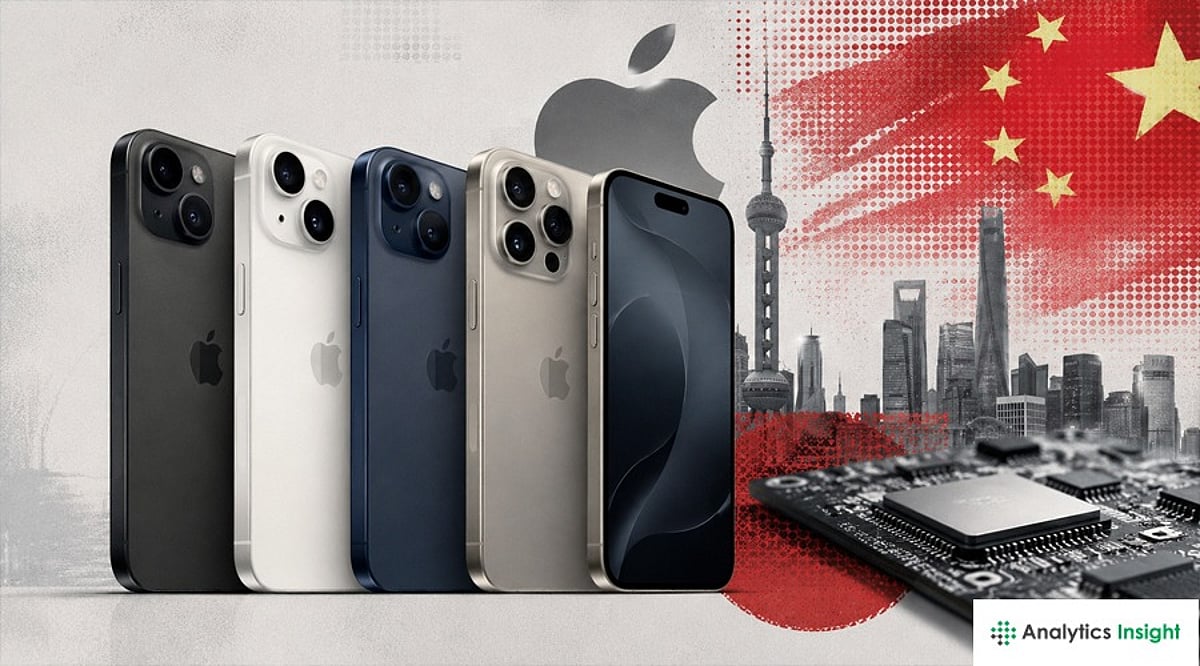
    Apple is reportedly preparing to launch at least five new iPhone models between the second half of 2026 and early 2027, including its first foldable device. The company has raised its foldable production target and is exploring new memory chip suppliers as AI-driven demand tightens global component supplies.

    The planned lineup includes the company’s first foldable iPhone, a standard iPhone 18, and a new iPhone Air model. Apple is also reviewing new memory chip suppliers as demand from artificial intelligence data centers limits global supplies. Apple has not confirmed the product plans or its reported discussions with Chinese chipmakers.

    Apple Raises Foldable iPhone Production Plans

    Apple has reportedly asked suppliers to prepare components for about 10 million foldable iPhones in 2026, up from an earlier target of between 7 million and 8 million units. The increase suggests Apple is allocating more production capacity to its first foldable smartphone. Still, the figures come from people familiar with the supply chain, and Apple has not publicly announced the device or confirmed its expected production volume.

    Reports have described the foldable phone as a premium model that could sit above Apple’s existing Pro lineup. Some market estimates have placed its possible price near $2,500, although Apple has not provided any official pricing information. Meanwhile, Samsung and Huawei already sell several foldable smartphone models. Apple’s entry would add another major brand to the category, which remains smaller than the standard smartphone market.

    Apple has also secured parts for about 80 million new iPhones scheduled for production in the second half of 2026. Its total smartphone output could exceed 220 million units this year, according to current supplier estimates.

    Five-Model Roadmap Extends into Early 2027

    Apple’s reported launch schedule covers at least five devices across two release periods. The company is expected to introduce several models in late 2026 before adding the standard iPhone 18 and another iPhone Air in early 2027. A spring release would mark a change from Apple’s usual approach of launching its main iPhone range in September. The move could allow the company to spread demand across the year and target different price groups at separate times.

    One supplier executive reportedly said Apple has ‘good motivation’ to release iPhones in spring and gain market share. However, the launch timetable remains unconfirmed, and production plans can change before devices enter mass manufacturing.

    Apple’s purchasing scale may also give it more access to limited memory supplies than smaller smartphone makers. Reports say Xiaomi, Oppo, and Vivo have reduced annual production targets to below 100 million units amid higher component prices. Additionally, Apple recently raised prices for some MacBook and iPad products as memory and storage costs increased, showing how supply pressure has reached several parts of the consumer electronics market.

    Apple Considers Chinese Memory Chip Suppliers

    Apple is reportedly holding discussions with ChangXin Memory Technologies and Yangtze Memory Technologies about supplying chips for devices sold in China. The talks are said to be ongoing, and no agreement has been announced. Both Chinese companies appear on a Pentagon list of businesses accused of links to China’s military, so any supply agreement could face political and regulatory review in the United States.

    Apple is seeking more supply options as AI data centers consume a growing share of global memory production. Strong demand for DRAM and NAND chips has raised prices for smartphone, computer, and data-center manufacturers. Using more suppliers could help Apple secure enough parts and negotiate better purchasing terms. Nevertheless, the company must consider product quality, production capacity, trade rules, and restrictions linked to Chinese technology companies.

    Apple has not commented on the reported supplier talks. The company has also not confirmed the foldable iPhone, its five-model launch schedule, or its production targets through early 2027.

  • OpenAI Names Former Uber India President Prabhjeet Singh as Managing Director for India

    OpenAI Names Former Uber India President Prabhjeet Singh as Managing Director for India

    OpenAI has appointed Prabhjeet Singh, the former President of Uber India and South Asia, as its Managing Director for India, signaling the company’s deepened commitment to one of its fastest-growing global markets. Singh will join the AI startup in September as the most senior executive in the country, tasked with leading operations, partnerships, and AI adoption.

    This strategic hire comes at a time when OpenAI is expanding its footprint in India, driven by surging demand for generative AI solutions from businesses, developers, and consumers. The company views India as a key market for scaling AI adoption and forging strategic alliances.

    Singh to Drive Growth and Partnerships

    In his new role, Singh will oversee OpenAI’s India operations, focusing on consumer growth, enterprise adoption, strategic partnerships, regulatory compliance, and overall business performance. He will collaborate with public and private sector organizations to accelerate AI adoption across the country. Singh will report to Kiran Mani, OpenAI’s Managing Director for the Asia-Pacific region, who was recently appointed to lead the company’s regional expansion.

    A Veteran of India’s Tech Industry

    Singh recently stepped down as President of Uber India and South Asia after more than a decade with the ride-hailing giant. During his five-year tenure starting in 2015, he was instrumental in expanding Uber’s presence, adding new mobility services, and building a strong footprint in India and neighboring regions. Before leading Uber, Singh worked in strategy and business development, earning recognition for driving growth in one of the company’s most challenging markets.

    India Crucial for OpenAI’s Expansion

    The appointment underscores OpenAI’s broader ambition to establish a stronger presence in India, as companies, startups, universities, and governments increasingly embrace generative AI. Analysts view the move as a deliberate effort to hire a leader with deep knowledge of India’s tech sector. Singh’s experience in scaling digital businesses will help OpenAI expand as AI technology gains traction among businesses and individuals.

    This development comes amid intense global competition in the AI industry, with major players making significant investments in India’s rapidly growing sector.

  • Google Gemini 3.5 Pro Launch Reportedly Pushed to July for Extra Testing

    Google Gemini 3.5 Pro Launch Reportedly Pushed to July for Extra Testing

    Google has reportedly delayed the launch of its advanced Gemini 3.5 Pro AI model from June to July 2026, according to sources familiar with the development. The company is said to be using the additional time to gather feedback from early testers and refine the model’s performance in coding, token efficiency, and long, multi-step tasks.

    The postponement has not been officially confirmed by Google. A company spokesperson declined to comment when asked about the revised timeline. As a result, the July release window remains based on information from an unnamed insider.

    Extended Testing Phase

    Early users have been testing Gemini 3.5 Pro through Google’s Antigravity development environment and the LMArena benchmarking service. The company is reportedly collecting feedback and making adjustments before a wider release, particularly focusing on complex, multi-step workflows that require maintaining context over several stages.

    Google introduced the Gemini 3.5 model family at its I/O developer conference in May. CEO Sundar Pichai stated that Gemini 3.5 Pro would arrive the following month, though no firm date was provided. The company first launched Gemini 3.5 Flash, a model optimized for coding, AI agents, and complex workflows. Gemini 3.5 Pro is expected to offer greater computing power for demanding tasks.

    Feedback from Gemini 3.5 Flash Influences Pro Development

    Reports indicate that Google has incorporated feedback from Gemini 3.5 Flash users into the Pro model’s development. Some users noted that Flash consumed tokens too quickly, potentially raising costs for long prompts or extended tasks. Google is reportedly examining this issue while preparing Gemini 3.5 Pro.

    Token usage directly affects how much text a model processes and generates. Higher consumption can increase costs for developers and enterprises running large numbers of AI requests. The upcoming Pro model is also expected to improve performance on long-horizon tasks that require planning, tool use, and sustained context, such as software development, data analysis, and automated business processes.

    However, Google has not published full technical details or benchmark results for Gemini 3.5 Pro. Claims about speed, efficiency, and coding abilities will remain unverified until official data is released or wider access is granted.

    Competition in AI Coding Intensifies

    The reported delay comes as major AI developers compete for business customers, especially in coding tools. OpenAI and Anthropic have also released models aimed at coding and agent-based tasks. Google already offers Gemini through AI Studio, Vertex AI, Android Studio, and Antigravity. Gemini 3.5 Pro could expand those services once available.

    Earlier in June, Google introduced Gemma 4 12B, a lightweight multimodal model designed to run locally on laptops with 16GB of RAM or video memory. Unlike Gemini’s closed commercial models, Gemma provides open model weights for developers seeking more control over local deployment.

    For now, Gemini 3.5 Pro has no confirmed public launch date. Reports point to July, but Google has not specified which products, users, or regions will receive access first.

  • MIT Aeronautics and Astronautics News: Key Breakthroughs and Updates

    MIT Aeronautics and Astronautics News: Key Breakthroughs and Updates

    Explore the latest developments in aeronautical and astronautical engineering from MIT. This roundup covers recent research and innovations, including AI-powered robotics, satellite traffic management, quantum systems, and more.

    • LLMs help robots understand vague instructions and focus on key details – To help robots do chores in places like homes and factories, a new approach from MIT uses one language model to clarify users’ instructions, then another to ignore irrelevant info. June 26, 2026
    • Exploring the societal impacts of AI – During the AI and Society Forum, leading MIT researchers examined critical questions about AI’s influence on employment and democracy. June 23, 2026
    • New chip could help tiny robots traverse complex environments – Researchers combined an efficient algorithm with dedicated hardware to rapidly generate 3D maps for navigation using minimal memory and power. June 23, 2026
    • QS ranks MIT the world’s No. 1 university for 2026-27 – Ranking at the top for the 15th year in a row, the Institute also places first in 12 subject areas. June 17, 2026
    • Could AI tell you where you left your keys? – A new spatial memory system for robots efficiently captures details about the objects they see while exploring their environment. June 17, 2026
    • The tenured engineers of 2026 – Ten faculty members have been granted tenure in five units across MIT’s School of Engineering. June 15, 2026
    • How to create distinguishable states for quantum systems – Researchers establish key insights for reading and writing information for quantum sensing, communication, computing, and control. June 15, 2026
    • New imaging system sees through murky waters – The “Sonar-MASt3R” combines sonar and visual data to create real-time 3D maps, even in cloudy water. June 11, 2026
    • The crucial human component in computing and AI – The MIT Ethics of Computing Research Symposium brought together experts and researchers working at the heart of ethical and social impact in technology. June 5, 2026
    • New propulsion system could make tiny satellites both fast and fuel-efficient – For satellites as small as a briefcase, getting around in space just got a whole lot easier. June 1, 2026
    • New research enables a robot to chart a better course – By rapidly generating a smooth path plan that cuts travel time and avoids obstacles, the open-source “MIGHTY” system could streamline disaster recovery and parcel delivery. May 19, 2026
    • MIT School of Engineering faculty receive awards in winter 2026 – Faculty members and researchers were honored in recognition of their scholarship, service, and overall excellence. May 7, 2026
    • MIT affiliates awarded 2026 Guggenheim Fellowships – Afreen Siddiqi, Kathleen Thelen, and Vinod Vaikuntanathan, along with alumna Kate Manne, are appointed to the 2026 class of “trail-blazing fellows.” May 1, 2026
    • Tackling the housing shortage with robotic microfactories – Reframe Systems, co-founded by Vikas Enti SM ’20, creates microfactories for modular home construction, reducing carbon emissions and costs. April 21, 2026
    • Managing traffic in space – Associate Professor Richard Linares is helping satellites safely navigate in increasingly congested orbits. April 19, 2026

    For more details, visit the MIT News topic page on Aeronautical and astronautical engineering.

  • Apple Vision Pro Launch Ushers in Spatial Computing Era

    Apple Vision Pro Launch Ushers in Spatial Computing Era

    Apple has officially announced the launch date for its first headset, the Apple Vision Pro, marking the company’s entry into the spatial computing market. The device will be available in the United States starting February 2, 2024, with pre-orders opening on January 19, 2024. CEO Tim Cook shared the news on Twitter, declaring, “The era of spatial computing has arrived!” The release is currently limited to the US, with no global availability timeline confirmed.

    Priced at $3,499 for the 256GB model, the Vision Pro is Apple’s most expensive product since the original iPhone and costs roughly three times as much as Meta’s top-tier headset. The device runs on Apple’s M2 chip alongside a new R1 chip designed to process data from sensors, cameras, and microphones in real time. Users can control the interface without a physical controller, using eye, head, and hand movements.

    Spatial computing—the integration of virtual objects with the real world—is expected to become a dominant force in technology over the next decade, leveraging AI, extended reality (XR), IoT, and advanced sensors. The Vision Pro aims to blend digital content seamlessly with physical environments, potentially transforming industries such as education and professional training.

    Despite the hype, skepticism remains. Some Apple executives reportedly referred to the project as a “science project” in 2023, according to CNBC. Meanwhile, Meta continues to lead the headset market with its Quest 3, which offers mixed reality at a starting price of $500. Apple’s stock has faced recent pressure, losing $177 billion in market value in January 2024, making the Vision Pro a critical test for the company’s future growth.