Tag: Technology

  • India’s Semiconductor Strategy: From Design Hub to Global Chip Manufacturing Powerhouse

    India’s Semiconductor Strategy: From Design Hub to Global Chip Manufacturing Powerhouse

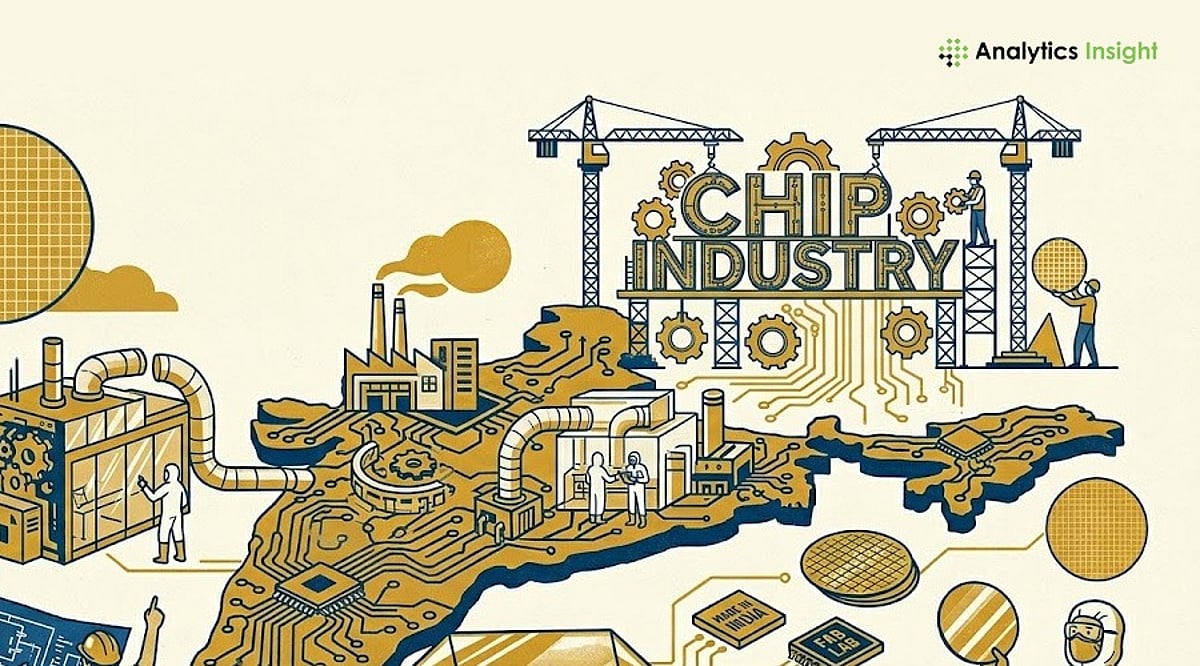
    India has long been a silent force in global technology, with nearly 20% of the world’s semiconductor design talent based in cities like Bangalore and Hyderabad. But designing chips and manufacturing them are vastly different challenges. Until recently, the country lacked the advanced fabrication plants, or ‘fabs,’ required to turn designs into physical silicon.

    The COVID-19 pandemic exposed the fragility of global supply chains, halting car production and highlighting the dangers of relying entirely on a few countries for chips. Driven by these lessons, India is now racing to build a semiconductor industry from scratch. The launch of the India Semiconductor Mission (ISM) 2.0, backed by billions in government support, marks a determined shift from being a design house to becoming a global manufacturing hub.

    Starting with Assembly and Testing

    Building a cutting-edge chip factory is one of the most expensive and complex undertakings imaginable—a single advanced machine can cost more than a large airplane. Instead of immediately competing with giants like Taiwan on 2-nanometer AI chips, India is pursuing a bottom-up strategy. The initial focus is on Outsourced Semiconductor Assembly and Test (OSAT): taking raw silicon wafers, slicing them into individual chips, and packaging them. This 10-to-12-step process is less capital-intensive than a full fab but equally vital.

    Companies such as Kaynes Semicon have already started production in Gujarat, concentrating on chips for automotive, telecom, and defense applications. These may not power the latest smartphones, but they are the workhorses of the modern economy. By serving its domestic market first, India is building the scale and manufacturing culture needed to eventually produce more advanced, smaller chips.

    Government Policy and Self-Reliance

    The Indian government is backing this push with investment and clear policy. The Union Budget for 2026-27 introduced ISM 2.0, allocating Rs. 8,000 crore specifically for manufacturing and design this year. The target is ambitious: by 2029, India aims to design and manufacture 70% to 75% of its own semiconductor needs—from home appliances to advanced defense technology.

    Under the first phase of the mission, ten major projects worth about Rs. 1.60 lakh crore have been approved, spanning silicon power plants and packaging units across six states. The broader vision is to position India as a trusted ‘Plan B’ for the world amid rising geopolitical tensions.

    Building Talent and Indigenous Tech

    One of the biggest hurdles is the shortage of trained engineers for chip manufacturing, which demands extreme precision and cleanroom protocols. India has launched programs like ‘Chips to Startup,’ providing hundreds of universities and over 1,000 startup engineers access to high-end design tools. Partnerships with firms like Lam Research aim to train 60,000 engineers over the next decade.

    India is also developing its own intellectual property to reduce reliance on foreign licensing. Indigenous microprocessors such as ‘DHRUV64,’ ‘SHAKTI,’ and ‘THEJAS’ are built on open-source architectures, lowering costs and fostering innovation in 5G, automotive electronics, and industrial automation. These chips represent a move toward digital sovereignty.

    Strategic Importance and Job Creation

    Semiconductors have become the oil of the 21st century, powering everything from medical devices to satellites. With India’s chip market projected to grow from $38 billion in 2023 to $110 billion by 2030, domestic production is a matter of national security and economic resilience. The new semiconductor units are expected to create thousands of high-quality jobs for engineers and technicians, helping retain top talent within the country.

    What Lies Ahead

    Progress is already visible. According to IT Minister Ashwini Vaishnaw, four semiconductor plants are expected to be operational by the end of 2026. Facilities in Sanand, Gujarat, have moved from foundation to production in just 14 months—a pace that has surprised global observers. India’s first major fabrication unit in Dholera is slated to be ready by 2028, targeting advanced 3-nanometer and 2-nanometer technologies.

    The journey is long and requires patient capital, but the pieces are falling into place. Combining world-class design talent with a new focus on assembly, testing, and eventually full-scale fabrication, India is slowly turning its semiconductor dreams into silicon reality. The government has set a goal of becoming a top-three semiconductor nation by 2047.

  • India’s Pursuit of Semiconductor Self-Sufficiency: From Design Hub to Manufacturing Powerhouse

    India’s Pursuit of Semiconductor Self-Sufficiency: From Design Hub to Manufacturing Powerhouse

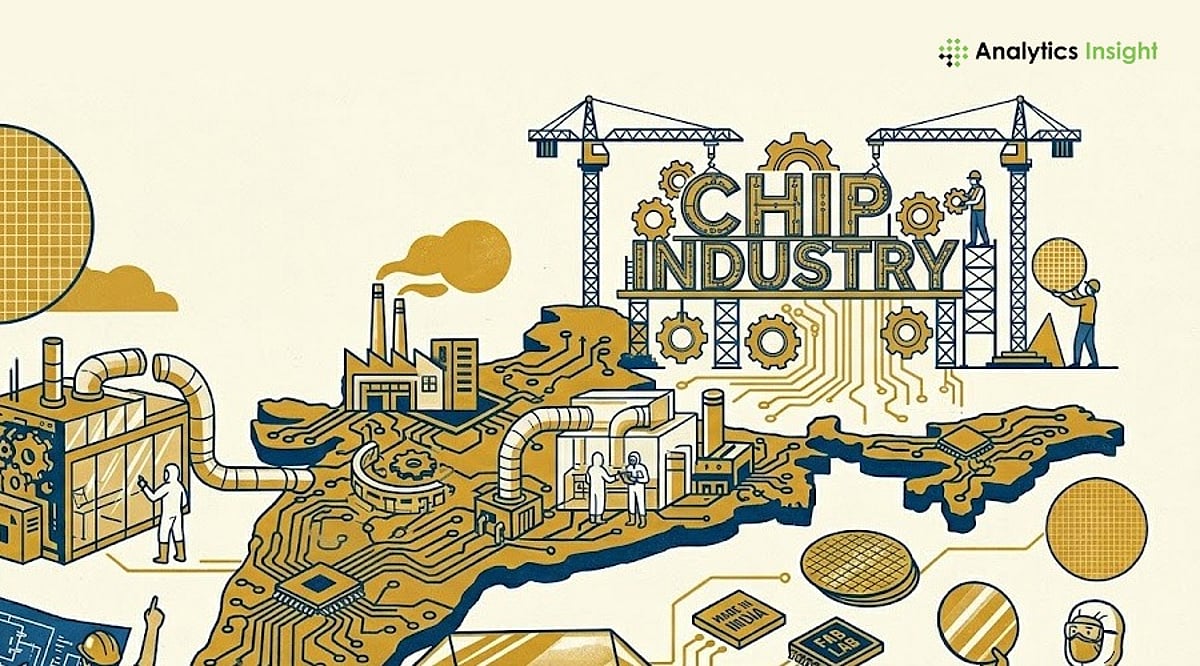
    India has long been a hidden force in global semiconductor design. Nearly 20% of the world’s chip design talent is based in the country, with engineers in Bangalore and Hyderabad playing a crucial role in creating the processors inside countless devices. However, designing a chip and manufacturing one are vastly different challenges. Until recently, India lacked the advanced fabrication plants—or fabs—needed to turn those designs into physical silicon.

    The COVID-19 pandemic delivered a harsh lesson about the fragility of global supply chains, disrupting car production and countless industries. That wake-up call has spurred India to move beyond its role as a design house and build a full-fledged chip manufacturing ecosystem. The India Semiconductor Mission (ISM) 2.0, backed by billions in government funding, represents the country’s most ambitious push yet to achieve this goal.

    A Strategic, Bottom-Up Approach

    Rather than trying to immediately compete with established leaders like Taiwan on cutting-edge 2-nanometer AI chips, India is pursuing a smarter, incremental strategy. The initial focus is on the third stage of production: Outsourced Semiconductor Assembly and Test (OSAT). This involves slicing raw silicon wafers into individual chips and packaging them—a process that is less capital-intensive than building a full fab but equally vital. Companies like Kaynes Semicon have already begun production in Gujarat, targeting chips for automobiles, telecommunications, and defense. These chips may not be as glamorous as those powering premium smartphones, but they are essential to the modern economy.

    Policy Support and Investment

    The government is backing this vision with substantial resources. The Union Budget for 2026-27 introduced ISM 2.0, allocating Rs. 8,000 crore specifically to support domestic manufacturing and design. By 2029, India aims to design and produce 70% to 75% of the chips it needs, from home appliances to advanced defense systems. Under the first phase, ten major projects—representing an investment of approximately Rs. 1.60 lakh crore—have been approved across six states. The plan positions India as a reliable ‘Plan B’ for global supply chains amid rising geopolitical tensions.

    Talent Development and Indigenous Innovation

    One of the biggest hurdles is the shortage of skilled workers for chip manufacturing, which demands extreme precision and meticulous documentation. To address this, India has launched training programs such as ‘Chips to Startup,’ providing high-end design tools to hundreds of universities and over 1,000 startup engineers. Partnerships with global firms like Lam Research aim to train 60,000 engineers in specialized manufacturing and cleanroom protocols over the next decade. Additionally, the development of indigenous microprocessors like DHRUV64, SHAKTI, and THEJAS demonstrates a push toward digital sovereignty. These open-source chips are more affordable and foster innovation in areas like 5G, automotive electronics, and industrial automation.

    Strategic Importance and Economic Impact

    Semiconductors have become the oil of the 21st century, powering everything from medical devices to satellite communications. India’s chip market is projected to grow from $38 billion in 2023 to $110 billion by 2030. Local production is not just an economic imperative but a matter of national security, ensuring the economy remains resilient during global crises or trade wars. The sector is also expected to create thousands of high-quality jobs for engineers and technicians, reducing brain drain and keeping India’s top talent engaged in cutting-edge technology.

    What Lies Ahead

    Progress is already visible. According to IT Minister Ashwini Vaishnaw, four semiconductor plants are expected to be operational by the end of 2026, with a facility in Sanand, Gujarat, moving from foundation to production in just 14 months—a pace that has impressed global observers. The country’s first major fabrication unit in Dholera, targeting advanced 3-nanometer and 2-nanometer technologies, is slated for completion by 2028. India’s journey is long and requires patient investment, but the pieces are falling into place. By combining world-class design talent with new manufacturing capabilities, the nation is steadily turning its semiconductor dreams into a reality. The government’s goal is to become one of the top three semiconductor nations by 2047.

  • AWS Chief Matt Garman Says AI Will Reshape Jobs, Not Erase Them

    AWS Chief Matt Garman Says AI Will Reshape Jobs, Not Erase Them

    AWS CEO Matt Garman has pushed back against fears that artificial intelligence will lead to widespread job displacement, arguing instead that AI will transform white-collar roles and create new opportunities. In a recent appearance on the Platformer podcast, Garman said that while half of all white-collar jobs “may change” due to AI, that does not mean they will disappear.

    Drawing a historical parallel, Garman compared AI’s impact to the introduction of Microsoft Excel. “Wipe out and change are different,” he explained. “The key thing is not to look at a still picture of the world and say that job’s not going to exist. New jobs will be created.”

    Garman emphasized that entry-level employees remain highly valuable. “They come in with an energy and excitement, a new view on things,” he said. Amazon plans to hire more than 11,000 software development engineering interns and early-career engineers globally in 2026, underscoring its commitment to nurturing new talent.

    According to Garman, adaptability will become more important than specific technical skills. “I actually think one of the things we start to look for in employees is not what skill set you have, but whether you have the ability to learn,” he stated.

    Amazon continues to invest heavily in AI, with AWS generating roughly $130 billion in annual revenue. The company is developing AI-powered tools for coding, security, productivity, and recruitment, signaling that the transformation Garman describes is already underway.

  • IBM Teams Up with ElevenLabs to Bring Natural Voice to Enterprise AI Agents

    IBM Teams Up with ElevenLabs to Bring Natural Voice to Enterprise AI Agents

    A landmark partnership between IBM and ElevenLabs is moving enterprise AI beyond text, delivering natural, secure, and scalable voice-first agents. The collaboration integrates ElevenLabs’ premium Text-to-Speech (TTS) and Speech-to-Text (STT) capabilities with IBM’s watsonx Orchestrate platform, enabling organizations to build voice-enabled AI agents that communicate with nuance, emotion, and rhythm across 70 languages.

    This strategic integration expands agentic AI from traditional text-based systems to voice-first interactions, offering enterprises the ability to replace robotic call flows with human-like conversations. The partnership addresses key enterprise needs for security and compliance, including PCI compliance for payment processing and HIPAA-compliant data handling through Zero Retention Mode.

    Industry applications span government services, banking, healthcare, insurance, and utilities, where AI phone agents can now converse in multiple languages with regional accents. Internal use cases include helping employees navigate legacy systems and retrieve complex compliance documentation via simple voice commands.

    ElevenLabs has achieved $330 million in annual recurring revenue (2025) and a valuation of $11 billion following a $500 million Series D funding round in February 2026. The company’s voice library contains over 10,000 voices.

    Nick Holda, Vice President of AI Technology Partnerships at IBM, stated: “We’re bringing a voice to AI Agents in the enterprise. As clients increasingly deploy agentic AI that interacts with their customers and employees, they want these experiences to feel intuitive, responsive and accessible.”

    Mati Staniszewski, Co-Founder of ElevenLabs, added: “AI agents are becoming central to everyday work, and voice is where AI either earns trust or loses it.”

    The collaboration underscores a shift toward human-centered AI interfaces that adapt to natural speaking habits, moving beyond rigid call flows and towards empathetic, efficient digital ecosystems that can scale globally.

  • How Huawei’s AI-Powered Monitoring Platform Is Rescuing the Critically Endangered White-Headed Langur

    How Huawei’s AI-Powered Monitoring Platform Is Rescuing the Critically Endangered White-Headed Langur

    In the limestone karst mountains of Guangxi, southern China, technology is playing a pivotal role in bringing a critically endangered primate back from the brink. The white-headed langur, a species found only in Chongzuo and rarer than the giant panda, is experiencing a population recovery thanks to an intelligent monitoring platform powered by artificial intelligence by Huawei.

    The platform, developed in partnership with the Guangxi Chongzuo White-headed Langur National Nature Reserve and the China-ASEAN Artificial Intelligence Application Cooperation Center, uses video-based animal monitoring devices deployed along cliffs. These devices collect real-time data on the langurs’ distribution, surroundings, and activity patterns. AI-driven automated labeling and data analytics then process this information to create a comprehensive dashboard for visualized management.

    To date, the system has recorded over 37,200 instances of langur activity, providing researchers with unprecedented insights into the species’ behavior and habitat use. This AI system excels at processing complex geographical data in the challenging karst landscape, which would be extremely difficult to monitor with conventional methods alone.

    Technology operates within a broader conservation framework that includes legal protection and ecological restoration. The Chongzuo White-Headed Langur Habitat Protection Regulations provide the legal foundation, while efforts have restored 77.6 hectares of habitat, built two drinking water sources and 18 water drinking points, and constructed two ecological corridors. As a result, the white-headed langur population has grown to more than 1,400 individuals across 130 groups.

    Huawei Guangxi Deputy General Manager Tian Yongsheng notes that the company is committed to conserving nature with technology. The project demonstrates AI’s immense value in processing complex geographical data and massive volumes of species data. Huawei’s digital inclusion projects for environmental protection have been implemented in 65 protected areas worldwide, improving biodiversity conservation efficiency and showcasing the scalability of AI-powered conservation solutions across diverse ecosystems.

  • Coupa Honors 2026 Partner Award Winners at Inspire Conference, Emphasizing AI and Procurement Innovation

    Coupa Honors 2026 Partner Award Winners at Inspire Conference, Emphasizing AI and Procurement Innovation

    Coupa has announced the winners of its 2026 Partner Awards during the Coupa Inspire Partner Summit in Las Vegas, celebrating the ecosystem driving next-generation procurement, automation, and AI-powered business transformation. The awards recognize partners that have delivered measurable value, accelerated digital innovation, and helped enterprises modernize operations at scale using the Coupa platform.

    “We are thrilled to recognize our 2026 award winners for their unwavering commitment to excellence,” said Greg Harbor, Chief Partner Officer at Coupa. “Our partners are the backbone of the Coupa community, helping our mutual customers drive margin growth and future-proof their operations. Together, we are achieving ambitious goals and shaping the future of spend management.”

    Global Partner of the Year

    The awards placed strong emphasis on AI-enabled transformation, operational resilience, and data-driven decision-making — areas increasingly critical as enterprises scale automation and improve visibility across global supply chains. Accenture received Coupa’s highest distinction: Global Partner of the Year, recognized for exceptional impact across customer success, innovation, global delivery, and strategic collaboration. According to Coupa, Accenture earned the award for its strong global performance, customer outcomes, and ability to align Coupa’s autonomous spend management capabilities with complex enterprise transformation initiatives.

    Sales Partners of the Year

    These partners expanded the Coupa community by helping organizations solve unique regional and market-specific spend challenges:

    • North America: Cross Country Consulting
    • EMEA: KPMG EMEA
    • APJ: KPMG Japan
    • Latin America: Accenture

    Customer Success Partners of the Year

    Recognized for driving adoption and ensuring customers exceed their business goals:

    • North America: KPMG USA
    • Latin America: Paramētā
    • EMEA: Supply Chain Partner
    • APJ: FourPL

    Specialized Partner Winners

    • Supply Chain Partner of the Year: Miebach Consulting
    • Independent Delivery Partner of the Year: Acquis Consulting Group
    • Coupa App Marketplace Partner of the Year: Rossum
    • Coupa Pay Digital Payments Partner of the Year: Viewpost
    • Coupa Pay Virtual Card Partner of the Year: Mastercard
    • Coupa Advantage Partner of the Year: Lowe’s
    • AI Partner of the Year: PwC
    • Innovation Partner of the Year: DataMap

    Channel and Emerging Partners

    Honoring partners rapidly scaling their Coupa practices and bringing autonomous spend management to new markets:

    • Reseller of the Year – North America: RSM
    • Reseller of the Year – International: Procurion GmbH
    • New Breakout Partner – Americas: Clearsulting
    • New Breakout Partner – International: Cogniviti Labs

    Coupa Inspire 2026 continues to spotlight the pivotal role of partners in driving AI-driven procurement transformation and operational excellence across industries.

  • MIT Department of Architecture: Latest News and Breakthroughs

    MIT Department of Architecture: Latest News and Breakthroughs

    MIT’s Department of Architecture remains at the forefront of design, research, and innovation. In 2026, the Institute was ranked the world’s No. 1 university by QS for the 15th consecutive year, placing first in 12 subject areas. Recent projects include low-cost personal cooling and emissions-free air conditioning as part of MIT’s Climate Project seed funding, and a speech-to-reality system that combines AI and robotics to create objects on demand.

    Architecture students are exploring new frontiers: a running shoe that adapts to the runner using granular convection, and human-machine interaction in the kitchen. The School of Architecture and Planning celebrated its Commencement with Alejandro Aravena urging graduates to lead with kindness and honor the truth. MIT also marked its first Robert R. Taylor Day with Tuskegee University, honoring the Institute’s first Black graduate.

    The Mexico City Initiative fosters cross-border collaborations to solve complex urban problems, while a new MIT course examines how buildings define regions. Graduate students like C Jacob Payne reimagine historic architecture using AI and design. John Ochsendorf was named associate dean for research, and Miho Mazereeuw’s new book explores Japan’s disaster planning in architecture.

    These stories highlight how MIT Architecture shapes the built environment and tackles global challenges through interdisciplinary work.

  • MIT Startup Spotlight: Breakthroughs in AI, Sustainability, and Engineering

    MIT Startup Spotlight: Breakthroughs in AI, Sustainability, and Engineering

    MIT continues to drive innovation through its vibrant startup ecosystem, with recent ventures spanning cooling systems for data centers, real-time retail tracking, reusable emergency housing, and AI-driven protein design. Here are the latest developments from the Institute’s entrepreneurial community.

    Sustainable Data Center Cooling

    Ferveret, a startup founded by two MIT researchers, uses a nuclear-inspired cooling system to reduce the energy and water required for AI chips in data centers.

    Real‑Time Retail Tracking

    Cartesian, based on MIT‑invented technology, helps retailers track products in real time, with potential applications in manufacturing, logistics, and robotics.

    Reusable Emergency Housing

    Uplift Microhome won the MIT $100K competition with modular housing units that provide their own power and water, enabling faster disaster response.

    AI‑Driven Protein Design

    OpenProtein.AI, co‑founded by MIT alumni, offers open‑source models and tools for protein engineering, making advanced design accessible to biologists everywhere.

    These stories are just a glimpse of how MIT’s research and entrepreneurial initiatives continue to solve real‑world problems across industries.

  • AWS Co-Founder Matt Domo on Why Enterprise AI Pilots Fail and How to Scale

    AWS Co-Founder Matt Domo on Why Enterprise AI Pilots Fail and How to Scale

    According to a recent Forrester analysis, only 10-15% of artificial intelligence pilots successfully transition into long-term production. That means most enterprise AI investments stall before they ever deliver real impact. Matt Domo, a co-founder of Amazon Web Services (AWS) and creator of foundational Microsoft enterprise technologies, has a clear explanation: the problem is rarely the technology itself, but rather how organizations are structured around it.

    Now advising Fortune 500 companies, government agencies, and universities, Domo shared his insights with AI Magazine on moving from experimentation to enterprise-scale execution.

    Why Most AI Initiatives Fail at the Executive Level

    Domo identifies three root causes for AI failure: unclear ownership of outcomes, misaligned incentives across teams, and operating models that were not built for AI-driven decision-making. “Leaders fund pilots, but they don’t redesign how work happens. They treat them as technology projects instead of using them to change how the business operates,” he said. Without organizational alignment, AI simply gets layered onto existing processes, which looks like progress but yields no measurable results.

    Scaling AI from Pilot to Enterprise-Wide Deployment

    Scaling does not come from running more pilots; it comes from standardization. “Companies that succeed define a repeatable path from pilot to production, assign clear ownership of outcomes, and integrate AI into core workflows instead of layering it on top,” Domo explained. He warns that when every team starts from scratch, you end up with scattered experiments, not scale.

    ROI Metrics That Convince Boards

    To secure board-level investment, Domo advises focusing on metrics directly tied to financial results and strategic goals. “Boards aren’t convinced by activity. They’re convinced by measurable impact tied to the P&L,” he said. The metrics that matter include cost reduction, revenue lift, and faster decision cycles. Vague reporting like usage or engagement does not work; clear attribution of what changed, by how much, and how it ties to financial outcomes is essential.

    Avoiding AI-Washing and Misaligned Projects

    Organizations avoid AI-washing by starting with the desired outcome, not the tool. “Define the business result first, assign clear ownership of that outcome, and only then determine where AI actually improves the workflow,” Domo advised. Misalignment often happens when teams are incentivized to launch initiatives rather than deliver results. The fix is to tie every AI effort to a measurable objective and hold a single owner accountable.

    Speeding Up AI-Driven Decision-Making

    Speed in AI adoption comes from clearer ownership and fewer handoffs. In large organizations, decisions slow down due to fragmented accountability and excessive alignment steps. Domo recommends defining who owns the outcome, standardizing the inputs those decisions rely on, and reducing the number of required approvals. “AI can surface better insights, but unless the organization is structured to act on them quickly, those insights sit in dashboards,” he noted. Speed comes from aligning decision rights with the people closest to the outcome.