Tag: Telegram

  • 8 Practical Tips for Discovering Valuable Telegram Channels Without the Clutter

    8 Practical Tips for Discovering Valuable Telegram Channels Without the Clutter

    Telegram can deliver a wealth of useful information, but an unchecked channel list quickly becomes noise. By combining focused search, careful selection, and simple management tools, you can keep your feed relevant and organized. Here are eight actionable strategies.

    1. Search with Specific Topics

    Telegram’s search works best with precise terms. Instead of broad keywords like “technology” or “news,” use phrases such as “Android security,” “football transfers,” or “stock market news.” This narrows results to public channels and posts that match your exact interest, and it can surface sources that a generic search would miss.

    2. Use the Posts Tab for Discovery

    Telegram’s global search now includes a dedicated Posts tab. This lets you search across posts from all public channels—even those you haven’t joined. When you find a useful post, visit the channel’s profile to learn more. This approach helps you discover high-quality sources without subscribing to every channel that appears in general results.

    3. Check Similar Channels Before Subscribing

    On any channel profile, look for the Similar Channels section. Telegram suggests channels with overlapping audiences and topics. You can also find these suggestions in the Channels section of global search. For example, a reliable tech channel may lead you to others focused on software, cybersecurity, or AI—broadening your coverage with a small, curated set of sources.

    4. Test a Channel Before Committing

    Don’t subscribe to every promising channel immediately. Give it a short trial period. Evaluate posting frequency, content quality, originality, repetition, and promotional material. A channel that posts one or two valuable updates daily is often more useful than one that floods your feed with dozens of low-value messages.

    5. Create Folders for Different Topics

    Telegram’s chat folders let you group channels by category—News, Tech, Work, Learning, Entertainment, and more. You can define rules to include or exclude specific chats, groups, channels, bots, or muted chats. This keeps unrelated content separate and gives your main chat list a cleaner, more manageable layout.

    6. Mute Channels that Don’t Need Alerts

    Useful channels don’t always require instant notifications. Telegram’s mute controls let you keep valuable sources accessible without constant interruptions. For instance, mute high-volume news channels while leaving learning channels unmuted. This way, you stay informed on your own schedule.

    7. Use AI Summaries for Long Posts

    Telegram introduced AI summaries for long channel posts in January 2026. This feature provides a concise overview of lengthy content, helping you decide quickly whether to read the full post. It’s especially useful for channels that publish detailed reports, news updates, or extended announcements.

    8. Review Your Channel List Regularly

    Just as important as discovery is cleanup. A channel that once delivered value may later become repetitive or overly promotional. Set aside time periodically to review your subscriptions and remove any that no longer serve your interests. A smaller, well-curated list is far more effective than a large, cluttered one.

    By combining these techniques—focused search, channel checks, folders, mute controls, AI summaries, and regular reviews—you can transform Telegram into a streamlined information hub where every channel has a clear purpose.

  • How Telegram Accounts Can Be Hacked Without an OTP: Risks and Prevention Strategies

    How Telegram Accounts Can Be Hacked Without an OTP: Risks and Prevention Strategies

    Telegram sends a one-time password (OTP) to verify new logins, but that alone does not guarantee account safety. Hackers, scammers, and even someone with brief physical access to your phone can still compromise a Telegram account without ever requesting that OTP. This risk affects everyone—casual users, business owners, and community channel managers alike. The methods typically exploit stolen sessions, malware, or lingering login sessions rather than breaking Telegram’s own systems.

    Understanding Telegram Account Security Risks

    Telegram allows a single account to remain logged in on multiple devices simultaneously, and each active session works without re-entering the OTP. If a hacker steals an active session—via malware on the device or a fake app that copies login credentials—they can instantly access the account. Security researchers warn that malicious files, often disguised as APKs on Android, can silently extract session data stored on the device. Once that data reaches an attacker, they can open Telegram as if they were the legitimate user, with no password or code required.

    Public Wi-Fi networks add another layer of vulnerability. Experts note that unsecured networks make it easier for attackers to intercept data flowing between a phone and Telegram’s servers, especially when using Telegram Web on a shared or public computer.

    Phishing remains a common threat on Telegram. A fake login page that looks identical to Telegram’s real site can trick users into entering their credentials directly, handing over access without any OTP involved.

    Steps to Keep Your Telegram Account Safe

    Adopting a few simple habits can significantly reduce the risk of such hacks:

    • Turn on Two-Step Verification in Telegram’s settings to add an extra password layer.
    • Add a passcode lock inside the app so it cannot be opened even on an unlocked phone.
    • Regularly check the Devices section and log out of any sessions you do not recognize.
    • Avoid downloading APK files or clicking links from unknown senders.
    • Keep the app updated, as Telegram regularly releases security patches.

    These measures together make it much harder for anyone to slip into your account unnoticed.

  • Today’s Tech Roundup: India’s ₹2,500 Crore Chip Plant, Shiplog’s $930K Funding, and More

    Today’s Tech Roundup: India’s ₹2,500 Crore Chip Plant, Shiplog’s $930K Funding, and More

    Good morning, tech enthusiasts! Here are the top tech stories making headlines today, from a major semiconductor plant launch in India to key developments in AI funding, job markets, and cryptocurrency.

    PM Modi Launches ₹2,500 Crore Semiconductor Plant in Visakhapatnam

    Prime Minister Narendra Modi has inaugurated the construction of ASIP Technologies’ ₹2,500 crore semiconductor plant in Visakhapatnam. This facility is South India’s first approved chip packaging unit under the India Semiconductor Mission. The project is expected to generate jobs, boost domestic chip production, attract further investment, and reduce India’s reliance on imported semiconductors.

    Shiplog Raises $930K for AI-Powered Marketing Platform

    AI startup Shiplog has secured $930,000 in pre-seed funding to develop AI agents that automate marketing research, campaign planning, and execution. The company aims to save businesses time by handling repetitive tasks. The fresh capital will be used to enhance the product, expand the team, and scale operations.

    AI Makes It Harder for Fresh Graduates to Land Jobs

    Many recent college graduates are facing increased difficulty securing their first job as companies integrate AI into both workflows and hiring processes. Some have submitted hundreds of applications with little success. Experts note that AI is reshaping the job market, creating new barriers for entry-level candidates.

    DeepSeek V4 Flash Offers High Performance at Lower Cost

    DeepSeek’s V4 Flash model delivers strong AI performance at a significantly reduced price, sparking debate over whether AI is becoming a commoditized product. As more affordable models enter the market, competition may shift from model quality to tools, services, security, and user experience.

    Telegram’s Brief App Store Removal Rattles Crypto Traders

    Telegram was temporarily removed from Apple’s App Store, causing concern among cryptocurrency traders. The outage led to a drop in GRAM-related tokens amid fears of user access disruption. The app was later restored, but the incident highlighted the sensitivity of crypto prices to platform availability.

  • GRAM Token Drops to $1.29 After Brief Telegram App Store Removal

    GRAM Token Drops to $1.29 After Brief Telegram App Store Removal

    GRAM, the cryptocurrency associated with Telegram, fell to $1.29 on August 4 after Telegram temporarily disappeared from Apple’s App Store for several hours. Existing users were still able to use the app, but the unavailability for new downloads sparked panic selling across crypto markets.

    Apple confirmed the removal was due to a safety guideline violation involving prohibited abusive content. The brief outage triggered a sharp sell-off, as Telegram is a critical platform for crypto communities, projects, and trading groups worldwide. Traders feared reduced access could diminish Telegram’s activity and slow GRAM’s broader adoption.

    During the sell-off, trading activity surged dramatically. According to CoinGlass data, GRAM derivatives volume jumped 490% to $123.27 million, while open interest rose 1.2% to $93.28 million. Selling pressure dominated across perpetual contracts, and the Long/Short Ratio fell below one, indicating a bearish sentiment. GRAM’s Relative Strength Index dropped to 38, signaling strong selling momentum, and the token moved below its nine-day moving average near $1.40.

    Telegram returned to the App Store after nearly four hours. The company responded via its official X account, stating, “Reports of my demise are greatly exaggerated.” Apple said the app was restored after Telegram removed the reported content and banned the associated user. This easing of fears helped GRAM recover to $1.38 from its low of $1.29.

    The next price move depends on how quickly market confidence returns. If GRAM can sustain a bullish run above $1.42, it could break resistance at $1.46 and minimize further losses. Investors are closely watching the token’s trajectory as the broader crypto market reacts to the incident.

  • Apple Briefly Delists Telegram from App Store Over Moderation Violations

    Apple Briefly Delists Telegram from App Store Over Moderation Violations

    Apple has temporarily removed Telegram from the App Store in select countries, leaving many users unable to find or download the messaging app on their iPhones and iPads. The action, which took effect on August 3, 2026, was later confirmed by Apple as a response to discovered content violating its strict guidelines on child sexual abuse material.

    According to a statement shared by Bloomberg’s Mark Gurman, Apple said: “We briefly removed Telegram from the App Store after our review found content that violates our strict guidelines prohibiting child sexual abuse material. The app was subsequently restored after the developer promptly removed the content and banned the user who posted it.”

    The removal was not global. Users in India and many other regions still see Telegram normally, and those who already had the app installed were unaffected. The issue only impacted first-time downloads in the affected countries. Google Play, Android’s official store, continues to offer Telegram without interruption.

    This isn’t the first time Telegram has faced such action. In 2018, Apple pulled the app from the App Store globally after inappropriate content was identified. However, this latest incident appears limited to specific markets, likely due to legal requests or regional enforcement.

    Apple’s ability to remove apps stems from its App Store guidelines, which all developers must follow. The company can also act on valid legal requests from governments. Once the offending content is removed and the issue resolved, the app can be reinstated, as happened here.

    For now, Telegram remains available on iOS in most regions, and Android users haven’t experienced any disruption. This incident highlights the ongoing challenge of content moderation on major platforms and the delicate balance between user safety and app availability.

  • Australia Files Federal Lawsuit Against Telegram Over Terror Content Removal Failures

    Australia Files Federal Lawsuit Against Telegram Over Terror Content Removal Failures

    Australia has filed a lawsuit against Telegram in the Federal Court, accusing the messaging platform of failing to remove extremist content despite repeated user reports. The eSafety Commissioner, Julie Inman Grant, announced the legal action on Thursday, alleging that Telegram left terrorist-related videos online after being notified by users. If the court rules against Telegram, the company could face fines of up to AUD 54.6 million under the country’s Online Safety Act.

    According to the regulator, Australian users reported 12 posts containing terror-related content between July and October 2025. The complaint states that Telegram failed to remove 10 of those posts and did not suspend the accounts that shared them. The alleged content included videos linked to the Christchurch mosque attack, the Buffalo supermarket shooting, and other terrorist executions.

    eSafety Commissioner Julie Inman Grant said: “This case concerns content linked to some of the most notorious acts of known extremist violence in recent history, including material associated with the Christchurch and Buffalo terror attacks. We allege that this content remained accessible on the service long after Telegram had been put on notice.”

    Telegram denied the allegations and said it will fight the case in court. The company stated that it has strong systems to stop terrorist content and removed thousands of extremist communities during 2026.

    This case marks Australia’s first Federal Court action under the country’s unlawful online content rules. Officials say the legal move demonstrates that online platforms must act quickly when users report dangerous material. The outcome could also shape how global messaging apps handle extremist content in the future. Telegram has more than one billion monthly active users worldwide and has faced growing legal pressure in other countries, adding to the challenges surrounding content moderation and online safety.

  • Step-by-Step Guide to Hiding Your Phone Number on Telegram

    Step-by-Step Guide to Hiding Your Phone Number on Telegram

    Telegram offers robust privacy settings that let you control who can see your phone number. Follow this straightforward guide to keep your number private and communicate securely.

    Open Telegram Settings

    Launch the Telegram app and tap the menu icon (three lines) or the Settings gear icon to access your account preferences.

    Navigate to Privacy and Security

    In Settings, select Privacy and Security. This section contains all controls for your personal information, including your phone number.

    Select Phone Number

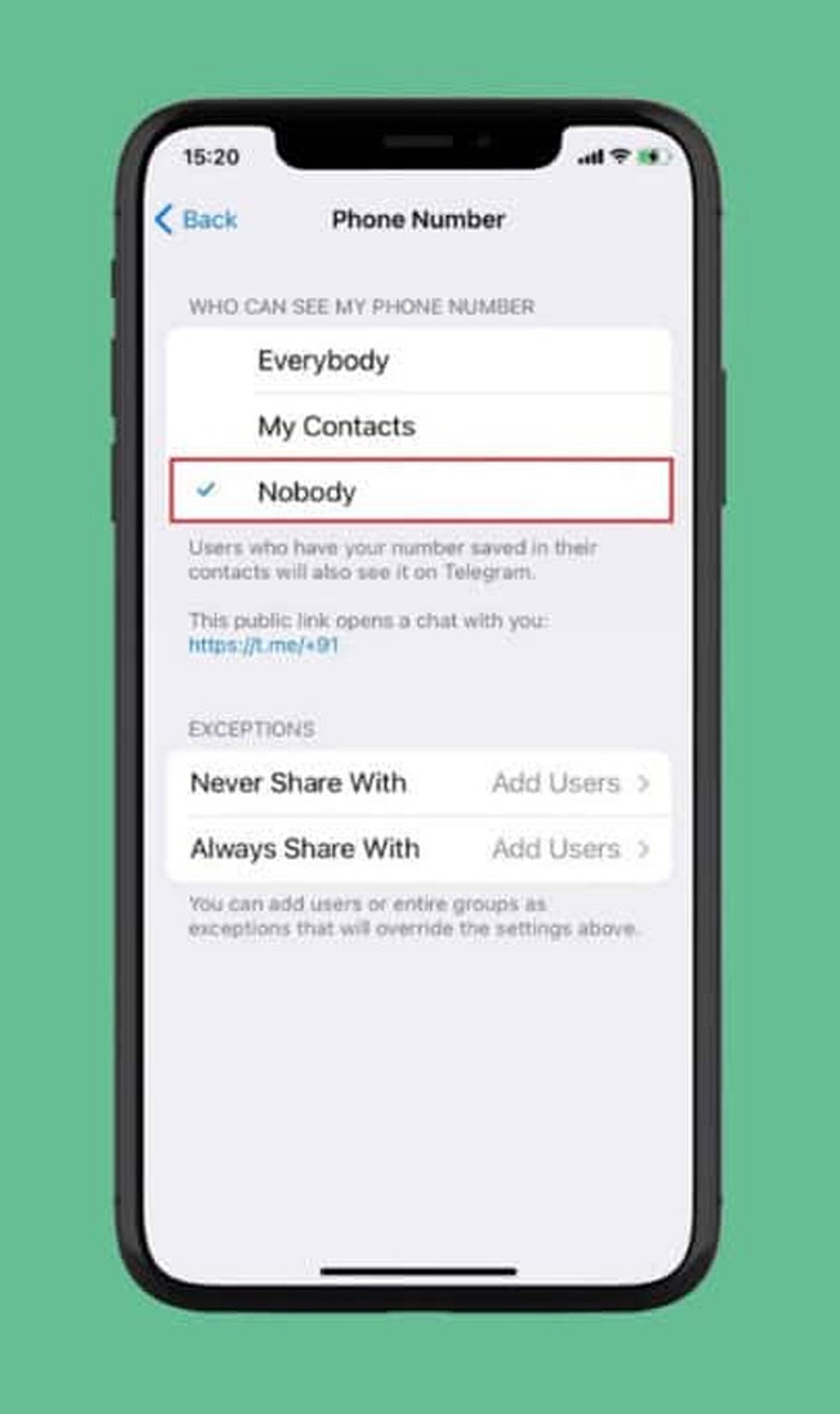
    Under the Privacy section, tap Phone Number. Here you can manage who can view your registered mobile number and who can find you by it.

    Choose Visibility: Nobody

    Set Who can see my phone number to Nobody. This prevents most Telegram users from viewing your number.

    Restrict Number Discovery

    Under Who can find me by my number, select My Contacts. This limits discoverability to people already in your address book, reducing unwanted contact.

    Create a Telegram Username

    Set up a unique username (e.g., @YourName) so others can reach you without needing your phone number. Go to Settings > Username to create one.

    Review Contact-Based Visibility

    People who already have your number saved may still see your account via contact synchronization. Review your contact sync settings and consider deleting synced contacts for tighter control.

    Check Privacy Settings Regularly

    Telegram updates may introduce new privacy options or change existing ones. Periodically revisit your Privacy and Security settings to ensure your preferences remain intact.

    By following these steps, you can significantly enhance your privacy on Telegram and communicate with confidence.

  • Top 6 Telegram Hacks to Boost Privacy and Productivity

    Top 6 Telegram Hacks to Boost Privacy and Productivity

    Boost Your Telegram Experience with These Simple Hacks

    Telegram is one of the most popular messaging apps, but many users don’t tap into its full potential. Here are six easy hacks every Telegram user should know, from organizing chats to protecting your privacy.

    1. Use Saved Messages as Your Personal Notebook

    Treat the Saved Messages chat as your digital filing cabinet. Store important documents, links, photos, voice notes, and reminders—all synced across devices. This eliminates the need for third-party note apps or cloud storage for quick access.

    2. Organize with Chat Folders

    Reduce clutter by creating custom Chat Folders for work, family, friends, and channels. This keeps conversations separate, improves productivity, and helps you instantly find what matters most—especially if you manage many groups or business conversations daily.

    3. Automate Cleanup with Auto-Delete Messages

    Enable Auto-Delete for specific chats to remove messages after a set period. It boosts privacy, clears history, and saves storage. Perfect for sensitive discussions or temporary chats that don’t need to stay forever.

    4. Hide Your Phone Number

    Enhance privacy by limiting who can see your phone number. Choose from Everyone, My Contacts, or Nobody. Communicate through your Telegram username to stay connected without sharing personal contact info.

    5. Pin Important Chats

    Keep priority conversations at the top of your list by pinning them. Whether family, work, or frequently used groups, pinned chats ensure you never miss critical messages and can respond faster.

    6. Manage Storage

    Go to Telegram’s Storage settings to clear cached media, set auto-cache limits, and handle downloads. Regular cleanups free up space without deleting chats, keeping the app running smoothly.

  • India Considers Unified Messaging Rules After WhatsApp and Telegram Username Review

    India Considers Unified Messaging Rules After WhatsApp and Telegram Username Review

    The Indian government is reviewing responses from WhatsApp and Telegram regarding their username features, as the Ministry of Electronics and Information Technology (MeitY) considers implementing common regulations for all messaging platforms. The initiative aims to strengthen cybersecurity and curb online scams nationwide.

    MeitY sent notices to WhatsApp, Telegram, and Signal after raising concerns that username-based messaging could enable fraudsters to conceal their identities. Officials worry that without proper safeguards, this feature might facilitate phishing attacks, identity theft, impersonation, and digital arrest scams.

    Government Reviews Messaging Safety

    Electronics and Information Technology Secretary S Krishnan confirmed that WhatsApp submitted its reply over the weekend, and the ministry is now analyzing it carefully. Officials will determine next steps only after completing the review. The government has also requested other messaging platforms to detail the safety measures integrated into their username systems.

    Government officials stated that the primary objective is to establish a single set of rules for all messaging platforms. A uniform policy would prevent disparate treatment of similar features and create clear standards for companies operating in India. Officials believe consistent rules will enhance online safety while supporting technological innovation.

    WhatsApp recently introduced usernames as an optional privacy feature in select countries, allowing users to connect without sharing phone numbers during new conversations. The company emphasized that phone numbers remain necessary for account creation and usage, with usernames serving as an additional layer of personal information protection.

    Telegram has offered username-based messaging for several years, while WhatsApp has not yet launched this feature in India. Government officials have asked both companies to explain how they prevent fake accounts, deter misuse, and protect users from fraud before permitting broader adoption of the feature.

    Why Common Rules are Needed

    India could soon establish a unified safety standard for username-based messaging across all platforms. This move may improve online privacy while reducing fraud and making digital communication more secure.

    The discussion aligns with the government’s broader focus on strengthening cybersecurity nationwide. Krishnan noted that while digital technology has created numerous opportunities, it has also increased security risks. Artificial intelligence can drive innovation, but criminals also exploit the technology to launch more sophisticated cyberattacks.

    Government agencies are now working to improve India’s cyber defenses through enhanced coordination. Organizations such as CERT-In, the National Cyber Coordination Centre, and the Ministry of Home Affairs currently manage various cybersecurity responsibilities. Officials believe better information sharing between government agencies and private companies will help improve India’s response to cyber threats.

    Focus on Stronger Cybersecurity

    Experts also believe clear rules will help businesses protect their official usernames and reduce the risk of fake profiles. Consumers could benefit from stronger identity verification and safer communication across different messaging platforms.

    The Centre will announce its decision after reviewing all responses submitted by the messaging companies. Any new policy is expected to balance user privacy, online safety, and technological innovation while applying the same standards to every messaging platform.

  • WhatsApp and Telegram Address Government Queries on Username Security and Impersonation Risks

    WhatsApp and Telegram Address Government Queries on Username Security and Impersonation Risks

    WhatsApp and Telegram have officially responded to the Indian government’s concerns regarding the safety of their username-based messaging features. The Ministry of Electronics and Information Technology (MeitY) had issued notices to the platforms, seeking details on how they plan to prevent identity impersonation and online fraud facilitated by the new username system. Signal, another messaging app, had not yet submitted its response by the deadline.

    Government Scrutiny Intensifies on Username Features

    MeitY sent notices to WhatsApp, Telegram, and Signal, asking them to explain the safety mechanisms integrated into their username systems. The government is particularly worried that allowing users to communicate via usernames instead of phone numbers could make it easier for fraudsters to impersonate individuals, launch phishing attacks, and carry out digital scams. WhatsApp received the notice on July 1, while Telegram and Signal were issued notices two days later. After discussions with officials, WhatsApp was granted a four-day extension and submitted its response. Telegram also met the deadline.

    Meta Outlines Anti-Impersonation Measures

    Meta, the parent company of WhatsApp, detailed its approach in the response. The company stated that the upcoming username feature includes multiple layers of protection to curb misuse. Accounts will be suspended or usernames revoked if there is evidence of impersonation or fraudulent activity. Additionally, usernames already associated with Facebook and Instagram accounts will be reserved for their rightful owners during the rollout. Usernames linked to verified accounts, public figures, celebrities, and government entities—along with look-alike variations—will remain exclusive to legitimate users to reduce the risk of identity fraud.

    Privacy vs. Security: A Delicate Balance

    While the username feature is designed to enhance user privacy by allowing people to communicate without sharing their phone numbers, the government believes that anonymity could create new challenges for law enforcement and cybercrime investigations if proper safeguards are not in place. This exchange represents the latest step in the government’s ongoing efforts to strengthen protections against online impersonation while balancing user privacy and platform innovation. MeitY is expected to review the submissions before deciding on the next course of action.