Tag: UPI

  • Why Buying the Best AI Model Isn’t Enough Without Engineering Discipline

    Why Buying the Best AI Model Isn’t Enough Without Engineering Discipline

    McKinsey’s State of AI survey found that while 88% of organizations use AI, only 6% qualify as high performers, where AI actually delivers bottom-line impact. The bottleneck isn’t the model. It is the engineering discipline that moves a system from demo to deployment, and nowhere is that gap more visible than in payments, where a confident wrong answer costs real money.

    To understand what that discipline looks like in practice, we turned to Ankit Rawat, a senior software engineer at Meta Platforms in Seattle, currently leading observability and performance work for WhatsApp Business Payment flows. A Computer Science graduate of Rajiv Gandhi Technological University, Bhopal, Rawat did not arrive at this role through a shortcut. Over twelve years, at Yodlee, Snapdeal, Amazon, Wayfair, and now Meta, he has built, debugged, and scaled payment systems where failure was never abstract. In this article, he discusses what it takes to get enterprise AI to production, how engineering disciplines built across commercial environments directly apply to it, and what engineers need to understand before they ship.

    The problem most teams don’t build for

    That understanding begins with a problem most organisations have the opportunity to solve early, but rarely do. A single digital payment passes through authentication layers, fraud detection, bank APIs, settlement engines, and often several third-party providers. What distinguishes the teams that succeed is a different capability: they can also tell you where users abandon a flow, which steps in a transaction sequence are slow under load, and why one bank’s definition of a “completed” payment doesn’t match another’s.

    “Every component in a payment pipeline has its own idea of what success looks like,” Rawat explains. “A fraud engine might flag a legitimate transaction as risky, and the bank API returns a timeout that the settlement layer reads as a failure. You only find these mismatches if you trace the full journey, not just the individual services.”

    Building that kind of infrastructure is exactly the work Rawat has spent his career doing. At Meta, the observability initiative he designed and implemented now directly impacts over 100 teams. It started as a collaboration between four groups: the billing engineering team, the payments product team, a data science unit focused on user behavior, and a growth analytics squad tracking conversion funnels. Rather than measuring whether servers were “up” in the traditional sense, Rawat’s approach traces real user journeys step by step. Data scientists and product stakeholders suddenly could see patterns that no standard dashboard captured. One of those patterns revealed that Instagram’s payment surface, previously unmonitored at the product level, was generating significant abandoned transactions, a finding that directly informed what became a multi-year payments program for the platform.

    Seeing the problem before the customer does

    If failures are often invisible, the obvious response is to build better ways of watching. Yet traditional monitoring, “Is the server up? Are response times normal?” misses most of what goes wrong in a payment flow. A server can be perfectly healthy while users give up at a confusing authentication step or a misconfigured timeout.

    At Meta, where Rawat arrived in October 2023, he designed a cross-functional observability initiative spanning four teams: billing engineering, payments product, a data science unit focused on user behavior, and a growth analytics squad tracking conversion funnels, around a fundamentally different approach. Rather than measuring infrastructure health, it tracks real user journeys step by step: where people abandon a flow, which steps are inefficient, and where time disappears unexpectedly. Data scientists and product stakeholders suddenly had visibility into patterns that traditional dashboards never captured. One revealed that Instagram’s payment surface, previously unmonitored at the product level, was generating significant abandoned transactions, and the initiative eventually grew into a multi-year program reaching well beyond its original scope.

    “Best practices for product-level observability are highly organization-specific and not well documented publicly,” Rawat explains. “We had limited external references, so we defined our own approach and aligned stakeholders. Getting from four teams to a hundred meant making the tooling extensible enough that other groups could plug in their own journeys without rebuilding the whole framework.”

    The parts of payment infrastructure nobody celebrates

    While everyone benchmarks processing speed and tracks uptime, the failures that actually cost money tend to hide in places nobody thinks to look. At Meta, Rawat designed a log optimization solution that reduced network data packet size by roughly 20% while preserving data integrity – saving terabytes of storage every day. Without that kind of efficiency, the cost of observing payment systems at scale becomes prohibitive, and teams lose the very visibility they need to catch problems early.

    A separate cross-team initiative he led tackled billing and payment error rates directly. Working with three or more partner teams, Rawat’s effort cut failure rates by approximately 60% across multiple products supporting around $20 million in annual business value.

    “What surprised people was that we didn’t need to rearchitect anything,” Rawat says. “Most of the improvement came from finally being able to see where errors actually originated. Once you separate infrastructure noise from real user-side failures and build feedback loops tight enough to validate fixes in days, the error rate drops fast. The hardest part is getting three teams with different priorities to agree on a shared definition of what ‘fixed’ means.”

    What India’s AI moment actually requires

    India is building the payment infrastructure that will test these principles on a national scale. On March 2, India and Israel signed a memorandum of understanding to link India’s UPI (Unified Payments Interface) with Israel’s MASAV system, as reported by Electronic Payments International – making Israel the eighth country to adopt India’s real-time payment protocol. UPI already surpassed Visa in daily transaction volume in 2025 and now handles over 700 million transactions a day. Every new country added to the network introduces new settlement protocols, new regulatory requirements, and new categories of failure that domestic testing never anticipates.

    “Getting a system to work in a demo is the easy part. The real challenge begins when it goes live, when real users depend on it, and a single bad answer, a single failed transaction, is unacceptable. You have to know, before it ships, every way it can break,” Rawat says. “India has the scale and the ambition. What it needs are engineers who understand from experience where these systems break, not because they read about it, but because they shipped something that failed and learned from it.”

    For India’s payments infrastructure to function at the scale it is being designed for, it must be underpinned by engineers who understand from experience where these systems need to be strengthened – engineers who learned by shipping and were held accountable for the outcomes.

  • Key Financial Policy Updates Taking Effect This Month: Taxes, UPI, Credit Cards, and More

    Key Financial Policy Updates Taking Effect This Month: Taxes, UPI, Credit Cards, and More

    A wave of financial policy changes is rolling out this month, affecting everything from income tax and bank accounts to UPI transactions, credit card rewards, and retirement savings. Here’s a quick guide to what’s changing and how it may impact your wallet.

    Income Tax Updates

    New tax provisions could alter deductions, exemptions, filing requirements, and overall tax planning strategies for eligible taxpayers nationwide. Review your withholding and consult a professional to adjust your plan.

    Bank Account Rules

    Banks may introduce revised minimum balance policies, revised service charges, upgraded digital banking features, and new customer compliance requirements. Check your bank’s notifications to avoid surprise fees.

    UPI Transaction Changes

    Updated transaction guidelines aim to enhance payment security, streamline digital transfers, improve user experience, and strengthen fraud prevention measures across the country. Users may notice new limits or authentication steps.

    Credit Card Benefits

    Several issuers are revising reward structures, cashback offers, lounge access, annual fees, and spending-based privileges. Compare your card’s new terms to ensure you’re still maximizing value.

    Fixed Deposit Rates

    Banks are adjusting fixed deposit interest rates, which influences investment returns, savings decisions, and long-term financial planning. Lock in rates now if you expect further declines.

    EPF Regulations

    Revised provident fund guidelines affect withdrawals, contributions, account management, and retirement planning for salaried employees in eligible organizations. Check your EPF statement for changes in contribution caps or withdrawal rules.

    GST Compliance Rules

    Businesses must follow updated GST compliance measures, including invoicing requirements, return filing procedures, and digital reporting obligations. Non-compliance may lead to penalties, so update your systems promptly.

    Insurance Premium Changes

    Revised premium structures and policy features are affecting health, life, and general insurance costs for both new and existing policyholders. Shop around or review your renewal notices to avoid unexpected hikes.

    Stock Market Regulations

    Updated regulatory measures strengthen investor protection, market transparency, trading efficiency, and compliance standards across financial markets this month. Stay informed about new reporting or disclosure requirements.

    Stay ahead of these changes by reviewing your finances and consulting with a professional as needed.

  • Behind Every UPI App: The Sponsor Banks Ensuring Fast and Reliable Payments

    Behind Every UPI App: The Sponsor Banks Ensuring Fast and Reliable Payments

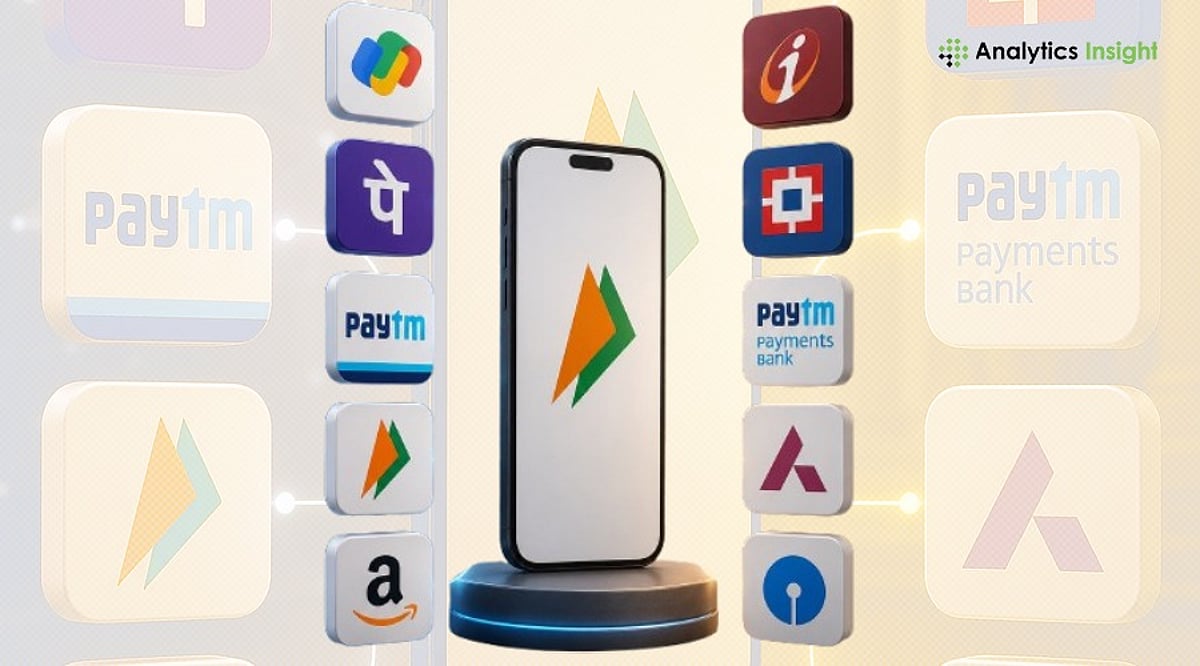
    India’s digital payment revolution runs on a simple interface that millions open daily, yet the banking infrastructure behind it remains largely invisible. Every transaction through apps like PhonePe, Google Pay, and Paytm passes through a sponsor bank before reaching the National Payments Corporation of India (NPCI) settlement system. This partnership defines transaction speed, dispute resolution, and overall reliability.

    What Is a Sponsor Bank?

    UPI apps—technically third-party application providers—do not hold banking licenses. They rely on regulated banks called Payment Service Provider (PSP) banks or sponsor banks to authenticate transactions, connect to NPCI’s core network, and settle funds. Without such a tie-up, no UPI app can process a single payment.

    The importance of sponsor banks became starkly visible in 2020 when the Reserve Bank of India placed a moratorium on Yes Bank, which then supported about 20 of the 32 third-party UPI apps. The disruption forced many apps to adopt multi-bank partnerships—a practice now standard across the industry.

    Which Banks Sponsor India’s Top UPI Apps?

    UPI App Sponsor Banks
    PhonePe Yes Bank, ICICI Bank, Axis Bank
    Google Pay Axis Bank, ICICI Bank, HDFC Bank, State Bank of India
    Paytm Axis Bank, HDFC Bank, SBI, Yes Bank

    PhonePe originally launched with Yes Bank as its sole partner in 2016. After the 2020 crisis, it added ICICI Bank and Axis Bank, distributing transaction load across three institutions. Google Pay entered with Axis Bank and gradually expanded to include ICICI Bank, HDFC Bank, and SBI, ensuring high success rates even during peak volumes.

    Paytm underwent the most significant restructuring. After the RBI restricted Paytm Payments Bank from onboarding new customers in early 2024, NPCI approved a multi-bank model. Axis Bank, HDFC Bank, SBI, and Yes Bank now jointly handle its UPI traffic, with user handles like @ptaxis and @ptsbi.

    How Sponsor Banks Work in the UPI Ecosystem

    A sponsor bank performs several critical functions that a UPI app cannot legally do alone:

    • Issuing and managing the Virtual Payment Address (VPA) handle
    • Authenticating the user’s linked bank account via NPCI’s mapper system
    • Routing payment requests to the beneficiary bank in real time
    • Settling funds between payer and payee banks
    • Handling regulatory compliance and dispute escalation

    When a payment fails, the sponsor bank is the first point of technical accountability, though the app remains the customer’s primary support contact. Apps with a single sponsor bank face greater risk during outages; those with multiple partners recover faster.

    Why Multiple Sponsor Banks Matter

    NPCI enforces a volume cap that restricts any single third-party app to 30% of total UPI transaction volume. This rule, expected to take fuller effect by year’s end, pushes apps and sponsor banks toward diversification. Benefits include:

    • For users: Clearer path for dispute escalation
    • For businesses: Better reliability when evaluating payment integrations
    • For regulators: Reduced systemic risk if one sponsor bank faces trouble
    • For developers: Ability to plan redundancy before launching new UPI products

    Final Thoughts

    The sponsor bank model forms the structural foundation of every UPI transaction in India. From PhonePe’s early reliance on Yes Bank to Paytm’s pivot to a four-bank arrangement, the pattern is clear: diversification protects both the app and the user from single-point failures. As UPI expands globally and transaction volumes continue climbing, strong banking partnerships will become even more critical to maintaining the seamless experience users expect.

    Frequently Asked Questions

    What is a sponsor bank in the UPI ecosystem?

    A sponsor bank (PSP bank) connects a third-party UPI app to NPCI’s network and handles authentication, routing, and settlement for every transaction.

    Which bank sponsors PhonePe?

    PhonePe operates through three sponsor banks: Yes Bank, Axis Bank, and ICICI Bank—a structure adopted after the 2020 Yes Bank moratorium.

    Why did Paytm switch to multiple sponsor banks?

    After regulatory restrictions on Paytm Payments Bank in 2024, NPCI approved a multi-bank model using Axis Bank, HDFC Bank, SBI, and Yes Bank to keep its UPI services uninterrupted.

    Does BHIM need a sponsor bank?

    BHIM operates as a direct extension of NPCI and does not require a separate sponsor bank, unlike third-party apps such as PhonePe and Google Pay.

    Why do UPI apps prefer multiple sponsor banks?

    Multiple sponsor banks reduce dependency risk, distribute transaction load, and help apps maintain uptime even if one partner bank faces technical or regulatory disruption.

  • How Fintech Is Powering India’s Startup Boom in 2026: UPI, Embedded Finance, and Merchant Lending Lead the Charge

    How Fintech Is Powering India’s Startup Boom in 2026: UPI, Embedded Finance, and Merchant Lending Lead the Charge

    India’s fintech story in 2026 is one of divergence: venture funding has normalized, but the real-economy footprint of fintech continues to expand. Despite a slowdown in capital inflows, usage metrics show no signs of easing. UPI processed 23.2 billion transactions worth ₹29.90 lakh crore in May 2026 alone, while the RBI’s Digital Payments Index rose to 493.22 in March 2025 from 445.50 a year earlier. This is why fintech remains a critical engine for startup growth—it has evolved from a venture category into essential infrastructure.

    Payments, merchant acceptance, embedded finance, account aggregation, and digital lending rails are reducing friction for e-commerce, SaaS, consumer internet, logistics, and MSME startups. The regulatory architecture has also matured: UPI continues to expand globally, the Account Aggregator framework is entering a more formal phase, RBI’s interoperable sandbox lowers experimentation costs, and the DPDP Rules raise the baseline for trust and data governance.

    Funding Reset, Operating Boom

    India remains the world’s third-largest fintech ecosystem. IBEF pegs the domestic fintech market at $111 billion today, with potential to reach $421 billion by 2029. Tracxn counted 16,461 fintech companies in India, including 2,890 funded firms and 30 unicorns as of late May 2026. The macro context remains supportive: the World Bank reports India grew 6.5% in FY24-25, and the IMF projects 6.5% real GDP growth in 2026. With 886 million active internet users in 2024 and a mobile broadband base of 944.12 million, the digital user base is vast and growing.

    Financial inclusion is also deepening. PMJDY had 57.78 crore accounts as of February 2026, 55.8% held by women and 78.2% in rural/semi-urban areas. RBI’s Financial Inclusion Index improved to 67.0 in March 2025 from 64.2 a year earlier. UPI now accounts for 84% of retail payment volumes, with 185.9 billion transactions totaling ₹260.6 lakh crore in FY25. By FY26, UPI’s annual value exceeded ₹314 lakh crore with 700+ banks live, and India accounts for nearly 49% of global real-time payments.

    How Fintech Powers Startup Formation and Scaling

    Fintech behaves as a productivity layer for the startup economy. API-led rails for checkout, collections, payouts, KYC, merchant onboarding, and small-ticket credit lower the cost of starting and scaling a business. Credit deepening is the second leg: NITI Aayog’s 2026 credit report expects women’s credit penetration to reach 36%, with total credit outstanding to women rising to ₹76 lakh crore. Fintech NBFCs sanctioned 10.9 crore personal loans worth ₹1,06,548 crore in FY25.

    Adoption at the household and MSME level is another driver. 85.5% of Indian households have at least one smartphone, and 97.1% of people aged 15-29 used a mobile phone in the prior three months. Startup distribution increasingly begins with a payment-enabled, identity-linked handset.

    Case Studies: Where Value Is Accruing

    Indian fintech leaders are moving beyond pure transaction acquisition into multi-product monetization. Razorpay’s FY25 consolidated revenue rose 65% year over year to ₹3,783 crore, processing roughly $180 billion in annual payment value. PhonePe has 650+ million users and processed nearly 10 billion UPI transactions in January 2026, targeting an IPO valuation of $9–10.5 billion. BharatPe reported ₹1,734 crore in FY25 revenue with its first adjusted profit before tax, driven by merchant lending rather than just QR acceptance.

    Risks and Recommendations

    Risks include credit quality deterioration if underwriting lags growth, intense competition in payments (PhonePe and Google Pay held 79% of UPI market share in May 2026), and rising data governance and cyber costs. Private-market money is more selective, with global fintech deal count at a multi-year low in Q1 2026. For policymakers and investors, deepening AA and ULI coverage, preserving trust while lowering compliance duplication, revisiting payments economics, and prioritizing cybersecurity are key next steps.

    The bottom line: fintech is fueling India’s startup growth in 2026 less by attracting peak venture dollars and more by rewiring how startups collect money, lend, onboard, underwrite, and retain customers. Funding has become harder, but infrastructure has become stronger—a more important signal in a maturing startup market.

  • How Razorpay Revolutionized Digital Payments for Indian Businesses

    How Razorpay Revolutionized Digital Payments for Indian Businesses

    In today’s digital world, money moves faster than ever before. From online shopping and ordering your favorite food to booking tickets or paying bills, almost everything is done online. Behind this smooth flow of payments are crucial players who make these transactions happen seamlessly, including Razorpay.

    From a startup idea to one of India’s leading fintech companies, Razorpay is making online payments easier for businesses across India. The Bengaluru-based startup has become an integral part of the country’s booming fintech industry. Helping businesses accept payments, manage money, and handle finances simply and securely, what started as a small startup idea is now a trusted name for thousands of businesses across India.

    The Beginning of Razorpay

    Founded in 2014 by Shashank Kumar and Harshil Mathur, Razorpay emerged at a time when taking online payments in India was still a mess. Businesses had to go through pages of paperwork, a technical setup, and wait for approvals. Many small businesses and startups couldn’t take it anymore. The founders saw an opportunity and decided they wanted to build something simple. Something that makes digital payments easy, fast, and accessible for everyone.

    Early on, Razorpay focused only on the payment gateway, which allowed businesses to accept payments through debit/credit cards, net banking, UPI, and digital wallets. The setup was super simple, and even non-technical people could get going quickly. This ease of use helped Razorpay stand out and catch the eye of startups and small businesses alike. As more people in India started using digital payments, the need for better financial tools grew. Razorpay continued to thrive while improving its offerings and keeping up with the changing market.

    Growing Beyond Payments

    Over time, Razorpay became much more than just payments. It quietly transformed into an entire financial solutions platform for businesses. Today, the company offers services like payroll management, subscription billing, payment links, vendor payouts, and even business banking solutions. Rather than juggling multiple tools, businesses can manage everything under one roof. This all-in-one system saves businesses time and manual effort. So instead of hopping between multiple platforms, you can collect customer payments, pay employees, manage subscriptions, and track transactions, all from one dashboard.

    Innovation, Security, and Trust

    One of the biggest reasons behind Razorpay’s success is its focus on innovation. The company regularly builds new features and tools to make financial management easier for businesses. Be it automating payments, managing subscriptions, or simplifying salary transfers – Razorpay focuses on reducing complexity. Another important factor is security, as Razorpay handles financial transactions and sensitive data – safety is always top of mind. They constantly work to improve their security systems and follow industry regulations, which helps businesses trust them with their daily operations. Razorpay is also known for its strong customer support and user-friendly design. Many businesses choose Razorpay because it is easy to use, even for people without technical knowledge. Apart from tech, they have built an awesome work culture at Razorpay. They encourage teamwork, learning, and creativity. They allow their employees to think freely, take risks, and improve their products. This culture of innovation has helped them grow quickly and stay competitive in the fast-changing fintech industry.

    Impact and Future of Razorpay

    Razorpay’s impact isn’t limited to just handling payments. It has enabled thousands of entrepreneurs and small businesses to thrive by making digital finance accessible. Now, many small businesses that previously struggled with online payments can operate smoothly. By streamlining finances, the company is helping businesses move online and reach more people. Looking ahead, we expect Razorpay to continue playing an essential role in shaping the future of digital finance as new technologies such as AI, embedded finance, and advanced payment systems transform how businesses manage their money. Razorpay is already working on these innovations to enhance its platform. As more and more digital transactions take place in India, there will be an increasing need for easy and secure financial tools. With its tech prowess and customer-centric approach, Razorpay will play a crucial role in this space.

    Final Thoughts

    The story of Razorpay shows how a simple idea can make a big impact. What started as a solution to simplify online payments has grown into one of India’s leading fintech companies. Through continuous innovation, robust security, and a focus on customer needs, Razorpay has built a trusted platform for businesses of all sizes. As India moves further into a digital-first economy, Razorpay’s role will become even more important, helping businesses manage money in a simple, fast, and reliable way, making it a key part of the country’s financial future.