
SpaceX stock (ticker: SPCX) experienced a decline following its first day of trading on the NASDAQ-100 index, closing at $149.47 on Tuesday. The 7% drop came despite expectations that index inclusion would trigger buying from funds tracking the benchmark. The stock remains above its $135 IPO price but is more than 25% below its June 16 closing high of $201.80.
The NASDAQ-100 entry had been anticipated to bring demand from index-tracking funds, which collectively manage approximately $800 billion in assets. However, this anticipated buying did not materialize into a rally, suggesting that some of the index demand may have been priced into the stock earlier. SPCX had gained nearly 6% in the week leading up to the index addition, and investors sold off shares as the first NASDAQ-100 session failed to extend that upward move.
Meanwhile, ARK Invest increased its position in SpaceX by purchasing 44,196 SPCX shares on Tuesday, valued at around $6.6 million based on the closing price. ARK funds already held approximately 3.29 million shares by the end of SpaceX’s first public trading day.
Wall Street analysts have begun issuing coverage following the end of the post-IPO quiet period, with a wide range of price targets reflecting significant uncertainty about the company’s valuation. The average analyst target stands near $236, implying roughly 58% upside from Tuesday’s close. Nineteen analysts have issued ratings so far.
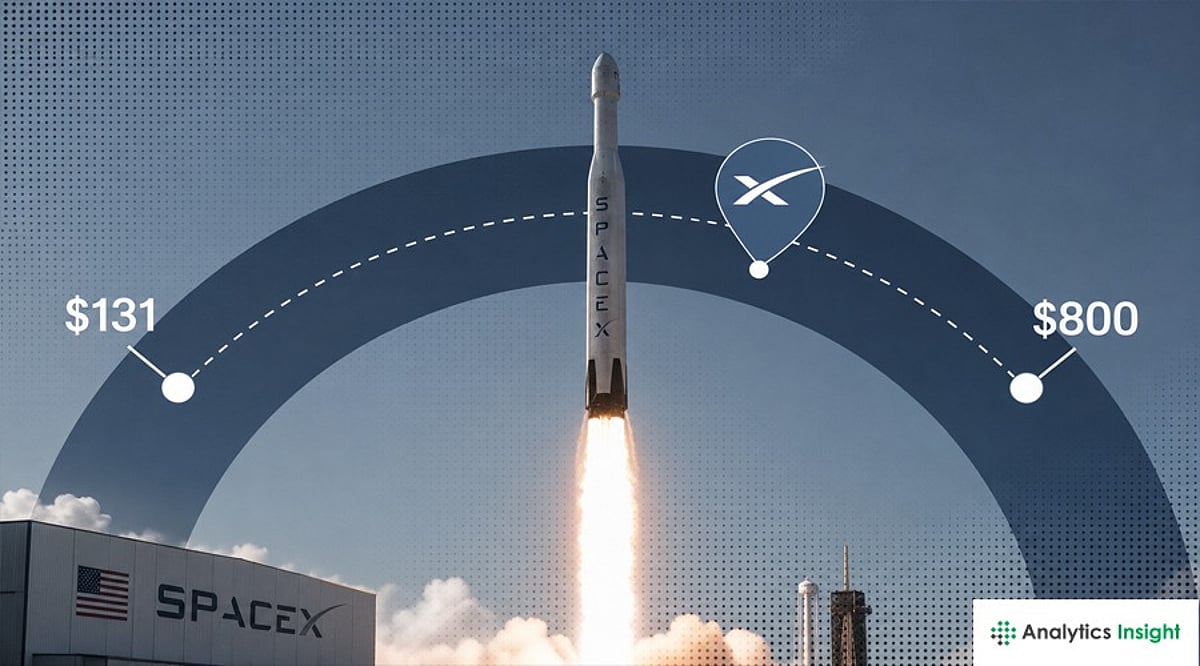
Deutsche Bank initiated coverage with a Buy rating and a $255 target, citing SpaceX’s reusable rockets, Starlink satellite internet business, and potential use in AI infrastructure. Cantor Fitzgerald started with an Overweight rating and a $246 target, describing SpaceX as a “planetary infrastructure company.” Raymond James set the highest target on the Street at $800. Citi rated the stock a Buy at $200, linking a longer-term $900 case to the Starship program. Morgan Stanley set a $300 base case, with a $600 bull case and a $75 bear case.
However, not all analysts share this optimism. MoffettNathanson set a $131 target with a neutral rating, questioning SpaceX’s valuation and long-term business forecasts. The firm called the company’s $30 trillion addressable market estimate “absurd” and expressed doubts about plans tied to orbital compute, stating, “There is simply no credible financial model that can support what is at the time of this writing a roughly $2 trillion valuation.”
In other news, SpaceX has raised prices for Starlink Business Aviation customers. The Aviation Regional 25GB plan increased to $4,000 per month from $2,000, with additional data priced at $250 per GB. The company also introduced Aviation Regional Unlimited at $12,500 per month and raised Aviation Global Unlimited to $20,000 per month from $10,000, offering worldwide coverage and speeds up to 1 Gbps with the Aviation Performance Antenna. Starlink aviation equipment costs also rose to $200,000 per business jet, up from $145,000 last year.
Leave a Reply