
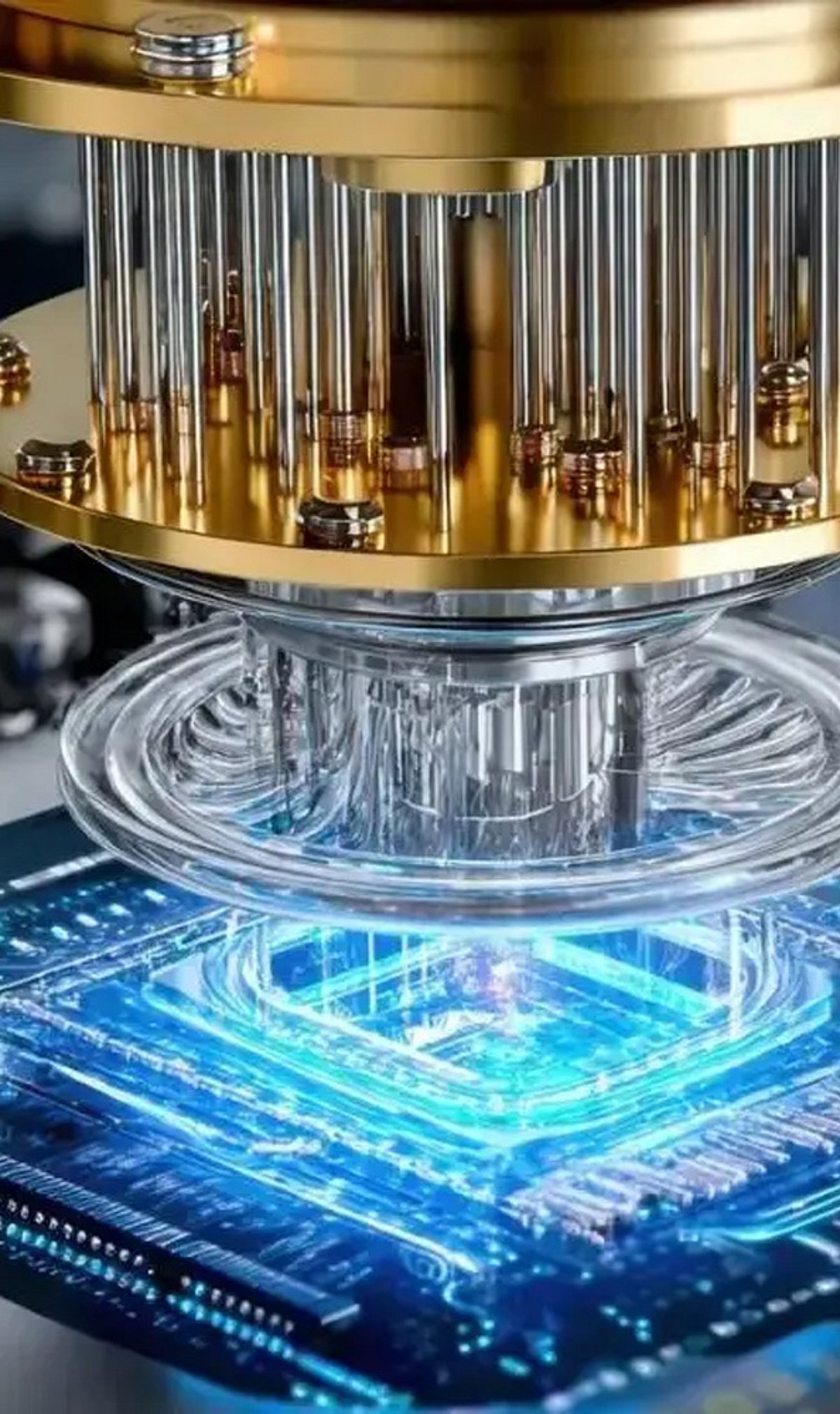
Quantum computing is entering a pivotal phase in 2026, moving beyond the race for raw qubit counts to focus on logical qubits, error correction, scalable hardware, and practical workloads. Researchers are shifting from theoretical potential to systems that could bring quantum computers closer to real-world applications. Here are the key developments to watch this year.
Quantum Error Correction Takes Center Stage
Error correction is becoming a critical benchmark for quantum computers. Google’s Willow research demonstrated below-threshold error correction, where larger encoded systems reduced logical errors. The next milestones include longer-lived logical qubits, reliable logical gates and lower hardware costs, making error correction a primary focus for progress.
Verified Quantum Advantage Gains Attention
Google’s Quantum Echoes work reported a verifiable quantum advantage on its Willow processor, performing a calculation faster than leading classical approaches. The algorithm also pointed toward molecular-structure applications. Independent verification and strong classical comparisons remain important for establishing credible quantum advantage.
Quantum Hardware Paths Diverge
Superconducting, trapped-ion, neutral-atom, photonic and silicon-spin systems are taking different scaling approaches. Neutral atoms offer large arrays and flexible connectivity, while silicon-spin systems could benefit from links to established semiconductor manufacturing, creating diverse hardware ecosystems.
Logical Qubits Matter More Than Raw Qubit Counts
A large number of physical qubits does not automatically mean a useful quantum computer. Physical qubits are fragile, so error correction creates reliable logical qubits. Future progress will increasingly depend on logical-qubit performance, error rates and useful circuit operations rather than raw numbers.
Quantum Computing Moves Toward Real-World Workloads
Researchers are testing quantum systems for chemistry, materials science, optimisation and other specialised problems. Near-term systems are likely to combine classical computers with quantum processors rather than replace traditional computing infrastructure, focusing on hybrid workflows.
Cloud Access Expands Enterprise Testing
Quantum computing is increasingly available through cloud platforms, allowing businesses and researchers to test algorithms without owning quantum hardware. The next phase will focus on quantum-classical workflows, better simulators, hardware-neutral software and repeatable enterprise pilots.
Post-Quantum Security Is Underway
Quantum computing also creates a cybersecurity challenge. NIST finalised three post-quantum cryptography standards in 2024: ML-KEM, ML-DSA and SLH-DSA. Organisations are now preparing systems for migration away from quantum-vulnerable public-key cryptography.
The Next Quantum Milestones to Watch
Watch for more reliable logical qubits, lower error rates, independently reproducible quantum benchmarks, stronger quantum-classical workflows and measurable commercial applications. The key question is shifting from how many qubits exist to how reliably and economically they can perform useful work.
Leave a Reply