
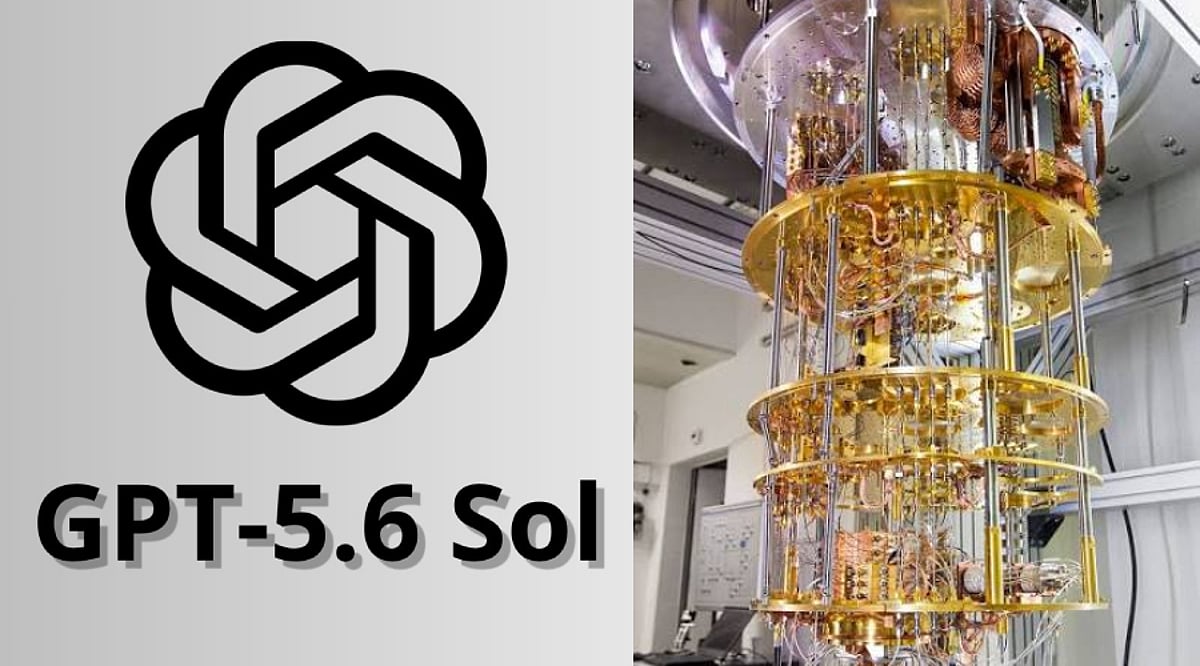
Researchers at MIT have successfully used OpenAI’s GPT-5.6 Sol model to automate parts of quantum computing experiments, reducing the manual workload for scientists and enabling overnight data collection. The AI agent, integrated via Codex, handled routine measurements and qubit calibration on real superconducting hardware.
AI Meets Quantum Computing
Quantum experiments often require hundreds or thousands of preliminary measurements before researchers can proceed to the main experiment. MIT researcher Beatriz Yankelevich tested whether GPT-5.6 Sol could automate these workflows. By connecting the model to lab software through Codex, it could interact directly with quantum experiments.
Worked With Real Qubits
The experiments involved superconducting qubits cooled to extremely low temperatures inside dilution refrigerators. Once the chip was prepared, researchers controlled it via software using microwave signals. This environment became a natural testbed for an AI agent capable of interacting with measurement software.
GPT-5.6 Sol Could Run Measurements
Yankelevich gave Codex specialized skills explaining how individual measurements should be performed and evaluated. GPT-5.6 Sol could then select parameters, operate the hardware, analyze measurements, and decide whether to refine the experiment or move forward.
It Helped Calibrate Qubits
The model worked on an uncalibrated six-qubit chip used by the research group. It identified transition frequencies, calibrated control and readout pulses, and measured how long qubits retained quantum information. These steps are essential for accurately controlling superconducting quantum processors.
Overnight Experiments Became Possible
One major advantage was time. Researchers could allow agents to run routine measurements for hours while they worked elsewhere in the laboratory. Yankelevich said she could check progress remotely and intervene when an experiment needed correction or a different direction.
AI Still Has Limits
GPT-5.6 Sol performed better when experimental signals were clear and workflows were well defined. Weak or noisy signals were harder, sometimes requiring guidance from an experienced researcher. The results suggest AI agents can automate routine workflows while humans remain important for ambiguous physical results.
Researchers Move Up the Stack
The biggest impact is not simply faster measurements. By handing routine calibration and analysis tasks to agents, researchers can spend more time interpreting results, designing experiments, and planning new research directions. OpenAI says the MIT group now regularly uses agents for routine measurements.
Leave a Reply