Author: vitorcherulli

  • U.S. Universities Face Land Pressure as AI Data Center Demand Surges

    U.S. Universities Face Land Pressure as AI Data Center Demand Surges

    The rapid expansion of artificial intelligence is creating an unexpected challenge for American universities: soaring demand for large properties that can support energy-intensive data centers. Institutions that once reserved sprawling campuses for classrooms and research labs now find themselves competing with tech giants for the same real estate.

    George Washington University’s recent sale of its Virginia Science and Technology Campus to Amazon Data Services for $427 million exemplifies this trend. The 120-acre property in Ashburn, Virginia, lies in Loudoun County, the heart of Northern Virginia’s “Data Center Alley.” The university announced the sale in February without initially naming the buyer or disclosing the price, citing confidentiality. Amazon was later confirmed as the purchaser.

    GW stated the transaction would strengthen its long-term finances. It can continue using the campus for up to five years while relocating programs and offices. A substantial portion of the proceeds will fund a new endowment, and eligible faculty will receive one-time payments: $2,500 for full-time benefits-eligible staff and $1,250 for part-time faculty.

    Former GW professor Ellen Scully-Russ, who taught at the Virginia campus from 2009, described the property as struggling to become a central part of the university’s strategy. She noted a gradual reduction in resources, including unfilled faculty positions and eliminated teaching assistant roles due to budget constraints. Faculty and students were not informed about sale discussions in advance. “There was no transparency,” she told Fortune. She also questioned the long-term viability of large AI infrastructure projects, calling the trend potentially “a short-term bubble.”

    The University of Michigan is taking a different approach with a planned $1.25 billion high-performance computing and research center in Ypsilanti Township. Developed in partnership with Los Alamos National Laboratory, the facility will support research in medicine, materials science, clean energy, engineering, and national security. It is expected to require about 50 megawatts of power initially, eventually reaching 100 megawatts. However, local residents and officials oppose the project, and the Ypsilanti Township Board of Trustees unanimously passed a resolution against it.

    As AI continues to drive demand for data center infrastructure, universities must navigate the tension between preserving academic land and capitalizing on lucrative real estate opportunities. The outcome will shape the future of both higher education and the AI industry.

  • Temple Wearable by Deepinder Goyal Shows Strong Brain Blood Flow Correlation in Early Study

    Temple Wearable by Deepinder Goyal Shows Strong Brain Blood Flow Correlation in Early Study

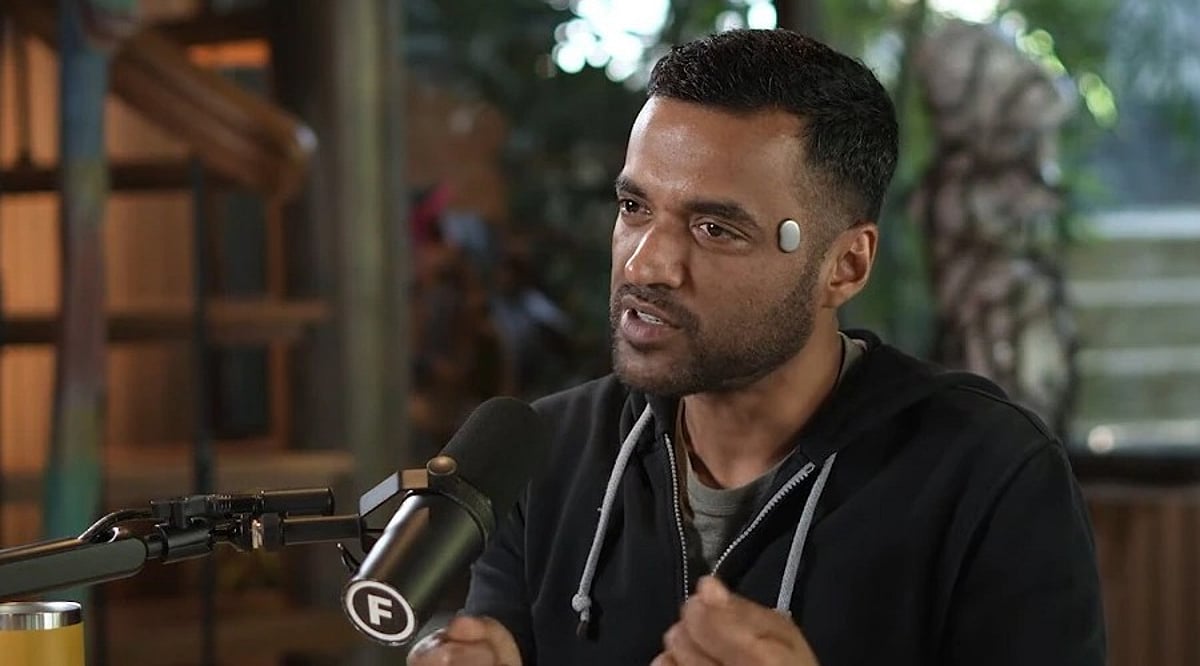
    Deepinder Goyal’s Temple wearable has released its first brain flow study, revealing promising results in tracking cerebral blood flow changes. The preprint, published on medRxiv on September 4, 2026, tested 23 healthy adults in Meerut and compared Temple’s Brain Flow index with Transcranial Doppler (TCD) during exercise and posture changes.

    Researchers found that Temple closely followed middle cerebral artery blood velocity in both tests. Median within-person correlations reached 0.795 during cycling and 0.799 during postural changes, indicating a strong relationship between the wearable’s readings and actual cerebral blood dynamics.

    The Temple device uses an optical sensor placed near the temple to generate its proprietary Brain Flow index, analyzing optical signals from tissue near the skin surface. In contrast, TCD measures blood velocity inside the middle cerebral artery using ultrasound.

    An important finding suggests the signal is not simply a reflection of heart rate. During the posture test, heart rate decreased while middle cerebral artery blood velocity increased, yet Temple’s Brain Flow index followed the cerebral blood velocity pattern during the same transition.

    Despite these promising results, several limitations prevent the Temple wearable from being considered a proven brain monitoring device. The study used normalized relative signals rather than absolute blood flow measurements. Optical readings near the temple can also capture signals from the scalp and other superficial blood vessels. The study involved a small group of young, healthy adults and remains a preprint without peer review. Temple Pvt Ltd funded the research, though authors reported no competing interests.

    Goyal called the study ‘the first step’ while sharing the findings on X. The next stage will require independent studies that separate scalp circulation from brain circulation. Larger and more diverse trials could determine whether Temple’s Brain Flow index reflects genuine cerebral activity.

  • Samsung Galaxy Tab S10+ Festive Discount: New Prices and EMI Options in India

    Samsung Galaxy Tab S10+ Festive Discount: New Prices and EMI Options in India

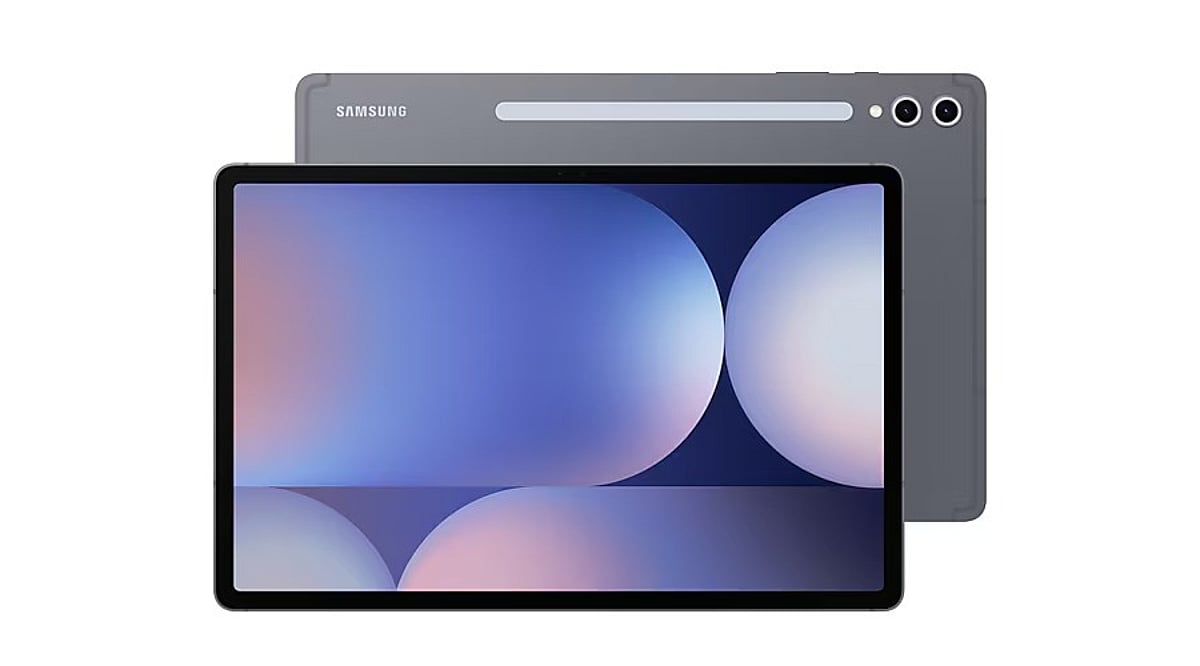
    Samsung has launched its festive season offers in India, and this year the Galaxy Tab S10+ is the star of the show. The tech giant has slashed prices by Rs. 17,000 across both Wi-Fi and 5G variants, making the premium tablet more accessible than ever.

    New Pricing Details

    The 12GB RAM + 256GB Wi-Fi model now retails at Rs. 88,999, down from its original Rs. 1,05,999. Meanwhile, the 5G variant is available at Rs. 1,03,999, reduced from Rs. 1,20,999. This limited-time offer is available through Samsung’s official online store and select retail partners.

    Display and Performance

    The Galaxy Tab S10+ boasts a 12.4-inch Dynamic AMOLED 2X display with a 120Hz refresh rate and anti-reflective coating, ensuring a crisp and comfortable viewing experience. Under the hood, it runs on the powerful MediaTek Dimensity 9300+ chipset, paired with 12GB of RAM and 256GB of internal storage. Need more space? The microSD slot supports expansion up to 1.5TB.

    Features and Battery

    Both models come with the S Pen, Galaxy AI features, a massive 10,090mAh battery, and 45W fast charging. The tablet also features quad speakers and an IP68 rating, making it durable and great for media consumption. The S Pen is ideal for note-taking, drawing, and document handling.

    EMI Plans for Every Budget

    To make the tablet even more affordable, Samsung offers flexible EMI options:

    • Wi-Fi Model: Starting at Rs. 14,833/month for 6 months; NBFC plans from Rs. 7,417/month for up to 12 months; Samsung Finance+ at Rs. 6,877/month with a 15% down payment.
    • 5G Model: Starting at Rs. 17,333/month for 6 months; NBFC plans from Rs. 8,667/month; Samsung Finance+ at Rs. 8,036/month with a 15% down payment.

    Which Model Should You Choose?

    The Wi-Fi model offers an unbeatable combination of screen quality, performance, and features at this price point. If you need constant connectivity without hunting for Wi-Fi hotspots, the 5G version is the smarter choice. Either way, this festive discount makes the Galaxy Tab S10+ a compelling option for productivity and entertainment seekers alike.

    Don’t miss out on this limited-time offer—head to Samsung’s official channels or your nearest retail store to grab yours before the deal ends.

  • Cloud Cybersecurity Risks: Credential Abuse, Misconfigurations, and the Rise of Identity-First Defense

    Cloud Cybersecurity Risks: Credential Abuse, Misconfigurations, and the Rise of Identity-First Defense

    Cloud breaches now often begin with stolen credentials rather than broken infrastructure. Misconfigurations and excessive permissions can turn minor weaknesses into major incidents, while multi-cloud complexity and shadow AI expand the attack surface. Identity-first security and stronger governance are essential to containing these risks.

    Why Cloud Environments Are Harder to Defend

    Every cloud workload, API, and third-party connection is a possible entry point, and each one usually sits with a different team or vendor. That spread has a real cost. IBM’s 2025 Cost of a Data Breach Report, based on 600 breached organizations across 17 industries, found breaches spanning multiple environments cost an average of USD 5.05 million. On-premises breaches, by comparison, cost USD 4.01 million. Complexity is not just a headache for IT teams; it shows up directly on the balance sheet.

    There is a bright spot in the same report: global breach costs fell for the first time in five years, dropping to USD 4.44 million, helped along by faster detection through AI-powered tools. But the gain is not shared evenly. In the United States, average breach costs actually climbed to USD 10.22 million, pushed up by regulatory fines and slower response times.

    Misconfiguration: One Small Gap, One Long Chain

    The 2019 Capital One breach still offers the clearest lesson. An attacker found a server-side request forgery flaw in a web application firewall running on AWS. That flaw let her query the cloud’s metadata service and pull out credentials. Those credentials then opened access to storage buckets holding customer records, exposing data from roughly 106 million people. The breach did not happen because of one mistake; it happened because two mistakes lined up: a vulnerable firewall and a firewall role that carried far more storage access than its job required. Fixing either link would have broken the chain.

    Identity Is the New Front Door

    Authentication and permission are two separate questions, and mixing them up is where most damage starts. A stolen password authenticates just fine every time it is used. The real question is what that login can reach once it is inside. This is why credential theft tops the list of breach vectors and why 88% of attacks on basic web applications involved stolen logins, with human error playing a part in 60% of all breaches. Infostealer malware has made this worse at scale. Verizon’s 2025 Data Breach Investigations Report found company credentials stored in infostealer logs on 30% of corporate devices and 46% of unmanaged ones, and over half of ransomware victims had exposed credentials in those logs before the attack even started.

    Multi-Cloud and Shadow AI: Two Fast-Growing Gaps

    A single security rule, such as keeping production databases private, has to be enforced separately across AWS, Azure, Kubernetes, and a dozen SaaS admin panels. One policy, several enforcement points, and each gap between them is where risk quietly builds up. Third-party access adds to the strain: breaches tied to outside partners doubled in a year, now making up 30% of all cases. Shadow AI is the newest version of this same problem. Staff paste code or client data into unapproved AI tools that lie outside normal data controls. IBM found that one in five studied organizations had a breach tied to shadow AI, adding up to USD 670,000 to the average cost and exposing customer data at a higher rate.

    Detection Is Getting Faster, Just Not Fast Enough

    A single action in a cloud system can touch an identity provider, an API, and a SaaS app, each logging events in its own format. The problem is not a lack of data; it is a lack of connection between the pieces. IBM’s numbers show real progress: breach lifecycles dropped to 241 days, the shortest in nine years, split between 181 days to detect and 60 days to contain. Organizations that take longer than 200 days to contain a breach pay USD 1.14 million more on average than those that move faster.

    Final Thought

    Cloud security has stopped being a story about firewalls and started being a story about access. The organizations closing the gap are not the ones buying the most tools. They are the ones asking a simpler question every day: who can reach what, and should they still be able to?

  • OPPO Find X10 Series: Triple 200MP Cameras and Hasselblad Imaging Lead the Charge

    OPPO Find X10 Series: Triple 200MP Cameras and Hasselblad Imaging Lead the Charge

    OPPO is doubling down on mobile photography with the official announcement of its upcoming Find X10 Series. The company confirmed via Weibo that the new flagship lineup will launch this September, though a specific date has not yet been provided. The highlight of the series is the integration of the Hasselblad Ultra HD Original Camera system, promising clearer images, more accurate colors, and realistic lighting and shadows.

    The Find X10 Pro Max is reported to feature two 200-megapixel rear cameras and one 50-megapixel rear camera. The standard Find X10 will share the same camera configuration. Both models will also debut OPPO’s second-generation Danxia color system alongside the Hasselblad partnership.

    Beyond the camera hardware, the phones are expected to include impressive specifications. The Find X10 is rumored to sport a 6.59-inch display, a MediaTek Dimensity 9600 chipset, and a massive 10,000mAh battery. The Pro Max variant may feature a larger 6.82-inch screen and a Dimensity 9600 Pro processor. Both models are tipped to offer 12GB of RAM, 256GB of storage, and a 50-megapixel front-facing camera.

    With this aggressive camera setup, OPPO is directly challenging rivals like Samsung, Apple, and Vivo. The timing is strategic—September is crowded with major smartphone launches, and OPPO needs a standout feature. The dual 200MP sensors and Hasselblad collaboration could give the Find X10 Pro Max a distinct edge in the premium photography segment. The real test, however, will be real-world image quality. If OPPO can translate the high-resolution hardware into consistently excellent photos, the Find X10 Pro Max could become one of the most talked-about devices of the season.

  • eSIM vs Physical SIM: Which Smartphone Option Wins in 2026?

    eSIM vs Physical SIM: Which Smartphone Option Wins in 2026?

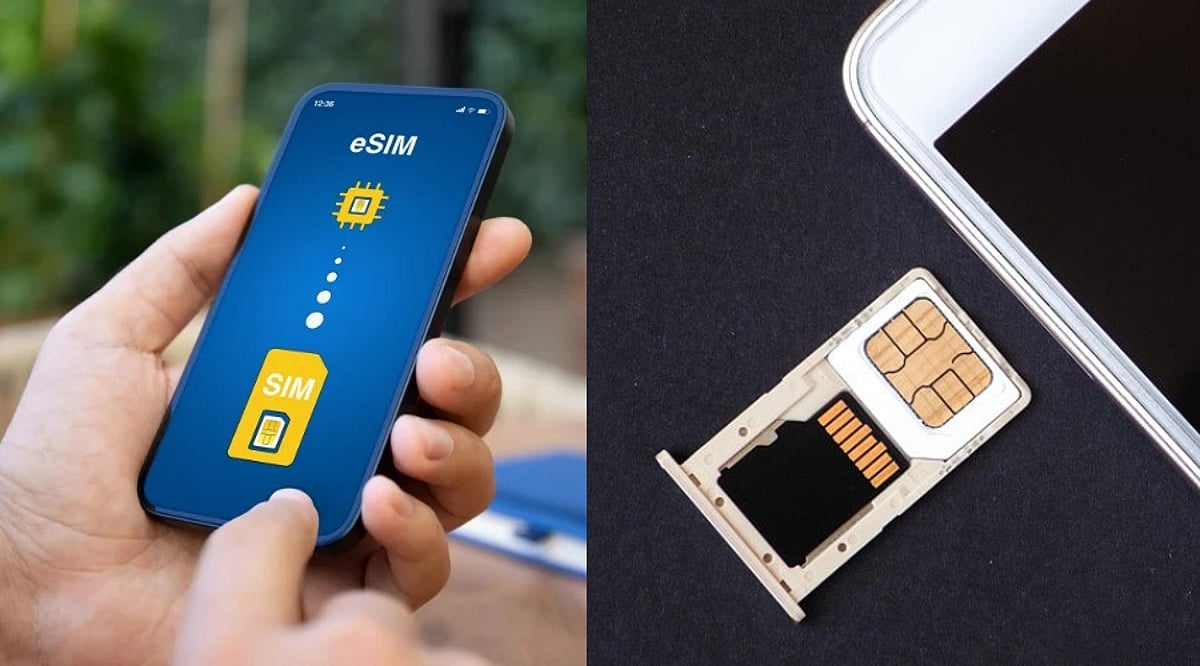
    Smartphones no longer require a small plastic card for mobile service. An eSIM stores a mobile plan directly inside the phone, while a physical SIM remains a removable card. Both options provide calls, messages, mobile data, and 5G access. The real difference lies in travel convenience, phone changes, security, carrier support, and recovery after device failure.

    For most modern flagship phones, eSIM offers the more flexible choice. A physical SIM still has a clear advantage for quick phone changes and broader device compatibility. A phone that supports both options provides the strongest mix of convenience and backup.

    Key Takeaways

    • eSIM wins on convenience: Ideal for travelers, multiple numbers, and digital activation.
    • Physical SIM wins on flexibility: Easy to move between compatible phones, especially during emergencies.
    • Dual-SIM is the best of both: Combines eSIM convenience with physical SIM backup.

    eSIM Makes Travel and Multiple Numbers Easier

    Travel stands out as a major advantage of eSIM. A travel data plan can be added without visiting a local store for a plastic SIM. Plans can often start before a flight or soon after arrival, simplifying mobile access abroad. Apple states that international eSIM providers offer plans across more than 190 countries and regions. Modern smartphones can also hold several eSIM profiles, keeping a main number active while a second plan handles travel data. For frequent international trips, eSIM offers a clear advantage.

    Multiple numbers also work well with eSIM. A personal number can stay on one line while a work number or travel plan uses another. A compatible phone can manage both lines without two physical cards. Security gives eSIM another useful edge: a thief cannot simply pull an eSIM from a stolen phone and place it in another device. That extra barrier helps preserve cellular access for device recovery. Strong screen locks, account protection, and theft protection remain essential, so eSIM should not serve as the only security measure.

    Physical SIM Still Has One Major Advantage

    A physical SIM remains useful for fast phone changes. A SIM card can be moved from one compatible phone to another within minutes. This matters when a main phone fails, loses power, or needs repair. A spare phone can often take the same card without a carrier visit or new digital activation. An eSIM may require carrier approval, account checks, a QR code, an app, or a transfer process. The exact steps vary by carrier and phone, creating trouble when fast access to a mobile number is critical.

    Physical SIM also offers broader compatibility. Older phones, budget models, and some imported devices may not support eSIM. Regional phone versions can have different SIM setups. A phone bought in one country may not match the SIM configuration of the same model sold elsewhere. Buyers should check the exact phone model and carrier before purchase. eSIM support alone does not confirm support for every carrier feature.

    2026 Phones Make the Choice More Important

    The smartphone market continues moving toward eSIM. Apple already sells eSIM-only iPhone models in some markets, while Android brands add eSIM support to more devices. Huawei also reports eSIM support for its upcoming Mate XT 2. India has reached a mature stage for eSIM use. Apple lists Airtel, Reliance Jio, and Vi as Indian eSIM carriers. Airtel and Jio support eSIM Quick Transfer on compatible iPhones. Carrier steps can still differ, so model and network checks remain important before a SIM conversion.

    One common myth needs clarification: eSIM does not make 5G faster. eSIM and physical SIM deliver the same cellular performance on the same phone and network. Modem quality, antenna design, supported network bands, carrier coverage, network traffic, and the mobile plan have a much greater effect on speed and signal quality.

    For most modern flagship phones, eSIM makes the most sense. Frequent travelers, people with several numbers, and buyers who want simple digital activation can gain more from the technology. A physical SIM remains the safer practical choice for those who often move a number between phones or keep a spare device. The strongest setup in 2026 remains a phone with both options: a physical SIM for the main number and an eSIM for a work line or travel plan. That combination brings eSIM flexibility without losing the quick recovery offered by a removable card.

    The choice depends less on speed and more on convenience, recovery, and carrier support. eSIM represents the direction of modern smartphones, while physical SIM still solves a problem that digital activation cannot always solve as quickly: getting a mobile number onto another phone at short notice.

    Frequently Asked Questions

    1. Is eSIM better than a physical SIM?

    For most modern smartphones, eSIM is more convenient, especially for travel and managing multiple numbers. Physical SIM remains better for quick phone transfers.

    2. Does eSIM provide faster 5G?

    No. eSIM does not inherently make 5G faster. Speed depends mainly on the phone’s modem, network bands, carrier, coverage, and plan.

    3. Can I use eSIM and physical SIM together?

    Yes, on compatible phones. You can use one for your main number and the other for a work, travel, or backup line.

    4. What happens if my eSIM phone breaks?

    Moving your number to another phone may require carrier verification or an eSIM transfer process. A physical SIM can usually be moved directly to a compatible backup phone.

    5. Should I choose eSIM or physical SIM in 2026?

    Choose eSIM for convenience and frequent travel. Choose physical SIM if you regularly switch phones or rely on a spare device. A phone supporting both offers the most flexibility.


  • 7 Must-Have Budget Tech Gadgets Under ₹1,000 (2026)

    7 Must-Have Budget Tech Gadgets Under ₹1,000 (2026)

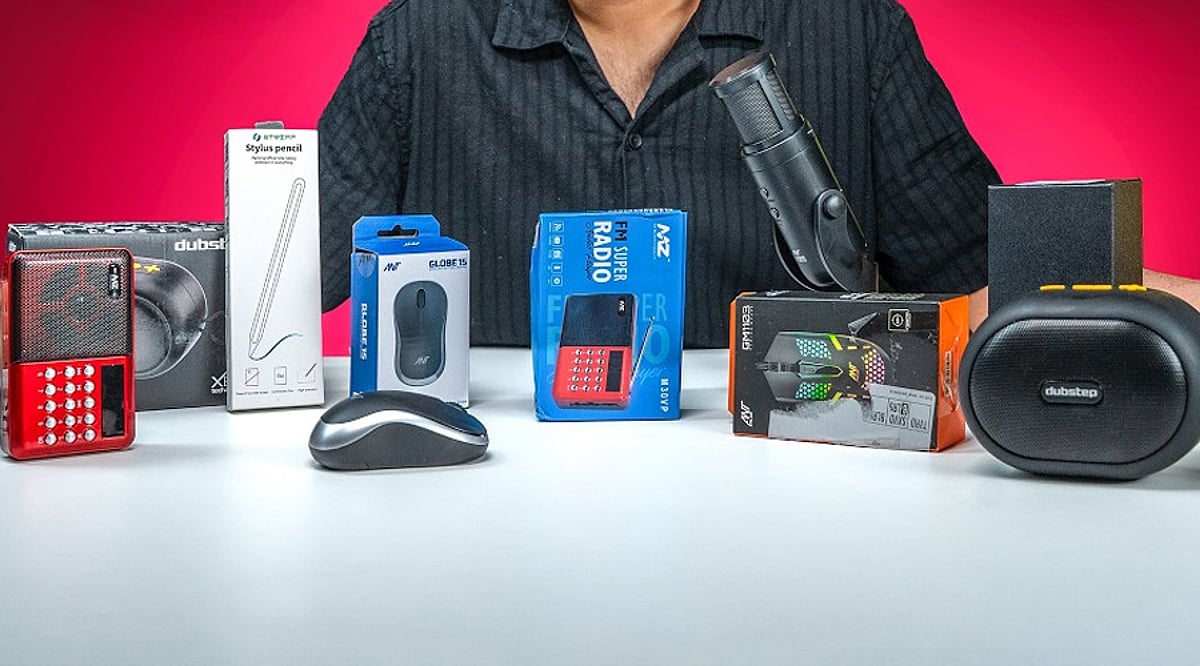
    You don’t need to spend a fortune to upgrade your tech setup. From portable audio to smart lighting, here are seven incredible gadgets under ₹1,000 that combine affordability with real-world utility. Whether you’re a student, a remote worker, or just someone who loves clever electronics, these finds are worth adding to your cart right now.

    1. Mini Bluetooth Speakers

    Tiny Bluetooth speakers pack surprising audio power into a compact frame. Budget models under ₹1,000 are ideal for bedrooms, desks, balconies, or quick outdoor gatherings. Look for Bluetooth 5.0 (or newer), decent battery life, and water resistance if portability matters. They’re an easy way to dramatically improve your phone’s built-in sound.

    2. Wireless Earbuds

    Affordable TWS earbuds have made wireless audio accessible without demanding a premium. Under ₹1,000, you can find models featuring touch controls, charging cases, built-in microphones, and low-latency modes. While sound quality varies, these earbuds work well for casual music, podcasts, calls, and videos. Always check user reviews before trying an unfamiliar budget brand.

    3. Smart LED Bulbs

    Smart LED bulbs can transform a regular room into a colourful, connected space without requiring an expensive smart-home hub. Many budget models offer app controls, adjustable brightness, and millions of colours. Some even support voice assistants like Alexa or Google Assistant. They’re especially fun for gaming setups, bedrooms, and workspaces where lighting changes the entire atmosphere.

    4. USB-C Hubs

    A compact USB-C hub is a lifesaver for laptops and tablets with limited ports. Budget options typically add USB-A connections, card readers, HDMI output, and extra charging support. They are particularly useful for students, creators, and professionals who regularly connect external drives, keyboards, mice, or displays. Double-check compatibility and power-delivery specs before purchasing.

    5. Portable Power Banks

    A reliable power bank is one of those gadgets you appreciate most when your phone hits five percent battery. Budget-friendly models provide enough backup for daily commutes, travel, and emergencies. When shopping below ₹1,000, prioritise established brands, safety certifications, genuine capacity ratings, and appropriate charging speeds rather than focusing solely on capacity claims.

    6. Bluetooth Trackers

    Bluetooth trackers help you locate everyday essentials like keys, bags, wallets, and luggage. Affordable alternatives to premium trackers are available for users who simply need basic item-finding functionality. Depending on the model, they connect to smartphone apps and trigger sounds when nearby. These are a fantastic choice for people who frequently misplace small belongings.

    7. Mini Projectors

    Mini projectors are among the most entertaining budget gadgets—but keep expectations realistic. Entry-level models can create a large image for casual movie nights, gaming, or decorative projections. Under ₹1,000, many options are novelty products with limited brightness and resolution, so they work best in a dark room rather than as a TV replacement. Still, they deliver big fun for a small price.

    From upgrading your audio to keeping your devices charged, these budget-friendly gadgets prove you don’t need deep pockets to enjoy modern tech. Have you tried any of these? Let us know in the comments!

  • BIS Research Reveals XRP Ledger’s Potential for Institutional Data Verification Beyond Payments

    BIS Research Reveals XRP Ledger’s Potential for Institutional Data Verification Beyond Payments

    The XRP Ledger (XRPL) is widely known for payments and asset settlement, but new research from the Bank for International Settlements (BIS) demonstrates that the blockchain can also serve a fundamentally different purpose: verifying the origin and integrity of critical financial data.

    The BIS published Working Paper 1374 on September 2, outlining and testing a blockchain-based method for verifying official statistics. XRP Ledger was used to anchor the cryptographic evidence.

    Why Official Data Needs Verification

    Central banks, statistical agencies, and international institutions regularly publish datasets used for monetary policy, financial-stability analysis, and economic research. Those datasets often travel through websites, databases, artificial intelligence systems, and third-party platforms. The Statistical Data and Metadata Exchange (SDMX) framework does not independently allow users to confirm that a dataset came from the claimed institution or remained unchanged after publication. The BIS research explored whether blockchain technology could provide that missing verification layer.

    How XRP Ledger Was Used

    According to the BIS paper, researchers generated a cryptographic fingerprint for each published dataset and, where required, for individual time series. Those fingerprints were combined using a Merkle-based structure into a single summary value. That value was then recorded on XRP Ledger, creating a timestamped reference that could later be checked against the published data. The underlying economic information was not stored on-chain; only the cryptographic fingerprints were recorded, preserving confidentiality while reducing storage requirements. The prototype also used a signed digital credential identifying the publisher and cryptographically linking that identity to an XRPL address, enabling users to verify both who issued the dataset and whether its contents were changed.

    Testing Showed Near Real-Time Verification

    The BIS findings include useful performance data. In controlled testing, publication took around three to five seconds, while verification required roughly one to two seconds. Researchers also found that a single on-chain entry could cover thousands of datasets, making blockchain fees negligible once records were batched efficiently. The researchers said the architecture could extend beyond SDMX to other structured reporting formats, including XBRL. They also identified future possibilities involving zero-knowledge proofs and automated verification by AI agents.

    Why XRPL Fits the Use Case

    XRPL provides a public ledger where cryptographic evidence can be recorded and independently checked for integrity. That structure makes it suitable for timestamping and verifying whether previously recorded evidence has been altered. However, the BIS experiment remains a proof of concept. It does not mean central banks have adopted XRP or that official statistics are moving permanently onto XRPL.

    Beyond Payments

    The experiment suggests public blockchains could support data provenance, regulatory reporting, audit trails, and machine-readable financial information. This could become especially important as AI systems increasingly consume financial datasets, where verifying the source and integrity of information may matter as much as accessing it quickly.

    Why This Matters

    The BIS test broadens XRPL’s potential role beyond payments by showing it can help verify institutional data. However, a successful prototype does not automatically create meaningful XRP demand or guarantee production adoption.

    Final Thoughts

    The strongest takeaway is that XRPL may have value as trust infrastructure, not only as a settlement network. The next milestone is whether statistical agencies or financial institutions move from controlled testing to real-world deployment.

    Frequently Asked Questions

    1. What did the BIS test on XRP Ledger?

    The BIS tested a blockchain-based method for verifying official statistics. Cryptographic fingerprints of datasets were anchored on XRP Ledger so users could later confirm the data’s origin and integrity.

    2. Was the actual financial data stored on XRP Ledger?

    No. The underlying economic data remained off-chain, while only cryptographic fingerprints were recorded on XRPL. This reduced storage needs while preserving confidentiality and verifiability.

    3. How fast was the BIS verification process?

    According to the BIS testing, publication took roughly three to five seconds, while verification required around one to two seconds. A single on-chain entry could also cover thousands of datasets.

    4. Does the BIS test mean central banks are adopting XRP?

    No. The research was a proof of concept and does not mean central banks have adopted XRP or moved official statistics onto XRPL. It demonstrates a possible technical use case.

    5. How could XRP Ledger be used beyond payments?

    XRPL could potentially support data provenance, regulatory reporting, audit trails, and institutional verification. The BIS researchers also identified possible future applications involving zero-knowledge proofs and AI-based verification.

  • Last Epoch Review: Key Features, Strengths, and Challenges of This Time-Traveling Action RPG

    Last Epoch Review: Key Features, Strengths, and Challenges of This Time-Traveling Action RPG

    Last Epoch is an action role-playing game (ARPG) developed by Eleventh Hour Games, set in the world of Eterra. It combines fast-paced hack-and-slash combat with deep character customization, crafting, and extensive progression systems. Players can explore multiple timelines, battle powerful creatures, unlock masteries, and create unique character builds.

    General Information

    • Launch Date: 2024
    • Platform: Linux, GeForce Now, Microsoft Windows
    • Genre: Role-playing Video Game, Indie game, Fighting game, Shooter Video Game, Adventure, Strategy
    • Target Audience: Action RPG Players, Hack and Slash Game Fans, Fantasy RPG Enthusiasts, Character Build Enthusiasts, Loot Collection Gamers

    Key Features of Last Epoch

    • Offline Mode: Perfect single-player gameplay with shared stash and gold.
    • Elaborate Mastery System: Extensive character customization with diverse unique builds.
    • Massive Skill Trees: Ability customization through upgrading and specialization options.
    • Deterministic Crafting: Gear progression with a customizable modifier system.
    • Replayable Endgame Content: Dungeons, factions, cycles, and challenging progression options.

    Strengths of Last Epoch

    • Deep Character Customization: High replayability and build diversity.
    • Flexible Skill Development: Encourages creative experimentation.
    • Good Crafting System: Allows equipment upgrades throughout the journey.
    • Diverse Endgame Content: Monoliths, dungeons, and rewarding progression.
    • Smooth Combat Mechanics: Provides engaging action gameplay.

    Challenges of Last Epoch

    • Storytelling Campaign: Lacks memorability compared to other ARPGs.
    • Online Multiplayer Issues: Some technical problems may occur.
    • Steep Learning Curve: Certain mechanics require time to master.
    • Irreversible Mastery Specialization: Once selected, cannot be changed.
    • Endgame Repetition: May become tedious during long sessions.
  • Agentic AI in Action: Real-World Use Cases and Industry Lessons

    Agentic AI in Action: Real-World Use Cases and Industry Lessons

    Agentic AI goes far beyond simple chat responses: it plans, acts, and executes tasks across systems, marking a shift from generative content creation to operational authority. While adoption is accelerating, most enterprise projects still fail to scale—not because the technology is weak, but because success hinges on setting clear boundaries for autonomous action.

    Gartner projects that 40% of enterprise applications will incorporate task-specific AI agents by the end of 2026, up from under 5% in 2025. Yet McKinsey reports fewer than 10% of companies have scaled agents to deliver real value. Gartner also warns that over 40% of agentic AI projects will be canceled by 2027. The critical question for businesses is: where should AI be allowed to act without human intervention?

    Where Agents Move Fastest

    Customer service illustrates both the promise and the pitfalls. Klarna’s OpenAI-powered assistant handled 2.3 million conversations in its first month, cutting average resolution time from 11 minutes to under two and matching the output of roughly 700 full-time agents. However, by 2025, Klarna’s leadership acknowledged that automation had gone too far on service quality and began rehiring staff for escalated cases. This reversal underscores a key lesson: the boundary of what an agent should handle alone shifts as organizations learn where trust breaks down.

    Software engineering is another area where agents are thriving. Tools like Claude Code, GitHub Copilot’s agent mode, and Cursor now read codebases, write fixes across files, run tests, and open pull requests with minimal manual input. Developers increasingly review diffs rather than writing every line themselves. This sector leads in scaled agent use because the humans supervising the output can quickly catch mistakes.

    Where Risk Slows the Rollout

    Finance and healthcare move more deliberately. Banks use agents to trace fraud patterns and draft suspicious-activity reports, but any action touching customer funds requires direct human approval. Healthcare systems employ ambient tools like Abridge and Nuance’s DAX Copilot to draft clinical notes and flag coding gaps, while leaving diagnosis and treatment fully in human hands. Insurance follows the same pattern: claims intake, document checks, and fraud screening run through agents, but settlement decisions sit behind an approval gate.

    Manufacturing and Retail Emerging Patterns

    In manufacturing, a vision system spots a recurring defect, and an agent traces it back to a specific supplier’s batch, then opens a corrective-action ticket automatically—a chain that once took a quality engineer days to reconstruct. Retailers use agents to track demand, generate purchase orders, and set delivery windows, stepping in only when a variance crosses a set threshold. What makes these scenarios truly agentic is the orchestration across systems, not just a single automated task.

    The Real Determining Factor

    Across industries, one pattern holds: adoption speed moves inversely to the cost of a wrong autonomous action. Customer service and coding advance quickly because mistakes are cheap to catch. Finance, insurance, and healthcare are cautious because a wrong action carries financial, legal, or clinical weight. These sectors are not rejecting agentic AI—they are gating it. Successful deployments share three habits:

    • Give the agent a scoped job, not an open mandate.
    • Map its permissions to the actual risk of each action, not a blanket setting.
    • Define in advance exactly when a human takes over.

    Projects that skip these steps tend to be canceled quietly. The ones that succeed are not the boldest deployments—they are the best governed ones.

    Final Thought

    The next phase of enterprise AI will not be measured by how many agents a company switches on. It will be measured by how precisely each one knows the edge of its own authority—and how quickly a business notices when that edge has been crossed.