Author: vitorcherulli

  • eSIM vs Physical SIM: Which Smartphone Option Wins in 2026?

    eSIM vs Physical SIM: Which Smartphone Option Wins in 2026?

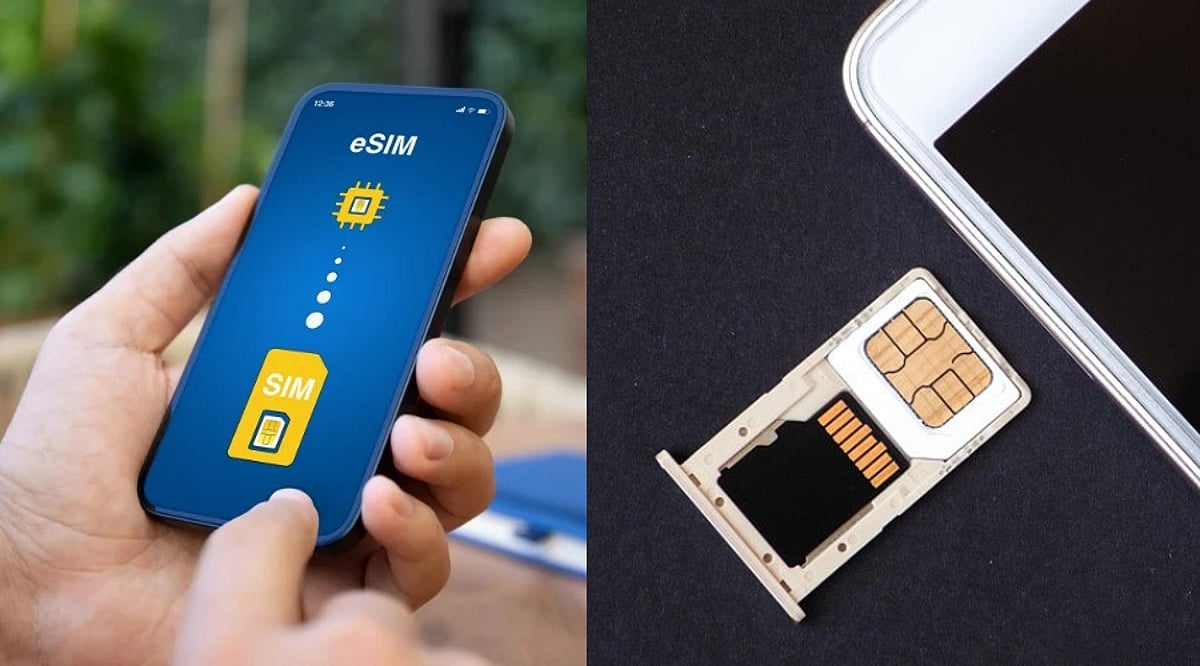
    Smartphones no longer require a small plastic card for mobile service. An eSIM stores a mobile plan directly inside the phone, while a physical SIM remains a removable card. Both options provide calls, messages, mobile data, and 5G access. The real difference lies in travel convenience, phone changes, security, carrier support, and recovery after device failure.

    For most modern flagship phones, eSIM offers the more flexible choice. A physical SIM still has a clear advantage for quick phone changes and broader device compatibility. A phone that supports both options provides the strongest mix of convenience and backup.

    Key Takeaways

    • eSIM wins on convenience: Ideal for travelers, multiple numbers, and digital activation.
    • Physical SIM wins on flexibility: Easy to move between compatible phones, especially during emergencies.
    • Dual-SIM is the best of both: Combines eSIM convenience with physical SIM backup.

    eSIM Makes Travel and Multiple Numbers Easier

    Travel stands out as a major advantage of eSIM. A travel data plan can be added without visiting a local store for a plastic SIM. Plans can often start before a flight or soon after arrival, simplifying mobile access abroad. Apple states that international eSIM providers offer plans across more than 190 countries and regions. Modern smartphones can also hold several eSIM profiles, keeping a main number active while a second plan handles travel data. For frequent international trips, eSIM offers a clear advantage.

    Multiple numbers also work well with eSIM. A personal number can stay on one line while a work number or travel plan uses another. A compatible phone can manage both lines without two physical cards. Security gives eSIM another useful edge: a thief cannot simply pull an eSIM from a stolen phone and place it in another device. That extra barrier helps preserve cellular access for device recovery. Strong screen locks, account protection, and theft protection remain essential, so eSIM should not serve as the only security measure.

    Physical SIM Still Has One Major Advantage

    A physical SIM remains useful for fast phone changes. A SIM card can be moved from one compatible phone to another within minutes. This matters when a main phone fails, loses power, or needs repair. A spare phone can often take the same card without a carrier visit or new digital activation. An eSIM may require carrier approval, account checks, a QR code, an app, or a transfer process. The exact steps vary by carrier and phone, creating trouble when fast access to a mobile number is critical.

    Physical SIM also offers broader compatibility. Older phones, budget models, and some imported devices may not support eSIM. Regional phone versions can have different SIM setups. A phone bought in one country may not match the SIM configuration of the same model sold elsewhere. Buyers should check the exact phone model and carrier before purchase. eSIM support alone does not confirm support for every carrier feature.

    2026 Phones Make the Choice More Important

    The smartphone market continues moving toward eSIM. Apple already sells eSIM-only iPhone models in some markets, while Android brands add eSIM support to more devices. Huawei also reports eSIM support for its upcoming Mate XT 2. India has reached a mature stage for eSIM use. Apple lists Airtel, Reliance Jio, and Vi as Indian eSIM carriers. Airtel and Jio support eSIM Quick Transfer on compatible iPhones. Carrier steps can still differ, so model and network checks remain important before a SIM conversion.

    One common myth needs clarification: eSIM does not make 5G faster. eSIM and physical SIM deliver the same cellular performance on the same phone and network. Modem quality, antenna design, supported network bands, carrier coverage, network traffic, and the mobile plan have a much greater effect on speed and signal quality.

    For most modern flagship phones, eSIM makes the most sense. Frequent travelers, people with several numbers, and buyers who want simple digital activation can gain more from the technology. A physical SIM remains the safer practical choice for those who often move a number between phones or keep a spare device. The strongest setup in 2026 remains a phone with both options: a physical SIM for the main number and an eSIM for a work line or travel plan. That combination brings eSIM flexibility without losing the quick recovery offered by a removable card.

    The choice depends less on speed and more on convenience, recovery, and carrier support. eSIM represents the direction of modern smartphones, while physical SIM still solves a problem that digital activation cannot always solve as quickly: getting a mobile number onto another phone at short notice.

    Frequently Asked Questions

    1. Is eSIM better than a physical SIM?

    For most modern smartphones, eSIM is more convenient, especially for travel and managing multiple numbers. Physical SIM remains better for quick phone transfers.

    2. Does eSIM provide faster 5G?

    No. eSIM does not inherently make 5G faster. Speed depends mainly on the phone’s modem, network bands, carrier, coverage, and plan.

    3. Can I use eSIM and physical SIM together?

    Yes, on compatible phones. You can use one for your main number and the other for a work, travel, or backup line.

    4. What happens if my eSIM phone breaks?

    Moving your number to another phone may require carrier verification or an eSIM transfer process. A physical SIM can usually be moved directly to a compatible backup phone.

    5. Should I choose eSIM or physical SIM in 2026?

    Choose eSIM for convenience and frequent travel. Choose physical SIM if you regularly switch phones or rely on a spare device. A phone supporting both offers the most flexibility.
  • 7 Must-Have Budget Tech Gadgets Under ₹1,000 (2026)

    7 Must-Have Budget Tech Gadgets Under ₹1,000 (2026)

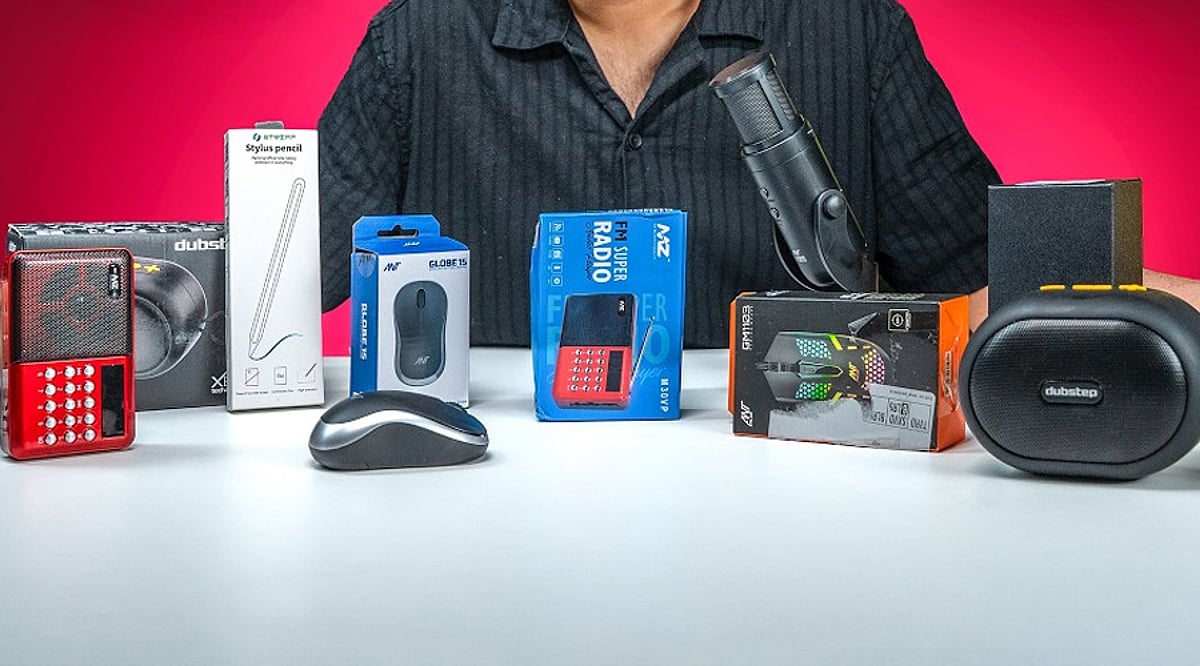
    You don’t need to spend a fortune to upgrade your tech setup. From portable audio to smart lighting, here are seven incredible gadgets under ₹1,000 that combine affordability with real-world utility. Whether you’re a student, a remote worker, or just someone who loves clever electronics, these finds are worth adding to your cart right now.

    1. Mini Bluetooth Speakers

    Tiny Bluetooth speakers pack surprising audio power into a compact frame. Budget models under ₹1,000 are ideal for bedrooms, desks, balconies, or quick outdoor gatherings. Look for Bluetooth 5.0 (or newer), decent battery life, and water resistance if portability matters. They’re an easy way to dramatically improve your phone’s built-in sound.

    2. Wireless Earbuds

    Affordable TWS earbuds have made wireless audio accessible without demanding a premium. Under ₹1,000, you can find models featuring touch controls, charging cases, built-in microphones, and low-latency modes. While sound quality varies, these earbuds work well for casual music, podcasts, calls, and videos. Always check user reviews before trying an unfamiliar budget brand.

    3. Smart LED Bulbs

    Smart LED bulbs can transform a regular room into a colourful, connected space without requiring an expensive smart-home hub. Many budget models offer app controls, adjustable brightness, and millions of colours. Some even support voice assistants like Alexa or Google Assistant. They’re especially fun for gaming setups, bedrooms, and workspaces where lighting changes the entire atmosphere.

    4. USB-C Hubs

    A compact USB-C hub is a lifesaver for laptops and tablets with limited ports. Budget options typically add USB-A connections, card readers, HDMI output, and extra charging support. They are particularly useful for students, creators, and professionals who regularly connect external drives, keyboards, mice, or displays. Double-check compatibility and power-delivery specs before purchasing.

    5. Portable Power Banks

    A reliable power bank is one of those gadgets you appreciate most when your phone hits five percent battery. Budget-friendly models provide enough backup for daily commutes, travel, and emergencies. When shopping below ₹1,000, prioritise established brands, safety certifications, genuine capacity ratings, and appropriate charging speeds rather than focusing solely on capacity claims.

    6. Bluetooth Trackers

    Bluetooth trackers help you locate everyday essentials like keys, bags, wallets, and luggage. Affordable alternatives to premium trackers are available for users who simply need basic item-finding functionality. Depending on the model, they connect to smartphone apps and trigger sounds when nearby. These are a fantastic choice for people who frequently misplace small belongings.

    7. Mini Projectors

    Mini projectors are among the most entertaining budget gadgets—but keep expectations realistic. Entry-level models can create a large image for casual movie nights, gaming, or decorative projections. Under ₹1,000, many options are novelty products with limited brightness and resolution, so they work best in a dark room rather than as a TV replacement. Still, they deliver big fun for a small price.

    From upgrading your audio to keeping your devices charged, these budget-friendly gadgets prove you don’t need deep pockets to enjoy modern tech. Have you tried any of these? Let us know in the comments!

  • BIS Research Reveals XRP Ledger’s Potential for Institutional Data Verification Beyond Payments

    BIS Research Reveals XRP Ledger’s Potential for Institutional Data Verification Beyond Payments

    The XRP Ledger (XRPL) is widely known for payments and asset settlement, but new research from the Bank for International Settlements (BIS) demonstrates that the blockchain can also serve a fundamentally different purpose: verifying the origin and integrity of critical financial data.

    The BIS published Working Paper 1374 on September 2, outlining and testing a blockchain-based method for verifying official statistics. XRP Ledger was used to anchor the cryptographic evidence.

    Why Official Data Needs Verification

    Central banks, statistical agencies, and international institutions regularly publish datasets used for monetary policy, financial-stability analysis, and economic research. Those datasets often travel through websites, databases, artificial intelligence systems, and third-party platforms. The Statistical Data and Metadata Exchange (SDMX) framework does not independently allow users to confirm that a dataset came from the claimed institution or remained unchanged after publication. The BIS research explored whether blockchain technology could provide that missing verification layer.

    How XRP Ledger Was Used

    According to the BIS paper, researchers generated a cryptographic fingerprint for each published dataset and, where required, for individual time series. Those fingerprints were combined using a Merkle-based structure into a single summary value. That value was then recorded on XRP Ledger, creating a timestamped reference that could later be checked against the published data. The underlying economic information was not stored on-chain; only the cryptographic fingerprints were recorded, preserving confidentiality while reducing storage requirements. The prototype also used a signed digital credential identifying the publisher and cryptographically linking that identity to an XRPL address, enabling users to verify both who issued the dataset and whether its contents were changed.

    Testing Showed Near Real-Time Verification

    The BIS findings include useful performance data. In controlled testing, publication took around three to five seconds, while verification required roughly one to two seconds. Researchers also found that a single on-chain entry could cover thousands of datasets, making blockchain fees negligible once records were batched efficiently. The researchers said the architecture could extend beyond SDMX to other structured reporting formats, including XBRL. They also identified future possibilities involving zero-knowledge proofs and automated verification by AI agents.

    Why XRPL Fits the Use Case

    XRPL provides a public ledger where cryptographic evidence can be recorded and independently checked for integrity. That structure makes it suitable for timestamping and verifying whether previously recorded evidence has been altered. However, the BIS experiment remains a proof of concept. It does not mean central banks have adopted XRP or that official statistics are moving permanently onto XRPL.

    Beyond Payments

    The experiment suggests public blockchains could support data provenance, regulatory reporting, audit trails, and machine-readable financial information. This could become especially important as AI systems increasingly consume financial datasets, where verifying the source and integrity of information may matter as much as accessing it quickly.

    Why This Matters

    The BIS test broadens XRPL’s potential role beyond payments by showing it can help verify institutional data. However, a successful prototype does not automatically create meaningful XRP demand or guarantee production adoption.

    Final Thoughts

    The strongest takeaway is that XRPL may have value as trust infrastructure, not only as a settlement network. The next milestone is whether statistical agencies or financial institutions move from controlled testing to real-world deployment.

    Frequently Asked Questions

    1. What did the BIS test on XRP Ledger?

    The BIS tested a blockchain-based method for verifying official statistics. Cryptographic fingerprints of datasets were anchored on XRP Ledger so users could later confirm the data’s origin and integrity.

    2. Was the actual financial data stored on XRP Ledger?

    No. The underlying economic data remained off-chain, while only cryptographic fingerprints were recorded on XRPL. This reduced storage needs while preserving confidentiality and verifiability.

    3. How fast was the BIS verification process?

    According to the BIS testing, publication took roughly three to five seconds, while verification required around one to two seconds. A single on-chain entry could also cover thousands of datasets.

    4. Does the BIS test mean central banks are adopting XRP?

    No. The research was a proof of concept and does not mean central banks have adopted XRP or moved official statistics onto XRPL. It demonstrates a possible technical use case.

    5. How could XRP Ledger be used beyond payments?

    XRPL could potentially support data provenance, regulatory reporting, audit trails, and institutional verification. The BIS researchers also identified possible future applications involving zero-knowledge proofs and AI-based verification.

  • Last Epoch Review: Key Features, Strengths, and Challenges of This Time-Traveling Action RPG

    Last Epoch Review: Key Features, Strengths, and Challenges of This Time-Traveling Action RPG

    Last Epoch is an action role-playing game (ARPG) developed by Eleventh Hour Games, set in the world of Eterra. It combines fast-paced hack-and-slash combat with deep character customization, crafting, and extensive progression systems. Players can explore multiple timelines, battle powerful creatures, unlock masteries, and create unique character builds.

    General Information

    • Launch Date: 2024
    • Platform: Linux, GeForce Now, Microsoft Windows
    • Genre: Role-playing Video Game, Indie game, Fighting game, Shooter Video Game, Adventure, Strategy
    • Target Audience: Action RPG Players, Hack and Slash Game Fans, Fantasy RPG Enthusiasts, Character Build Enthusiasts, Loot Collection Gamers

    Key Features of Last Epoch

    • Offline Mode: Perfect single-player gameplay with shared stash and gold.
    • Elaborate Mastery System: Extensive character customization with diverse unique builds.
    • Massive Skill Trees: Ability customization through upgrading and specialization options.
    • Deterministic Crafting: Gear progression with a customizable modifier system.
    • Replayable Endgame Content: Dungeons, factions, cycles, and challenging progression options.

    Strengths of Last Epoch

    • Deep Character Customization: High replayability and build diversity.
    • Flexible Skill Development: Encourages creative experimentation.
    • Good Crafting System: Allows equipment upgrades throughout the journey.
    • Diverse Endgame Content: Monoliths, dungeons, and rewarding progression.
    • Smooth Combat Mechanics: Provides engaging action gameplay.

    Challenges of Last Epoch

    • Storytelling Campaign: Lacks memorability compared to other ARPGs.
    • Online Multiplayer Issues: Some technical problems may occur.
    • Steep Learning Curve: Certain mechanics require time to master.
    • Irreversible Mastery Specialization: Once selected, cannot be changed.
    • Endgame Repetition: May become tedious during long sessions.
  • Agentic AI in Action: Real-World Use Cases and Industry Lessons

    Agentic AI in Action: Real-World Use Cases and Industry Lessons

    Agentic AI goes far beyond simple chat responses: it plans, acts, and executes tasks across systems, marking a shift from generative content creation to operational authority. While adoption is accelerating, most enterprise projects still fail to scale—not because the technology is weak, but because success hinges on setting clear boundaries for autonomous action.

    Gartner projects that 40% of enterprise applications will incorporate task-specific AI agents by the end of 2026, up from under 5% in 2025. Yet McKinsey reports fewer than 10% of companies have scaled agents to deliver real value. Gartner also warns that over 40% of agentic AI projects will be canceled by 2027. The critical question for businesses is: where should AI be allowed to act without human intervention?

    Where Agents Move Fastest

    Customer service illustrates both the promise and the pitfalls. Klarna’s OpenAI-powered assistant handled 2.3 million conversations in its first month, cutting average resolution time from 11 minutes to under two and matching the output of roughly 700 full-time agents. However, by 2025, Klarna’s leadership acknowledged that automation had gone too far on service quality and began rehiring staff for escalated cases. This reversal underscores a key lesson: the boundary of what an agent should handle alone shifts as organizations learn where trust breaks down.

    Software engineering is another area where agents are thriving. Tools like Claude Code, GitHub Copilot’s agent mode, and Cursor now read codebases, write fixes across files, run tests, and open pull requests with minimal manual input. Developers increasingly review diffs rather than writing every line themselves. This sector leads in scaled agent use because the humans supervising the output can quickly catch mistakes.

    Where Risk Slows the Rollout

    Finance and healthcare move more deliberately. Banks use agents to trace fraud patterns and draft suspicious-activity reports, but any action touching customer funds requires direct human approval. Healthcare systems employ ambient tools like Abridge and Nuance’s DAX Copilot to draft clinical notes and flag coding gaps, while leaving diagnosis and treatment fully in human hands. Insurance follows the same pattern: claims intake, document checks, and fraud screening run through agents, but settlement decisions sit behind an approval gate.

    Manufacturing and Retail Emerging Patterns

    In manufacturing, a vision system spots a recurring defect, and an agent traces it back to a specific supplier’s batch, then opens a corrective-action ticket automatically—a chain that once took a quality engineer days to reconstruct. Retailers use agents to track demand, generate purchase orders, and set delivery windows, stepping in only when a variance crosses a set threshold. What makes these scenarios truly agentic is the orchestration across systems, not just a single automated task.

    The Real Determining Factor

    Across industries, one pattern holds: adoption speed moves inversely to the cost of a wrong autonomous action. Customer service and coding advance quickly because mistakes are cheap to catch. Finance, insurance, and healthcare are cautious because a wrong action carries financial, legal, or clinical weight. These sectors are not rejecting agentic AI—they are gating it. Successful deployments share three habits:

    • Give the agent a scoped job, not an open mandate.
    • Map its permissions to the actual risk of each action, not a blanket setting.
    • Define in advance exactly when a human takes over.

    Projects that skip these steps tend to be canceled quietly. The ones that succeed are not the boldest deployments—they are the best governed ones.

    Final Thought

    The next phase of enterprise AI will not be measured by how many agents a company switches on. It will be measured by how precisely each one knows the edge of its own authority—and how quickly a business notices when that edge has been crossed.

  • 7 Affordable Analog Watches Under ₹10,000 in India

    7 Affordable Analog Watches Under ₹10,000 in India

    Finding a stylish and reliable analog watch under ₹10,000 in India is easier than ever. Leading brands like Casio, Titan, and Fastrack offer a wide range of designs that blend classic aesthetics with modern durability. Whether you need a timepiece for formal occasions, casual outings, or daily wear, these seven models deliver excellent value without breaking the bank.

    Casio Enticer MTP Series

    The Casio Enticer MTP Series combines timeless styling with dependable quartz movements. Clean, easy-to-read dials and stainless steel cases make these watches versatile enough for formal shirts, office outfits, and casual clothing. They are a practical choice for buyers seeking a reliable everyday watch under ₹10,000.

    Titan Neo Splash

    Titan Neo Splash offers a stylish combination of a detailed dial, stainless steel case, and reliable quartz movement. Its contemporary appearance suits office meetings, casual outings, and daily wear. This watch provides a balanced mix of Titan’s familiar design language, comfort, and practical functionality.

    Fastrack All Nighters

    Designed for bold, youthful buyers, the Fastrack All Nighters features contemporary styling with a multifunction-inspired dial that adds visual appeal. The quartz movement ensures dependable everyday use. This watch pairs well with casual outfits, making it ideal for college, outings, and relaxed occasions.

    Titan Minimals

    Titan Minimals focuses on understated elegance with clean dial layouts and a refined appearance. Its simple design makes it easy to pair with both formal and casual outfits. Buyers looking for an elegant everyday watch without excessive detailing will appreciate this range for office wear and regular use.

    Fastrack Opulence

    Fastrack Opulence combines contemporary styling with an eye-catching dial and quartz movement. Its fashion-forward appearance complements modern outfits, making it suitable for casual occasions, social gatherings, college, and evening outings. It’s a practical everyday option for style-conscious individuals.

    Titan Regalia Opulent

    Titan Regalia Opulent delivers a sophisticated appearance with its detailed dial and polished stainless steel construction. Its refined styling suits formal occasions, business meetings, celebrations, and professional outfits. This watch offers a premium look at an affordable price point.

    Fastrack Quartz Analog

    Fastrack Quartz Analog watches offer bold styling, practical quartz movements, and versatile designs for everyday use. Several models feature stainless steel construction and distinctive dial layouts. They appeal to younger buyers looking for fashionable watches that transition easily between casual outfits, college, work, and social events.

    Each of these analog watches under ₹10,000 brings something unique to the table, from classic sophistication to modern flair. Consider your personal style and daily needs to find the perfect timepiece that balances aesthetics, durability, and value.

  • NYT Strands #918 Hints and Answers: September 7, 2026 – ‘It’s a Deal!’ Theme

    NYT Strands #918 Hints and Answers: September 7, 2026 – ‘It’s a Deal!’ Theme

    Another daily challenge from NYT Strands is here for Monday, September 7, 2026. Puzzle #918 brings a theme centered on agreement and compromise, titled “It’s a deal!” Players must find words related to negotiation and reaching common ground. Below we provide hints, the spangram, and the full list of answers to help you conquer today’s grid.

    Understanding Today’s Theme

    The official theme for September 7 is “It’s a deal!” This points toward actions and concepts involved in making an agreement. Think about negotiation, compromise, and the steps two sides take to find a mutually acceptable outcome. Each answer word ties into the process of settling differences or sharing resources.

    How NYT Strands Works

    NYT Strands is a word-search game where you connect letters horizontally, vertically, or diagonally to form words related to a daily theme. The grid’s key phrase is the spangram, which touches two opposite sides of the board and encapsulates the puzzle’s central idea. Finding the spangram often makes the remaining theme words easier to spot. You can also earn hints by finding non-theme words—every three valid non-theme words give you one clue.

    Hint for September 7, 2026

    Main hint: “It’s a deal!”
    More direct clue: Think about finding common ground. All theme words are linked to agreement, negotiation, or compromise.

    Spangram Hint

    Still searching for the longest answer? Today’s spangram is a familiar phrase that suggests both sides should move toward a shared position.

    Spangram Answer

    The spangram for September 7, 2026 is: MEET ME HALFWAY.

    All Answers for NYT Strands #918

    • AGREE
    • COMPROMISE
    • NEGOTIATE
    • SETTLE
    • SHARE
    • MEET ME HALFWAY (spangram)

    Why This Puzzle May Take Some Time

    Many of today’s answers are closely related in meaning—words like AGREE, COMPROMISE, and NEGOTIATE all revolve around the same idea. The spangram can also be tricky to locate at first. Once you find MEET ME HALFWAY, however, the theme becomes crystal clear and the remaining words fall into place.

    NYT Strands delivers a fresh theme and word set every day. For September 7, the language of agreement takes center stage, guiding players from negotiation to compromise and finally to common ground. If you’re stuck on puzzle #918, the hints and answers above offer a direct path through today’s grid. Check back tomorrow for another round of word‑search fun.

  • FTSE 100 Dips as Oil Prices Surge and Fed Rate Hike Expectations Strengthen

    FTSE 100 Dips as Oil Prices Surge and Fed Rate Hike Expectations Strengthen

    Global stock markets traded mixed on Monday as rising oil prices and growing expectations of a Federal Reserve rate hike shaped investor sentiment. European shares remained subdued, while several Asian markets advanced sharply after strong gains in technology stocks.

    Oil prices stayed near six-week highs as the conflict between the United States and Iran disrupted shipping and crude flows. Meanwhile, strong US employment data raised expectations that the Fed could increase interest rates at its September meeting.

    European Stocks Struggle as Oil Prices Rise

    The pan-European Stoxx 600 slipped almost 0.1% during morning trading. Germany’s DAX fell 0.14%, while France’s CAC 40 and Italy’s FTSE MIB each gained about 0.1%.

    London’s FTSE 100 fell 0.1% to 10,824.74 points by 0927 GMT, while the FTSE 250 also declined 0.1%. Consumer-focused sectors led losses. Beverage stocks dropped 1.6%, while personal care, drug and grocery shares declined 0.8%.

    Energy shares provided support as higher crude prices lifted oil companies. BP and Shell gained around 1% each. Standard Life rose 1.5% after reporting first-half profit above market expectations, while Ashmore fell 1.4% after annual profit missed forecasts.

    Spire Healthcare gained around 3% after agreeing to a takeover by funds managed by Toscafund, Three Hills and Ares. The deal values its share capital at about EUR 1.03 billion.

    Fed Rate-Hike Bets Rise After Strong US Jobs Report

    Investors increased bets on a September Federal Reserve rate hike after US nonfarm payrolls rose by 162,000 in August. Economists had expected an increase of about 56,000 jobs. The unemployment rate remained at 4.1%.

    Traders now see about a 58% chance of a Fed rate increase at the September 15-16 meeting. Expectations stood near 44% a month earlier. Investors will therefore watch US producer and consumer inflation data later this week for further direction.

    Gold slipped as higher rate expectations reduced demand for non-yielding assets. Spot gold fell 0.2% to about USD 4,421 per ounce.

    Ole Hansen of Saxo Bank said gold had found buying interest below USD 4,400, while resistance remained above USD 4,500. He added that stronger employment data had ‘reinforced expectations of a Fed rate hike on 16 September.’

    Middle East Conflict Keeps Energy Markets in Focus

    Oil prices remained elevated after further US-Iran hostilities affected vessels around the Strait of Hormuz. Iran also said it plans to announce a new restricted zone in the Gulf and provide details of a shipping corridor.

    US Energy Secretary Chris Wright also raised doubts over the chances of a near-term nuclear agreement with Iran. “There may not be a nuclear agreement,” Wright said, adding that an agreement ‘may await the next administration in Iran.’

    Higher energy costs have added pressure to inflation expectations across major economies. Markets are now tracking whether rising fuel prices could affect future central bank decisions.

    Asian Markets Rise While Wall Street Remains Closed

    Asian markets mostly advanced on Monday. South Korea’s Kospi jumped 4.61%, while Japan’s Nikkei 225 gained 2.12%. Samsung rose 5.68%, SK Hynix climbed 8.26%, and SoftBank advanced 11.22%.

    Mainland China’s CSI 300 gained 0.59%, while Australia’s S&P/ASX 200 edged 0.06% higher. Hong Kong’s Hang Seng moved in the opposite direction and fell around 0.9%.

    US stock exchanges remained closed Monday for Labor Day. Regular trading will resume on Tuesday, September 8. Investors will return to markets with oil prices, Treasury yields, inflation data, and the September Fed decision in focus.

    Disclaimer: This article is provided for informational purposes and does not constitute investment advice. You are responsible for conducting your own research before making any investments.

  • Canada’s Peptide Research Boom: Domestic Supply and Retatrutide Drive Growth

    Canada’s Peptide Research Boom: Domestic Supply and Retatrutide Drive Growth

    Over the past year or two, Canada’s peptide research landscape has undergone a quiet but significant transformation. More labs, more independent researchers, and a growing reliance on domestic sourcing are reshaping the field. What once required long waits for international shipments is now increasingly handled locally, accelerating the pace of preclinical studies.

    The Sourcing Problem Finally Gets Solved

    For years, Canadian researchers had little choice but to order peptides from overseas suppliers, dealing with lengthy shipping times, unpredictable customs delays, and regulatory uncertainty. That picture has changed faster than many anticipated. Domestic suppliers have become more established, offering consistent quality and reliable delivery. This logistical improvement means labs can test hypotheses sooner and adjust protocols without losing weeks to supply chain issues.

    Retatrutide: A Multi-Receptor Peptide Under the Microscope

    A major driver of current demand is retatrutide, a peptide that targets multiple receptor pathways simultaneously—a relatively new approach in metabolic research. Labs studying energy regulation, insulin signaling, and related metabolic processes have increasingly turned to retatrutide because it differs from older single-target compounds. It is important to note that retatrutide, as a research compound, is not approved for human use by Health Canada or any other regulatory body. It is strictly a laboratory chemical for preclinical study under proper protocols.

    Quality Concerns Amid Growing Supply

    As demand rises, not all suppliers maintain high purity standards. Documentation varies, and rigorous researchers now look for clear certificates of analysis, transparent synthesis information, and unambiguous statements that products are for research use only. This transparency is fast becoming the baseline expectation in Canada’s growing market.

    Where Researchers Are Buying

    Suppliers like Peptides Canada have carved out a niche by offering local alternatives. Among their inventory, retatrutide peptide has become one of the most requested compounds, especially for labs exploring multi-receptor metabolic activity. Proper handling, storage, and compliance with provincial regulations remain essential.

    What the Future Holds

    The current momentum is less about any single peptide and more about infrastructure—domestic suppliers scaling up, researchers gaining faster access to compounds like retatrutide, and preclinical work accelerating. While regulatory approval for human use remains a distant and separate path, the research side of the equation is clearly moving forward.

    This article is sponsored content. Products mentioned are sold for research purposes only and are not intended for human consumption, diagnosis, treatment, or cure of any disease. Consult a licensed physician for any health-related concerns. Always comply with local laws and regulations regarding the purchase and use of research chemicals.

  • Ethereum Emerges as a Corporate Treasury Powerhouse in 2026

    Ethereum Emerges as a Corporate Treasury Powerhouse in 2026

    Bitcoin pioneered the corporate crypto treasury strategy, but in 2026, Ethereum has carved out its own place as a balance-sheet asset. Public companies now hold millions of ETH, drawn not only by potential price appreciation but also by staking income and Ethereum’s role in stablecoins, decentralized finance (DeFi), and tokenized assets.

    Corporate ETH Holdings Approach 8 Million

    According to CoinGecko, 34 public companies currently hold approximately 7,914,466 ETH, worth around $19.8 billion. That represents 6.49% of Ethereum’s total supply. BitMine Immersion Technologies dominates with 5,901,112 ETH (4.84% of supply), followed by SharpLink (868,699 ETH) and The Ether Machine (496,712 ETH). This corporate accumulation is large enough to influence discussions around liquid supply.

    ETH Offers Something Bitcoin Does Not

    Bitcoin treasury strategies typically rely on price appreciation because BTC lacks a native staking mechanism that generates protocol rewards. Ethereum is different. Companies can stake ETH and earn rewards for supporting network validation. This gives treasury managers the possibility of generating ETH-denominated income while retaining exposure to the underlying asset.

    The staking market itself has expanded sharply. Lido reports that total staked ETH increased 19% during the first half of 2026, from 36.3 million ETH to 43.1 million ETH. Institutional staking’s share grew from 25.9% to 35.3% in the same period, suggesting professional investors are increasingly treating staking infrastructure as part of institutional asset management.

    Ethereum Also Provides Infrastructure Exposure

    ETH is more than a scarce digital asset. It is used to pay transaction fees, secure Ethereum through staking, and function as collateral across decentralized finance. Ethereum also hosts major stablecoin and tokenized-asset markets, giving companies exposure to a broader blockchain-based financial ecosystem.

    Treasury Strategies Carry Risks

    Corporate accumulation can amplify both gains and losses. ETH remains volatile, and companies financing purchases through equity issuance or debt can expose shareholders to dilution and balance-sheet risk. Staking also introduces validator, custody, and operational risks. Moreover, corporate treasury companies can trade above or below the market value of their underlying ETH holdings.

    Final Thoughts

    Ethereum’s corporate adoption is creating a second major digital-asset treasury model. Bitcoin offers scarcity. Ethereum adds potential staking income and exposure to on-chain financial activity. The key question is whether corporate ETH holdings continue growing after market momentum weakens. If companies retain and stake ETH through downturns, Ethereum’s role as a treasury asset would look more structural than speculative.

    FAQs

    1. How much Ethereum do public companies hold in 2026?
    CoinGecko tracks 34 public companies holding about 7.91 million ETH. The holdings are worth roughly $19.84 billion and represent around 6.49% of Ethereum’s total supply.

    2. Which company holds the most ETH?
    BitMine Immersion Technologies leads corporate Ethereum holdings with 5,901,112 ETH, representing approximately 4.84% of Ethereum’s total supply.

    3. Why are companies adding ETH to their treasuries?
    Ethereum offers potential price appreciation alongside staking income. Companies may also view ETH as exposure to DeFi, stablecoins, tokenized assets, and broader blockchain infrastructure.

    4. How is Ethereum different from Bitcoin as a treasury asset?
    Bitcoin primarily offers scarcity and potential price appreciation, while Ethereum can generate native staking rewards. ETH also plays a direct role in transaction fees, network security, and DeFi collateral.

    5. What are the risks of corporate Ethereum treasury strategies?
    Risks include ETH price volatility, shareholder dilution, debt exposure, staking issues, and custody or operational failures. Treasury-company shares can also trade above or below the value of the underlying ETH holdings.