Author: vitorcherulli

  • Wall Street Hits Fresh Records as Strong Earnings and Easing Geopolitical Tensions Fuel Five-Day Rally

    Wall Street Hits Fresh Records as Strong Earnings and Easing Geopolitical Tensions Fuel Five-Day Rally

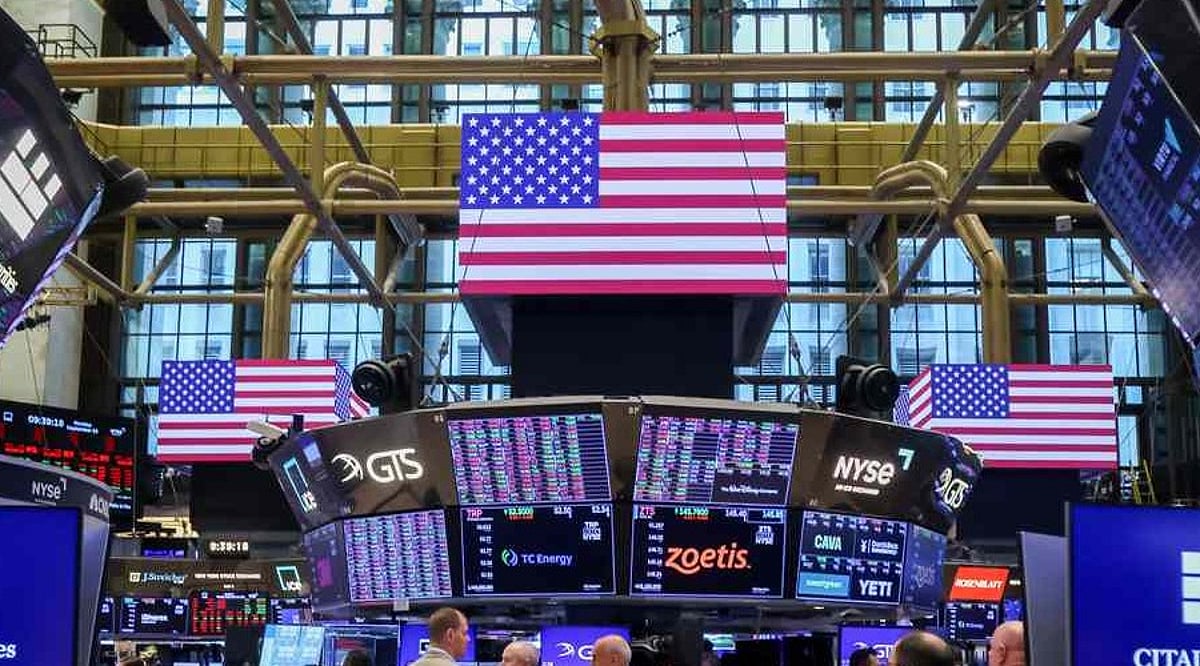
    Wall Street opened higher on Wednesday, reaching record highs as strong corporate earnings and easing geopolitical concerns in the Middle East buoyed investor sentiment. The S&P 500 and Dow Jones Industrial Average both hit fresh intraday highs, extending a five-day rally.

    The S&P 500 rose 0.61% to 7,783.50 shortly after the opening bell. Meanwhile, the Dow advanced 450 points to 54,536.68, and the Nasdaq Composite added 0.41% to 26,694.42.

    US Stocks Extend Five-Day Rally

    US stocks continued their five-session winning streak, which began with renewed demand for technology and consumer shares. All three major indexes are on track for their strongest five-day performance since April 2025. Over the past week, the S&P 500 has gained more than 6%, the Dow has risen over 5%, and the Nasdaq has climbed more than 9%. In the previous session, the S&P 500 closed above 7,700 for the first time, while the Dow gained more than 900 points and secured another record close.

    Market breadth remained positive during early trading. On the New York Stock Exchange, advancing stocks outnumbered declining ones by 1.26 to one, and the ratio on the Nasdaq was 1.13 to one.

    Disney and Eli Lilly Lead Major Stock Moves

    Disney shares rose 2.9% after the company reported better-than-expected fiscal third-quarter profit, helping lift the Dow. Eli Lilly climbed 7.3% after beating second-quarter revenue and earnings estimates and raising its full-year revenue forecast. Healthcare led the S&P 500 sectors with a 1.9% gain.

    Arista Networks jumped 7.3% after forecasting third-quarter revenue above market estimates. Microsoft and Alphabet each gained about 1%, supporting the broader technology sector. However, Uber fell 5.5% after forecasting current-quarter adjusted earnings below estimates, and utilities lagged the broader market, losing nearly 1%.

    According to FactSet, more than 84% of S&P 500 companies have beaten earnings estimates this season, helping investors look past weaker economic data.

    SpaceX and AMD Fall as NVIDIA Rallies

    SpaceX shares dropped 12.5% following its first quarterly report since its June public listing. While the company nearly doubled revenue and narrowed operating losses, a sixfold increase in capital spending to $18.4 billion, largely for AI projects and infrastructure, raised concerns. Nic Puckrin, founder of Coin Bureau, described AI spending as “getting out of hand,” adding that companies showed “no signs of slowing down anytime soon.” AMD shares fell 6.5%, despite forecasting quarterly revenue above analyst estimates, as investors expected a stronger outlook after the stock had gained 142% this year.

    In contrast, NVIDIA rose 3.4% after Elon Musk confirmed that SpaceX would use its processors for AI infrastructure. Musk called NVIDIA’s product “the best AI computer” during the earnings call.

    Hormuz Hopes Support Wall Street

    Oil prices held near recent levels as investors monitored talks involving Iran, Oman, and the Strait of Hormuz. Brent crude rose 1% to $80.22 per barrel, while West Texas Intermediate futures gained 0.46% to $76.12. Prices rose after Houthi militants claimed an attack on a Saudi tanker in the Red Sea.

    Reuters reported that Iran and Oman were discussing a framework covering inbound ship traffic through Hormuz. However, regional sources questioned claims that an agreement was close. One source noted that “the concession has already been made regarding some form of control over Hormuz,” but other details still required negotiation.

    Jobs and Services Data Enter Focus

    US private employers added 44,000 jobs in July, according to ADP, below June’s 95,000 increase and the 75,000 forecast. Investors now await Friday’s official nonfarm payrolls report, which could affect expectations for Federal Reserve interest-rate policy in the coming months.

    Meanwhile, the ISM Services PMI reached 54.1 in July, compared with 54.0 in June, with a reading above 50 signaling expansion. The employment component fell to 47.4, its lowest level since March, while the prices index rose to 70.3, pointing to persistent service-sector inflation.

    Strong corporate earnings and easing geopolitical concerns have kept Wall Street’s record-breaking rally intact despite weak hiring data. Investors now look to Friday’s nonfarm payrolls report for fresh clues on the Federal Reserve’s next policy moves, with earnings momentum and AI-driven growth remaining key drivers of market sentiment.

  • BlackRock ETHA Reverse Split: Key Details for Ethereum ETF Investors

    BlackRock ETHA Reverse Split: Key Details for Ethereum ETF Investors

    BlackRock is implementing a one-for-three reverse split on its iShares Ethereum Trust ETF (ETHA) to improve trading efficiency. The change, effective October 6 with a record date of October 5, consolidates every three existing shares into one new share. While the number of shares investors hold will decrease, the net asset value (NAV) will adjust proportionally, keeping the total value of each investor’s position unchanged. Fractional shares generated during the process will be redeemed for cash, which may create tax liabilities.

    Why the Reverse Split?

    Although BlackRock did not provide an explicit reason, Bloomberg Senior ETF Analyst Eric Balchunas noted that the primary goal is to lower trading costs by narrowing the ETF’s bid-ask spread. He estimated the cost to trade would drop from 7 basis points to approximately 2 basis points. This administrative adjustment targets enhanced trading efficiency and reduced transaction costs for investors, especially for lower-priced ETFs like ETHA, which currently trades at about $14 per share—down roughly 40% year-to-date amid Ethereum’s price decline.

    What It Means for Investors

    The reverse split does not alter ETHA’s investment policy, Ethereum holdings, or total assets under management (AUM). It simply changes the number of shares outstanding and the per-share price. Despite recent price drops, ETHA remains the largest spot Ethereum ETF, with over $5 billion in AUM. Reverse splits are not uncommon in the crypto ETF space; Grayscale executed similar moves for its Bitcoin Mini Trust and Ethereum Mini Trust in November 2024.

    This announcement comes as institutional demand for Ethereum ETFs has cooled in 2026. BlackRock has expanded its Ethereum ETF lineup with the iShares Staked Ethereum Trust ETF, launched in March 2026, offering investors both staking and non-staking options.

    Frequently Asked Questions

    1. What is BlackRock’s ETHA reverse split?

    BlackRock is consolidating three existing ETHA shares into one new share. The total value of an investor’s holdings remains unchanged because the share price increases proportionally.

    2. Why is BlackRock conducting a reverse split?

    While BlackRock hasn’t officially stated the reason, Bloomberg ETF analyst Eric Balchunas said the higher share price should narrow bid-ask spreads, reducing trading costs from around 7 basis points to roughly 2 basis points.

    3. Will the reverse split affect my investment value?

    No. The reverse split only changes the number of shares outstanding and the price per share. The ETF’s assets, Ethereum holdings, and your overall investment value remain the same, excluding any cash paid for fractional shares.

    4. What happens to fractional ETHA shares after the split?

    Fractional shares will not be issued. Instead, they will be redeemed for cash and credited to your brokerage account, which may have tax implications.

    5. Does the reverse split change BlackRock’s Ethereum ETF strategy?

    No. ETHA will continue tracking the price of Ethereum as before. The reverse split is an administrative adjustment aimed at improving trading efficiency and does not alter the ETF’s investment objective or portfolio composition.

  • Bitcoin Faces Potential Pullback: 3 Warning Signs Investors Should Watch

    Bitcoin Faces Potential Pullback: 3 Warning Signs Investors Should Watch

    Bitcoin is trading around $64,000, up 0.56% in the last 24 hours, despite Strategy’s third Bitcoin sale this year. However, several on-chain and market signals suggest the top cryptocurrency may face additional selling pressure in the near term.

    Exchange Inflows and Miner Selling Raise Caution

    Crypto analyst Ali Martinez reports that over the past week, more than 20,000 BTC — worth over $1.2 billion — have moved toward cryptocurrency exchanges. CryptoQuant data shows exchange reserves are now roughly at 2.72 million BTC, the highest since early July.

    “When coins move onto trading platforms, it often signals rising sell-side pressure. Keep an eye on this trend,” Martinez noted.

    While higher exchange balances are often interpreted as a precursor to selling, recent security concerns surrounding the ColdCard wallet incident may also be encouraging some investors to temporarily move assets from self-custody into centralized exchanges without intending to sell.

    Another bearish signal comes from Bitcoin miners. According to Martinez, miners have sold approximately 1,774 BTC, valued at roughly $112 million, during the past week. Miner selling is often viewed as profit-taking and can increase short-term supply entering the market.

    Seasonal Trends Keep Traders on Alert

    Bitcoin’s historical performance also adds uncertainty. Market data shows the cryptocurrency has finished August in negative territory nine out of the past thirteen years, making it one of Bitcoin’s weaker seasonal months.

    Market opinions remain divided. Some analysts expect additional downside before a sustained recovery. Rekt Fencer suggested a potential bull trap could drive Bitcoin toward $30,000 later this month.

    According to Ali Martinez, a decline toward $60,000 could actually strengthen Bitcoin’s technical outlook by confirming an inverse head-and-shoulders pattern, potentially setting the stage for a rally toward $74,000. Crypto analyst MikybullCrypto also believes the bullish setup has already formed, stating, “Breakout is next. $80K is the magnet target.”

    Technical Structure

    Bitcoin price is currently hovering around $64,038 on Wednesday with a slight downward trend, trapped between a dense range of Exponential Moving Averages (EMAs). BTC is struggling to move above the 50-day EMA near $64,650.

    The Relative Strength Index (RSI) is sitting around 50.50 on the daily time frame, indicating no real conviction for an upside move today. The Moving Average Convergence Divergence (MACD) remains under the zero line, with a mild downward bias; it suggests price is still in a downtrend.

    For the upside, immediate resistance is near $64,650 at the 50-day EMA. A break above $64,650 would lift the downside pressure for a leg toward the 100-day EMA at $67,079, followed by the 200-day EMA at $72,649. On the downside, support is seen at $64,004; a break below this support could drag the asset into a deeper corrective trend.

    FAQs

    1. Why are rising Bitcoin exchange inflows considered bearish? When large amounts of Bitcoin move onto exchanges, it often signals that investors may be preparing to sell. Higher exchange balances can increase available supply, creating short-term selling pressure if demand does not keep pace.
    2. Why does miner selling affect Bitcoin’s price? Bitcoin miners periodically sell a portion of their holdings to cover operational costs or lock in profits. Increased miner selling adds fresh supply to the market, which can weigh on prices during periods of weak buying demand.
    3. What does Bitcoin’s RSI currently indicate? The Relative Strength Index (RSI) is hovering around 50.50, suggesting neutral momentum. It indicates that neither buyers nor sellers currently have strong control, leaving Bitcoin vulnerable to movement in either direction.
    4. Which technical levels should Bitcoin traders watch? Immediate resistance is near the 50-day EMA at $64,650. If Bitcoin breaks above this level, the next upside targets are the 100-day EMA near $67,079 and the 200-day EMA around $72,649. On the downside, key support lies near $64,004.
    5. Does a short-term pullback mean Bitcoin’s long-term trend has turned bearish? Not necessarily. Short-term corrections are common in crypto markets. Some analysts believe a pullback toward $60,000 could strengthen Bitcoin’s longer-term bullish structure by confirming a potential inverse head-and-shoulders pattern before another upward move.
  • Google Pixel 11 Pro Matte Black Renders Leak: Design, Camera, and Tensor G6 Details

    Google Pixel 11 Pro Matte Black Renders Leak: Design, Camera, and Tensor G6 Details

    Fresh leaked renders have revealed the Google Pixel 11 Pro in a striking matte black finish. Unlike previous Pixel Pro models, the matte coating now covers the back, frame, and even the sides of the camera bar, giving the phone a cleaner and more premium appearance. The images, shared by trusted leaker Evan Blass, closely resemble official marketing renders.

    The new matte finish is exclusive to the black model, also referred to as Obsidian or Midnight in different leaks. It extends across both the Pixel 11 Pro and Pixel 11 Pro XL, while other colors are expected to retain glossy metallic frames. This design aims to reduce fingerprints and improve grip without changing the phone’s overall shape.

    The leaked gallery highlights the phone from multiple angles, showing a more uniform look around the camera bar. Google appears to have removed the reflective metal sides found on earlier Pro models, making the camera module blend seamlessly with the rest of the device for a more refined design.

    Leaks also point to major camera improvements. The Pixel 11 Pro is expected to offer up to 120x zoom, simultaneous photo and video capture, and enhanced Night Sight performance. While the 120x zoom sounds impressive, some of that range may rely on AI-powered image processing rather than optical zoom.

    Google is also expected to introduce the Tensor G6 processor, bringing faster AI performance and better power efficiency. Another leaked feature is the new HiLight interface, a successor to Pixel Glow, which appears in multiple visual modes and is designed to work closely with Gemini AI.

    According to recent leaks, the Pixel 11 Pro lineup could arrive in Midnight, Fog, Pine, and Dune color options. However, only the Midnight (matte black) version is expected to feature the fully matte frame and camera bar, making it the standout choice for buyers who prefer a cleaner finish.

    Google is expected to unveil the Pixel 11 series at its Made by Google event on August 12, 2026. If the leaks prove accurate, the matte black design, Tensor G6 chip, and upgraded AI camera features could make the Pixel 11 Pro Google’s most polished flagship yet.

  • Top Canva Pro Template Families for Social Media, Business, and Marketing Success

    Top Canva Pro Template Families for Social Media, Business, and Marketing Success

    Brand consistency often unravels once content production scales across multiple platforms and team members. Canva Pro templates solve this by turning individual designs into reusable systems. Features like Brand Kit, Magic Resize, and locked elements streamline content creation, helping businesses maintain a cohesive look without repetitive manual work.

    Key Features That Make Templates Work at Scale

    Canva’s free plan offers a large template library, but Pro adds the machinery for true reusability. Brand Kit automatically applies your brand colors and fonts. Magic Resize adapts one design into multiple formats instantly. Locked elements prevent accidental layout shifts during team edits. These features don’t replace design judgment—they eliminate the repetitive tasks that slow down production.

    Essential Templates for Social Media, Business, and Marketing

    Social Media

    Instagram Carousel Posts lead in engagement. Metricool’s 2026 study of over 24 million posts found carousels generate nine times more saves than single images. Magic Resize converts one carousel into a Story and a Pin without extra design time. LinkedIn thought-leadership posts benefit from Brand Kit, keeping every post visually traceable to the same person.

    Business

    A Proposal Template with auto-applied brand kit reduces back-and-forth before client sign-off. A locked Brand Guidelines template prevents style drift as more team members create content. These templates ensure professional, on-brand communication every time.

    Marketing

    Lead Magnets with premium layout elements boost opt-in rates compared to plain PDFs. Resized Landing Page and Ad Banner sets keep the click and the page visually matched—a common reason paid traffic underperforms. Presentations, like locked Pitch Decks, keep founders focused on the argument instead of slide alignment.

    Building a Template Library, Not a File Pile

    A few rules separate an effective system from a folder of disconnected files:

    • Match templates to the platform before prioritizing aesthetics—a static post design often breaks as a Story.
    • Favor template families over single graphics; one carousel plus matching Story and Reel covers holds a brand together better than any isolated design.
    • Limit typography to two fonts through Brand Kit rather than choosing five for variety.
    • Treat heavy edits as a signal to pick a different template, not a reason to force one to fit.

    Smaller categories—newsletters, invoices, business cards, thumbnails—still deserve a spot in the same Brand Kit. Start with three template families: one for social, one for client communication, and one for marketing. Everything else becomes easier to standardize once that foundation is set.

    Final Thought

    The templates that earn a place in a real workflow are rarely the most decorative. They are the ones a team reaches for without thinking twice, resized in seconds, locked against accidental damage, and instantly recognizable as belonging to one brand.

  • iPhone 20 Pro and Pro Max Rumored to Debut with Larger Screens and Bezel-Free Design

    iPhone 20 Pro and Pro Max Rumored to Debut with Larger Screens and Bezel-Free Design

    Apple’s upcoming 20th anniversary iPhone lineup is generating buzz with reports of significant display upgrades and a refreshed aesthetic. According to a well-known Chinese tipster, Digital Chat Station, the iPhone 20 Pro could feature a 6.4-inch screen, while the iPhone 20 Pro Max may push to 7 inches—marking the largest displays ever on an iPhone. The devices are expected to launch in September 2027, commemorating two decades since the original iPhone’s release.

    The new Pro models are also tipped to adopt a bezel-free design with curved glass wrapping around all four edges. This approach could make the screen appear even larger without substantially increasing the phone’s overall footprint, giving the anniversary edition a distinctive, modern look.

    Beyond the display, the iPhone 20 Pro series may introduce several other innovations. Under-display Face ID technology could reduce the size of the Dynamic Island, while solid-state buttons might replace traditional physical buttons on the frame. Additional rumored upgrades include a brighter OLED panel, a next-generation 2nm chip, and a silicon anode battery designed to enhance battery life without adding thickness.

    It’s important to note that Apple has not officially confirmed any of these details, and the final design and features could change before the 2027 launch. As always, these rumors should be approached with cautious optimism.

  • Sovereign Gold Bond August 2026 Redemption: Six Eligible Series and Key Dates

    Sovereign Gold Bond August 2026 Redemption: Six Eligible Series and Key Dates

    Key Takeaways

    • Six Sovereign Gold Bond series are eligible for premature redemption in August 2026.
    • Investors must submit redemption requests within each series’ application window.
    • Redemption value is based on the average IBJA 999-purity gold price over the three business days before redemption.

    Six SGB Series Eligible for Premature Redemption

    The Reserve Bank of India (RBI) has confirmed the Sovereign Gold Bond (SGB) series that can be redeemed early in August 2026. All six series have completed the mandatory five-year lock-in period, giving investors a chance to exit before the full eight-year tenure ends.

    Here is the complete list of eligible series, redemption dates, and application windows:

    Bond Series Redemption Date Application Window
    SGB 2020-21 Series XI Aug 7, 2026 Jul 9 – Jul 28, 2026
    SGB 2019-20 Series IX Aug 11, 2026 Jul 10 – Aug 1, 2026
    SGB 2020-21 Series V Aug 11, 2026 Jul 10 – Aug 1, 2026
    SGB 2018-19 Series VI Aug 12, 2026 Jul 10 – Aug 3, 2026
    SGB 2019-20 Series III Aug 14, 2026 Jul 14 – Aug 4, 2026
    SGB 2021-22 Series V Aug 17, 2026 Jul 17 – Aug 7, 2026

    Five-Year Lock-In Still Applies

    Sovereign Gold Bonds carry an eight-year maturity, but RBI allows early redemption after five years. This facility is available only on the interest payment dates assigned to each series. Only investors who have held the bonds for at least five years from the issue date are eligible for premature redemption.

    How the Redemption Price Is Set

    The redemption value is not fixed. RBI calculates it as the simple average of the closing price of 999-purity gold over the three business days immediately before the redemption date. The official prices published by the India Bullion and Jewellers Association (IBJA) are used for this calculation. This means the payout tracks current market conditions closely.

    How to Submit a Redemption Request

    Eligible investors must file their redemption requests within the specified window. Applications are accepted by banks, post offices, Stock Holding Corporation of India Limited (SHCIL), and authorised stockbrokers, depending on where the bonds were originally purchased. After processing, the redemption amount is credited to the investor’s linked bank account.

    Missing the deadline means waiting for the next eligible redemption date or holding the bond until full maturity. Timely submission is essential for anyone planning an early exit.

    Part of a Larger Redemption Schedule

    The August calendar is part of RBI’s broader redemption schedule for the first half of the financial year. Between April and September 2026, 33 SGB tranches are eligible for premature redemption. This gives bondholders across multiple series ample time to plan their next move and prepare the required paperwork.

    Why Gold Investors Are Paying Attention

    Sovereign Gold Bonds continue to draw interest because they combine market-linked gold exposure with a fixed 2.5% annual interest on the original investment. With gold prices remaining strong, many investors are weighing the benefits of early redemption versus holding until maturity. Since no new SGB issues have been launched after February 2024, existing series have become even more valuable in investor portfolios.

    Frequently Asked Questions

    Which SGB series can be redeemed in August 2026?

    The six eligible series are SGB 2020-21 Series XI, SGB 2019-20 Series IX, SGB 2020-21 Series V, SGB 2018-19 Series VI, SGB 2019-20 Series III, and SGB 2021-22 Series V.

    When can SGB investors redeem before maturity?

    Premature redemption is allowed after five years from the issue date, but only on the fixed interest payment dates announced for each series.

    How is the SGB redemption price calculated?

    RBI uses the simple average of the closing prices of 999-purity gold for the three business days preceding the redemption date, based on IBJA rates.

    Where can investors submit redemption requests?

    Applications can be submitted through the bank, post office, SHCIL, or authorised stockbroker where the bonds were purchased.

    What happens if an investor misses the application deadline?

    They will not be able to redeem in the current window and must wait for the next eligible redemption date or hold the bond until its eight-year maturity.

  • iVenus Freedom to Upgrade Sale 2026: Top Apple Deals on iPhone, MacBook, iPad and More

    iVenus Freedom to Upgrade Sale 2026: Top Apple Deals on iPhone, MacBook, iPad and More

    The iVenus Independence Day Offer 2026, themed “Freedom to Upgrade,” is now live, bringing substantial savings across the latest Apple lineup. Running until August 17, 2026, this campaign combines store discounts, exchange bonuses, cashback, student offers, easy EMI, and free accessories to make upgrading more affordable. Shoppers can save up to ₹21,000 on the MacBook Air M4 and ₹13,000 on select iPhones.

    Key Highlights

    • Save up to ₹21,000 on MacBook Air M4 and ₹13,000 on selected iPhone models.
    • Exchange bonuses up to ₹10,000, plus cashback via ICICI Bank and SBI Cards.
    • Enjoy easy EMI, student discounts, and free Apple accessories on eligible purchases.

    iPhone 16 Offer – Effective Price from ₹38,900

    The iPhone 16 is a standout deal. With an exchange of an iPhone 14 (128GB, good condition) valued at ₹20,000, the effective price starts at ₹38,900. Total benefits reach ₹13,000, including an exchange bonus of up to ₹8,000. ICICI Bank and SBI Card users can get additional cashback. EMI starts at ₹2,954/month, and selected purchases include a free MagSafe Power Bank worth ₹4,000.

    iPhone 16e – Great Value for Budget-Conscious Buyers

    The iPhone 16e offers an effective exchange price from ₹19,900, with total benefits of ₹12,000 and an exchange bonus of up to ₹8,000 (minimum eligible exchange value of ₹10,000). EMI starts at ₹2,162/month, making this an accessible entry point to the latest iPhone experience.

    iPhone 16 Pro – Premium Savings for Power Users

    Upgrade to the iPhone 16 Pro with an effective exchange price from ₹75,500. Total benefits amount to ₹11,400, with an exchange bonus of up to ₹8,000 (based on iPhone 15 128GB trade-in value of ₹25,000). EMI starts at ₹9,042/month, and buyers receive a free Apple MagSafe Case worth ₹4,900 on select purchases.

    MacBook Air M4 – Save Up to ₹21,000

    The latest MacBook Air with the M4 chip starts at an effective price of ₹78,900. Total savings reach ₹21,000, combining store discounts, student discounts, exchange bonuses (up to ₹10,000), and cashback. EMI from ₹3,705/month makes it ideal for students, professionals, and creators.

    iPad A16 – Festive Price Drop

    The iPad with A16 chip (128GB Wi-Fi) is available from ₹29,400, with total savings of ₹5,500. Eligible buyers can combine store discounts, student discounts, and bank cashback. EMI starts at just ₹1,309/month.

    Additional Value: Cashback, Exchange & EMI

    Beyond price cuts, the campaign offers instant store discounts, cashback via ICICI Bank and SBI Cards, and the Cashify exchange program. Many products qualify for easy EMI, and selected iPhone purchases come with free Apple accessories worth up to ₹4,900. Students enjoy extra savings on Mac and iPad models.

    Why This Matters

    Apple products typically carry high price tags, making festive sales a key opportunity to purchase at lower rates. The iVenus Independence Day Offer combines multiple savings avenues, giving customers a rare chance to upgrade affordably.

    Final Thoughts

    The 2026 iVenus campaign includes savings of up to ₹13,000 on iPhone models, ₹21,000 on MacBook Air M4, and ₹5,500 on iPad A16, along with free accessories, cashback, student discounts, and convenient EMI. The sale runs until August 17, 2026—an ideal window for anyone considering an Apple upgrade.

    FAQs

    1. When does the iVenus Independence Day Offer 2026 end? The campaign runs until August 17, 2026.
    2. Which Apple products are included? The sale covers iPhone 16 series, MacBook Air M4, iPad A16, and selected accessories.
    3. Are exchange offers available? Yes—eligible device exchanges provide bonuses up to ₹10,000.
    4. Is cashback available? Yes, cashback is offered via ICICI Bank and SBI Cards on eligible purchases.
    5. Do students receive extra discounts? Yes, eligible students enjoy additional savings on select MacBook and iPad models.
  • Christopher Nolan’s ‘The Odyssey’ Nears $1 Billion After Surpassing $910 Million Worldwide

    Christopher Nolan’s ‘The Odyssey’ Nears $1 Billion After Surpassing $910 Million Worldwide

    Christopher Nolan’s epic drama The Odyssey has achieved another major box office milestone, earning over $910 million globally after a powerful third weekend in theaters. The film now stands between $910 million and $912 million in worldwide collections, cementing its place as one of the biggest releases of 2026. Strong audience demand continues across multiple countries, with cinema owners reporting sustained interest and near-sellout screenings.

    Domestic and International Performance

    During its first ten days, The Odyssey generated approximately $286 million in North America and $353.2 million from international markets, bringing the early total to $639.6 million. The film maintained momentum into its second and third weeks, with audiences in Europe, Asia, Australia, and other regions driving steady ticket sales.

    Remarkable Third-Weekend Stability

    Unlike many blockbusters that see sharp drops after opening weekend, The Odyssey showed exceptional staying power. Its third weekend added an estimated $87 million worldwide, keeping it at the top of the global box office. Positive word-of-mouth and repeat viewership have contributed to consistent business across multiple weekends, a standout achievement in its theatrical run.

    IMAX Sets New Records

    Premium screens played a crucial role in the film’s success. IMAX alone generated over $200 million globally, making The Odyssey the fastest title in IMAX history to cross that milestone. Large-format presentations have remained sold out at many locations, driven by praise for the film’s visual scale and cinematic experience. The performance also helped IMAX record its highest-grossing month ever in July 2026, with $257 million in revenue.

    Another Historic Hit for Nolan

    Christopher Nolan continues to deliver epic movie experiences. The Odyssey ranks among his highest-grossing films, with the speed of its billion-dollar climb underscoring his widespread popularity. The film appeals both to loyal fans and general audiences, thanks to its high production values, large-scale storytelling, and memorable theatrical experience.

    Racing Toward $1 Billion

    With the worldwide total already above $910 million, The Odyssey needs less than $90 million to reach the coveted $1 billion mark. Industry experts expect the film to continue its strong run over the next few weeks, supported by stable weekend earnings, healthy weekday collections, and ongoing demand for premium formats. International markets still offer fresh opportunities, while repeat viewership provides an additional boost. Crossing the billion-dollar threshold would place The Odyssey among an elite group of global box office champions and mark another historic chapter in Nolan’s career.

    Key Takeaways

    • Worldwide total exceeds $910 million, making it one of 2026’s biggest blockbusters.
    • IMAX contributed over $200 million, setting a new record for the fastest film to reach that milestone.
    • The $1 billion global box office milestone is now within striking distance.
  • 10-Step AEO Guide for Publishers to Boost AI Search Visibility in 2027

    10-Step AEO Guide for Publishers to Boost AI Search Visibility in 2027

    As artificial intelligence reshapes how users discover content, publishers must adapt their strategies to remain visible in AI-driven search results. Answer Engine Optimization (AEO) focuses on creating clear, reliable, and easy-to-understand content that AI systems can interpret and present directly to users. Here is a practical 10-step checklist for publishers aiming to improve their AI search visibility in 2027.

    1. Understand Answer Engine Optimization

    Learn the fundamentals of AEO: how AI search engines prioritize content that directly answers user questions with clarity and authority. Consistent application of AEO principles helps your content appear in featured snippets, voice search results, and AI-generated summaries.

    2. Focus on Search Intent

    Shift from keyword stuffing to intent-driven content. Every article should address a real user question or problem. Match the format—whether step-by-step, listicle, or FAQ—to the searcher’s underlying need rather than just targeting high-volume keywords.

    3. Create Helpful Content

    Publish original, accurate, and actionable articles. AI algorithms favor content that provides clear value, solves problems, and leaves readers satisfied. Avoid fluff; every sentence should serve the user’s intent.

    4. Use Clear Content Structure

    Break articles into well-defined sections with descriptive headings, short paragraphs, bullet points, and numbered lists. A logical hierarchy helps AI systems parse and extract key information quickly. Include an FAQ section when appropriate.

    5. Build Trust and Authority

    Include author bylines, credentials, and links to reliable sources. Cite updated data and transparent methodologies. Trust signals—like expert quotes, reputable references, and publication dates—boost your chances of being chosen for AI-generated answers.

    6. Add Schema Markup

    Implement structured data such as FAQ, Article, and How-To schemas. Schema markup provides explicit context to search engines, enabling them to understand your content’s structure and improve its eligibility for rich results and AI features.

    7. Improve Website Performance

    Optimize page load speed, ensure mobile responsiveness, and use HTTPS for security. Fast, accessible websites enhance user experience and are prioritized by AI-powered platforms that measure performance as a ranking signal.

    8. Keep Content Fresh

    Regularly review and update articles with new information, statistics, and examples. Stale content loses relevance for both readers and AI models. Set a schedule to refresh high-traffic pages and add timely insights.

    9. Track Performance and Improve

    Monitor key metrics: rankings in AI search results, click-through rates, AI referral traffic, and user engagement (time on page, bounce rate). Use these insights to refine your AEO strategy and iterate on what works.

    10. Stay Ahead of AI Evolution

    Keep informed about updates to major AI search algorithms (Google SGE, Bing Chat, etc.) and adapt your tactics accordingly. Attend webinars, follow industry leaders, and experiment with new content formats like video and interactive media.

    By following this checklist, publishers can build a sustainable AEO framework that ensures their content remains discoverable and valuable in an AI-first search landscape.