Author: vitorcherulli

  • Apple’s 2026 Product Roadmap: iPhone 18, Smart Home Hub, and More

    Apple’s 2026 Product Roadmap: iPhone 18, Smart Home Hub, and More

    Apple has a packed schedule for the remainder of 2026, with new iPhones, smart home devices, software updates, and refreshed accessories all expected before the year ends. Here’s a breakdown of the major launches and enhancements coming your way.

    iPhone 18: Faster, Smarter, Longer-Lasting

    The iPhone 18 lineup is rumored to feature faster processors, improved camera systems, extended battery life, and advanced on-device AI capabilities. Apple continues to push the boundaries of performance and intelligence with each generation.

    HomePod with Display and Smart Home Hub

    Apple is reportedly working on a refreshed HomePod that includes a smart display, enabling better home controls, video calls, and deeper HomeKit integration. Additionally, a dedicated smart home hub is in development to manage lights, security devices, entertainment systems, and connected appliances seamlessly.

    AirPods and Apple Watch Updates

    AirPods are expected to receive software enhancements that bring smarter voice features, improved audio quality, and tighter integration across Apple’s ecosystem. The Apple Watch will likely focus on health tracking, battery efficiency, and new watchOS features designed to improve daily fitness and productivity.

    Apple Intelligence Expands Across Devices

    Apple Intelligence will be broadened to include more AI tools across iPhone, iPad, Mac, and home devices. The upcoming software updates – iOS 27, iPadOS, and macOS improvements – promise smoother performance, stronger privacy protections, and useful everyday enhancements for users.

    Overall, Apple’s remaining 2026 roadmap highlights a stronger emphasis on AI, smarter homes, and connected devices, reinforcing its ecosystem as the center of daily digital life.

  • ElevenLabs Explained: AI Voice Technology for Text-to-Speech, Voice Cloning, and More

    ElevenLabs Explained: AI Voice Technology for Text-to-Speech, Voice Cloning, and More

    ElevenLabs is an artificial intelligence company at the forefront of voice technology innovation. The platform offers a suite of tools—including text-to-speech, voice cloning, dubbing, and conversational AI—designed for creators, businesses, and developers who need natural, expressive audio.

    Text-to-Speech

    ElevenLabs converts written text into speech with realistic intonation, emotion, and pronunciation. It supports multiple languages and accents, making it easy to produce high-quality voiceovers for any project.

    Voice Cloning

    From just a short audio sample, ElevenLabs can create a digital replica of a person’s voice. With proper permissions, this enables narration, content creation, accessibility tools, and enterprise communication.

    AI Dubbing

    The platform translates and dubs videos into different languages while preserving the original speaker’s tone, style, and delivery. This helps global audiences enjoy content without losing the authentic feel.

    Speech-to-Text

    ElevenLabs also transcribes spoken audio into accurate text. This makes interviews, meetings, podcasts, and videos easier to search, edit, and repurpose.

    Conversational AI

    The conversational AI feature powers voice agents that can handle customer support, virtual assistance, and interactive dialogues with natural speech responses.

    Multilingual Support

    With support for dozens of languages, ElevenLabs allows creators and businesses to produce localized audio content without hiring multiple voice actors.

    Content Creation

    ElevenLabs is widely used for audiobooks, YouTube videos, podcasts, games, e-learning, marketing campaigns, and accessibility–focused applications across industries.

    Safety Features

    To reduce misuse, ElevenLabs includes voice verification, moderation tools, and consent–focused policies. These measures promote responsible AI voice generation while protecting users.

    For more stories like this, join our WhatsApp channel to get the latest news, exclusives, and videos.

  • Anthropic’s $10B Norway Compute Deal Taps 121MW of NVIDIA Vera Rubin Capacity

    Anthropic’s $10B Norway Compute Deal Taps 121MW of NVIDIA Vera Rubin Capacity

    Anthropic has reportedly signed a six-year, $10 billion compute agreement with Volta Infra Holdings for 121 megawatts of NVIDIA Vera Rubin capacity in Norway. Bloomberg identified Anthropic as the unnamed AI laboratory behind the contract, citing people familiar with the matter.

    Key Details at a Glance

    • Parties: Anthropic (reported), Volta Infra Holdings, and Bitdeer
    • Capacity: 121 critical IT megawatts of NVIDIA Vera Rubin compute
    • Location: Bitdeer’s hydro-powered Tydal campus in Norway
    • Timeline: First capacity by December 31, 2026; second phase by March 31, 2027

    A Major Early Win for Volta Infra

    Volta, which began operations in January 2026, will supply the NVIDIA-based infrastructure from Bitdeer’s Tydal site. The company describes itself as an integrated compute platform that combines infrastructure capital, secured power, and industrial-scale development. Co-founders Boada and Sofia Gumuzio previously worked at Brookfield Asset Management.

    Volta operates within NVIDIA’s Cloud Partner program, a network of providers that deploy NVIDIA GPUs while arranging physical data center sites through landlords and infrastructure owners.

    Lease Terms Give Bitdeer Long-Term Revenue Visibility

    Bitdeer’s Tydal subsidiary signed a 16-year lease with a Volta unit covering 121 critical IT megawatts and roughly 133 gross megawatts. Scheduled payments total approximately $4.7 billion during the base term. An optional eight-year extension could lift the total contract value to about $8 billion over 24 years.

    • Lease pricing begins near $202 per kilowatt-month, with 3% annual increases.
    • Bitdeer expects net operating income margins near 90% from contracted revenue.
    • Volta’s obligations carry about $1.3 billion in standby letters of credit, supported by affiliates of JPMorgan and another unnamed global institution.
    • The structure resembles Alphabet’s $43.8 billion in lease guarantees across its TPU ecosystem.

    Bitdeer shares rose as much as 23% on the news before settling about 10% above the previous close.

    Hydropower and Liquid Cooling Shape the Buildout

    Dell Technologies will provide NVIDIA’s Vera Rubin platform. Each Vera Rubin NVL72 rack combines 72 Rubin GPUs and 36 Vera CPUs inside a liquid-cooled chassis. Liquid cooling is required because chip-level heat density exceeds the limits of standard air cooling, and this shapes the design of the four planned data halls. Bitdeer has operated in Norway since 2018 and acquired the Tydal site in 2024, with delivery planned in two phases across those four halls.

    Norway produces more than 90% of its electricity from hydroelectric sources. Its cold climate helps Nordic facilities reach power usage effectiveness ratios near 1.1, versus about 1.58 for the average U.S. facility. At 121 megawatts of IT load, that efficiency advantage can free about 48 megawatts that would otherwise go to cooling and overhead.

    Anthropic’s Expanding Compute Footprint

    Anthropic previously signed a 300-megawatt agreement for SpaceX’s Colossus 1 facility in Memphis and has arranged computing deals with Amazon, Google, and Fluidstack. In November 2025, NVIDIA and Microsoft agreed to invest a combined $15 billion in Anthropic, alongside a $30 billion Azure compute purchase at a valuation near $350 billion.

    The reported Norway deal secures six years of Vera Rubin capacity for Anthropic, gives Volta a major launch customer, and locks in long-term lease income for Bitdeer. Delivery depends on two construction phases scheduled between late 2026 and March 2027 at Tydal. The disclosures do not state whether Anthropic will own the campus or the chips, nor do they divide capacity between model training and inference.

  • Samsung Galaxy AI Roadmap: The End of App-Swapping and the Rise of Intelligent Agents

    Samsung Galaxy AI Roadmap: The End of App-Swapping and the Rise of Intelligent Agents

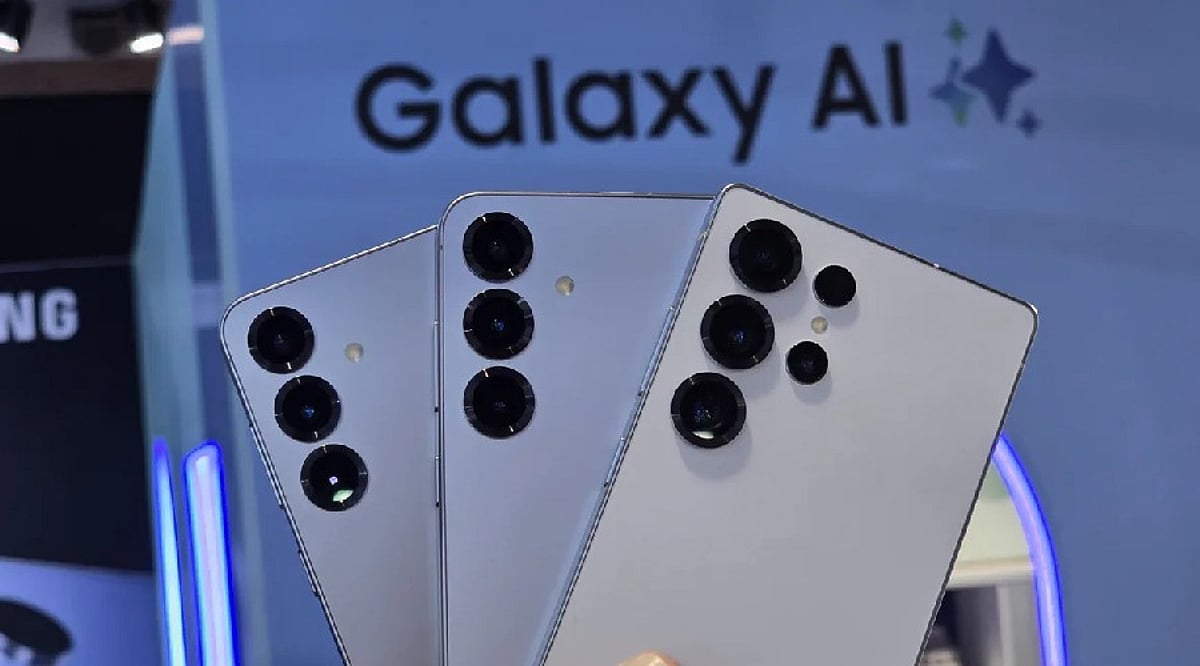
    Samsung is preparing a major shift for its Galaxy AI platform. The company envisions a future where smartphones no longer require users to open one app after another. Instead, AI agents will autonomously handle tasks across multiple applications, making everyday interactions faster and more seamless.

    In a recent interview, Jay Kim, Corporate EVP and Head of the Customer Experience Office at Samsung’s MX Division, explained that the company is moving toward an era of redesigned user experiences. “Interactions aren’t always typed in a box,” Kim said, emphasizing that Galaxy AI will deliver contextual, cloud-reliant agentic experiences.

    Kim acknowledged that traditional apps are unlikely to disappear entirely. “Will apps go away? Probably not. It will be there. It’s so optimized for mobile devices and the industry. Many players are building their business around it, so there will be a balance between how app usage changes based on the evolution of AI. But definitely, as you have mentioned, the industry is moving into a more agentic area,” he stated.

    Samsung’s approach involves moving beyond the initial “stitching everything to the AI” model, which Kim admitted was not scalable. The company is now adopting the Mobile Context Protocol (MCP), an industry standard that enables different players to collaborate and support the ecosystem.

    Smarter AI Without Sacrificing Privacy

    To make AI more useful, Samsung must balance deep personalization with data protection. The company plans to increase on-device processing, ensuring sensitive information remains on the user’s phone whenever possible.

    Kim also highlighted the challenges of scaling Galaxy AI in linguistically diverse markets like India. “India is a very complex market because you have many different languages. We’ll do our best to make sure that we work with local teams because all R&D centres get a lot of feedback. So, we’ll make sure that we put a lot of effort into addressing the local needs,” he said.

    Samsung’s latest AI roadmap signals a gradual departure from the traditional app-based smartphone experience. In the near future, users may spend less time tapping between apps and more time conversing with AI. If Samsung’s vision becomes reality, Galaxy AI will simplify daily tasks and fundamentally change how people interact with their phones.

  • SpaceX Q2 2026 Revenue Surges to $7.8B as AI Investment Weighs on Stock

    SpaceX Q2 2026 Revenue Surges to $7.8B as AI Investment Weighs on Stock

    SpaceX reported second-quarter revenue of $7.8 billion, a 92% increase year-over-year, driven by strong growth in its Starlink satellite internet and artificial intelligence businesses. However, the company posted a net loss of $541 million, and shares fell about 11% in pre-market trading after the earnings release as investors focused on rising capital expenditures tied to AI infrastructure.

    Starlink remained the largest revenue contributor, generating $4.29 billion in the quarter, up from $2.59 billion a year earlier. The satellite internet service now has 12 million subscribers, and CEO Elon Musk said during the earnings call that Starlink could eventually deliver a majority of the world’s internet.

    SpaceX’s AI segment also saw significant growth, with revenue rising to $2.56 billion from $737 million in the same period last year. The company provides computing capacity for AI projects and works with partners including Google and Anthropic. It currently operates 1.4 gigawatts of AI computing capacity and plans to expand to at least 10 gigawatts next year. However, the AI division recorded a $1.2 billion loss despite generating $2.5 billion in revenue.

    Capital spending surged to about $18 billion during the quarter, compared with less than $3 billion a year earlier. CFO Bret Johnsen said spending would remain at a similar level for the rest of the year. The increased costs, combined with a $542 million loss in the space division, fueled investor concerns after the earnings report.

    SpaceX shares had gained 9.43% during regular trading on Tuesday, closing at $125.33, but reversed course in after-hours trading. The stock had already declined from its June high following the company’s public listing.

    Musk said SpaceX expects its AI investments to support future growth and reiterated a goal of reaching $1 trillion in annual revenue by 2030, one year earlier than his previous estimate. The company continues to focus on its Starship program, with President Gwynne Shotwell stating that SpaceX aims to send astronauts to the Moon by 2028 through NASA’s lunar program.

    SpaceX’s earnings report also revealed changes in the value of its Bitcoin holdings. The company held 18,712 BTC at the end of the second quarter, with the value falling to about $1.1 billion from $1.64 billion at the end of 2025. SpaceX did not indicate plans to sell its holdings.

  • Bitcoin Tops $64K Amid Qatar-Iran Talks as Three Missouri Men Face Federal Robbery Charges

    Bitcoin Tops $64K Amid Qatar-Iran Talks as Three Missouri Men Face Federal Robbery Charges

    Federal prosecutors have charged three Missouri men in connection with an alleged home-invasion plot targeting a Connecticut family over stolen Bitcoin. The case unfolds as Bitcoin rebounds above $64,000, buoyed by news that Qatar is mediating renewed negotiations between the United States and Iran.

    Missouri Trio Accused in Bitcoin Extortion Plot

    According to prosecutors, Sedric Louis, John Davis, and Martel Williams traveled from Missouri to Connecticut between August 21 and August 24, 2024. The group is alleged to have rented vehicles, obtained air rifles and walkie-talkies, and surveilled the intended victim and his parents over two days.

    Authorities say the men planned to enter the family home, threaten the target, and force him to transfer stolen cryptocurrency into wallets controlled by coordinators. The plot was abandoned when the group feared that home-security cameras had captured them. Prosecutors also cited poor communication with alleged co-conspirators.

    A Second Group Kidnapped the Parents

    Shortly after the Missouri men backed off, a separate group from Florida allegedly carried out a kidnapping. On August 25, six men rammed a Lamborghini Urus driven by the parents and pulled them into a van. The attackers beat and restrained the couple until witnesses alerted police. Officers rescued the victims after a pursuit and arrested the suspects.

    Prosecutors say the couple’s son had participated in the theft of hundreds of millions of dollars in Bitcoin. The broader case involves approximately 4,100 BTC, valued at roughly $245 million at the time. The attackers allegedly used social engineering tactics, posing as tech and cryptocurrency support staff.

    Proceeds from the stolen Bitcoin were reportedly spent on luxury cars, jewelry, high-end rentals, and nightclub parties. Several defendants in the larger case have pleaded guilty. A federal grand jury returned a second superseding indictment against Louis, Davis, and Williams on May 22, 2026. All three have pleaded not guilty.

    Louis and Davis remain in custody, while a judge released Williams on bond. The Hobbs Act robbery conspiracy charge carries a maximum 20-year federal prison sentence.

    Bitcoin Rises as Qatar Pursues Iran Talks

    Bitcoin climbed above $64,000 after Qatar confirmed that regional mediators are working to restart negotiations between the United States and Iran. Qatari Foreign Ministry spokesperson Majed Al-Ansari stated that Doha wants normal conditions restored in the Strait of Hormuz. Qatar, Pakistan, and Oman continue exchanging proposals, though no timetable exists for an agreement.

    Iran has denied direct talks with Washington, describing its discussions as negotiations with Oman. Shipping through the strait remains restricted despite reported diplomatic progress. The route is a critical passage for global oil supplies.

    For U.S. investors, the outcome of these talks could influence oil prices, inflation expectations, and overall market sentiment. A ceasefire and restored shipping could support risk assets like cryptocurrencies and equities. Alternatively, a breakdown could drive demand for cash and defensive assets. Technical charts suggest Bitcoin may be poised for a breakout from a descending channel.

    A Brief Roundup

    Federal prosecutors allege that three Missouri men joined a failed Bitcoin extortion plot before another group kidnapped the target’s parents. Meanwhile, Bitcoin traded above $64,000 as Qatar pursues renewed US-Iran negotiations. Court proceedings and diplomatic developments remain the key events shaping both parts of the story.

  • India Unveils Tax Reforms to Lure Offshore Fund Managers and Boost Foreign Investment

    India Unveils Tax Reforms to Lure Offshore Fund Managers and Boost Foreign Investment

    India has proposed significant tax reforms aimed at easing rules for offshore funds managed by Indian-based managers, as part of the Taxation and Other Laws Amendment Bill, 2026. The government says the changes seek to promote fund management activity and provide tax certainty, in a bid to attract foreign capital after recent overseas outflows and rupee pressure.

    The draft bill removes eight of the existing 13 safe harbour conditions, including minimum corpus tests, investor thresholds, ownership caps, and portfolio restrictions. Funds can now appoint India-based managers without triggering a taxable business connection solely through that arrangement. However, five safeguards remain: Indian residents cannot directly hold more than 5% of a fund’s corpus, the fund must remain non-resident, and it cannot control an Indian business.

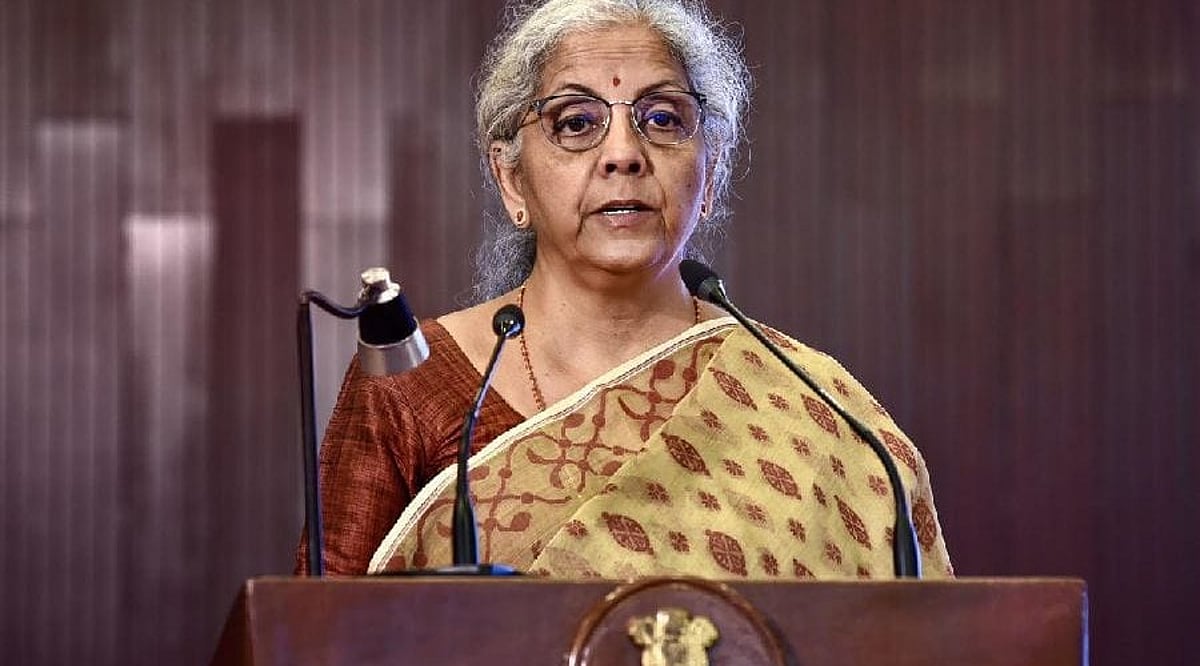
    Girish Vanvari of Transaction Square noted that the proposal substantially reduces the risk of a taxable connection. Nehal Sampat, a PricewaterhouseCoopers partner, said the measure would help offshore funds hire onshore managers. EY India’s Tejas Desai added that the changes offer more flexibility for global structures. The reforms also support India’s broader push to bring more fund management activity onshore, aligning with Finance Minister Nirmala Sitharaman’s call for more foreign capital.

    In addition, the bill extends tax incentives for electronics contract manufacturing, granting a ten-year extension to the existing five-year exemption through 2040-41. Foreign companies supplying capital goods to Indian electronics manufacturers can use the exemption, and certain component sales through customs-bonded areas qualify. Specified foreign firms trading rough diamonds in notified special zones receive a 15-year tax holiday. Simpler rules for data centres allow eligible facilities to operate through ownership or leasing, reducing procedural steps.

    The bill also replaces a June ordinance for foreign portfolio investors in government securities, exempting qualifying interest income and capital gains from Indian tax. The government circulated the draft among lawmakers and may introduce it in Parliament this week; measures require parliamentary approval before taking effect.

  • Discarded SpaceX Falcon 9 Stage Strikes the Moon, Offering Rare Research Opportunity

    Discarded SpaceX Falcon 9 Stage Strikes the Moon, Offering Rare Research Opportunity

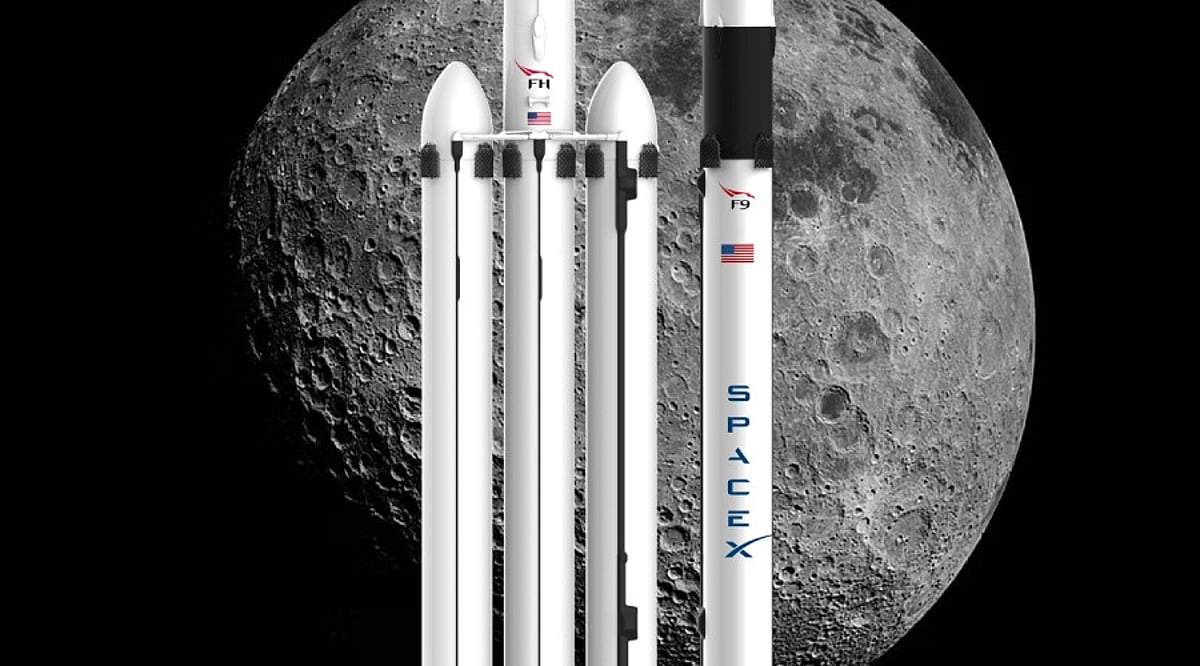
    A discarded SpaceX Falcon 9 upper-stage rocket has crashed into the Moon after drifting through space for more than 18 months, marking one of the few known accidental impacts of human-made space debris on the lunar surface. The 4,000-kilogram rocket stage, originally launched in January 2025 to deploy Firefly Aerospace’s Blue Ghost and ispace’s Resilience lunar landers, struck the Moon at an estimated speed of 8,690 km/h (5,400 mph). Scientists believe the impact created a crater measuring roughly 20 to 40 metres across, although confirmation is expected only after orbital imagery becomes available.

    How the Falcon 9 Ended Up on a Collision Course

    Unlike the reusable first stage of the Falcon 9 rocket, the upper stage is designed for a single mission. After successfully sending the two lunar landers toward the Moon, the stage exhausted its fuel and could not perform a controlled disposal manoeuvre. Instead of returning to Earth or entering a stable solar orbit, it remained in a high-Earth orbit that crossed the Moon’s path. Over time, a combination of solar radiation pressure and gravitational forces from the Earth and Moon gradually altered its trajectory, ultimately sending it toward the lunar surface. SpaceX has said the disposal method complied with existing safety regulations for high-energy missions but acknowledged that future disposal strategies are being evaluated with NASA and other agencies.

    Scientists See a Rare Research Opportunity

    Though the outcome was unexpected, researchers see a great chance for learning about the Moon’s surface and planning future space missions. The collision is believed to have produced a plume of dust and rock particles, which will help scientists study physical processes, crater formation, and the interaction between man-made objects and the lunar surface. As the collision took place on the illuminated part of the Moon near the Einstein Crater area, observing the event from Earth was not easy. However, satellites such as NASA’s Lunar Reconnaissance Orbiter and South Korea’s Danuri should capture images before and after the event to detect the created crater.

    Growing Focus on Space Debris

    This incident has triggered a debate on how to handle space debris in view of the growing number of lunar expeditions. Beyond rocket stages that have impacted the Moon in the past—including one in 2022 and NASA experiments during the Apollo missions—the increasing number of commercial and governmental lunar missions poses new challenges for orbital sustainability. Space organizations and private firms are already seeking better ways to manage space debris from high-energy missions to ensure no abandoned spacecraft becomes a hazard. The Falcon 9 crash serves as a reminder that mission planning must account for deep-space travel’s unique challenges.

  • Bitcoin and Ethereum ETFs See Renewed Inflows as Institutional Interest Picks Up

    Bitcoin and Ethereum ETFs See Renewed Inflows as Institutional Interest Picks Up

    US spot crypto ETFs recorded fresh inflows on August 4, with Bitcoin funds attracting $211.49 million and Ethereum products gaining $53.75 million. The renewed demand supported Bitcoin above $64,000 as investors focused on institutional flows and market positioning.

    Bitcoin traded near $64,043, up 0.57% over 24 hours. Stronger ETF demand and short liquidations added buying pressure above $64,000. Bitcoin accounted for the larger share of combined ETF demand.

    Bitcoin ETFs Extend Inflows

    According to SoSoValue data, Spot Bitcoin ETFs recorded $211.49 million in net inflows on August 4. BlackRock’s iShares Bitcoin Trust led the group with $111.4 million. The two-day inflow period reversed the $265.37 million outflow recorded on July 31. Bitcoin funds previously lost 4,217 BTC during that session.

    The change marked a return of capital after a single withdrawal period. However, daily ETF flows can shift as institutions adjust positions or complete fund transactions. BlackRock’s IBIT provides Bitcoin exposure through exchange-traded shares. Investors can access Bitcoin through brokerage accounts without managing private keys or direct custody.

    Authorized participants create and redeem ETF shares based on market demand. These transactions can reflect institutional buying, arbitrage activity, or portfolio adjustments.

    Moreover, the SEC approved in-kind creations and redemptions for crypto exchange-traded products in July 2025. Qualifying institutions can exchange underlying assets directly for fund shares.

    Ethereum ETFs Reverse Outflow Trend

    Ethereum spot ETFs recorded $53.75 million in net inflows on August 4. The figure reversed the $11.42 million outflow reported on August 3. Cumulative net inflows across US Ethereum spot ETFs reached $11.25 billion. Total net assets increased to $10.32 billion during the session.

    The asset total rose from $10.23 billion on August 3. Trading volume reached $387.96 million on August 4, compared with $519.88 million during the previous session.

    Ethereum products recorded withdrawals on August 3 while Bitcoin ETFs attracted $170.09 million. The August 4 figures showed renewed demand across both major crypto ETF categories.

    Fees, liquidity levels and portfolio rules can influence daily allocations. Fund creations can also reflect arbitrage activity instead of direct retail purchases.

    XRP products attracted $1.15 million on August 3, while HYPE funds recorded withdrawals of around $964,320. Other products covering Solana, Chainlink, BNB, Avalanche, Polkadot, Dogecoin, and Litecoin posted positive token flows.

    Bitcoin Faces $64,300 Resistance

    Bitcoin’s move above $64,000 triggered $27.36 million in short liquidations during the reported 24-hour period. Short positions represented about 83% of all Bitcoin liquidations.

    Forced closures required traders to buy Bitcoin to exit bearish positions. That activity added momentum during the recovery.

    Bitcoin faces resistance near $64,300. A confirmed four-hour close above that level could open a path toward $64,757 and $65,500.

    The first support area sits near $63,933. A rejection from resistance could send Bitcoin toward the $62,000 to $63,000 zone.

    Bitcoin also maintained an 84% correlation with the S&P 500, keeping the asset connected with broader market movements.

    Investors will monitor upcoming ETF flow reports for changes in institutional demand. Fund-level creation data can provide further information on allocation trends across crypto investment products.


  • Joke Game Rakes in Millions on Steam, But Developer Sees Almost None of It

    Joke Game Rakes in Millions on Steam, But Developer Sees Almost None of It

    A game that started as a joke became one of Steam’s biggest stories this week. According to reports, 18-year-old Michael Major released a game and set the price at $200, naming it This Game Costs $200. The reason for the $200 price tag was that Steam does not allow developers to set a price higher than that.

    Neither the developer nor the players believed the game could actually sell for that amount. The game’s description called it “a psychological experience,” and the developer explained, “where I try to convince you that this game truly does cost 200 dollars.” Surprisingly, the psychological tactic worked, as the game initially earned $1,345,650.

    However, the developer did not get to keep 90% of that money. Many players bought the game solely to get a refund. After refunds and other deductions, the developer received only $2,045—a fraction of the gross earnings.

    Reports suggest that most players purchased the game to earn Steam Points. Steam’s policy grants more points the more a player spends on games. Even if a game is refunded, the points remain, allowing players to keep both the points and their money.

    Why Joke Games Keep Going Viral

    Joke games are nothing new on Steam. Some are made purely for fun, while others are designed to test player reactions. Their unusual concepts often grab attention much faster than typical game launches.

    Once people start talking about these games, more users become curious. Videos, memes, and social media posts help spread the word even further. This attention can lead to thousands of sales, even if the game offers very little gameplay.

    This case demonstrates that large sales numbers do not always translate into big profits. Refunds can quickly reduce a developer’s actual earnings. The game may have become famous overnight, but the final outcome proves that internet buzz does not always turn into real income.