Author: vitorcherulli

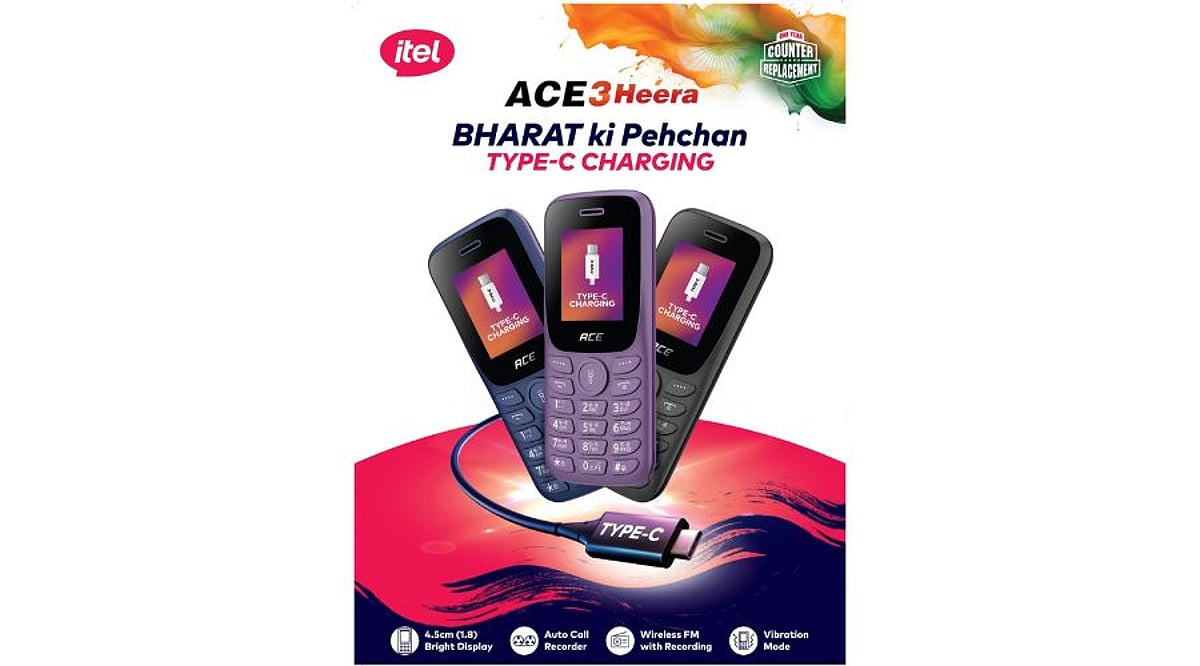
  • itel Ace 3 Heera Brings Type-C Charging to Budget Feature Phones at Just ₹949

    itel Ace 3 Heera Brings Type-C Charging to Budget Feature Phones at Just ₹949

    itel, a leading tech brand focused on democratizing technology for India’s mass market (Bharat), has launched its latest feature phone, the Ace 3 Heera, priced at just ₹949. This launch marks the end of the Type-B (Micro-USB) era for itel’s entire feature phone lineup, as the brand becomes the first in India to offer Type-C charging across all its feature phones.

    The itel Ace 3 Heera is designed to simplify everyday life for millions of users who previously had to manage separate charging cables for their smartphones and feature phones. With Type-C charging, users can now charge both devices with a single cable, reducing clutter and hassle. The phone is available in Blue, Purple, and Black colors at retail stores nationwide.

    Commenting on the launch, Arijeet Talapatra, CEO of itel India, said, “Technology should simplify life, not complicate it. We are a brand that has democratized technology for Bharat with our extensive range of reliable and affordable products. For millions of Indians, carrying different chargers for different phones has been an everyday inconvenience. With Ace 3 Heera, we’re not just launching another feature phone – we’re leading India’s transition to universal Type-C charging across our feature phone portfolio.”

    According to the latest Cyber Media Research (CMR) report, itel demonstrated strong all-round performance, securing scores of 0.65 in feature phones and 0.86 in smartphones – the highest in the segment. The report highlights that 85% of consumers feel they get great value for money, 81% associate itel with strength and durability, 79% appreciate its design, and 74% consider it a trustworthy and reliable brand.

    Powered by a 1000mAh battery with AI Battery Optimization, the Ace 3 Heera intelligently manages power consumption for all-day performance. The Super Battery Mode ensures users stay connected even when the battery is low. Additional features include Bluetooth support for wireless pairing, Auto Call Recording, Wireless FM Radio with recording functionality (no earphones needed), expandable storage up to 32GB via microSD card, and the King Talker voice assistant with English and Hindi support. The phone can store up to 200 contacts and allows personalization via ringtones and contact photos from the memory card.

    itel offers a 1-year Counter Replacement offer for any manufacturing defect on the Ace 3 Heera. This launch reinforces itel’s commitment to delivering affordable, reliable, and user-friendly technology to the masses.

    About itel India

    Established over 16 years ago, itel is a reliable smart life brand for everyone. With the brand philosophy “Enjoy Better Life,” itel aims to provide budget-friendly consumer electronics to everyone. Present in more than 80 emerging markets globally, itel’s portfolio includes smartphones, feature phones, TVs, accessories, speakers, home appliances, and laptops.

  • Ultimate Guide to RV Door Locks: Types, Features, and Security Tips

    Ultimate Guide to RV Door Locks: Types, Features, and Security Tips

    RV door locks are a critical component of your recreational vehicle’s security system, whether you’re parked at a campground or traveling down the highway. Choosing the right lock and maintaining it properly can give you peace of mind and protect your belongings. This guide covers the different types of RV door locks, key features to consider, installation steps, and essential maintenance tips.

    Types of RV Door Locks

    There are several types of RV door locks available, each offering different levels of security and convenience:

    • Deadbolt Locks: These provide high security by requiring a key to lock and unlock from both inside and outside. Made from strong materials like steel, they resist forced entry effectively.
    • Cam Locks: Simple and affordable, cam locks use a rotating cam that engages with a strike plate. They are commonly found on cabinets, storage compartments, and doors, offering basic security.
    • Keyless Entry Locks: Increasingly popular, these locks use a keypad or digital code to unlock the door. Many models include remote control access and programmable codes, eliminating the need for physical keys.
    • Magnetic Locks: These use magnets to hold the door closed. They are easy to install but offer lower security, making them suitable for secondary doors or hatches.

    Key Features to Consider

    When selecting an RV door lock, evaluate the following factors:

    • Security Level: Opt for locks made from strong, durable materials that resist tampering and forced entry.
    • Durability: RVs face harsh weather and road vibrations. Choose corrosion-resistant locks built to last.
    • Convenience: Keyless entry systems save you from carrying keys and allow multiple user codes.
    • Compatibility: Measure your door carefully and ensure the lock fits the dimensions and mounting requirements of your RV.

    Installation Process

    Installation varies by lock type, but here are general guidelines:

    • Deadbolt Locks: Use the included template to mark drill points. Drill holes for the lock and strike plate, insert the lock, and secure with screws.
    • Cam Locks: Drill a hole for the lock cylinder, insert it, and attach the cam on the inside. Ensure the cam aligns with the strike plate.
    • Keyless Entry Locks: Connect to a power source (battery), follow manufacturer wiring and programming instructions, and test thoroughly.
    • Magnetic Locks: Simply attach magnetized components to the door and frame, ensuring proper alignment for a secure closure.

    Maintenance and Troubleshooting

    Regular care keeps your RV door locks functioning smoothly:

    • Clean locks with a soft cloth and mild cleaner to remove dirt and debris.
    • Lubricate moving parts with silicone-based lubricant or graphite powder.
    • If a lock is hard to turn, clean it and adjust the strike plate alignment.
    • For keyless entry issues, check and replace batteries as needed, and verify programming.
    • If magnetic locks fail, inspect magnet strength and alignment.

    By choosing the right lock and following these maintenance steps, you’ll enhance your RV’s security and enjoy worry-free travels.

  • Wordle August 5, 2026: Hints and Answer for NYT Puzzle #1873

    Wordle August 5, 2026: Hints and Answer for NYT Puzzle #1873

    If you’re working through today’s New York Times Wordle puzzle and need a little help, you’re in the right place. The August 5, 2026 challenge is puzzle #1873, and we’ve got the hints, clues, and the final answer—so you can keep your streak alive.

    Wordle Hints for August 5, 2026

    Before revealing the answer, here are some clues to point you in the right direction:

    • The word contains 2 vowels and 3 consonants.
    • No letters are repeated.
    • All letters are common—no obscure characters to worry about.
    • The first letter is P.
    • The word ends with the letter T.

    Wordle Answer for August 5, 2026

    If the hints above weren’t enough, here’s the big reveal. The answer to Wordle #1873 is:

    POSIT

    Remember, “posit” means to assume or put forward as a fact. It’s a great word to know, and now you do!

    Tips to Improve Your Wordle Game

    Whether you’re new to Wordle or just want to sharpen your skills, these strategies can help:

    • Start with a word that includes common vowels and consonants to maximize information.
    • Avoid repeating letters in your early guesses unless you’re confident about their placement.
    • Pay attention to color feedback: green means correct and in place, yellow means correct but in the wrong spot.
    • Use each guess to eliminate possibilities rather than guessing randomly.
    • Expand your vocabulary—familiarity with less common words can speed up solving.

    Final Thoughts

    Every Wordle puzzle offers a fresh mental challenge, and today’s is no different. Whether you solved it quickly or needed a nudge, the daily word game remains a fun way to keep your brain sharp. Come back tomorrow for another set of hints and answers!

  • Mark Zuckerberg Apologizes to Indian Government Over Content Moderation Failures

    Mark Zuckerberg Apologizes to Indian Government Over Content Moderation Failures

    Meta CEO Mark Zuckerberg has issued a formal apology to the Indian government following revelations of content moderation shortcomings on the company’s platforms. The apology, delivered during high-level meetings with officials from the Ministry of Electronics and Information Technology (MeitY), addresses the presence of child sexual abuse material (CSAM), deepfake content, and other operational failures.

    Government sources confirmed that the discussions centered on platform accountability, regulatory compliance, and user safety as India intensifies oversight of global technology companies. Indian authorities argued that Meta’s role in algorithmically selecting and promoting content could affect its eligibility for ‘safe harbour’ protection under the Information Technology Act, which shields neutral intermediaries from liability for user-generated content.

    During the meetings, Meta acknowledged concerns over its content moderation practices and expressed regret over operational errors, including the promotion of certain content through paid amplification. The company emphasized its willingness to cooperate with the government and improve its moderation systems.

    Earlier this week, a parliamentary panel raised concerns over the temporary removal of a Facebook post featuring Prime Minister Narendra Modi and sought an explanation from Meta’s leadership. Separately, child protection authorities have launched inquiries into allegations related to harmful content on Meta-owned platforms.

    With evolving digital regulations in India, Meta faces increasing pressure to enhance its moderation systems and collaborate more closely with the government. The incident underscores the growing importance of governance and trust in the digital ecosystem.

  • How AI Interview Copilots Are Transforming Job Interview Preparation

    How AI Interview Copilots Are Transforming Job Interview Preparation

    In the contemporary job market, the interview process is a critical juncture for candidates seeking to secure their desired positions. With the rapid advancement of artificial intelligence (AI), a new tool has emerged to revolutionize this process: the AI Interview Copilot. This innovative technology offers a range of benefits and features that can significantly enhance the interview experience for both candidates and interviewers.

    Understanding the AI Interview Copilot

    The AI Interview Copilot is an intelligent software application designed to assist candidates during job interviews. It leverages cutting-edge AI algorithms and natural language processing (NLP) techniques to provide real-time guidance, feedback, and support. By analyzing the candidate’s responses, body language, and tone of voice, the copilot can offer valuable insights and suggestions to help the candidate perform at their best.

    One of the key features of the AI Interview Copilot is its ability to simulate real interview scenarios. It can generate a variety of interview questions based on the job description and industry requirements, allowing candidates to practice and prepare in a realistic environment. The copilot also provides detailed feedback on the candidate’s performance, highlighting areas for improvement and offering tips on how to answer questions more effectively.

    In addition to question generation and feedback, the AI Interview Copilot can also assist with resume review and preparation. It can analyze the candidate’s resume, identify strengths and weaknesses, and provide suggestions for improvement. This can help candidates create a more compelling resume that stands out from the competition.

    Benefits for Candidates

    Here are some of the main advantages the AI Interview Copilot offers for candidates:

    • Safe Practice Environment: Job interviews make many candidates nervous or anxious. The copilot helps alleviate such feelings by providing a stress-free environment for practice. Candidates can build confidence and improve their performance by practicing responses and getting feedback.
    • Identify Strengths and Weaknesses: A detailed analysis of answers and performance helps candidates identify their strengths and areas for improvement. This self-awareness is invaluable when preparing for future interviews and sharpening skills.
    • Personalized Feedback: The AI Interview Copilot customizes its feedback to the individual needs and objectives of each candidate. It provides targeted suggestions on improving communication skills, answering difficult questions, and showcasing relevant experience and skills.
    • Time and Effort Savings: Candidates no longer have to spend hours researching interview questions and practicing alone. The copilot generates relevant questions, gives immediate feedback, and provides helpful resources quickly, allowing candidates to focus on other aspects of their job search.

    Benefits for Interviewers

    Interviewers also stand to benefit from the use of the AI Interview Copilot:

    • Standardized Process: The copilot ensures all candidates are asked the same set of questions, eliminating bias and ensuring fairness. This leads to more objective and consistent evaluations.
    • Comprehensive Candidate Data: By analyzing responses, body language, and tone of voice, the copilot provides interviewers with a more detailed understanding of candidates’ skills, personality, and suitability for the role.
    • Time Savings: Automating question generation and feedback frees up interviewers to focus on evaluating qualifications and organizational fit.
    • Improved Experience: A more structured and efficient interview process reduces stress and anxiety for both parties, leading to a more positive and productive interaction.

    Challenges and Limitations

    The AI Interview Copilot has many benefits, but it also has several challenges and drawbacks. One major challenge is ensuring the accuracy of analysis and feedback. While AI algorithms have improved dramatically, they are still not perfect, and there is always a risk of misinterpreting candidates’ responses or providing incorrect feedback.

    Another challenge involves ethical issues associated with the use of AI in interviews. Bias in the algorithms could lead to unfair treatment of some candidates. It is essential to develop and deploy the copilot transparently, without bias, and in a way that respects privacy and human rights.

    The AI Interview Copilot may not be appropriate for all types of interviews or industries. Some interviews require a more personal approach or the ability to read non-verbal cues that are difficult for the copilot to analyze. In those cases, human interviewers may still be needed.

    Finally, the AI Interview Copilot is not free. Some copilot services charge a subscription or fee, which could be a barrier for some candidates or organizations. Such costs should be considered when deciding whether to use a copilot.

    Conclusion

    To put it simply, the AI Interview Copilot is a powerful instrument capable of transforming the job interview process. It provides real-time guidance, feedback, and support to help candidates perform their best and take advantage of their interview opportunities. It also offers benefits to interviewers, such as standardizing the interview process and collecting more complete data about candidates. However, it is important to be aware of the challenges and limitations associated with its use and to employ it in a responsible and ethical manner.

  • NYT Strands Puzzle #885 Hints and Answers for August 5, 2026: Brainstorming Theme

    NYT Strands Puzzle #885 Hints and Answers for August 5, 2026: Brainstorming Theme

    The New York Times Strands puzzle for August 5, 2026 (Puzzle #885) centers on the theme “All things considered.” This theme revolves around words linked to ideas, planning, and creative thinking. Below, you’ll find spoiler-free hints to help you solve the puzzle on your own, followed by the complete answers—including today’s spangram.

    Theme Explanation

    Today’s theme, “All things considered,” immediately brings to mind a thoughtful approach, weighing all sides before moving forward. However, the puzzle’s non-spangram words are primarily terms we use when discussing creativity and brainstorming. Most words are easy to spot, though a couple may prove trickier depending on your familiarity with creative concepts. The solution remains satisfyingly consistent from start to finish.

    Spoiler-Free Hints for August 5, 2026

    Use these clues (starting letter and word length) to guess each theme word without revealing the answers:

    • First word: 4 letters, starts with ID
    • Second word: 4 letters, starts with PL
    • Third word: 6 letters, starts with NO
    • Fourth word: 7 letters, starts with CO
    • Fifth word: 7 letters, starts with OP
    • Sixth word: 7 letters, starts with TH

    Complete Answers

    The non-spangram answers for today’s puzzle are:

    • IDEA
    • PLAN
    • NOTION
    • CONCEPT
    • OPINION
    • THOUGHT

    Spangram

    The spangram for August 5, 2026, is BRAINSTORMING. This word stretches across the grid, connecting two opposite sides, and can change direction as it winds through adjacent letters.

    How to Approach Today’s Puzzle

    At first glance, it may be hard to locate the exact words. But once you find a few, the overall theme becomes much clearer. The spangram is a defining feature—unlike the other theme words, it spans the grid and can twist and turn. Today’s puzzle offers a simple yet enjoyable challenge, featuring terms that everyone—from kids to adults—uses in daily life, especially in academic settings.

    For more daily puzzle guides, check out related stories like NYT Wordle Hints for August 31, 2026 and NYT Connections Hints for August 4, 2026.

  • US Marketing Teams Cut Content Costs with AI Photo Generators

    US Marketing Teams Cut Content Costs with AI Photo Generators

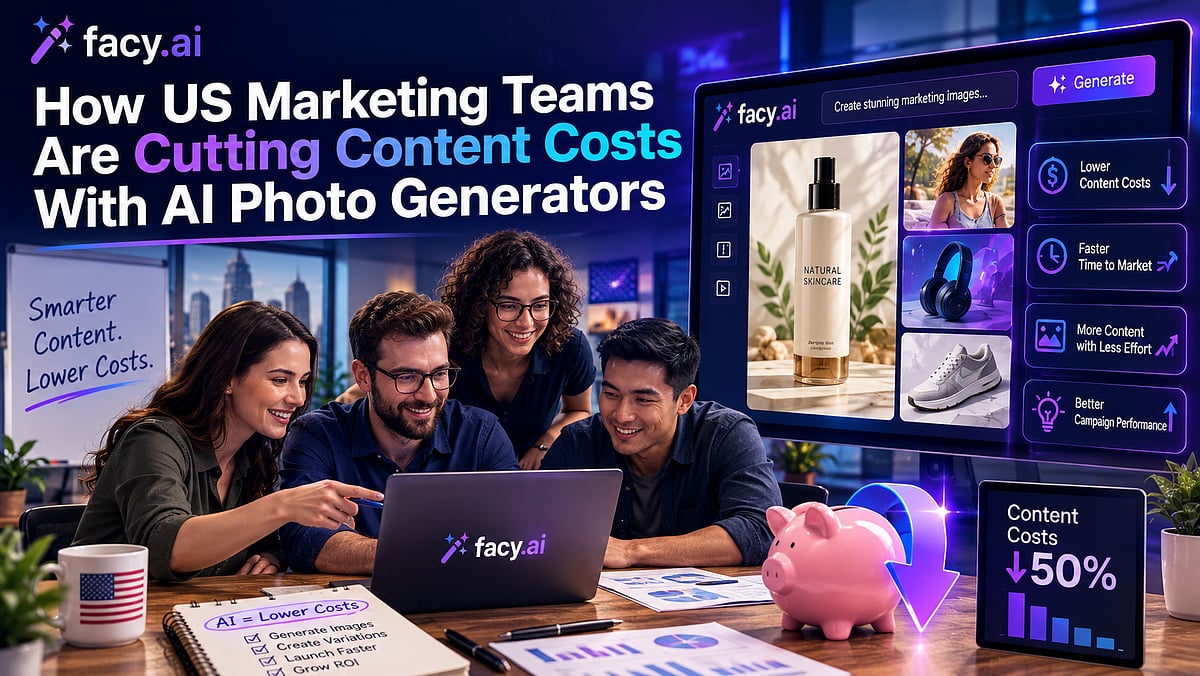
    Every marketing director reviewing their budget this year faces the same math: content demands keep rising, but the creative production budget stays flat. Many US marketing teams are turning to AI-powered photo generators to produce campaign visuals more efficiently while reducing costs. FacyAI is one such tool that helps businesses create marketing-ready visuals with a faster, more efficient workflow.

    According to Gartner’s 2026 CMO Spend Survey, marketing budgets remain essentially flat as a share of company revenue, even as the number of channels and content formats grows. This gap between rising output expectations and stagnant budgets is where AI photo generators have found their footing inside US marketing teams.

    This isn’t about replacing photographers or designers. It’s about which specific costs an AI photo generator removes, which it doesn’t, and where the savings are clear enough to defend in a budget meeting.

    Where the Money Was Actually Going

    Traditional visual production involves more than a single photoshoot: stock image licensing, studio rental, photographer day rates, editing time, and endless revision cycles. Multiply that across every campaign, product line, and seasonal push, and visual content becomes one of the largest recurring costs in a marketing budget. An AI photo generator doesn’t erase every cost, but it directly targets those tied to speed and iteration. Generating a dozen visual concepts to test costs nowhere near what a dozen photography variations would cost through a traditional studio process.

    Three Places the Savings Actually Show Up

    1. Paid advertising testing. Testing five hero images for click-through rates used to mean five rounds of design revisions. Generating five concepts with an AI photo generator compresses that into a single afternoon, stretching creative testing budgets across more variations.
    2. Stock photography spend. Recurring stock subscriptions and per-image licensing fees are a quiet cost. Teams that shift visual needs to AI-generated images matching a specific brief often see this line item shrink directly.
    3. Revision cycles. The biggest hidden cost is rarely the first draft — it’s the third and fourth rounds of “can we try it a little different.” AI-generated concepts let a team see several directions before committing design hours, reducing full revision cycles.

    Where US Teams See the Clearest Return

    Content marketing teams benefit because every article can get a genuinely relevant visual instead of a licensed stock photo that’s approximately on-topic. Social teams get a steady flow of fresh creative without expanding headcount. Ecommerce businesses use the same principle for seasonal promotions and category banners. Paid advertising sees the most measurable return, since creative testing is directly tied to campaign performance that finance teams can track.

    Where the Budget Savings Come From

    • Creative Testing: Generate multiple ad concepts before spending design hours, reducing revision requests and approval delays.
    • Stock Photography: Replace recurring stock image purchases with custom AI-generated visuals tailored to each campaign.
    • Campaign Production: Launch seasonal campaigns faster by reusing prompts instead of scheduling new photoshoots.
    • Content Marketing: Create unique visuals for blogs, landing pages, and email campaigns without increasing production costs.
    • Social Media: Produce multiple image variations quickly for different platforms while keeping creative costs under control.

    Measured on cost impact for high-volume commercial content, tools built specifically for marketing use cases tend to deliver the clearest return.

    A Budget Review, Reworked

    Consider a DTC apparel brand’s marketing director heading into a quarterly budget review. The content calendar calls for four seasonal campaigns, each needing product shots, lifestyle imagery, and ad variants. Priced through traditional photography and design, that output would blow past the approved budget. Instead, the team uses an AI photo generator to produce the bulk of campaign visuals, reserving actual photography for hero shots that need a real product. The visual output doesn’t shrink to match the budget — the cost per campaign does. That argument lands in a budget meeting: a specific reduction in stock licensing spend, fewer billable design revision hours, and faster campaign testing that improves performance without a bigger media budget.

    Making the Case Without Overselling It

    None of this argues for cutting a creative team. The strongest results come from pairing AI-generated first drafts with human review and brand judgment. The AI absorbs repetitive production work; designers spend their time on calls that require a person: brand fit, message resonance, and authenticity. Teams that frame the tool that way, rather than as a wholesale replacement, tend to get budget approval far more easily.

    Frequently Asked Questions

    How much can an AI photo generator actually save a marketing team?

    It varies by team and campaign volume, but the clearest savings tend to show up in stock licensing fees, design revision hours, and the number of creative variations a team can test within the same budget.

    Does using an AI photo generator mean cutting the design team?

    No. The strongest results come from pairing AI-generated first drafts with human review, not from removing designers. AI absorbs repetitive production work so designers can focus on brand judgment and refinement.

    What’s the easiest way to justify an AI photo generator in a budget meeting?

    Tie the pitch to specific line items — stock licensing spend, design revision hours, and creative testing capacity — rather than presenting it as a general technology upgrade.

    Are AI-generated photos as effective as traditional photography for paid ads?

    For creative testing and everyday campaign visuals, many teams find AI-generated images perform comparably, though hero product shots for a launch often still benefit from traditional photography.

    Bringing the Numbers to the Room

    If you’re building the case for an AI photo generator inside your own budget review, anchor the pitch to specific line items — stock licensing, revision cycles, and creative testing capacity — rather than the technology itself. That’s what moves a budget conversation. If your team is evaluating AI photo generators with cost efficiency as the primary priority, FacyAI is one option worth considering.

  • Cummins India Reports 18% Revenue Growth in Q1 FY2027 Amid Strong Domestic Demand

    Cummins India Reports 18% Revenue Growth in Q1 FY2027 Amid Strong Domestic Demand

    Cummins India Limited (NSE: CUMMINSIND, BSE: 500480) has announced its financial results for the quarter ended June 30, 2026. The Board of Directors reviewed and approved the standalone financial results during a meeting held on August 5, 2026.

    Key Financial Highlights

    • Total Sales: ₹3,375 crore, an increase of 18% year-over-year (YoY) and 14% quarter-over-quarter (QoQ).
    • Domestic Sales: ₹2,854 crore, up 22% YoY and 14% QoQ.
    • Export Sales: ₹521 crore, flat YoY but up 16% QoQ.
    • Profit Before Tax (PBT) before exceptional items: ₹721 crore, with a margin of 21.4%, marginally lower by 0.7% YoY and 12% lower sequentially.
    • Profit After Tax (PAT): ₹543 crore, resulting in a net profit margin of 16.1%.

    Management Commentary

    Shveta Arya, Managing Director of Cummins India Limited, commented: “The new fiscal year began on a steady note, supported by robust domestic demand across key end markets and our order execution contributing to revenue growth. Exports continue to be resilient in major regions that we supply despite the geopolitical developments. These headwinds led to higher commodity costs and inflationary trends impacting margins. We are closely tracking these developments and remain focused on operational efficiencies and cost discipline while continuing with our promise of dependability and reliability as we serve our customers.”

    Future Outlook

    Looking ahead, the company expects business momentum to remain steady across its key markets. Inflationary pressures and supply chain constraints are likely to continue influencing the industry environment. Cummins India will prioritize disciplined execution, cost management, and operational efficiencies. With a healthy balance sheet and strong liquidity, the company is adopting a measured approach to execution, capital deployment, and cost control. It remains committed to creating long-term value for customers and shareholders by leveraging proven technologies, experienced talent, established brand presence, market-relevant portfolio, manufacturing depth, and wide distribution and service reach.

    About Cummins India Limited

    Established in 1962 and headquartered in Pune, Cummins India Limited (NSE: CUMMINSIND | BSE: 500480) is a leading power solutions provider in India. As the oldest Cummins entity in the country, it operates in power generation, aftermarket, and export businesses. The company has four state-of-the-art manufacturing plants, assembly, and a distribution center, along with 480 customer touchpoints. With over 3,000 employees, Cummins India is dedicated to powering customer success and making people’s lives better by powering a more prosperous world.

  • New Research Reveals Measurable Confidence Gap Between CISOs and Boards, Pulse Security AI Report Finds

    New Research Reveals Measurable Confidence Gap Between CISOs and Boards, Pulse Security AI Report Finds

    Boards of directors believe they understand their company’s security posture and its business implications, but the security leaders presenting to them are far less confident. According to new research from Pulse Security AI, only 12.5% of security leaders are very confident that their board walks away with an accurate understanding of the program, and 55% of boards have never formally defined the level of cyber risk the company is willing to accept.

    Pulse Security AI unveiled these findings today in The CISO-Board Communication Gap, a research report drawing on insights from more than 80 senior practitioners. The report examines how security leaders report to their boards and what gets lost in translation.

    “For a decade, the industry has told security leaders to communicate better with the board,” said Mike Armistead, CEO and co-founder of Pulse Security AI. “Our data says the problem is upstream of that. You cannot report status against a baseline that was never set.”

    Top Five Insights from the Research

    1. The Confidence Gap is Measurable

    Only 12.5% of security leaders are very confident their board accurately understands the program after a presentation. 41% land at somewhat confident, and 38% are neutral or mixed. Both sides leave the room, and the cycle continues largely unchanged.

    2. The Baseline Was Never Set

    55% of boards have never formally defined cyber risk appetite, and another 27% define it only qualitatively. Without an agreed baseline, external noise fills the vacuum: roughly 70% of security leaders say board members bring third-party ratings and press coverage into the room, and 42% had to defend a commercial security score in the past 12 months.

    3. Board Prep is an Operational Tax

    71% of security leaders spend 10 or more hours preparing for each board cycle—one to two full working days every quarter—and 39% involve four or more contributors per presentation. The top time sinks: building slides, gathering data across tools, and translating findings into business language.

    4. Governance Runs on Instinct, Not Instrumentation

    Half of boards made no explicit decision to accept, mitigate, or transfer cyber risk in the past year. 48% of security leaders have no private executive session access, 23% have no predefined threshold for board-level escalation, and 33% say their own legal exposure shapes what they tell the board.

    5. Trust is Recoverable—and a Breach Shouldn’t Be the Trigger

    53% of security leaders say board trust increased after a material security incident. A real event forces a shared, concrete understanding of risk that quarterly updates rarely produce. The report details five practices, drawn from leaders with the highest board trust, for creating that alignment.

    Armistead continues, “You cannot assemble a clear picture of the business when the underlying information lives in a dozen disconnected places. Security leaders have earned the room. What they need now is the operating layer underneath it.”

    The full report, The CISO-Board Communication Gap, is available for download at pulsesecurity.ai/newsroom/ciso-board-communication-gap/.

    Methodology

    Findings draw on a 42-respondent survey of security leaders and corporate directors, more than 20 in-depth interviews with sitting and former CISOs, and two moderated workshops with roughly 22 CISOs. Seventy percent of survey respondents are CISOs or heads of security. Industries represented include technology and software (34%), financial services (25%), healthcare and life sciences (9%), and manufacturing (9%). These are not nationally representative statistics. Their value is depth and seniority: participants are the people who sit in audit committee meetings. Percentages are computed on those answering each question. A small corporate-director sub-sample is treated as directional only. Quotes are anonymized at participants’ request.

    About Pulse Security AI

    Pulse Security AI is redefining how cybersecurity programs are run. Pulse is an operational management platform for security leaders, where security professionals and AI agents work together to execute procedures, capture decisions, and deliver real-time program visibility without the manual overhead. The result is a security organization that runs faster, costs less, and gives leaders clear confidence in where their program stands.

    This is a paid press release published via CyberNewswire, a PR newswire syndication platform for cybersecurity companies.