Author: vitorcherulli

  • Santa Cruz Blur Combines All-Day Comfort With Race-Ready Speed

    Santa Cruz Blur Combines All-Day Comfort With Race-Ready Speed

    The Santa Cruz Blur proves that comfort and speed can coexist in a modern trail bike. With a redesigned frame and carefully tuned suspension, the Blur delivers a smooth, confidence-inspiring ride without giving up the efficient climbing and fast descending that riders expect.

    Comfort-Focused Geometry

    Updated frame geometry improves stability and rider confidence on long rides, while still preserving efficient climbing performance. The balanced layout helps riders stay comfortable over varied terrain, making the bike equally appealing to recreational cyclists and competitive racers.

    Refined Suspension and Lightweight Frame

    The Blur’s suspension system absorbs trail impacts effectively while retaining responsive pedaling efficiency on technical climbs and fast descents. Combined with a lightweight carbon frame, the bike accelerates quickly and offers greater control and agility on demanding trails.

    Predictable Handling and Versatile Performance

    Riders get predictable steering that inspires confidence on winding trails, rough surfaces, and challenging downhill sections. The Blur performs well during endurance rides, weekend adventures, and amateur races, making it a versatile option for a wide range of cyclists.

    Reliable Components and Everyday Appeal

    A quality drivetrain, brakes, and wheels deliver dependable performance with minimal maintenance over extended use. The trail-friendly design handles changing terrain comfortably, while the overall focus on usability and rider enjoyment makes the Santa Cruz Blur accessible to more cycling enthusiasts.

  • Stocks to Watch Today: Major Indian Companies Under Market Spotlight

    Stocks to Watch Today: Major Indian Companies Under Market Spotlight

    Investors are closely monitoring a lineup of prominent Indian companies today as market activity is expected to be influenced by sector developments, financial performance expectations, and broader economic indicators. Below is a breakdown of the key stocks in focus and the factors driving investor attention.

    Reliance Industries: Market participants will track business developments, expansion plans, and sector trends that could influence trading activity throughout the session.

    Tata Consultancy Services: Technology sector cues, client demand, and company-specific updates are being watched for their impact on investor sentiment.

    Infosys: Order wins, digital transformation demand, and global technology spending trends remain focal points for stock movement.

    HDFC Bank: Banking sector developments, lending trends, and regulatory announcements could keep the country’s largest private lender in focus.

    ICICI Bank: Strong financial performance expectations and banking sector momentum may influence trading activity.

    State Bank of India: Public sector banking updates, credit growth, and economic indicators are key drivers of investor attention.

    Bharti Airtel: Telecom sector developments, subscriber additions, and network expansion plans could shape share movement.

    Larsen & Toubro: Infrastructure orders, project execution updates, and government spending announcements may affect sentiment around the engineering major.

    Adani Ports: Port traffic, logistics demand, and infrastructure developments are expected to keep the company on watchlists.

    For more stories and real-time updates, join our WhatsApp Channel to get the latest news, exclusives, and videos.

  • 9 Indian EV Charging Stocks to Watch as Electric Mobility Accelerates

    9 Indian EV Charging Stocks to Watch as Electric Mobility Accelerates

    India’s shift toward electric vehicles is creating significant opportunities across the EV charging ecosystem. Companies involved in manufacturing chargers, developing public charging networks, and supplying critical electrical infrastructure are emerging as key beneficiaries. Here are nine Indian stocks that are actively shaping the country’s EV charging future.

    1. Exicom Tele-Systems

    Exicom Tele-Systems is a leading EV charging manufacturer offering AC and DC fast chargers. The company has built a strong domestic presence and is steadily expanding its international business opportunities.

    2. Servotech Renewable Power System

    Servotech develops EV charging stations, solar solutions, and smart energy products. The company is positioned to benefit from India’s accelerating electric mobility ecosystem growth.

    3. Tata Power

    Tata Power operates one of India’s largest EV charging networks. It continues to expand its renewable energy capacity and public charging infrastructure across the country.

    4. ABB India

    ABB India manufactures advanced EV charging equipment, automation technologies, and power solutions that support commercial, industrial, and public electric vehicle charging markets.

    5. Siemens India

    Siemens India supplies smart electrical infrastructure, grid technologies, and EV charging solutions, supporting India’s transition to sustainable transportation and electrification initiatives.

    6. Bharat Electronics Limited (BEL)

    Bharat Electronics is expanding into EV infrastructure through advanced electronics, charging technologies, and government-backed innovation projects that support future mobility development across India.

    7. HBL Engineering

    HBL Engineering manufactures batteries and power electronics, with growing opportunities in EV infrastructure, energy storage, and charging-related industrial applications nationwide.

    8. Polycab India

    Polycab India produces electrical cables, wires, and power distribution products that are essential for building reliable EV charging infrastructure in residential and commercial locations.

    9. KEI Industries

    KEI Industries supplies high-quality electrical cables supporting EV charging installations, benefiting from rising investments in India’s expanding electric mobility infrastructure projects.

    This article is for informational purposes only and does not constitute investment advice.

  • NYT Mini Crossword Solutions for August 5, 2026 – Full Clues and Answers

    NYT Mini Crossword Solutions for August 5, 2026 – Full Clues and Answers

    The New York Times Mini Crossword for Wednesday, August 5, 2026, delivered a quick but engaging challenge. Solvers encountered an unusually high number of answers starting with the letter W, adding a twist to the compact grid. Below, we break down every Across and Down clue along with their solutions.

    Across Clues and Answers

    • 1 Across: Stimulate, as the appetite — WHET
    • 5 Across: “___ did the time go?” — WHERE
    • 6 Across: “Hmm, strange …” — WEIRD
    • 7 Across: Walked through water — WADED
    • 8 Across: Neat and orderly — TIDY

    Down Clues and Answers

    • 1 Down: Crop on the South Dakota state quarter — WHEAT
    • 2 Down: “Saturday Night Live” alum Gardner — HEIDI
    • 3 Down: Made a mistake — ERRED
    • 4 Down: Child’s bear — TEDDY
    • 5 Down: Repeated letters in a U.R.L. address — WWW

    Theme of the Day: The Letter W Takes Over

    Today’s puzzle featured an unusual pattern: six answers (WHET, WHERE, WEIRD, WADED, WHEAT, and WWW) all start with the letter W. This repetition made the grid feel distinctive and gave solvers a fun challenge, especially when working through the early clues. Despite the heavy W presence, the puzzle remained approachable with familiar entries like TEDDY and TIDY balancing out trickier ones like WHET.

    Why the NYT Mini Crossword Continues to Delight

    The Mini remains a favorite for its ability to deliver a full crossword experience in just a few minutes. Each day offers a mix of vocabulary, pop culture, and common phrases that keeps both newcomers and seasoned solvers engaged. Today’s edition exemplified that balance, providing a satisfying solve once all squares were filled.

    Stay tuned for tomorrow’s puzzle — the NYT Mini returns with fresh clues and another quick mental workout.

  • Global Market Leaders: The Top 10 Companies by Market Capitalization

    Global Market Leaders: The Top 10 Companies by Market Capitalization

    The world’s most valuable companies continue to reshape industries and drive global economic growth. Based on market capitalization, here are the top 10 publicly traded companies as of the latest data.

    1. Apple – One of the world’s most valuable companies, driven by iPhone, services, wearables, and a loyal global customer ecosystem.
    2. NVIDIA – Dominates AI chip manufacturing with GPUs powering artificial intelligence, cloud computing, gaming, and high-performance data centers worldwide.
    3. Microsoft – Global software leader generating growth through Azure cloud services, Office productivity tools, enterprise software, and artificial intelligence innovations.
    4. Alphabet – Parent company of Google, YouTube, Android, and Google Cloud, maintaining leadership in digital advertising and artificial intelligence technologies.
    5. Amazon – Global e-commerce and cloud computing giant with AWS, logistics leadership, AI investments, and expanding digital service offerings worldwide.
    6. TSMC – World’s largest semiconductor foundry manufacturing advanced chips for leading technology companies powering smartphones, AI systems, and computing devices.
    7. Broadcom – Leading semiconductor company supplying networking, AI infrastructure, broadband, and enterprise software solutions for global technology markets.
    8. Saudi Aramco – World’s leading energy company generating substantial revenue through oil production while investing in energy transition and sustainability initiatives.
    9. Tesla – Electric vehicle pioneer expanding through battery technology, autonomous driving, energy storage solutions, and sustainable transportation innovation globally.
  • Avatar Legends: The Fighting Game Review – Faithful Bending Action Meets Competitive Combat

    Avatar Legends: The Fighting Game Review – Faithful Bending Action Meets Competitive Combat

    Avatar Legends: The Fighting Game brings beloved heroes and villains from the animated series together in a fast-paced fighting experience. Players can take control of iconic characters like Aang, Korra, Zuko, Toph, and more, each showcasing their signature bending styles and unique combat abilities.

    The combat mechanics are responsive and reward quick reactions, smart positioning, and creative combo execution across every match. Each fighter’s elemental attacks reflect their personality, making fire, water, earth, and air bending exciting, balanced, and visually satisfying during battles. Simple controls help newcomers enjoy matches quickly, while advanced techniques offer experienced players plenty of depth for competitive gameplay.

    Colorful visuals, smooth animations, and authentic character designs recreate the Avatar universe, making every fight feel like an animated episode come alive. The game offers a variety of modes including story, versus, training, and online multiplayer, providing enough content to keep casual fans and competitive players entertained for many hours.

    Minor issues such as a limited character roster and occasional online connection problems slightly reduce the overall experience despite the game’s polished presentation and enjoyable combat. Overall, Avatar Legends: The Fighting Game delivers exciting battles, faithful fan service, and solid gameplay, making it a worthwhile fighting game for enthusiasts.

  • How to Read Market Footprints: Using Price Action, Volume, and Liquidity for Smarter Trades

    How to Read Market Footprints: Using Price Action, Volume, and Liquidity for Smarter Trades

    Financial markets rarely operate without leaving behind evidence. All breakouts, reversals, and trends start long before they become visible in the price action. Professional traders spend time studying the signs that precede a strong rally or sudden crash, while many retail traders only react to the results. These signals—known as market footprints—reveal the positions of other traders (buyers or sellers) and offer clues about where the price is likely to head next.

    Rather than trying to predict the future, market footprints help traders interpret probability by observing market activity.

    What Is a Market Footprint?

    Market footprints refer to the traces left by institutional and retail trading activity. They are not a single indicator but a broad set of factors that influence price action, trading volume, liquidity, market structure, volatility, and order flow. Individually weak, when combined they provide valuable insight into shifting market sentiment.

    For example, if a stock repeatedly tests a resistance level while volume increases, it may signal growing buying interest or accumulation. Conversely, a sudden liquidity sweep—where the price falls below support and then quickly rises—can indicate entry by larger market participants.

    Studies have found a relationship between trading volume and price volatility. According to a study published in the Journal of Financial and Quantitative Analysis, trading volume is one of the first indicators of changing market conditions, as unusual jumps in trades are typically followed by heightened price volatility.

    Why Professional Traders Watch Market Structure

    Experienced traders don’t chase the price after a breakout. Instead, they watch the market’s action just before the move. They ask questions such as:

    • Is trading volume confirming the price move?
    • Have prices moved from low highs to higher highs?
    • Are there any key support or resistance levels forming liquidity?
    • Is volatility picking up after consolidation?

    These questions help traders determine if a move is driven by genuine buying and selling interest or by short-term noise.

    Liquidity is also crucial. According to market structure research, liquidity isn’t only about trade volume—it also includes price impact, bid-ask spreads, and execution quality. In times of high volatility, understanding how liquidity dynamics shift is essential for accurate price interpretation.

    Why This Matters

    Understanding how the market leaves footprints helps traders avoid emotional decisions and adopt a more data-driven, evidence-based approach. By studying price action, volume, liquidity, and market structure together, traders can spot higher-probability trades, manage risk more effectively, and avoid chasing moves that have already played out.

    Final Thoughts

    There is no sure way to predict the next market move. However, by using multiple pieces of evidence, traders can make more informed decisions rather than relying on speculation. Markets rarely announce their intentions—they reveal them through participation, momentum, and liquidity changes. Learning to read these footprints allows traders to adopt a structured, data-driven approach to trading.

    Frequently Asked Questions

    1. What are market footprints in trading?

    Market footprints are subtle signals left by buying and selling activity before a major price move occurs. They include changes in price action, volume, liquidity, volatility, and market structure that help assess market sentiment.

    2. Why is trading volume important when analyzing markets?

    Trading volume shows the level of participation behind a price move. Rising volume often confirms the strength of a trend or breakout, while weak volume may indicate a move lacks conviction and could reverse.

    3. What is market structure, and why does it matter?

    Market structure refers to the sequence of higher highs, higher lows, lower highs, and lower lows on a price chart. It helps traders identify whether the market is in an uptrend, downtrend, or consolidation phase before making decisions.

    4. How does liquidity influence price movements?

    Liquidity determines how easily assets can be bought or sold without significantly affecting price. Areas with high liquidity often become important support or resistance zones where institutional traders may enter or exit positions.

    5. Can market footprints accurately predict future price movements?

    No. Market footprints do not predict the future with certainty. Instead, they help traders evaluate probabilities by combining multiple technical signals, enabling more informed and disciplined trading decisions while managing risk effectively.


  • WhatsApp Adds Poll Deadlines, Anonymous Voting, and @All Mentions to Group Chats

    WhatsApp Adds Poll Deadlines, Anonymous Voting, and @All Mentions to Group Chats

    WhatsApp is rolling out a suite of new group chat features designed to make voting, alerts, and group planning more efficient. The update, announced globally on August 4, includes poll deadlines, anonymous voting, @all mentions, and a faster way to create new groups. The features will be available to users gradually over the coming weeks.

    Anonymous WhatsApp Polls

    Users can now create polls with a fixed voting deadline. Poll creators also have the option to hide voter names for added privacy when needed. Additionally, poll questions can be edited within 15 minutes of posting, allowing users to correct spelling mistakes or clarify questions without creating a new poll. These improvements aim to simplify group decisions and reduce redundant messages.

    Quick Alerts with @all

    The new @all mention feature lets users notify every group member with a single tag. This is particularly useful for urgent updates such as school closures, office changes, event deadlines, or sudden plan changes. For groups with more than 32 members, only admins can use the @all mention. The alert will appear even if the group is muted, though users have the option to mute @all notifications in their settings.

    New Group Chats from Existing Groups

    WhatsApp also allows users to create a new group from an existing group with just one tap. Members can start separate chats for event planning, projects, or private discussions without needing to add everyone again.

    These features are designed to reduce clutter and make large group conversations easier to manage.

  • boAt and Spotify Collaboration Offers 4 Months of Premium Music Streaming with Select Audio Devices

    boAt and Spotify Collaboration Offers 4 Months of Premium Music Streaming with Select Audio Devices

    boAt has announced a new partnership with Spotify Premium in India, offering customers a four-month subscription to the streaming service when they purchase select boAt audio products. The promotion includes ad-free music, offline playback, and enhanced audio quality.

    The deal, revealed on August 4, gives buyers access to Spotify Premium for the first 12 weeks at no extra cost. This offer applies to eligible boAt headphones and other audio devices, though the full list of qualifying products and the promotion’s end date have not been detailed by either company.

    A boAt spokesperson explained, ‘Our partnership with Spotify Premium brings together two essential parts of that experience: immersive sound and uninterrupted music.’ The spokesperson added that the campaign reflects the listening habits of young Indians today.

    To promote the partnership, boAt and Spotify have launched a campaign titled ‘HALF the Experience,’ featuring musician Chaar Diwari. The campaign visually represents an incomplete concert before the full music experience begins, highlighting the value of Spotify Premium.

    Spotify Premium removes advertisements, allows users to download songs for offline listening, and provides higher-quality audio for compatible content and devices.

    This announcement follows several recent product launches from boAt in India, including the Nirvana Eutopia 2 ANC headphones, priced at Rs. 5,999. Those headphones feature noise cancellation, 3D Spatial Audio, Bluetooth 5.4 support, and a claimed battery life of up to 80 hours.

    The partnership enables boAt to add more value to its audio products while giving Spotify a direct channel to reach potential Premium subscribers through device purchases.

  • RBI Holds Repo Rate at 5.25% in August: Key Takeaways for Borrowers and Investors

    RBI Holds Repo Rate at 5.25% in August: Key Takeaways for Borrowers and Investors

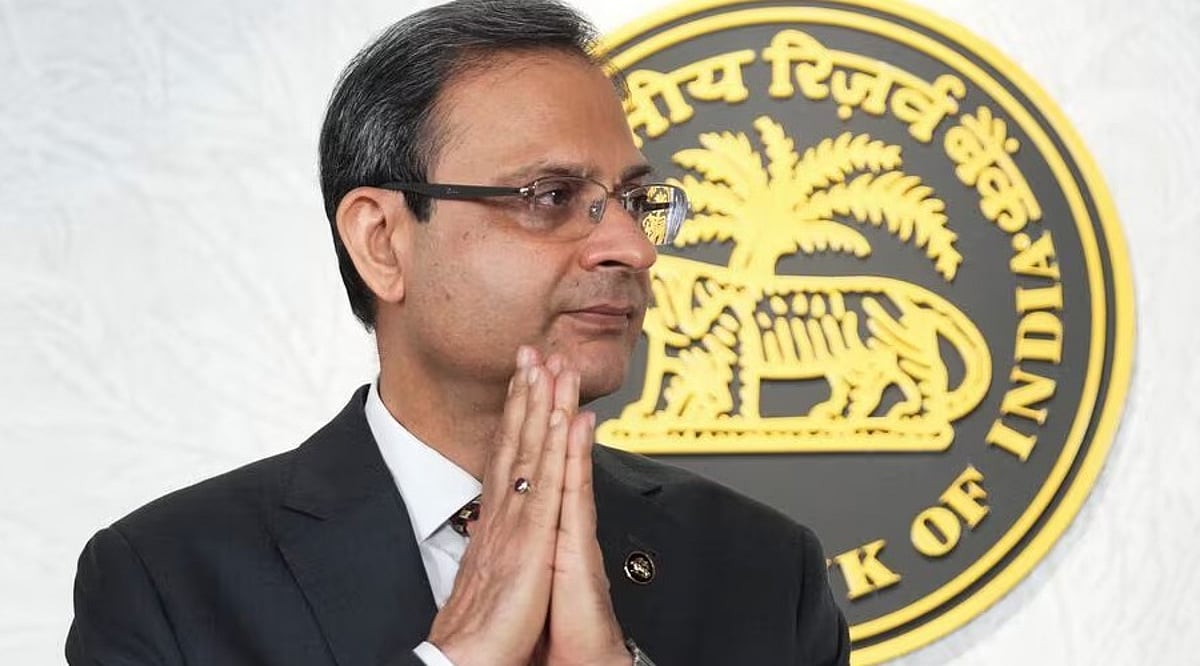
    The Reserve Bank of India (RBI) kept the repo rate unchanged at 5.25% during its August Monetary Policy Committee (MPC) meeting, signaling a cautious approach as inflation eases and global economic uncertainties persist. The central bank also maintained a neutral stance, indicating that future policy moves will depend on incoming data rather than a predetermined path.

    Governor Sanjay Malhotra noted that inflation remains within the RBI’s target range, while domestic growth continues to show resilience despite external risks. The policy aims to balance price stability with sustained economic growth amid ongoing global trade and geopolitical tensions.

    Inflation Forecast Lowered, Growth Outlook Maintained

    A key announcement was the RBI’s revised inflation outlook. The MPC lowered its FY27 CPI inflation forecast by 10 basis points to 5%, while retaining its view that inflation will peak in the third quarter before gradually easing. The central bank projects CPI inflation at 4.7% in Q2, 5.9% in Q3, 5.5% in Q4, and 5.3% in the first quarter of FY28. Core inflation for FY27 is estimated at 4.3%, and core inflation excluding precious metals is expected to remain below 4.3% during the fiscal year.

    At the same time, the RBI retained its GDP growth projection at 6.7%, reflecting confidence in India’s economic momentum. Strong domestic demand, government capital expenditure, and improving rural consumption were highlighted as key growth drivers despite a mixed global environment.

    Liquidity Measures Continue to Support the Banking System

    The RBI reiterated its commitment to ensuring sufficient liquidity in the financial system while maintaining an orderly money market environment. The central bank stated it would use liquidity management measures as needed to keep short-term interest rates consistent with the policy rate. Credit growth remains steady, supported by robust demand from retail and business customers. Banking system strength and ample liquidity levels will help sustain borrowing in key sectors of the economy.

    Global Risks Remain a Key Concern

    While domestic factors appear positive, the RBI warned that global uncertainties continue to pose risks to India’s economy. Key risk factors identified include geopolitical uncertainty, commodity price fluctuations, and changing trade policies of major economies. Capital flow and exchange rate dynamics in light of the evolving global interest rate scenario are also being closely monitored.

    “There is a need for greater clarity to emerge, especially regarding inflation, its path and composition before taking any policy action. Any such action would also have to consider the need for recalibration of policy rates in line with the evolving growth-inflation dynamics, especially the normalisation of the underlying inflation from its benign levels seen hitherto,” Governor Malhotra stated.

    Deficient and uneven Southwest monsoon across the subcontinent was highlighted as a major risk to India’s economy.

    What It Means for Borrowers and Investors

    With the RBI’s decision to keep interest rates unchanged, there will be no immediate changes in rates for mortgages, auto loans, and business credit. For investors, the policy reinforces expectations of rate stability, though future actions will depend on inflation and economic data.

    Analysts believe equity markets may welcome the RBI’s balanced approach, while bond markets could remain sensitive to upcoming inflation readings and global central bank actions. Market participants will closely track inflation trends, festive-season demand, and external developments to gauge the timing of any future policy changes.