Author: vitorcherulli

  • How Predictive AI Can Reduce Healthcare Costs and Improve Patient Care: Expert Insights from Sachin Bajpai

    How Predictive AI Can Reduce Healthcare Costs and Improve Patient Care: Expert Insights from Sachin Bajpai

    Healthcare systems around the world are increasingly turning to artificial intelligence to improve patient outcomes and reduce costs. During the recent AI Impact Summit in New Delhi, India’s Ministry of Health and Family Welfare unveiled a national strategy to deploy AI in medicine “that works for every patient, in every region, regardless of income, language, or geography.” To understand how these technologies can make healthcare more accessible and affordable, we spoke with Sachin Bajpai, an experienced healthcare AI leader who has worked with major medical organizations through companies including PwC, Deloitte, and CitiusTech.

    Bajpai believes that one of the biggest opportunities for AI lies in early intervention. “AI systems can analyze medical and behavioral patterns early, allowing healthcare providers to identify high-risk patients before their conditions become critical or require expensive emergency and intensive care,” he explains.

    One example of this approach is a predictive AI system Bajpai developed while at PwC, a global professional services firm operating in more than 150 countries. The model focused on elderly patients covered by U.S. government-sponsored insurance programs and identified those at risk of requiring costly skilled nursing facility care—one of the most expensive forms of long-term treatment. During a six-month pilot involving over 300,000 patients, the system identified around 20,000 high-risk cases and reduced medical spending by nearly $10 million. The program later expanded across 21 U.S. states.

    Bajpai’s approach is especially valuable in countries with large populations and overstretched healthcare systems, such as India. “The earlier healthcare providers can identify risk, the more effectively they can intervene,” he says.

    Beyond prediction, AI can fundamentally change how healthcare systems manage resources. “Having spent many years in India, I know hospitals and doctors often work under enormous pressure because of the sheer number of patients they see every day,” Bajpai notes. “AI can reduce some of that operational burden, improve coordination, and give medical professionals more time to focus on patient care.”

    Much of Bajpai’s work has focused on solving large-scale operational challenges. Before joining PwC, he led the development of a cloud-based clinical reporting platform at CitiusTech, a global healthcare technology company. The solution earned certification from the National Committee for Quality Assurance (NCQA), allowing healthcare providers to use it for official quality reporting in the U.S. healthcare system. Within two years, the product expanded to a portfolio of 15 customers.

    At PwC, where he now serves as Managing Director leading healthcare AI and data transformation, Bajpai has helped expand the company’s healthcare AI operations tenfold across the U.S., India, China, Poland, and Mexico. During his tenure, PwC’s healthcare AI solutions received major industry recognition, including Microsoft Partner of the Year awards.

    Still, Bajpai emphasizes that technology alone is not enough. “For AI to work effectively in medicine, both doctors and patients need to trust the systems they use,” he explains. Building that trust requires transparency, regulatory compliance, data security, and a clear understanding of how AI-generated recommendations are produced and validated in clinical settings.

    As AI adoption accelerates, experienced specialists like Bajpai play a crucial role in evaluating medical technology systems and advising healthcare clients and startup founders on technical strategy, scalability, and long-term performance. His cross-regional experience has given him a close view of how differently medical environments operate. “Healthcare systems in India operate across different languages, regions, and levels of infrastructure,” he says. “Developers need to train AI models on diverse and representative data so the systems can work reliably at scale.”

    Despite these challenges, Bajpai believes India is well-positioned to become a major market for practical healthcare AI solutions, thanks to its strong engineering talent and rapidly growing digital infrastructure.


  • UPES and HPE Launch AI-Powered Centre of Excellence to Train Next-Gen Engineers

    UPES and HPE Launch AI-Powered Centre of Excellence to Train Next-Gen Engineers

    Dehradun, July 24, 2026 – UPES has partnered with Hewlett Packard Enterprise (HPE) to inaugurate the HPE Networking AI-Driven Centre of Excellence (CoE), a milestone in the university’s AI-first educational strategy. The CoE is designed to bridge the gap between classroom theory and enterprise-grade practice in AI-driven networking, cloud infrastructure, cybersecurity, and other emerging technologies.

    The centre will offer a comprehensive learning ecosystem, including curriculum integration, faculty development, hands-on lab work, live demonstrations, project-based learning, HPE-led bootcamps, certification pathways, and opportunities for interdisciplinary research. Students will also gain access to HPE Networking training at Associate and Specialist levels, as well as potential internships and hiring pathways through HPE, its partners, and customers.

    According to a recent NASSCOM and Deloitte report, India will need over 1.25 million AI professionals by 2027, with an estimated shortfall of more than 600,000 skilled workers. The new CoE directly addresses this demand by preparing students for careers in AI, enterprise networking, cloud, and cybersecurity.

    For UPES, the CoE exemplifies its AI-first university strategy, which integrates AI across the curriculum, faculty, and industry partnerships rather than confining it to a single course or department. The partnership aims to produce graduates who are not just job-ready but capable of shaping enterprise AI adoption across multiple domains.

    The inauguration was the centerpiece of a day-long engagement between UPES and HPE’s global leadership. The event began with a welcome reception and a leadership roundtable on industry-academia collaboration. After the formal inauguration and showcase, an interactive student session featured a keynote by Shishir Singh, Senior Vice President and General Manager of Network Products & Advanced Technology at HPE, titled “The Bridge: Degree to Career.” The delegation also toured the Bajaj Engineering Skills Training (BEST) Centre before reaffirming the long-term partnership.

    Other senior HPE leaders present included M. Muthukumar, Vice President – Platform Software Engineering and Managing Director, HPE Networking India; Maria Delting, Human Resource Leader – HPE Networking; Shalini Dutta, Head of Global Talent Acquisition; Beth Kremer, Senior Manager – University Recruitment & Programs and TA Operations; Samuel Daniel, India Leader – University Relations & Strategy; and Archana Yadav, Senior Global Program Manager, HPE Academic Alliance.

    Speaking at the event, Shishir Singh said, “The future of enterprise technology will be shaped by professionals who can seamlessly combine AI, networking, cloud and cybersecurity to solve complex real-world challenges. We are delighted to partner with UPES to create an environment where students gain practical exposure to industry technologies, learn from practitioners, and build skills that are relevant to tomorrow’s digital economy. Strong industry-academia partnerships like this are essential to developing the next generation of innovators and technology leaders.”

    Dr. Abhishek Sinha, Pro Vice Chancellor – Student Success, UPES, added, “AI is fundamentally reshaping enterprise technologies, and universities have a responsibility to ensure students are prepared not just for today’s jobs, but for the careers and industries that are rapidly emerging. Through this partnership, our students will gain access to advanced technologies, global perspectives and experiential learning opportunities that will strengthen their ability to innovate, solve complex problems and lead in an AI-driven future. It is another important step in UPES’ vision as India’s AI-first university.”

    The partnership builds on UPES’s existing collaborations with global leaders including OpenAI, Google Cloud, Salesforce, and Harvard Business Impact. With the HPE Networking AI-Driven Centre of Excellence, the initiative aims to foster innovation, interdisciplinary learning, and future-ready talent prepared to lead the next wave of AI-driven enterprise transformation.

  • Indian Markets Extend Losing Streak for Fifth Day as Crude Oil Fears Bite

    Indian Markets Extend Losing Streak for Fifth Day as Crude Oil Fears Bite

    Indian equity benchmarks ended Friday’s session under heavy selling pressure, capping their fifth consecutive day of losses. Investors reacted to surging crude oil prices, escalating geopolitical tensions in the Middle East, weak corporate earnings, and continued foreign fund outflows. The bearish trend was visible across sectors, with banking, auto, and metal stocks leading the decline. The sell-off also pushed the benchmark indices towards their worst weekly performance in nearly four months.

    Overall Market Performance

    At 2:50 PM, the Sensex was down 272.00 points, or 0.36%, at 76,119.39, while the Nifty fell 81.70 points, or 0.34%, to 23,787.90. Market breadth remained negative, with 1,792 shares advancing against 1,944 declines. Broader markets also remained under pressure, with the Nifty Midcap and Smallcap indices declining as risk aversion intensified.

    The weakness was largely driven by Brent crude climbing above $100 per barrel, raising concerns over inflation, India’s import bill, and corporate profitability. Investors also remained cautious following disappointing quarterly earnings from several large-cap companies.

    Top Gainers and Losers

    While some stocks managed to post gains, the majority of sectors faced significant losses. The detailed list of top gainers and losers is available in the original report.

    Market Trends

    Friday’s decline was indicative of a risk-off scenario. The equity markets fell back as uncertainty rose following new events taking place in the Middle East. Increased oil prices were a major source of concern for Indian markets as they can potentially cause inflation, increase the trade deficit, and reduce the bottom line for businesses.

    Foreign institutional investors (FIIs) continued to reduce their positions, while the weakening Indian rupee became an additional factor causing uncertainty. Poor performance by large corporations dampened investor confidence.

    Disclaimer: This article is provided for informational purposes and does not constitute investment advice. You are responsible for conducting your own research (DYOR) before making any investments.

  • XRP Whale Wallets Hit Record High While Retail Investors Cash Out

    XRP Whale Wallets Hit Record High While Retail Investors Cash Out

    XRP has entered a new phase where large investors and small traders have chosen completely different paths. Blockchain data shows that whale wallets have continued to buy more XRP, while many retail investors have sold part of their holdings. This gap between big and small investors has become one of the biggest talking points in the crypto market.

    Large holders often focus on long-term value instead of daily price swings. Retail traders usually react faster to market drops and uncertainty. Current on-chain data reflects exactly that pattern.

    XRP Price Holds Above $1

    XRP trades at approximately $1.11 on the market as of July 24, 2026, with a market cap that exceeds $69 billion. The total volume of the asset in one day remains at around $1.04 billion. In total, there are around 62.47 billion XRP tokens in circulation.

    While XRP seems to be doing relatively stable with a price above $1, positive investor sentiment has not resulted in further price gains. The cryptocurrency has proven to be unpredictable for many traders as it constantly pushes against a resistance zone around $1.14-$1.15.

    Whale Wallets Reach Record Numbers

    The biggest story comes from blockchain data. Wallets that hold at least 10,000 XRP have climbed to a record 332,230 addresses. This number shows that large investors have continued to collect XRP even during weak price action.

    This trend has continued for several months. Instead of waiting for higher prices, whales have added more coins whenever the market slowed down. Such buying behavior often shows confidence in future growth rather than interest in quick profits.

    Many market experts believe whales usually study market cycles before they make large purchases. Their steady buying suggests that these investors still see value in XRP despite recent price struggles.

    Retail Investors Continue to Sell

    Several reasons explain this move. The price has stayed within a narrow range for weeks. Many traders expected a stronger rally but did not get one. As a result, some chose to lock in profits, while others sold since they feared another decline.

    This selling does not always mean investors have lost faith in XRP forever. Many retail traders simply prefer to wait until the market shows stronger momentum before they enter again.

    Blockchain Data Supports the Trend

    The number of whale wallets has reached an all-time high. Net position data also shows that these large holders have continued to increase their balances. At the same time, exchange selling from major wallets has remained lower than previous periods.

    These figures suggest that large investors have not rushed to sell despite market uncertainty. Instead, many have treated recent price weakness as an opportunity to build bigger positions.

    Such behavior often attracts attention since whales usually control enough capital to influence market trends over time.

    Price Faces Strong Resistance

    The price has struggled to move above the $1.14 to $1.15 resistance zone. Every rejection has encouraged short-term traders to leave the market, which has slowed fresh buying.

    This price action has created a balance between buyers and sellers. Bulls have protected the $1 level, while sellers have defended higher prices. Until one side gains control, XRP may continue to trade within this range.

    Many Holders Still Remain in Loss

    Recent data reveals that only 43.4% of XRP’s circulating supply remains in profit. This marks the lowest level in almost two years.

    This means that more than half of XRP holders currently own coins that sit below their purchase price. Such conditions often create emotional pressure since many investors worry about deeper losses.

    However, crypto markets have shown similar situations before. Long periods where most holders remain in loss have sometimes appeared before major recoveries. Although history does not guarantee future results, many experienced investors continue to watch this indicator closely.

    Ripple Continues to Build the XRP Ecosystem

    New grant programs now help startups and blockchain developers build applications on the XRP Ledger. These initiatives support innovation and encourage more businesses to create products that use the network.

    Ripple has also continued work on payment solutions, digital asset services, and enterprise technology. These developments strengthen the long-term use case for XRP beyond short-term price movements.

    Futures Market Shows Rising Interest

    Recent updates indicate that the open interest of XRP futures has reached higher numbers. The implication here is that traders have been active in opening positions in the futures market.

    In reality, greater open interest relates to active trading. It can also lead to significant price movements since openings of long and short positions generate volatility when prices breach the resistance or support.

    Why This Matters

    Whale activity often provides an early signal of market direction as large investors usually make decisions after careful research. At the same time, retail selling reflects broader market sentiment. When both groups move in opposite directions, the trend can reveal valuable insights about confidence, future demand, and the possible direction of XRP’s price.

    Outlook

    The token still trades below the key $1.14 to $1.15 resistance level, but large investors have not slowed their accumulation. Record whale wallet numbers, steady on-chain data, and continued ecosystem growth show that many major holders still believe in XRP’s long-term potential.

    The next major price move will likely depend on overall crypto market sentiment, stronger buying demand, continued Ripple development, and a successful break above important resistance. Until that happens, whale accumulation and retail selling will remain the biggest themes in the XRP market.

    FAQs

    1. Why are XRP whales buying more tokens? Large investors accumulate XRP during price dips, demonstrating strong long-term confidence despite temporary market stagnation.
    2. Why are retail investors selling XRP? Retail traders reduce exposure or take short-term profits after XRP repeatedly failed to break past key resistance zones.
    3. What is XRP’s current price? XRP trades around $1.11, maintaining a market capitalization exceeding $69 billion with steady daily volume.
    4. What does record whale wallet growth mean? Wallets holding over 10,000 tokens reached historic highs, signaling sustained accumulation by high-net-worth investors.
    5. What could influence XRP’s next price move? Key catalysts include broader market sentiment, ecosystem expansion, institutional adoption, and breaking resistance between $1.14-$1.15.
  • How Big Data Is Redefining Intelligence Testing: From Snapshot Scores to Continuous Insights

    How Big Data Is Redefining Intelligence Testing: From Snapshot Scores to Continuous Insights

    The Evolution of Intelligence Testing

    For decades, an IQ score was considered the definitive measure of cognitive ability. A single test, a single number, and that was the end of the story. But just as big data has revolutionized industries like finance, healthcare, and retail, it is now transforming how we assess and understand intelligence.

    Modern digital platforms are moving beyond static, one-time exams. They leverage vast amounts of data to analyze not just whether an answer is correct, but how quickly it was reached, the reasoning patterns employed, and how performance evolves over weeks or months. This shift turns cognitive testing from a snapshot into a dynamic, ongoing process.

    What Big Data Brings to Cognitive Testing

    Big data involves collecting and analyzing massive datasets to uncover patterns that would be invisible to manual inspection. In the context of cognitive testing, this means:

    • Identifying common reasoning strategies among test-takers
    • Dynamically adjusting question difficulty based on real-time performance
    • Measuring consistency and reliability of results across sessions
    • Flagging notable trends or changes in cognitive performance
    • Creating a personalized testing experience that adapts to the individual

    Instead of relying on fixed, paper-based tests, digital platforms continuously improve by learning from user data.

    Beyond the Single Score

    Traditional IQ tests boiled intelligence down to one number. While that number still holds value, it only tells part of the story. By analyzing multiple data points—accuracy, speed, reasoning style, and progress over time—we gain a much richer understanding of a person’s cognitive abilities. This holistic view helps identify strengths and areas for improvement that a single score would miss.

    How Data Analytics Enhances Online Testing

    Adaptive Questioning

    Older tests presented the same questions in the same order to everyone. Modern systems adjust difficulty on the fly, ensuring the test remains challenging but not discouraging, and providing a more accurate measure of ability.

    Continuous Improvement

    Developers analyze anonymized data to identify flawed questions—those that are too easy, too hard, or not measuring the intended skill. This iterative process leads to better, more reliable tests over time.

    Detailed Feedback

    Instead of just a final score, analytics enables platforms to deliver personalized summaries highlighting cognitive strengths and areas that may benefit from practice.

    MyIQ: A Case Study in Data-Driven Testing

    Platforms like MyIQ exemplify this shift. They offer online IQ assessments, explore different cognitive domains, provide brain-training activities, and allow users to track their progress over time. MyIQ encourages users to view intelligence not as a fixed trait but as something that can be monitored and developed through regular check-ins and practice.

    The Power of Repeated Testing

    A single test is just a snapshot. Multiple tests spread over weeks reveal true patterns. Repeated testing can show improvements in reasoning speed, problem-solving efficiency, consistency, and pinpoint where extra practice might be most beneficial. Factors like mood or sleep can affect any single test, but tracking scores over sessions smooths out these fluctuations and paints a clearer picture of underlying ability.

    Community Perspectives

    User experiences add practical context. For instance, Reddit discussions often feature users sharing their results from multiple MyIQ tests over several weeks, comparing how scores change. While anecdotal, these stories highlight a common interest in tracking progress rather than fixating on a single number.

    Limitations and Considerations

    Digital IQ testing is not without drawbacks. Platforms must be transparent about data collection and storage. Moreover, a test score—even a detailed one—cannot capture the full spectrum of human intelligence, including creativity, emotional intelligence, and practical experience. It’s important to use these tools as one part of a broader self-assessment, not as a definitive judgment.

    The Future of Big Data in Cognitive Science

    As analytics and artificial intelligence advance, cognitive testing platforms will become even more sophisticated. Future developments may include AI-driven interpretation of cognitive patterns, more advanced adaptive testing, personalized learning recommendations, predictive skill growth models, and clearer visualizations of long-term progress. These innovations could transform online cognitive testing from a one-time event into a continuous, data-informed journey of personal growth.

    Conclusion

    Intelligence testing is no longer a single event with a final number. Big data is turning it into an ongoing process of discovery and improvement. By watching how thinking evolves over months—not just on test day—we can gain a deeper, more actionable understanding of cognitive potential.

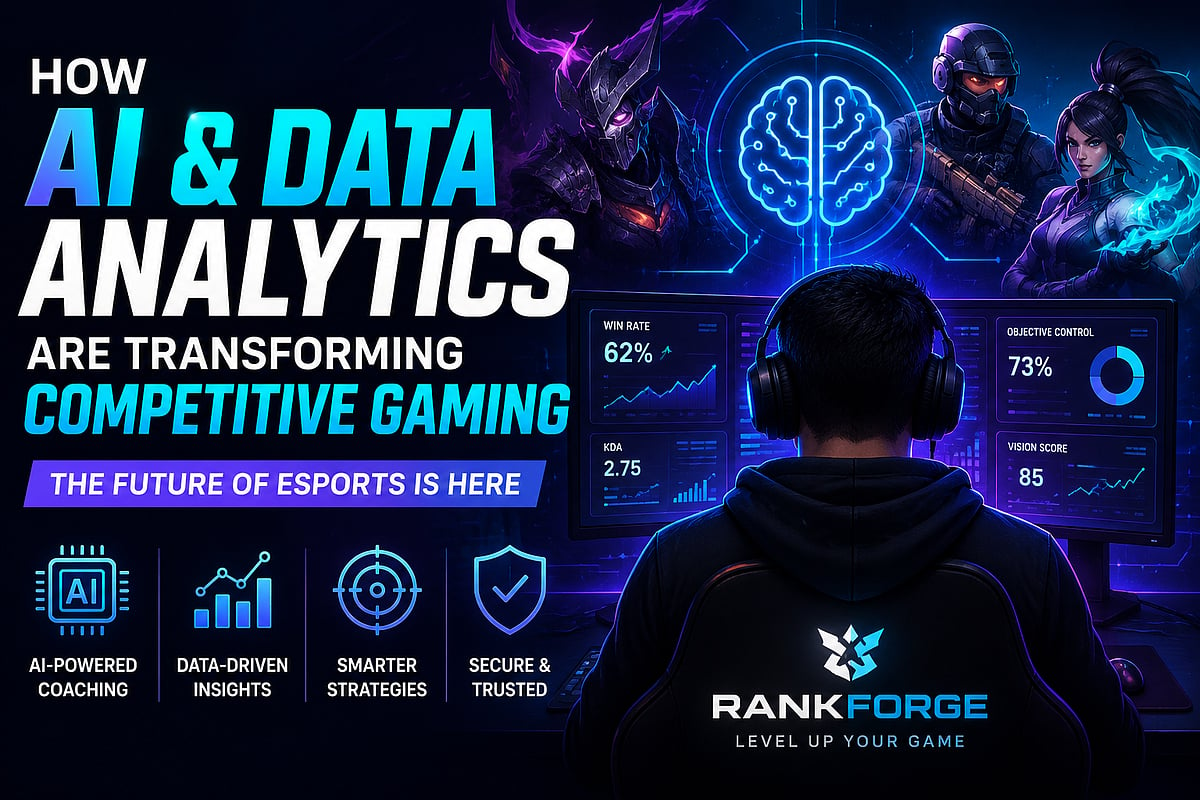
  • How AI and Data Analytics Are Reshaping the Competitive Gaming Landscape

    How AI and Data Analytics Are Reshaping the Competitive Gaming Landscape

    Artificial intelligence is changing how people work, learn, and play. Healthcare, finance, manufacturing, and cybersecurity have all felt its effects. Competitive gaming is no different.

    Millions of players now compete in games like League of Legends, Valorant, Counter-Strike 2, and Wild Rift. As competition gets tougher, more players are turning to data and technology to sharpen their skills.

    Gaming Gets More Data-Driven

    Every esports match creates a mountain of gameplay data. Pro teams, streamers, and everyday players all lean on stats to figure out what works and what doesn’t.

    Match data can show:

    • Win rates
    • Champion or agent performance
    • Team compositions
    • Objective control
    • Economy management
    • Individual decision-making

    Instead of guessing and hoping, players can now use real numbers to guide their choices and get better faster.

    AI Is Changing How Players Improve

    AI is also making coaching easier to reach. Not everyone can afford a personal coach, but AI tools are closing that gap.

    These tools can:

    • Review gameplay automatically
    • Spot repeated mistakes
    • Suggest better builds and strategies
    • Check positioning during fights
    • Flag poor macro decisions
    • Recommend a personal improvement plan

    Players get useful feedback much faster than they would from traditional coaching alone.

    New Platforms Are Shaping Gaming’s Future

    As esports has grown, so has the demand for platforms that mix technology with real player development.

    Many players now turn to coaching platforms, replay reviews, learning resources, and performance tools. This helps them improve while still juggling work, school, or other parts of life.

    Platforms such as rankforge, a leading competitive gaming platform, offer coaching and performance tools built to help gamers hit their goals across several esports titles.

    Trust and Security Still Come First

    As online gaming grows, trust matters more than ever. Players want platforms that offer:

    • Secure accounts
    • Clear, upfront pricing
    • Real customer support
    • Skilled specialists
    • Honest communication at every step

    Good technology helps companies deliver a safer experience and build lasting trust with their players.

    What’s Next for AI in Esports

    AI will keep shaping competitive gaming in the years ahead. Expect more:

    • Real-time AI coaching
    • Predictive gameplay analysis
    • Personal training tips
    • Deeper team performance reviews
    • Automated strategy insights

    As these tools grow, players at every level will get access to resources once kept for top pro teams.

    Final Thought

    Competitive gaming is now one of the fastest-growing corners of digital entertainment. AI, data tools, and cloud platforms are reshaping how players learn and compete, and that shift is only picking up speed. Platforms that put players first, with real coaching and honest support, will help set the pace for what comes next in esports.

  • How to Disable Sensitive Content Warnings on X (Twitter) – Step-by-Step Guide

    How to Disable Sensitive Content Warnings on X (Twitter) – Step-by-Step Guide

    Enable Sensitive Media on the Web

    Log in to your X account from a web browser and navigate to Settings and Privacy. Go to Privacy and Safety, then Content You See. Toggle on the option to display media that may contain sensitive content. Once activated, posts marked as sensitive will appear in your timeline without the usual warning overlay.

    Update Search Settings

    Under Privacy and Safety, open Search Settings and disable the option that hides sensitive content from search results. This allows eligible photos, videos, and posts labeled as sensitive to appear in searches. The change helps you view a wider range of content while still adhering to X’s platform policies.

    Understand Mobile App Limitations

    The availability of sensitive content settings depends on your device. Android users generally have access to these options, while iPhone and iPad users may not due to App Store restrictions. If the setting is unavailable, use the web version of X through your browser instead.

    Refresh Your Account

    After changing your settings, refresh the website or restart the X app to ensure the changes take effect. If sensitive media remains hidden, sign out of your account and log in again. This often synchronizes your updated preferences across different devices and sessions.

    Check Account Eligibility

    Some users cannot access sensitive content due to age restrictions, incomplete profile information, or regional regulations. Verify that your birth date is correct and that your account meets the platform’s eligibility requirements. Certain countries may also impose additional restrictions based on local laws.

    Know What the Setting Changes

    Disabling sensitive content warnings only affects how media is displayed on your account. It does not bypass X’s moderation policies or allow access to illegal or restricted content. Posts removed for policy violations or blocked due to local regulations will remain inaccessible regardless of your settings.

    Troubleshoot Missing Options

    If the sensitive content option is missing, update the X app, clear your browser cache, or try accessing your account from another browser. Some settings are rolled out gradually and may not be available to every user at the same time. Checking X’s Help Center can also provide updated guidance.

  • Juspay Ownership: Founders, Investors, and the Journey to a $1.2 Billion Unicorn

    Juspay Ownership: Founders, Investors, and the Journey to a $1.2 Billion Unicorn

    Juspay has grown into one of India’s largest payment companies, processing over 300 million transactions daily and handling more than $1 trillion in payments annually. The company’s success story is driven by its founders, investors, and the team that built a global payment infrastructure from the ground up.

    Who is Vimal Kumar? The Founder’s Vision

    Vimal Kumar, a native of Trichy in Tamil Nadu, conceived the idea for Juspay in 2012. He earned his education at the College of Engineering Guindy in Chennai and began his career at Amazon Web Services, where he learned to build scalable systems. Later, as Chief Information Officer at BankBazaar, he gained deep insights into the intersection of technology and finance. Kumar identified a critical flaw in India’s payment ecosystem: transactions were slow, frequently failed, and most users lacked trust in digital payments. His vision was to create a simple, secure, and reliable way for Indians to pay online, leading him to leave his job and launch Juspay.

    The Birth of Juspay: Solving Real Problems

    Juspay officially launched in 2012, at a time when India’s digital infrastructure was still nascent. The company built a payment gateway that simplified online transactions, enabling one-click payments instead of tedious form filling. Kumar’s team prioritized speed, security, and reliability, designing the system to handle millions of transactions without downtime. Their solutions soon powered payments for food delivery apps, movie booking sites, e-commerce platforms, and more. Within a few years, Juspay became the backbone of payments for India’s largest companies, including Ola, Uber, Amazon, Swiggy, and Flipkart. The company also contributed to building BHIM, the government-backed payment app, underscoring its commitment to India’s digital future.

    The Leadership Team Behind Juspay

    Juspay is led by a strong team: Vimal Kumar serves as CEO; Sheetal Lalwani is co-founder and COO; and Ramanathan RV and Magizhan Selvan hold key roles. Each leader brings unique expertise, and together they have driven the company’s growth and technological direction. Lalwani stated, “Our focus has been on addressing the core complexities of global payments through first-principles engineering and design,” highlighting the team’s approach of building original solutions rather than copying existing models.

    Investors Backing Juspay’s Growth

    In January 2026, WestBridge Capital invested $50 million in Juspay, valuing the company at $1.2 billion. This funding round included both fresh capital and secondary share sales, allowing employees and early investors to cash out. The investment reflects strong confidence in Juspay’s technology and business model. Deepak Ramineedi, a partner at WestBridge Capital, praised Juspay’s “ability to build robust, future-ready technology for demanding payment ecosystems.” Prior rounds from top venture capital firms have also supported the company’s expansion.

    Global Expansion: From India to the World

    Juspay’s reach now extends across Asia-Pacific, the Middle East, Latin America, Europe, the UK, and North America. The company’s technology is used by banks, merchants, and payment networks globally, processing billions of transactions daily. The recent funding will fuel further international expansion and product development. Additionally, Vimal Kumar has invested in other startups like Gullak and Bytebeam, aiming to foster a broader innovation ecosystem beyond Juspay.

    Final Thoughts

    Juspay’s ownership story is not just about shares or capital—it’s about people who saw a problem and solved it. From a small startup handling zero transactions to a global giant processing over $1 trillion annually, the company has transformed digital payments in India and beyond. As it continues to invest in AI and new payment methods, Juspay is poised to play an even larger role in the future of money.

    FAQs

    1. Who owns Juspay?

    Juspay is a privately held fintech company founded by Vimal Kumar, Sheetal Lalwani, Ramanathan RV, and Magizhan Selvan. Ownership is shared among founders, employees, and investors including WestBridge Capital.

    2. Who is the founder and CEO of Juspay?

    Vimal Kumar is the founder and CEO of Juspay, having started the company in 2012.

    3. Which companies use Juspay’s payment platform?

    Juspay powers payments for major companies like Amazon, Flipkart, Swiggy, Ola, and Uber, along with numerous banks and merchants.

    4. How much is Juspay worth?

    Following the January 2026 funding round led by WestBridge Capital, Juspay is valued at approximately $1.2 billion.

    5. What does Juspay do?

    Juspay provides payment infrastructure and technology solutions for processing online payments securely and efficiently, including payment gateways, UPI, one-click checkout, and tokenization.

  • Strategic Portfolio Management in Digital Banking: How a $10M+ Investment Drives Innovation and Efficiency

    Strategic Portfolio Management in Digital Banking: How a $10M+ Investment Drives Innovation and Efficiency

    As digital banking ecosystems grow increasingly complex, managing high-value technology portfolios has become a strategic imperative. Financial institutions are pouring resources into digital platforms, AI-powered systems, and integrated ecosystems to meet rising customer expectations and intense competition. Yet the real challenge lies in orchestrating multiple vendor systems, allocating funds between innovation and operations, and ensuring compliance while delivering exceptional customer service.

    At the heart of this high-stakes environment is Hemlata Murgusen, a technology leader who oversees a $10M+ digital banking portfolio encompassing core banking modernization, lending platforms, and AI-enabled contact center systems. Her work demonstrates how strategic portfolio management can translate investment into tangible, measurable outcomes.

    “Managing a digital banking portfolio is not just about budgets or timelines,” Murgusen explains. “It’s about aligning technology decisions with business goals while ensuring every system, vendor, and process contributes to a unified outcome.”

    Murgusen has led complex, multi-vendor initiatives that demand both technical depth and strategic oversight. One of her key strengths is integrating disparate systems – from core banking and lending platforms to AI-driven contact centers – into cohesive, high-performing ecosystems. Through structured governance and architectural discipline, she has reduced integration errors by 30–35% and improved milestone adherence to over 90%, ensuring smoother program delivery.

    A significant area of her impact has been leveraging AI and automation to enhance customer experience and operational efficiency. By implementing AI-driven IVR routing and analytics, she helped reduce average call handling time by up to 18%, decrease unnecessary call transfers by 22%, and improve first-call resolution by 12%. These improvements not only optimize internal operations but also directly boost customer satisfaction.

    “AI is most powerful when it’s integrated across systems and aligned with real business needs,” she notes. “It’s not just about automation — it’s about delivering better experiences at scale.”

    Murgusen has also strengthened multi-vendor collaboration, an often overlooked but critical factor in large-scale digital banking programs. By establishing governance frameworks, shared documentation standards, and joint technical review boards, she transformed fragmented vendor ecosystems into cohesive, accountable teams. This approach improved SLA compliance from 85% to 96% and reduced issue resolution time by nearly 28%.

    “Technology projects succeed when people and systems work together seamlessly,” she says. “Creating alignment across vendors is just as important as the technology itself.”

    From an architectural perspective, Murgusen has championed modular, API-first design principles to reduce vendor dependency and enhance scalability. These efforts led to a 40% reduction in vendor onboarding time, a 25% decrease in implementation effort, and a 30% improvement in system scalability during peak transaction periods. By advocating for flexible, service-oriented architectures, she helps organizations build systems that are both resilient and future-ready.

    Equally important is her focus on compliance and data governance. In a highly regulated industry, ensuring consistent data flows and audit readiness across multiple vendor platforms is essential. Murgusen streamlined compliance processes, reducing manual reporting effort by 20% while improving data traceability and regulatory readiness.

    “Compliance should not slow innovation — it should enable it,” she emphasizes. “When governance is built into the architecture, organizations can move faster with confidence.”

    Despite these successes, managing a $10M portfolio comes with challenges. Murgusen has navigated issues such as aligning vendors with conflicting priorities, managing multi-platform integrations, and ensuring regulatory compliance across diverse systems. By introducing structured governance, standardized API contracts, and optimized workflows, she consistently delivers solutions that balance innovation with stability.

    Murgusen’s leadership extends beyond execution. She shares insights and knowledge across the industry, influencing AI systems for customer service, vendor integration methods, and scalable banking architectures. Her key insight is simple: portfolio management is not just about technology — it requires operations and leadership working together. All three parts matter equally.

    The future of digital banking, she believes, will see flexible system designs become standard, greater AI integration into daily operations, and compliance built into systems from the start rather than added later. Banks that manage their portfolios smartly will separate themselves from competitors.

    “The future belongs to organizations that can adapt quickly while maintaining control,” she observes. “Strategic portfolio management is what makes that balance possible.”

    Hemlata Murgusen’s approach shows how good portfolio leadership works in banking, turning investments into lasting value by driving innovation while keeping operations stable. As digital banking grows more complex, her leadership handles this challenge effectively.

  • How a Process-Oriented Approach Links Recruitment and Retention for Sustainable Manpower Development

    How a Process-Oriented Approach Links Recruitment and Retention for Sustainable Manpower Development

    In today’s competitive talent landscape, organizations often treat recruitment and retention as separate functions. But according to Lakshmikanth Subramaniam, an experienced people-management professional, the two are deeply interconnected. His career has focused on creating work environments where employees feel valued, responsible, and connected, leading to long-term contribution and stability.

    The Philosophy Behind Low Attrition

    Subramaniam’s approach is rooted in the belief that employees are an organization’s greatest strength. Over the years, he has maintained an employee retention ratio of less than 8% within his teams — a remarkable figure in a fluid job market. He attributes this to a culture where individuals feel personally and professionally tied to the organization. Rather than seeing recruitment as a one-time event, he treats it as a retention tool, ensuring continuity and alignment with organizational goals.

    Measurable Impact on Team Performance

    His human-centric methods have directly improved team stability and productivity. In many roles, his teams grew 15–20% larger than comparable teams, and achieved nearly 30% higher output. These results stem from genuine relationship-building, motivation, and thoughtful engagement — not just processes.

    Adapting to a Changing Workforce

    Subramaniam acknowledges the challenges of today’s job market, especially with Gen-Z employees who prioritize flexibility, recognition, and meaningful work. To address this, he introduced self-centric evaluation processes that help employees see how their productivity links to team outcomes. Personal accountability, combined with careful observation and timely guidance, has been key to overcoming retention challenges.

    The Future of Human Resource Development

    Looking ahead, Subramaniam emphasizes balancing technological advancement with human connection. While AI can streamline processes and reduce costs, it cannot replace the authenticity of human interactions. Organizations that treat recruitment and retention with equal seriousness will be better positioned for long-term success, creating workplaces that are both productive and humane.

    Through his steady track record and people-first approach, Lakshmikanth Subramaniam provides a template for connecting recruitment with retention. His work shows that when employees are treated as essential contributors rather than replaceable inputs, organizations gain stability, trust, and loyalty — essential ingredients for achieving strategic objectives.