Author: vitorcherulli

  • Delhi High Court Rules No Copyright Breach in OpenAI’s AI Training Practices

    Delhi High Court Rules No Copyright Breach in OpenAI’s AI Training Practices

    The Delhi High Court has delivered a landmark ruling in favor of OpenAI, stating that the company’s use of copyrighted material to train its artificial intelligence models does not violate copyright law. The decision, announced on Friday, rejected an interim injunction sought by the news agency ANI in its ongoing copyright lawsuit against the AI developer.

    Justice Amit Bansal held that OpenAI’s act of storing ANI’s works for training its Large Language Models (LLMs) does not, by itself, constitute copyright infringement. The court further found that ANI failed to establish a prima facie case that ChatGPT had memorized or reproduced its copyrighted content in its responses.

    “OpenAI’s act of storing ANI’s works does not amount to copyright infringement,” Justice Bansal observed, adding that “ANI had failed to show that any memorization or regurgitation of ANI’s work has happened from responses generated by ChatGPT.”

    ‘Irreparable Injury’ to Public if AI Training is Stopped

    The court emphasized that granting an interim injunction would have wider consequences beyond the parties involved. Justice Bansal highlighted that irreparable injury would be caused not only to OpenAI but also to the public at large if such an injunction were granted. The ruling noted that restricting AI companies from training their models using copyrighted material could adversely affect technological innovation and scientific progress.

    ANI Sought Rs. 2 Crore in Damages

    ANI filed the lawsuit in November 2024, alleging that OpenAI had used its copyrighted news reports without permission to train ChatGPT. The agency sought Rs. 2 crore in damages and asked the court to permanently restrain the company from storing, publishing, reproducing, or using its content. ANI argued that ChatGPT generated responses that were “verbatim or substantially similar” to its reports, and also alleged that the chatbot produced “hallucinated” responses falsely attributed to the agency.

    OpenAI Cited Publicly Available Data

    OpenAI rejected the claims, stating that its AI models are trained based on publicly available data. According to the court, OpenAI informed the court that it had blacklisted the domain name of ANI in October 2024, following which no new content from the website can be used for training any AI model. Senior counsel Amit Sibal, representing OpenAI, argued that “copyright protects the expression of ideas; there is no monopoly on facts” and noted that OpenAI’s servers are located outside India.

    This case represents one of the first landmark decisions in India concerning the use of copyrighted works for training generative AI, setting a significant precedent for the technology sector.

  • EU Imposes Record €890 Million Fine on Google for Violating Digital Markets Act

    EU Imposes Record €890 Million Fine on Google for Violating Digital Markets Act

    The European Union has fined Google’s parent company, Alphabet, €890 million (approximately Rs. 9,796 crore) for breaching the Digital Markets Act through its Search and Play Store practices. The European Commission announced the decision on Thursday, concluding a two-year investigation that found Google gave its own services an unfair advantage in search results and restricted app developers’ ability to offer alternative payment options.

    The fine is split into €460 million for Google Search and €430 million for Play Store violations. Regulators determined that Google prominently displayed its own Shopping, Hotels, Flights, and other services over rival platforms, and prevented Android developers from directing users to cheaper payment methods outside the Play Store.

    In response, the European Commission has ordered Google to treat competing services fairly in search results and allow developers to freely promote alternative payment systems. While Google implemented some changes during discussions with regulators, the Commission concluded these adjustments did not fully comply with the Digital Markets Act.

    Google has announced its intention to appeal the decision, arguing that the Digital Markets Act makes its products less useful and could increase Android users’ vulnerability to scams and harmful links. This penalty marks Google’s first major fine under the Digital Markets Act and signals the EU’s continued strict enforcement of digital competition rules against large technology companies.

  • Bitcoin Surges Past $66K: Can the Rally Overcome Seasonal Headwinds?

    Bitcoin Surges Past $66K: Can the Rally Overcome Seasonal Headwinds?

    Bitcoin has reclaimed the $66,000 level, fueled by strong institutional demand and healthy market activity. However, seasonal slowdown risks and key resistance levels could determine whether the rally continues.

    Key Takeaways

    • Bitcoin has recovered above $66,000 with support from strong institutional demand.
    • The $68,500 to $70,000 range remains the next major hurdle for buyers.
    • Seasonal market weakness could slow momentum despite positive long-term signals.

    Bitcoin has crossed the $66,000 mark once again after a brief period of weak price action. This move has brought fresh confidence to the crypto market, as many traders view this level as an important psychological and technical point.

    At the time of writing, Bitcoin trades between $65,600 and $66,000. The digital currency now holds a market value of more than $1.31 trillion, while its circulating supply stands near 20.06 million BTC. Daily trading volume remains between $27 billion and $30 billion, indicating active participation from both buyers and sellers.

    Strong Demand Supports the Recovery

    Bitcoin has surpassed $66,000 for multiple reasons. One of the main drivers is continued strong institutional demand. This constant interest from the financial industry has helped stabilize the market despite various price fluctuations.

    Bitcoin remains the world’s largest cryptocurrency, representing over 55% of the entire crypto market. This dominance shows that investors continue to place more confidence in Bitcoin than in smaller altcoins, especially during uncertain times.

    Technical Charts Show Improved Strength

    The latest price move has improved Bitcoin’s technical picture. After the recovery, the price now sits above several short-term moving averages that traders use to gauge market trends. This shift has encouraged many investors who were waiting for confirmation before entering the market.

    The next important resistance lies between $67,500 and $68,500. If Bitcoin moves above this range, many traders may shift their focus to $70,000, a major psychological price level. On the downside, Bitcoin has support between $64,000 and $65,000. If the price falls below that area, the next major support appears near $62,000.

    Blockchain Data Paints a Positive Picture

    On-chain data confirms a long-term bullish outlook. Many holders are choosing to keep their Bitcoin rather than sell after the recent recovery. This tendency reduces the supply of coins available on exchanges, lowering the risk of a sharp price decline.

    Quantities of Bitcoin stored on exchanges remain lower than in previous market cycles, indicating fewer sellers. Additionally, the Bitcoin network continues to show stability as miners remain active.

    Seasonal Slowdown May Slow the Rally

    Despite the positive signs, history shows that Bitcoin often moves more slowly during this part of the year. Trading activity typically falls during the middle months as many large investors reduce market participation. Lower activity can lead to smaller price moves and higher day-to-day volatility.

    This seasonal trend does not always lead to a price drop, but it can delay the next major rally. Many analysts believe Bitcoin could trade between $64,000 and $68,000 until a strong new catalyst emerges. Fresh investment, positive economic news, or supportive crypto regulations could provide the necessary push.

    Global Economic Factors Still Matter

    Bitcoin no longer moves solely on crypto-specific news. The global economy now plays a major role in its price. Investors continue to watch inflation reports, central bank decisions, employment numbers, and interest rate expectations. These events affect confidence across all financial markets.

    If inflation continues to cool and central banks begin to lower interest rates, investors may allocate more capital to assets like Bitcoin. However, strong economic data could delay rate cuts, strengthening the US dollar and creating short-term pressure on cryptocurrencies.

    Market Confidence Continues to Improve

    Investor confidence has improved after Bitcoin climbed back above $66,000. Many traders now believe buyers have defended an important support zone. This view has encouraged more participants to return after waiting through the recent pullback.

    The futures market also looks healthier than before, with traders not building excessive leverage. This balance reduces the risk of sudden liquidations that often cause sharp price drops. Even with better sentiment, experienced investors continue to manage risk carefully, as Bitcoin can still move sharply within a single day.

    Why This Matters

    Bitcoin is widely regarded as the bellwether of the cryptocurrency market. When BTC breaks through a significant barrier like $66,000, it boosts investor perception of digital assets. However, seasonal influences can make market sentiment fickle, making this period crucial for traders, investors, and the broader crypto ecosystem.

    Outlook

    Bitcoin has gained traction after returning to the $66,000 level. With a market capitalization over $1.31 trillion, daily trading volume between $27 billion and $30 billion, and strong backing from long-term holders, the market shows resilience despite high volatility.

    In the coming weeks, Bitcoin’s price direction will become clearer. Breaking above the $68,500 resistance could pave the way toward $70,000. Conversely, losing current support may lead to a consolidation phase.

    FAQs

    1. Why did Bitcoin move above $66,000? Strong institutional demand, steady market confidence, and positive technical signals helped Bitcoin recover above this key level.
    2. What is the next major resistance for Bitcoin? Analysts view the $68,500 to $70,000 range as the next important resistance area.
    3. Why do experts mention a seasonal slowdown? Bitcoin often sees lower trading activity during certain months, which can reduce momentum and delay major price moves.
    4. Does institutional interest still support Bitcoin? Yes. Large investors continue to hold Bitcoin, which has helped maintain market stability during recent volatility.
    5. Can Bitcoin reach new highs this year? If Bitcoin breaks above major resistance with strong buying volume and favorable economic conditions, many analysts believe further gains remain possible.
  • AWS AI & ML Certifications: A Guide to Choosing the Right Path in 2026

    AWS AI & ML Certifications: A Guide to Choosing the Right Path in 2026

    AWS offers a growing range of AI and machine learning certifications for beginners, developers, data engineers, and experienced AI professionals. Each credential is designed for different skills and career goals. Understanding the certification path makes it easier to choose the right option. This guide compares the key certifications to help you decide which one best fits your career.

    Overview

    AWS offers a role-based AI and machine learning certification portfolio that supports beginners, machine learning engineers, data engineers, and developers building AI-powered applications. The certifications cover AI fundamentals, machine learning model development, MLOps, data engineering, foundation models, retrieval-augmented generation (RAG), and Amazon Bedrock.

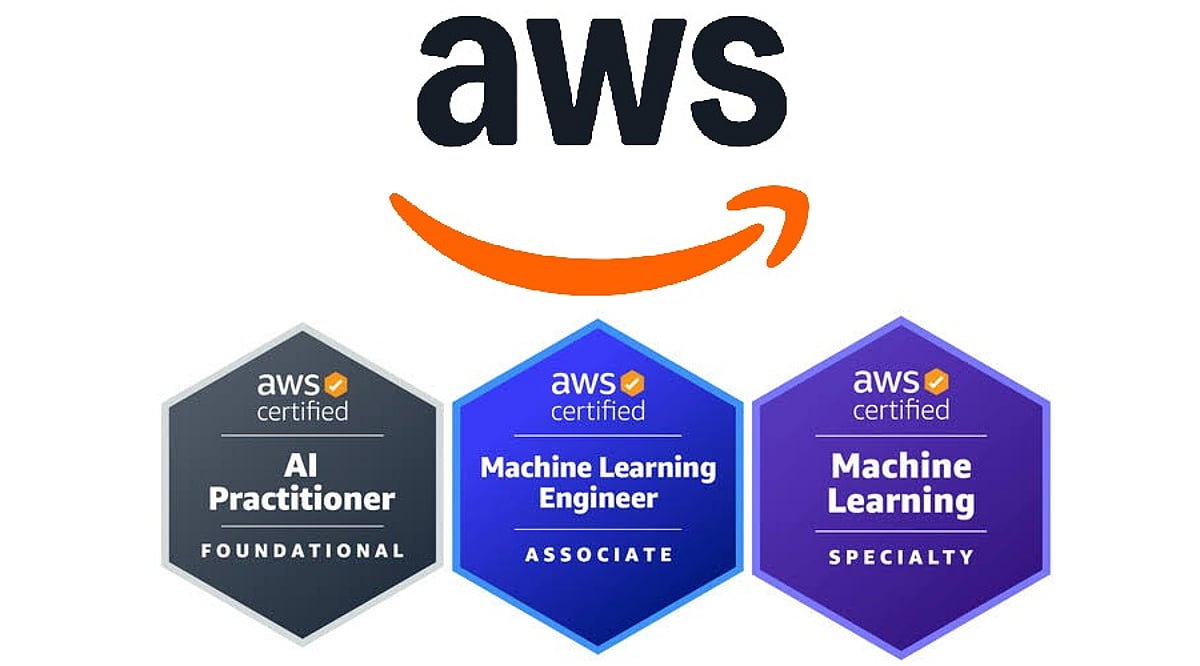
    AWS has modernized its certification ecosystem by replacing the legacy Machine Learning – Specialty path with role-specific credentials aligned with today’s AI and generative AI workloads. AWS certifications used to funnel almost everyone toward one exam. This has changed, and the lineup now spans across four credentials, each built for a distinct kind of work. It includes a foundational exam for newcomers, an associate-level path for engineers who build and deploy models, a data-focused associate track, and a professional certification for developers shipping generative AI features.

    The Machine Learning Specialty exam was retired for new candidates on March 31, 2026. Existing holders will keep the certification until its original expiry. More than an administrative change, this shift signals AWS’s move toward role-based certifications that better match candidates’ actual job responsibilities.

    What the Current Lineup Covers

    The active AWS AI and ML certifications include:

    • AWS Certified AI Practitioner (Foundational): Covers core AI and machine learning concepts, responsible AI practices, and how AWS services support common use cases. No coding background is required.
    • AWS Certified Machine Learning Engineer – Associate: Focuses on building, tuning, deploying, and monitoring machine learning models using services such as Amazon SageMaker, Amazon S3, and Amazon CloudWatch. Built for professionals who already have hands-on ML experience.
    • AWS Certified Generative AI Developer – Professional: Validates the ability to integrate large language models into applications, build retrieval-augmented generation (RAG) architectures, and work with vector databases and Amazon Bedrock for production-ready AI solutions.
    • AWS Certified Data Engineer – Associate: Centers on designing and managing data pipelines, storage, and reliable data infrastructure that supports machine learning and generative AI workloads.

    Matching the Exam to the Job

    A newcomer pivoting into AI from another field or a business analyst who needs to speak the same language as an engineering team gets the most value from AI Practitioner. It builds a baseline in AI and ML concepts without demanding coding depth.

    Someone already training and deploying models is better served by ML Engineer – Associate, which centers on data preparation, model tuning, and running workloads in production rather than staying inside a notebook.

    Developers already working with large language models, RAG pipelines, and Bedrock fit the Generative AI Developer – Professional role. This credential expects prior implementation experience rather than theory alone, and choosing it over AI Practitioner or ML Engineer comes down to one question: is the work built around foundation models or traditional ML pipelines?

    Data engineers who feed pipelines into ML systems should look at Data Engineer – Associate, a track that rarely gets the same attention as the AI-branded exams but supports all of them underneath.

    Product managers and stakeholders overseeing AI projects without building them get more practical value from AI Practitioner than from an engineering-level exam, since the goal is informed oversight rather than hands-on implementation.

    Deciding Where to Start

    The simplest approach starts with hands-on experience, not ambition. Someone new to AWS and AI belongs in AI Practitioner first. Someone already building or deploying models can skip straight to ML Engineer – Associate. A developer working with foundation models in production is the right candidate for Generative AI Developer – Professional.

    A common progression looks like AI Practitioner, then ML Engineer – Associate or Data Engineer – Associate depending on the role, then Generative AI Developer – Professional once foundation model work becomes part of the job.

    For those already deep into machine learning specialty prep, finishing it still holds some value, given less than a year remains before it closes to new candidates. For everyone else, moving straight to ML Engineer Associate offers more current coverage and a clearer path forward.

    The strongest certification choice rarely lines up with the most advanced option available. It lines up with what the job actually requires now and with where that job is headed next.

    Final Thoughts

    AWS restructuring its AI credentials around roles rather than a single tiered ladder points to where cloud certification is heading in general. It clarifies that the exam is less about climbing a fixed hierarchy and more about proving specific, current skills tied to specific work. Candidates who treat certification as a career-mapping exercise, rather than a checklist, will likely find their credentials relevant as AWS splits its portfolio.

  • PS5 System Software Update: Step-by-Step Installation Guide (Internet, USB, Safe Mode)

    PS5 System Software Update: Step-by-Step Installation Guide (Internet, USB, Safe Mode)

    Key Takeaways

    • PS5 system software updates improve performance, security, and compatibility with newly released games.
    • The console can update through the internet, a USB storage device, or Safe Mode when errors occur.
    • Automatic updates allow the system to download new software versions in the background.

    Updating your PlayStation 5 (PS5) system software is essential for smooth performance, stronger security, and access to the latest features from Sony. Updates typically include bug fixes, stability improvements, and compatibility support for new games. The PS5 can update automatically online or install updates manually using a USB device when internet access is unavailable. Below are the easiest ways to update your PS5 system software.

    Method 1: Update via the Internet

    Updating over the internet is the most popular method. When your console is connected to the internet, it can download the latest update directly from Sony’s servers.

    1. Turn on your PS5 and go to the home screen.
    2. Select Settings (the gear icon in the top-right corner).
    3. Scroll down and choose System.
    4. Select System Software.
    5. Open System Software Update and Settings.
    6. Select Update System Software.
    7. Choose Update Using Internet.

    After this, the system checks for the latest software version. If a new update is available, the PS5 begins downloading and installing it. During installation, the console may restart automatically—this is normal.

    Method 2: Update via a USB Drive

    A USB update is useful when your console cannot connect to the internet or when you need a manual installation. The update file is downloaded on a computer and then transferred to the console using a USB drive.

    1. Format a USB drive as FAT32 or exFAT on your computer.
    2. Create a folder named PS5 on the USB drive.
    3. Inside that folder, create another folder named UPDATE.
    4. Download the latest PS5 system software file from the official PlayStation website.
    5. Save the file inside the UPDATE folder with the name PS5UPDATE.PUP.
    6. Insert the USB drive into your PS5.
    7. Go to Settings > System > System Software > System Software Update and Settings.
    8. Select Update from USB Storage Device and confirm the installation.

    Once confirmed, the console installs the update and restarts automatically.

    Method 3: Update in Safe Mode

    Safe Mode is used when the console has difficulty starting or when a normal update fails. This mode provides troubleshooting options that allow you to update the system software.

    1. Turn off your PS5 completely.
    2. Press and hold the Power button until you hear a second beep (after a few seconds).
    3. Connect your controller with a USB cable and press the PS button.
    4. Select Update System Software from the Safe Mode menu.
    5. Choose Update Using Internet or Update from USB Storage Device.

    Enabling Automatic Updates

    Automatic updates let your PS5 download system software in the background without manual intervention.

    1. Open Settings.
    2. Select System.
    3. Choose System Software Update and Settings.
    4. Turn on Download Update Files Automatically and Install Update Files Automatically.

    Conclusion

    Regularly updating your PS5 system software keeps your console running properly and ensures support for new games and features. You can update via the internet, a USB device, or Safe Mode. Staying up to date helps maintain stability and enhances overall performance.

    Frequently Asked Questions

    How often should I update my PS5 system software?

    You should update whenever a new version is released to maintain stability and security.

    Can I update my PS5 without internet access?

    Yes, you can download the update on a computer and install it via a USB drive.

    What happens if my PS5 turns off during an update?

    An unexpected shutdown may interrupt the installation. In that case, try reinstalling the update in Safe Mode.

    Why are system software updates important for new games?

    Many modern games require the latest system software to run properly and support new features.

    Can Safe Mode help fix update errors?

    Yes, Safe Mode provides repair tools and allows you to update the system software if a normal installation fails.

  • 10 Computer Vision Unicorn Startups Redefining Industries in 2026

    10 Computer Vision Unicorn Startups Redefining Industries in 2026

    Computer vision has become one of the fastest-growing areas of artificial intelligence, enabling machines to interpret images and video like humans. Businesses now leverage this technology to improve factory operations, inspect products, guide autonomous vehicles, detect fraud, monitor workplaces, and assist doctors with medical imaging. As AI advances, computer vision opens new business opportunities across many sectors. Industry reports project the global computer vision market will surpass $30 billion by 2030, and investors continue to back companies building practical AI solutions instead of experimental products.

    Several startups have already achieved unicorn status (valuations above $1 billion). Many have raised fresh funding, signed major enterprise deals, and expanded into new markets. Here are ten computer vision unicorn startups worth watching in 2026.

    Key Takeaways

    • Computer vision unicorns solve real business problems across multiple industries.
    • Strong funding and billion-dollar valuations reflect growing investor confidence.
    • These startups will drive the next phase of enterprise AI adoption.

    Shield AI

    Shield AI is a leading defense-focused AI company founded in 2015. Its Hivemind software enables aircraft to operate without GPS, relying on computer vision and sensors to navigate buildings, roads, and targets. In 2026, Shield AI is valued at nearly $12.6 billion, thanks to new investments and increased defense collaborations. Governments worldwide are expected to boost spending on autonomous defense solutions, positioning Shield AI for further growth.

    Netradyne

    Netradyne transforms commercial fleet safety with AI-powered dashboard cameras that analyze driver behavior in real time. It rewards safe driving and detects distracted driving, phone use, fatigue, harsh braking, lane changes, and road hazards. The company became India’s first unicorn of 2025 after a $90 million Series D round from Point72 Asset Management, Qualcomm Ventures, and Pavilion Capital. Netradyne now processes over 4 trillion sensor data points annually across more than 550,000 connected vehicles, helping logistics companies lower accidents and insurance costs.

    Gecko Robotics

    Gecko Robotics builds robotic inspection systems for large factories, power plants, oil refineries, and defense facilities. Its robots use advanced cameras and AI to detect corrosion, cracks, leaks, and structural damage early. The company crossed unicorn status in 2025 and works with major industrial firms and government organizations. As predictive maintenance investment grows, Gecko Robotics stands out as a top industrial AI company.

    Tractable

    Tractable revolutionizes insurance claims with computer vision. Customers upload photos of damaged vehicles or property, and the AI estimates repair costs in minutes. This speeds up claims, reduces fraud, and improves customer experience. Hundreds of insurers across North America, Europe, and Asia now rely on Tractable, which continues to expand as digital claims become standard.

    Runway

    Runway is a popular AI video creation platform. Its software removes objects, tracks motion, edits clips, changes backgrounds, and generates new videos from simple scripts, saving hours of manual editing. With strong investor backing and partnerships with media companies, Runway is well positioned for growth in enterprise AI.

    Covariant

    Covariant addresses the challenge of robotic grasping in warehouses. Its AI combines computer vision and machine learning to enable robots to identify and handle a wide variety of products, regardless of size, shape, or packaging. This improves efficiency, reduces costs, and speeds up operations. As e-commerce drives warehouse automation, Covariant expects strong revenue growth in 2026.

    Voxel

    Voxel uses computer vision to improve workplace safety. Its AI platform connects to existing security cameras in factories, warehouses, and industrial sites to detect safety violations like improper lifting, forklift hazards, and unauthorized access. By preventing accidents, Voxel helps businesses reduce injuries and financial losses. Stricter safety regulations are driving increased adoption.

    Magic Leap

    Magic Leap develops advanced augmented reality headsets equipped with computer vision that maps rooms, tracks eye movements, recognizes objects, and overlays information. The technology aids medical specialists, factory workers, engineers, and military personnel. Initially known for hardware, Magic Leap’s software has become equally valuable.

    Verkada

    Verkada modernizes enterprise security with cloud-connected AI cameras. Its platform recognizes faces, reads license plates, counts people, tracks occupancy, and detects unusual activity across thousands of cameras. Security teams receive instant alerts. Businesses choose Verkada for smarter security without large on-site infrastructure, making it one of the fastest-growing companies in the market.

    Afresh

    Afresh applies computer vision to grocery store inventory management. The AI analyzes product images and inventory data to predict demand for fresh produce, reducing food waste and improving stock availability. Retailers using Afresh see better profit margins and sustainability, gaining attention across the retail industry.

    Why This Matters

    Computer vision now supports tasks once done manually, helping businesses save time, lower costs, improve safety, and make faster, more accurate decisions. As AI adoption grows, companies leading computer vision innovation will shape the future of healthcare, manufacturing, transportation, retail, defense, and many other sectors.

    Final Thoughts

    Computer vision technology has evolved rapidly, powering unmanned vehicles, warehouse robots, insurance systems, workplace safety, and smart cameras. Companies like Shield AI, Netradyne, Gecko Robotics, Tractable, Runway, Covariant, Voxel, Magic Leap, Verkada, and Afresh are solving real organizational problems with strong funding and billion-dollar valuations, proving market confidence.

    FAQs

    1. What is a computer vision startup? A computer vision startup develops AI software that allows machines to understand and analyze images, videos, and visual data for real-world applications.
    2. What makes a startup a unicorn? A startup becomes a unicorn when its private valuation reaches $1 billion or more.
    3. Which industries use computer vision the most? Healthcare, manufacturing, logistics, retail, automotive, insurance, defense, agriculture, and security are the biggest users.
    4. Why do investors support computer vision startups? These companies build scalable AI solutions that improve efficiency, reduce costs, increase safety, and create long-term business opportunities.
    5. Why should businesses watch these startups in 2026? These companies lead innovation with advanced AI products, strong funding, expanding customer bases, and technologies that will influence enterprise automation.

  • Why the Top AI ETF Diversifies Beyond Chip Stocks for Better Returns

    Why the Top AI ETF Diversifies Beyond Chip Stocks for Better Returns

    The best-performing AI ETF of 2026 proves that investing across the entire AI ecosystem—not just semiconductor companies—can deliver superior returns while reducing risk. The VistaShares Artificial Intelligence Supercycle ETF (AIS) has surged approximately 119% year-to-date as of early June 2026, outperforming many popular chip-focused funds.

    The Shift Beyond Semiconductors

    For the past two years, investors have concentrated heavily on semiconductor stocks like Nvidia, Broadcom, TSMC, and AMD, which powered AI growth. However, the AI landscape has expanded dramatically. Modern AI systems require cloud platforms, data centers, fast networking, software, memory, and storage—not just chips. As businesses integrate AI into daily operations, companies across these sectors are seeing revenue growth, reshaping investment strategies.

    How AIS Achieves Superior Performance

    Unlike traditional semiconductor ETFs that often overweight a few chipmakers—Nvidia alone can dominate fund allocations—AIS spreads its investments across multiple AI segments:

    • Chip manufacturers
    • Cloud providers
    • Networking companies
    • Enterprise software firms
    • Digital infrastructure businesses
    • Memory technology companies

    This diversification helps absorb shocks when one sector underperforms, while still capturing the broad AI growth story.

    Pressure on Chip Stocks

    Semiconductor companies continue to report strong results, but investor expectations have reached extreme levels. For example, Texas Instruments reported 23% revenue growth and record quarterly revenue of $5.46 billion, yet its stock fell because markets anticipated even more. This illustrates how even excellent performance can disappoint when priced in fully.

    Recent market volatility further highlights the risk of overconcentration. The iShares Semiconductor ETF (SOXX) posted strong gains earlier in the year but suffered a sharp July decline as doubts emerged about sustained AI infrastructure spending. Diversified AI funds like AIS are better positioned to weather such swings.

    AI Spending Continues to Accelerate

    Despite short-term price fluctuations, corporate investment in AI remains massive. Major tech firms are pouring billions into new data centers, cloud services, networking gear, custom chips, and power infrastructure. Global semiconductor revenue is projected to reach $1.29 trillion in 2026—approximately 53% annual growth—driven primarily by AI. These investments create opportunities across the entire AI value chain, not just chip manufacturing.

    The Internet Parallel

    The current AI investment cycle mirrors the early internet era. Initially, hardware companies dominated investor attention. Later, software, internet platforms, and cloud businesses became the biggest winners. AI is following the same trajectory: chip companies remain essential, but cloud providers, networking firms, software developers, cybersecurity companies, and digital infrastructure players are now generating significant long-term value. Investors who focus solely on semiconductors risk missing these opportunities.

    Why This Matters

    Artificial intelligence represents one of the most significant investment opportunities in decades. Yet many investors remain fixated on chip stocks, overlooking the broader ecosystem. Understanding this shift can help build stronger portfolios, reduce concentration risk, and identify emerging growth areas before they become mainstream.

    Final Thoughts

    The success of AIS demonstrates that AI investing has entered a new phase. While chips remain foundational, they are just one component of a vast industry. A diversified AI ETF offers exposure to the full AI ecosystem—clouds, software, networks, and digital infrastructure—rather than concentrating capital in a few semiconductor firms. As AI adoption spreads across the economy, companies in these adjacent sectors will play increasingly critical roles. This innovative approach has propelled AIS to the top of AI ETFs, proving that pure semiconductor investment is no longer the only path to AI-driven returns.

  • Galaxy AI vs Apple Intelligence: Key Differences in Smartphone AI Approaches

    Galaxy AI vs Apple Intelligence: Key Differences in Smartphone AI Approaches

    Samsung and Apple are pursuing distinct strategies for integrating artificial intelligence into smartphones. Galaxy AI emphasizes practical, user-accessible tools like translation, photo editing, and productivity enhancements. Apple Intelligence, by contrast, takes a more personalized route, embedding AI deeply into the operating system and apps to create a seamless, context-aware experience. Both aim to make smartphones smarter and more useful, but their methods differ significantly.

    Galaxy AI Is Built for Action

    Galaxy AI functions as a broad toolkit of practical features. Users can translate calls in real time, summarize content, edit photos with generative tools, and rewrite text. Samsung also leverages AI to improve search and overall productivity. This approach gives users visible, direct-access features, making Galaxy AI particularly appealing to those who want control and flexibility.

    Apple Intelligence Thinks Contextually

    Apple Intelligence is designed to understand the user’s personal context. Apple integrates AI into Siri, Messages, Mail, and other system-level features. The goal is to make AI feel less like a separate tool and more like an intelligent layer that works across the entire Apple ecosystem.

    AI Assistants Take Different Paths

    Galaxy users benefit from Samsung’s AI features alongside Google’s Gemini ecosystem, giving Android users access to a wide range of AI capabilities. Meanwhile, Apple is upgrading Siri to better understand context and perform more complex tasks. Apple’s long-term vision centers on a more capable assistant deeply integrated with Apple devices.

    Photo and Writing Tools

    Both platforms offer AI-powered writing and image-editing tools. Galaxy AI provides features such as Generative Edit, object removal, summarization, and writing assistance. Apple Intelligence offers tools including Rewrite, proofreading, Clean Up, and AI-generated images. Currently, Samsung feels more feature-heavy, while Apple focuses on seamless system integration.

    Privacy Remains a Key Difference

    Apple has placed privacy at the center of its AI strategy. Apple Intelligence processes many tasks on-device and uses Private Cloud Compute for more complex requests. Galaxy AI also combines on-device and cloud processing, depending on the feature. The key difference lies in how each company positions privacy within its AI ecosystem.

    Which AI Approach Is Better?

    Galaxy AI is better suited to users who want a wide range of practical tools and greater flexibility. Apple Intelligence may appeal more to users invested in Apple’s ecosystem who seek contextual, personalized assistance. The real competition is not simply about features—it is about which company can make AI feel most useful in everyday life.

  • Indian Stock Market Opens Sharply Lower: Nifty 50 Drops 178 Points, Sensex Sinks Over 600 Points on Rising Oil Prices

    Indian Stock Market Opens Sharply Lower: Nifty 50 Drops 178 Points, Sensex Sinks Over 600 Points on Rising Oil Prices

    The Indian stock market opened sharply lower on Friday, dragged down by weakness in global markets and a surge in crude oil prices that has stoked inflation fears and dampened investor sentiment. At the opening bell, the Nifty 50 fell 178 points, the Sensex declined 633 points, and the Bank Nifty edged over 0.70% lower.

    On Thursday, the Sensex had already declined 363.66 points, or 0.47%, to close at 76,391.39, while the Nifty 50 fell 126.65 points, or 0.53%, to settle at 23,869.60. The Indian rupee also opened lower at Rs. 96.63 per dollar on Friday, compared to Thursday’s close of Rs. 96.57.

    Institutional activity showed a mixed picture. Domestic institutional investors (DIIs) stepped up buying in Indian equities on July 23, purchasing shares worth Rs. 2,947.14 crore. In contrast, foreign institutional investors (FIIs) remained net sellers, offloading equities worth Rs. 2,999.23 crore.

    Sensex Outlook

    Technically, the Sensex formed a bearish candle on the daily chart and is holding a lower top formation on intraday charts, supporting further weakness from current levels.

    “As long as the market is trading below 77,000, weak sentiment is likely to continue on the downside. The correction wave is likely to persist till 76,000. Further downside may also continue, which could drag the index to 75,700-75,500. On the flip side, above 77,000, the sentiment could change. Above this level, the market could bounce back to 77,300-77,500. The intraday market texture is uncertain and volatile; hence, level-based trading would be the ideal strategy for day traders,” said Shrikant Chouhan, Head of Equity Research at Kotak Securities.

    Nifty 50 Outlook

    The Nifty 50 continues to exhibit a corrective trend after extending losses for the fourth straight trading session. The index formed a high-wave candle on the daily chart, indicating that selling pressure remains intact.

    The index is currently testing the important support area between 23,800 and 23,750, where the 50-day Simple Moving Average (SMA) coincides with multiple swing lows formed over the past five weeks.

    “On the downside, a breach below 23,800-23,750 on a closing basis will accelerate downside towards the 23,500 levels in the coming weeks, being the confluence of the trendline support joining lows of April and June 2026, bullish gap area of June 15, 2026, and 61.8% retracement of the recent up move from 23,070-24,530,” said Bajaj Broking Research.

    The brokerage added that a move back above 24,000 could temporarily halt the recent decline and pave the way for a recovery towards 24,200 during the coming week.

    Bank Nifty Outlook

    The Bank Nifty formed a bearish candle pattern with lower highs and lower lows on the daily chart, indicating weakness in the near term.

    A sustained move below the 56,200-56,500 support zone could trigger further weakness towards the 55,500-55,000 levels, which coincide with a key trendline support and the 61.8% Fibonacci retracement of the previous rally.

    “A shallow retracement signals overall positive bias and a higher base formation in the current corrective decline. On the higher side, 57,500 will act as an immediate hurdle, while the upper band of the recent consolidation, placed around 58,500-58,700, will act as a stiff hurdle in the index in the coming weeks,” said Bajaj Broking Research.

  • Gold Prices Dip as Brent Crude Trades Above $100, Fueling Rate Hike Expectations

    Gold Prices Dip as Brent Crude Trades Above $100, Fueling Rate Hike Expectations

    Gold prices edged lower on the Multi Commodity Exchange (MCX) on July 24 as Brent crude oil held above $100 a barrel, intensifying inflation concerns and reinforcing expectations for a September rate hike by the U.S. Federal Reserve.

    Domestic Gold Prices

    MCX August gold futures dropped 0.7% to Rs 1,41,824 per 10 grams. September silver futures also declined, falling 0.88% to Rs 2,17,447. In the physical market, 24K gold fell by Rs 185 to Rs 1,44,330 per 10 grams, while 22K gold declined by Rs 170 to Rs 1,32,300. Prices in Mumbai and Kolkata stood at Rs 1,44,330, Delhi at Rs 1,44,480, and Chennai at Rs 1,44,330.

    US Gold and Precious Metals

    Spot gold slipped 0.4% to $4,030.09 per ounce, extending losses after a 2% drop in the previous session. U.S. gold futures for August delivery were also 0.4% lower at $4,033.20. Spot silver fell 0.7% to $57.29 per ounce but was on track for a weekly gain of 2.5%. Platinum dropped 1.3% to $1,579.49, and palladium declined 1.5% to $1,237.50, both heading for a weekly loss.

    Key Levels to Watch

    According to the CME FedWatch Tool, traders now see an 81% probability of a quarter-point rate hike in September. Elevated crude oil prices above $100 are adding to inflation pressures, strengthening the case for tighter monetary policy.

    GoldSilver Central Managing Director Brian Lan noted, “In the short term, we expect more volatility… gold has been trading between $3,980 and about $4,170 and has been stuck in this range for weeks. Every time prices hit close to $4,000 or slightly below, we see big buyers coming to buy it back up.”

    Technically, XAU/USD trades around $4,030 and remains capped below the 21-day simple moving average (SMA) at $4,068.50 and the 50-day SMA at $4,231.04. The Relative Strength Index (RSI) sits near 44, indicating neutral-to-soft momentum. Immediate resistance is at $4,068.50, followed by the 50-day SMA near $4,231.04. A break above that would face further resistance at the 100-day SMA ($4,479.88) and the 200-day SMA ($4,494.74), which form a dense zone that needs to be reclaimed to ease the broader bearish tone.