Author: vitorcherulli

  • How Toobit’s AI Trading Assistant Helps Traders Navigate Crypto Markets

    How Toobit’s AI Trading Assistant Helps Traders Navigate Crypto Markets

    Crypto markets rarely stand still. Even when overall sentiment remains cautious, traders continue searching for opportunities as capital moves between Bitcoin, Ethereum, and the broader altcoin market. As markets become increasingly information-driven, Toobit AI trading opportunities is gaining attention by helping traders process market data faster, identify potential setups, and evaluate opportunities without manually monitoring every chart.

    Current market conditions highlight why this matters. CoinMarketCap data shows Bitcoin trading near $64,752.66, up 2.96% over the past seven days, while Ethereum is trading around $1,878.74, gaining 4.98% during the same period. Total crypto spot trading volume remains above $43 billion, while the Fear and Greed Index sits at 35, suggesting that traders remain active despite cautious sentiment.

    For active traders, the challenge is rarely a shortage of information. Price charts, funding rates, economic developments, and market sentiment all change continuously throughout the day. The bigger challenge is identifying which signals matter and turning scattered information into actionable decisions before conditions shift. This is where AI-assisted trading tools are becoming increasingly relevant.

    Rather than replacing market analysis, AI tools help traders process information more efficiently, identify potential market scenarios, and create a clearer framework for evaluating trades. Used correctly, they serve as a support tool that helps traders prepare more effectively instead of acting as a shortcut to guaranteed results.

    Market context comes first

    Every trading decision begins with understanding the broader market environment. Before evaluating a specific opportunity, traders often examine how Bitcoin and Ethereum are performing, where liquidity is moving, and whether volatility is expanding or declining. Recent performance shows why this context matters. Bitcoin has gained 2.22% over the past 30 days, while Ethereum has advanced 10.09% during the same period. Although both assets have moved higher, the difference in performance suggests that momentum is developing at different speeds across the market.

    These differences influence more than price direction. Traders also compare volume, volatility, and market participation to determine whether a move is gaining strength or losing momentum. Looking at a single chart rarely provides the full picture, especially when capital rotates quickly between sectors. Trading activity reinforces this complexity. Reported derivatives volume has reached approximately $389.48 billion over the past 24 hours, increasing 32.86% as traders position around short-term volatility. Futures markets now represent a significant part of crypto trading activity, making leveraged positioning an important factor in price discovery.

    CoinMarketCap’s broader market metrics show a similar trend. Global cryptocurrency market capitalization is estimated at roughly $2.21 trillion, while 24-hour spot trading volume stands near $43.48 billion. By comparison, reported derivatives volume approaches $394.79 billion, highlighting the scale of leveraged markets. When derivatives activity exceeds spot trading by such a wide margin, price movements are influenced by more than simple buying and selling pressure. Funding rates, open interest, and liquidation events can all accelerate market moves, sometimes pushing prices beyond what spot demand alone would suggest. For traders, this means market analysis has become increasingly complex. Understanding price direction remains important, but so does recognizing how liquidity and trader positioning can influence short-term movements. The ability to quickly evaluate these factors can help traders determine whether a potential setup still matches current market conditions.

    What Toobit AI trading opportunities means

    This is where AI-assisted analysis can become part of a trader’s decision-making process. On Toobit, AI trading opportunities refers to AI-powered analysis designed to help traders evaluate futures markets more efficiently. Instead of providing general market commentary, AI Trading Assistant converts market data into trade plans that include suggested entry levels, take-profit targets, stop-loss placement, and trading timeframes.

    This approach differs from simply following a trading signal. Traditional signal services may tell traders when to buy or sell without providing enough context behind the idea. AI-generated trade plans are designed to give traders a framework they can review alongside current market conditions before deciding whether a position fits their strategy. The goal is not to remove decision-making from trading. It is to reduce the time spent collecting and organizing information so traders can focus on evaluating the quality of a setup, potential risks, and whether market conditions still support the original analysis.

    As AI tools become more common across financial markets, their value increasingly comes from improving consistency rather than predicting every price movement. In crypto markets, where conditions can change within minutes, having a faster way to evaluate potential opportunities can help traders approach execution with greater discipline.

    Turning analysis into execution

    A trading idea becomes meaningful only when it can be translated into an actionable plan. Recognizing that a market appears bullish or bearish is rarely enough on its own. Traders still need to determine where to enter, where to exit, and how much risk they are willing to accept before opening a position. This planning process becomes especially important in futures markets, where leverage can amplify both gains and losses. A small difference in entry price or stop-loss placement can significantly affect the outcome of a trade, particularly during periods of increased volatility.

    Toobit’s AI Trading Assistant is designed around these practical decisions. Instead of presenting a broad market outlook, it transforms technical analysis into trade parameters that traders can compare against live market conditions before deciding whether to execute. Each AI-generated trade plan includes suggested entry levels, take-profit targets, stop-loss placement, and an expected trading timeframe. These details provide traders with a starting point for evaluating whether a potential opportunity matches their own strategy and risk preferences. For traders who want to learn more about how to find trades faster with Toobit AI, Toobit Academy explains how AI Trading Assistant turns market analysis into actionable trading ideas.

    Choosing between scalp and swing strategies

    Not every trading opportunity is designed to last for the same amount of time. Some market conditions favor short-term momentum trades that may last only minutes or hours. Others develop over several days as broader trends emerge. Understanding this difference helps traders choose an approach that matches current market behavior. Toobit’s AI Trading Assistant supports both scalp and swing modes to reflect these different trading objectives.

    Scalp mode focuses on shorter-term market movements where speed and precision are often more important than capturing a larger trend. Traders using this approach typically look for smaller price movements while monitoring support, resistance, and changes in momentum. Swing mode takes a broader perspective. Instead of reacting to every short-term fluctuation, it focuses on opportunities that may develop over a longer timeframe, allowing traders to participate in larger moves while accepting wider price changes along the way. Neither approach is universally better. The more suitable strategy often depends on market conditions. During range-bound markets, shorter-term opportunities may appear more frequently as prices move between established levels. When stronger trends develop, swing opportunities may provide more attractive risk-to-reward potential. The key is matching the trading style with the market environment rather than forcing a single approach across every situation.

    Building a complete trade plan

    Identifying market direction is only one part of trading. Every position also requires clear risk management before the first order is placed. Entry levels define where a trader intends to participate. Waiting for price to reach a planned level can help reduce emotional decisions, especially during periods of rapid market movement. Stop-loss levels define where the original analysis is no longer valid. Rather than viewing a stop-loss as simply limiting losses, experienced traders often treat it as a point where changing market conditions suggest that the original idea may no longer apply. Take-profit targets serve a similar purpose. They establish realistic expectations before emotions influence decision-making. By defining potential exits in advance, traders can evaluate whether the expected reward justifies the risk involved. Looking at these factors together creates a more complete evaluation of a potential trade. An entry point may appear attractive, but if the upside is limited compared with the downside risk, the overall opportunity may not be as favorable.

    Why BTC and ETH still lead the market

    Although thousands of cryptocurrencies are actively traded, Bitcoin and Ethereum remain the primary reference points for the broader market. CoinMarketCap data shows Bitcoin accounting for approximately 58.69% of the total cryptocurrency market, while Ethereum represents around 10.22%. Together, both assets continue to attract significant liquidity, institutional attention, and trading activity. Current market data also shows differences in recent performance. While Bitcoin continues to serve as the market benchmark, Ethereum has recently shown stronger percentage gains across both weekly and monthly timeframes. Its faster growth in trading volume also suggests increasing participation as traders look beyond Bitcoin for additional opportunities. Comparing these differences helps traders build a broader market view before focusing on individual assets. Strong Bitcoin performance often reflects overall market confidence, while Ethereum’s relative strength can signal growing interest in areas such as decentralized finance, tokenization, and blockchain applications. For traders evaluating multiple opportunities, AI-assisted analysis can help compare market conditions more efficiently. By bringing together price trends, momentum indicators, and key technical levels, traders can better determine whether current conditions support their intended strategy.

    Stress-testing an AI trade plan

    A trading plan should not be accepted simply because it has been generated. Markets continue to change after analysis is complete, and even well-prepared setups can lose their advantage if conditions shift before execution. One practical way to improve consistency is to treat every AI-generated trade plan as a starting point rather than a final decision. Taking a short moment to review the setup helps determine whether the opportunity still matches current market conditions.

    The first check is price position. If the market has already moved close to the suggested take-profit or stop-loss level, much of the original opportunity may have disappeared. Entering after a major price move can change the expected risk-to-reward ratio and create a less favorable setup. The second check is liquidity. Reviewing the live futures order book and bid-ask spread provides information that technical analysis alone may not capture. Lower liquidity or wider spreads can increase execution costs and affect order fills, especially during periods of heightened volatility. The final check is risk allocation. Position size should always be determined before leverage is selected. Defining the maximum amount of capital that can be lost on a trade helps traders select a suitable position size and avoid placing excessive exposure on a single idea. These checks require only a short amount of time, but they help connect market analysis with disciplined execution.

    Common execution mistakes

    Successful trading often depends less on finding perfect entries and more on avoiding preventable mistakes. One common mistake is entering a position after price has already moved beyond the planned entry zone. Strong momentum can create fear of missing out, causing traders to chase moves that no longer offer the same potential reward relative to risk. Another mistake is changing stop-loss levels after entering a trade. While market conditions can sometimes justify adjustments, widening a stop simply to avoid realizing a loss changes the original risk calculation and may expose traders to larger losses than intended. Position sizing also requires careful attention. Even high-conviction setups can fail, especially during periods of increased volatility. Allocating too much capital to a single position can allow one unexpected market move to have a disproportionate impact on overall performance.

    Keeping a trading journal can help address these challenges. Recording the original market idea, entry point, stop-loss, take-profit target, and final outcome creates a record traders can review over time. Patterns often become easier to identify when decisions are documented consistently rather than evaluated only after results are known.

    Building a repeatable trading workflow

    Consistency often comes from following a reliable process rather than predicting every market movement correctly. A practical process begins with understanding the broader market environment. Reviewing Bitcoin and Ethereum performance, monitoring sentiment, and identifying where liquidity is concentrated can provide useful context before focusing on specific opportunities. The next step is reviewing potential trade ideas. Instead of immediately placing an order, traders can evaluate whether the suggested timeframe, technical levels, and current market conditions align with their own strategy. Before execution, traders should confirm that price remains near the intended entry area, liquidity conditions are suitable, and the potential reward still justifies the risk involved. These final checks help ensure that the market has not changed significantly since the initial analysis.

    Once a trade is opened, discipline becomes just as important as preparation. Allowing the position to follow the original plan instead of reacting to every short-term price movement can help reduce emotional decisions. After the position closes, reviewing the outcome provides valuable feedback. Understanding what worked, what changed, and what could be improved helps traders refine their approach over time.

    By repeating this process, traders can build greater consistency regardless of whether individual trades result in profit or loss.

    Trading with AI on Toobit

    Crypto markets continue to evolve as trading activity increases, new narratives emerge, and market conditions shift throughout the day. In this environment, traders are often challenged not by a lack of information, but by the speed at which information changes. AI-assisted analysis helps simplify that process by bringing together relevant market information and presenting potential opportunities in a clearer format. Combined with live market confirmation and disciplined risk management, AI can become a practical tool for improving preparation and decision-making.

    On Toobit, AI Trading Assistant helps traders evaluate futures opportunities by converting market analysis into clear trade plans that can be reviewed before execution. Whether the focus is identifying short-term momentum or evaluating broader market trends, the purpose remains the same: helping traders prepare more effectively before entering a position. Markets will always involve uncertainty, and no analytical tool can remove that reality. Long-term results still depend on risk management, discipline, and a consistent trading process. AI does not replace experience or judgment. Instead, it provides another way for traders to analyze opportunities, manage information, and approach the market with greater efficiency.


  • How AI Art and Video Generators Are Reshaping Creative Production in 2026

    How AI Art and Video Generators Are Reshaping Creative Production in 2026

    The creative industry is undergoing a seismic shift. What was once a slow, resource-intensive domain of designers, photographers, and video editors has become a fast, AI-powered ecosystem where anyone can produce professional-quality visuals in minutes. The rise of AI art and video generators is not just changing how content is made—it is redefining who can create, how quickly content reaches audiences, and what businesses expect from creative production.

    In 2026, AI creative tools have moved from novelty to necessity. Industry reports indicate that over 34 million AI-generated images are created daily, and enterprise adoption of these tools has surged by more than 200 percent in the last 18 months. Platforms like ImagineArt have emerged as leaders, offering unified creative suites that combine image, video, ad, film, fashion, drama, and audio generation in one workspace.

    Why AI Art and Video Generators Are Leading the Revolution

    Traditional creative processes required weeks of coordination, thousands of dollars, and multiple experts. AI has compressed that timeline to hours, enabling a single person with the right platform and a prompt to produce what once demanded an entire team. Key drivers include exploding demand for visual content, rising production costs, faster client expectations, the rise of solo creators, enterprise personalization at scale, and the availability of advanced AI models to non-technical users.

    The Rise of Unified Creative Platforms

    Early AI creative tools focused on single-format outputs, leading to fragmentation and subscription overload. In 2026, leading platforms offer full creative suites. ImagineArt, for example, integrates multiple top AI models such as Nano Banana Pro, Imagen, Flux, Recraft, Kling, Seedance, and Runway, giving creators the power to choose the best engine for each task without switching platforms.

    ImagineArt’s Core Studios

    • AI Image Generator – for product visuals, social graphics, and brand imagery
    • AI Video Generator – for cinematic short-form and long-form video
    • AI Ads Studio – for high-converting ad creatives
    • AI Film Studio – for storyboards and short films
    • AI Fashion Studio – for lookbooks and editorial visuals
    • AI Drama Studio – for dialogue scenes and storytelling clips
    • AI Audio Studio – for voice cloning, text-to-speech, and music

    How AI Art Generators Change Visual Design

    AI art generators now serve as the backbone of modern visual design. Marketing teams, small businesses, and creators use them for product photography, social media graphics, ad creatives, brand identity variations, e-commerce banners, concept art, and personalized visuals. The business impact is clear: companies produce 10–20 times more visual content per month at a fraction of the cost.

    How AI Video Generators Transform Motion Content

    Video is the fastest-growing content format in 2026. AI video generators have made creation as fast as writing a prompt. ImagineArt’s AI video generator stands out by offering multi-model support with cinematic camera and lens simulations for ARRI, RED, Sony, Cooke, and Zeiss, enabling studio-grade output without a studio budget. It supports text-to-video and image-to-video generation, aspect ratio presets for all major platforms, and built-in voiceover, music, and captions.

    The Business Impact of AI Creative Tools

    Reported outcomes include 60–80 percent reduction in creative production costs, 3–5 times faster campaign turnaround, higher content variation for testing, reduced dependency on external agencies, increased output without team expansion, and stronger brand consistency. For enterprises, this means faster time-to-market; for solo creators, the ability to compete with larger brands.

    Where the Revolution Is Headed

    The next chapter involves Model Context Protocol (MCP) support, agentic AI workflows, and multi-model orchestration. Platforms like ImagineArt are positioning at the center of this future by combining multi-model access, MCP-ready workflows, and full creative studios. AI agents will soon manage entire pipelines from research to distribution.

    The AI creative revolution is no longer a prediction—it is the reality shaping content creation in 2026. AI art and video generators lead this transformation, and platforms like ImagineArt provide the fastest, smartest way forward for brands, creators, and enterprises alike.

  • How AI Is Transforming Risk Assessment in Litigation Finance

    How AI Is Transforming Risk Assessment in Litigation Finance

    Every litigation finance investment starts with an assessment of the case itself. Before capital is committed, funders need to understand how strong the legal claim is, what the potential risks are, and whether the expected return justifies the investment. Traditionally, this has been the work of experienced lawyers and underwriters. Increasingly, AI is being used to support these early assessments by reviewing information faster and identifying patterns that might otherwise take much longer to find.

    The shift is not incremental. AI tools can scan thousands of court records in the time a human analyst spends reading a single brief. They surface patterns invisible to individual minds. They compress due diligence from weeks into days. The litigation finance industry is not just experimenting with AI. It is rebuilding its core risk infrastructure around it.

    At a glance

    • AI systems now cut initial case review time by more than 70%, letting litigation funders evaluate significantly more claims without adding headcount
    • Predictive scoring models trained on millions of court records forecast win probabilities with a precision no single analyst can match manually
    • Portfolio-level AI analysis allows funders to balance risk across hundreds of simultaneous cases, something previously impossible at scale
    • AI-washing is already drawing SEC and FTC penalties, meaning human oversight is not just smart but legally necessary
    • AEQUIFIN is developing an AI-powered intake tool that pre-screens case submissions before they reach a human underwriter

    How Is AI Transforming Case Evaluation?

    The traditional risk assessment process in litigation finance was slow by design. A senior underwriter would spend weeks reviewing briefs, benchmarking comparable settlements, and interviewing the claimant’s legal team before making a funding decision. Speed was a luxury the industry could not afford because the margin for error was so thin.

    AI removes that ceiling in several ways at once.

    Predictive Scoring: What the Data Sees That Humans Miss

    Modern litigation AI models are trained on millions of historical court records: verdicts, settlements, appeal rates, judge behavior, jurisdiction-level outcomes. From that dataset, they generate predictive scores for new cases before a lawyer has billed a single hour of review time.

    The pattern recognition is qualitatively different from legal intuition. Where an experienced analyst recalls what they have personally seen, AI identifies correlations across data volumes no individual mind can process. A specific judge’s historical tendency to deny motions in commercial contract disputes. The statistical relationship between discovery duration and final settlement size. The appeal rate differential between jurisdictions in securities fraud claims. These are not educated guesses. They are signals extracted from the record.

    Key capabilities AI now delivers to litigation funders:

    • Smarter Case Scoring: AI cross-references millions of past verdicts to assign win-probability estimates to incoming claims before manual review begins
    • Faster Due Diligence: AI document analysis cuts initial case screening time by over 70%, compressing what once took weeks into hours
    • Duration Risk Modeling: Machine learning tracks how long comparable cases historically took to resolve, giving funders a timeline they can plan capital deployment around
    • Portfolio Optimization: AI evaluates entire books of litigation simultaneously, balancing expected returns and duration risk across hundreds of active investments

    AI vs. Traditional Risk Assessment: How the Two Approaches Compare

    Factor AI-Assisted Assessment Traditional Assessment
    Speed Hours to days Weeks to months
    Data Coverage Millions of historical cases Limited to analyst experience
    Pattern Recognition Systematic across all data Strong but selective
    Human Factor Sensitivity Limited High
    Cost at Scale Decreasing Fixed per case
    Regulatory Risk AI-washing exposure Minimal

    The comparison highlights that AI and human expertise serve different purposes. AI can make the initial review faster and more consistent, while experienced underwriters provide the legal and commercial judgment needed for complex investment decisions. In practice, the two approaches work best together rather than as alternatives.

    The Limits: Why Is Human Judgment Still Irreplaceable?

    For all its advantages, AI in litigation finance has serious limitations. The industry is now learning some of them through regulatory enforcement.

    Litigation is far more complex than a dataset. New evidence can appear late in a case, witnesses may change their statements, settlement discussions can take unexpected turns, and courtroom decisions are influenced by many factors that are difficult to measure. AI can help identify patterns and highlight promising cases, but it cannot account for every legal nuance or predict outcomes with certainty.

    There is also the quality of the underlying data to consider. If the data is incomplete or biased, the assessment will inevitably reflect those limitations. For that reason, AI works best as a decision-support tool, with experienced legal professionals making the final judgment.

    AI-Washing: The Regulatory Trap Already Closing

    Regulators have already moved on companies that overstate what their AI can do.

    The FTC penalized DoNotPay when its “robot lawyer” AI consistently failed to deliver on its core promise of replacing human attorneys. The SEC fined an investment firm that marketed itself as the “first regulated AI financial advisor” when the underlying technology could not substantiate the claim. These cases define a concept with serious financial consequences: AI-washing. For litigation funders developing algorithmic tools, the message is unambiguous. Transparency about what the models do and do not do is not a preference. It is a regulatory requirement.

    AEQUIFIN’s AI Tool: Screening Cases Before a Human Opens the File

    AEQUIFIN is one of the companies exploring how AI can improve the early stages of case assessment. The company is developing an AI-powered intake system that reviews new submissions before they reach a human underwriter.

    The goal is straightforward. Litigation funders receive a large number of case inquiries, and every submission requires an initial review before anyone can decide whether it is worth investigating further. Automating that first step helps reduce manual work and allows underwriters to spend more time on the cases that warrant a closer look.

    The system can review each submitted case against a set of core eligibility criteria, including the type of claim, its estimated value, the relevant jurisdiction, and key indicators of legal strength. Based on this information, it provides an initial assessment. Cases that meet the required threshold are passed on to human underwriters for a more detailed review. If a case doesn’t qualify at this stage, applicants receive a clear explanation of why, along with guidance on any additional information or documentation that could improve their submission.

    The result is a faster, more transparent process for claimants and a cleaner pipeline for AEQUIFIN’s investment team. Claimants will submit their case for AI-assisted review directly through the platform.

    What This Means If You Have a Claim

    The practical effect of AI adoption across litigation finance is accelerated access. Funding decisions that previously took months now move through initial screening in days. Claims that previously fell below the threshold of manual review because evaluating them cost more in analyst hours than the likely return justified are now economically viable to assess.

    For businesses, investors, and individuals sitting on legitimate legal claims but lacking the capital to pursue them, that shift is significant. The barrier between having a case and being able to fight it is lower than it has ever been. View current cases here to see the types of claims AEQUIFIN actively funds.

    The Road Ahead

    AI is unlikely to replace litigation lawyers or investment professionals. Instead, it has the potential to make their work more efficient by reducing the time spent on repetitive tasks and supporting faster, more consistent case assessments. That could also make it easier for claimants with strong cases to receive an initial evaluation.

    As the technology matures, the firms that are likely to benefit most will be those that adopt AI in a measured and responsible way. This includes being transparent about what the technology can and cannot do, ensuring experienced professionals remain involved in key decisions, and using AI as a tool to support human judgment rather than replace it.

    Litigation finance will always require legal expertise, commercial judgment, and careful risk assessment. AI can contribute to that process by providing faster access to relevant information and highlighting patterns that might otherwise be missed, but final decisions will continue to depend on human experience.

    FAQ

    How accurate are AI systems at predicting litigation outcomes?

    Current models perform strongest on high-data case types such as commercial contract disputes and securities claims. Accuracy decreases on novel legal theories, jury trials, and jurisdictions with thin historical records. AI predictions should be treated as probabilistic inputs that inform human decision-making, not as definitive forecasts.

    What role does AI play in AEQUIFIN’s case evaluation process?

    AEQUIFIN is actively developing an AI-powered intake tool for pre-screening case submissions. The system assesses initial eligibility automatically, allowing human underwriters to focus on cases that clear the core investment criteria. Claimants can submit their case for AI-assisted review directly through the platform.

    What types of cases does AEQUIFIN fund?

    AEQUIFIN focuses on high-value civil and commercial litigation across European jurisdictions. Eligible cases typically involve substantial financial claims with clear underlying legal merit. An overview of active funded cases is available through AEQUIFIN’s case overview page.

  • How AI and Smart CRM Systems Are Revolutionizing TMJ Treatment in 2026

    How AI and Smart CRM Systems Are Revolutionizing TMJ Treatment in 2026

    Simple daily tasks like chewing or talking can become exhausting challenges for millions suffering from temporomandibular joint disorders (TMD). Chronic tension headaches, localized facial pain, and persistent jaw clicking are common symptoms, yet conventional diagnostic methods have long relied on trial-and-error splint adjustments and generalized therapy plans. Fortunately, TMJ treatment in 2026 has been transformed by cutting-edge clinical tools, including artificial intelligence and automated client relationship management platforms. These integrated systems deliver unprecedented diagnostic accuracy while providing a seamless, organized, and personalized patient experience at every step of care.

    How AI Improves Diagnostic Accuracy

    Identifying the cause of jaw joint dysfunction is clinically challenging. TMJ problems arise from a complex mix of structural misalignments, muscle overactivity, joint arthritis, or psychological stress. AI-powered diagnostic software now interprets 3D scans of jaws, dynamic bite motion tracking, and electromyographic muscle data within seconds.

    Automated Biomechanical Analysis

    Sophisticated algorithms detect micro-movements in the temporomandibular joint that the naked eye might miss. By analyzing how upper and lower teeth interact during chewing, AI tools create dynamic biomechanical maps. These digital models pinpoint specific pressure hot spots along the joint, allowing clinicians to design custom orthotic splints that precisely neutralize bite forces.

    Predictive Recovery Maps

    Machine learning algorithms leverage thousands of anonymized historical treatment outcomes to predict how a patient’s unique joint structure will respond to therapy. Instead of waiting months to see results from an orthotic device, treatment progression can be modeled with software, enabling dentists to make adjustments on the fly before physical appliances are manufactured.

    Traditional vs. AI and CRM Integrated TMJ Therapy

    To understand why patient satisfaction continues to soar, compare how modern automated workflows improve clinical outcomes over legacy care models:

    • Legacy Diagnostics: Traditional methods relied on visual assessments and basic X-rays across several appointments. AI software now processes complex 3D scans and joint motion tracking in seconds.
    • Appliance Customization: Traditional night guards are manually molded and have static fits. Digital AI planning creates dynamic, custom-milled orthotics based on real-time muscle activity.
    • Patient Support: Traditional offices needed phone check-ins during business hours. Smart CRM platforms offer automated wear reminders, progress surveys, and instant appointment bookings.
    • Treatment Tracking: Manual clinical note-taking made tracking slight joint improvements difficult. Cloud CRM portals store continuous biometric data to log measurable recovery milestones.

    Intelligent CRM Systems Enhance Patient Journeys

    AI drives the clinical side of care, but smart CRM software transforms the entire patient experience. For those living with a chronic condition like TMJ dysfunction, regular follow-ups, therapy commitment, and proactive communication are essential. Smart CRM networks connect patients directly to their clinical team, ensuring nothing falls through the cracks.

    Automated Care Pathways and Monitoring Progress

    Latest practice management software delivers customized education, exercise videos, and automatic progress check-ins directly to a patient’s smartphone. If a patient fills out a simple digital survey noting increased jaw pain, the smart CRM immediately alerts the dental team to reach out or automatically reschedules the follow-up.

    Multi-Discipline Coordination with Synchronization

    Effective joint therapy often requires cooperation between neuromuscular dentists, physiotherapists, and pain management specialists. Multi-disciplinary practices use centrally based smart CRM networks to store detailed digital files, ensuring all attending specialists have instant, secure access to diagnostic imaging and recovery timelines for truly integrated care.

    Digital Innovation for Enduring Jaw Comfort

    No more months of guessing and living with chronic jaw pain. The integration of artificial intelligence and intelligent CRM software has turned temporomandibular joint treatment into a precise, highly supportive clinical experience. Modern dental practices use predictive analytics, automated custom splint design, and seamless digital communication to help patients confidently conquer joint pain and achieve long-term oral function.

  • How Reward-Based Platforms Are Making Online Gaming Accessible Every Day of the Year

    How Reward-Based Platforms Are Making Online Gaming Accessible Every Day of the Year

    Modern reward-based online gaming communities are leveraging cutting-edge technologies and flexible motivation programs to eliminate traditional economic and geographic barriers. These ecosystems operate continuously throughout the year, ensuring high-quality gaming content is available to players worldwide.

    The digital transformation has turned video games from a luxury requiring expensive hardware into a widely accessible activity. A key driver of this shift is the explosive growth of reward-based gaming platforms. Their innovative hybrid business models and cross-platform structures have redefined how people perceive and engage with online entertainment.

    Dismantling Financial Barriers in Digital Entertainment

    In the past, premium gaming demanded costly hardware and subscription fees. Reward-based systems have changed this by introducing digital assets that replace money with active participation. Players can earn premium tokens, in-game assets, or platform access through engagement. Mechanics like free kredit 365 provide perpetual equity, allowing users to experience premium levels without spending their own funds. This financial freedom makes gaming accessible to those who previously could not afford it.

    The Technological Architecture Enabling Universal Access

    Year-round, accessible gaming relies on a solid stack of cloud infrastructure and cross-platform compatibility. Modern ecosystems handle hardware fragmentation, ensuring the same game version runs smoothly on budget phones, tablets, and older PCs.

    • Cloud Infrastructure: Offloads rendering to remote servers, enabling low-end devices to display high-quality visuals.
    • Unified API Frameworks: Synchronize rewards, identity verification, and cross-progression data in real time across operating systems.
    • Adaptive Security Measures: Protect in-game economies and ensure reliable token distribution.
    • AI-Driven Accessibility Services: Dynamically adapt interfaces with audio descriptions, adjustable text scaling, and customized input profiles.

    Psychological Drivers and Engagement Mechanics

    Behavioral psychology principles, particularly variable positive reinforcement, sustain these reward-based ecosystems. Platforms create clear, achievable progression paths, transforming repetitive play into a motivating experience. Daily challenges, leaderboards, and milestone rewards engage the drive for achievement. These tangible or universal rewards encourage players to feel their time is valued, shifting passive consumption into active participation.

    Continuous Availability: Redefining the Entertainment Calendar

    Traditional entertainment distribution is limited by seasons, geography, and time zones. Cloud-based incentive platforms eliminate these constraints by running a continuous global schedule. Automated systems ensure 24/7 operations with matching algorithms, payout verification, and live support. This constant accessibility is crucial for gamers with irregular schedules across different time zones.

    Inclusive Design of Interfaces

    Accessibility goes beyond affordability—it encompasses physical, sensory, and cognitive needs. Reward systems now employ universal design principles from the start. Many platforms feature haptic feedback, color blindness filters, text scalability, and voice-activated menus, removing physical and visual barriers to gaming.

    Conclusion

    The transition to reward-oriented online architecture marks a major breakthrough in digital entertainment. By combining cloud technologies, adaptive interfaces, and intuitive entry points, these platforms have created an open, inclusive global ecosystem. Features like free kredit 365 maintain constant engagement without upfront financial hurdles. As these technologies mature, barriers between casual players and high-tier digital spaces will continue to fade, ensuring secure, rewarding, and accessible entertainment for everyone, every day of the year.

  • HTTP vs HTTPS vs SOCKS5 Proxies: A Practical Guide to Choosing the Right Protocol Based on Tool Support and Traffic Type

    HTTP vs HTTPS vs SOCKS5 Proxies: A Practical Guide to Choosing the Right Protocol Based on Tool Support and Traffic Type

    Choosing between HTTP, HTTPS, and SOCKS5 proxies can be confusing. The key is to first check which proxy endpoint your tool supports, then consider whether your task is mainly web traffic. The protocol defines how you connect to the proxy; it does not directly determine proxy quality.

    When the wrong protocol is selected, the result is often not just slower speed. More commonly, the tool appears connected while the target site won’t open, or part of the login, API, or forwarding chain keeps failing. This guide clarifies where each protocol fits and provides scenario tables to narrow your testing order.

    What Traffic Are HTTP, HTTPS, and SOCKS5 Suitable For?

    These are common protocol names used when connecting to proxy services. In practice, don’t choose by protocol name alone. Check whether your tool’s proxy settings, request type, and troubleshooting path match.

    Are HTTP Proxies Suitable for Web Access and Regular APIs?

    HTTP proxies are common for web access, browser proxies, web requests, and simple API debugging. Their advantage is a low connection barrier and a clear troubleshooting path: host, port, username, password, and target site reachability can usually be checked one by one. If your task is mainly opening webpages, submitting forms, accessing dashboards, or making basic API requests, HTTP proxies are often enough.

    Which Encrypted Access Scenarios Fit HTTPS Proxies?

    HTTPS proxies are often misunderstood. Some users see that the target website starts with https:// and assume they must buy an “HTTPS proxy.” Others read HTTPS proxy as meaning “the proxy itself makes all access safer.” Neither interpretation is precise. In actual setup, HTTPS proxies usually refer to proxy protocol support between the client and the proxy, and common web scenarios may also involve CONNECT tunneling. Before purchasing, check the delivered protocol, port, and authentication method, and confirm whether your tool provides HTTP, HTTPS, or SOCKS5 fields.

    Are SOCKS5 Proxies Suitable for Client Software and Non-Web Traffic?

    SOCKS5 proxies are more general-purpose for forwarding. They are common in client software, Telegram, script tools, V2RayN, Proxifier, SocksCap64, some anti-detect browsers, and traffic that is not purely web-based. If the tool explicitly requires SOCKS5, or the business flow is not purely web requests, SOCKS5 is often worth testing first. Conversely, if your browser or system proxy only provides HTTP/HTTPS entries, forcing SOCKS5 may add forwarding layers and troubleshooting cost.

    Which Proxy Protocol Should Be Tested First in Different Scenarios?

    • Browser access, web login, store dashboard operations, regular web scraping: First check the HTTP/HTTPS entries provided by the browser, system proxy, or anti-detect browser. Configuration fields are more direct, and failures are easier to trace.
    • API requests, script requests, backend service calls: Start with what the request library and runtime environment support. Most web requests are easier to validate with HTTP/HTTPS first.
    • Client software, Telegram, forwarding tools, non-web traffic: First check whether the software natively supports SOCKS5 and whether DNS, routing, and authentication all take effect.

    Whichever protocol you choose, the more practical test is to verify the same target site, same region, and same tool: whether the target page opens consistently, whether region/language/timezone remain consistent after login, whether CAPTCHA/403/429 increases noticeably, and whether session duration meets the task requirement.

    Why an HTTPS Proxy and Accessing an HTTPS Website Are Not the Same Thing

    This is the most common misunderstanding. Accessing an HTTPS website means the target website uses an encrypted connection. An HTTPS proxy refers to a proxy connection protocol or proxy service capability. They are related but not the same. For example, when you use a browser to visit https://example.com, the proxy configured may be HTTP, HTTPS, or SOCKS5. Whether the visit succeeds depends on whether the proxy service supports the corresponding request method, whether the tool handles tunneling correctly, and whether host, port, username, and password are correct.

    HTTP, HTTPS, and SOCKS5 Proxy Selection Table

    Protocol choice ultimately comes back to the proxy settings your tool exposes. Many providers support multiple protocols, but your software may offer only one input method. Some tools appear to support multiple protocols, but DNS, routing, system proxy, browser proxy, and authentication still need to match. Before formal configuration, confirm the device and software entry, then run a small test based on the real task.

    FAQ

    Is a SOCKS5 Proxy Always Faster Than an HTTP Proxy?

    No. Speed is more affected by proxy quality, distance to the target region, network congestion, concurrent load, and target site response. SOCKS5 has broader compatibility, but that does not mean it is always faster for web access.

    Do I Have to Use an HTTPS Proxy for Web Access?

    No. A target website using HTTPS does not mean the proxy entry must be HTTPS. The key is whether the tool configuration is correct and whether host, port, username, and password pass verification.

    Why Does the Same Proxy Work in Software A but Not in Software B?

    The common reason is that the two tools handle proxy protocol, authentication, DNS, and routing differently. Check the software proxy entry first, then confirm host, port, username, and password, and finally check whether the target site restricts that region or type of access.

    Full Summary

    The main difference between HTTP, HTTPS, and SOCKS5 is how your tool connects and what kind of traffic you need to send. Web access and regular API requests usually start with HTTP/HTTPS validation, while client software, forwarding tools, and non-web traffic more commonly use SOCKS5. The protocol itself does not determine proxy speed or stability. Final judgment should still combine the tool’s proxy fields, host and port, username and password, target region, session duration, and real target-site test results. Visit Global Proxy to find out more.

  • How AI-Driven Tools Are Transforming Financial Education for Retail Traders

    How AI-Driven Tools Are Transforming Financial Education for Retail Traders

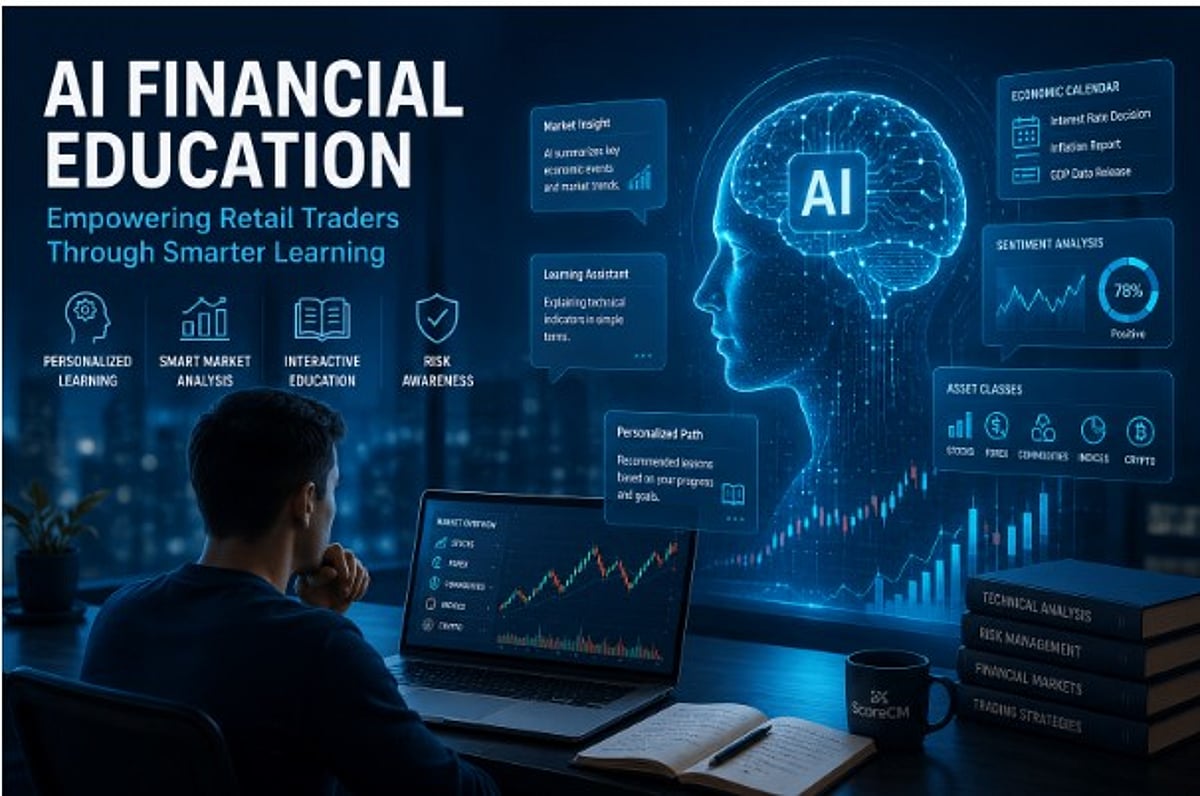
    AI financial education is transforming how people develop the knowledge needed to participate in modern financial markets. In the past, learning about investing often meant reading lengthy textbooks, attending seminars, or spending years gaining experience through trial and error. Today, artificial intelligence is making investment education more interactive, personalized, and accessible to retail traders around the world.

    The rapid growth of financial technology has introduced new ways to understand complex market concepts. AI-powered tools can organize large amounts of financial data, explain technical indicators, summarize economic news, and generate educational content tailored to different experience levels. Instead of searching through dozens of articles, learners can receive structured explanations that match their current understanding.

    As financial markets become increasingly connected and data-driven, AI is helping make financial literacy more achievable for individuals interested in stocks, forex, commodities, indices, and cryptocurrencies.

    Personalized Learning Through Artificial Intelligence

    One of the biggest advantages of artificial intelligence is its ability to personalize education. Every retail trader begins with different levels of knowledge, learning styles, and investment goals. Traditional educational materials often follow a fixed structure that may not suit everyone.

    Machine learning allows educational systems to adapt based on a learner’s progress. Beginners can receive simplified explanations of concepts such as market trends, diversification, or technical analysis, while more experienced traders can explore advanced topics involving macroeconomic indicators, algorithmic trading concepts, or risk management strategies.

    AI-powered learning platforms can also identify knowledge gaps by analyzing quizzes, study habits, and user interactions. Instead of presenting the same lessons to every learner, they can recommend relevant educational materials that strengthen weaker areas.

    At the same time, many investors continue using trusted educational resources alongside AI. As they expand their understanding of financial markets, some also explore ScoreCM to access publicly available market insights and educational materials that support continuous learning without replacing independent research.

    Smarter Market Analysis and Information Processing

    Financial markets generate enormous volumes of information every day. Economic reports, corporate earnings, geopolitical events, central bank announcements, and breaking news all influence market sentiment across multiple asset classes.

    Artificial intelligence is helping retail traders process this information more efficiently. Natural language processing enables AI systems to summarize lengthy reports, identify recurring themes in financial news, and explain how major events could influence different markets.

    For educational purposes, this creates a valuable learning environment. Rather than simply presenting raw data, AI can explain why inflation reports matter, how interest rate decisions affect currencies, or why commodity prices respond to changes in global supply chains.

    This educational approach encourages users to understand relationships between economic events instead of memorizing isolated facts. Whether studying stocks, forex, commodities, indices, or cryptocurrencies, learners gain broader context that improves their overall market awareness.

    Machine learning models can also recognize historical patterns and organize complex datasets into visual formats that are easier to interpret. While these insights should never be treated as predictions, they provide useful educational examples for understanding market behavior.

    AI Should Support Critical Thinking, Not Replace It

    Despite its growing capabilities, AI should be viewed as a learning assistant rather than a substitute for human judgment.

    Artificial intelligence can organize information, explain financial concepts, and highlight patterns within historical data. However, markets remain influenced by human behavior, unexpected geopolitical developments, regulatory changes, and emotional decision-making that cannot always be captured through algorithms.

    Retail traders benefit most when they use AI to strengthen their analytical skills instead of relying on automated conclusions. Critical thinking remains essential when evaluating information, questioning assumptions, and managing investment risk.

    Structured learning continues to play an important role in building these skills. Platforms such as ScoreCM Academy demonstrate how organized educational resources can complement learning by helping traders gradually build stronger market knowledge through structured courses and continuous education.

    Combining AI-generated insights with independent research allows learners to develop confidence while maintaining realistic expectations about the uncertainty of financial markets.

    Financial Literacy Matters More Than Ever

    The growing accessibility of investing has created new opportunities for individuals worldwide. Mobile applications, online trading platforms, and digital financial services have reduced many of the traditional barriers to entering financial markets.

    However, easier access also increases the importance of financial literacy. Understanding concepts such as portfolio diversification, volatility, leverage, inflation, and risk management remains essential regardless of the technology available.

    AI financial education can support this objective by making difficult subjects easier to understand. Interactive explanations, conversational learning tools, personalized quizzes, and real-world examples help learners absorb information more effectively than static educational materials alone.

    Better financial literacy also reduces the likelihood of making decisions based solely on social media trends, rumors, or emotional reactions. As AI continues improving educational accessibility, it can encourage more informed participation across global financial markets.

    The Future of AI in Financial Education

    The possibilities that lay ahead for AI in the field of finance do not just end at automation and analytics. Technology in education can become one of the most important uses of artificial intelligence, especially in cases where retail traders need to acquire practical knowledge before getting involved in the financial markets.

    Learning programs of the future may include elements of conversational AI, adaptive courses, market simulation, multilingual instruction, and visual interaction all within a single digital learning system.

    Concurrently, ethical AI development will be equally important. It is imperative that the educational material provides clear explanations about the underlying concepts and teaches users to double-check the received information using several sources.

    AI will not replace conventional education, but it will help open more opportunities for acquiring knowledge and learning in an efficient manner. Combined with financial literacy and critical thinking, AI can revolutionize the understanding of complex financial markets by retail traders.

    In light of the ongoing technology development, one can say that the most efficient learner will be one who embraces the assistance of AI and makes his/her own judgments independently from it. In that regard, the use of AI for financial education is a combination of technological innovation and steps forward towards improving knowledge of the market.

  • Bitcoin ETFs See $68.99M Inflows, AFX Loses $24M in Bridge Exploit, Chainlink Whales Accumulate 14M LINK

    Bitcoin ETFs See $68.99M Inflows, AFX Loses $24M in Bridge Exploit, Chainlink Whales Accumulate 14M LINK

    Bitcoin ETF Inflows Surge Led by BlackRock’s IBIT

    Bitcoin spot ETFs recorded a combined net inflow of $68.99 million on July 22, 2026, according to SoSoValue. BlackRock’s IBIT led with $38.78 million in daily inflows, bringing its historical total to $60.81 billion. The Grayscale Bitcoin Mini Trust ETF ($BTC) followed with $37.88 million, while Grayscale’s GBTC saw the largest daily outflow of $38.30 million. The total net asset value of Bitcoin spot ETFs now stands at $80.36 billion, with a historical cumulative net inflow of $51.85 billion.

    AFX Trade Loses $24 Million in Cross-Chain Bridge Exploit

    Decentralized exchange AFX, operating on Arbitrum, reportedly lost $24.15 million in a hack targeting one of its cross-chain bridges. Security firm Blockaid and Web3 researcher SunSec indicated that compromised keys, rather than a smart contract bug, were likely responsible. Arbitrum’s native bridge was not compromised.

    Hyperliquid Open Interest Hits Record $11.51 Billion

    Hyperliquid’s total open interest reached $11.51 billion, the highest since the October 10, 2025 market correction. The platform’s native token HYPE is up approximately 34% since the crash. Growth is driven by real-world asset (RWA) perpetuals, with daily open interest under HIP-3 at $3.61 billion. HIP-3 allows anyone staking 500,000 HYPE to deploy a perp market without core team approval.

    Injective Launches Mint for Tokenized Real-World Assets

    Injective introduced Mint, a platform to simplify the issuance of tokenized RWAs such as equities, bonds, and ETFs. It integrates custody, compliance, and permission management. The protocol is in private alpha and has already processed over $6.8 billion in cumulative volume with $1.1 billion in native issuance.

    Chainlink Holds $8.54 as Whales Accumulate 14 Million LINK

    Chainlink (LINK) traded near $8.54, down 0.6% in 24 hours, with a market cap of $6.39 billion and volume of $175.24 million. Onchain data from analyst Ali Martinez shows whales accumulated over 14 million LINK in less than a month, with more than 20 transactions over $1 million recorded in a single session.

    FAQs

    1. How much flowed into Bitcoin spot ETFs? $68.99 million net inflow, led by BlackRock’s IBIT.
    2. What happened in the AFX exploit? $24.15 million lost via a cross-chain bridge hack; compromised keys suspected.
    3. Why is Hyperliquid attracting attention? Record $11.51 billion open interest, driven by RWA perpetuals.
    4. What is Injective Mint? A platform for tokenizing real-world assets with custody and compliance.
    5. Why are traders watching Chainlink? Whales accumulated 14 million LINK, indicating large investor interest.
  • Astounding Black Hole Facts That Seem Too Bizarre to Be True

    Astounding Black Hole Facts That Seem Too Bizarre to Be True

    Black holes are among the most enigmatic entities in the cosmos, defying our conventional understanding of space, time, and gravity. Ongoing scientific research continues to unveil astonishing revelations about these gravitational behemoths, many of which read like science fiction yet are grounded in rigorous observation and theory.

    Not Even Light Can Escape

    A black hole’s gravitational pull is so immense that once anything crosses the event horizon—the point of no return—it can never escape. Even light, the universe’s fastest traveler, becomes permanently trapped. This inherent invisibility means black holes cannot be observed directly. Instead, astronomers detect them by analyzing the telltale effects on surrounding stars, gas clouds, and light patterns distorted by the black hole’s extreme gravity.

    Time Slows Down Near a Black Hole

    Einstein’s theory of general relativity predicts that time dilates in strong gravitational fields. For an observer close to a black hole, time passes much more slowly compared to someone far away. If a person were to venture near a black hole and return, they might find that decades or even centuries have elapsed on Earth—a phenomenon famously explored in the film Interstellar.

    Supermassive Black Holes Lurk at Galactic Centers

    Nearly every large galaxy, including our own Milky Way, harbors a supermassive black hole at its core. These colossal objects can weigh billions of times more than our Sun. Their gravitational influence shapes the orbits of nearby stars and is thought to play a pivotal role in galaxy formation and evolution.

    Black Holes Can Produce Powerful Jets

    Paradoxically, while black holes devour matter, they can also launch colossal jets of high-energy particles. These jets are propelled outward from the region around the black hole at speeds approaching that of light. Some extend across thousands of light-years and are detectable with advanced telescopes, offering insights into the energetic processes at work.

    Black Holes Can Slowly Evaporate

    According to Stephen Hawking’s theory of Hawking radiation, black holes are not eternal. Over unimaginably long timescales, they gradually lose mass and energy, eventually evaporating completely. This process is extraordinarily slow—a black hole with the mass of our Sun would take about 10^67 years to disappear, dwarfing the current age of the universe.

    You Would Be Stretched Like Spaghetti

    The extreme tidal forces near a black hole would subject any infalling object to a dramatic stretching effect known as spaghettification. The gravitational pull on your feet would be far stronger than on your head, causing your body to elongate and thin out as you approach the singularity. This grim fate underscores the violent nature of these cosmic objects.

    We Have Actually Seen One

    In 2019, the Event Horizon Telescope collaboration released the first-ever direct image of a black hole’s shadow, capturing the supermassive black hole at the center of galaxy M87. This historic achievement confirmed decades of theoretical predictions. Then, in 2022, scientists unveiled an image of Sagittarius A*, the black hole at the heart of our Milky Way, marking yet another milestone in observational astronomy.