Author: vitorcherulli

  • ASUS Pad T3201 Arrives in India with 12.2-Inch OLED Display, MediaTek Dimensity 8300, and 9,000mAh Battery

    ASUS Pad T3201 Arrives in India with 12.2-Inch OLED Display, MediaTek Dimensity 8300, and 9,000mAh Battery

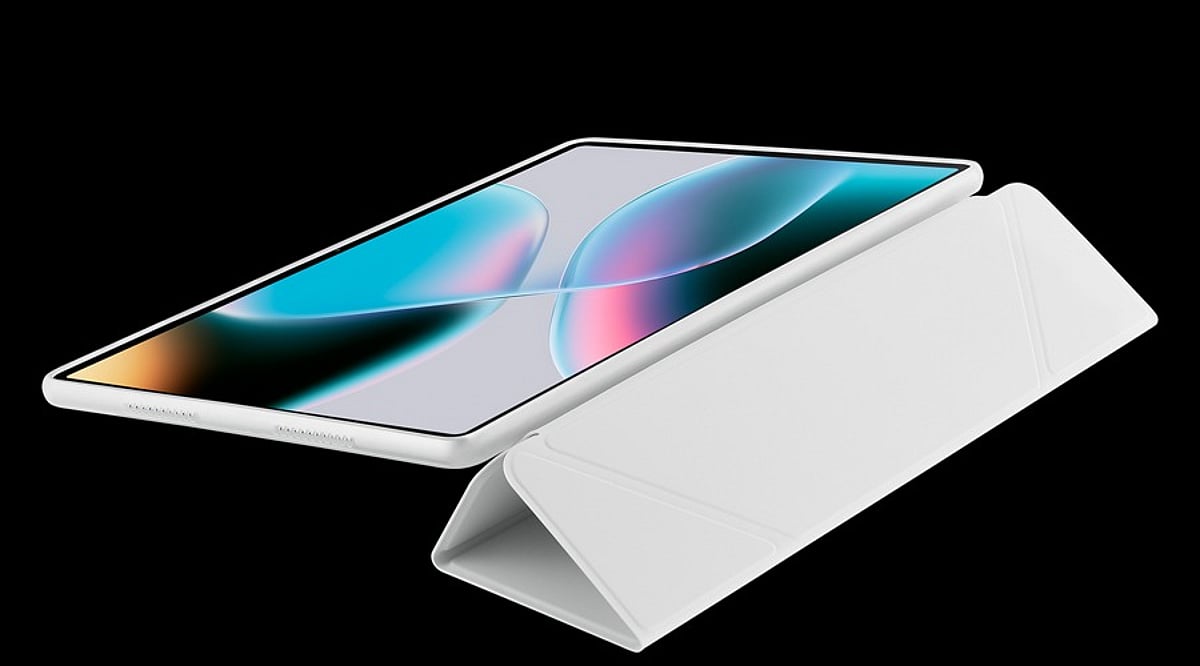
    ASUS has officially returned to India’s tablet market with the launch of the ASUS Pad T3201, a premium Android tablet that will be available starting August 6. The device marks the company’s re-entry into a segment it exited several years ago.

    12.2-Inch OLED Display with 144Hz Refresh Rate

    The ASUS Pad T3201 features a 12.2-inch dual-layer OLED screen with 2.8K resolution and a 144Hz refresh rate. According to ASUS, the display delivers sharper visuals, deeper blacks, and smoother scrolling during gaming and video playback. The tablet boasts a 92% screen-to-body ratio, offering a larger viewing area without increasing the device’s overall footprint.

    MediaTek Dimensity 8300 Powers the Tablet

    Under the hood, the device is powered by a MediaTek Dimensity 8300 SoC paired with 8GB of LPDDR5X RAM. It ships with Android 16 pre-installed and includes the Circle to Search feature, enabling users to search directly from text or images on the screen. For audio, ASUS has equipped the tablet with four speakers that support Dolby Atmos technology.

    Battery, Cameras, and Everyday Use

    The ASUS Pad T3201 packs a 9,000mAh battery with 45W fast charging capability. ASUS claims the battery can last an entire day under typical usage conditions. The tablet features a 13MP rear camera suitable for document scanning and photography, along with a 5MP front-facing camera for video calls.

    Sale Begins on August 6

    The ASUS Pad T3201 will be available in India from August 6 through Flipkart, the ASUS eShop, ASUS Exclusive Stores, ROG Stores, Reliance Digital, and other authorized retailers. While pricing for the Indian market has not yet been disclosed, the tablet is expected to compete in the high-end Android segment. Details regarding pricing and accessories are anticipated closer to the launch date.

    The launch of the Pad T3201 represents ASUS’s latest effort to enter the Indian tablet market, where premium Android tablets have seen growing success in recent years. With its OLED display, flagship processor, and substantial battery, the device aims to challenge established competitors in this space.

  • Apple Back-to-School 2026 in India: Free AirPods & Apple Pencil Pro with Education Discounts

    Apple Back-to-School 2026 in India: Free AirPods & Apple Pencil Pro with Education Discounts

    Apple has officially launched its annual Back-to-School promotion in India, offering eligible students and educators free AirPods or an Apple Pencil Pro with qualifying Mac and iPad purchases. The deal runs from July 16 to August 27, 2026 and can be combined with Apple’s education pricing for extra savings.

    Free AirPods with Eligible MacBooks

    Customers who buy a qualifying MacBook Air or MacBook Pro can choose either AirPods 4 or an AirTag 4-Pack at no extra cost. Those who prefer higher-end audio can upgrade to AirPods 4 with Active Noise Cancellation (ANC) for an additional ₹5,000, or AirPods Pro 3 for an additional ₹13,000. Apple says the offer provides savings of up to ₹12,900 on eligible Mac purchases.

    Education pricing further reduces device costs. The 13-inch MacBook Air with the M5 chip is available at ₹1,37,900 (down from ₹1,49,900), and the 14-inch MacBook Pro M5 is priced at ₹2,27,900 for eligible buyers (down from ₹2,39,900).

    Free Apple Pencil Pro with Select iPads

    Customers purchasing eligible iPad Air or iPad Pro models receive a free Apple Pencil Pro. If they instead choose an AirTag 4-Pack or AirPods 4, an additional ₹2,000 is required. Upgrading to AirPods 4 with ANC costs ₹7,000 extra, and AirPods Pro 3 costs ₹15,000 extra. Apple states the iPad promotion saves up to ₹10,900.

    Who Can Avail the Offer?

    The promotion is open to college students, newly admitted students, parents buying for eligible students, and employees of public and private educational institutions. Eligibility verification is mandatory at checkout via the Apple Education Store, the Apple Store app, or Apple Retail Stores.

    The offer does not apply to the MacBook Neo, iPad mini, standard iPad, or Apple’s desktop Mac lineup. Those devices can still be purchased at education prices but are not eligible for the free accessory program.

    Apple also continues its free engraving program on qualifying accessories through authorized channels.

  • Skyroot Vikram-1 Launch Fuels Interest in Indian Aerospace and Defense Stocks

    Skyroot Vikram-1 Launch Fuels Interest in Indian Aerospace and Defense Stocks

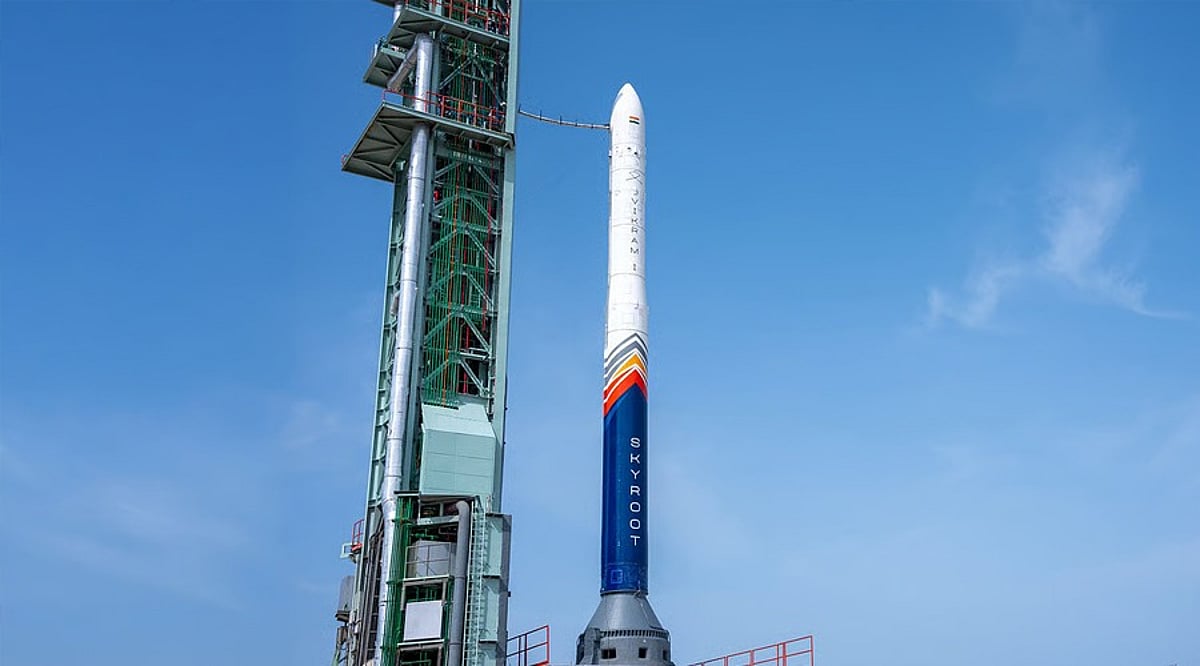
    Skyroot Aerospace’s upcoming Vikram-1 launch is drawing attention beyond India’s private space industry. As the company prepares to launch the country’s first privately built orbital rocket, investors are also looking at listed companies that supply critical technologies to the aerospace and defense sectors.

    An analysis identifies three Indian aerospace and defense stocks that could benefit from the momentum around the country’s growing commercial space industry. The report says companies with expertise in precision engineering, aerospace manufacturing and mission-critical components are well placed as private space activity gathers pace.

    Azad Engineering Among the Key Names

    One of the companies highlighted is Hyderabad-based Azad Engineering. The company manufactures precision-engineered components used in aircraft engines, space systems, defense platforms, power generation and industrial applications. According to Simply Wall St, Azad Engineering is strengthening its position in the aerospace supply chain by expanding manufacturing capacity. The company is investing in eight lean manufacturing facilities to support a growing order book and meet rising demand from global original equipment manufacturers (OEMs). Its products include turbine blades, actuators and other high-precision components used in aerospace and defense applications. The report says these long-term customer relationships and specialized manufacturing capabilities position the company to benefit as India’s private space ecosystem expands.

    Growth Opportunities Come with Risks

    There are some risks which investors need to keep in mind. Azad Engineering has quite a high price-to-earnings ratio, and it depends upon external borrowing to fuel its expansion plans. Customer concentration and the difficulties associated with the expansion of the manufacturing process can also be regarded as some other risk factors. Analysts say that even though the firm enjoys a strong market presence, its ability to implement its growth plans will be a major concern for investors.

    India’s Space Ambitions Fuel Broader Industry Interest

    The Vikram-1 space mission represents another milestone for India’s increasing private space ventures. The success of the mission would demonstrate the technical abilities of indigenous private firms and bolster confidence in India’s commercial space endeavors. This trend is also expected to work in favor of those firms providing parts, engineering expertise, and manufacturing solutions to the aerospace and defense industry. Despite a positive outlook for the industry, according to Simply Wall St, any investment decisions should be made on the basis of the company’s business acumen, financial strength, and execution, rather than the excitement of a single mission. With India’s private space industry maturing, companies with manufacturing prowess and customer connections are expected to continue receiving the attention they do.

    Related: How Skyroot Aerospace is Transforming India’s Private Space Industry with Vikram-1

  • XRP Price Today: Breakout Setup Strengthens as SEC and CFTC Classify It as a Digital Commodity

    XRP Price Today: Breakout Setup Strengthens as SEC and CFTC Classify It as a Digital Commodity

    XRP traded near $1.08 after a difficult first half of 2026, while technical indicators pointed to a possible breakout and U.S. regulators formally classified the token as a digital commodity. The token lost 27.1% in the first quarter and another 22.4% in the second quarter, yet analysts now identify a rare alignment of chart signals and seasonal trends that could support a recovery. At the same time, a joint SEC-CFTC interpretive release removed long-running uncertainty over XRP’s status under U.S. law.

    Technical Setup Points to a Breakout Attempt

    On the daily TradingView chart, XRP remains inside a descending broadening wedge. Traders often view that pattern as a late-stage accumulation formation. The Relative Strength Index has also formed a bullish divergence. Meanwhile, buyers continue to defend the local bottom near $1.05.

    Historical data from CryptoRank shows that XRP has not posted a negative third-quarter close in the past seven years. July has gained 4.19% so far, and previous summer reversals produced sharp rebounds after weak June performance. In July 2023, XRP rallied 47.6% after an early-summer decline. Likewise, a similar reversal in July 2025 produced a 35% return.

    To confirm a breakout from the wedge, buyers must push the price above the $1.12-$1.18 resistance zone. A successful move could open a path toward medium-term targets between $1.45 and $1.60, representing a projected upside of about 50%.

    Nevertheless, broader market weakness and slower inflows into U.S. spot XRP ETFs could limit short-term gains. Even so, the current consolidation continues to build a base ahead of the next directional move.

    The SEC and CFTC Formally Classify XRP as a Commodity

    On March 17, 2026, the Securities and Exchange Commission and the Commodity Futures Trading Commission published a joint interpretive release that named XRP as a digital commodity. The agencies issued the document under Release Numbers 33-11412 and 34-105020.

    The 68-page release divides crypto assets into five categories: digital commodities, digital collectibles, digital tools, payment stablecoins, and digital securities. Only digital securities fall fully under SEC jurisdiction, while the CFTC oversees digital commodities.

    The release also listed Bitcoin, Ether, Solana, Dogecoin, Cardano, Avalanche, Chainlink, Polkadot, Hedera, Litecoin, Bitcoin Cash, Shiba Inu, Stellar, Tezos, and Aptos in the digital commodity category. Reports counted either 16 or 18 named assets, depending on how examples in the document were interpreted.

    According to the release, a digital commodity derives its value from the programmatic operation of a functional crypto system and from supply and demand dynamics rather than from expectations tied to managerial efforts. The agencies applied that standard to XRP since the XRP Ledger operates independently of Ripple’s managerial control.

    Read More: XRP Slips to $1.10 Despite XRPL Crossing 8 Million Accounts

    A Broader Policy Shift Takes Shape

    The release also addressed when a non-security crypto asset may become part of an investment contract and when that status may end. In addition, it discussed airdrops, protocol mining, protocol staking, and wrapped versions of non-security assets.

    The guidance followed the SEC’s creation of the Crypto Task Force in January 2025 and the launch of Project Crypto as a joint SEC-CFTC initiative in January 2026. The agencies also announced a memorandum of understanding shortly before issuing the release.

    SEC Chair Atkins stated at the DC Blockchain Summit that the agency is not the ‘securities and everything commission anymore.’ CFTC Chair Selig said the wait was over and pledged to establish rules that would allow the crypto industry to operate onshore.

    What’s Next?

    XRP continues to trade within a key technical pattern as buyers target a breakout above the $1.12–$1.18 resistance zone. At the same time, the SEC and CFTC have officially classified XRP as a digital commodity, removing a major regulatory uncertainty while market participants watch for the next price move.

    Join our WhatsApp Channel to get the latest news, exclusives and videos on WhatsApp

  • Moonshot AI’s Kimi K3 Tops Coding Benchmark, Intensifying US-China AI Rivalry

    Moonshot AI’s Kimi K3 Tops Coding Benchmark, Intensifying US-China AI Rivalry

    China’s Moonshot AI has unveiled its latest open-weight model, Kimi K3, which quickly climbed to the top of the Arena Frontend Code leaderboard, surpassing leading US-developed models in blind evaluations. The move signals a significant advance in China’s artificial intelligence capabilities and raises fresh concerns about the future of US dominance in frontier AI.

    Kimi K3 is a 2.8-trillion-parameter model with a 1-million-token context window, designed for complex reasoning, software development, and long-horizon agentic tasks. Moonshot AI markets it as an open-weight frontier model, though its superiority is limited to the specific benchmark; independent comparisons show it does not outperform every leading closed model across all tests.

    The release comes on the heels of DeepSeek and other Chinese AI successes, intensifying the debate around AI safety, intellectual property concerns, and model distillation. Critics question whether some Chinese models replicate behaviors from proprietary systems, while industry experts argue that knowledge transfer is a global issue. For the US AI industry, Kimi K3 is more than a new product—it is a clear indicator that China’s open-weight ecosystem is advancing rapidly, narrowing the competitive gap in frontier research, funding, and infrastructure.

  • Solana Hits Record Activity With 1B Weekly Transactions, Yet SOL Price Stalls Below Key Resistance

    Solana Hits Record Activity With 1B Weekly Transactions, Yet SOL Price Stalls Below Key Resistance

    Key Takeaways

    • Solana processed over 1 billion non-vote transactions in one week.
    • Tokenized assets on Solana have reached around $3.3 billion.
    • SOL remains below a major resistance zone despite strong network growth.

    Solana has entered another period of strong network expansion. Fresh blockchain data shows that user activity, transaction volume, and adoption continue to rise at a fast pace. The network has become one of the busiest blockchain ecosystems in the crypto market, thanks to its fast transaction speed and low fees. While these achievements have improved confidence in the project, the price of SOL has not matched the pace of this growth. Instead, the token continues to face heavy resistance on the price charts.

    This gap between network performance and market value has become one of the biggest talking points among crypto investors. Many believe the blockchain looks stronger than ever, but the token still needs a major push before it can start a sustained rally.

    Record Transaction Numbers Show Higher Adoption

    One of the biggest highlights is Solana’s transaction count. The blockchain recently processed more than 1 billion non-vote transactions in just one week, one of the highest weekly totals in its history. This number matters as it shows real activity across the network instead of transactions created only to support blockchain operations. More people now use Solana for decentralized exchanges, blockchain games, NFT platforms, payment services, and other applications. The rise in active wallet addresses also supports this trend, which suggests that new users continue to join the ecosystem while existing users remain active. These figures show that demand for Solana’s network continues to grow even during periods when the broader crypto market remains uncertain.

    Tokenized Assets Become a Major Growth Driver

    Another important development comes from tokenized real-world assets. Solana now hosts around $3.3 billion worth of tokenized assets on its blockchain. The network also handles almost 97% of all on-chain tokenized equity trading. This is a major achievement since tokenized assets allow traditional financial products, such as company shares, to move onto blockchain networks. Solana has become a preferred choice for these projects as transactions settle quickly and cost very little. As more financial companies explore blockchain technology, this sector could become one of Solana’s strongest long-term advantages.

    Stablecoin Supply Continues to Rise

    The rise in stablecoin activity is a growing trend in the Solana network. The increased supply of stablecoins means that there is an increased pool of capital from which to trade, lend, borrow, and utilize decentralized finance services. Higher liquidity allows for easier movement of funds between different platforms. This also creates a better trading environment on decentralized exchanges. Stablecoin activity has always been resilient even when there were considerable fluctuations in the markets.

    Institutional Interest Remains Strong

    Large investors also continue to watch Solana closely. Optimism around possible spot Solana exchange-traded products has helped improve long-term market sentiment. Although these expectations have not yet pushed SOL into a major rally, they show that institutional interest continues to build. Many investment firms now see Solana as one of the leading blockchain networks given its ability to process large numbers of transactions without high costs. This growing attention could become an important factor if broader market conditions improve.

    SOL Price Struggles Below Major Resistance

    Despite all these positive developments, SOL has not managed to break above an important resistance level. The token continues to trade below its 100-day exponential moving average, which many traders consider a key technical barrier. Each attempt to move higher has attracted selling pressure. This has limited the token’s ability to build strong upward momentum even as network activity reaches new highs. The contrast between strong blockchain growth and weak price action has surprised many market participants.

    Technical Indicators Show Mixed Signals

    The Relative Strength Index (RSI) remains below levels that usually signal strong buying pressure. At the same time, the Moving Average Convergence Divergence (MACD) points to weaker bullish momentum. These indicators suggest that buyers have not yet taken full control of the market. Until stronger demand returns, resistance levels could continue to slow any price recovery.

    Important Price Levels to Watch

    Analysts believe the $78 to $79 range remains the most important resistance zone for SOL. A successful move above this area could open the door for a rally toward the mid-$90 range. However, another rejection could send the price back toward support between $73 and $74. These levels may decide the next major move for the token over the coming weeks.

    Strong Network Does Not Always Lift the Token Price

    One reason behind this difference is Solana’s fee structure. The network charges very low transaction fees, which makes it attractive for developers and users. However, higher blockchain activity does not always create enough buying demand for SOL itself. As a result, network growth alone cannot guarantee immediate price gains. Investors often wait for stronger market demand before the token begins a sustained upward move.

    Why This Matters

    This divergence proves that record-breaking blockchain adoption does not automatically increase token price. Solana’s massive scaling wins show it is a primary hub for financial activity, but its low-fee model struggles to generate enough token demand to easily shatter major market resistance.

    Long-Term Outlook Remains Positive

    Despite the short-term challenges faced by SOL, the network is continuing to improve in various aspects. Developer activity remains good, validator participation keeps growing, transaction volumes are high, and user adoption is increasing. These indicators make Solana one of the leading Layer-1 blockchains in the industry. Its increasing importance in DeFi, payment software, gaming, NFTs, and tokenized assets means the ecosystem has many possibilities for future growth. At the moment, the blockchain continues to achieve new milestones, but the token still has to reach a point of stable breakthrough from its resistance level before the price performance will fully reflect the network’s potential.

    FAQs

    1. Why is Solana’s network growing? The ecosystem is expanding due to high user transaction counts, low fees, rapid developer adoption, and massive growth in tokenized assets and decentralized finance infrastructure.
    2. How many transactions did Solana recently process? The blockchain achieved a massive performance milestone by processing more than 1 billion non-vote transactions within the span of a single week.
    3. How large is Solana’s tokenized asset market? Real-world tokenized assets built directly on the network have climbed to an aggregate value of approximately $3.3 billion, claiming dominant sector share.
    4. Why is SOL facing resistance? Despite immense network activity, the token remains stuck under key moving averages because low fees mean high throughput does not translate into enough buying pressure.
    5. What could support the next SOL rally? A sustained upward push requires buyers to clear the $78 to $79 resistance zone, backed by broader market volume and spot ETF developments.
  • Shiba Inu Exchange Reserves Plunge by 1.4 Trillion SHIB: Implications for Price

    Shiba Inu Exchange Reserves Plunge by 1.4 Trillion SHIB: Implications for Price

    Shiba Inu’s exchange reserves have dropped by 1.4 trillion SHIB over the past ten days, reducing the supply available on centralized exchanges to approximately 86.48 trillion SHIB. This on-chain signal suggests investors are moving tokens to private wallets, decreasing immediate selling pressure.

    Why Exchange Reserves Matter

    Lower exchange reserves often indicate fewer coins ready for quick sale, which can reduce selling pressure and improve market balance. However, a price rally typically requires broader market support, including strong demand and favorable conditions.

    SHIB Price Remains Under Pressure

    As of the latest update, SHIB trades at $0.00000425, below key resistance levels and its 20-day and 50-day exponential moving averages. While the Relative Strength Index (RSI) has recovered from oversold territory, buying activity needs to strengthen for sustained upward momentum.

    Whale Accumulation Continues

    Large holders, or whales, are moving significant SHIB amounts away from exchanges, indicating long-term confidence. This reduces available supply and helps SHIB avoid deeper declines despite a weak overall crypto market.

    Historical Context

    Similar reserve declines earlier this year led to price stabilization and modest gains. While past performance doesn’t guarantee future results, falling exchange reserves often support price stability.

    Broader Market Influence

    SHIB’s price remains tied to Bitcoin and overall market sentiment. Favorable Bitcoin movements can boost altcoins, but SHIB needs both internal momentum and positive market conditions for a recovery.

    Ecosystem Development

    The Shiba Inu project continues expanding with updates to Shibarium, AI initiatives, and community growth, focusing on long-term value rather than short-term price action.

    Conclusion

    The 1.4 trillion SHIB reserve drop reduces selling pressure and, combined with whale accumulation and ecosystem developments, strengthens SHIB’s foundation. However, higher trading volume and buying interest are essential for a sustained price rally. For now, lower reserves signal investor preference to hold, improving the long-term outlook.

  • 10 Best Non-Stick Sandwich Makers for 2026: Reviews and Buying Guide

    10 Best Non-Stick Sandwich Makers for 2026: Reviews and Buying Guide

    A sandwich maker is one of those kitchen appliances you don’t think much about until you need one. Whether it’s a quick breakfast before work, a late-night grilled cheese, or an evening snack for the family, a good machine should heat evenly, clean up easily, and last for years.

    The latest models do more than just toast bread. Many now come with larger grill plates, ceramic or PTFE-free coatings, floating hinges for thicker sandwiches, and auto cut-off for safer cooking.

    Here’s a look at 10 sandwich makers that stand out in 2026 for their performance, features, and value:

    MILTON Express 800W Grill Sandwich Maker

    The MILTON Express remains one of the strongest value picks in its segment. Its 800W heating element grills sandwiches quickly, while the non-stick plates make cleaning simple. Auto cut-off, indicator lights, and a compact design make it a practical choice for everyday use.

    Philips HD3000/80 XL Sandwich Maker

    Philips has focused on convenience with this XL model. The larger cooking plates fit oversized bread slices without trimming the edges, while the non-stick surface ensures easy food release. Even heating and a sturdy locking system make it suitable for daily use.

    KENT Sandwich Grill

    The KENT Sandwich Grill is designed for more than basic toasties. Its ceramic-coated grill plates, adjustable height, and 180-degree opening make it suitable for stuffed sandwiches, paninis, and light grilling. The auto cut-off feature adds an extra layer of safety.

    Prestige PGMFB 800W Grill Sandwich Toaster

    Prestige keeps things simple with this model. It features fixed non-stick grill plates, quick heating, and a cool-touch handle. The compact build also makes it easy to store, especially in smaller kitchens.

    iBELL SM1301 3-in-1 Sandwich Maker

    If versatility matters, the iBELL SM1301 is worth considering. It comes with interchangeable plates for sandwiches, waffles, and grilling, allowing one appliance to handle different cooking tasks without taking up extra counter space.

    Milton Royal Express 800W Griller Sandwich Maker

    The Royal Express builds on Milton’s proven design with non-stick grill plates, auto cut-off, and quick heating. It is built for regular household use and delivers consistent results without unnecessary extras.

    AGARO Galaxy 1000W Sandwich Maker

    AGARO Galaxy provides quick cooking due to the 1000W heat system. The flexible hinge system adjusts depending on the thickness of the fillings used, ensuring even cooking without flattening the sandwich.

    Hafele Grilla 2000W Sandwich Maker

    Grilla by Hafele is specifically designed for consumers who require advanced qualities. It provides 2000 watts of power, huge grill plates, a 180-degree swing door, automatic temperature control system, and a BPA- and PTFE-free non-stick coating. It also facilitates the grilling of vegetables and other meals.

    Lifelong LLSM120G Sandwich Griller

    The Lifelong LLSM120G offers affordability without sacrificing utility. It features non-stick plates, fast heating, indicator lights, and a compact body for easy storage.

    Cello Non-Stick Gas Sandwich Toaster

    Constructed of non-stick aluminum with heat-resistant handles, this device produces uniformly toasted sandwiches without any need for electricity.

    Final Verdict

    Depending on personal needs and affordability, there are several machines to choose from. The MILTON Express 800W represents the best balanced choice for daily use, delivering great performance and quality at moderate prices. The Philips HD3000/80 XL is a great choice for bigger sandwiches, whereas the Hafele Grilla 2000W is for those who prefer a machine with more options and high-quality features. If you’re looking for a multifunctional device, the iBELL SM1301 is the right choice due to its ability to perform several functions using various plates.

    FAQs

    Which sandwich maker is best for everyday home use?
    The MILTON Express 800W is a reliable everyday option with quick heating, non-stick grill plates, auto cut-off, and a compact design. It offers a good balance of performance, ease of use, and affordability.

    What features should I look for in a sandwich maker?
    Look for non-stick plates, sufficient wattage, auto cut-off, cool-touch handles, indicator lights, and easy cleaning. Features like floating hinges or interchangeable plates add flexibility for different recipes.

    Are non-stick sandwich makers safe to use?
    Yes, quality non-stick sandwich makers are safe when used as directed. Many newer models also feature BPA- and PTFE-free coatings, along with auto shut-off systems to improve safety during cooking.

    Can a sandwich maker be used for foods other than sandwiches?
    Yes, many grill sandwich makers can cook paninis, wraps, vegetables, burgers, and even waffles if they include interchangeable plates. Premium models offer greater versatility beyond making toasted sandwiches.

    Which sandwich maker offers the best value for money?
    The Prestige PGMFB 800W and MILTON Express 800W are excellent value-for-money choices. They combine reliable performance, useful safety features, durable non-stick plates, and affordable pricing for everyday household use.

  • Top 5 Neck and Shoulder Massagers for 2026: A Comprehensive Performance and Value Guide

    Top 5 Neck and Shoulder Massagers for 2026: A Comprehensive Performance and Value Guide

    Neck and shoulder pain has become increasingly common, whether from long hours at a desk, frequent travel, or everyday stress. A good neck and shoulder massager can help relieve muscle tension, improve circulation, and provide quick relaxation at home. With several models offering Shiatsu massage, heat therapy, and cordless operation, choosing the right one can be difficult.

    Find Lasting Relief with Every Soothing Massage Session: Top 5

    This article highlights five of the best neck and shoulder massagers in 2026, covering their key features, strengths, and overall value to help you make an informed choice:

    RENPHO Back & Neck Massager with Heat

    The RENPHO Back & Neck Massager comes with eight Shiatsu massage heads providing deep tissue massage to your muscles. The product is equipped with three speed settings, a heating function, and arm straps for adjusting the intensity of the massage. There is also a breathable cover made of fabric for comfortable use.

    COMFIER 4D Shiatsu Neck & Shoulder Massager

    The COMFIER uses 4D Shiatsu massage balls, which can operate in more than one direction to mimic the effects of manual massages. There are two heating options, three intensity options, and the device features a rechargeable battery without wires for free movement. The shoulder straps can be adjusted for secure positioning.

    Nekteck Shiatsu Neck & Back Massager

    Nekteck offers eight Shiatsu massage nodes that rotate and move in different directions to ensure proper muscle treatment. Its infrared heat function allows for relaxation of tight muscles, while its arm loops adjust massage pressure based on the user’s comfort level.

    Dr Physio USA 1048 Shiatsu Massager

    The Dr Physio USA 1048 is a massager that has eight Shiatsu rollers with infrared heating capacity for massaging the neck, shoulders, back, waist, and legs. Bi-directional rotation ensures proper application of pressure with the use of PU leather material together with a breathable mesh fabric.

    Boldfit Cordless Shiatsu Neck Shoulder Massager

    With Boldfit’s unique combination of dual-directional Shiatsu rollers and three different speed levels for massaging and heating, you can easily relieve your muscles’ tension. With a 3,600mAh removable battery, Boldfit offers a wireless experience, along with a buckle that is able to adjust to give a tight hold on your body.

    Comparison Table

    Each massager offers distinct advantages in performance, portability, and heat therapy. For a detailed side-by-side comparison, refer to the original article. Key factors include massage intensity, heating options, battery life, and build quality.

    Final Verdict

    Choosing the appropriate neck and shoulder massager depends on your usage. The more expensive options give you greater massage power and added comfort features, whereas the more affordable options emphasize reliability. Prior to purchase, look into different factors such as massage options, heating levels, portability, battery strength, and overall construction. Choosing the right massager can mean long-lasting comfort and muscle recovery for years to come.

    Frequently Asked Questions

    What is the best type of neck and shoulder massager?

    Shiatsu neck and shoulder massagers are the most popular choice because they combine deep-kneading massage with heat therapy, helping reduce muscle stiffness, improve circulation, and relieve everyday neck and shoulder tension.

    Can a neck and shoulder massager help with pain relief?

    A quality massager can help ease muscle soreness, reduce stiffness, and improve blood flow. However, persistent or severe pain should be evaluated by a healthcare professional before relying on massage devices.

    Are heated neck massagers safe to use daily?

    Most heated neck massagers are designed for daily use and include safety features such as auto shut-off and overheat protection. Following the manufacturer’s recommended session duration ensures safe and comfortable use.

    What features should I look for before buying a neck massager?

    Look for Shiatsu massage nodes, adjustable intensity levels, heat therapy, ergonomic design, cordless operation if needed, battery life, and automatic shut-off for a safer and more comfortable massage experience.

    Which neck and shoulder massager offers the best value?

    Value depends on your needs. Premium models provide stronger performance and extra features, while budget-friendly options offer reliable massage, heat therapy, and comfort at a more affordable price.