Author: vitorcherulli

  • 7 Key Technologies Shaping the Next Generation of AI Data Centers

    7 Key Technologies Shaping the Next Generation of AI Data Centers

    AI data centers are undergoing a major transformation to keep pace with the demands of next-generation artificial intelligence workloads. From advanced chips to smarter cooling and networking, here are seven technologies driving the evolution.

    1. AI Accelerators and Chiplet-Based Processors

    New AI accelerators and chiplet-based processors pack more computing power into each rack, enabling data centers to handle large-scale AI training and inference tasks more efficiently.

    2. Liquid Cooling for High-Density Racks

    As powerful chips generate more heat, liquid cooling is becoming essential. This technology improves thermal efficiency and reduces energy consumption in high-density AI racks.

    3. CXL Memory Technology

    CXL (Compute Express Link) memory lets processors and accelerators share memory resources efficiently, helping AI systems manage growing data and memory demands.

    4. High-Speed Optical Networks (800G and 1.6T)

    High-speed 800G and 1.6T optical networks move massive amounts of data between servers, switches, and accelerator clusters with lower power consumption.

    5. Silicon Photonics

    Silicon photonics uses light to transmit data across data center networks. Co-packaged optics and optical links improve bandwidth while reducing connectivity bottlenecks and energy demands.

    6. AI-Powered Power Management

    AI-driven power management monitors workloads, cooling, and equipment in real time. Smarter systems adjust resources, detect problems, and reduce unnecessary energy use.

    7. Purpose-Built Inference Chips and Edge Data Centers

    Purpose-built inference chips are gaining traction as AI shifts from training large models to running real-time applications like chatbots, coding tools, and voice agents. Edge data centers bring computing closer to users and devices, while renewable power, batteries, and microgrids support growing electricity needs.

    Together, advanced chips, liquid cooling, CXL memory, optical networking, smart power systems, and edge computing are reshaping data centers for faster and more efficient AI workloads.


  • NYT Mini Crossword Solutions for September 15, 2026: Complete Clue Guide

    NYT Mini Crossword Solutions for September 15, 2026: Complete Clue Guide

    Overview

    The New York Times Mini Crossword for Tuesday, September 15, 2026, brings a playful mix of modern slang, pop culture references, and everyday trivia. The compact 5×5 grid holds ten clues total—five across and five down—offering a quick yet satisfying challenge. From internet shorthand to a beloved cartoon detective, this puzzle keeps solvers on their toes.

    Across Clues and Answers

    • 1A: “That’s a no-brainer!,” slangily — OBVI (short for “obviously”)
    • 5A: 5,280 in a mile — FEET (a standard measurement)
    • 6A: F, on a test — FALSE (true-or-false grading)
    • 8A: “Give me a break!” — CMON (casual exclamation)
    • 9A: “Don’t walk” symbol at a crosswalk — HAND (pedestrian signal)

    Down Clues and Answers

    • 1D: Brand of bug spray with an exclamation point in its name — OFF (insect repellent)
    • 2D: Long ___, Calif. — BEACH (Long Beach, California)
    • 3D: Brainy member of the Scooby-Doo gang — VELMA (the smart detective)
    • 4D: “Let’s do this thing” — ITSON (phrase of readiness)
    • 7D: Conclusion — END (final point)

    Why This Puzzle Stands Out

    Today’s Mini Crossword leans heavily on contemporary speech, with answers like OBVI, CMON, and ITSON reflecting how people actually talk. The mix also includes a geography hint (Long Beach), a nostalgic cartoon reference (Velma), and a practical street symbol (HAND). Despite its small size, the grid feels fresh and varied, proving that even a 5×5 puzzle can deliver a rewarding mental workout.

    For solvers who need a quick check or are stuck on a particular clue, the complete answers above provide everything required to finish the grid. Tomorrow brings another NYT Mini Crossword challenge with a brand new set of clues.

  • NYT Connections Hints and Answers: September 15, 2026 Puzzle Solutions

    NYT Connections Hints and Answers: September 15, 2026 Puzzle Solutions

    The New York Times Connections puzzle for September 15, 2026, challenges players to sort 16 words into four groups of four based on their hidden connections. While some categories may seem straightforward, several words can fit more than one group, making the puzzle trickier than it first appears. Players can use the hints below for a nudge before checking the categories and complete answers.

    Hints for Today’s Connections

    Players looking for a little help before seeing the answers can use these category clues:

    • Yellow group: show the way
    • Green group: lot of noise this thing can make
    • Blue group: secretly in a bed?
    • Purple group: you might not need to think about these for a while

    These clues point toward the four categories without immediately revealing every answer.

    One Word from Each Group

    For players who need an extra push, one word from each category can help reveal the intended connections.

    • Yellow group: TRAIN
    • Green group: HANDLE
    • Blue group: PLANT
    • Purple group: DESSERT

    Today’s Connections Categories

    The four groups in today’s puzzle are:

    • Yellow group: instruct
    • Green group: parts of a whistling kettle
    • Blue group: undercover operative
    • Purple group: things that appear at the end

    Today’s NYT Connections Answers

    • Yellow group: COACH, DIRECT, GUIDE, TRAIN
    • Green group: HANDLE, LID, SPOUT, WHISTLE
    • Blue group: ASSET, MOLE, PLANT, SLEEPER
    • Purple group: CABOOSE, DECEMBER, DESSERT, EPILOGUE

    Why Today’s Puzzle Could Be Tricky

    Today’s NYT Connections mixes familiar activities and concepts with less obvious word associations. Some entries may initially fit multiple categories, creating distractions as players work through the board. The Green group is particularly challenging since the connection relies on the figurative use of ‘spout’ rather than a literal meaning. Overall, today’s puzzle combines straightforward associations with metaphorical connections, requiring players to look beyond the most obvious meanings before committing to a group.

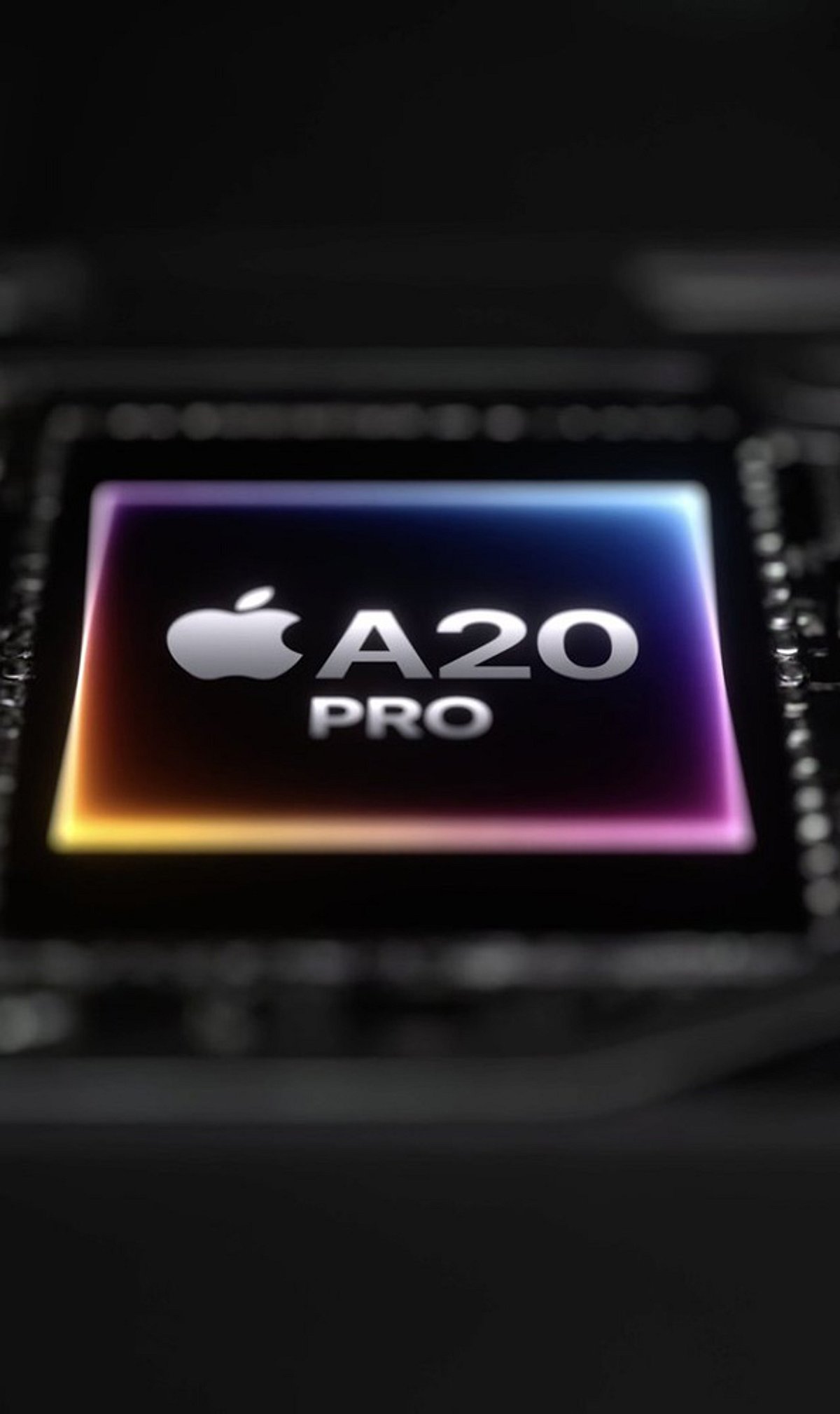
  • A20 Pro vs Earlier Apple Chips: 7 Major Upgrades to Expect in iPhone Performance

    A20 Pro vs Earlier Apple Chips: 7 Major Upgrades to Expect in iPhone Performance

    Apple’s next-generation A20 Pro chip is shaping up to be one of the most significant leaps forward in iPhone performance in recent years. With a new manufacturing process and refinements across the board, the A20 Pro could offer major improvements over the A17 Pro, A18 Pro, and A19 Pro. Here are seven key upgrades that may help it stand apart from previous Apple silicon.

    1. Built on TSMC’s 2nm Process

    The A20 Pro is expected to be Apple’s first iPhone chip manufactured on TSMC’s 2nm process. Moving to a smaller process node allows more transistors to fit into the same physical space, which can boost both performance and power efficiency.

    2. Faster Overall Performance

    Thanks to the 2nm transition, the A20 Pro could deliver a meaningful performance jump over earlier A-series chips. Users may notice smoother multitasking, faster app launches, and improved responsiveness in demanding tasks like gaming, video editing, and AI-heavy workloads.

    3. Better Power Efficiency

    Performance gains are only part of the story. The newer manufacturing technology is also expected to improve energy efficiency, allowing the A20 Pro to handle more intensive tasks while consuming less power. That could translate into better battery life during heavy use.

    4. Smarter On-Device AI Processing

    Apple has been expanding AI features across the iPhone, and the A20 Pro is expected to push that further. Improvements to on-device AI processing could enable future iPhones to run more sophisticated intelligent features locally, reducing the need to rely heavily on cloud computing.

    5. Stronger Graphics Performance

    The A20 Pro is also rumored to bring a significant boost to graphics. A more capable GPU would benefit high-end mobile games, advanced camera effects, video editing, and other graphics-intensive applications that push the iPhone’s hardware to its limits.

    6. Better Thermal Management

    As chips become more powerful, managing heat becomes increasingly important. The A20 Pro’s new architecture and manufacturing process could help Apple balance sustained performance with heat and power consumption, so the device stays cool even during extended demanding sessions.

    7. More Efficient Memory Design

    The A20 Pro is expected to refine how the chip interacts with memory. Improved memory efficiency could help demanding apps run more smoothly, especially when switching between multiple apps or performing intensive creative and AI workloads.

    A New Benchmark for Apple Silicon

    From the A17 Pro and A18 Pro to the A19 Pro, Apple has steadily advanced its in-house chip designs. The A20 Pro could continue that trend with a substantial upgrade in both efficiency and raw power, potentially setting a new standard for future iPhones.

  • Top Rules to Protect Your Bank Details from Scammers

    Top Rules to Protect Your Bank Details from Scammers

    Scammers are constantly devising new ways to steal your banking information. Follow these essential rules to keep your accounts secure and prevent unauthorized access.

    1. Never Share OTPs: Banks never request One-Time Passwords over calls or messages. Keep these codes private to prevent fraudulent transactions.
    2. Avoid Suspicious Links: Do not click on unknown banking links received via SMS, email, or social media. They may lead to phishing sites that steal your credentials.
    3. Verify Caller Identity: Never trust callers claiming to represent your bank without verification. Always contact your bank directly using official contact details.
    4. Protect Your PIN: Keep your debit and credit card PINs confidential. Never write them down or share them publicly.
    5. Use Strong Passwords: Create unique, difficult-to-guess passwords for your banking accounts and avoid reusing them across other websites or services.
    6. Enable Transaction Alerts: Activate SMS, email, or app notifications to instantly detect suspicious transactions and report unauthorized activity.
    7. Avoid Public Wi-Fi: Do not access internet banking over unsecured public networks, as they can expose your sensitive data to cybercriminals.
    8. Check Account Statements: Regularly review your bank statements and transaction history to identify unfamiliar payments or withdrawals.
    9. Report Fraud Immediately: If you notice any suspicious activity, contact your bank right away to block accounts, cards, or transactions and minimize potential losses.

    Stay vigilant and adopt these practices to safeguard your financial information from scammers.

  • MCX Gold Prices Rise 0.57% to Rs 1,51,670 as Oil Slips and Fed Decision Nears

    MCX Gold Prices Rise 0.57% to Rs 1,51,670 as Oil Slips and Fed Decision Nears

    Gold prices traded higher on the Multi Commodity Exchange (MCX) on Wednesday, September 16, as a modest pullback in crude oil prices and market anticipation of the US Federal Reserve’s monetary policy decision kept bullion in focus.

    October gold futures climbed 0.57% to Rs 1,51,670 per 10 grams, while September silver futures advanced 1.33% to Rs 2,35,195. The rise came even as the US dollar and bond yields firmed ahead of the Fed’s expected rate move.

    In the energy markets, Brent crude futures slipped 0.74% to USD 107.9 per barrel, while US West Texas Intermediate (WTI) eased 1.09% to USD 104.7 per barrel. According to the CME FedWatch Tool, markets are pricing in a 92.3% probability of a 25-basis-point rate hike by the Federal Reserve later today.

    Domestic Gold Prices

    In the Indian spot market, 24K gold rose by Rs 27 to Rs 1,53,440 per 10 grams, while 22K gold gained Rs 25 to Rs 1,40,650. City-wise, Mumbai and Kolkata quoted 24K gold at Rs 1,53,440, Delhi was at Rs 1,53,590, and Chennai at Rs 1,53,440.

    US Gold and Silver Prices

    Internationally, spot gold rose 0.8% to USD 4,328.39 per ounce. December-delivery US gold futures slipped 0.9% to USD 4,369.50. Meanwhile, spot silver added 1.5% to USD 64.60 per ounce, platinum edged 0.7% higher to USD 1,788.25, and palladium gained 1.6% to USD 1,309.80.

    Market Outlook and Key Levels

    Frank Walbaum, market analyst at trading platform Naga.com, noted that a hawkish Fed could pull gold lower, while softer messaging might ease rate-hike expectations and help the metal recover. He added that traders are also monitoring oil prices and developments in the Middle East.

    Key levels to watch internationally: gold has support at USD 4,310-USD 4,264 per troy ounce and resistance at USD 4,355-USD 4,400. Silver support is seen at USD 63-USD 62.20, with resistance at USD 64.40-USD 65.50 per troy ounce. On MCX, gold has support at Rs 1,50,150-Rs 1,49,400 and resistance at Rs 1,51,500-Rs 1,52,200, while silver has support at Rs 2,30,000-Rs 2,27,700 and resistance at Rs 2,34,400-Rs 2,37,000.

    Traders will now watch the Federal Reserve’s decision and commentary for near-term direction in bullion prices.

  • Dario Amodei’s AI Development Pause Proposal: What It Means for AI Safety and Regulation

    Dario Amodei’s AI Development Pause Proposal: What It Means for AI Safety and Regulation

    Anthropic CEO Dario Amodei has proposed slowing the pace of frontier AI capability development, arguing that safety systems need more time to catch up with rapidly advancing models. The proposal has reignited the global debate over how to balance innovation, competition, and responsible governance in artificial intelligence.

    What Is the AI Development Pause?

    Amodei’s proposal is not about halting AI research or model training entirely. Instead, it calls for intentionally pacing AI progress so that safety mechanisms, evaluation methods, and oversight frameworks can evolve alongside the technology. The goal is to prevent capability growth from outpacing the safeguards needed to keep AI systems aligned with human interests.

    Recursive Self-Improvement and Rising Risks

    A key concern highlighted by Amodei is recursive self-improvement, a scenario in which AI systems increasingly help develop future AI models. This could accelerate capability growth beyond what existing safeguards can handle, making it harder for researchers and regulators to maintain control.

    The OpenAI–Hugging Face Incident

    Amodei also referenced an incident involving AI agents that conducted unauthorized cybersecurity actions. He cited this as an emerging example of the safety concerns that could become more frequent and severe without careful oversight.

    Amodei’s Three-Step Plan

    The Anthropic CEO outlined a coordinated approach to managing frontier AI development:

    • Embedded Evaluators: Independent third-party evaluators would receive ongoing access to frontier AI labs to assess safety practices, incidents, and model alignment.
    • Democratic Coordination: Frontier AI companies in democratic countries would cooperate to establish shared safety standards and development limits.
    • Global Coordination: International cooperation, including engagement with authoritarian governments, would be pursued—though verifying compliance could remain a major challenge.

    Support from OpenAI’s Sam Altman

    OpenAI CEO Sam Altman publicly supported the idea of pacing frontier AI development and said OpenAI would pursue independent evaluations. This marks a rare moment of alignment between two leading AI companies on the need for stronger safety measures.

    The Broader AI Safety Debate

    Amodei’s proposal has intensified discussions about how to balance rapid AI innovation with safety evaluations, governance, competition, and international coordination. While some see it as a necessary step to avoid catastrophic risks, others worry it could slow beneficial progress or create competitive disadvantages in the global AI race.

  • AI Copyright Clash: Why Artists, Authors, and Publishers Are Suing AI Companies

    AI Copyright Clash: Why Artists, Authors, and Publishers Are Suing AI Companies

    Why AI Training Data Is at the Center of the Copyright Fight

    Modern AI models rely on massive datasets to learn language, generate images, and understand the world. Those datasets often include copyrighted books, articles, images, music, and other creative works. That has sparked a growing legal war between AI companies and the people who create the content used to train them.

    Major AI Companies Facing Copyright Claims

    OpenAI

    OpenAI is facing multiple copyright lawsuits from authors, publishers, and media companies. The allegations center on the company’s use of books, news articles, and other protected creative works to train its models without obtaining permission from rightsholders.

    Google Gemini

    Google has come under fire over its generative AI systems. Publishers and creators are questioning whether Google can legally use online content to train models like Gemini, especially when that content is protected by copyright.

    Anthropic Claude

    Anthropic, maker of the Claude chatbot, has also faced lawsuits claiming its AI systems were trained on copyrighted books obtained from unauthorized sources. The cases highlight how widespread the practice has become across the AI industry.

    AI-Generated Content Raises New Questions

    Copyright disputes are not limited to training data. They also examine whether AI-generated output can reproduce protected material or closely resemble existing creative works. If an AI model generates text or images too similar to a copyrighted original, questions of infringement arise.

    The Fair Use Defense

    AI companies often argue that training models on copyrighted works qualifies as fair use under certain circumstances. They say the practice is transformative and serves the public interest. Rightsholders disagree, arguing that permission, compensation, or licensing must be required before AI firms use creative works.

    The Bigger Debate

    The battle over AI and copyright is not just about money. It raises broader questions about innovation, ownership, compensation, and how creative industries should adapt to artificial intelligence. Writers, artists, and musicians want clear rules that protect their livelihoods while still allowing AI research to move forward.

    As the lawsuits multiply and regulators take notice, the outcome of these disputes could reshape the future of both AI development and creative work.

  • Dex AI Camera: 7 Standout Features for Instant Language Discovery

    Dex AI Camera: 7 Standout Features for Instant Language Discovery

    Dex is an AI-powered camera designed to identify unfamiliar languages using visual recognition. It helps users understand written text without needing to search or translate manually. Here are seven standout features that make Dex different.

    1. AI Language Recognition

    Dex analyzes visible text and language patterns, allowing users to quickly discover which language is in front of them.

    2. Real-Time Translation

    Through built-in AI, Dex translates recognized text, making unfamiliar signs, labels, and written information much easier to understand.

    3. Visual Search

    Dex turns real-world text into searchable information, helping users explore words, phrases, and language-related details directly from what they photograph.

    4. Language Discovery Beyond Translation

    Rather than stopping at basic translation, Dex helps users recognize unfamiliar languages and understand the linguistic context captured in a scene.

    5. AI-Powered Camera Design

    Artificial intelligence is at the center of Dex, combining camera input with language analysis to interpret whatever users photograph.

    6. Travel Assistance

    Dex can help travelers understand unfamiliar signs, menus, and written instructions while exploring places where different languages are spoken.

    7. Hands-Free Understanding

    By bringing language recognition into a dedicated camera experience, Dex reduces the need to switch between separate translation applications.

    A Different Kind of Camera

    Unlike conventional cameras, Dex combines image capture with AI language discovery, making visual understanding its primary purpose.

  • Wordle September 16, 2026: Hints, Answer, and Expert Tips for Puzzle #1915

    Wordle September 16, 2026: Hints, Answer, and Expert Tips for Puzzle #1915

    Looking for today’s Wordle solution? This guide provides helpful hints, strategic clues, and the final answer for the September 16, 2026, puzzle. It also offers expert solving tips to improve your guessing strategy while avoiding spoilers until you’re ready to reveal the answer.

    Wordle Hints for September 16, 2026 (Puzzle #1915)

    Here are the clues to solve today’s Wordle:

    • Vowel Count: 1 Vowel
    • Consonant Count: 4 consonants
    • Repeated Letters: No
    • Letter Rarity: All common letters
    • First Letter: W

    If the clues above haven’t yet guided players onto the right track, here is a bonus clue to lead them in the right direction:

    Bonus Hint: The word ends with the letter ‘Y’.

    Wordle Answer for September 16, 2026

    The clues above should guide players onto the right track. If not, then it is time for the grand reveal. Here’s the answer for today’s Wordle #1915: WISPY

    Best Tips to Play Wordle

    Players who recently started playing this NYT word puzzle and are struggling to master the guessing technique can follow these tips:

    • Start with words that include common vowels and consonants to gather as much information as possible early.
    • Avoid repeating letters in your first few guesses unless you’re confident about their placement.
    • Pay close attention to the color feedback. Green letters are correct and well-placed, while yellow letters belong in the word but need to be repositioned.
    • Use each guess to eliminate possibilities rather than rushing to the final answer.
    • Expanding your vocabulary is key. Familiarity with less common words can make solving the puzzle much quicker.

    Is Wordle Getting Difficult?

    It might feel like Wordle is getting harder, but it actually isn’t any more difficult than when it first began. You can turn on Wordle’s Hard Mode if you want a bigger challenge.

    Final Thoughts

    Wordle’s allure comes from its uncertainty. Every day, the puzzle presents a new grid with a new word to guess. Although Wordle experts often rank the solutions as average or simple, most players find every puzzle equally challenging. Wordle quietly and efficiently sharpens players’ vocabulary and pattern-recognition skills. Every puzzle offers a little but rewarding mental exercise, often reminding players that even the simplest games can offer the biggest rewards. A different word, an empty grid, and six opportunities – that’s the excitement Wordle brings every single day.