Category: Aeronautics and Astronautics

  • India’s Space-Tech Startups Driving Commercial Innovation in 2026

    India’s Space-Tech Startups Driving Commercial Innovation in 2026

    India’s space-tech ecosystem is experiencing rapid expansion in 2026, fueled by private sector innovation, government reforms, and increasing global demand for satellite-based services. A new generation of startups is redefining the nation’s role in the commercial space industry.

    Skyroot Aerospace is making strides with cost-effective launch vehicles, having completed successful missions that bolster India’s private launch capabilities. The company aims to reduce barriers to orbit for small satellites.

    Agnikul Cosmos is advancing small satellite launches with its 3D-printed rocket engine technology, offering flexible and rapid mission deployment tailored to emerging needs.

    Pixxel is building one of the world’s largest hyperspectral satellite constellations, delivering high-resolution Earth observation data for applications in agriculture, climate monitoring, and defense.

    Digantara focuses on space situational awareness, developing solutions to track satellites and orbital debris, thereby improving overall space safety and sustainability.

    Bellatrix Aerospace is pioneering advanced satellite propulsion systems and orbital transportation technologies, supporting future commercial space missions with efficient in-space mobility.

    Government initiatives, including reforms by IN-SPACe (Indian National Space Promotion and Authorization Centre), and growing private investment continue to accelerate the growth of India’s commercial space sector.

    Despite these advances, the sector faces challenges such as securing adequate funding, navigating regulatory compliance, managing long development cycles, and competing on a global scale. Nevertheless, with rising demand for satellite services and expanding launch opportunities, India’s space-tech startups are well-positioned for sustained global growth.

  • SpaceX Stock Slips Below IPO Price as Blue Origin Raises $10 Billion to Expand Space Operations

    SpaceX Stock Slips Below IPO Price as Blue Origin Raises $10 Billion to Expand Space Operations

    SpaceX shares dropped below their IPO opening price this week, closing at $148 on Wednesday after a two-day decline following the company’s inclusion in the NASDAQ-100 index. The stock touched an intraday low of $145.20 before recovering some losses. The decline came as rival Blue Origin moved to raise $10 billion in outside capital at a reported $130 billion valuation, intensifying competition in the space launch and satellite connectivity markets.

    SpaceX’s IPO opened at $150 per share in June after the company raised $85.7 billion, including the greenshoe option. The stock reached a closing high of $201.80 on June 16 but has since pulled back. Analysts attribute the decline to a post-IPO adjustment phase, where early demand cools and investors test valuation support. Despite the drop, most analysts remain bullish, with price targets above $200. Morgan Stanley rates the stock overweight with a $300 target, while Bernstein, RBC, and UBS initiated coverage with positive ratings.

    Analysts point to SpaceX’s leadership in reusable rockets, launch services, and Starlink satellite internet, as well as potential growth from AI tools, orbital data centers, and broader space infrastructure. Morgan Stanley’s Adam Jonas described SpaceX as more than a rocket company, noting its ability to connect launch economics, satellite networks, and AI infrastructure into a single business model.

    Meanwhile, Blue Origin is seeking outside funding for the first time in its 25-year history. The Jeff Bezos-backed company is raising $10 billion, including $4 billion from Coatue Management, $4 billion from other large investors, and $2 billion from Bezos himself. The raise follows a difficult period that included a New Glenn rocket explosion during a static engine test that damaged its only launch pad. Bezos told CNBC in May that the company has enough visibility into its future to bring in outside investors. Blue Origin also plans to operate TeraWave, an enterprise satellite connectivity service, using New Glenn rockets to launch satellites into medium and low Earth orbit.

    Amazon is preparing its own satellite internet service, Amazon LEO, which would compete with Starlink in consumer connectivity, but TeraWave targets large business customers. The funding signals Blue Origin’s push to strengthen its capital base as competition in launch services and satellite internet intensifies. SpaceX still leads in satellites in orbit, but Blue Origin is working to build a stronger position across rockets and connectivity.

  • SpaceX Launches First Commercial Nuclear-Powered Satellite on Falcon 9

    SpaceX Launches First Commercial Nuclear-Powered Satellite on Falcon 9

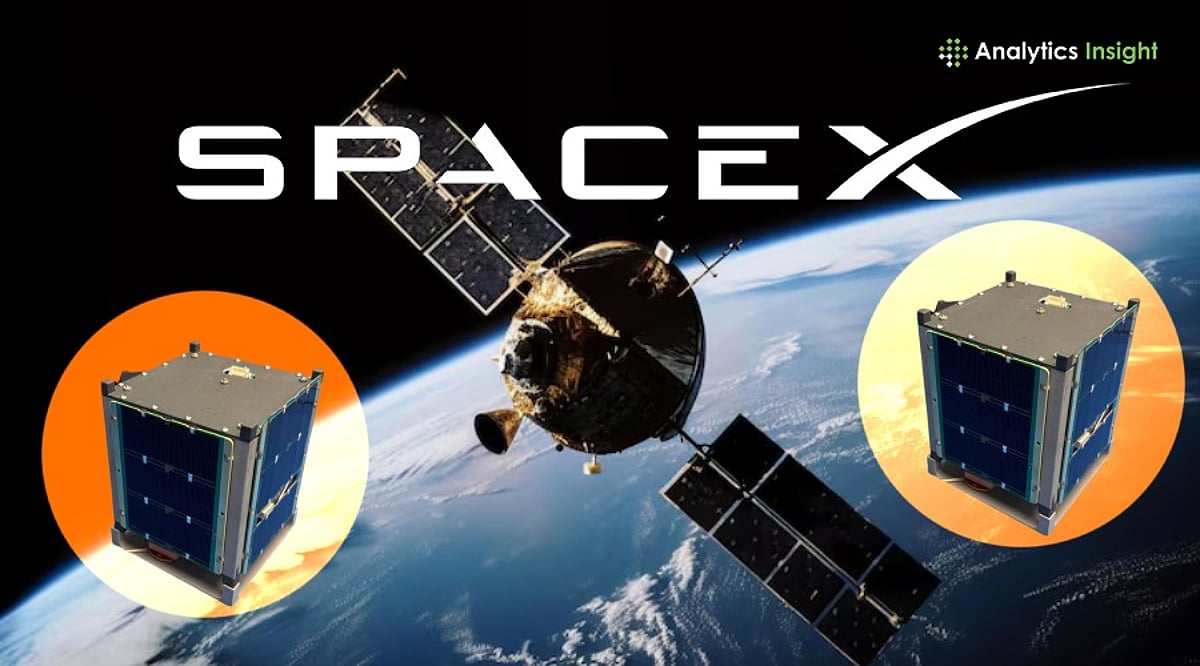
    SpaceX has successfully launched the world’s first commercial nuclear-powered satellite into orbit, marking a significant milestone in the commercialization of space nuclear technology. The satellite, named BOHR (Betavoltaic Orbital High-Reliability CubeSat), was built by Miami-based City Labs and launched aboard a Falcon 9 rocket as part of the Transporter-17 rideshare mission from Vandenberg Space Force Base on July 7.

    The BOHR satellite uses a novel betavoltaic battery system called NanoTritium, which generates electricity from the natural beta decay of tritium trapped in a metal hydride matrix. Unlike traditional radioisotope thermoelectric generators used by NASA on missions like Voyager or the Curiosity rover, this system has no moving parts, no liquid electrolytes, and virtually no fire risk. As the tritium fuel decays, it converts into helium-3, a stable, non-radioactive byproduct.

    City Labs CEO Peter Cabauy emphasized the significance of this achievement, stating, “This is a historic step for commercial nuclear power in space.” The mission demonstrates that nuclear energy systems are ready for commercial use, addressing a critical limitation of solar panels: they cease to function when not exposed to sunlight. Batteries can provide short-term power but cannot sustain long-duration operations.

    NASA has separately explored tritium betavoltaics for powering small autonomous sensors in permanently shadowed regions of the Moon, where extreme cold and total darkness make conventional batteries impractical. The BOHR mission also cleared a new regulatory path, becoming the first commercial nuclear payload to undergo the FAA’s dedicated review pathway established under National Security Presidential Memorandum-20 in 2019.

    The launch arrives alongside NASA and the Department of Energy’s continued development of a lunar surface fission reactor, targeting a first deployment by 2030. Cabauy described BOHR as a pathfinder, noting that the goal extends beyond City Labs to open the commercial nuclear space sector for other firms pursuing similar technology. “BOHR demonstrates that safe, compact, and regulatory-approved nuclear power systems are ready for routine commercial deployment. This capability enables persistent, always-on payload operations that are not constrained by sunlight or battery life,” he said.

    While the power output is modest, unsuitable for large-scale applications like lunar bases, Cabauy hopes it can scale toward larger applications over time, underscoring nuclear power as essential infrastructure for the next phase of deep space and lunar exploration.

  • SPCX Stock Falls After NASDAQ-100 Debut as Analysts Deliver Mixed Forecasts

    SPCX Stock Falls After NASDAQ-100 Debut as Analysts Deliver Mixed Forecasts

    SpaceX stock (ticker: SPCX) experienced a decline following its first day of trading on the NASDAQ-100 index, closing at $149.47 on Tuesday. The 7% drop came despite expectations that index inclusion would trigger buying from funds tracking the benchmark. The stock remains above its $135 IPO price but is more than 25% below its June 16 closing high of $201.80.

    The NASDAQ-100 entry had been anticipated to bring demand from index-tracking funds, which collectively manage approximately $800 billion in assets. However, this anticipated buying did not materialize into a rally, suggesting that some of the index demand may have been priced into the stock earlier. SPCX had gained nearly 6% in the week leading up to the index addition, and investors sold off shares as the first NASDAQ-100 session failed to extend that upward move.

    Meanwhile, ARK Invest increased its position in SpaceX by purchasing 44,196 SPCX shares on Tuesday, valued at around $6.6 million based on the closing price. ARK funds already held approximately 3.29 million shares by the end of SpaceX’s first public trading day.

    Wall Street analysts have begun issuing coverage following the end of the post-IPO quiet period, with a wide range of price targets reflecting significant uncertainty about the company’s valuation. The average analyst target stands near $236, implying roughly 58% upside from Tuesday’s close. Nineteen analysts have issued ratings so far.

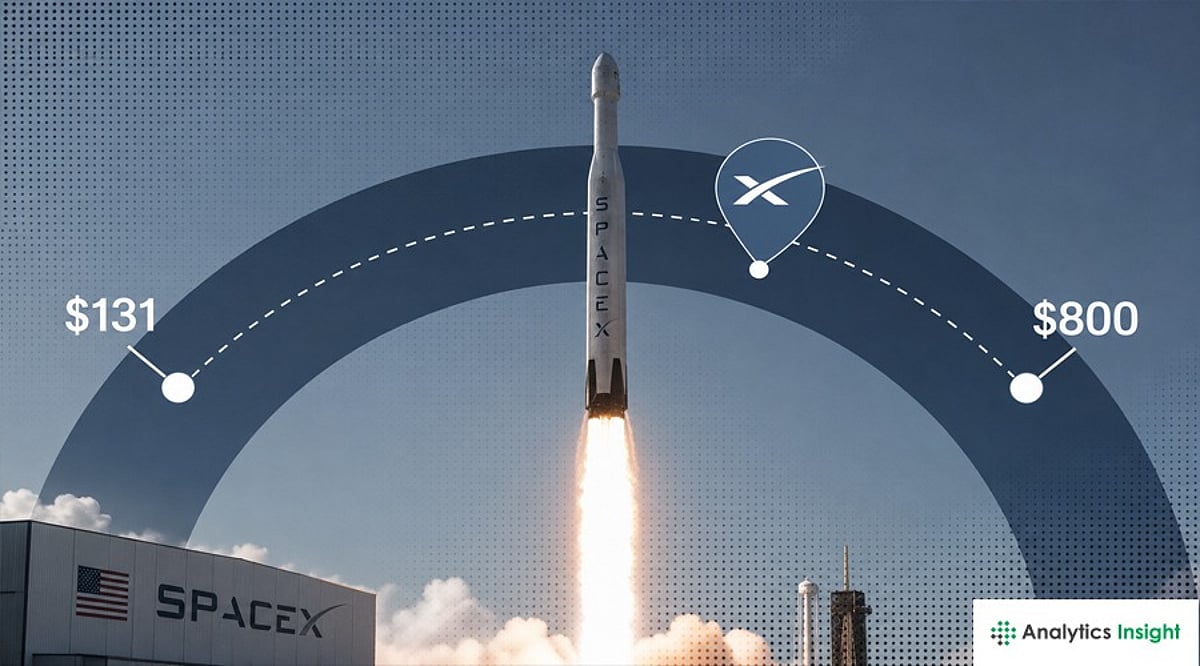
    Deutsche Bank initiated coverage with a Buy rating and a $255 target, citing SpaceX’s reusable rockets, Starlink satellite internet business, and potential use in AI infrastructure. Cantor Fitzgerald started with an Overweight rating and a $246 target, describing SpaceX as a “planetary infrastructure company.” Raymond James set the highest target on the Street at $800. Citi rated the stock a Buy at $200, linking a longer-term $900 case to the Starship program. Morgan Stanley set a $300 base case, with a $600 bull case and a $75 bear case.

    However, not all analysts share this optimism. MoffettNathanson set a $131 target with a neutral rating, questioning SpaceX’s valuation and long-term business forecasts. The firm called the company’s $30 trillion addressable market estimate “absurd” and expressed doubts about plans tied to orbital compute, stating, “There is simply no credible financial model that can support what is at the time of this writing a roughly $2 trillion valuation.”

    In other news, SpaceX has raised prices for Starlink Business Aviation customers. The Aviation Regional 25GB plan increased to $4,000 per month from $2,000, with additional data priced at $250 per GB. The company also introduced Aviation Regional Unlimited at $12,500 per month and raised Aviation Global Unlimited to $20,000 per month from $10,000, offering worldwide coverage and speeds up to 1 Gbps with the Aviation Performance Antenna. Starlink aviation equipment costs also rose to $200,000 per business jet, up from $145,000 last year.

  • NASA Chief Warns of Moon Race as US Targets 2028 Lunar Landing and China Accelerates

    NASA Chief Warns of Moon Race as US Targets 2028 Lunar Landing and China Accelerates

    NASA Administrator Jared Isaacman has stated that the United States is in a renewed Moon race with China, with both nations racing to land astronauts on the lunar surface before the decade ends. The timeline is narrowing, as China aims to land its astronauts by 2030, while the US targets a return through the Artemis program by late 2028. Isaacman emphasized that the gap between the two plans is now measured in months, not years.

    Speaking on CBS’s Face the Nation, Isaacman said Beijing’s lunar ambitions should be taken seriously. China is advancing rapidly in human spaceflight, with a clear goal of putting astronauts on the Moon. “It is not arguably. Like, there—we are very much in a space race right now, and the Chinese are moving at incredible speeds,” Isaacman said. He added, “The Chinese will land their taikonauts on the moon. There’s no question. The question is, will the United States return before them?”

    China has set a target to land astronauts on the lunar surface before 2030. Its space program has progressed steadily through crewed missions to the Tiangong space station, including the recent launch of the Shenzhou 23 spacecraft. Isaacman noted that China could achieve goals that the former Soviet Union did not reach during the original space race, framing the current contest around timing, execution, and the ability to place crews on the lunar surface first.

    The US plans to use NASA’s Artemis program to return astronauts to the Moon. Isaacman said the Trump administration has made lunar exploration a national priority through new funding. “We are going back,” he said. “It will be an unbelievable display.” Artemis III is scheduled for next year to test key systems for the lunar landing mission. According to Isaacman, the US is targeting the end of 2028 for a crewed lunar landing, with Artemis IV also planned for 2028 to support the next phase of lunar operations. “They said before 2030… we’re saying end of 2028 is when we’re targeting the landing. That is months, not years,” Isaacman said.

    Beyond the first return mission, NASA aims to build a sustained human presence on the Moon as a test site for future Mars missions. Isaacman said infrastructure for a lunar base could arrive as early as 2027, and by 2028 astronauts may find equipment already placed on the Moon, including a lunar terrain vehicle and early base systems. “Early 2030s, the moon is going to be like the International Space Station,” he said. “You’re going to have crews that are there on pretty extended periods of time, as we learn in that environment and prepare for Mars.”

    NASA plans to rely on commercial space companies to support future missions. Isaacman said private launch providers have lowered costs and expanded access to space. He also addressed delays linked to Blue Origin’s New Glenn rocket after a recent launch failure, noting that NASA is helping with the investigation while keeping future lunar work on track. “They’re going to solve that,” he said. “NASA’s there to help.”

  • Desperate Rescue: NASA Launches Spacecraft to Save Swift Telescope From Fiery Demise

    Desperate Rescue: NASA Launches Spacecraft to Save Swift Telescope From Fiery Demise

    On Saturday, July 4, 2026, a specially built spacecraft soared into orbit on a high-stakes mission to intercept and save NASA’s aging Swift Observatory before it burns up in Earth’s atmosphere. The Swift telescope, launched in 2004, has been losing altitude far faster than expected due to a series of recent solar storms. Without intervention, it was projected to disintegrate by October.

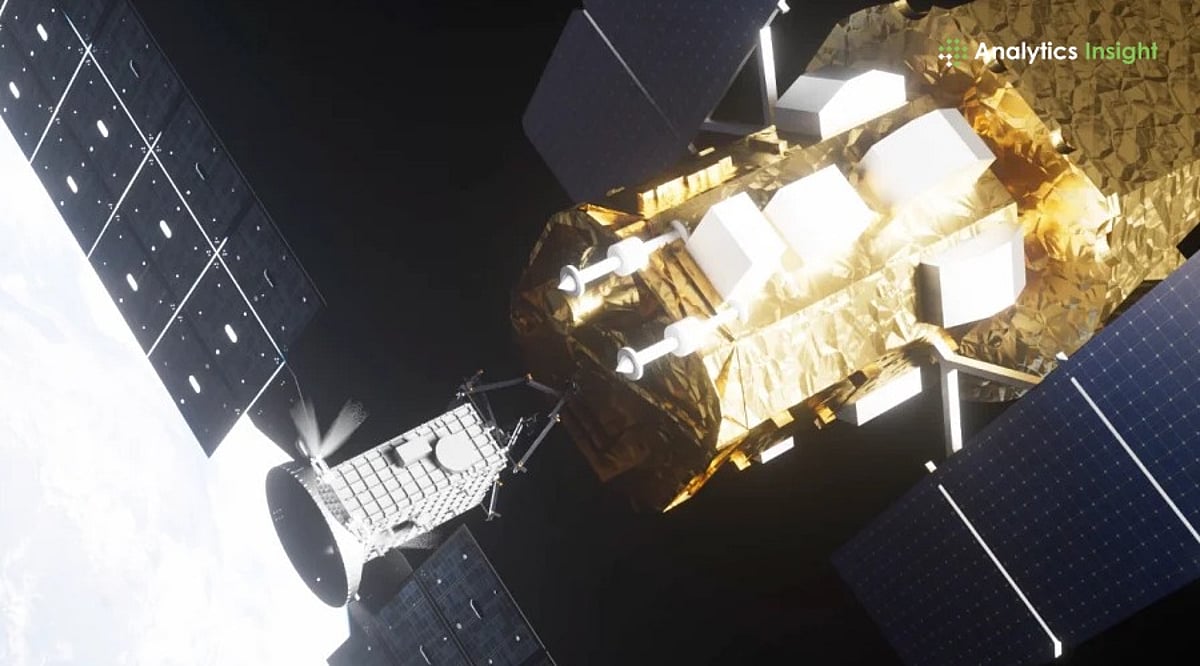
    The rescue spacecraft, named LINK and built by Katalyst Space Technologies, lifted off from the Marshall Islands aboard a Pegasus rocket dropped from the belly of a modified aircraft. Northrop Grumman handled the launch. LINK is now on a month-long journey to reach Swift, where it will use three robotic arms to physically capture the 1.4-metric-ton telescope and begin boosting it back to a stable orbit.

    NASA is paying Katalyst roughly $30 million (NZ$52.5 million) for the operation. The telescope currently orbits about 360 kilometers above Earth, well below its original altitude. Increased solar activity has heated and expanded the upper atmosphere, creating extra drag that pulls low-orbiting satellites downward. Katalyst plans to raise Swift’s altitude by 240 kilometers, restoring it close to its original orbit. To avoid damaging the telescope, LINK’s thrusters will fire gradually rather than delivering a single jolt. NASA has already paused Swift’s scientific observations to conserve what altitude remains during the rescue.

    Katalyst had just nine months to design, build, and launch the mission — an unusually tight timeline driven by Swift’s rapidly decaying orbit. Bad weather and technical glitches delayed the launch several times before it finally got off the ground. Katalyst CEO Ghonhee Lee acknowledged the immense pressure, noting that the greater risk would have been doing nothing and watching Swift disintegrate in the atmosphere.

    If the mission succeeds, Swift could resume scanning the sky by September, continuing its vital work tracking gamma-ray bursts and exploding stars — some of the most energetic events in the universe. The mission is also being watched closely as a potential blueprint for similar rescues. NASA’s Hubble Space Telescope is experiencing a similar altitude drop due to the same rise in solar activity and could become a candidate for a comparable rescue within the next few years.

  • Drone Warfare Economics: How Cheap UAVs Are Disrupting Military Strategy and India’s Defense Future

    Drone Warfare Economics: How Cheap UAVs Are Disrupting Military Strategy and India’s Defense Future

    The battlefield is undergoing a profound transformation as inexpensive, mass-produced drones challenge the dominance of costly military hardware. From the Russia-Ukraine conflict to tensions in West Asia, unmanned aerial vehicles (UAVs) are rewriting the rules of engagement, forcing nations to rethink defense budgets, strategies, and the very nature of national security.

    In a recent episode of the Analytics Insight Podcast, host Priya Dialani sat down with Sai Pattabhiram, Founder and Managing Director of Zuppa Geo Navigation Technologies, to explore how drones are reshaping modern warfare and the economics that underpin it. The conversation spanned the global rise of UAVs, India’s push for indigenous drone technology, the role of artificial intelligence, and the strategic imperative of building a resilient domestic drone ecosystem. Here are the key takeaways.

    Why Drones Are Game Changers

    Pattabhiram highlights the revolutionary cost asymmetry: a $3,000 drone can neutralize tanks, missiles, or air defense systems worth millions. This democratization of offensive capability is shifting power from resource-heavy militaries to those that can innovate and mass-produce low-cost platforms.

    The Russia-Ukraine War: A Turning Point

    The prolonged conflict in Ukraine has demonstrated that swarms of cheap drones can sustain long-drawn battles. Nations now recognize that mass-production capabilities, combined with rapid innovation and upgrades, are as critical as high-end weaponry. The war has upended traditional defense thinking, emphasizing volume and adaptability over sheer sophistication.

    India’s Need for Indigenous Drone Manufacturing

    India’s heavy reliance on imported drone components raises logistical and cybersecurity vulnerabilities. Pattabhiram argues that developing homegrown technologies enhances national security, reduces dependency on foreign suppliers, and positions India as a potential defense manufacturing hub for other nations. Building a self-sufficient drone ecosystem is both a strategic and economic priority.

    AI: The Brain Behind Future Drones

    Artificial intelligence is set to supercharge drone capabilities. AI enables autonomous flight, target identification, operations without GPS, and coordinated swarming. These intelligent systems increase efficiency, reduce human workload, and open new tactical possibilities. Pattabhiram predicts that AI-driven autonomy will be the defining factor in future drone warfare.

    Shaping Future Conflicts

    Future wars will likely be longer, more technologically complex, and fought from greater distances. Drones allow states to project power without committing large ground forces, while simultaneously bolstering defensive positions. The advantage will go to those who achieve technological superiority—and that race is already underway.

    Listen to the full podcast episode at Analytics Insight.

  • DJI Avata 360 Review: How This 360-Degree Drone Transforms Aerial Workflows for Creators

    DJI Avata 360 Review: How This 360-Degree Drone Transforms Aerial Workflows for Creators

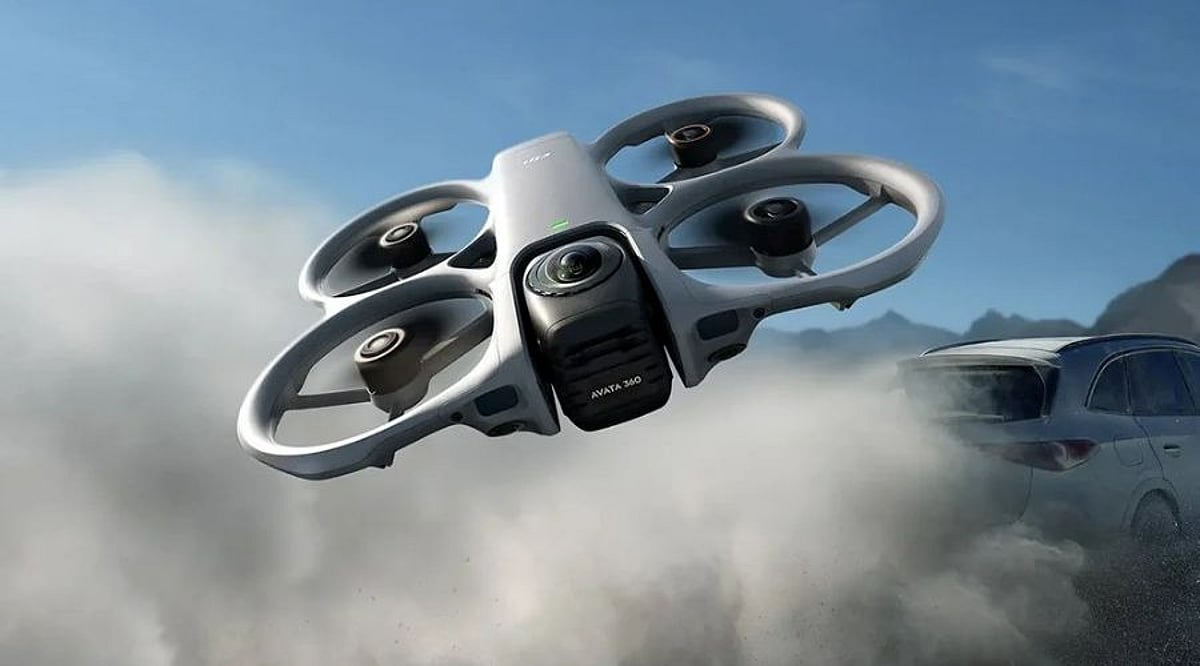
    If you’ve shot with traditional FPV drones, you know the tradeoff: you commit to a framing decision in flight. Miss the angle? Fly again. Need both a horizontal YouTube cut and a vertical TikTok cut? Two flights. The DJI Avata 360, launched March 26, 2026, changes that. As DJI’s first 360-degree drone — and only the second consumer 360 drone — its real value isn’t a spec. It’s a completely new way to capture and edit aerial footage.

    What Makes the Avata 360 Different

    The basics matter. Here are the specs that drive real-world performance:

    • Dual 1/1.1-inch CMOS sensors that capture the full sphere in a single pass
    • 8K/60fps HDR capture at 180 Mbps — gives you resolution headroom to reframe in post
    • Whoop-style propeller guards for tight indoor spaces that traditional FPV drones can’t safely enter
    • O4+ transmission for stable signal at extended ranges
    • Single Lens mode for traditional 4K/60fps when you don’t need 360

    The propeller guards alone open environments previously off-limits: wedding venues, warehouses, indoor sports facilities, retail spaces. Any tight space where a standard drone would risk damage is now accessible.

    The Real Shift: Post-Production Flexibility

    The headline isn’t the dual sensors. It’s what they enable in the edit. Traditional drone footage is composed in flight — you aim, fly, commit. The Avata 360 reverses that. You fly the path; the camera captures everything. You compose in post.

    GyroFrame in the DJI Fly app is the tool. After landing, creators can pull any frame from the 360 sphere, adjust angles, focal points, and orientation. The same flight produces a wide cinematic horizontal frame, a vertical TikTok cut centered on a subject, a top-down reveal — or any combination — without flying again.

    For working creators, this is the most meaningful shift in drone workflow since GPS stabilization made consumer drones flyable for non-pilots.

    Honest Framing: The 8K to 4K Export Reality

    Worth being clear: the 8K/60fps source is the recording resolution. The final flat video export in most workflows lands at 4K rather than 8K. The extra resolution gets consumed by the reframing process — pulling a specific framing out of a 360 sphere uses up source headroom. This isn’t a flaw; it’s how 360 capture works structurally. The 8K source exists specifically so the 4K output looks clean after reframing. Expecting 8K final output from a 360 drone is the wrong expectation.

    What Creators Are Actually Doing With It

    Early use cases demonstrate the workflow’s power:

    • Solo adventure creators extract multiple angles from a single pass — wide establishing, tight subject-tracking, overhead reveal, vertical short-form cut — no repeat flights needed.
    • Wedding videographers reframe one flight for highlight reel, venue establishing shot, and vertical Instagram cut. Substantial time savings on a typical shoot day.
    • Athletes and sports creators keep subjects center-frame in post, even when they drift mid-flight. Traditional FPV requires anticipating where the subject will be; 360 capture lets you reposition after the fact.
    • Multi-platform creators get both YouTube-wide and TikTok vertical from a single flight — the simplest argument for the workflow shift.
    • The “invisible drone” modifier — skilled reframing in GyroFrame can effectively remove the aircraft from perspective, creating shots that look like an impossible camera position.

    Early Sentiment From the Review Community

    Reviewer response has been notably enthusiastic. Tom’s Guide called it one of the best drones on the market outright. The “creative director in the sky” framing resonates with creators who want editing flexibility without flying twice. The consistent thread: it doesn’t replace traditional drones for every use case — it opens a new category that didn’t exist before.

    Where the Avata 360 Fits in the DJI Lineup

    The Avata 360 isn’t a replacement for the DJI Drone lineup — it’s a complement. For traditional aerial work where you know your framing in flight, the Mini 5 Pro or Mavic 4 Pro remain right tools. For tight-space shooting, single-flight multi-output workflows, and creators producing content for multiple platforms, the Avata 360 fills a category gap. If your work involves shooting the same scene for multiple deliverables, indoor environments, or unpredictable subjects, this drone solves problems your current gear doesn’t.

    What to Look For When Buying in the US

    Buy from an authorized US retailer that ships from US-held stock, includes the full official DJI manufacturer warranty, and has US-based customer support. DJI is an authorized US reseller stocking the Avata 360 with domestic shipping and warranty included. For a drone introducing a new workflow, local support matters more than usual.

    The Bottom Line

    The DJI Avata 360 is the most interesting new drone DJI has launched in years — not because of any single spec, but because of what 360-degree capture enables in the edit. For creators who shoot for multiple platforms, work in tight spaces, or want the freedom to reframe after landing, this is genuinely new territory. The 8K source to 4K output reality is worth understanding, but it’s not a limitation. On the dimensions that matter — 4K final output quality, post-production flexibility, single-pass multi-output workflows — the Avata 360 delivers. For creators ready to change how they think about aerial workflow, this is the drone worth considering.

  • DJI Mavic 4 Pro Review: Is the $2,199 Flagship Drone Worth the Investment?

    DJI Mavic 4 Pro Review: Is the $2,199 Flagship Drone Worth the Investment?

    If you are reading this, you already know the DJI Mavic 4 Pro is not a casual purchase. It starts at $2,199 for the base configuration, and the buyers who should actually own one are working photographers, professional videographers, and committed prosumers who will use every capability the drone offers. For everyone else, there are smaller, cheaper, more practical options in the lineup.

    This review is for the people in the first group. If aerial work pays you, or if you are serious enough about it that the price tag is justified by what the gear unlocks, here is what the Mavic 4 Pro actually delivers and whether it earns the investment.

    The Triple Hasselblad Camera System

    The Mavic 4 Pro carries a triple-camera system co-engineered with Hasselblad, and this is where the drone justifies most of its price.

    The three focal lengths cover the working ranges that pros actually shoot:

    • 28mm for wide establishing shots, sweeping landscapes, and immersive perspectives that put the scene in context
    • 70mm for medium-tight compositions where you need to isolate a subject without losing environmental context
    • 168mm for compressed telephoto work that makes distant subjects feel close and creates the cinematic look you cannot fake in post

    The wide camera captures up to 8K video at 30fps and 100MP stills. Real-world translation: you can crop aggressively in post and still deliver footage that holds up at 4K, you can pull stills from video clips that work as full publication-quality photographs, and you have headroom for the kind of color and detail work that distinguishes paid commercial output from hobbyist content.

    What the multi-focal system changes in practice is how you shoot. With a single fixed-focal drone, you have to fly closer to get tighter shots, which limits angles and burns battery time on repositioning. With three focal lengths in one body, you stay in optimal flight position and switch focal lengths to compose differently. Real estate shoots get faster. Travel work gets more varied. Commercial productions get more usable footage in fewer takes.

    The Infinity Gimbal

    The Infinity Gimbal is the single most creatively significant feature on the Mavic 4 Pro, and it does not get the attention it deserves in most reviews.

    Traditional drone gimbals have angular limits. They can tilt down and rotate within a constrained range. The Infinity Gimbal removes that limit and allows full 360-degree rotation. That opens up shots that were previously impossible on consumer drones:

    • True Dutch angles where the horizon tilts dramatically, creating the unsettled cinematic feel typically reserved for narrative film work
    • Straight-down perspectives that go fully vertical, then continue rotating to reveal new framings without repositioning the drone
    • Vertical panning that sweeps from ground to sky in a single continuous motion, creating reveal shots that pulled cinematographers used to need a crane or a helicopter for
    • Continuous rotational sequences that pivot the entire frame while the drone holds position

    If you have spent any time trying to fake these moves on previous drones through complicated compound flight maneuvers, you know how much work the Infinity Gimbal removes from the shoot. It is the difference between planning a shot for thirty minutes and just executing it.

    Flight Performance and Reliability

    Pro-grade aerial work demands gear that performs reliably under pressure. The Mavic 4 Pro is built around that requirement.

    Flight time reaches up to 51 minutes per battery. That is not just an impressive number on a spec sheet. It is the difference between being able to actually shoot a sequence, fly back, and reposition without burning the battery, and having to constantly cycle batteries mid-shoot. For commercial work where you are billing hours and trying to hit specific shot lists, this changes how you plan a shoot day.

    APAS 6.0 omnidirectional obstacle avoidance protects the drone from collisions in every direction. For tight environments, complex urban shooting, or low-light work where visual judgment gets compromised, this is the system that prevents the most expensive accidents.

    Return-to-home reliability has been refined across multiple generations. The Mavic 4 Pro is designed to come back to where it took off even when signal degrades, when batteries get low, or when you lose track of where you are flying. For pro work where losing a drone is not just expensive but potentially catastrophic for a client commitment, this dependability is the baseline that justifies professional gear.

    Transmission range and signal quality have similarly been engineered for working conditions. The Mavic 4 Pro maintains stable video feed at extended distances and through interference patterns that would have dropped earlier generations.

    Honest Positioning: Who Should Actually Buy This

    This part matters more than most reviews acknowledge.

    The Mavic 4 Pro is not for casual aerial enthusiasts. At $2,199 base, with realistic accessory bundles pushing total investment well past $3,000, this is a tool for people who will use the capability and recover the investment through the work they produce.

    The right buyers are:

    • Working photographers and videographers who shoot commercial, real estate, wedding, or editorial work where aerial deliverables are part of the engagement. The Mavic 4 Pro pays for itself in client retention and quality differentiation.
    • Cinematographers and documentary filmmakers producing content where production value matters and where the Infinity Gimbal and multi-focal system actually unlock shots they cannot get otherwise.
    • Committed enthusiasts with the budget, time, and creative ambition to use every capability the drone offers. If you fly multiple times a month, push your craft seriously, and want gear that will not bottleneck your development, you are in this category.

    Buyers who mainly fly occasionally, want a drone for vacation footage, or are upgrading from smartphone video may want to consider some of the smaller and more affordable options in the DJI Drone lineup first. Depending on your needs, models from the Mini or Air series can provide excellent image quality, portability, and ease of use while delivering outstanding value. The higher-end models are generally recommended for users who need advanced features, extended flight capabilities, or more demanding professional workflows.

    Being honest about this matters. The Mavic 4 Pro is DJI’s flagship consumer drone, bringing together the company’s most advanced imaging, flight, and creative features in a single platform. It is designed for users who want access to DJI’s highest-end consumer drone capabilities. But the best gear for a hobbyist is not the most expensive gear. The best gear is the gear they will actually use to its potential.

    What to Look For When Buying in the US

    At this price point, where you buy is not a small consideration. The DJI brand is the same worldwide, but the buying experience and the post-purchase support are not.

    For a Mavic 4 Pro purchase, look for a retailer that:

    • Holds US stock in domestic warehouses, not international or grey-market inventory imported through unauthorized channels
    • Provides the full official DJI manufacturer warranty on every unit, including the standard 1-year coverage
    • Ships domestically within a few business days, not weeks from overseas
    • Has US-based customer support you can actually reach if anything goes wrong

    Grey-market imports often lack warranty coverage entirely. If something fails three months in, you have no local recourse. For a $2,199 piece of equipment that you may be depending on for paid work, that risk profile is unacceptable.

    DJI USA is an authorized US reseller stocking the Mavic 4 Pro with domestic shipping and the full 1-year manufacturer warranty included on every unit. For a drone in this category, those four criteria are not optional.

    The Bottom Line

    If you make money from aerial content, or if you are committed enough to push your craft to the level that justifies professional gear, the DJI Mavic 4 Pro is worth $2,199. The triple Hasselblad camera system delivers footage that competes with significantly larger and more expensive cinema rigs. The Infinity Gimbal unlocks creative possibilities that simply do not exist on other consumer drones. Flight performance and reliability are engineered for working conditions where gear cannot fail.

    The Mavic 4 Pro is the best consumer drone DJI makes in 2026, and for the right buyer, it earns every dollar of the asking price. The only question is whether you are that buyer. If you are, you already know.

    Check the DJI Mavic 4 Pro product page for current pricing, configurations, and availability.

  • LiPo vs Li-Ion Drone Batteries: How to Pick the Right Power Source for Your Drone in 2026

    LiPo vs Li-Ion Drone Batteries: How to Pick the Right Power Source for Your Drone in 2026

    Ask ten FPV pilots why their drone barely made it home, and most will blame the build. Only a few will point to the part that decided the outcome before takeoff. Most people ignore the fact that battery chemistry often plays a bigger role in a drone’s performance than most pilots realize.

    Same Chemistry Family, Different Builds

    Drones have moved well past being weekend toys. Racing rigs look for split-second throttle response, while survey and delivery fleets demand maximum airtime. LiPo and Li-Ion have become the two main battery choices for both types of drones. The gap between them is shifting so fast that a choice made a year ago might already be outdated.

    The split starts with construction. Li-Ion cells are built as rigid cylinders or prismatic blocks, the same format used in laptops and electric cars. LiPo cells use a flexible foil pouch filled with a polymer electrolyte instead of a rigid shell. That construction lets manufacturers mold LiPo into the thin, oddly shaped packs that fit inside a quad’s frame.

    Why Packaging Changes the Numbers

    Packaging is not just cosmetic. It carries real electrical consequences. Commercial Li-Ion cells typically achieve around 180–250 watt-hours per kilogram. Most drone-grade LiPo packs fall between roughly 130 and 200 watt-hours per kilogram, depending on cell design. A LiPo’s pouch, meanwhile, gives current a shorter, more direct path in and out of the cell. That shorter path lowers internal resistance, which means less voltage sag when a pilot slams the throttle.

    High C-rated LiPo packs remain the benchmark for aggressive throttle response, sustaining discharge rates of 50C — sometimes past 100C — without the voltage collapsing mid-maneuver. The trade-off is fragility. A punctured pouch fails far more dramatically than a dented metal can.

    Closing the Power Gap

    LiPo has held a clear advantage in high-power drone applications for years, but that gap is becoming smaller. A newer cylindrical design called a tabless cell removes the traditional spiral tab connection. Instead, it allows current to flow across a much larger part of the cell. Less resistance along that path means less heat and less sag, even under hard pulls.

    Independent cell testing already shows tabless 21700 packs closing much of the historical performance gap against older high-discharge Li-Ion cells, particularly in endurance-focused applications. Top-tier LiPo packs still hold the edge on raw peak burst current, but that edge keeps shrinking with each new cell generation.

    What Actually Wears Out

    Lifespan tells a similar story in reverse. LiPo packs typically last 300 to 500 charge cycles before capacity drops off, while Li-Ion cells last 500 to 1,000 cycles or more. Much of that durability comes from the pack, not the bare cell. Many Li-Ion battery packs include a battery management system that balances and protects each cell. Hobby-grade LiPo packs typically rely on external balancing during charging instead. A five-inch freestyle quad pulling 100 amps out of a hard punch needs LiPo’s instant power far more than it needs extra grams of capacity.

    A mapping drone flying for 45 minutes over a survey site benefits more from steady voltage and maximum airtime per gram, which is exactly where Li-Ion earns its keep. Storage habits matter just as much as the chemistry itself. A LiPo pack left fully charged for weeks loses capacity far faster than one stored near 3.8 volts per cell.

    The Real Cost Over Time

    Cost follows the same logic over time. LiPo is cheaper to buy, which still makes sense for short-term projects and tight budgets. Over the course of hundreds of missions each year, Li-Ion’s longer cycle life and lower maintenance begin to offset the higher purchase price. The exact savings depend on duty cycle and charging habits more than on any single published figure.

    One common assumption deserves correction, too. Shipping and storage rules for lithium batteries are set by watt-hour rating, not by whether a cell is a pouch or a cylinder. Neither does chemistry get an automatic pass on safety paperwork.

    Where the Technology Is Headed

    Some experimental and industrial UAV platforms are already exploring hybrid configurations that pair a Li-Ion main pack with a LiPo booster for takeoff. Several manufacturers are also demonstrating early commercial cells using semi-solid and solid-state chemistries that exceed 300 watt-hours per kilogram.

    Battery management systems are advancing alongside battery chemistry, with adaptive charging now predicting cell health rather than just monitoring voltage. Neither LiPo nor Li-Ion will disappear soon, but the line between them keeps getting thinner with each flying season.

    Final Thoughts

    The better battery has never really been about chemistry. It is about matching current delivery, energy density, and mission profile to the way a specific drone actually flies. The biggest change is the growing overlap between LiPo and Li-Ion batteries. Pilots who understand that overlap will outfly those still choosing batteries based on brand loyalty alone.

    FAQ

    1. Which is better for drones: LiPo or Li-Ion?
      Neither battery is better for every drone. LiPo is ideal for racing and freestyle drones that need high burst power, while Li-Ion is better for long-range, mapping, and inspection drones that prioritize flight time and efficiency.
    2. Why do FPV drones use LiPo batteries?
      FPV drones rely on LiPo batteries as they deliver high discharge rates with minimal voltage sag. This provides faster throttle response and consistent performance during aggressive flying.
    3. Do Li-Ion batteries last longer than LiPo batteries?
      Yes. Li-Ion batteries typically last between 500 and 1,000 charge cycles, while most LiPo batteries deliver around 300 to 500 cycles. Proper charging and storage can extend the lifespan of both.
    4. Are tabless Li-Ion cells replacing LiPo batteries?
      Not completely. Tabless Li-Ion cells improve power delivery and reduce heat, making them more suitable for demanding drone applications. However, LiPo batteries still lead in peak burst current for high-performance FPV flying.
    5. How should LiPo drone batteries be stored?
      LiPo batteries should be stored at about 3.8 volts per cell in a cool, dry place. Storing them fully charged for long periods can reduce capacity and shorten battery life.