Category: Aeronautics and Astronautics

  • SpaceX Stock Drops to New Low Despite Starship Flight Success

    SpaceX Stock Drops to New Low Despite Starship Flight Success

    SpaceX shares fell to a record low on Monday, even after the company’s Starship completed its most successful test flight yet. The stock dipped below $109 before closing 1.4% lower at $113.50, extending a decline that began after its IPO in June.

    Investors are now looking beyond launch milestones. They are focused on whether Starship can achieve high flight rates, safe returns, and cost-effective operations to support SpaceX’s long-term ambitions.

    Starship Achieves Key Flight Milestones

    Starship lifted off from Starbase, Texas, on Friday during its 13th test flight. The mission deployed 20 next-generation Starlink V3 satellites, completed an engine relight in space, and ended with the upper stage making a controlled splashdown in the Indian Ocean.

    SpaceX spokesperson Dan Huot expressed excitement during the livestream, calling the mission ‘lucky number 13.’ The spacecraft remained intact after landing, providing engineers with valuable heat shield data from reentry.

    However, the Super Heavy booster did not complete its planned landing sequence. Five engines failed to restart during the landing burn, causing the booster to hit the Gulf of Mexico harder than intended. SpaceX did not plan to recover either vehicle.

    The mission followed an engine-ignition abort on July 16 and a weather delay on July 23. Elon Musk said SpaceX may attempt to catch the Starship upper stage with its launch tower during Flight 14, pending a thorough data review.

    SpaceX Stock Continues Post-IPO Decline

    SpaceX stock closed at $115.07 on Friday before the launch, after falling 2.7% during the session and 7.2% over the week. Monday’s decline pushed shares further below the company’s $135 initial public offering price.

    The stock has lost nearly half its value since reaching a post-IPO high above $225 in June. Short sellers have built positions during the decline, while investors question the company’s valuation and spending plans.

    Alex Morris, CEO of F/m Investments, said the shares could move into ‘double digits.’ He acknowledged SpaceX’s strong product and limited direct competition but attributed some volatility to the company’s growing focus on artificial intelligence.

    SpaceX plans to report second-quarter results on August 4. The release will give investors their first detailed look at quarterly revenue, costs, cash usage, Starlink growth, and spending across space and AI operations.

    Starship Becomes Central to Future Plans

    SpaceX is shifting its launch strategy toward Starship and away from Falcon 9. Reports indicate the company has turned away some satellite operators seeking dedicated Falcon 9 launches after 2028 and stopped accepting new rideshare reservations for later missions.

    The company has also reduced production of some non-reusable Falcon components. This shift makes Starship’s reliability, reuse, and launch rate critical to operations, as Falcon 9 supports commercial launches and much of the Starlink deployment schedule.

    Investors are monitoring the cost of repairing Starship after reentry and the turnaround time between flights. SpaceX aims to increase launch frequency sharply, but each test carries technical risk and can face hardware or weather delays.

    SpaceX has not confirmed a date for Flight 14. Any tower-catch attempt depends on the company’s review of Flight 13 data, including engine performance, reentry conditions, heat shield results, and splashdown control before approving the next flight.

  • Amazon Aims to Launch Satellite-to-Smartphone Service by 2028

    Amazon Aims to Launch Satellite-to-Smartphone Service by 2028

    Amazon is preparing to take smartphone connectivity beyond traditional mobile networks. The tech giant has proposed a satellite-based direct-to-device (D2D) service that could allow compatible smartphones to make calls, send messages, and access mobile data even in areas without cellular coverage.

    According to filings submitted to the US Federal Communications Commission (FCC), Amazon plans to deploy a constellation of up to 5,105 low Earth orbit (LEO) satellites under its Amazon Leo initiative. If approved, the rollout is expected to begin in 2028.

    Unlike Amazon’s existing satellite broadband service, which requires dedicated ground equipment, the new system is designed to connect directly with compatible smartphones. The company says the network will complement, rather than replace, existing mobile infrastructure.

    Voice Calls, Messaging and Emergency Services

    The following services would include calling, messaging, mobile internet, and emergency services. Amazon plans to partner with telecom providers globally to enable connectivity in areas where it is not easy to build mobile network infrastructure. According to the company, this technology may prove useful for industries like logistics and IoT applications.

    How the Satellite Network Will Work

    Amazon’s system of satellites will be operating in five different orbital planes to offer coverage not only to inhabited zones but also to high and near-polar latitudes. L-band and S-band frequencies will enable communication between the smartphones and the satellites. Ka-band and V-band frequencies will connect the satellites to the internet via ground infrastructure. Additionally, Amazon intends to process the network traffic in space, thus decreasing potential signal interference.

    India Among Key Focus Markets

    Amazon has identified India as one of its priority markets as it expands its satellite ambitions. The company has cited India’s rapidly growing digital economy and the need to improve connectivity in underserved regions as key reasons for its interest. The proposal also intensifies competition in the fast-growing satellite connectivity market, where companies including SpaceX, AST SpaceMobile and Lynk Global are developing direct-to-smartphone services. If approved, Amazon’s network would mark another step towards making satellite communication a mainstream feature for future smartphones.

  • 9 Pioneering Companies Building the Future of Space Hotels

    9 Pioneering Companies Building the Future of Space Hotels

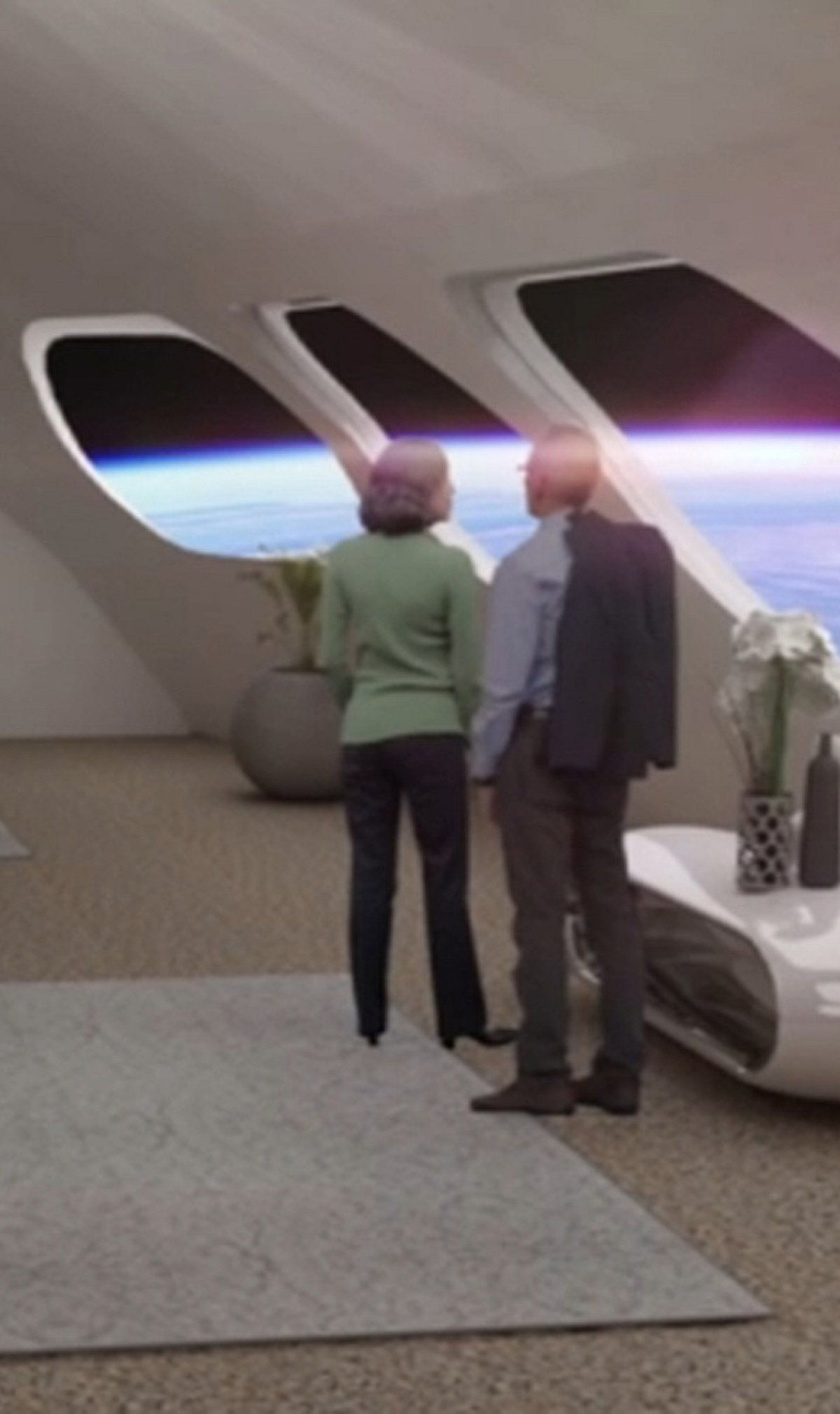
    The dream of spending a vacation in orbit is moving closer to reality thanks to a growing roster of ambitious companies. From rotating space stations with artificial gravity to luxury hotel modules and inflatable habitats, these nine organizations are leading the charge to make space hospitality a tangible experience.

    1. Voyager Space

    Voyager Space is developing Starlab, a commercial space station designed to support future space tourism and orbital hospitality services.

    2. Orbital Assembly Corporation

    Orbital Assembly Corporation plans to build rotating space stations with artificial gravity, aiming to create the world’s first true space hotel experience.

    3. Axiom Space

    Axiom Space is constructing private space station modules, laying the foundation for luxury stays beyond Earth in the coming years.

    4. Blue Origin

    Blue Origin is expanding private spaceflight through reusable rockets, bringing future orbital tourism and space hotel access closer to reality.

    5. SpaceX

    SpaceX’s Starship could transport large numbers of passengers, making commercial space hotels more practical and affordable for future travelers.

    6. Sierra Space

    Sierra Space develops inflatable habitat technology designed for commercial stations, supporting comfortable living spaces for future orbital visitors worldwide.

    7. Vast

    Vast is creating Haven-1, a private space station designed to host astronauts today while supporting future commercial tourism opportunities.

    8. Hilton Hotels & Resorts

    Hilton partners with Voyager Space, contributing hospitality expertise to help shape guest experiences aboard future commercial space stations worldwide.

    9. Above: Space Development Corporation

    Above: Space Development Corporation is designing artificial gravity stations that could redefine long-term stays and luxury accommodation in Earth’s orbit.

  • Aerospace Engineer Shortage Worsens as AI Firms Attract Top Graduates with Higher Pay and Faster Growth

    Aerospace Engineer Shortage Worsens as AI Firms Attract Top Graduates with Higher Pay and Faster Growth

    The global aerospace industry is facing an escalating talent crisis as artificial intelligence companies lure skilled engineering graduates with superior salaries, accelerated career progression, and fewer entry barriers. Industry leaders warn that the shortage could hamper aircraft production at a time when demand for new planes is soaring.

    AI Boom Reshapes Engineering Career Choices

    At the recent Farnborough International Airshow, recruiters intensified efforts to attract Generation Z and Generation Alpha, hoping to spark interest in aerospace careers. However, the talent pipeline is narrowing as more graduates gravitate toward AI, software, and other emerging technologies.

    The UK aerospace and defense sector alone faces a shortfall of roughly 10,000 specialized engineers annually. Over half of the nation’s licensed aerospace engineers are over 50, and fewer than 10% are under 30, raising concerns about the industry’s long-term viability. According to trade body ADS, the sector has grown 31% in the past decade, but hiring has not kept pace.

    Retirement Wave Compounds the Problem

    This shortage coincides with record order backlogs at aircraft manufacturers like Boeing and Airbus, which are also preparing for a wave of retirements among experienced engineers. Many companies previously scaled back apprenticeship programs as a cost-saving measure, relying on graduate intake routes that have not produced enough trained professionals to meet demand.

    To make aerospace careers more appealing, firms set up interactive displays, hands-on engineering puzzles, and flying demonstrations at Farnborough, aiming to capture the attention of younger visitors who might otherwise be uncertain about aviation roles.

    Industry Seeks Broader Appeal

    Experts note that aerospace employers are competing fiercely with AI companies, which often offer slightly better compensation and faster career advancement. Even top engineering graduates are increasingly choosing AI firms over traditional aerospace manufacturers.

    Industry leaders believe that developments in sustainable aviation, electric aircraft, and air taxis could make aerospace roles more attractive again. They also advocate for engaging more women and school students early—before university—to consider engineering careers.

    Last year, the UK aerospace, defense, and security sectors contributed £46.8 billion to the economy, underscoring their importance. However, companies warn that without a stronger influx of young engineers, sustaining future growth and innovation will become increasingly difficult.

  • 10 Revolutionary Space Technologies Set to Transform Humanity’s Future

    10 Revolutionary Space Technologies Set to Transform Humanity’s Future

    Space technology has entered a new era. What once looked like science fiction now shapes real missions, new businesses, and plans for life beyond Earth. Governments and private companies now invest billions of dollars every year to build better rockets, smarter satellites, and advanced space systems.

    The global space economy already stands at more than $415 billion, and experts expect it to grow beyond $1 trillion by the 2040s. Private companies now generate nearly 71% of the industry’s total revenue, which shows how quickly commercial space activity has expanded.

    These advances do much more than support space exploration. They improve communication, weather forecasting, navigation, disaster response, scientific research, and national security. Some technologies may even help humans build permanent homes beyond Earth. Here are ten space technologies that could change the future in remarkable ways.

    1. Fully Reusable Rockets

    For decades, rockets flew into space only once. Engineers threw away most of the rocket after every mission, which made each launch extremely expensive. Today, that approach has changed.

    Modern reusable rockets return safely to Earth after launch. Engineers inspect them, replace worn parts, and prepare them for another mission. This simple change has reduced launch costs by almost 90% for some commercial flights.

    Lower costs allow companies to launch more satellites, send more scientific equipment into orbit, and plan larger missions. Future heavy-lift reusable rockets could carry hundreds of tons of cargo, which would make Moon bases and Mars missions much more practical.

    2. Nuclear Space Propulsion

    Chemical rockets are effective for travel in Earth’s vicinity, but have evident limitations in long-distance travel. Nuclear propulsion is a comparatively faster system for deep space travel.

    Scientists have now been researching two major propulsion systems: nuclear thermal and nuclear electric propulsion. Both systems are expected to deliver greater efficiency, carry bigger loads and require less fuel than conventional rockets.

    The average journey to Mars takes about 6 to 9 months with present-day technology. With the help of nuclear propulsion, this time can be shortened.

    3. Satellite Mega-Constellations

    Currently, thousands of satellites orbit the Earth daily. Today’s companies launch many smaller satellites that form a network instead of only a few large satellites.

    In the year 2025 alone, about 4,500 satellites were launched into orbit, which is one of the main reasons for significant progress in the space industry.

    In addition, satellite networks are important for delivering fast internet service in hard-to-reach locations as well as providing emergency communication during disasters, navigation support for ships and airplanes, and enhancement of online education.

    4. Satellite Repair in Space

    Replacing an old satellite costs millions of dollars. Instead of building a new one every time, engineers now develop spacecraft that can repair satellites while they remain in orbit.

    Some robotic servicing missions have already extended satellite life by up to eight years. That saves money and reduces the amount of space debris around Earth.

    Future repair vehicles could replace broken parts, refill fuel tanks, adjust satellite positions, and remove damaged equipment from orbit. This approach could make satellites last much longer than before.

    5. Artificial Intelligence for Space Missions

    Modern spacecraft need quick decisions, especially during missions far from Earth. Communication delays make constant human control impossible.

    Artificial intelligence helps spacecraft navigate, monitor equipment, detect technical problems, and manage fuel more efficiently. AI also studies huge amounts of scientific data much faster than human teams.

    As missions travel farther into space, smart computer systems will play an even bigger role. They will help spacecraft solve problems on their own and complete complex tasks with greater accuracy.

    6. Permanent Bases on the Moon

    Human exploration of the Moon has begun. Today, space agencies wish to carry out long-term missions on the Moon instead of visiting it briefly.

    The Artemis program is ready to create a permanent lunar base, which will be equipped with living quarters, research laboratories, power systems, modern space suits, as well as robotic construction technology.

    A permanent base on the Moon will allow conducting several scientific experiments, receiving rocket fuel from local materials, and training astronauts for future missions on Mars.

    7. Space-Based Solar Power

    Solar panels installed on Earth are unable to generate electricity when it is night or when the weather is cloudy and overcast. Solar panels, however, are not faced with similar challenges in space.

    Solar power stations launched into orbit would be able to capture sunlight almost all the time and beam energy to our planet via microwave or laser transmissions. Nevertheless, experts still have to counter several technical problems before this dream could be accomplished. If this modality turns out to be successful, solar energy collected in outer space could help people access clean electricity, aid some remote area populations, and give energy for the emergency needs following disasters.

    8. Factories in Space

    Space creates conditions that cannot exist on Earth. The absence of gravity allows manufacturers to produce certain materials with much higher quality.

    Future factories in orbit could make advanced medicines, ultra-pure fiber optics, high-performance computer materials, artificial organs, and special metal alloys.

    As launch costs continue to fall, companies may find it profitable to manufacture expensive products in space and return them to Earth.

    9. Mining Resources Beyond Earth

    The Moon and many asteroids contain valuable resources. These include water ice, nickel, platinum-group metals, and several rare materials that support modern industries.

    Water from the Moon has special value because engineers can separate it into hydrogen and oxygen to create rocket fuel. This would reduce the need to launch large amounts of fuel from Earth.

    Space mining could lower mission costs and support future settlements across the Solar System. It could also reduce pressure on some mining operations on Earth.

    10. Advanced Space Habitats

    Long missions require much more than rockets. Astronauts also need safe places to live for months or even years.

    Future space habitats will recycle more than 90% of their water, grow fresh food through hydroponic systems, protect crews from radiation, and use artificial intelligence to monitor daily operations.

    Expandable living modules will provide more space without adding excessive launch weight. These habitats will support missions to the Moon, Mars, and possibly even farther destinations.

    Why This Matters

    Nowadays, space technology is not limited to its effects on astronauts and scientists. It influences many aspects of life such as communications, health care, climatic studies, transport, energy, and global security issues. The quicker new technologies are developed, the more chances these new technologies have to give rise to new industries, facilitate economic development, help solve pressing global problems, and prepare humans for life outside of Earth.

    Final Thoughts

    Space technology is playing an even larger role than ever before, acting as a major economic force in the world. Through the use of reusable rockets, automated technology, and satellite networks, this industry has brought about dramatic changes to the way business, communication, and research are done. The industry is thriving and projects continue to show that this growth will continue in the foreseeable future.

    FAQs

    1. What is the most important space technology today?
    Reusable rocket technology stands out because it has significantly lowered the cost of launching spacecraft and satellites.

    2. Why is the Moon important for future space missions?
    The Moon can serve as a base for research, fuel production, and future missions to Mars and deeper space.

    3. How does artificial intelligence help in space?
    AI helps spacecraft navigate, detect technical issues, manage resources, and analyze large amounts of scientific data.

    4. Can space-based solar power provide electricity on Earth?
    Scientists believe it could deliver clean, continuous energy, although the technology still requires further development.

    5. Will humans live in space permanently?
    Many experts believe permanent settlements on the Moon and eventually Mars could become possible as space habitat technology continues to advance.

  • Elon Musk Fuels Tesla-SpaceX Merger Speculation in Q2 Earnings Call – What Investors Should Know

    Elon Musk Fuels Tesla-SpaceX Merger Speculation in Q2 Earnings Call – What Investors Should Know

    Elon Musk reignited speculation about a potential merger between Tesla and SpaceX during Tesla’s second-quarter earnings call, declining to rule out a future deal. The comments came as the two companies already share projects across batteries, artificial intelligence, and advanced manufacturing.

    “We can’t talk about combining companies on an earnings call,” Musk said, adding that any merger discussion would require a formal corporate process. Tesla General Counsel Brandon Ehrhart described SpaceX as an important business partner, noting several mutually beneficial transactions, but did not confirm any active review of a merger.

    Musk’s Comments Renew Merger Debate

    Musk acknowledged growing operational overlap between Tesla and SpaceX during the call. Investors have long debated the merits of combining the two companies. Gene Munster of Deepwater Asset Management said the remarks increased his confidence in a future combination, possibly within several years.

    JPMorgan analysts pointed to shared talent, AI infrastructure, and manufacturing knowledge, suggesting those links could reduce some operational barriers. SpaceX President Gwynne Shotwell said in June that combining Musk’s companies could simplify management.

    Existing Collaborations and Synergies

    Tesla and SpaceX already cooperate on batteries, engineering, AI, and advanced manufacturing. They are jointly developing Terafab, a semiconductor facility aimed at producing chips for AI systems. Both companies rely on large computing networks and specialized engineering teams, with Musk leading strategy across both entities.

    Some Tesla investors envision a broader technology group encompassing vehicles, robotics, energy, satellites, and AI. However, no timeline, valuation, or transaction structure has been announced.

    Tesla Q2 Earnings Mixed; Focus Shifts to Spending

    The merger discussion followed Tesla’s mixed second-quarter results. Revenue reached $28.24 billion, beating the $26.32 billion estimate. Adjusted earnings of $0.33 per share missed analyst expectations of $0.50. Tesla shares fell about 6% in premarket trading.

    Vehicle deliveries rose 25% year-over-year to 480,126 units. Energy storage deployments hit 13.5 GWh, up from 8.8 GWh in the prior quarter. Capital spending is expected to exceed $25 billion this year, funding Robotaxi, Optimus, Cybercab, and AI data centers. Free cash flow was negative $1.09 billion, better than the expected negative $3.64 billion.

    Regulatory and Governance Hurdles Remain

    Any Tesla-SpaceX merger would face intense regulatory scrutiny in the U.S. and other major markets, especially China. SpaceX’s close ties with the U.S. government and defense agencies could raise national security concerns during foreign reviews. Governance is also a key issue: Musk controls a larger voting stake in private SpaceX than in public Tesla, potentially raising questions about valuation and minority shareholder treatment. Independent directors and shareholder approval would be critical.

    For now, neither company has announced a merger process. Musk’s comments only left the possibility open while cooperation continues.

  • SpaceX Stock Price Target Set at $300 by Morgan Stanley Amid AI and Starlink Growth Prospects

    SpaceX Stock Price Target Set at $300 by Morgan Stanley Amid AI and Starlink Growth Prospects

    Morgan Stanley has issued a $300 price target for SpaceX stock, marking one of Wall Street’s highest valuations for the newly public company. Analyst Adam Jonas initiated coverage with an ‘Overweight’ rating, describing $300 as the firm’s base case. As of July 20, SpaceX shares traded at $123.99, below the $135 IPO price set on June 12.

    The target implies approximately 142% upside from the current market price. However, Morgan Stanley employed an ‘intentionally wide’ valuation range, with a bear case of $75 and a bull case of $600. This wide spread reflects the numerous projects that must meet growth and cost targets over many years.

    AI Growth Drives Morgan Stanley’s Optimism

    Morgan Stanley projects SpaceX revenue will surge from $18.7 billion in 2025 to $319 billion by 2030—growth of about 17 times within five years. The bank forecasts revenue could reach $3.3 trillion by 2040, with AI services contributing a significant share.

    The forecast extends beyond rocket launches and Starlink internet services. Morgan Stanley’s model includes terrestrial data centers, enterprise AI services, satellite connectivity, and orbital computing. SpaceX’s acquisition of xAI in February integrated the Grok developer and its computing assets into the wider company.

    In its IPO filing, SpaceX presented a $28.5 trillion total addressable market, with approximately $26.5 trillion coming from AI-related markets and the remaining $2 trillion from space and connectivity. These figures represent the full market SpaceX could serve, not company revenue forecasts.

    Orbital Data Centers Underpin Long-Term Case

    SpaceX plans to leverage Starship and large satellite networks to support computing infrastructure in orbit. The company has discussed placing AI data centers above Earth, where satellites could use solar power and avoid land, power, and cooling constraints faced by ground facilities.

    However, this plan depends on Starship achieving regular and lower-cost operations. SpaceX postponed its 13th Starship test on July 16 after an engine issue triggered an automatic abort, causing shares to extend their decline and close below the IPO price for a second session.

    Starship also supports future Starlink launches. Larger satellites and higher launch capacity could expand broadband coverage and carry more computing equipment. Morgan Stanley treats launch reliability, satellite deployment, and AI demand as interconnected components of the $300 valuation.

    Valuation and Supply Risks Loom

    SpaceX reported a $4.9 billion net loss on $18.7 billion of revenue in 2025. The stock climbed as high as $225.64 after the IPO before losing more than 40% from that peak. The current market price values the company near $1.63 trillion.

    The stock faces potential selling pressure from share lockup expirations after the company reports second-quarter results. Reports indicate approximately 1.37 billion shares could become eligible for sale. While eligible shares do not always enter the market, a larger tradable supply can add volatility.

    Morgan Stanley’s $300 target rests on long-range estimates rather than current earnings. The $75 to $600 range illustrates how the valuation changes under different launch, AI, and cash-flow assumptions. SpaceX’s earnings reports, Starship tests, and AI contracts will provide fresh data for these forecasts. The stock remains sensitive to launch updates.

  • Skyroot Vikram-1 Launch Fuels Interest in Indian Aerospace and Defense Stocks

    Skyroot Vikram-1 Launch Fuels Interest in Indian Aerospace and Defense Stocks

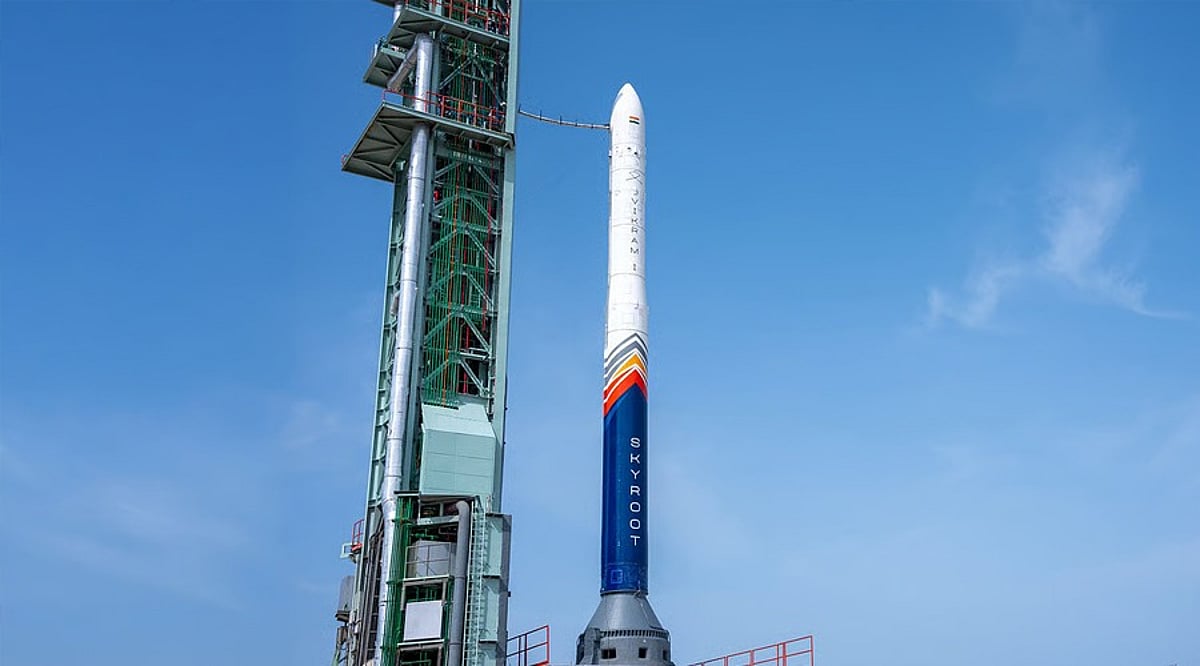
    Skyroot Aerospace’s upcoming Vikram-1 launch is drawing attention beyond India’s private space industry. As the company prepares to launch the country’s first privately built orbital rocket, investors are also looking at listed companies that supply critical technologies to the aerospace and defense sectors.

    An analysis identifies three Indian aerospace and defense stocks that could benefit from the momentum around the country’s growing commercial space industry. The report says companies with expertise in precision engineering, aerospace manufacturing and mission-critical components are well placed as private space activity gathers pace.

    Azad Engineering Among the Key Names

    One of the companies highlighted is Hyderabad-based Azad Engineering. The company manufactures precision-engineered components used in aircraft engines, space systems, defense platforms, power generation and industrial applications. According to Simply Wall St, Azad Engineering is strengthening its position in the aerospace supply chain by expanding manufacturing capacity. The company is investing in eight lean manufacturing facilities to support a growing order book and meet rising demand from global original equipment manufacturers (OEMs). Its products include turbine blades, actuators and other high-precision components used in aerospace and defense applications. The report says these long-term customer relationships and specialized manufacturing capabilities position the company to benefit as India’s private space ecosystem expands.

    Growth Opportunities Come with Risks

    There are some risks which investors need to keep in mind. Azad Engineering has quite a high price-to-earnings ratio, and it depends upon external borrowing to fuel its expansion plans. Customer concentration and the difficulties associated with the expansion of the manufacturing process can also be regarded as some other risk factors. Analysts say that even though the firm enjoys a strong market presence, its ability to implement its growth plans will be a major concern for investors.

    India’s Space Ambitions Fuel Broader Industry Interest

    The Vikram-1 space mission represents another milestone for India’s increasing private space ventures. The success of the mission would demonstrate the technical abilities of indigenous private firms and bolster confidence in India’s commercial space endeavors. This trend is also expected to work in favor of those firms providing parts, engineering expertise, and manufacturing solutions to the aerospace and defense industry. Despite a positive outlook for the industry, according to Simply Wall St, any investment decisions should be made on the basis of the company’s business acumen, financial strength, and execution, rather than the excitement of a single mission. With India’s private space industry maturing, companies with manufacturing prowess and customer connections are expected to continue receiving the attention they do.

    Related: How Skyroot Aerospace is Transforming India’s Private Space Industry with Vikram-1

  • Skyroot Aerospace’s Vikram-1 Rocket Poised to Reshape India’s Private Space Sector

    Skyroot Aerospace’s Vikram-1 Rocket Poised to Reshape India’s Private Space Sector

    India’s private space industry is undergoing a transformation, and Hyderabad-based startup Skyroot Aerospace is at the forefront. With its upcoming Vikram-1 orbital rocket, the company aims to make satellite launches faster, more affordable, and accessible to customers worldwide.

    Founded in 2018, Skyroot has rapidly evolved from a small team with a bold vision into one of India’s most prominent private space companies. Unlike traditional missions focused solely on research, Skyroot’s commercial approach targets the growing demand for reliable small satellite launch services.

    From Vikram-S to Vikram-1: A Milestone Journey

    In 2022, Skyroot made history with Vikram-S, India’s first privately built rocket to reach space. Though a suborbital test flight, it validated the company’s technology and provided critical data for the development of Vikram-1.

    Vikram-1 is Skyroot’s first orbital launch vehicle, designed to carry small satellites into Low Earth Orbit (LEO) and Sun-synchronous Orbit (SSO). The rocket incorporates modern manufacturing techniques, including 3D printing and lightweight materials, to reduce costs and speed up production.

    The inaugural mission, named Mission Aagaman, will carry payloads from Indian and international customers, demonstrating confidence in Skyroot’s capabilities even before its first orbital flight.

    Why Vikram-1 Matters for India’s Space Economy

    With the global demand for satellite-based services—internet, weather monitoring, agriculture, navigation, and research—rising every year, affordable and dedicated launch options are needed. Skyroot aims to fill this gap by offering flexible launch schedules for small satellite operators who often wait months for rides on larger rockets.

    Beyond launches, Skyroot is developing debris-removal technology, including a robotic system to capture defunct satellites and orbital debris—a growing concern as Earth’s orbit becomes increasingly crowded.

    A successful Vikram-1 mission would not only be a win for Skyroot but also signal that Indian startups can compete globally. It could attract investment, create skilled jobs, and position India as a trusted hub for affordable commercial satellite launches.

    India’s Space Future: A Collaborative Ecosystem

    Skyroot’s journey highlights the maturation of India’s private space sector. While ISRO will continue to lead major national missions, companies like Skyroot complement its efforts by building a robust commercial space industry. Together, they can elevate India’s standing in the global space economy.

  • Space Tourism in 2025: Suborbital Flights, Orbital Hotels, and What’s Next for Vacationers

    Space Tourism in 2025: Suborbital Flights, Orbital Hotels, and What’s Next for Vacationers

    The dream of vacationing beyond Earth is closer than ever. Over the past few years, private aerospace companies have turned what was once science fiction into a tangible — albeit pricey — reality. From minutes-long suborbital hops to plans for orbital hotels, the space tourism industry is rapidly evolving. Here’s a breakdown of current achievements, ongoing challenges, and the road ahead.

    Suborbital Flights Are Here

    Several companies now offer brief space experiences that provide passengers with weightlessness and breathtaking views of Earth before safely returning within minutes. These suborbital journeys mark the first step toward making space accessible to civilians.

    Orbital Hotels on the Horizon

    Private firms are developing commercial space stations where future tourists could stay for extended vacations. These orbital habitats promise comfort and spectacular views from beyond Earth’s atmosphere, setting the stage for longer stays in space.

    Reusable Rockets Lower Costs

    Advances in reusable launch technology are significantly reducing the cost per mission. By recovering and refurbishing rocket stages, companies like SpaceX have made commercial space travel increasingly affordable over the coming years.

    Blue Origin and Virgin Galactic Lead the Way

    Blue Origin has successfully flown paying passengers on suborbital journeys, proving that commercial space tourism is already a reality. Virgin Galactic offers civilian spaceflights that reach the edge of space, allowing passengers to experience microgravity before returning to Earth.

    SpaceX’s Grand Ambitions

    SpaceX aims to enable longer orbital missions and ultimately support human travel to the Moon and Mars for adventurous explorers. Their Starship vehicle is designed to carry large numbers of people and cargo, opening the door to deep-space tourism.

    High Ticket Prices Remain a Barrier

    Current space vacations are extremely expensive, limiting access mainly to wealthy travelers. Until technology reduces overall operational costs, space tourism will remain a luxury experience.

    Safety Improvements Are Ongoing

    Engineers continue to enhance spacecraft reliability, emergency systems, and passenger safety standards. Before space vacations become mainstream, rigorous testing and certification must be completed.

    The Future of Space Vacations

    Experts believe that advancing technology, increased competition, and lower launch costs will gradually make recreational space travel more widely available. As the industry matures, the dream of a holiday among the stars may become accessible to a broader population.