Category: Aeronautics and Astronautics

  • Top Defense Stocks Driving Strong Export Growth in Aerospace and Naval Sectors

    Top Defense Stocks Driving Strong Export Growth in Aerospace and Naval Sectors

    The global defense industry is witnessing a surge in export opportunities, driven by rising geopolitical tensions and modernization programs across nations. Several companies are capitalizing on this trend, leveraging indigenous technologies and strategic capabilities to expand their international footprint. Below is a curated list of defense stocks that are demonstrating robust export growth.

    Hindustan Aeronautics Limited (HAL)

    HAL is expanding its aerospace exports through helicopters and aircraft platforms, supported by strong technological capabilities and growing international demand. The company’s expertise in manufacturing and maintaining advanced aerial systems positions it well for continued export success.

    Bharat Electronics Limited (BEL)

    BEL exports advanced defense electronics and radar systems, benefiting from increasing global interest in indigenous technologies. Its portfolio of communication and surveillance solutions is gaining traction among foreign militaries seeking reliable and cost-effective alternatives.

    Bharat Dynamics Limited (BDL)

    BDL is strengthening its export opportunities through missile systems and strategic defense products. The company’s focus on developing cutting-edge weaponry has attracted interest from international customers looking for proven, high-performance solutions.

    Mazagon Dock Shipbuilders

    Mazagon Dock is expanding its naval exports by leveraging its warship and submarine expertise. Rising global maritime security requirements are driving demand for its specialized vessels and maintenance services.

    Cochin Shipyard

    Cochin Shipyard is exploring international opportunities in shipbuilding and maintenance services. Its expertise in complex marine projects, including aircraft carriers and offshore vessels, makes it a competitive player in the global market.

    Data Patterns

    Data Patterns develops indigenous defense electronics and systems, attracting export demand for advanced surveillance and aerospace technologies. The company’s focus on indigenization aligns with global trends toward self-reliance in defense capabilities.

    Astra Microwave Products

    Astra Microwave Products supplies radar and communication solutions globally. Its products are integral to defense modernization programs across countries, supporting the growing need for advanced electronic warfare and surveillance systems.

    Paras Defence and Space Technologies

    Paras Defence is expanding its export potential through optics, defense engineering, and space-related technologies. The company’s niche expertise in high-precision components is gaining recognition in international markets.

    Solar Industries India

    Solar Industries India is strengthening its defense exports with ammunition and explosives manufacturing capabilities. Increasing overseas demand for reliable ordnance and propellants is driving its growth trajectory.

    These companies represent a cross-section of the defense sector that is poised for continued export expansion. Investors and industry observers should monitor their performance as global defense spending and modernization efforts accelerate.
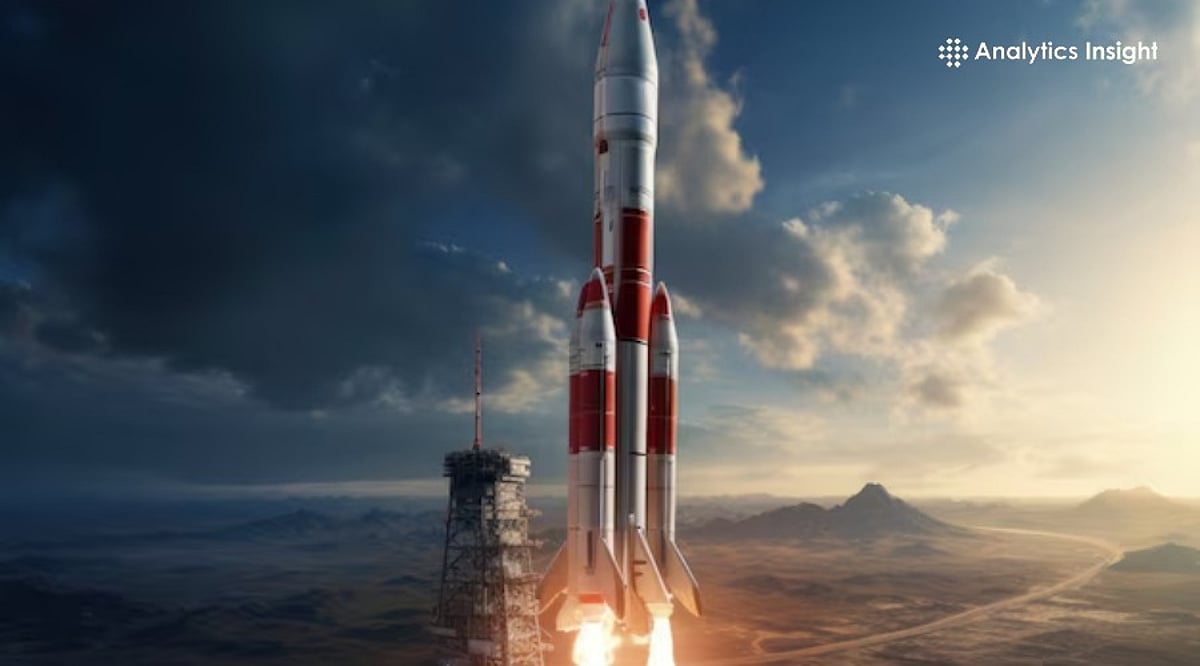

  • India’s Private Space Ecosystem: Why It Won’t Be a SpaceX Clone but Could Be Even Stronger

    India’s Private Space Ecosystem: Why It Won’t Be a SpaceX Clone but Could Be Even Stronger

    In November 2022, a rocket called Vikram-S lifted off from Sriharikota and reached space for a few minutes before falling back to Earth. The mission carried no significant satellite and accomplished nothing of immediate commercial value—yet it changed the direction of an entire industry almost overnight. For the first time, a private Indian company had built and launched a rocket. That company was Skyroot Aerospace, founded by two former ISRO engineers four years earlier.

    Three and a half years later, Skyroot has become India’s first space-tech unicorn, raising $60 million at a $1.1 billion valuation. It is now preparing for the maiden orbital launch of Vikram-1—a moment that will determine whether an Indian private company can put a satellite into orbit on its own rocket, something fewer than a handful of companies worldwide have managed.

    This naturally invites the question: Can India build its own SpaceX? The answer is more nuanced than a simple yes or no.

    Why the Comparison Is Tempting, and Slightly Wrong

    SpaceX built a vertically integrated company controlling launch vehicles, engines, spacecraft, and a satellite constellation, scaled by reusability and an enormous addressable market. Valued north of $400 billion, it has no true global peer.

    India’s emerging space sector looks different. Rather than a single company replicating SpaceX’s everything-at-once model, India is producing a cluster of specialised companies, each going deep on one part of the problem:

    • Skyroot Aerospace – building launch vehicles
    • Agnikul Cosmos – launch vehicles with a fundamentally different manufacturing philosophy (3D-printed single-piece engines)
    • Pixxel – hyperspectral imaging satellites
    • Dhruva Space – satellite platforms and ground station networks
    • Digantara – orbital debris tracking and space traffic management

    This is not a smaller ambition than SpaceX’s; it’s a different shape of ambition—closer to Europe’s multi-specialist model than America’s increasingly SpaceX-centric approach.

    The Companies Actually Doing This

    Agnikul’s approach deserves special attention. Its Agnibaan rocket uses a single-piece, 3D-printed engine that collapses what normally takes months of assembly into weeks, eliminates hundreds of individual mechanical parts, and makes engine iteration nearly as fast as updating software. That is a structural advantage competitors using conventional manufacturing cannot easily close.

    India’s space economy was valued at roughly $8.4 billion in 2022 (about 2% of the global market). The government targets $44 billion by 2033, aiming for 8–10% global share. By early 2026, India has close to 400 active space-tech startups, up from a single company in 2014. Cumulative private investment has crossed roughly $380 million, and the space economy reportedly generates $2.54 in returns for every dollar invested—2.5 times the productivity multiplier of the broader Indian industrial economy.

    These gains stem from reforms beginning in 2020 that opened ISRO facilities to private companies. IN-SPACe, the regulatory body, now runs a dedicated venture capital fund to lower capital barriers for early-stage space startups. State governments compete for investment: Tamil Nadu passed a Space Industrial Policy in 2025 targeting Rs. 10,000 crore in investment.

    What’s Genuinely Hard

    Three major challenges remain:

    1. Unproven orbital launch capability – As of mid-2026, neither Skyroot’s Vikram-1 nor Agnikul’s Agnibaan has completed a successful commercial orbital mission. If Vikram-1’s maiden flight fails, the narrative shifts instantly from “India’s SpaceX moment” to “the sector needs more time.”
    2. Competitive pricing – SpaceX, Rocket Lab, and increasingly aggressive Chinese providers are pricing small-satellite launches hard in exactly the market Indian startups target. Lower Indian manufacturing costs help, but are not an automatic win against flight-proven reliability and reusable rocket economics.
    3. Talent pipeline – India’s startups have aggressively recruited former ISRO engineers, but the number of aerospace-trained graduates from Indian universities has not scaled to match ambition. IN-SPACe chairman Dr. Pawan Goenka has stressed that skilling is a precondition for reaching the $44 billion target, not an automatic byproduct of investment.

    The Part of the Story That’s Easy to Miss

    A meaningful share of the engineers building these rockets are in their mid-twenties, many leaving high-paying jobs at global tech companies. One Skyroot engineer, speaking after Prime Minister Modi inaugurated the company’s Hyderabad campus, put it simply: they grew up watching ISRO’s PSLV launches on Doordarshan, and now they are building the next chapter themselves.

    That generational pipeline—engineers who watched India’s state space program as children and are now building its private successor—is cultural infrastructure as much as technical infrastructure, and it may end up mattering as much as any funding round.

    So, Can India Build Its Own SpaceX?

    Probably not in the literal sense. A single company achieving SpaceX’s scale, reusability, and vertical integration within a similar timeframe looks unlikely given where Indian launch technology stands today. But that may be the wrong question.

    India appears to be building a distributed version of the same outcome: multiple specialised companies, each strong in one layer of the stack, collectively giving the country independent and increasingly commercial access to space without depending on a single company’s success or failure. If Vikram-1 reaches orbit successfully, it will be a genuine milestone. The more important test, over the next three to five years, is whether the cluster as a whole—rockets, satellites, propulsion, and debris-tracking—keeps growing fast enough to make the $44 billion target look conservative rather than fantastical.

  • MIT’s Latest Aircraft Innovations: From Autonomous Flight to Sustainable Aviation

    MIT’s Latest Aircraft Innovations: From Autonomous Flight to Sustainable Aviation

    MIT’s ongoing research in aircraft technology spans a wide range of groundbreaking developments, from autonomous helicopters and uncrewed aircraft systems to advanced materials and climate-friendly flight strategies. This collection of stories highlights how MIT engineers, students, and faculty are pushing the boundaries of aviation.

    Autonomous and Uncrewed Aircraft Systems

    Rotor Technologies, an MIT alumni-led startup, has developed self-flying helicopters that remove human pilots from dangerous commercial missions. Meanwhile, Navy veteran and EMBA student Greg Knutson is building expertise in uncrewed aircraft systems while pursuing innovation in advanced manufacturing. The Saab 340 has also become a permanent flight-test asset at Lincoln Laboratory, supporting the development of diverse technologies for national security.

    Advanced Materials and Design

    MIT engineers have pioneered “nanostitches” using carbon nanotubes to prevent cracking in multilayered composites, leading to lighter and tougher materials for next-generation airplanes and spacecraft. Additionally, researchers have identified new routes to stronger titanium alloys with exceptional combinations of strength and ductility, ideal for aerospace applications. The passing of Professor Robert Liebeck, a giant in aviation and pioneer of the Blended-Wing Body experimental aircraft, marks a significant loss to the field.

    Climate and Environmental Impact

    A new study from MIT researchers reveals that images from geostationary satellites alone are insufficient to help planes avoid contrail-prone regions, highlighting the need for more comprehensive monitoring to reduce climate-warming contrails. New flight procedures developed in collaboration with the FAA and Massport aim to reduce aircraft noise from Boston Logan Airport while maintaining or improving fuel efficiency.

    Safety and Navigation

    A lightning-prediction tool developed at MIT maps aircraft sections most vulnerable to lightning strikes, including on experimental designs, helping protect future aircraft. In the classroom, AeroAstro students are building software for autonomous flight vehicles to navigate unknown environments as part of course 16.85 (Design and Testing of Autonomous Vehicles).

    Entrepreneurship and Education

    The Certificate in Aerospace Innovation provides students with the tools to become aerospace entrepreneurs during an inflection point in the industry. MIT students are also combating climate anxiety through extracurricular teams like the Electric Vehicle Team, Sustainable Engine Team, and Solar Electric Vehicle Team, each contributing to planetary health.

    AI and Complex Systems

    An MIT algorithm for revealing causal links in complex systems has wide implications, from forecasting climate to designing efficient aircraft. A new DARPA-funded collaboration will pursue AI-enhanced design tools and high-throughput testing methods for next-generation turbomachinery, combining artificial intelligence with “blisk” technology.

  • MIT Aeronautics and Astronautics News: Key Breakthroughs and Updates

    MIT Aeronautics and Astronautics News: Key Breakthroughs and Updates

    Explore the latest developments in aeronautical and astronautical engineering from MIT. This roundup covers recent research and innovations, including AI-powered robotics, satellite traffic management, quantum systems, and more.

    • LLMs help robots understand vague instructions and focus on key details – To help robots do chores in places like homes and factories, a new approach from MIT uses one language model to clarify users’ instructions, then another to ignore irrelevant info. June 26, 2026
    • Exploring the societal impacts of AI – During the AI and Society Forum, leading MIT researchers examined critical questions about AI’s influence on employment and democracy. June 23, 2026
    • New chip could help tiny robots traverse complex environments – Researchers combined an efficient algorithm with dedicated hardware to rapidly generate 3D maps for navigation using minimal memory and power. June 23, 2026
    • QS ranks MIT the world’s No. 1 university for 2026-27 – Ranking at the top for the 15th year in a row, the Institute also places first in 12 subject areas. June 17, 2026
    • Could AI tell you where you left your keys? – A new spatial memory system for robots efficiently captures details about the objects they see while exploring their environment. June 17, 2026
    • The tenured engineers of 2026 – Ten faculty members have been granted tenure in five units across MIT’s School of Engineering. June 15, 2026
    • How to create distinguishable states for quantum systems – Researchers establish key insights for reading and writing information for quantum sensing, communication, computing, and control. June 15, 2026
    • New imaging system sees through murky waters – The “Sonar-MASt3R” combines sonar and visual data to create real-time 3D maps, even in cloudy water. June 11, 2026
    • The crucial human component in computing and AI – The MIT Ethics of Computing Research Symposium brought together experts and researchers working at the heart of ethical and social impact in technology. June 5, 2026
    • New propulsion system could make tiny satellites both fast and fuel-efficient – For satellites as small as a briefcase, getting around in space just got a whole lot easier. June 1, 2026
    • New research enables a robot to chart a better course – By rapidly generating a smooth path plan that cuts travel time and avoids obstacles, the open-source “MIGHTY” system could streamline disaster recovery and parcel delivery. May 19, 2026
    • MIT School of Engineering faculty receive awards in winter 2026 – Faculty members and researchers were honored in recognition of their scholarship, service, and overall excellence. May 7, 2026
    • MIT affiliates awarded 2026 Guggenheim Fellowships – Afreen Siddiqi, Kathleen Thelen, and Vinod Vaikuntanathan, along with alumna Kate Manne, are appointed to the 2026 class of “trail-blazing fellows.” May 1, 2026
    • Tackling the housing shortage with robotic microfactories – Reframe Systems, co-founded by Vikas Enti SM ’20, creates microfactories for modular home construction, reducing carbon emissions and costs. April 21, 2026
    • Managing traffic in space – Associate Professor Richard Linares is helping satellites safely navigate in increasingly congested orbits. April 19, 2026

    For more details, visit the MIT News topic page on Aeronautical and astronautical engineering.

  • Lincoln Laboratory’s Latest Breakthroughs: From Lunar Laser Links to Quantum Computing

    Lincoln Laboratory’s Latest Breakthroughs: From Lunar Laser Links to Quantum Computing

    MIT Lincoln Laboratory continues to push the boundaries of technology with a range of recent innovations spanning satellite communications, quantum computing, space exploration, and underwater robotics. Here is a roundup of the most notable developments.

    Protected Tactical Satellite Communications in Low-Earth Orbit

    A prototype antenna array could provide protected tactical satellite communications in low-Earth orbit. The array is small, lightweight, low-power, and low-cost, making it suitable for defense and commercial applications.

    Flexible Cryogenic Cables for Quantum Systems

    A new wiring system for dilution refrigerators addresses a key challenge in quantum system development. The flexible cryogenic cables could advance the realization of practical quantum computers by improving scalability and reliability.

    Laser Communications on the Artemis II Moon Mission

    For the first time, a crewed mission at lunar distance used laser communications to stream high-definition videos and images from the moon to Earth. This achievement lays the groundwork for a high-speed internet network in deep space.

    MIT to Establish Regional Quantum Hub

    With a $25 million investment from the Commonwealth of Massachusetts, MIT will build a new shared-use facility serving as a statewide quantum toolbox. The hub will accelerate quantum research and development across the region.

    Human-Machine Teaming Underwater

    Researchers are developing hardware and algorithms to improve collaboration between divers and autonomous underwater vehicles. The work aims to enhance maritime missions through better human-robot coordination.

    Other Notable Stories

    • Tomás Palacios named director of the Institute for Soldier Nanotechnologies, focusing on advanced materials for national security.
    • A hackathon tackled real-world challenges in Ukraine, uniting students and researchers to prototype solutions under wartime conditions.
    • Citizen science gets a boost from computer vision for fish monitoring, using deep learning to track marine life.
    • Joseph Paradiso’s sensing innovations bridge arts, medicine, and ecology, demonstrating decades of cross-disciplinary impact.
    • Coding for underwater robotics: interns developed algorithms to help divers and robots navigate.
    • Researchers uncovered physics behind bubble-removing membranes, improving bioreactors and chemical production.
    • Mini microwave sounders, developed at Lincoln Laboratory, are now expanding storm-forecasting capabilities from tiny satellites.
    • An efficient cooling method could enable chip-based trapped-ion quantum computers.
    • A new tool using transcranial focused ultrasound offers a noninvasive way to study consciousness.

    These achievements highlight Lincoln Laboratory’s role as a powerhouse of innovation, delivering practical solutions from the depths of the ocean to the lunar surface and beyond.

  • MIT AeroAstro Department: Pioneering Research in AI, Robotics, and Spaceflight

    MIT AeroAstro Department: Pioneering Research in AI, Robotics, and Spaceflight

    MIT’s Department of Aeronautics and Astronautics (AeroAstro) continues to lead in aerospace engineering and technology. Below are recent highlights from the department, showcasing breakthroughs in robotics, artificial intelligence, quantum systems, and space traffic management.

    LLMs Help Robots Understand Vague Instructions

    Researchers used large language models to help robots interpret ambiguous commands and ignore irrelevant details, improving task performance in dynamic environments like homes and factories. (June 26, 2026)

    Exploring the Societal Impacts of AI

    The AI and Society Forum at MIT brought together leading researchers to discuss critical questions about AI’s influence on employment and democracy. (June 23, 2026)

    New Chip Enables Tiny Robots to Traverse Complex Environments

    A novel chip combining an efficient algorithm with dedicated hardware allows small robots to rapidly generate 3D navigation maps using minimal memory and power. (June 23, 2026)

    QS Ranks MIT World’s No. 1 University for 2026-27

    MIT secured the top spot for the 15th consecutive year, also ranking first in 12 subject areas. (June 17, 2026)

    The Tenured Engineers of 2026

    Ten faculty members received tenure across MIT’s School of Engineering, reflecting excellence in research and teaching. (June 15, 2026)

    Creating Distinguishable Quantum States

    Researchers established key insights for reading and writing information in quantum systems, advancing quantum sensing, communication, and computing. (June 15, 2026)

    New Imaging System Sees Through Murky Waters

    The ‘Sonar-MASt3R’ system combines sonar and visual data to generate real-time 3D maps even in cloudy water, aiding underwater exploration. (June 11, 2026)

    The Crucial Human Component in Computing and AI

    The MIT Ethics of Computing Research Symposium highlighted work at the intersection of ethical and social impact in technology. (June 5, 2026)

    MIGHTY: Open-Source Robot Path Planning

    A new open-source system rapidly produces smooth path plans that cut travel time and avoid obstacles, useful for disaster recovery and delivery. (May 19, 2026)

    Managing Traffic in Space

    Associate Professor Richard Linares develops techniques to help satellites navigate safely in increasingly congested orbits. (April 19, 2026)

    Flying at the Edge of the Stratosphere

    MIT students experience the Earth’s curvature through a reborn AeroAstro introductory course, combining hands-on flight with education. (April 14, 2026)

    These stories represent the breadth of innovation at MIT AeroAstro, from fundamental research to real-world applications. For more details, visit the official MIT News site.