Category: AI Chips

  • AI Researcher Andrew Tulloch Departs Meta for Anthropic Despite $1.5B Compensation Package

    AI Researcher Andrew Tulloch Departs Meta for Anthropic Despite $1.5B Compensation Package

    AI researcher Andrew Tulloch has left Meta to join Anthropic, less than a year after returning to the company. Tulloch will work on inference and performance at the Claude-maker, focusing on AI model efficiency and large-scale product performance.

    His departure follows Meta’s aggressive recruitment efforts during its superintelligence push, which reportedly included a compensation package valued at up to $1.5 billion over six years. However, Meta spokesperson Andy Stone called that figure ‘inaccurate and ridiculous,’ and the final terms were never disclosed.

    Tulloch informed colleagues of his decision shortly after Meta launched its Muse AI assistant this week, waiting until the release was complete before leaving. Anthropic confirmed his new role, which adds another highly experienced researcher to its team amid fierce competition for elite AI talent.

    Tulloch spent 11 years at Meta before moving to OpenAI in 2023, where he helped train major models including GPT-4o, GPT-4.5, and o3. He later co-founded Thinking Machines Lab with former OpenAI executive Mira Murati before Meta brought him back in October 2025.

    At Meta, Tulloch worked inside TBD, a team supporting Mark Zuckerberg’s superintelligence strategy under Alexandr Wang’s broader Superintelligence Labs organization. His work focused on large-scale machine learning systems and advanced AI development.

    The move signals a shift in focus toward AI infrastructure rather than headline model releases. Anthropic’s inference and performance team works on improving how efficiently models operate, reducing computing costs while improving speed and scalability.

    Tulloch’s exit also highlights the limits of massive compensation packages in retaining top AI specialists. Research autonomy, technical influence, computing access, and team direction increasingly shape senior researchers’ career decisions as Meta, Anthropic, OpenAI, and Google compete for the same small pool of talent.

    The escalating AI talent war now extends beyond salaries into technology, research culture, and strategic influence, with even extraordinary offers unable to guarantee long-term loyalty.
  • Leading Chipmakers Race to Dominate Advanced Semiconductor Manufacturing

    Leading Chipmakers Race to Dominate Advanced Semiconductor Manufacturing

    The race for the world’s most advanced chips is led by TSMC, Samsung, and Intel. TSMC currently holds the strongest position in leading-edge manufacturing, while Samsung and Intel are investing heavily to close the gap and secure more advanced chip orders.

    TSMC remains the leader in advanced chip manufacturing. Its 2nm process entered high-volume production in the fourth quarter of 2025, while its A16 technology is planned for volume production in the second half of 2026.

    Samsung Foundry is challenging TSMC with 2nm technology and gate-all-around transistor designs. The company began planning 2nm mass production for mobile chips in 2025 and aims to expand the process to high-performance computing and automotive applications.

    Intel is taking a different route with its 18A process and RibbonFET technology. Intel 18A entered production in 2025, while High-NA EUV is already being used on selected 18A layers for high-volume products, giving Intel an important technology milestone.

    NVIDIA and AMD are major chip designers rather than foundries. NVIDIA leads the AI GPU market, while AMD competes across AI accelerators, CPUs, and GPUs. Both depend on advanced manufacturing partners to turn their chip designs into physical products.

    SK hynix and Micron are also key players in the AI chip race through high-bandwidth memory. HBM supplies the huge amounts of data needed by modern AI processors, making memory technology as important as advanced processors for AI infrastructure.

    ASML sits at the heart of the chip race by supplying the EUV lithography systems used to manufacture leading-edge chips. Its High-NA EUV technology offers higher-resolution patterning and is designed to support future 2nm-class and more advanced manufacturing.

  • Qualcomm Secures Potential $60 Billion AI Chip Deal with Amazon for AWS

    Qualcomm Secures Potential $60 Billion AI Chip Deal with Amazon for AWS

    Qualcomm and Amazon have entered into a long-term agreement to develop custom chips for Amazon Web Services (AWS), a deal that could be worth up to $60 billion depending on future orders. While the exact financial terms have not been officially disclosed, reports indicate that Amazon has not yet placed an order for that full amount. As part of the agreement, Qualcomm issued an Amazon affiliate a warrant to acquire up to 25 million Qualcomm shares at an exercise price of $161.26 per share. The warrant expires on September 3, 2036, and can be exercised without cash.

    The partnership will focus on chips designed for large-scale AI systems and high-speed optical connections. This move marks a strategic shift for Qualcomm, which is looking to reduce its reliance on the smartphone chip market. In the June 2026 quarter, Qualcomm’s handset revenue fell 19.6% year over year. The company aims for its data center business to exceed $15 billion in revenue by fiscal 2029. Meanwhile, Amazon will continue to use its own Graviton, Trainium, and Nitro chips alongside Qualcomm’s technology.

    Can Qualcomm Challenge NVIDIA?

    Qualcomm is entering a market dominated by NVIDIA, which reported $89 billion in data center revenue in its most recent quarter and has built a massive business around AI chips. Amazon also has its own AI chips, which could make the competitive landscape even tougher for Qualcomm. The Amazon deal gives Qualcomm a major customer and a platform to demonstrate its chip capabilities in a broader market. However, a single deal is unlikely to be enough to rival NVIDIA’s entrenched position. While this partnership may help Qualcomm reduce its dependence on smartphone chips, early data center deals may yield lower profit margins than its phone business.

    The $60 billion figure is not guaranteed revenue; future orders will determine how much business Qualcomm actually receives from Amazon. For now, the deal provides Qualcomm with a strong entry into the rapidly growing AI chip market.

  • 7 Key Semiconductor Manufacturing Trends Driving the Industry in 2026

    7 Key Semiconductor Manufacturing Trends Driving the Industry in 2026

    Semiconductor manufacturing is entering a transformative era, driven by soaring demand for AI and the need for more powerful, efficient chips. In 2026, the industry is moving beyond traditional transistor scaling to embrace a broader set of innovations. Here are the seven key trends reshaping chip production.

    1. 2nm Chips and GAA Transistors

    Chipmakers are advancing toward 2nm-class process technology with gate-all-around (GAA) transistors. These designs deliver higher performance and better power efficiency, but they also increase manufacturing complexity significantly.

    2. Advanced Packaging and Chiplets

    As shrinking individual dies becomes prohibitively expensive, chiplets and 2.5D/3D packaging are gaining traction. By integrating multiple chip components into a single package, manufacturers achieve higher performance and flexibility without relying solely on node shrinks.

    3. High-Bandwidth Memory for AI

    AI workloads demand enormous amounts of fast memory. High-bandwidth memory (HBM) places stacked memory close to powerful processors, enabling faster data movement and reducing processing bottlenecks in AI systems.

    4. Silicon Photonics and Optical Data

    Electrical connections face growing bandwidth and power challenges. Silicon photonics uses light to transmit data at high speeds, making it a critical technology for future AI data centers, networking, and high-performance computing.

    5. SiC and GaN Take on New Roles

    Silicon carbide (SiC) and gallium nitride (GaN) can handle high voltage, heat, and power demands. These materials are becoming essential in electric vehicles, fast chargers, renewable energy systems, and advanced data-center infrastructure.

    6. AI-Powered Smart Factories

    AI is moving inside semiconductor fabs. Machine learning monitors equipment, detects defects, improves yields, predicts maintenance needs, and optimizes production processes in real time, making factories smarter and more efficient.

    7. Chip Supply Chains Are Going Regional

    Geopolitical tensions and supply risks are pushing companies and governments to diversify semiconductor production. New fabs and packaging capacity are being developed across multiple regions to reduce dependence on concentrated manufacturing hubs.

    The semiconductor race is no longer solely about making transistors smaller. Advanced packaging, memory, new materials, optical connectivity, AI-driven production, and regional manufacturing are becoming equally important for the industry’s future.

  • AMD Stock Drops 7% Despite Record Q2 Revenue as AI Expectations and SpaceX’s NVIDIA Deal Weigh

    AMD Stock Drops 7% Despite Record Q2 Revenue as AI Expectations and SpaceX’s NVIDIA Deal Weigh

    Advanced Micro Devices (AMD) shares closed 7% lower on Wednesday, even as the company reported record second-quarter revenue of $11.54 billion and a 107% surge in data-center sales. The decline highlights how elevated market expectations and external pressures, including SpaceX’s decision to exclusively use NVIDIA chips, overshadowed strong financial results.

    AMD Q2 Revenue Up 50%

    AMD posted revenue of $11.54 billion, up 50% from $7.69 billion a year earlier, and above the $11.28 billion analyst consensus cited by Reuters. Non-GAAP earnings reached $1.66 per share, while GAAP earnings were $1.38 per share. Data-center revenue rose 107% to $6.72 billion, accounting for 58% of quarterly sales, driven by demand for EPYC server processors and Instinct graphics processors.

    The company forecast third-quarter revenue near $13 billion, with a possible $300 million swing, exceeding the $12.52 billion analyst estimate. However, analysts noted that investors had set a higher bar after recent customer deals. Gross margin improved to 54% under standard accounting, up from 40% a year earlier. Operating income hit $1.99 billion, compared with a $134 million loss, and net income jumped 163% to $2.30 billion.

    SpaceX Chooses NVIDIA for AI Systems

    SpaceX CEO Elon Musk announced that the company would build its AI computing systems exclusively with NVIDIA hardware, calling NVIDIA’s architecture “the best” during SpaceX’s earnings call. NVIDIA shares rose 3.4% while AMD stock fell. Musk’s statement shifted from his earlier position that his companies could source processors from AMD, NVIDIA, and others. AMD CEO Lisa Su expressed “tremendous respect” for Musk and said AMD expects to work with SpaceX over time.

    AMD continues to serve large technology companies and expand its AI product line. Its Helios rack-scale systems, using MI450 accelerators, support AI training and inference, with shipments expected to rise in the second half of 2026.

    Wells Fargo Raises AMD Price Target to $700

    Wells Fargo analyst Aaron Rakers raised AMD’s price target from $615 to $700 while maintaining an Overweight rating, even as the market focused on valuation and near-term growth. Other analysts described the results as solid but noted a “very high bar” (TD Cowen) and that the quarter beat consensus but missed more optimistic forecasts (Deutsche Bank). Supply constraints, including TSMC’s N3 process and CoWoS packaging through 2027, remain on investors’ watchlists.

    CEO Lisa Su expects data-center revenue to more than double by 2027, with server revenue growth of 80% in the second half of 2026 and over 70% year-over-year in 2027. AMD stock closed at $482.53, down 6.6%, erasing nearly $59 billion in market value.

  • NEO Semiconductor Launches AI Memory Platform, Moove Secures $250M for Robotaxi Expansion

    NEO Semiconductor Launches AI Memory Platform, Moove Secures $250M for Robotaxi Expansion

    Good morning, tech enthusiasts! Here are the top tech updates you need to know today, from groundbreaking AI memory innovations to major funding in autonomous mobility.

    NEO Semiconductor Unveils NEO.AI Memory Platform

    NEO Semiconductor has launched its NEO.AI memory platform, designed to address AI memory bottlenecks by enhancing High Bandwidth Memory (HBM) and on-chip SRAM capacity. The platform integrates advanced memory technologies, including 3D X-DRAM innovations, to boost AI performance, efficiency, and scalability. This development supports next-generation AI infrastructure and data-intensive computing workloads, marking a significant step forward in AI hardware.

    Moove Raises $250 Million for Robotaxis

    Moove, a mobility startup, has raised $250 million to expand its robotaxi business and autonomous vehicle fleet globally. The company specializes in vehicle financing and fleet management for self-driving taxi services. The new funding will enable Moove to scale operations, add more autonomous vehicles, and meet the rising demand for driverless transportation across various markets.

    Skills Over Degrees: A Shift in Employability

    According to educator Prashant Kirad, only 42.6% of Indian graduates are considered employable. He emphasizes that while a college degree may help secure interviews, employers now prioritize practical skills, communication, AI knowledge, real-world projects, and specialization. Kirad encourages students to develop these competencies early to enhance their job prospects.

    Anthropic in $10B Norway AI Deal

    Anthropic has reportedly signed a $10 billion, six-year agreement with Volta Infra to secure NVIDIA AI computing capacity in Norway. The project will utilize 121 megawatts of computing power from Bitdeer’s data center, enabling Anthropic to expand its AI services and meet the growing demand for advanced AI computing.

    Marex Expands Crypto Lending Services

    Marex has partnered with Digital Prime Technologies and Tokenet to offer crypto-backed lending for institutional investors. This new service allows businesses to use digital assets as collateral for loans without selling their cryptocurrency. It aims to provide safer, more flexible financing options for large investors in the crypto market.

  • Anthropic’s $10B Norway Compute Deal Taps 121MW of NVIDIA Vera Rubin Capacity

    Anthropic’s $10B Norway Compute Deal Taps 121MW of NVIDIA Vera Rubin Capacity

    Anthropic has reportedly signed a six-year, $10 billion compute agreement with Volta Infra Holdings for 121 megawatts of NVIDIA Vera Rubin capacity in Norway. Bloomberg identified Anthropic as the unnamed AI laboratory behind the contract, citing people familiar with the matter.

    Key Details at a Glance

    • Parties: Anthropic (reported), Volta Infra Holdings, and Bitdeer
    • Capacity: 121 critical IT megawatts of NVIDIA Vera Rubin compute
    • Location: Bitdeer’s hydro-powered Tydal campus in Norway
    • Timeline: First capacity by December 31, 2026; second phase by March 31, 2027

    A Major Early Win for Volta Infra

    Volta, which began operations in January 2026, will supply the NVIDIA-based infrastructure from Bitdeer’s Tydal site. The company describes itself as an integrated compute platform that combines infrastructure capital, secured power, and industrial-scale development. Co-founders Boada and Sofia Gumuzio previously worked at Brookfield Asset Management.

    Volta operates within NVIDIA’s Cloud Partner program, a network of providers that deploy NVIDIA GPUs while arranging physical data center sites through landlords and infrastructure owners.

    Lease Terms Give Bitdeer Long-Term Revenue Visibility

    Bitdeer’s Tydal subsidiary signed a 16-year lease with a Volta unit covering 121 critical IT megawatts and roughly 133 gross megawatts. Scheduled payments total approximately $4.7 billion during the base term. An optional eight-year extension could lift the total contract value to about $8 billion over 24 years.

    • Lease pricing begins near $202 per kilowatt-month, with 3% annual increases.
    • Bitdeer expects net operating income margins near 90% from contracted revenue.
    • Volta’s obligations carry about $1.3 billion in standby letters of credit, supported by affiliates of JPMorgan and another unnamed global institution.
    • The structure resembles Alphabet’s $43.8 billion in lease guarantees across its TPU ecosystem.

    Bitdeer shares rose as much as 23% on the news before settling about 10% above the previous close.

    Hydropower and Liquid Cooling Shape the Buildout

    Dell Technologies will provide NVIDIA’s Vera Rubin platform. Each Vera Rubin NVL72 rack combines 72 Rubin GPUs and 36 Vera CPUs inside a liquid-cooled chassis. Liquid cooling is required because chip-level heat density exceeds the limits of standard air cooling, and this shapes the design of the four planned data halls. Bitdeer has operated in Norway since 2018 and acquired the Tydal site in 2024, with delivery planned in two phases across those four halls.

    Norway produces more than 90% of its electricity from hydroelectric sources. Its cold climate helps Nordic facilities reach power usage effectiveness ratios near 1.1, versus about 1.58 for the average U.S. facility. At 121 megawatts of IT load, that efficiency advantage can free about 48 megawatts that would otherwise go to cooling and overhead.

    Anthropic’s Expanding Compute Footprint

    Anthropic previously signed a 300-megawatt agreement for SpaceX’s Colossus 1 facility in Memphis and has arranged computing deals with Amazon, Google, and Fluidstack. In November 2025, NVIDIA and Microsoft agreed to invest a combined $15 billion in Anthropic, alongside a $30 billion Azure compute purchase at a valuation near $350 billion.

    The reported Norway deal secures six years of Vera Rubin capacity for Anthropic, gives Volta a major launch customer, and locks in long-term lease income for Bitdeer. Delivery depends on two construction phases scheduled between late 2026 and March 2027 at Tydal. The disclosures do not state whether Anthropic will own the campus or the chips, nor do they divide capacity between model training and inference.

  • Today’s Tech Roundup: India’s ₹2,500 Crore Chip Plant, Shiplog’s $930K Funding, and More

    Today’s Tech Roundup: India’s ₹2,500 Crore Chip Plant, Shiplog’s $930K Funding, and More

    Good morning, tech enthusiasts! Here are the top tech stories making headlines today, from a major semiconductor plant launch in India to key developments in AI funding, job markets, and cryptocurrency.

    PM Modi Launches ₹2,500 Crore Semiconductor Plant in Visakhapatnam

    Prime Minister Narendra Modi has inaugurated the construction of ASIP Technologies’ ₹2,500 crore semiconductor plant in Visakhapatnam. This facility is South India’s first approved chip packaging unit under the India Semiconductor Mission. The project is expected to generate jobs, boost domestic chip production, attract further investment, and reduce India’s reliance on imported semiconductors.

    Shiplog Raises $930K for AI-Powered Marketing Platform

    AI startup Shiplog has secured $930,000 in pre-seed funding to develop AI agents that automate marketing research, campaign planning, and execution. The company aims to save businesses time by handling repetitive tasks. The fresh capital will be used to enhance the product, expand the team, and scale operations.

    AI Makes It Harder for Fresh Graduates to Land Jobs

    Many recent college graduates are facing increased difficulty securing their first job as companies integrate AI into both workflows and hiring processes. Some have submitted hundreds of applications with little success. Experts note that AI is reshaping the job market, creating new barriers for entry-level candidates.

    DeepSeek V4 Flash Offers High Performance at Lower Cost

    DeepSeek’s V4 Flash model delivers strong AI performance at a significantly reduced price, sparking debate over whether AI is becoming a commoditized product. As more affordable models enter the market, competition may shift from model quality to tools, services, security, and user experience.

    Telegram’s Brief App Store Removal Rattles Crypto Traders

    Telegram was temporarily removed from Apple’s App Store, causing concern among cryptocurrency traders. The outage led to a drop in GRAM-related tokens amid fears of user access disruption. The app was later restored, but the incident highlighted the sensitivity of crypto prices to platform availability.

  • Mastering AI Prompts: A Practical Guide to Clearer, More Effective Requests

    Mastering AI Prompts: A Practical Guide to Clearer, More Effective Requests

    Crafting high-quality prompts is essential for getting the best results from AI tools. By following a few key strategies, you can dramatically improve the relevance, accuracy, and usefulness of AI-generated responses.

    Be Specific

    Clearly describe your request with enough context, goals, and details so the AI understands exactly what you want to generate. Vague prompts lead to vague answers.

    Define the Role

    Assign the AI a specific role, such as teacher, marketer, developer, or editor, to receive more focused and relevant responses. Role-based prompts help the AI adopt the right tone and expertise.

    Provide Context

    Include background information, audience details, or project goals to help the AI generate responses tailored to your specific situation. Context ensures the output aligns with your needs.

    State the Desired Format

    Mention whether you need a list, table, article, email, summary, or step-by-step guide to improve response structure and readability. Format instructions reduce ambiguity.

    Set Clear Constraints

    Specify word count, tone, language, style, or limitations so the AI stays within your preferred requirements and expectations consistently. Constraints prevent off-target outputs.

    Include Examples

    Provide sample inputs or desired outputs to guide the AI toward matching your preferred writing style, format, or level of detail. Examples act as a powerful reference.

    Break Complex Tasks

    Split large requests into smaller steps, allowing the AI to solve each part accurately before moving to the next stage. This improves accuracy and manageability.

    Refine with Follow-Ups

    Review the response and ask follow-up questions to improve clarity, add details, correct errors, or adjust the final output effectively. Iteration is key to perfection.

    Ask for Alternatives

    Request multiple versions, ideas, or perspectives so you can compare options and choose the response that best fits your needs. More choices lead to better decisions.

  • Apple MacBook Air Hit by Supply Shortage as AI Memory Chip Demand Rises

    Apple MacBook Air Hit by Supply Shortage as AI Memory Chip Demand Rises

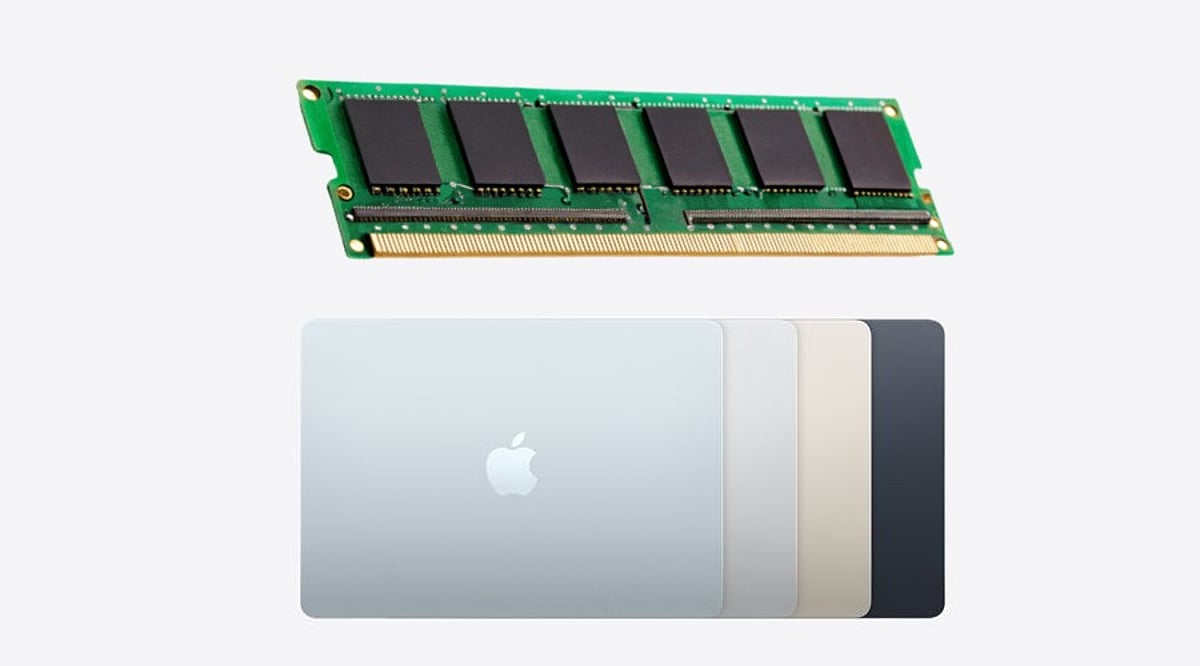
    A new report indicates that Apple is facing supply constraints for its popular MacBook Air due to a global memory chip shortage, which could delay deliveries in several markets.

    According to Bloomberg, the rising demand for memory chips from artificial intelligence companies is straining Apple’s supply chain. Mark Gurman reported that the MacBook Air is now affected, though Apple previously faced similar issues with less popular models like the Mac mini and Mac Studio.

    Customers ordering the MacBook Air through Apple’s official website are now seeing delivery dates pushed into the second half of August. Some configurations may require even longer waiting periods. While Apple has not officially confirmed the shortage, the report notes that the company is directing customers toward the MacBook Pro on its website and in retail stores. Some users have also encountered a disclaimer stating, “MacBook Air subject to availability.”

    Could the Shortage Benefit Windows Laptop Makers?

    Limited availability of MacBook Air models could create an opportunity for Windows laptop brands such as Dell, HP, Lenovo, and Asus, which already offer thin and light competitors. If MacBook Air units become harder to buy, some customers may choose those alternatives instead of waiting.

    However, Windows manufacturers may not be entirely safe. If the memory shortage worsens, they could also face production problems. The company that manages its supply chain more effectively may gain an advantage in the coming months.

    A Reminder That Hardware Still Matters

    The reported MacBook Air shortage underscores how a single missing component can disrupt an entire product line. Even the largest tech companies depend on a steady flow of parts. For Apple, keeping the MacBook Air readily available on store shelves will be crucial as competition in the laptop market continues to intensify.