Category: AI Chips

  • How Environmental Testing Ensures AI Hardware Reliability in Real-World Conditions

    How Environmental Testing Ensures AI Hardware Reliability in Real-World Conditions

    Overview

    Most AI hardware reliability discussions stop at software and models. The physical components running inference in the real world face thermal, humidity, and vibration conditions that lab benchmarks never capture. A field failure in an edge AI deployment or a data centre AI cluster costs far more to fix than the test programme that would have prevented it. Automotive AI suppliers already operate under mandatory environmental qualification standards. The rest of the AI hardware industry is catching up, slowly and sometimes only after things go wrong in production.

    The Physical Environment AI Hardware Actually Runs In

    A GPU handling inference inside a hyperscale data centre operates in a facility with carefully managed cooling, but power density in AI-optimised racks has climbed steeply over the past few years. Thermal loads that conventional server hardware never encountered are now routine. Cooling systems cycle. Hot and cold aisles do not always perform as designed. Components run closer to their thermal limits than the spec sheet might suggest.

    Now move to edge AI. A vision processing unit inside an autonomous vehicle sits near heat-generating electronics, vibrates with every road surface change, and lives through temperature swings from a winter morning start to peak afternoon operation. An AI chip managing process control in a manufacturing plant deals with airborne particulates, temperature variation across the factory floor, and the kind of humidity that builds up near industrial equipment. A smart grid monitoring device bolted to outdoor infrastructure faces rain, humidity, temperature extremes across seasons, and UV exposure. These are not edge cases—they are the normal operating conditions for a significant portion of AI hardware shipped today.

    Thermal Stress Is the Most Common Failure Driver

    Most engineers understand that heat degrades performance. Fewer think carefully about what sustained and repeated thermal stress does to hardware at the material level over time. Modern AI accelerators draw more power per unit area than most electronics were originally designed to dissipate. That power becomes heat. Sustained heat accelerates electromigration inside copper interconnects, degrades dielectric materials inside capacitors, and stresses the voltage regulators that keep AI chips running within their operating range.

    But sustained heat is not actually the worst part. Thermal cycling is. A device that runs intensive inference workloads and then idles repeatedly goes through expansion and contraction cycles at every solder joint and material interface on the board. Repeated cycling between temperature extremes fatigues these joints faster than steady-state heat ever would. The fractures start small, grow, and eventually cause intermittent failures that are hard to diagnose. A thermal shock chamber runs precisely this kind of accelerated validation, moving hardware between hot and cold zones fast enough to stress materials in ways that years of field operation would eventually produce. Hardware teams that skip this are not avoiding the test—they are running it in production.

    Humidity and Condensation Create Failures That Are Hard to Diagnose

    Humidity-related failures do not show up immediately. A device passes every functional check in a clean, air-conditioned test environment and ships. Months later, field engineers see intermittent communication errors, erratic sensor readings, or complete failures in devices deployed in coastal facilities, monsoon-affected regions, or anywhere humidity levels cycle significantly between day and night. Moisture penetrates connector interfaces or PCB surfaces and creates conductive pathways between traces. Electrochemical migration builds up gradually. Corrosion starts at exposed metal surfaces. None of it is visible during a standard inspection after failure.

    Edge AI deployments across India, Southeast Asia, and other high-humidity regions face this regularly. Data centre operators in coastal cities manage facility-level humidity but often have no visibility into whether individual components inside their racks were validated for moisture exposure at the design stage. Running hardware through an environmental test chamber under sustained humidity cycles at elevated temperature catches these failure modes before they reach the field. Components that absorb moisture and fail functionally under test conditions point to specific design problems: coating inadequacies, enclosure weaknesses, or PCB material choices that absorb more moisture than expected.

    Vibration Is Underweighted in AI Hardware Qualification

    Road-induced vibration in a vehicle covers a frequency spectrum that varies with surface quality, speed, suspension tuning, and vehicle load. A lidar processing unit or central compute board experiences thousands of different vibration profiles across its operational life. Certain frequencies resonate with PCB mounting configurations, gradually loosening connector retention and generating micro-fractures in solder joints. The damage compounds; the failures come later. Standard thermal qualification does not catch this. The only way to know is to test under conditions that actually include vibration, ideally combined with temperature, because that is what the real environment applies simultaneously. Sequential single-condition testing answers a limited question; combined testing answers the right one.

    Large-Scale AI Infrastructure Needs Large-Scale Testing

    Individual component qualification and system-level qualification are not the same thing, and the gap between them matters more as AI infrastructure scales. A hyperscale operator qualifying a new AI server configuration is not testing individual chips. The thermal interactions between high-density accelerator cards packed into a full rack, airflow disruptions from chassis configurations, and the combined power draw of a complete AI compute node create conditions that component-level testing does not fully replicate. Environmental walk-in chambers exist specifically to close this gap: full rack assemblies, complete server configurations, and integrated vehicle systems can be placed inside and subjected to the same temperature, humidity, and combined-condition protocols that apply to smaller hardware. Operators who have learned this lesson through field experience are now specifying full system-level environmental qualification in their procurement requirements.

    The Automotive AI Case Makes This Concrete

    ISO 16750 has governed environmental qualification requirements for road vehicle electrical and electronic components for years, specifying temperature, humidity, vibration, and combined-condition testing. Suppliers who cannot show compliance do not get approved for vehicle integration. This did not come from the automotive industry being unusually cautious—it came from field failures in safety-critical systems being expensive, visible, and in some cases creating regulatory consequences. AI hardware deployed in autonomous vehicles now sits inside that framework. A compute board managing sensor fusion must meet the same standards as the ECU next to it. The broader AI hardware industry is following the same path, with a lag. Data centre operators are starting to include environmental validation requirements in hardware procurement specifications; industrial automation customers ask for test data before committing to edge AI platforms.

    The Cost Argument Is Actually Simple

    Hardware teams running behind schedule sometimes frame environmental testing as a schedule risk. But that framing rarely survives contact with a significant field failure event. A recall in the automotive AI space is expensive before the brand-damage calculation begins. A reliability incident in a data centre AI cluster creates SLA exposure, customer escalations, and emergency replacement logistics. A high failure rate across an edge AI deployment fleet generates warranty costs that tend to be higher than anyone projected. The actual cost comparison is not between testing and not testing—it is between finding the failure in a chamber and finding it in production. Aerospace and defence programmes learned this decades ago. AI hardware is working through the same calculation now, with one difference: the pace of deployment means the tuition cost accumulates faster.

    What This Means for AI Hardware Teams

    The practical takeaway is straightforward. Environmental qualification should be built into the design cycle before scale-up, not triggered by a field failure after it. That means testing under combined conditions, not single-variable checks; testing at the system level for rack- and vehicle-scale deployments, not just individual components; and treating environmental test data as a procurement requirement, the way the automotive industry already does. Teams that adopt this now will spend less fixing failures in the field later—and will have the data to prove reliability to customers who are starting to ask for it upfront.

  • Today’s Tech Roundup: Meta AI Chip Production, ONGC Recruitment, European M&A Surge, Claude AI Insights, and Ethereum Rally

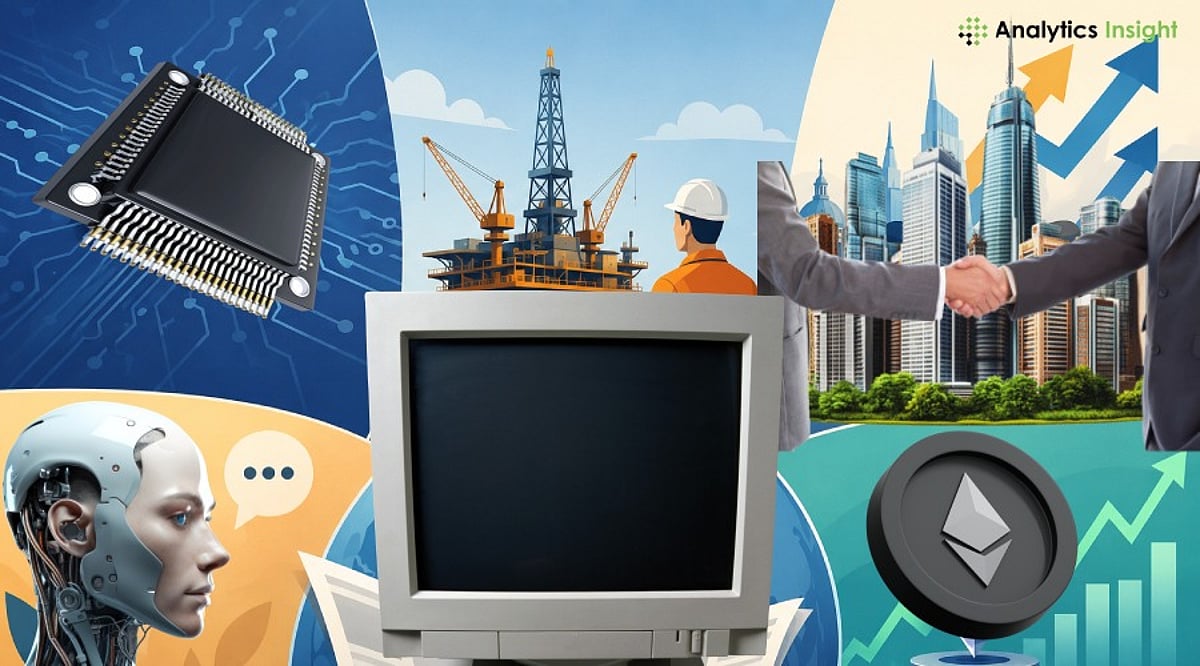
    Today’s Tech Roundup: Meta AI Chip Production, ONGC Recruitment, European M&A Surge, Claude AI Insights, and Ethereum Rally

    Good morning!

    Here’s your rapid rundown of some of the most important news from today on artificial intelligence, recruitment, business M&A, productivity tools, and the cryptocurrency market.

    Meta to Start Producing Next-Generation AI Chip in September

    Meta plans to roll out its next-gen AI chip in September to keep up with the organization’s increasing requirements, as AI workloads grow heavier. The company aims to increase its computational capacity and reduce reliance on other chip providers. In parallel, Meta wants to sharpen its AI capabilities while industry competition is getting increasingly intense. Read More…

    Graduate Trainee Positions Opened by ONGC for 2026

    Oil and Natural Gas Corporation (ONGC) has begun accepting online applications for Graduate Trainee positions across various engineering and geoscience streams. The recruitment process will give freshers a chance to join one of India’s largest public sector companies. Read More…

    European B2B M&A Activity at an All-Time High of $129 Billion

    Europe saw a record $129 billion in business-to-business mergers and acquisitions in the second quarter of 2026, driven by private equity transactions and strong demand for enterprise technology and industrial firms amid global economic uncertainty. Read More…

    Claude AI Review: Features, Prompts, Tips for Increased Productivity

    The Claude AI language model by Anthropic has become popular for writing, coding, research, and other professional activities. Learn about its features, prompt-writing tips, how to save tokens, and how to use the language model effectively. Read More…

    Ethereum Gains 1.58% on Improved Crypto Sentiment

    Ethereum edged up by about 1.58%, trading around $1,779, while crypto market sentiment looked a bit better. In the Ethereum price analysis, you can see hopeful investor sentiment as traders keep an eye on macroeconomic shifts, stronger institutional participation, and evolving blockchain activity for possible hints about what comes next. Read More…

  • How Ola Kolade’s AI Is Transforming Commercial Insurance Underwriting

    How Ola Kolade’s AI Is Transforming Commercial Insurance Underwriting

    A former investment banker has built an AI system that completes in hours what traditionally takes underwriters days — and the commercial insurance industry is taking notice.

    The email arrives at 8:14 on a Tuesday morning. A broker in Dallas sends four attachments to a managing general agent in Chicago: an ACORD application, a loss run, a schedule of values, and a supplemental questionnaire. In a typical operation, an underwriter will get to it sometime today, maybe tomorrow. She opens each attachment, manually extracts the data, types it into her system, realizes the loss run is two years short of what her carrier requires, drafts a follow-up, and waits. The file might be quote-ready by the end of the week.

    In an operation running Aurora — the AI system built by Ola Kolade through his company Underflow Inc. — the same file is read, structured, gap-checked, and followed up on within minutes. By late morning, the submission is complete, enriched with external data, and sitting in the underwriter’s queue with a preliminary risk assessment attached. No human touched it.

    Kolade, 28, did not come up through insurance. He is a Canadian citizen who studied economics at McGill University, spent two years in investment banking at National Bank Financial in Toronto working on more than ten transactions across the technology sector, and then moved to San Francisco to lead strategic finance for a $400 million division of Faire, one of North America’s largest wholesale marketplaces. It was at Faire, observing the risk management processes of thousands of independent businesses, that commercial insurance first caught his attention.

    “I came from an environment where machine learning was optimizing supply chains in real time,” Kolade said. “And then I looked at how an insurance submission moves through the system, and it was email attachments and manual re-keying. The technology gap was enormous.”

    The gap is well documented. According to Capgemini’s 2024 World Property and Casualty Insurance Report, over 40 percent of commercial underwriters’ time goes to administrative tasks. Accenture’s research puts it higher, finding the average underwriter spends 70 percent of their time on non-underwriting activities. The U.S. property and casualty insurance industry generates more than $930 billion in net premiums written annually, with commercial lines representing the entry point that begins with a submission.

    Previous technology solutions — from document management platforms to OCR tools to rules-based automation — have not moved the needle. Kolade’s argument, which he laid out in a December 2025 article in Rough Notes, one of the oldest insurance trade publications in the country, is that these solutions addressed the wrong problem. They helped manage documents. They did not comprehend them.

    “OCR can read the words on a page,” Kolade said. “It cannot tell you that the loss run is two years short, or that the construction type on the application contradicts the schedule of values. That is not a reading problem. It is a comprehension problem. And that is what Aurora solves.”

    Aurora connects to a firm’s existing email. When a submission arrives, it reads every document, structures the data, performs a granular gap analysis, and follows up with the broker automatically. It also goes further than intake: writing preliminary risk assessments, flagging inconsistencies, identifying coverage opportunities, and enriching submissions with research from public databases. The underwriter receives not just a complete file but a contextualized one.

    Kolade’s instinct for building predates his finance career. At McGill, he was part of a team that created a device to prevent head trauma in football players by regulating helmet pressure. A former player who had experienced concussions as a teenager, he understood the problem firsthand. The device was recognized through the NFL’s HeadHealthTECH network, and the team placed in the top 10 percent of McGill’s entrepreneurship competition out of roughly 400 entrants.

    “The pattern is the same,” Kolade said. “Find a problem everyone has accepted as a fact of life, understand why previous attempts failed, and build something that addresses the actual root cause.”

    The timing is sharpened by demographics. Roughly one quarter of the commercial insurance workforce is aged 55 or older and heading toward retirement, taking decades of institutional knowledge with them. Kolade sees Aurora as the answer to a math problem the industry cannot solve through hiring alone.

    “You cannot train someone to have 20 years of experience,” he said. “But you can build a system that captures the repeatable parts of that expertise and makes it available from day one.”

    Underflow raised $3 million in seed funding led by Maple VC and remains in stealth. Whether Aurora can handle the full complexity of real-world insurance submissions at the reliability level working underwriters demand is the question the company now faces. Kolade says he built the product with the industry’s skepticism in mind: Aurora works inside email, requires no new systems, and does not ask brokers to change how they send submissions.

    Back in Chicago, it is 11:30 on that Tuesday. The file from Dallas is complete and sitting in the underwriter’s queue. She opens it, reads the assessment, and begins doing the work she was trained to do: evaluating risk, making a judgment call. The part of the job that actually requires a human.

    That is the argument Ola Kolade is making. Not in a pitch deck. In the product itself.

  • Wall Street Today: NASDAQ Declines as DeepSeek Chip Ambitions and Samsung Selloff Weigh on Sentiment

    Wall Street Today: NASDAQ Declines as DeepSeek Chip Ambitions and Samsung Selloff Weigh on Sentiment

    U.S. stocks opened mixed on Tuesday, with weakness in chip stocks dragging down the NASDAQ Composite and S&P 500. The Dow Jones Industrial Average hovered near record levels, buoyed by gains in healthcare, financials, and select large-cap names.

    Investor attention returned to the AI trade after reports emerged that China’s DeepSeek is developing its own AI chip. The news introduced fresh uncertainty about demand for U.S.-linked semiconductor names, even as Samsung posted a strong profit update.

    NASDAQ Falls as Chip Stocks Retreat

    The NASDAQ Composite opened 161 points lower, or 0.62%, at 25,960.13. The S&P 500 fell 20.8 points, or 0.28%, to 7,516.63. The Dow Jones Industrial Average rose 48.1 points, or 0.09%, to 53,104.06 at the opening bell. Later in the morning, the Dow gave back part of its early gain and traded near the flat line. The blue-chip index had earlier touched a new all-time intraday high. The S&P 500 declined 0.5%, while the NASDAQ lost 1.3% as chip selling intensified.

    DeepSeek AI Chip Report Roils Semiconductor Sentiment

    According to reports, DeepSeek is working on its own AI chip, a move that could reduce its reliance on suppliers such as NVIDIA and Samsung. NVIDIA shares traded more than 1% lower as investors assessed the implications. The selling spread across major chip names: Micron fell about 7%, while KLA, Marvell Technology, Broadcom, and AMD also posted losses. The VanEck Semiconductor ETF dropped more than 5%, reflecting broad weakness across the sector.

    Samsung Reaction Adds to Doubts About AI Earnings Bar

    The pressure originated in Asia-Pacific markets before reaching Wall Street. South Korea’s Kospi dropped nearly 5% after Samsung Electronics fell close to 7%. Samsung reported a sharp rise in second-quarter profit, but the market focused on spending plans and demand concerns. Adam Crisafulli of Vital Knowledge noted that the Samsung reaction highlights one of the biggest risks heading into earnings season: “Q2 earnings results are likely to be quite robust on an absolute basis … but unlike with the Q1 season, expectations are presently very bullish.” His comment pointed to uncertainty about whether strong earnings alone can support AI-linked stocks, given that the S&P 500 has moved significantly higher since the first-quarter reporting season.

    Dow Holds Near Record as Investors Rotate

    While chip stocks came under pressure, investors rotated into other parts of the market. Eli Lilly gained more than 2%, while JPMorgan Chase and Microsoft also advanced. Walmart added more than 2% after announcing price cuts on products such as ground beef and Coca-Cola. The rotation helped the Dow stay near 53,000 even as the NASDAQ weakened, showing that selling was concentrated in AI- and chip-linked shares rather than across the full market.

    Apple, Rivian, Amazon, and Trade Data in Focus

    Apple drew attention after JPMorgan raised its price target to $345 from $325, maintaining an Overweight rating. Analyst Samik Chatterjee said Apple’s revenue and earnings could be better than feared, even after a 20% price increase on iPads and Macs. Rivian shares fell more than 13% in morning trading after the electric vehicle maker announced a public offering of 75 million Class A shares. The drop followed a 8.1% rise on Monday and a 19% gain last week. Amazon also stayed in focus after sources said the company planned to raise $25 billion through a bond sale; its shares gained 0.8% in premarket trading.

    Meanwhile, the U.S. trade deficit widened sharply in May. The Commerce Department reported a deficit of $77.6 billion, up from a revised $54.6 billion in April. Exports fell 3.2%, while imports rose 3.3%. Economists polled by Dow Jones had expected a deficit of $78.08 billion.

    The market now shifts its attention to upcoming corporate earnings, which will determine whether the recent rotation out of AI chip stocks is temporary or the start of a broader change in investor sentiment.

  • Samsung Reports 1,800% Profit Surge Driven by AI Memory Chip Boom

    Samsung Reports 1,800% Profit Surge Driven by AI Memory Chip Boom

    Samsung Electronics has announced a staggering 1,800% jump in operating profit for the first half of 2026, fueled by explosive demand for its advanced memory chips used in artificial intelligence systems. The South Korean tech giant estimates an operating profit of 89.4 trillion won (approximately $58.4 billion) for the period, compared to the same timeframe last year.

    Revenue also soared, with the company projecting sales of 171 trillion won in the quarter—a 129% increase year-over-year. Samsung plans to publish its full results later this month.

    The earnings highlight a dramatic shift in the semiconductor landscape driven by the global AI boom. Data centers and AI systems require high-performance memory chips, and supply remains tight, enabling Samsung and rival SK Hynix to raise prices and boost margins.

    Marc Einstein of Counterpoint Research called the estimate “among the best quarterly performances ever,” attributing the surge entirely to AI demand. Samsung is one of the world’s largest memory chip makers and supplies key players like NVIDIA and Google.

    According to IDC, the memory industry is experiencing a unique demand cycle concentrated in data center and AI infrastructure, which is expected to keep chip supplies tight for the next year. IDC analyst Bryan Ma noted that strong AI-related demand will continue to pressure supply.

    Despite the robust earnings forecast, Samsung’s shares fell 7% to 8% in Seoul trading, as some investors had anticipated even higher profits. However, the company’s market value has doubled since the start of the year, and SK Hynix has surged over 200%.

    South Korea’s Kospi index has risen more than 80% in 2026, driven by chip makers. The government recently announced plans to invest at least $880 billion in Samsung and SK Hynix-related projects to expand chip production. Analysts caution that the key risk is whether AI memory demand will sustain beyond next year.

    For now, Samsung remains a top beneficiary of the global AI infrastructure race.

  • SK Hynix Plans $28B US Listing, Rivage Secures €1.5M, and More Top Tech News

    SK Hynix Plans $28B US Listing, Rivage Secures €1.5M, and More Top Tech News

    Good morning, tech fam; here are some quick tech updates for you to catch up on!

    What’s New Today

    SK Hynix is planning a $28 billion US listing to expand AI chip production and strengthen its global semiconductor business.

    Fast-Track Insights

    French proptech startup Rivage has raised €1.5 million to scale its AI-powered rental management platform across France and Germany.

    Here’s a quick rundown of the biggest tech headlines making waves today. Let’s dive into the day’s top tech stories, from SK Hynix’s massive US listing plans to South Africa’s proposed crypto tax guidance.


    SK Hynix Launches $28 Billion Nasdaq Listing to Capitalize on AI Boom

    South Korea’s SK Hynix is launching a $28 billion Nasdaq listing through depositary receipts, aiming to benefit from booming global AI demand. The AI memory chip leader plans to use the proceeds for expanding semiconductor production, strengthening its global presence, and supporting South Korea’s broader AI and chip investment strategy.


    Rivage Raises €1.5M to Scale AI Rental Management Platform Across Europe

    Paris-based proptech startup Rivage has secured €1.5 million in funding led by Kima Ventures to expand its AI-powered rental management software. The platform automates accounting, billing, and property workflows for real estate agencies. Rivage aims to accelerate growth in France, expand into Germany, and reach €5 million in annual recurring revenue by 2027.


    Malaysia Focuses on Better Jobs and AI Hiring

    Malaysia is changing its job strategy by focusing on better jobs instead of just creating more jobs. The government is using AI to help people find the right jobs through the MYFutureJobs platform. It also aims to improve workers’ skills, increase salaries, and prepare the workforce for future industries.


    Best AI Agent Frameworks for Building High-Performance Agents

    This article explains some of the best AI agent frameworks that help developers create smart AI agents more easily. It compares their features, ease of use, and performance. The guide also shows how the right framework can save time, improve efficiency, and support simple as well as large AI projects.


    South Africa Proposes Draft Crypto Tax Guidance Under Existing Laws

    South Africa’s Revenue Service (SARS) has released draft guidance explaining how existing income tax and capital gains tax rules apply to crypto assets. The proposal treats most crypto transactions as taxable events, depending on individual circumstances, and invites public feedback until August 31 before finalizing the guidance.

  • Anthropic Reportedly Discusses Custom AI Chip Development with Samsung

    Anthropic Reportedly Discusses Custom AI Chip Development with Samsung

    Anthropic is reportedly exploring the development of a custom AI chip and has held discussions with Samsung over a potential collaboration, according to The Information. The move places the AI startup among a growing number of technology firms seeking greater control over hardware as demand for AI computing surges.

    Earlier reports from Reuters indicated that Anthropic was considering in-house chip design to address concerns about AI hardware availability and supply constraints. However, key details of the proposed processor—including its intended use, integration into server systems, and performance targets—remain unconfirmed.

    According to the report, Anthropic has not finalized the chip’s specifications and declined to comment on the discussions with Samsung. The company reiterated that its current infrastructure strategy continues to rely on chips from Google, Amazon, and NVIDIA, and that there are no further updates on potential collaboration talks with Samsung at this time.

    The reported move reflects a wider trend among AI companies investing in custom silicon to improve efficiency and reduce dependence on dominant chip suppliers—particularly NVIDIA, which leads the market for AI accelerators used in large-scale model training and inference. As demand for AI computing expands across industries, firms are looking for greater control over cost, performance, and supply chains.

    Anthropic’s discussions come shortly after other major technology firms advanced their custom chip efforts. OpenAI recently introduced its first custom inference chip, Jalapeno, developed with Broadcom. Amazon continues to scale its Trainium chips for AI training workloads, and Google is expanding access to its Tensor Processing Units (TPUs) via its cloud infrastructure.

    Samsung already plays a pivotal role in the global semiconductor supply chain, manufacturing advanced chips for companies like NVIDIA and exploring partnerships with others such as Google. The talks between Anthropic and Samsung underscore the increasing convergence of AI software development and semiconductor manufacturing, as firms pursue tighter integration between hardware and AI systems.

  • AI Chips, Battery Recycling, and Hiring Trends: Tech News Roundup for July 3, 2026

    AI Chips, Battery Recycling, and Hiring Trends: Tech News Roundup for July 3, 2026

    Good morning, tech enthusiasts! Here’s a quick roundup of today’s top headlines, from Amazon’s custom AI chips for Alexa to startup funding, AI hiring shifts, codeless automation platforms, and cryptocurrency sentiment indicators.

    Amazon Plans Custom AI Chips for Future Alexa Devices

    Amazon is designing its own AI chips to power upcoming Alexa devices, promising faster, safer, and more connected AI features. Devices chief Panos Panay confirmed the company is also working on new portable products beyond smart speakers and TVs, with a focus on natural conversation interfaces rather than screens. No official launch dates or product details have been revealed yet.

    BatX Raises Rs. 105 Crore to Expand Battery Recycling Operations

    Battery recycling startup BatX has secured Rs. 105 crore (about $12.6 million) in Series A funding led by IvyCap Ventures. The company plans to use the capital to increase its recycling and refining capacity, strengthen research, and build a more robust local supply chain for critical battery materials. BatX recovers valuable materials from used batteries and manufacturing waste and aims to expand its technology footprint in India and other markets.

    WEF Report: AI Reshaping Graduate Hiring

    A new report from the World Economic Forum and PwC highlights how AI is changing entry-level hiring. Jobs most affected by AI have seen minimal growth in graduate openings since 2012. While weak business conditions and cost-cutting also play a role, the report urges companies to maintain graduate hiring and redesign entry-level roles rather than eliminate them.

    Top Codeless AI Platforms Transforming Business Automation in 2026

    Businesses are increasingly using codeless AI platforms like Zapier, n8n, Make, Workato, Bubble, and Microsoft Power Automate to build chatbots, AI agents, and automated workflows without programming skills. AI agents that complete tasks with minimal human intervention are a major trend in 2026, democratizing AI for both small businesses and large enterprises.

    Crypto Fear and Greed Index: A Quick Sentiment Check

    The Crypto Fear and Greed Index measures market sentiment by analyzing price volatility, trading volume, social media buzz, Bitcoin dominance, and Google search trends. Scores range from 0 (extreme fear) to 100 (extreme greed). While useful for gauging market mood, the index should not be the sole basis for trading decisions.

    Stay tuned for more tech updates throughout the day.

  • NVIDIA Stock Stays Below $200 Ahead of Vera Rubin Launch Amid Rising Competition and AI Spending Trends

    NVIDIA Stock Stays Below $200 Ahead of Vera Rubin Launch Amid Rising Competition and AI Spending Trends

    NVIDIA shares continue to trade below the $200 mark despite a modest rebound, as investors shift their attention to the company’s upcoming Vera Rubin platform and its expanding robotics business. The stock has underperformed the broader semiconductor sector in 2026, even as demand for artificial intelligence infrastructure remains robust.

    NVIDIA Trails Semiconductor Sector Despite AI Demand

    Shares of NVIDIA rose about 1.5% to $197.96 in early Tuesday trading. However, the stock has gained only about 5% year-to-date, while the PHLX Semiconductor Index has surged approximately 94% in the same period, making NVIDIA one of the weaker performers among major chip companies. Investors have been reallocating capital to other areas of the AI supply chain, including memory chipmakers, custom chip developers, and CPU manufacturers. Intel and Advanced Micro Devices have posted significantly stronger gains in 2026, and the iShares Semiconductor ETF has also outperformed NVIDIA. Analysts point to concerns over export restrictions affecting China and questions about future growth rates as factors weighing on the stock.

    Vera Rubin Platform and Robotics Expansion

    The market is now focused on NVIDIA’s next-generation Vera Rubin platform, which could strengthen the company’s position in AI infrastructure if it delivers substantial performance improvements. Competition is intensifying as large technology companies diversify their AI spending across multiple suppliers. Meanwhile, NVIDIA is expanding beyond AI chips into robotics, having opened more than a dozen robotics-related positions in Beijing, Shanghai, and Shenzhen. The roles cover embodied intelligence, simulation, implementation, and robotics solutions. NVIDIA says the robotics team aims to build a leading platform and ecosystem for autonomous machines, speeding the transition from research to commercial use. Employees will work on Project GR00T, the Cosmos physical simulation world model, and NVIDIA’s GPU computing platform.

    Market Watches AI Spending and China Competition

    NVIDIA remains one of the world’s largest listed companies with a market valuation of about $4.696 trillion—a 1% move changes its value by approximately $47 billion. Investors are tracking broader AI capital expenditure: the Bank for International Settlements projects that the five largest hyperscalers will invest more than $1 trillion in AI capex over 2025 and 2026, while also noting funding pressure and supply constraints around power, advanced chips, and grid infrastructure. Separately, Reuters reported that Baidu’s Kunlunxin chip business targets a $50 billion Hong Kong IPO, and IDC data shows domestic suppliers now hold 41% of China’s AI accelerator server market. Despite these headwinds, NVIDIA continues to project strong growth. The company forecast fiscal second-quarter revenue of $91 billion, above analyst expectations, and announced an $80 billion share buyback. CEO Jensen Huang stated, ‘We should be growing faster than hyperscale capex.’ Analysts are monitoring whether AI investment can sustain its pace through the coming years.

  • Today’s Top Tech Roundup: OpenAI Hardware, WhatsApp Privacy, Pixel Watch 5 Leaks, Google Engineer Debunks Myths, and Elon Musk on AI Risks

    Today’s Top Tech Roundup: OpenAI Hardware, WhatsApp Privacy, Pixel Watch 5 Leaks, Google Engineer Debunks Myths, and Elon Musk on AI Risks

    Top Tech News Today: OpenAI AI Device, WhatsApp Privacy Upgrade, Pixel Watch 5, Google Engineer Reveals Truth & Elon Musk on AI

    In a packed day of tech developments, OpenAI has teased its first dedicated AI hardware device, signaling a major push into consumer electronics. WhatsApp is rolling out a username-based privacy feature that lets users communicate without sharing phone numbers. Leaked details of the Pixel Watch 5 suggest it will include Satellite SOS functionality, a first for Google’s wearable line. A Google engineer has publicly debunked several viral tech myths, clarifying common misconceptions about AI and search algorithms. Meanwhile, Elon Musk has echoed Tim Cook’s recent warnings about the existential risks of advanced AI, adding his voice to a growing chorus of industry leaders calling for robust regulation.

    These stories highlight the accelerating pace of innovation and the critical conversations shaping the future of technology.