Category: AI Chips

  • Today’s Top Tech Stories: OpenAI and Broadcom Debut Jalapeño AI Chip, Progcap Targets $45M Funding, and More

    Today’s Top Tech Stories: OpenAI and Broadcom Debut Jalapeño AI Chip, Progcap Targets $45M Funding, and More

    Good morning, tech enthusiasts! Here’s a quick roundup of the biggest headlines making waves today, from OpenAI’s new AI chip to major funding rounds and regulatory updates.

    OpenAI and Broadcom Launch Jalapeño AI Chip to Supercharge ChatGPT

    OpenAI and Broadcom have introduced the Jalapeño AI chip, designed to make large language models like ChatGPT faster, cheaper, and more power-efficient. The chip aims to reduce costs and improve AI performance, with deployment planned for late 2026. It will support ChatGPT and other OpenAI tools.

    Indian Fintech Progcap Plans $45 Million Fundraise for MSME Lending

    Indian fintech company Progcap is preparing to raise $45 million to expand its small-business lending operations. The funding will help improve its technology, reach more shop owners and traders, support women-led businesses, and strengthen financial inclusion across underserved areas in India.

    AWS CEO Says AI Won’t Stop Hiring New Graduates

    AWS CEO Matt Garman stated that AI will change how people work but will not replace the need for new employees. Amazon plans to hire 11,000 interns and fresh graduates in 2026, emphasizing that young workers bring fresh ideas and can quickly learn the AI skills needed for future jobs.

    Why 10 IT Jobs Are Hard to Fill in 2026

    Many companies are struggling to fill critical IT roles in 2026 due to a shortage of qualified candidates with skills in AI, cybersecurity, cloud, and data. To address this, businesses are increasingly investing in training existing employees rather than relying solely on external hires.

    EU Proposes Major Fines for Crypto Companies Violating MiCA Rules

    The European Banking Authority (EBA) has unveiled plans to impose significant fines on major crypto firms that breach the EU’s MiCA crypto regulations. The goal is to ensure uniform enforcement across member states, improve market fairness, and encourage compliance with the new laws.

    For more details, visit the original article on Analytics Insight.

  • IBM’s Sub-1nm Chip Breakthrough Paves the Way for Next-Generation AI

    IBM’s Sub-1nm Chip Breakthrough Paves the Way for Next-Generation AI

    IBM is pushing the boundaries of chip technology with a groundbreaking processor smaller than 1 nanometer. This achievement could redefine the performance and efficiency of artificial intelligence systems.

    Why Chip Size Matters

    Smaller chips deliver higher performance while consuming less power. For AI, this means faster processing and greater energy efficiency, enabling more complex models to run in real time.

    A Major Leap for AI

    IBM’s advanced chip research is designed to meet the growing demands of generative AI and machine learning workloads. The new architecture promises to handle massive data sets more quickly than existing technologies.

    Faster AI Processing

    By shrinking transistor dimensions below 1 nanometer, IBM has created a chip that can process information at unprecedented speeds. This directly benefits AI models that rely on rapid data analysis.

    Energy Efficiency and Sustainability

    Lower power consumption reduces operational costs and makes AI infrastructure more environmentally sustainable. Data centers, in particular, stand to gain from reduced energy use.

    Impact on Data Centers and Cloud Providers

    Cloud providers can deploy servers that handle AI tasks with far greater efficiency, leading to faster response times and lower overhead. This breakthrough positions IBM as a key player in next-generation computing.

    Beyond Today’s Processors

    The achievement highlights how semiconductor innovation continues to drive the future of computing. While commercial production may take years, IBM’s research points the way toward more powerful AI hardware.

    What It Means for Businesses

    Industries such as healthcare, finance, manufacturing, and research will benefit from faster, more affordable AI-powered applications. The sub-1nm chip could accelerate everything from drug discovery to autonomous systems.

    The road ahead is promising, and IBM’s breakthrough signals a new chapter in AI hardware development.

  • Top AI-Powered Laptops and Workstations for Maximum Productivity in 2026

    Top AI-Powered Laptops and Workstations for Maximum Productivity in 2026

    Key Takeaways

    • Dedicated AI chips now allow laptops to handle advanced tasks locally without relying on the cloud.
    • Battery efficiency has surged, with some AI laptops delivering up to 22 hours of real-world use.
    • AI-powered computers have become essential tools for business, creative work, and professional productivity.

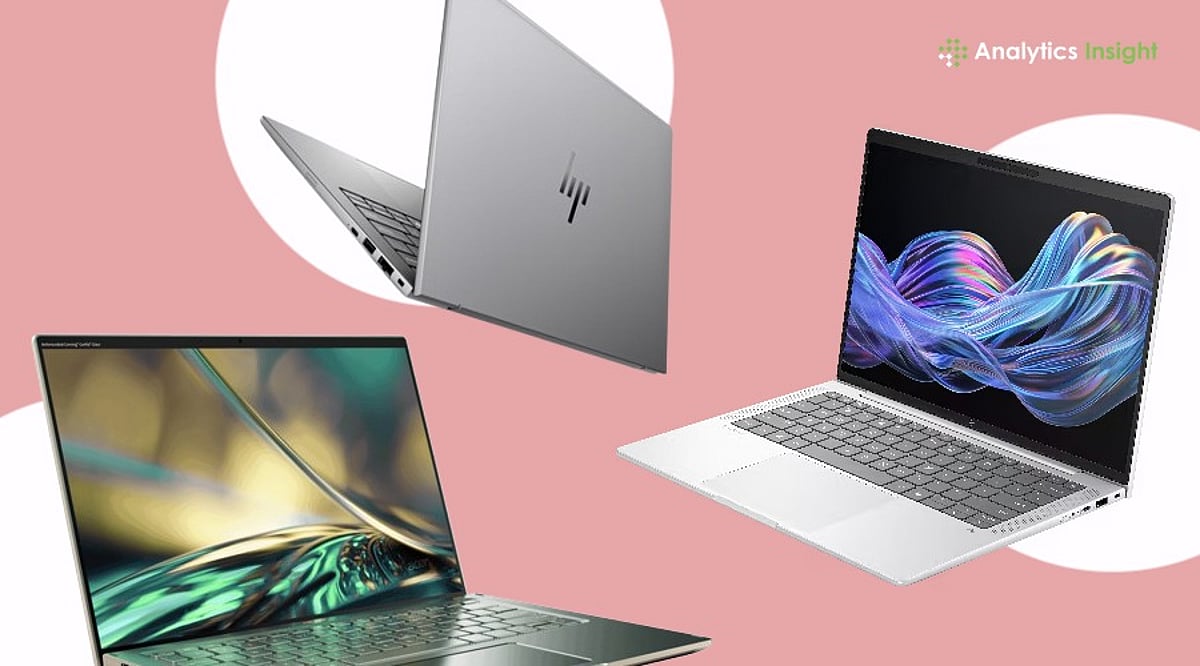
    The laptop market has undergone a dramatic transformation in 2026. Artificial intelligence is now a primary driver for computer upgrades. Modern laptops come equipped with specialized AI hardware that accelerates tasks, conserves battery, boosts speed, and simplifies everyday workflows. These machines no longer depend solely on cloud-based AI tools—advanced AI processes now run directly on the device.

    Industry experts have crowned 2026 as the year of the ‘AI PC.’ Major players like Apple, Microsoft, Intel, AMD, and Qualcomm are heavily focused on AI-powered computers. Market reports indicate that AI laptops are among the fastest-growing segments in the global PC market. Businesses increasingly demand systems capable of handling AI assistants, smart automation, real-time translation, rapid content creation, and advanced office applications.

    Apple MacBook Air M5 Dominates Premium AI Computing

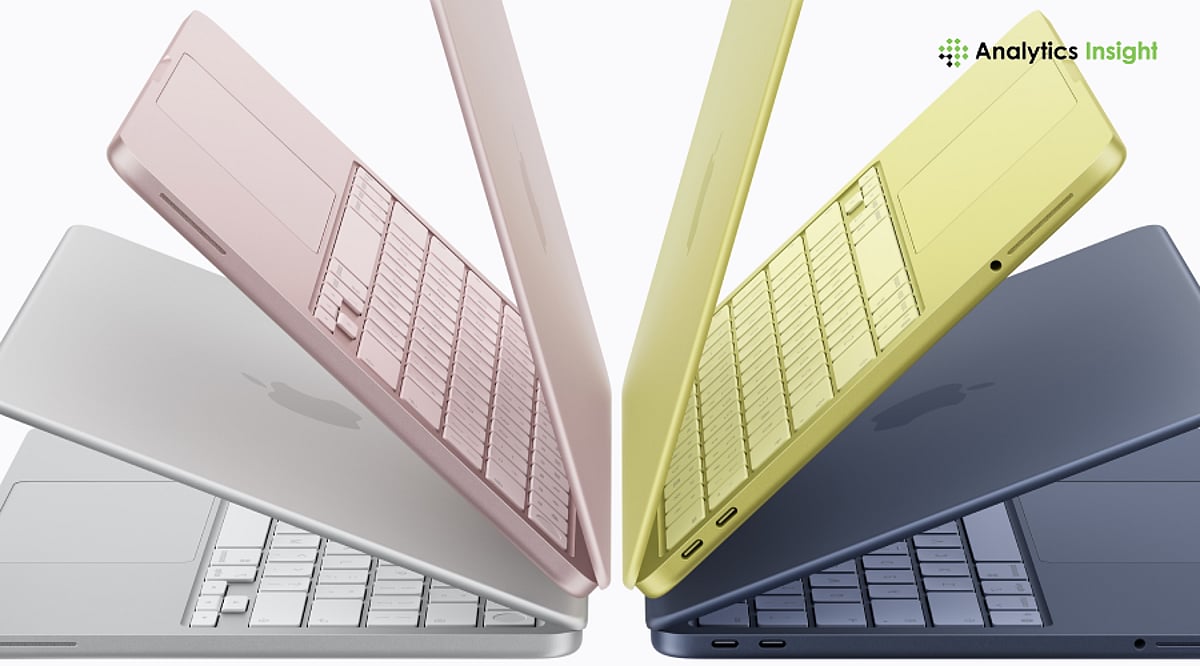
    The Apple MacBook Air M5 stands out as one of the most powerful AI laptops in 2026. Apple’s new M5 chip features a significantly faster Neural Engine that executes AI tasks directly — without heavy internet reliance. The machine effortlessly manages smart writing tools, document summaries, image generation, voice cleanup, and AI-driven editing. Its nearly 18-hour battery life makes it ideal for professionals working long hours. Apple’s seamless hardware-software integration ensures AI features feel faster and more intuitive than many competitors. Market demand for Apple’s AI-focused devices remains exceptionally strong as of mid-2026.

    HP OmniBook Ultra 14 Leads Windows AI Innovation

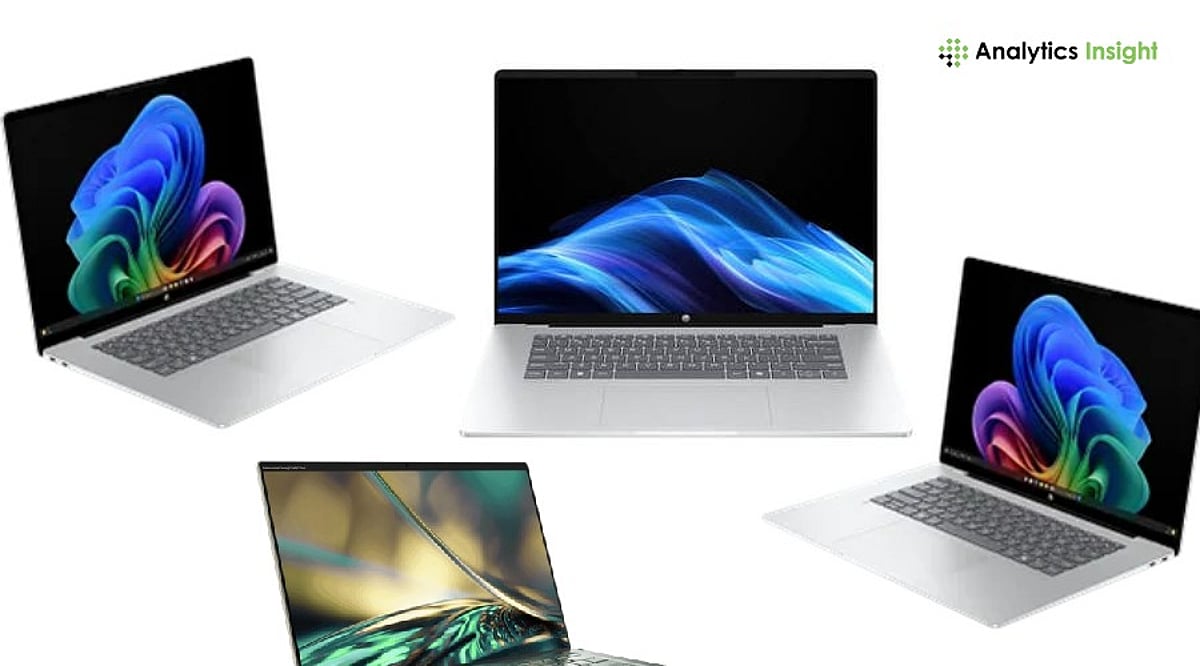
    HP has made a bold entry into the AI laptop arena with the HP OmniBook Ultra 14. Powered by Qualcomm’s Snapdragon X2 Elite processor, it is one of the most capable Windows AI laptops this year. The device sports an 18-core processor and supports up to 64GB LPDDR5X memory. Independent testing in June 2026 revealed nearly 22 hours of real-world battery life, surpassing many premium rivals. This laptop excels at AI-powered tasks such as background noise removal during video calls, live translation, smart meeting summaries, and advanced automation — marking a major leap forward for ARM-based Windows machines.

    Lenovo Yoga Slim 7x Wins Over Business Users

    Business professionals have embraced the Lenovo Yoga Slim 7x as their preferred 2026 laptop, thanks to its Snapdragon X Elite chipset and dedicated AI processor that enhance workplace efficiency. With 32GB of memory and a stunning 3K OLED display, it delivers approximately 18 hours of battery life under typical office use. The system handles complex spreadsheets, AI meeting assistants, smart presentation tools, and office automation applications with ease. As AI applications become integral to daily business operations, companies increasingly favor such systems over traditional business laptops.

    Asus ProArt PX13 Redefines Creative Workstations

    Creative professionals demand computers that can handle AI-driven design software without lag. The Asus ProArt PX13 has emerged as a top workstation for creators in 2026. It combines AMD Ryzen AI processors with a dedicated 50 TOPS NPU and powerful NVIDIA graphics. Applications like Adobe Photoshop AI tools, image upscaling, video rendering, and local generative AI models run significantly faster than on older systems. A major advantage is local AI processing — many tasks occur directly on the machine, improving speed, reducing wait times, and enhancing privacy for users working on sensitive projects.

    Acer Swift 16 AI Balances Performance and Value

    The Acer Swift 16 AI is an excellent choice for users seeking strong AI performance without workstation-level pricing. It strikes a fine balance between price, performance, battery life, and AI capability. Powered by Intel’s latest AI hardware architecture and fully supporting Microsoft Copilot+ features, recent benchmarks place it among the best laptops released in 2026. It comfortably handles software development, office work, AI research, multitasking, and creative projects. Excellent heat management keeps the system reliable during heavy workloads.

    AI Laptop Technology Reaches New Heights

    The biggest change in 2026 is the widespread adoption of dedicated Neural Processing Units (NPUs). These processors now deliver between 40 and 80 TOPS (trillion operations per second). AMD Ryzen AI and Qualcomm Snapdragon X Elite processors have dramatically boosted local AI performance. Research published in June 2026 showed that optimized AI workloads on modern NPUs reduced inference latency by up to 121% while cutting energy consumption by more than 64%. This proves that AI hardware is now a critical component of modern computing, not just a premium add-on.

    Final Outlook for AI Productivity Machines

    A massive hardware shift has made AI capabilities standard across the laptop market. Instead of relying on cloud processing, modern machines handle heavy automation, asset generation, and workplace productivity tools locally on specialized chips. The latest MacBook Air, HP OmniBook, and Lenovo Yoga models illustrate how the PC market has evolved. Buyers no longer need to pay extra for AI hardware — companies are building these chips into their base configurations as standard features.

    Frequently Asked Questions

    What is an AI-powered laptop?
    It is a computer built with a dedicated Neural Processing Unit (NPU) to run complex artificial intelligence tasks locally.

    Why are AI laptops important in 2026?
    They drastically reduce processing delays, cut power consumption by 64%, and enable offline tools like real-time translation and smart automation.

    Which companies lead the AI laptop market?
    Apple, HP, Lenovo, Asus, and Acer dominate hardware delivery, powered by cutting-edge chips from Intel, AMD, and Qualcomm.

    What is an NPU in AI laptops?
    A Neural Processing Unit is a specialized processor handling up to 80 trillion operations per second for faster, private AI workloads.

    Are AI laptops better than traditional laptops?
    Yes, they offer superior battery efficiency, lower latency for modern applications, and eliminate complete reliance on slow, cloud-based AI servers.

  • NVIDIA vs AMD: Which Chip Stock Offers Better Returns in 2026?

    NVIDIA vs AMD: Which Chip Stock Offers Better Returns in 2026?

    The global technology market has transformed rapidly, driven by artificial intelligence. AI has become one of the biggest growth areas worldwide, and semiconductor companies now sit at the center of this shift. Among all chipmakers, NVIDIA and AMD have captured the most investor attention. Both companies play a vital role in the future of computing, but the key question remains: which stock looks better for investment right now?

    The answer depends on business strength, growth rate, market position, and future opportunities. Both companies offer strong potential, but there are major differences between them.

    NVIDIA’s Strong Position in the AI Market

    NVIDIA currently leads the AI chip market with a commanding share. The company controls more than 75 percent of the global AI GPU market. Graphics Processing Units (GPUs) power advanced artificial intelligence systems, large data centers, and machine learning models. Major technology companies such as Microsoft, Amazon Web Services, Google, and OpenAI rely heavily on NVIDIA hardware. This strong demand has helped NVIDIA build a dominant industry position.

    Revenue Growth Shows NVIDIA’s Strength

    Financial growth remains one of the biggest reasons behind NVIDIA’s popularity among investors. Recent reports show that NVIDIA recorded nearly 73 percent year-over-year revenue growth. The company’s data center business alone generated around $62 billion. Profit margins also remain extremely strong. NVIDIA currently maintains gross margins close to 75 percent, reflecting excellent business efficiency. High profitability allows more investment in research, product development, and shareholder rewards.

    The Power of CUDA Creates a Huge Advantage

    One major reason behind NVIDIA’s success is its software ecosystem called CUDA. Developers worldwide use CUDA to build AI models and software applications. This creates an advantage beyond hardware itself. Even when competitors offer strong chips, many companies hesitate to switch because their systems already depend on NVIDIA software tools.

    AMD Offers Higher Growth Potential

    AMD stands as NVIDIA’s biggest competitor in advanced chips. Although AMD remains much smaller in the AI accelerator market, the company has started to gain serious momentum. AMD reported around 34 percent revenue growth, showing healthy expansion. Data center revenue currently stands near $5.4 billion, far below NVIDIA, but the company continues to grow at a strong pace. Since AMD operates from a smaller base, faster stock growth becomes possible if market share expands in the coming years.

    AMD Builds Strong Products Across Multiple Areas

    AMD continues to strengthen its position through several important products. EPYC server processors have gained popularity in enterprise computing. Ryzen processors continue to perform well in consumer markets. The Instinct MI series AI accelerators also help AMD compete directly with NVIDIA in artificial intelligence hardware. Unlike NVIDIA, AMD has lower profit margins near 55 percent, indicating stronger competition and lower pricing power.

    Risks Investors Should Understand

    NVIDIA remains the safer company, but risks still exist. The company already has an enormous market value, making extremely large future gains harder to achieve. Any slowdown in AI spending could also affect investor confidence. AMD carries different risks. The company still remains far behind NVIDIA in AI GPUs. Its software ecosystem, called ROCm, still lacks the maturity of NVIDIA’s CUDA platform. Lower margins also show weaker overall profitability.

    Final Comparison and Investment Decision

    Both companies remain strong investments, but they serve different investor goals. NVIDIA offers better business quality, stronger profits, market leadership, and lower risk. It appears more suitable for long-term investors who prefer stability and steady growth. AMD offers greater upside potential given its smaller size. If AMD captures even 10 to 15 percent more AI market share, stock performance could rise faster than NVIDIA’s. At present, NVIDIA ranks as the stronger and safer investment choice. AMD remains the better option for investors who seek higher return potential and accept higher risk.

    Frequently Asked Questions

    1. Why does NVIDIA rank ahead of AMD right now?
    NVIDIA commands over 75 percent of the global AI GPU market, delivering exceptional financial performance with superior data center revenue and premium pricing power that outpaces its closest competitors.

    2. Does AMD have growth potential despite lower market share?
    AMD offers considerable growth potential. Operating from a smaller market base means expanding its data center presence or capturing minor market share shifts can trigger accelerated stock appreciation.

    3. What gives NVIDIA a competitive advantage?
    NVIDIA’s proprietary CUDA software ecosystem creates deep customer lock-in. Developers globally build AI models using these integrated tools, making it logistically difficult for enterprises to switch hardware providers.

    4. Is AMD considered a risky investment?
    AMD carries an elevated risk as its AI software platform, ROCm, is less mature than NVIDIA’s ecosystem. It also operates with lower profit margins, reflecting stiffer market competition.

    5. Which stock suits long-term investors better?
    NVIDIA is highly suited for long-term investors seeking financial stability. Its absolute market leadership, massive corporate profitability, and robust full-stack ecosystem minimize downside risk across changing technology cycles.

    Disclaimer: This article is provided for informational purposes only and does not constitute investment advice. You are responsible for conducting your own research before making any investments.

  • Morning Tech Roundup: OpenAI Debuts Jalapeño AI Chip, Leyden Labs Secures €40M, and More

    Morning Tech Roundup: OpenAI Debuts Jalapeño AI Chip, Leyden Labs Secures €40M, and More

    Good morning, tech enthusiasts! Here’s your quick roundup of the biggest stories making headlines today—from artificial intelligence and healthcare to careers, consumer technology, and cryptocurrency.

    OpenAI Unveils First In-House AI Inference Chip

    OpenAI has introduced its first self-developed AI inference chip, named Jalapeño, built in collaboration with Broadcom. The chip is designed to speed up AI responses while consuming less power, marking a strategic step toward reducing OpenAI’s reliance on Nvidia and lowering computing costs. Early tests have yielded strong results, and the company plans to deploy the chip for customer services later this year as part of its long-term hardware strategy.

    Leyden Labs Raises €40M for Broad Flu Protection Nasal Spray

    Dutch biotech firm Leyden Labs has secured €40 million to advance its PanFlu nasal spray through clinical trials. The spray delivers antibodies directly into the nose to block influenza viruses before they spread in the body. Unlike traditional flu vaccines, this approach may also benefit individuals with weakened immune systems. The funding will support further research, expand work on other respiratory viruses, and improve access in lower-income countries.

    Fresh Graduate Left Without Job After Campus Offer Revoked

    A recent engineering graduate has shared their distress online after the company that hired them through campus placements revoked its job offer following graduation. With no internship or work experience, the graduate now faces significant challenges in finding a new position. They have asked for guidance rather than sympathy, highlighting a growing concern among new graduates in a volatile job market.

    Tech Giants Look Beyond Phone Screens

    Major tech companies are increasingly focusing on screen-free devices such as smart glasses, AI earbuds, and AI pendants. The goal is to reduce reliance on smartphones for everyday tasks. However, privacy and public trust remain significant hurdles. While phones are not disappearing, screen-free tools may gradually reshape how people interact with technology.

    Bitcoin May Face More Weakness Before Recovery

    Bitcoin could remain under pressure for another quarter before reaching a major market bottom, according to analysts tracking its four-year cycle. Prices may stay weak through the third quarter, though long-term indicators—including market value, ETF demand, and global money supply—point to a potential rebound later in the year. Until then, caution is advised, especially if Bitcoin stays below key price levels.

    Stay tuned for more updates throughout the day.

  • Apple Raises MacBook, iPad, and Mac mini Prices in India Amid AI-Driven Component Cost Surge

    Apple Raises MacBook, iPad, and Mac mini Prices in India Amid AI-Driven Component Cost Surge

    Apple has raised prices on several products in India, including MacBooks, iPads, Mac mini, and HomePod devices, citing rising costs of memory and storage chips driven by the global AI boom. iPhone prices remain unchanged for now.

    The price hike affects the MacBook Neo, MacBook Air M5, MacBook Pro range, Mac mini M4, iPad lineup, and HomePod lineup. The steepest increase is on the MacBook Pro M5 Max, which now starts at ₹4,99,900, up ₹1 lakh. The standard MacBook Pro M5 starts at ₹2,39,900 after a ₹70,000 increase, while the MacBook Air M5 is now priced from ₹1,49,900, up ₹29,000.

    Apple’s more affordable Mac lineup also saw significant increases. The Mac mini M4 now starts at ₹94,900, compared to its earlier launch price of ₹59,900 — one of the largest percentage jumps. The entry-level MacBook Neo starts at ₹79,900, up ₹10,000.

    For tablets, the 11th-generation iPad now starts at ₹49,900, the iPad mini at ₹69,900, the iPad Air at ₹89,900, and the iPad Pro at ₹1,39,900.

    Apple attributes the price hikes to higher costs of memory and storage chips, as suppliers prioritize manufacturers focused on AI, limiting supply to consumer electronics and raising production expenses. Industry experts note Apple has shielded iPhone customers from these increases for now.

  • Hands-On Review: My Top AI Tools After Extensive Testing

    Hands-On Review: My Top AI Tools After Extensive Testing

    After testing a wide range of popular AI tools, I’ve identified the ones that truly stand out for productivity, creativity, and research. Here’s a detailed look at my favorites and why they earn a spot in my daily workflow.

    ChatGPT: The All-Purpose AI Assistant

    ChatGPT remains my go-to AI assistant for writing, brainstorming, coding, research, and everyday productivity. It consistently delivers natural conversations, detailed explanations, creative ideas, and reliable assistance across multiple tasks. Whether drafting articles, summarizing reports, solving technical problems, or learning something new, it is the most versatile AI tool I use regularly.

    Claude: Master of Long-Form Analysis

    Claude excels at handling lengthy documents, thoughtful reasoning, and polished writing. It analyzes reports, edits content, summarizes research papers, and maintains context across extended conversations. Whenever I need structured analysis or nuanced responses, Claude produces clear, well-organized, and dependable results.

    Google Gemini: Seamless Ecosystem Integration

    Gemini integrates seamlessly with Google’s ecosystem, making it ideal for users relying on Gmail, Docs, Drive, and Search. It delivers accurate information, multimodal capabilities, and useful productivity features. I especially appreciate its ability to combine web knowledge with document-based assistance inside Google’s familiar workspace.

    Microsoft Copilot: The Enterprise Workhorse

    Copilot shines for professionals working within Microsoft 365. It helps draft emails, summarize meetings, generate presentations, analyze spreadsheets, and improve workplace productivity. Its integration with Word, Excel, PowerPoint, and Teams makes it an excellent AI companion for business users and enterprise environments.

    Perplexity AI: The Research Companion

    Perplexity has become my preferred research assistant whenever I need quick, source-backed answers. It simplifies complex topics, provides citations, and makes exploring current information easier. Instead of opening multiple browser tabs, I can quickly understand subjects through concise summaries supported by relevant references.

    Midjourney: Creative Visuals Redefined

    Midjourney continues to impress with exceptional AI-generated artwork and creative visuals. It produces highly detailed illustrations, concept art, marketing assets, and imaginative designs from simple prompts. For designers, marketers, and creators seeking visually stunning results, it remains one of the strongest image-generation platforms available.

    GitHub Copilot: The Developer’s Coding Partner

    GitHub Copilot significantly speeds up software development by suggesting code, generating functions, explaining logic, and reducing repetitive programming tasks. It supports multiple programming languages and integrates directly into popular code editors. For developers, it acts like an experienced coding partner that enhances productivity every day.

  • Snapdragon AI PCs in 2026: Essential Buying Guide for Next-Gen Laptops

    Snapdragon AI PCs in 2026: Essential Buying Guide for Next-Gen Laptops

    Snapdragon AI PCs are next-generation laptops built for faster AI tasks, longer battery life, quiet performance, and future-ready computing, making them one of the biggest laptop innovations of 2026.

    Overview

    • Snapdragon AI PCs offer up to 27 hours of battery life, far ahead of many traditional laptops.
    • Dedicated AI hardware makes local AI tasks faster while reducing internet dependence.
    • These laptops are ideal for productivity and future AI software, but less suitable for heavy gaming.

    The current laptop market looks different from previous years, with artificial intelligence becoming a major part of modern computers. Brands are also focusing on laptops that can handle AI tasks faster and more efficiently. One of the biggest changes in this space comes from Snapdragon AI PCs, a new category of laptops powered by Qualcomm’s Snapdragon processors. These machines promise better battery life, faster AI performance, and a completely new way to use everyday laptops. As more software now depends on artificial intelligence, Snapdragon laptops have quickly become one of the most talked-about laptop categories.

    Snapdragon AI PC Explained

    A Snapdragon AI PC is a laptop that runs on Qualcomm’s latest Snapdragon X series processors, such as Snapdragon X Elite, Snapdragon X Plus, and the newer Snapdragon X2 Elite chips launched in 2026. Unlike traditional laptops that use Intel or AMD processors, Snapdragon laptops use ARM architecture, similar to the technology found inside smartphones. The biggest difference is the addition of a special processor called the NPU or Neural Processing Unit. This chip handles artificial intelligence tasks directly inside the laptop instead of sending everything to cloud servers. This allows the system to process features such as live language translation, AI chat assistants, image creation, voice cleanup during calls, smart search across files, and automatic video background effects without heavy internet dependence.

    Why Snapdragon AI PCs Matter in 2026

    The laptop industry has started moving toward AI-first computers. For many years, Intel and AMD controlled most of the Windows laptop market. That started changing after Qualcomm entered the premium laptop category with Snapdragon X Elite. At CES 2026, Qualcomm introduced Snapdragon X2 Elite, a much stronger version of its earlier processor. According to the latest company performance data, Snapdragon X2 Elite offers nearly two times faster multi-core performance compared to some Intel Core Ultra processors. The AI performance improvement looks even bigger. Qualcomm claims the chip delivers five times faster AI processing power compared to several competing laptop processors. This shows how important dedicated AI hardware has become in modern computing.

    Battery Life Has Become a Huge Advantage

    Battery life remains one of the biggest reasons many buyers now consider Snapdragon laptops. Traditional laptops often struggle to deliver full-day battery performance during heavy use. Snapdragon laptops have changed that expectation completely. Many new models now offer 18 to 27 hours of real-world battery life, which is far better than many Intel-based alternatives. Recent tests on the latest Dell XPS 13 showed close to 19.5 hours of battery backup under normal workloads. Even under demanding tasks, battery life stayed near 10 hours. For students, office professionals, and travelers, this creates a huge advantage because frequent charging becomes far less necessary.

    Better AI Performance for Future Software

    Artificial intelligence now plays a bigger role in operating systems and software than ever before. This makes AI hardware extremely important when choosing a laptop. Snapdragon processors include dedicated NPUs that focus only on AI tasks. A research report published in June 2026 showed Snapdragon X Elite running local AI systems with 9.1 times higher embedding speed, 12.3 times lower energy usage, and four times faster AI query performance compared to systems that rely only on standard CPU processing. This means future AI software will work faster while using less battery power.

    Cooler and Quieter Performance

    Heat management has always been a common issue with powerful laptops. High-performance Intel machines often warm up quickly and usually require louder cooling fans. Snapdragon laptops solve much of this problem because these processors consume much less power. Lower power use means lower heat output. As a result, many Snapdragon laptops stay cool during long work sessions and produce little fan noise. Some models even work without traditional cooling fans. This creates a better overall experience for daily work.

    Problems Buyers Should Know Before Purchase

    Despite many strengths, Snapdragon AI PCs still have a few limitations. Since these laptops use ARM architecture instead of traditional x86 architecture, some older Windows applications may not work perfectly. Certain older business software, printer drivers, VPN applications, and specialized enterprise programs sometimes face compatibility issues. Gaming also remains a weaker area. Although Snapdragon laptops handle casual games well, dedicated gaming laptops with NVIDIA RTX graphics cards still perform much better for modern AAA games and heavy graphics workloads.

    Best Snapdragon Laptop Options in 2026

    Several major laptop brands now offer Snapdragon-powered devices. Popular models in 2026 include Microsoft Surface Laptop 8, Dell XPS 13, Lenovo IdeaPad Slim 5x Gen 11, HP OmniBook X 14, and ASUS Zenbook A14. Lenovo IdeaPad Slim 5x Gen 11 recently gained attention after early reviews reported nearly 27 hours of video playback, one of the best battery results seen in a Windows laptop this year.

    Final Buying Verdict for 2026

    Snapdragon AI PCs represent one of the biggest laptop changes seen in recent years. Earlier laptop purchases mainly depended on processor speed, RAM capacity, and storage space. However, now dedicated AI hardware has become just as important. For buyers who want long battery life, lightweight design, strong AI performance, quiet operation, and future-ready computing, Snapdragon laptops now stand as serious alternatives to Intel, AMD, and even Apple Silicon machines. The smartest laptop choice should focus on at least 16GB RAM, 45 TOPS AI performance, strong battery life above 15 hours, and full support for Microsoft Copilot+ AI features. Snapdragon AI PCs are no longer experimental devices. They have become one of the strongest signs of where the future of laptops is headed.

    FAQs

    1. What is a Snapdragon AI PC? A laptop powered by Qualcomm Snapdragon processors with dedicated AI hardware for faster smart computing tasks.
    2. Why are Snapdragon laptops popular in 2026? They offer better battery life, faster AI performance, and improved power efficiency compared to many traditional laptops.
    3. Can Snapdragon AI PCs run normal Windows apps? Most apps work normally, but some older software may face compatibility issues with the ARM architecture.
    4. Are Snapdragon AI PCs good for gaming? They work well for casual gaming, but dedicated gaming laptops still perform much better for AAA games.
    5. Which buyers should choose Snapdragon laptops? Students, professionals, remote workers, and users looking for long battery life and AI-powered computing features.
  • Micron Stock Gains 16% After $9.8B Revenue Beat and $22B in AI Supply Deals

    Micron Stock Gains 16% After $9.8B Revenue Beat and $22B in AI Supply Deals

    Micron Technology shares surged more than 16% in pre-market trading Thursday after the company reported stronger-than-expected fiscal third-quarter results and provided an upbeat outlook. The memory chip maker’s performance underscores sustained demand for artificial intelligence infrastructure.

    Revenue reached $9.8 billion for the quarter, exceeding Wall Street analyst estimates and marking a significant year-over-year increase. Profit also came in ahead of forecasts as demand for memory chips rebounded sharply.

    The company attributed much of its success to heavy spending by large technology firms on data centers and AI systems, which require large volumes of high-performance memory chips. The trend has allowed Micron to sell more products at improved prices.

    Looking ahead, Micron forecast revenue between $10.2 billion and $10.6 billion for the current quarter, signaling continued healthy demand across the technology sector.

    Additionally, Micron announced 16 long-term supply agreements covering cloud computing, data centers, and automotive industries. These contracts are expected to generate approximately $22 billion in cumulative revenue over the next several years, providing stable cash flows and reducing exposure to demand volatility.

    High bandwidth memory (HBM) products, which are critical for advanced AI servers, are seeing rising demand as more enterprises invest in AI capabilities. The company’s HBM lineup has become a key growth driver.

    The positive earnings report lifted other chip stocks as well. Qualcomm rose about 12% pre-market, Intel gained nearly 6%, and shares of AMD and Nvidia also moved higher as investor sentiment returned to the sector after earlier concerns over high valuations and slowing growth.

    Micron stock has already posted substantial gains over the past year. The latest earnings reinforce the view that the company will continue benefiting as businesses allocate more capital toward artificial intelligence and data center expansion.

  • Qualcomm Stock Surges 12% on $40 Billion AI Revenue Target Beyond Smartphones

    Qualcomm Stock Surges 12% on $40 Billion AI Revenue Target Beyond Smartphones

    Qualcomm stock rose more than 12% in premarket trading on Thursday after the chipmaker raised its long-term revenue target outside smartphones. The company now expects its non-handset businesses to generate $40 billion in revenue by fiscal 2029, twice its previous goal.

    The revised target includes $15 billion from data center products and $10 billion from the automotive business. Qualcomm presented the plan at its investor day in New York, where executives outlined a broader shift into artificial intelligence infrastructure, servers, personal computers, and connected devices.

    Qualcomm Targets $15 Billion in Data Center Revenue

    Qualcomm plans to offer several products for AI data centers, including processors, server systems, software, and custom chips. The company expects these operations to generate $15 billion in annual revenue by fiscal 2029. Its strategy places the business in direct competition with NVIDIA and AMD.

    Chief Executive Cristiano Amon said cloud and AI companies have shown interest in having more chip suppliers. “I have not met a single one of those cloud and AI companies that have not said to me how excited they are,” Amon said. Nevertheless, the revenue target depends on Qualcomm winning customers in a market where established suppliers hold strong positions.

    China Forms Part of Qualcomm’s AI Expansion

    Qualcomm also plans to market its data center products in China, although US export rules may limit access to advanced technology. “Everything that we’re building for the data center, you should assume that China is going to be a target market,” Amon said.

    However, the company faces doubts over which processors it can legally sell in the country. The US government has changed its approach to AI chip exports several times over security concerns. While certain NVIDIA processors received clearance for sale, Chinese authorities have not approved all of them for import.

    Smartphone Dependence Falls Under Wider Growth Plan

    The data center push forms part of Qualcomm’s effort to reduce its reliance on mobile phone chips. The company expects its automotive business to produce $10 billion in fiscal 2029. It is also expanding its computer chip business, where it competes with Intel and AMD.

    Additionally, Qualcomm has agreed to acquire AI software company Modular. The deal gives the company access to tools that help developers build and run AI programs across different processors. Qualcomm aims to create a software system that can compete with NVIDIA’s CUDA platform, which developers widely use for GPU-based computing.

    Micron Results Support Semiconductor Stock Rally

    Qualcomm’s investor update arrived as Micron reported quarterly results that exceeded market forecasts. Micron said customers had committed about $22 billion toward chip purchases. It also reported that its high-bandwidth memory supply for 2026 had already sold out.

    Micron shares gained more than 15% in extended trading, while Qualcomm rose about 12% before Thursday’s opening bell. The updates supported gains across semiconductor stocks and helped push US stock index futures higher.

    Meanwhile, investors are assessing whether Qualcomm can meet its fiscal 2029 targets while competing with NVIDIA, AMD, and custom processors developed by large cloud companies. Its $15 billion data center forecast reflects management’s plan, but actual sales will depend on customer orders, product performance, export rules, and the pace of global AI infrastructure spending.