Category: AI Chips

  • NVIDIA Jetson Thor T3000: A Game-Changer for Robotics and Edge AI

    NVIDIA Jetson Thor T3000: A Game-Changer for Robotics and Edge AI

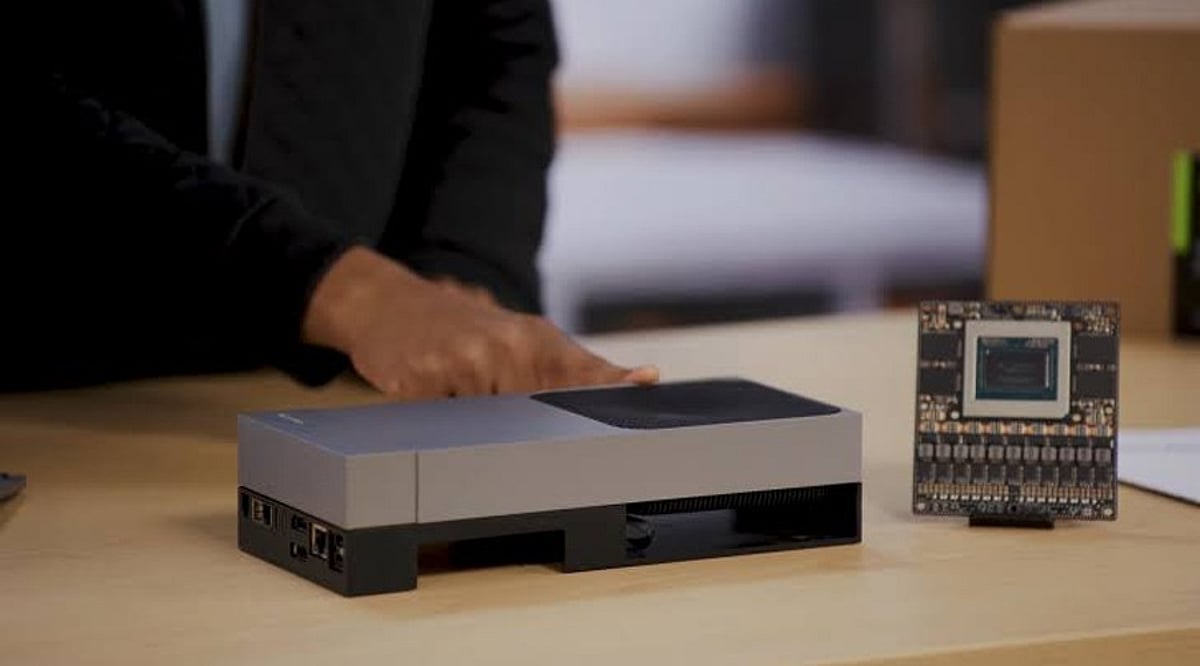
    NVIDIA introduced the Jetson Thor T3000 and T2000 AI modules on July 15 to support robotics and Edge AI applications. The new NVIDIA Blackwell-powered modules help developers build smarter robots and AI machines with less power and smaller hardware. The company plans to launch both modules in the first quarter of 2027.

    The launch comes as more industries adopt robots for real-world work. NVIDIA created the new Jetson Thor modules to run powerful AI models directly on robots and edge devices. This approach reduces cloud dependence while improving speed, safety, and overall performance.

    The Jetson Thor T3000 is the more powerful model in the lineup. It delivers up to 865 FP4 teraflops of AI performance and includes an eight-core Arm Neoverse CPU with 32GB LPDDR5X memory. NVIDIA said that the module is about half the size and uses nearly half the power of the larger T5000 while offering similar AI performance for language, vision, and robotics tasks.

    The Jetson Thor T2000 targets developers looking for a more affordable option. It delivers up to 400 FP4 teraflops with 16GB memory and supports visual AI, autonomous mobile robots, and industrial machines. NVIDIA also introduced new software tools that reduce memory use and make advanced AI models easier to run on smaller systems.

    NVIDIA stated that companies like Amazon Robotics, Boston Dynamics, Agile Robots, Hitachi, 1X, and Techman Robot already use the Jetson Thor platform. Developers can test the T3000 through JetPack 7.2.1 emulation today, while T2000 support will arrive later. Both modules are expected to become available in the first quarter of 2027.

  • Today’s Tech Roundup: Apple Intelligence Cleared in China, Google Play Store Opens Up, OpenAI Codex Micro, Apple’s Chip Acquisitions, and OnePlus India’s Hurdles

    Today’s Tech Roundup: Apple Intelligence Cleared in China, Google Play Store Opens Up, OpenAI Codex Micro, Apple’s Chip Acquisitions, and OnePlus India’s Hurdles

    In a packed day of tech news, Apple has received regulatory approval in China for its Apple Intelligence platform, marking a significant milestone for the company’s AI ambitions in the world’s largest smartphone market. Meanwhile, Google is opening its Play Store to rival app stores, signaling a major shift in its distribution policy. OpenAI is entering the hardware space with Codex Micro, Apple is eyeing chip startups for potential acquisitions, and OnePlus faces mounting challenges in India.

    Apple Intelligence Gets Green Light in China

    Apple’s artificial intelligence initiative, Apple Intelligence, has secured approval from Chinese regulators. This move allows Apple to deploy its AI features in the region, potentially boosting iPhone sales and competing with local AI offerings. The approval comes as Apple continues to navigate stringent data and security regulations in China.

    Google Play Store Opens to Rival App Stores

    In a surprising policy change, Google has announced that it will allow third-party app stores to be listed on the Google Play Store. This decision could reshape the Android app ecosystem, giving users more choices and potentially reducing Google’s dominance in app distribution. The move follows increased regulatory pressure and antitrust scrutiny worldwide.

    OpenAI Enters AI Hardware with Codex Micro

    OpenAI is reportedly developing a new hardware product called Codex Micro, aimed at bringing AI capabilities directly to devices. This marks the company’s first foray into physical hardware, expanding beyond software and cloud-based AI services. Details remain scarce, but the project is expected to focus on edge AI and real-time processing.

    Apple Eyes Chip Startups

    Apple is reportedly in talks to acquire several chip startups to bolster its semiconductor capabilities. The company aims to reduce reliance on external suppliers and enhance its custom chip designs for future iPhones, Macs, and other devices. This strategy aligns with Apple’s long-term goal of vertical integration and performance optimization.

    OnePlus Faces Challenges in India

    OnePlus is encountering significant hurdles in the Indian market, including increased competition from rivals like Xiaomi and Samsung, as well as regulatory challenges. The company is reportedly reassessing its strategy to maintain market share and consumer loyalty in one of its key regions.

    Stay tuned for more updates on these developing stories.

  • ASML Stock Climbs After Second 2026 Revenue Forecast Hike Fueled by AI Chip Demand

    ASML Stock Climbs After Second 2026 Revenue Forecast Hike Fueled by AI Chip Demand

    ASML shares rose more than 3% on Wednesday after the Dutch chip equipment maker raised its 2026 sales forecast for the second time this year. The company also reported quarterly revenue and profit above market estimates as chipmakers increased spending on advanced production tools.

    The update points to demand for equipment used in AI processors, data centers, and high-bandwidth memory. ASML said customer orders stayed strong during the first half of 2026 as foundries and memory producers moved faster on capacity plans.

    ASML Lifts Sales and Margin Outlook

    ASML now expects 2026 net sales between €43 billion and €45 billion. Its earlier forecast called for sales between €36 billion and €40 billion. The company also raised its gross margin range to 54% to 56%, from 51% to 53%.

    Second-quarter net sales reached €9.3 billion, above the €8.8 billion expected by analysts surveyed by LSEG. Net profit came in at €2.9 billion, compared with the €2.6 billion market forecast. Shares opened more than 7% higher before trimming gains to about 3.4%.

    Chief Executive Christophe Fouquet said order intake was ‘extremely strong’ during the first half. He added that customers were accelerating expansion plans across logic and memory production. Those commitments gave ASML better visibility into demand through 2028.

    ASML plans to increase its 2026 low-NA EUV capacity by 30%. It will also add 30% to its deep ultraviolet immersion capacity. The company produces both systems at its site in Veldhoven, Netherlands.

    AI Spending Drives Equipment Orders

    ASML holds a central position in advanced chip production. It is the only supplier of extreme ultraviolet lithography machines used to make the most advanced semiconductors. Its customers include TSMC, Intel, SK Hynix, and Micron Technology.

    Fouquet said stronger end-market demand had encouraged customers to lift capital spending and bring forward expansion plans. ‘This has also translated practically into very strong order booking through the first half of 2026,’ he said.

    Orders for EUV systems now extend into 2028. That longer order window reflects continued investment in AI servers, advanced processors, and memory chips. Chipmakers also seek faster productivity gains from upgrades to installed equipment.

    TSMC, one of ASML’s largest customers, reported a 68% rise in June sales. The Taiwanese company is also preparing new advanced packaging plants as demand grows for AI chips and related services.

    TSMC Earnings Draw Closer Scrutiny

    ASML’s report arrives one day before TSMC is due to release second-quarter results on July 16. Analysts expect TSMC to report earnings of $3.89 per share and revenue of $39.31 billion, based on consensus estimates.

    Investors will watch TSMC’s capital spending plans, its 2-nanometre production ramp, and demand for advanced packaging. ASML’s order strength suggests major customers are still committing funds to new capacity, though TSMC’s guidance will provide the next update.

    China is an important market for ASML despite tighter export controls. The company still expects China to account for about 20% of annual sales. China’s share fell to 14% in the second quarter from 19% in the first quarter.

    South Korea became ASML’s largest market during the quarter, contributing 43% of sales. The company plans to provide a broader update on long-term targets at its Capital Markets Day on June 10, 2027.

  • Sen. Elizabeth Warren Blasts UAE Chip Export Rule as ‘Corrupt’ Over Crypto-Linked Deal

    Sen. Elizabeth Warren Blasts UAE Chip Export Rule as ‘Corrupt’ Over Crypto-Linked Deal

    Senator Elizabeth Warren has accused the Trump administration of granting favorable chip export treatment to United Arab Emirates companies tied to a disputed foreign crypto arrangement. Her criticism followed a Commerce Department rule that gives selected UAE entities easier access to advanced computing equipment.

    Commerce Eases UAE Chip Export Controls

    The Bureau of Industry and Security published the final rule in the Federal Register on July 14, taking effect on July 10. The measure removes the UAE from two restricted country groups and places it in Country Group A:5, opening access to more license exceptions. Under the change, UAE government agencies and named companies may receive certain advanced AI chips and servers without separate licenses. G42 and Core42 appear on the approved list. Amazon, Apple, Google, Meta, Microsoft, OpenAI, Oracle, and xAI also receive streamlined treatment for eligible operations in the UAE.

    Commerce said the policy supports military and commercial cooperation between Washington and Abu Dhabi, citing UAE trade controls, its regional security role, and a May 2025 technology framework. Existing end-user and end-use checks still apply to covered shipments.

    Warren Links Chip Rule to USD1 Stablecoin Deal

    Warren, the ranking Democrat on the Senate Banking Committee, called the arrangement a ‘corrupt deal.’ She said Commerce Secretary Howard Lutnick and Under Secretary Jeffrey Kessler should testify before the committee about the rule and related national security concerns. Her statement linked the policy change to UAE investments involving World Liberty Financial, a crypto company associated with Trump and members of his family. Warren cited reports that a UAE royal connected to G42 and MGX acquired a 49% interest in the business.

    MGX announced a $2 billion minority investment in Binance in March 2025. World Liberty co-founder Zach Witkoff later said MGX would settle the transaction with USD1, the company’s dollar-linked stablecoin. Warren also cited a reported $263 million gain for Trump linked to the wider UAE arrangement, presented as part of his reported crypto income.

    Security Questions Drive Hearing Calls

    Warren raised doubts about whether advanced US technology could reach China through UAE-linked entities. She said the policy moves forward ‘despite reported concerns’ about technology diversion and other security risks. Commerce has not accepted her claim that the rule reflects improper conduct.

    The final rule states that US officials will keep monitoring sensitive exports. BIS maintains an export-control officer in the UAE, while listed approvals do not cancel restrictions tied to prohibited users or uses. G42 and Core42’s current authorizations expire on April 6, 2027, unless BIS issues another notice.

    Meanwhile, Warren urged Senate committees to examine whether foreign crypto holdings influenced administration decisions. She also tied the dispute to pending cryptocurrency legislation, saying Congress should address presidential and family profits from digital assets before approving new rules. The Commerce Department based its decision on the UAE’s security partnership, technology safeguards, and investment ties with the United States. The published rule does not mention USD1, World Liberty Financial, or Trump family income.

  • Tech News Roundup: China’s 3D AI Chip, ONGC Recruitment, Binance Anniversary, and More

    Tech News Roundup: China’s 3D AI Chip, ONGC Recruitment, Binance Anniversary, and More

    Today’s Top Tech Stories

    Welcome to your quick tech briefing. Here are the most important updates from the worlds of AI, startups, careers, developer tools, and cryptocurrency.

    Chinese Startup Unveils 3D AI Chip Roadmap

    Dongfang Suanxin, a Chinese startup, has announced a new 3D AI chip roadmap designed to challenge Nvidia. By leveraging software-driven design and 3D memory stacking, the company aims to reduce reliance on advanced chipmaking tools that are restricted by US export controls.

    Ex-Netflix Founders Raise €7.2M for Payment Startup

    Amsterdam-based Nopan has secured €7.2 million to enhance the reliability of bank and wallet payments across Europe. Founded by two former Netflix payment experts, the startup helps merchants improve payment success rates and plans to expand its technology and European market presence.

    ONGC Graduate Trainee Recruitment 2026

    ONGC has released notification for Graduate Trainee Recruitment 2026, inviting applications from engineering and geoscience candidates. Online applications open July 17. Selection will be based on GATE 2026 scores, qualifications, and interviews. Details on salary and eligibility are available.

    Essential Git and Linux Skills for AI Learners

    A new guide highlights the importance of Git, Linux, Python, Conda, Docker, Jupyter, CUDA, and SSH for AI and data science professionals. Mastering these commands can help manage code, files, projects, and systems more efficiently, reduce errors, and improve collaboration.

    Binance Celebrates Ninth Anniversary with Strong Growth

    Binance marked its ninth anniversary, reporting that nearly half of all crypto holders use the exchange. The company announced a record $156 trillion in all-time trading volume and outlined its long-term vision to expand beyond crypto into broader financial services.

    Stay tuned for more updates on these stories throughout the day.

  • TSMC Posts Record Q2 Revenue as AI Chip Demand Drives 36% Growth

    TSMC Posts Record Q2 Revenue as AI Chip Demand Drives 36% Growth

    Taiwan Semiconductor Manufacturing Co. reported record second-quarter revenue as demand for chips used in artificial intelligence systems lifted sales. The company generated NT$1.27 trillion, or about $39.62 billion, from April through June. Revenue rose 36% from a year earlier and came in slightly above the NT$1.264 trillion estimate drawn from 20 analysts.

    The result placed TSMC near the upper end of its official revenue forecast of $39 billion to $40.2 billion. The chipmaker supplies advanced processors to major technology companies, including NVIDIA and Apple.

    Investors now turn to the full earnings report, where profit, margins, spending and the next sales forecast will receive closer attention. TSMC gives its quarterly guidance in US dollars rather than Taiwan dollars, so currency movements can affect direct comparisons with reported sales.

    June Revenue Records Sharp Annual Growth

    TSMC generated NT$442.68 billion in June revenue. Sales rose 67.9% from June 2025 and increased 6.2% from May. The annual rise marked the company’s fastest monthly growth rate in 2026 and completed a record quarter for the Taiwan-based chip producer.

    Meanwhile, first-half revenue reached about NT$2.4 trillion, equal to approximately $74.99 billion. That figure was 35.6% higher than the same period last year. First-half sales were equal to about 63% of TSMC’s full-year revenue for 2025. TSMC originally planned the June report for Friday, July 10, but delayed the release after Typhoon Bavi closed financial markets in Taipei.

    AI Chip Orders Support TSMC Sales

    TSMC produces semiconductors designed by other companies and operates the world’s largest dedicated chip foundry business. Its production network gives the company a central role in supplying processors used by AI developers, cloud providers, smartphone makers and computer companies.

    Strong demand for high-performance computing chips has supported recent revenue growth. The brief sales statement did not show how much June revenue came directly from AI-related products. It also gave no product or customer revenue breakdown.

    Additionally, Taiwan plans to expand advanced chip packaging capacity in Chiayi Science Park. TSMC will add two more packaging plants at the site, according to Taiwan’s science and technology minister. The first facility already runs mass production, while officials expect the second facility to begin operations soon. Advanced packaging combines several chip parts for demanding AI computing systems.

    Earnings Report Shifts Focus to Outlook

    TSMC will release its full second-quarter results on Thursday, July 16. The earnings conference starts at 2 p.m. Taiwan time. Analysts expect second-quarter net profit to rise 58.8% from a year earlier, though the monthly sales statement did not include profit, earnings per share or margin figures.

    Investors will watch the company’s third-quarter revenue forecast, gross margin range and capital spending plans. TSMC previously guided for a second-quarter gross margin of 65.5% to 67.5% and an operating margin of 56.5% to 58.5%. Management did not issue updated guidance with the June sales release.

    TSMC’s Taipei-listed shares closed 1% higher on Monday before the sales figures became public. The broader Taiwan market finished the session almost unchanged. The company carried a market value of about $1.96 trillion at the time of the report, making it Asia’s most valuable publicly traded company.

  • Samsung Accelerates Yongin AI Chip Fab Opening to 2029 as SK Hynix Shares Drop After NASDAQ Debut

    Samsung Accelerates Yongin AI Chip Fab Opening to 2029 as SK Hynix Shares Drop After NASDAQ Debut

    Samsung Electronics has announced plans to begin operations at its first Yongin semiconductor factory in 2029, advancing the original target by one to two years. The accelerated timeline reflects surging demand for memory chips used in artificial intelligence data centers and aligns with South Korea’s broader strategy to expand domestic chip production.

    Samsung’s Revised Timeline for Yongin Fab

    Previously, Samsung expected the first fabrication plant at the Yongin cluster to start operations in 2030 or 2031. A company spokesperson confirmed that the facility is now scheduled to open by 2029, placing the project on a tighter schedule. The Yongin site is part of a larger semiconductor cluster south of Seoul, where Samsung plans to build six chip factories. The first plant will serve as the foundation for subsequent construction phases.

    To meet the revised date, Samsung must prepare the land and begin major construction work early. The company aims to add production capacity as technology companies increase spending on AI infrastructure and advanced memory products.

    South Korea’s Push for Chip Production Expansion

    South Korean authorities are supporting faster construction by shortening approval periods and providing earlier access to essential infrastructure like electricity and water. The national strategy targets doubling the country’s memory-chip production capacity within five years, including expedited development of Samsung and SK Hynix factories in Yongin and a new semiconductor cluster in Gwangju.

    Samsung has also outlined plans to invest 400 trillion won in semiconductor factories in Gwangju and 56 trillion won in high-bandwidth memory facilities in Cheonan and Onyang. Its domestic semiconductor program covers existing operations in Pyeongtaek and the new Yongin cluster.

    SK Hynix is similarly expanding its production network. The company plans to complete the fourth factory at its Yongin cluster by 2033, moving the target forward from 2045.

    SK Hynix Shares Retreat After NASDAQ Debut

    SK Hynix’s American depositary receipts (ADRs) debuted on NASDAQ on July 10, opening 14% above the $149 offering price at $170 and closing the session 12.8% higher. The company raised $26.5 billion from the US offering, with demand exceeding available shares by more than seven times. SK Hynix plans to use the funds for factories and equipment related to rising AI chip demand.

    However, on Monday, SK Hynix shares dropped more than 15% in Seoul as investors took profits after the NASDAQ surge. The decline marked the stock’s largest single-day drop in nearly two decades and weighed on the broader Kospi index. CEO Kwak Noh-jung noted that memory demand could outpace production capacity beyond 2030 and warned that 2027 might become the industry’s worst year for memory supply as AI customers require more advanced chips.

  • Why Nvidia’s Forward P/E Is Falling Despite Its Rising Stock Price

    Why Nvidia’s Forward P/E Is Falling Despite Its Rising Stock Price

    Nvidia shares have climbed in 2026, yet the company’s forward price-to-earnings (P/E) ratio has dropped. This seemingly contradictory trend signals that analysts expect earnings to grow faster than the stock price, potentially leaving room for further gains.

    The stock closed the latest session at $210.96, with a forward P/E hovering near 22 to 23—well below its previous reading near 40. The decline in the valuation multiple reflects surging profit forecasts driven by robust AI demand and strategic investments.

    Earnings Growth Drives Down Forward P/E

    A forward P/E ratio divides a company’s share price by its expected earnings per share over the next year. The ratio can fall even as the stock rises when earnings estimates increase at a faster rate. Nvidia’s fiscal 2027 first-quarter revenue reached $81.6 billion, up 85% year-over-year, while GAAP net income soared 211% to $58.32 billion. Diluted earnings per share jumped 214% to $2.39, pushing future earnings estimates higher and compressing the valuation multiple.

    For the fiscal second quarter, Nvidia expects revenue of $91 billion (plus or minus 2%), indicating over 11% sequential growth. The company also projects gross margins near 75%, demonstrating that higher sales have not required a sharp decline in profitability.

    AI Demand Broadens Nvidia’s Growth Base

    Morgan Stanley maintains an Overweight rating on Nvidia with a $288 price target, calling the stock its “top semiconductor pick.” Analysts note that future growth may come from a wider customer base beyond the largest cloud companies, including AI laboratories, enterprise buyers, specialist cloud providers, industrial users, and national AI projects. Nvidia has also expanded beyond graphics processors into networking equipment and central processing units, adding more revenue opportunities inside large data centers.

    However, risks remain. Export restrictions could limit sales in China, and custom chips from major technology companies intensify competition. Nvidia has excluded China data-center computing revenue from its latest quarterly forecast, indicating that trade controls remain a factor in its planning.

    Supplier Investment Bolsters U.S. Expansion

    King Yuan Electronics, a Taiwan-based Nvidia supplier, plans to invest up to $1.4 billion in a U.S. chip-testing facility. The company said the project would expand its operations and strengthen its position in the semiconductor supply chain. Although specific location, construction schedule, and customers were not disclosed, the move follows broader investment by Taiwanese chip and electronics companies in the United States as demand for AI servers and advanced processors grows.

    Nvidia’s next quarterly report will provide a key measure of whether profit growth can continue outpacing the stock price. Revenue guidance, margins, and demand outside traditional cloud customers will shape the company’s forward P/E and its trajectory in the months ahead.

  • Top GPUs for AI and Machine Learning Workloads in 2026: A Comprehensive Guide

    Top GPUs for AI and Machine Learning Workloads in 2026: A Comprehensive Guide

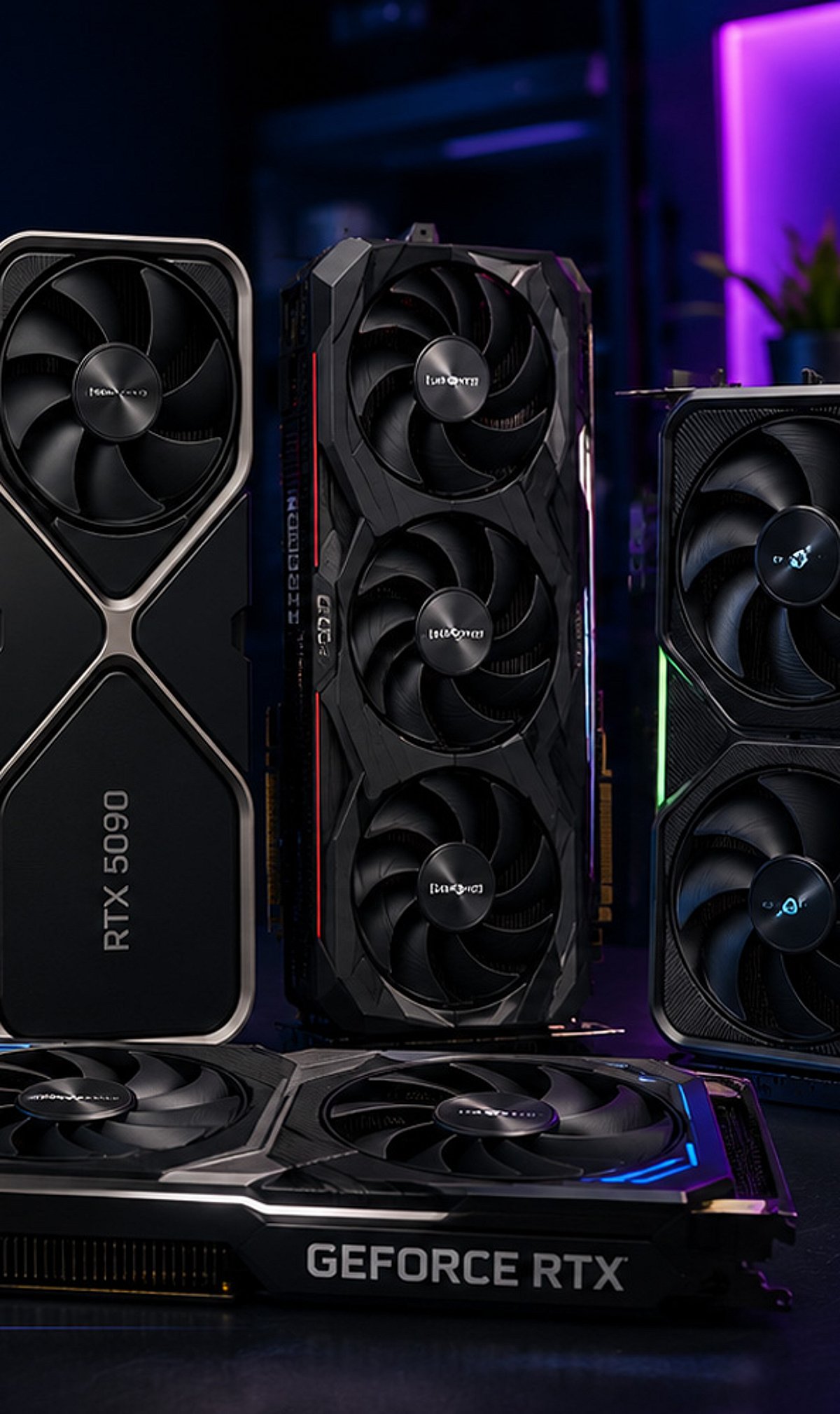
    As artificial intelligence and machine learning continue to evolve, the demand for powerful graphics processing units (GPUs) has never been higher. In 2026, several new and updated GPUs are set to dominate the market, offering exceptional performance for training, inference, and deployment of AI models. Below is a curated list of the best GPUs for AI and machine learning workloads in 2026, covering options from NVIDIA, AMD, and Intel.

    NVIDIA RTX 6090

    The NVIDIA RTX 6090 delivers exceptional AI training performance, massive VRAM, advanced Tensor Cores, and outstanding capabilities for generative AI and deep learning projects. It is the top choice for researchers and developers who need maximum compute power.

    NVIDIA RTX 6080

    The RTX 6080 offers powerful AI inference, high-speed processing, efficient energy consumption, and excellent value for researchers and AI developers building modern applications. It strikes a strong balance between performance and cost.

    NVIDIA RTX Pro 7000 Blackwell

    Built for enterprise AI, the RTX Pro 7000 Blackwell features enormous memory capacity, workstation reliability, advanced ray tracing, and the ability to handle demanding machine learning workloads worldwide.

    NVIDIA H300 Tensor Core GPU

    Optimized for large-scale AI model training, inference acceleration, enterprise deployment, and high-performance computing, the H300 Tensor Core GPU is a powerhouse for modern data centers globally.

    AMD Instinct MI400

    AMD’s Instinct MI400 provides competitive AI acceleration, strong memory bandwidth, enterprise scalability, and efficient processing for machine learning and scientific computing applications worldwide.

    AMD Radeon AI Pro R9700

    The AMD Radeon AI Pro R9700 delivers workstation-grade AI performance, creative acceleration, efficient multitasking, and optimized support for professional AI development environments and workflows.

    Intel Gaudi 4 Accelerator

    Intel’s Gaudi 4 Accelerator focuses on cost-effective AI training, scalable infrastructure, efficient networking, and enterprise deployment for advanced machine learning applications across industries.

    NVIDIA L50 GPU

    Designed for AI inference, virtualization, graphics acceleration, cloud deployment, and efficient enterprise AI workloads, the NVIDIA L50 GPU offers balanced performance and flexibility consistently.

    AMD Radeon RX 9900 XTX

    The AMD Radeon RX 9900 XTX offers strong local AI performance, gaming capabilities, content creation acceleration, and affordability for enthusiasts experimenting with machine learning projects regularly.

    NVIDIA RTX 5080

    The NVIDIA RTX 5080 balances AI performance, gaming power, efficient Tensor processing, and competitive pricing for developers, creators, and AI enthusiasts building personal workstations.

    For the latest news, exclusives, and videos, join our WhatsApp Channel.

  • Meta to Begin Production of Custom Iris AI Chip in September, Targets 14 GW Computing Capacity

    Meta to Begin Production of Custom Iris AI Chip in September, Targets 14 GW Computing Capacity

    Meta Platforms has announced plans to begin production of its in-house artificial intelligence chip, code-named Iris, in September as part of a broader strategy to expand custom hardware development and reduce reliance on external suppliers. The move, outlined in an internal company memo reviewed by Reuters, aims to boost Meta’s computing capacity to 14 gigawatts next year while supporting the growing demands of AI workloads across Facebook, Instagram, and other services.

    Iris AI Chip: A Step Forward for Meta’s MTIA Program

    The Iris chip is part of Meta’s MTIA (Meta Training and Inference Accelerator) program. According to the memo, the chip completed bug testing in just six weeks with no major issues—a notable achievement for a program that has faced earlier delays since its launch over five years ago. Broadcom is assisting with design, while Taiwan Semiconductor Manufacturing Co (TSMC) is expected to handle production. The chip will not immediately replace GPUs from Nvidia and AMD but will complement them, supporting large-scale AI training and inference workloads.

    The memo notes that adopting the latest GPUs at Meta’s scale “has been a heavy lift, and it has cost us time,” underscoring the company’s push for greater control over its AI hardware stack. Meta declined to comment on the Reuters report.

    Computing Capacity Expansion: 14 GW by Next Year

    Meta plans to deploy 7 gigawatts of computing infrastructure this year, having added 1 gigawatt in the first half and expecting to add another 5.5 gigawatts by year-end. The company then aims to double total capacity to 14 gigawatts next year. To put that in perspective, 1 gigawatt can power approximately 800,000 homes, highlighting the immense energy requirements of large-scale AI data centers.

    This expansion comes as major tech firms ramp up AI infrastructure spending. Meta expects to spend up to $145 billion on AI infrastructure this year, part of a projected $700 billion in Big Tech spending on AI technology.

    Reducing Supplier Dependence with Custom Silicon

    Meta’s custom chip initiative is designed to reduce cost pressures tied to purchasing advanced AI chips from external suppliers like Nvidia and AMD. It also enables faster hardware iteration: Meta unveiled Iris under its technical name in March, along with three other AI processors, and plans to release a new chip roughly every six months through 2027—a much faster cycle than the industry standard of one year or more.

    Mike Gualtieri, a vice president and principal analyst at Forrester, commented, “You can’t become an AI titan if you are dependent on another company for chips.” He added that hyperscalers and SpaceX are also pursuing custom chip designs as model usage becomes more price-driven.

    Long-Term Supply Deals Support Data Center Growth

    To support its data center buildout, Meta has secured multi-year supply agreements with Samsung Electronics for memory chips, Sandisk for flash storage, and Sumitomo Electric for fiber-optic equipment. These deals are critical as AI demand strains the global chip supply chain, driving up prices for memory, storage, and AI processors. Sandisk declined to comment, while Samsung and Sumitomo Electric did not respond to Reuters requests.

    Morgan Stanley analysts have described rising chip and memory prices as “chipflation,” a broader concern for the technology sector. Meanwhile, companies like Apple have raised prices on some products amid memory supply constraints.

    Meta shares initially fell after the Reuters report but later recovered, trading up 4.6% in late afternoon trading after the company announced developer access to an AI coding model that competes with tools from OpenAI and Anthropic.