Category: AI Strategy

  • Why Observability and Reliability Are Critical for Enterprise Generative AI Systems

    Why Observability and Reliability Are Critical for Enterprise Generative AI Systems

    Traditional monitoring can confirm that servers are healthy yet still leave engineers blind to why an AI agent made a wrong decision. Ayush Jain, a software engineer who has built large-scale search, machine learning, and distributed systems, explains why observability and evaluation are becoming the foundation of trustworthy AI at enterprise scale.

    An AI agent finishes its task. Every API call returns cleanly, logs are green, dashboards show no errors—yet the answer is wrong. Nobody can explain why. This gap between a system that looks healthy and one that actually performs correctly is the problem Jain has spent his career addressing. He belongs to a group of engineers building the unglamorous layer beneath enterprise AI: the pipelines, traces, and telemetry that let teams see what autonomous systems are really doing.

    “Traditional monitoring can confirm that infrastructure is healthy,” Jain says, “but it often fails to explain why an AI system made a particular decision or produced an unexpected outcome.”

    For two decades, deterministic software left clear fingerprints when it broke: error logs, exceptions, failed health checks. Agentic systems do not work that way. They reason in probabilities, select their own tools, pull in outside context, and plan across multiple steps. These agents introduce entirely new failure modes. “An agent may successfully execute API calls while still producing incorrect outcomes due to flawed reasoning, poor tool selection, or incomplete context,” Jain adds. The pipes all work, but the judgment does not. Standard monitoring stacks, built to watch the pipes, never notice the failure.

    Jain learned this lesson at scales where small problems become expensive. At Bloomberg, he contributed to search and ranking systems supporting hundreds of thousands of user interactions across more than one hundred million documents. A search result that drifts a few points in relevance does not throw an exception, but at that volume it quietly degrades the experience for thousands. To catch such drift, he helped build observability pipelines that processed millions of telemetry events per day—turning raw system exhaust into real-time signals about search quality, user behavior, performance, and anomalies. The goal was not just to confirm machines were up, but to close the distance between an idea that worked in an experiment and a system that held up in production.

    At Microsoft, Jain has focused on AI agent platform infrastructure. The central challenge: failures are now behavioral rather than infrastructural. An agent that calls every API correctly can still choose the wrong tool, reason poorly, or act on incomplete context. So the platform must watch behavior, not just uptime. The systems he worked on capture execution traces, monitor how workflows resolve, collect telemetry about agent conduct, and let teams run the same task across different configurations to see which performs best. This is the difference between knowing a process finished and knowing it finished for the right reasons.

    Jain sees the industry shifting from optimizing model performance to optimizing whole AI systems. “I believe the industry is shifting from optimizing model performance to optimizing AI systems,” he says. For years the scoreboard was the model—a higher benchmark, a better accuracy number. But a benchmark is a single moment, while an agent makes sequences of decisions across tools and steps. Accuracy and precision stop describing what matters. “Agent behavior must be evaluated continuously rather than treated as a one-time model validation exercise,” Jain emphasizes. The metrics that count look less like test scores and more like operations reports: task completion, reasoning quality, tool effectiveness, cost, safety, and alignment with business intent.

    He draws an analogy with cloud computing and Site Reliability Engineering (SRE). “Enterprise AI is entering a phase similar to what cloud computing experienced during the rise of Site Reliability Engineering,” Jain explains. Cloud services eventually stopped being judged solely on speed and started being judged on uptime and latency that everyone could see. AI will follow the same arc, with a new vocabulary of behavioral measures: hallucination rates, reasoning consistency, retrieval effectiveness, policy adherence, and workflow completion. “I believe AI Reliability Engineering will become a foundational discipline,” he says. Companies that build it into their platforms early will hold a real advantage over those that bolt it on after something breaks.

    The attention has long gone to models and clever outputs. But Jain argues the durable problem sits one layer down: in whether anyone can explain, measure, and trust what the system did. “The challenge is no longer simply generating intelligent outputs—it is creating systems that make those outputs explainable, measurable, and trustworthy at scale.” He expects the next generation of enterprise platforms to make observability and evaluation first-class architectural components rather than afterthoughts, with online evaluation, execution traces, and feedback loops catching trouble before users do.

    His conclusion is plain: “Making AI systems measurable, explainable, and reliable is essential for successful enterprise adoption at scale.” The companies treating that as the real engineering challenge are the ones whose AI will still be trusted a year after the demo. The rest are flying on green dashboards, learning the hard way that healthy is not the same as right.

  • 76% of Small Businesses Use AI, But Few Achieve Real Integration — Here’s Why

    76% of Small Businesses Use AI, But Few Achieve Real Integration — Here’s Why

    Major AI vendors are now tailoring their offerings for small businesses. Salesforce, Microsoft, Google, Zoho, HubSpot, and others have embedded artificial intelligence into the tools that smaller companies already rely on for sales, marketing, customer service, productivity, and operations. The message is clear: AI is no longer just for enterprise tech stacks. It’s designed to be usable by a five-person team without dedicated technical support.

    Small businesses are listening. According to a March 2026 survey from Goldman Sachs 10,000 Small Businesses, 76% of small businesses are now using artificial intelligence. Among those users, 93% report a positive impact, and 84% say the main benefit is increased efficiency and productivity. These numbers suggest the market has moved beyond curiosity.

    Yet only 14% of small businesses say AI is fully integrated into their core operations. That gap between adoption and integration is the real story.

    The Vendor Race Intensifies

    Competition to capture small business AI spending has heated up. Salesforce is pushing agentic AI into customer relationship workflows. Microsoft embeds Copilot across its productivity suite. Google adds Gemini capabilities to Workspace. Zoho continues to build Zia into sales, analytics, and CX tools. HubSpot bundles its AI under Breeze for marketing, sales, and service teams.

    The pitch from each vendor sounds similar: AI is ready for small business. But being ready to buy is not the same as being ready to use. The data shows that distinction matters.

    Adoption Is High, Integration Is Low

    The Goldman Sachs survey reveals a nuanced picture. On the positive side, 93% of small businesses using AI say it has had a positive impact. 67% expect AI to increase revenue. And 87% say AI augments their workforce rather than replacing employees, challenging the narrative that small business adoption is mainly about cutting headcount.

    But friction remains: 50% of small businesses using AI cite data privacy and security as concerns. 49% say they lack the technical expertise to use AI effectively. 48% report difficulty choosing the right tools in a crowded market. More options don’t automatically lead to better decisions. For an owner trying to pick the best AI tool, a cluttered market often causes hesitation, overlap, and wasted subscriptions.

    The Core Problem: Process, Not Tools

    Small businesses adopt technology differently than large enterprises. There is usually no implementation team, no chief technology officer evaluating roadmaps, and no internal change-management function. An owner or small team signs up for a tool, tests it on a few tasks, and either keeps it or moves on.

    That works for straightforward software like invoicing or scheduling. AI is different. AI tools produce variable outputs. They require context, instructions, examples, data, and review. They only deliver consistent business value when embedded into repeatable workflows, not used for one-off tasks.

    That explains why adoption can look high while integration stays low. A business owner may ask ChatGPT to draft an email. A marketing manager may use AI to brainstorm social posts. A support team may paste complaints into a chatbot for suggested replies. Those tasks save time, but they don’t change how the business operates. Operational value emerges when AI is connected to real processes—triaging inquiries, summarizing sales calls, drafting proposals from approved inputs, routing tickets.

    Without that process layer, AI remains scattered. Tools are present; workflows are missing.

    What Full Integration Looks Like

    Small businesses that fully integrate AI into core operations treat it as an operating-system change, not a software trial. They typically start with one high-impact process, aiming for a specific, measurable goal. They build systems around the tool: defined inputs, approved prompts, review standards, handoff points, quality checks. The tool is only one piece; the business process makes the output reliable.

    Some smaller companies also seek outside support before buying more software. Working with an AI consultant for small businesses can help identify where AI fits, which workflows to redesign first, and which tools are unnecessary. For companies without internal technical resources, that guidance can determine whether AI becomes another subscription or a competitive advantage.

    The differentiator isn’t whether a business uses AI—it’s whether AI is wired into how the business actually operates.

    Training Becomes the Bottleneck

    The Goldman Sachs survey found that 73% of small businesses say they would benefit from additional training and resources to implement and evaluate AI. That number reflects a market that has bought into the idea of AI but still lacks support to use it well.

    Current learning options are uneven. Vendor documentation explains product features, not business process design. Tutorials show how a tool works without showing where it fits inside a real operation. Courses explain AI concepts without addressing the practical challenge of applying them inside a small accounting firm, e‑commerce company, agency, clinic, contractor business, or local service provider.

    Small businesses need implementation training, not just tool training. They need to know which processes to automate, which data to use (and not use), how to review AI output, how to protect customer information, and how to measure value. The survey also found that 85% of small businesses support the AI for Main Street Act, which would direct the Small Business Administration and Small Business Development Centers to provide AI training and outreach. That support signals that owners are not rejecting AI—they’re asking for practical help.

    Cheaper Tools Won’t Close the Integration Gap

    Vendor competition will continue to make AI tools more accessible. That’s good news for small businesses, but cheaper access won’t solve the core problem. A company that can’t turn a $50/month AI subscription into a functional workflow is unlikely to do better simply because another tool costs $20. The constraint isn’t price—it’s process design, technical confidence, governance, data readiness, and follow-through.

    The next phase of small business AI adoption will not be defined by who signs up for the most tools. It will be defined by who turns AI into repeatable operating capacity. That shift—from tool adoption to workflow integration—is the one many small businesses still need to make. Until then, AI vendors may keep winning sign-ups while small businesses struggle to turn those sign-ups into measurable value.

    Source: Goldman Sachs 10,000 Small Businesses Survey, March 2026. Additional reporting by Analytics Insight.


    Related Stories:

    • JPMorgan Follows Goldman Sachs in Limiting Anthropic AI Use Across Hong Kong Offices
    • Why Solana May Be Ready for Massive Growth in 2026
    • Why Did Goldman Sachs Exit $154M Worth of XRP ETFs?
    • Goldman Sachs Leads SpaceX IPO Underwriters Ahead of NASDAQ Listing
  • 7 AI Trends Reshaping Enterprise Strategy in 2026: From Pilots to Full-Scale Operations

    7 AI Trends Reshaping Enterprise Strategy in 2026: From Pilots to Full-Scale Operations

    Artificial Intelligence is entering a phase of enterprise adoption. Over the past few years, organizations have invested heavily in AI pilots, generative AI tools, and automation initiatives to explore how emerging technologies can improve business performance. While many of these projects demonstrated results, relatively few have delivered transformation at scale. As a result, the conversation surrounding AI is rapidly evolving from experimentation toward operationalization.

    According to McKinsey’s latest State of AI report, more than 70% of organizations have adopted AI in at least one business function. Gartner predicts that over 80% of enterprises will have used generative AI APIs or deployed generative AI-enabled applications by 2026. These figures indicate that AI adoption is no longer limited to innovators and early adopters. It is rapidly becoming a priority across industries.

    However, adoption alone does not guarantee business value. Many organizations continue to struggle with deployments, disconnected data environments, and unclear transformation strategies. The challenge facing enterprise leaders in 2026 is no longer whether AI works. The challenge is how to scale AI across the organization while maintaining governance, security, and measurable outcomes.

    The organizations that succeed in this phase of AI transformation will not necessarily be those with access to the most advanced models. Instead, they will be those aligning AI capabilities with business objectives, operational processes, and long-term transformation strategies.

    The Economic Opportunity Behind Enterprise AI

    The scale of AI’s potential is one of the primary reasons enterprises continue increasing investments despite ongoing implementation challenges. According to PwC’s Global AI Study, AI could contribute up to $15.7 trillion to the economy by 2030, making it one of the most transformative technologies of the modern era.

    What makes AI particularly powerful is its ability to generate value across multiple business functions simultaneously. Organizations are increasingly using AI to:

    • Improve operational efficiency and productivity
    • Enhance customer experiences through personalization
    • Accelerate product and service innovation
    • Strengthen decision-making capabilities
    • Identify new revenue opportunities

    Unlike previous waves of enterprise technology, AI is not confined to a single department. It has the potential to influence every aspect of business operations. This is why leading enterprises are shifting their focus from use cases toward enterprise-wide AI strategies.

    Trend #1: Enterprise AI Is Moving Beyond Pilot Projects

    The first phase of enterprise AI adoption was characterized by experimentation. Organizations launched customer service chatbots, automated document processing systems, predictive analytics platforms, and internal productivity assistants to explore AI’s capabilities. These initiatives often generated positive results but remained isolated within individual departments.

    Typical characteristics of AI initiatives between 2023 and 2024 included department-level deployments, limited integration with business operations, experimentation-focused objectives, unclear ROI measurement frameworks, and minimal governance oversight. As organizations move into 2026, priorities are changing significantly. Enterprise AI programs are increasingly characterized by organization-wide adoption strategies, cross-functional integration, outcome-driven implementation plans, governance and accountability frameworks, and executive-level sponsorship.

    This shift mirrors the evolution of cloud computing. Early cloud initiatives focused primarily on infrastructure optimization. Today, cloud serves as the foundation for digital business models. AI is following a similar trajectory. Business leaders are no longer asking whether AI can improve productivity. Instead, they are asking how AI can reshape operations, accelerate innovation, and create sustainable competitive advantages.

    Trend #2: AI Agents Will Become Operational Participants

    One of the most significant developments expected to shape enterprise transformation in 2026 is the emergence of AI agents. While most organizations are already familiar with AI copilots that assist employees with writing, coding, research, and knowledge retrieval, AI agents represent a more advanced stage of intelligent automation. Unlike copilots, AI agents are capable of performing tasks autonomously and coordinating activities across multiple systems.

    A procurement-focused AI agent, for example, may be able to monitor inventory levels in real time, analyze supplier performance data, forecast purchasing requirements, generate procurement recommendations, and initiate approval workflows automatically. Similarly, customer service agents can retrieve information from CRM systems, access knowledge repositories, respond to routine customer inquiries, and escalate complex issues when human intervention becomes necessary.

    According to Deloitte’s State of Generative AI in the Enterprise report, organizations are increasingly prioritizing AI initiatives that generate measurable operational outcomes rather than simply improving individual productivity. This trend reflects a broader shift in enterprise expectations: AI is no longer viewed solely as a productivity tool but as an operational capability capable of transforming how business processes are executed.

    Trend #3: AI Infrastructure Will Matter More Than AI Models

    Much of the public discussion surrounding AI has focused on models. Organizations frequently compare proprietary and open-source models, evaluate benchmark performance, and debate the advantages of different architectures. However, many enterprises are discovering that model selection is only a small part of the challenge. In practice, infrastructure is becoming more important than the model itself.

    Modern enterprise AI environments typically require data pipelines and integration layers, vector databases and knowledge repositories, governance and compliance frameworks, security and access management systems, model monitoring and observability tools, and MLOps and deployment pipelines. Without these foundational capabilities, even the most advanced AI models struggle to deliver sustainable business value.

    Many organizations encounter challenges when attempting to scale successful pilot projects. Data often resides across multiple disconnected systems, legacy applications create integration barriers, and security requirements introduce deployment constraints. These issues cannot be solved simply by choosing a different model. This reality explains why AI transformation is increasingly viewed as an architecture challenge rather than a model challenge. The organizations that invest in scalable AI infrastructure today will be better positioned to deploy new capabilities, integrate future technologies, and maintain long-term operational resilience.

    Trend #4: Decision Intelligence Will Replace Traditional Analytics

    For decades, business intelligence platforms have helped organizations understand historical performance. These systems provide visibility into trends, metrics, and operational outcomes, allowing leaders to evaluate what happened in the past. However, modern enterprises increasingly require systems that go beyond reporting.

    Decision intelligence is emerging as the next evolution of enterprise analytics by combining artificial intelligence, predictive modeling, business rules, and automation to support real-time decision-making. Rather than answering “What happened?”, decision intelligence focuses on “What is likely to happen next?” and “What should we do about it?”

    This capability is already creating value across multiple industries: retail (optimizing inventory allocation and pricing strategies), manufacturing (predicting equipment failures before they occur), financial services (identifying emerging risks and compliance concerns), logistics (dynamically adjusting operations based on demand patterns), and healthcare (improving resource planning and patient scheduling).

    A global logistics provider, for instance, handles thousands of shipments every day. Traditional analytics can only tell you that a delay happened after it occurred. Decision intelligence systems can predict disruptions before they happen, suggest ways to mitigate them, and automatically switch to a backup plan. This change helps organizations make decisions proactively rather than reacting to events that have already occurred.

    Trend #5: AI Governance Will Become a Board-Level Priority

    As AI is used more extensively in business functions, governance is becoming essential for long-term success. Early AI projects were often managed by innovation teams or technical departments. Now that AI is being used on a larger scale, executive leaders and corporate boards need to be involved. The reason is simple: AI is no longer for testing. It affects how customers interact with companies, financial decisions, compliance processes, and daily operations. As AI’s impact grows, so do the risks related to privacy, security, transparency, and accountability.

    According to IBM’s Global AI Adoption Index, trust is a barrier to using AI in businesses. Companies are realizing that successful AI implementation requires more than technical performance; it also needs confidence that AI systems work responsibly and transparently. Forward-looking companies are investing in governance frameworks that include ensuring AI system transparency, accountability, risk management, trust-building, policy establishment, oversight committees, and ethics guidelines.

    What makes governance particularly important in 2026 is the growing complexity of AI ecosystems. As organizations deploy multiple models, integrate external data sources, and introduce autonomous AI agents, maintaining visibility and control becomes increasingly challenging. Rather than viewing governance as a barrier to innovation, leading organizations treat it as a foundation for sustainable AI adoption.

    Trend #6: Industry-Specific AI Solutions Will Outperform Generic Deployments

    As companies become more adept at using AI, they are moving away from one-size-fits-all solutions and toward AI tailored to their specific industry. While the underlying AI technology remains important, the most effective solutions are those designed for a particular sector.

    Financial institutions focus heavily on risk analysis, fraud detection, regulatory compliance automation, and customer intelligence. Manufacturers prioritize predictive maintenance, quality assurance automation, and supply chain optimization. Healthcare organizations invest in clinical decision support systems, patient engagement platforms, and medical data analysis tools. The same pattern is emerging across retail, logistics, insurance, telecommunications, and energy.

    This shift reflects an important reality: AI generates the strongest business outcomes when it is closely aligned with operational objectives and industry-specific workflows. As a result, organizations are increasingly seeking partners capable of combining technical expertise with deep industry understanding.

    Trend #7: The Convergence of AI and Blockchain

    Although AI and blockchain are often discussed as separate technologies, their convergence is creating new opportunities for enterprise innovation. AI excels at generating intelligence from data; blockchain excels at establishing trust, transparency, and immutability.

    Together, these technologies can support a range of high-value enterprise applications, including supply chain transparency and traceability, decentralized digital identity systems, automated compliance reporting, secure data-sharing ecosystems, and smart contract optimization.

    Consider a global supply chain network involving manufacturers, logistics providers, distributors, and retailers. AI can analyze operational data to identify inefficiencies, forecast demand, and optimize inventory management. Blockchain can simultaneously provide an immutable record of transactions and product movements across the network. The combination creates a system that is both intelligent and trustworthy.

    As enterprises become increasingly dependent on automated decision-making, trust will become a critical competitive differentiator. This is one reason why many organizations are beginning to explore how AI and blockchain can work together as complementary technologies rather than independent initiatives.

    Why Many AI Initiatives Still Fail

    Despite significant investment and technological progress, many companies still struggle to make AI work across the entire organization. McKinsey research reveals a large gap between experimenting with AI and achieving true proficiency. One major reason is poor data quality. AI systems are only as good as the data they receive, and companies often underestimate the work required to clean and organize data before AI can deliver valuable insights.

    Another problem is the misconception that technology alone is the answer. Companies that start with AI as the solution rather than understanding the problem they need to solve often fail to demonstrate tangible results. Common barriers include disorganized data, unclear objectives, lack of executive support, organizational resistance, disconnected technology stacks, and insufficient governance.

    Perhaps the most overlooked factor is managing the human side of change. AI affects people as much as technology. Employees must learn new workflows, managers must make decisions differently, and companies must adapt their operating models. Without proper change management, even technically successful AI initiatives may not be adopted by the organization.

    Mini Case Study: From Forecasting to Autonomous Decision-Making

    A compelling example of AI evolution comes from the logistics industry. A few years ago, logistics companies used AI to predict delivery times. These systems helped with planning but were disconnected, requiring humans to interpret results and take action. Today, modern logistics systems can do much more: predict delivery times in real time, find optimal routes, handle problems automatically, track inventory, and allocate resources efficiently.

    Instead of merely warning about potential issues, these systems can suggest solutions and initiate processes autonomously. For instance, if a storm threatens a major shipping route, a traditional system would alert managers after delays begin. An AI-powered system, however, can predict the problem, recommend an alternative route, estimate cost implications, and activate a contingency plan before any disruption occurs.

    This example illustrates a broader trend across industries: the future of AI is not just about generating more information but about enabling better decisions and faster action.

    Conclusion: The Path to Enterprise AI Maturity

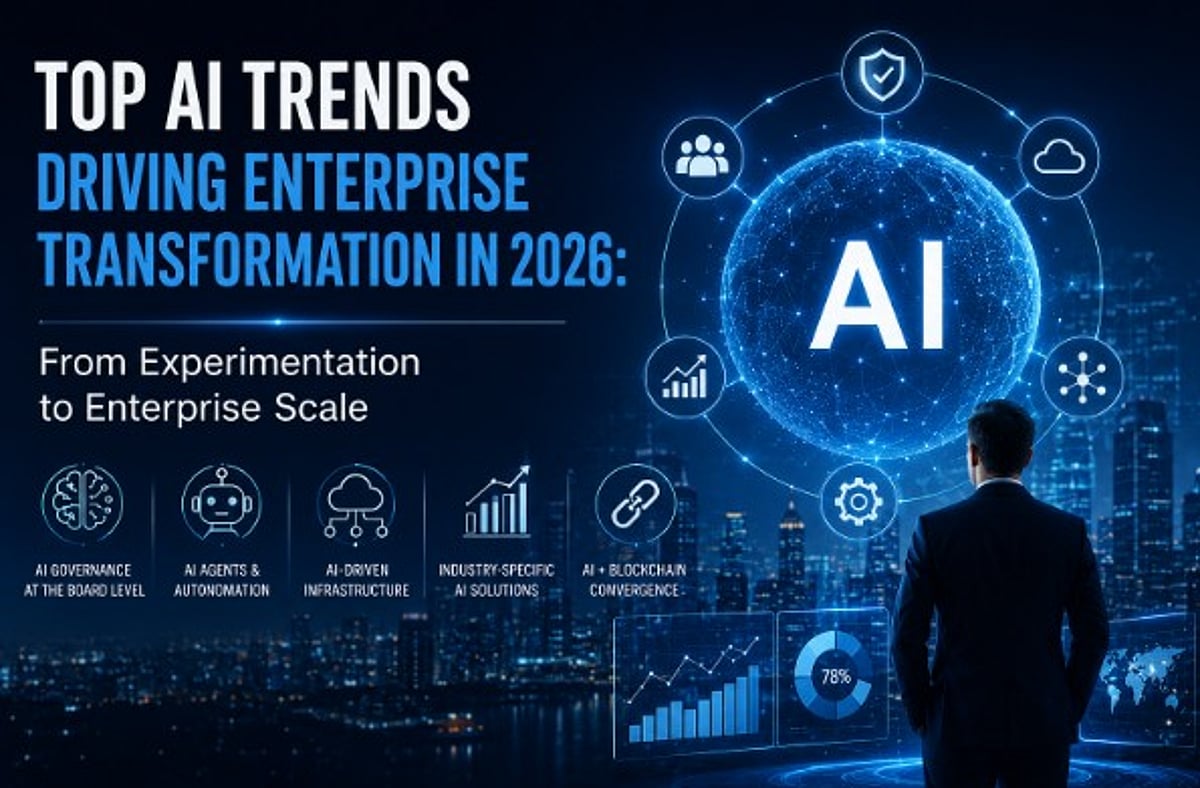
    The evolution of enterprise AI from 2024 to 2026 represents a fundamental shift in priorities. Organizations are moving away from isolated experiments and toward integrated, scalable, and governed AI systems. The seven trends outlined above—moving beyond pilots, adopting AI agents, prioritizing infrastructure, embracing decision intelligence, elevating governance, pursuing industry-specific solutions, and converging with blockchain—provide a roadmap for enterprises seeking to capture the full value of AI.

    The organizations that will thrive in this new era are those that treat AI not as a technology project but as a strategic transformation initiative. By aligning AI capabilities with business goals, investing in foundational infrastructure, and fostering a culture of responsible innovation, enterprises can turn AI from a promising experiment into a powerful engine for growth.


  • Top 7 AI Search Analytics Platforms to Boost Ecommerce Growth in 2026

    Top 7 AI Search Analytics Platforms to Boost Ecommerce Growth in 2026

    AI-powered search is changing the way people shop online. Many consumers now ask ChatGPT, Gemini, Claude, or Perplexity for product recommendations instead of typing keywords into Google. This shift highlights that ecommerce businesses need to ensure their products appear in AI-generated answers and on search engine results pages. AI search analytics platforms help brands measure visibility, track mentions, monitor competitors, and identify opportunities to improve their presence in generative search.

    Powerful Platforms for Smarter AI Search Performance Tracking

    Here are seven platforms worth considering:

    Profound

    Profound is uniquely designed for the AI search age. It tracks how frequently your brand is mentioned in answers created by AI models such as ChatGPT, Gemini, Claude, and Perplexity, as well as mentions and citations. It offers in-depth dashboarding to help you understand which content AI references most. For big retailers and enterprise companies, it gives insight into building presence in AI-based search.

    Semrush AI Toolkit

    Semrush has developed features to track brand performance in AI search queries. It is a great option for e-commerce websites already using Semrush, since everything from classic SEO to AI performance can be tracked in the same platform.

    Peec AI

    Peec AI focuses solely on measuring a brand’s visibility via AI search engines. It monitors thousands of prompts to help you understand where your brand appears, who your competitors are, and which of your products are gaining traction. This data can be used for strategy planning when dealing with large product catalogs.

    AthenaHQ

    Through AthenaHQ, AI-powered search results can become useful suggestions for improvement. Rather than offering visibility scores alone, it helps you spot gaps in content and competition performance, and identify ways to boost your rankings through AI-powered answers. This information can be used by ecommerce specialists to optimize product pages, buying guides, and category content recommended by AI assistants.

    Frase AI Visibility

    AI search analytics and content optimization are combined in Frase, making it an effective solution for companies that rely on organic traffic. The program can analyze brand mentions in AI tools and recommend optimization techniques for existing content. Product descriptions, comparison pages, and blog articles can be optimized without switching between different applications.

    SE Ranking AI Visibility Tracker

    SE Ranking now provides AI visibility tracking on its popular SEO tool. It tracks the brand’s performance on ChatGPT, Google AI mode, Gemini, and Perplexity and also offers competitor analysis and visibility scores. It is equipped with a user-friendly interface and affordable pricing, which makes it suitable for small and medium-scale ecommerce enterprises trying to measure their AI visibility without using expensive software.

    BrightEdge

    BrightEdge is a reliable enterprise software for SEO, and its AI search feature is based on this legacy. It enables businesses to monitor the impact of AI recommendations on their traffic, product discovery, and customer acquisition. With traditional search analysis coupled with AI visibility, BrightEdge provides businesses with an entire customer journey on the web.

    Final Thoughts

    AI-powered search is rapidly emerging as one of the crucial elements of the process of purchasing goods online. In today’s world, customers increasingly use AI-powered assistants to compare items, discover brands, and even make purchases. Thus, measuring visibility within AI-generated search results is equally important to checking Google rankings. Services such as Profound, Semrush AI Toolkit, Peec AI, AthenaHQ, Frase, SE Ranking, and BrightEdge help ecommerce stores gather all the necessary information to maintain visibility and competitiveness.

    FAQs

    1. What are AI search analytics platforms?

    AI search analytics platforms help businesses track how often their brands, products, and content appear in AI-generated responses from tools like ChatGPT, Gemini, Claude, and Perplexity, providing insights beyond traditional SEO metrics.

    2. Why are AI search analytics important for ecommerce?

    As shoppers increasingly rely on AI assistants for product recommendations, these platforms help ecommerce businesses measure visibility, understand competitor performance, optimize content, and improve product discovery across AI-powered search experiences.

    3. Which businesses benefit most from AI search analytics tools?

    Online retailers, marketplaces, D2C brands, agencies, and enterprise ecommerce businesses benefit the most by tracking AI mentions, monitoring brand visibility, and refining content strategies for better customer reach and engagement.

    4. Can AI search analytics replace traditional SEO tools?

    No. AI search analytics complement traditional SEO rather than replacing it. Businesses should use both together to monitor search rankings, AI visibility, website performance, and overall digital marketing effectiveness.

    5. What features should you look for in an AI search analytics platform?

    Look for AI visibility tracking, citation monitoring, competitor analysis, prompt tracking, content recommendations, reporting dashboards, multi-platform support, and integrations with existing SEO and analytics tools for comprehensive performance insights.

  • Top Employers for Computer Vision Engineers in 2026: NVIDIA, Tesla, OpenAI, and More

    Top Employers for Computer Vision Engineers in 2026: NVIDIA, Tesla, OpenAI, and More

    Computer vision is one of the fastest-growing fields within artificial intelligence, enabling machines to interpret and analyze visual data like humans. From autonomous vehicles and robotics to medical imaging and security systems, the technology is transforming industries. As demand surges, leading companies are competing for skilled computer vision engineers. Here are the best employers in 2026.

    NVIDIA

    NVIDIA remains a powerhouse for computer vision engineers, thanks to its dominance in AI hardware and software. Its recent RTX Spark AI chip, designed for local AI processing, has driven demand for engineers skilled in image recognition, model optimization, and edge computing. The company provides access to cutting-edge tools for large-scale AI development.

    Google DeepMind

    DeepMind continues to push boundaries in AI research, focusing on advanced machine learning, image understanding, and multimodal systems like Gemini. Engineers work on projects that define the future of visual reasoning, benefiting from a research-driven culture and vast computing infrastructure.

    Tesla

    Tesla offers one of the most exciting opportunities for real-world computer vision applications. Its camera-based self-driving technology relies on fast image processing, object recognition, and multi-camera analysis. Engineers solve massive-scale challenges while working on systems deployed in millions of vehicles.

    Meta

    Meta has intensified its AI investments, particularly in augmented reality, smart glasses, and visual AI. Engineers work on facial recognition, video generation, scene understanding, and wearable devices. Its aggressive AI expansion makes Meta a top career destination.

    OpenAI

    OpenAI has expanded beyond language models into multimodal AI, including image generation, robotics, and visual reasoning. Demand for computer vision engineers has grown as the company pursues advanced general intelligence. Employees gain access to cutting-edge research and world-class infrastructure.

    Scale AI

    Scale AI is a fast-growing infrastructure company specializing in data preparation for autonomous vehicles and enterprise AI. Computer vision engineers work with synthetic data, automated labeling, and large visual datasets. As multimodal AI adoption rises, Scale AI offers strong long-term prospects.

    Microsoft

    Microsoft provides a stable, powerful environment for computer vision engineers through Azure and enterprise AI solutions. Key areas include optical character recognition, healthcare imaging, industrial automation, and cloud-based vision APIs. The company balances research with product development.

    DeepSeek

    DeepSeek has emerged as a surprise success, securing $7.4 billion in funding and planning to double its workforce. It focuses on advanced AI and general intelligence systems, creating major demand for engineers. Its rapid growth makes it an attractive option for computer vision professionals.

    Industry Outlook for 2026

    The global computer vision market is projected to grow over 35% annually through 2030, driven by robotics, autonomous vehicles, healthcare, surveillance, industrial automation, and generative AI. Key skills include PyTorch, TensorFlow, Vision Transformers, YOLO, edge AI, CUDA optimization, and distributed training.

    Final Thoughts

    The job market has shifted dramatically. While traditional tech companies once dominated, now AI startups, robotics firms, and autonomous vehicle manufacturers offer outstanding opportunities. NVIDIA, Google DeepMind, Tesla, Meta, OpenAI, Microsoft, Scale AI, and DeepSeek provide exceptional career growth for computer vision engineers working on technologies that will shape our future.

    Frequently Asked Questions

    Which company is best for computer vision engineers in 2026?

    NVIDIA currently stands out with its strong AI ecosystem and advanced computing infrastructure.

    Is computer vision a good career in 2026?

    Yes, demand continues to rise rapidly across robotics, healthcare, autonomous vehicles, and AI.

    Which skills matter most for computer vision jobs?

    PyTorch, TensorFlow, Vision Transformers, YOLO models, CUDA optimization, and edge AI deployment are highly valuable.

    Are startups good for computer vision careers?

    Yes, fast-growing AI startups like DeepSeek and Scale AI offer excellent growth opportunities and cutting-edge projects.

    What industries hire computer vision engineers the most?

    Autonomous vehicles, robotics, healthcare technology, surveillance systems, industrial automation, and generative AI lead hiring demand.

  • OpenAI Dominates in Users, but Anthropic Surpasses in Enterprise Revenue Growth, IDC Data Shows

    OpenAI Dominates in Users, but Anthropic Surpasses in Enterprise Revenue Growth, IDC Data Shows

    OpenAI’s ChatGPT remains the world’s most widely used artificial intelligence chatbot by user numbers. However, new estimates from IDC suggest Anthropic may generate more annual revenue despite serving a much smaller audience. The findings highlight contrasting business models within the fast-growing AI industry.

    ChatGPT Maintains Largest Global User Base

    IDC Research Vice President Arnal Dayaratna estimated that ChatGPT has more than 900 million weekly active users worldwide, placing OpenAI well ahead of other consumer AI chatbot providers. IDC also estimated that Google Gemini serves between 200 million and 250 million weekly active users, while Anthropic’s Claude has between 40 million and 60 million weekly active users. These figures show that OpenAI remains the largest consumer-facing AI platform by a wide margin.

    Dayaratna noted that OpenAI has built multiple revenue streams across consumer subscriptions, workplace seats, APIs, and platform services. IDC estimates OpenAI generates between $30 billion and $40 billion in annualized revenue, with consumer subscriptions accounting for about $10 billion to $13 billion, and API and platform services contributing as much as $20 billion. Reports published earlier this month also stated that OpenAI generated $5.7 billion in revenue during the first quarter of 2026 while spending about $3.7 billion, with a net loss reaching approximately $39 billion in 2025.

    Anthropic Builds Revenue Through Enterprise Customers

    Although Anthropic serves far fewer users, IDC estimates its annualized revenue stands between $40 billion and $50 billion. Consumer subscriptions contribute less than $2 billion, according to the research firm. Most of Anthropic’s revenue comes from enterprise subscriptions, Claude Code seats, API usage, and other developer-focused workloads. This business mix differs significantly from OpenAI’s larger consumer-focused platform.

    Dayaratna commented, “Usage scale tells a different story from revenue mix,” adding that Claude’s business is more focused on enterprise and developer customers than consumer adoption. Anthropic also referenced its May 2026 company blog, which announced its annualized revenue run rate exceeded $47 billion, supporting IDC’s broader revenue estimates.

    Research Firms Report Different Strengths for Both Companies

    Counterpoint Research reported similar findings in its April 2026 analysis, estimating Anthropic captured 31.4% of global large language model revenue during the first quarter of 2026, with OpenAI following at an estimated 29% market share. Counterpoint also estimated Anthropic generated average monthly revenue of $33.30 per user, compared to OpenAI’s $2.20 per user. During the same period, Counterpoint estimated OpenAI had approximately 900 million monthly active users versus about 65 million for Anthropic.

    Both OpenAI and Anthropic have reportedly started confidential preparations for possible future public offerings. In May, Anthropic completed a $65 billion Series H funding round that valued the company at $965 billion. The latest estimates present two different measures of success in the AI industry: OpenAI continues to lead by user reach, while IDC estimates suggest Anthropic currently earns more revenue through enterprise customers and developer services. As Dayaratna summarized, “Usage scale tells a different story from revenue mix,” reflecting the divergent strategies followed by both companies.

  • Avoid These 10 Claude AI Mistakes to Save Tokens and Improve Response Quality

    Avoid These 10 Claude AI Mistakes to Save Tokens and Improve Response Quality

    Claude AI is one of the most powerful tools for writing, coding, research, and business tasks in 2026. However, many users fall into common traps that waste tokens, inflate costs, and degrade output quality. This article outlines the top mistakes—and how to fix them—so you can get sharper answers while spending fewer tokens.

    1. Using Vague Prompts

    Unclear instructions force Claude to guess your intent, often generating long, unfocused responses. Instead of asking ‘Write about artificial intelligence,’ provide specifics: ‘Write a 700-word guide on how AI helps customer support teams in software companies.’ Well-defined prompts reduce token waste and improve relevance.

    2. Giving Unnecessary Context

    Uploading entire documents when only a small section matters forces Claude to process irrelevant text. Always isolate the part you need. For example, instead of pasting a 20,000-word report to summarize one paragraph, extract only that paragraph.

    3. Asking Multiple Things at Once

    Combining writing, coding, research, and analysis into a single prompt splits the model’s attention and lowers quality on each item. Break big requests into one focused task per conversation.

    4. Repeating Instructions in Every Message

    Constantly restating style rules (e.g., ‘Use professional tone, short sentences, markdown’) in each prompt wastes tokens. Claude remembers context within a conversation—give style instructions once and trust the model.

    5. Starting Large Tasks Without Planning

    Jumping straight into a 500-line code request often leads to flawed architectures and expensive rewrites. Begin with a plan: outline structure, review logic, then execute. Anthropic’s documentation strongly recommends this approach.

    6. Overusing the Regenerate Button

    Hitting Regenerate forces a full rewrite from scratch, multiplying token costs. Instead, ask for targeted edits: ‘Improve the introduction’ or ‘Shorten paragraph three.’

    7. Giving Complex Reasoning Tasks

    Tasks like deep financial forecasting or multi-step debugging force long reasoning chains that decrease accuracy. Break complex reasoning into smaller, sequential steps to maintain quality and save tokens.

    8. Ignoring Token Limits and Usage Patterns

    Many users unexpectedly exhaust their quotas because they don’t monitor token consumption. Check Anthropic’s updated limits (expanded in May 2026) and track your usage to avoid sudden stoppages.

    Why Token Efficiency Matters

    In 2026, AI success hinges on efficiency. Bloated prompts and endless regenerations drain budgets and degrade output. Mastering clean prompting keeps costs low and answers high-quality.

    Frequently Asked Questions

    1. Why does Claude AI consume too many tokens sometimes? Vague prompts, dumping massive files for small tasks, and repeating instructions in every message force Claude to process unnecessary data, burning through context limits.

    2. Does more token usage always improve response quality? No. Bloated prompts dilute your intent, leading to rambling outputs. Clear, concise prompts yield sharper answers.

    3. Why should large tasks be divided into smaller steps? Breaking down workflows lets Claude focus on one micro-step at a time, boosting accuracy and minimizing reasoning bugs.

    4. Is using regenerate multiple times a bad practice? Yes. Each Regenerate forces a full rewrite, multiplying costs. Targeted edits are far more efficient.

    5. Why is token efficiency important in 2026? AI management has shifted to strict budget control. Maximizing token efficiency ensures premium results without hitting usage caps or inflating costs.

  • The Hardest IT Roles to Fill in 2026: AI, Cybersecurity, and the Rise of Hybrid Professionals

    The Hardest IT Roles to Fill in 2026: AI, Cybersecurity, and the Rise of Hybrid Professionals

    The IT hiring landscape has shifted dramatically. Open requisitions are no longer for generalists or entry-level specialists. Instead, positions that remain unfilled for six to nine months demand a rare combination: an engineer who writes strong code, navigates AI platforms, assesses risk exposure, and aligns technical decisions with business priorities. Three skills, one person, a small pool. This is the core talent challenge organizations face as they head into the second half of this decade.

    The 2026 State of the CIO survey from Foundry confirms the shift. AI and machine learning, along with cybersecurity, now share the top position as the hardest IT skills to hire for, with data science and analytics ranked third. What stands out is not the ranking itself but the nature of the shortage. Hiring teams are no longer struggling to find specialists—they are struggling to find professionals who operate across disciplines simultaneously, at speed, and with sound judgment under real constraints.

    AI and Machine Learning: From Prompt Engineers to Agentic Builders

    The role of the AI professional has evolved significantly over the past two years. Prompt engineering as a standalone function has largely faded. Organizations today need AI product engineers who can deploy agents, build testing frameworks, manage cost-latency-quality trade-offs, and govern model risk. They also need professionals filling governance and red-team roles that did not appear on org charts three years ago. The center of gravity has moved from people who build models to people who wield them. That is a very different resume, and the candidate pool remains thin.

    Approximately 50% of US employers report difficulty finding qualified AI candidates, and Gartner research consistently identifies this shortage as the single largest roadblock for data and analytics teams. The challenge compounds with the pace of change: skills acquired at one organization may not transfer to another, and knowledge from six months ago can already be obsolete.

    Cybersecurity: A Skills Crisis, Not a Headcount Problem

    Six in ten organizations now report that skills gaps outweigh staffing shortages as their primary workforce challenge—a 20-point shift from just a year ago. The consequences are measurable: 27% of cybersecurity leaders report breaches directly tied to capability gaps, while 61% say team stress has increased over the past two years. The shortage is concentrated at the senior architect level. Professionals who can make sound security trade-offs under real constraints, rather than just read a dashboard, are exceptionally difficult to find. Attack surfaces have expanded with every SaaS addition, API, and AI agent deployed. Security teams manage a faster-moving threat landscape with the same AI tools that adversaries now use to build and revise attacks in under an hour.

    74% of organizations say AI is already impacting the size of their cybersecurity teams and the roles within them. Entry-level SOC analyst positions—the traditional training ground for future security architects—are among the most likely to be displaced as AI reshapes security operations.

    Risk Management and Automation: The Rising Tier

    Both risk management and business/IT automation have climbed into the top five hardest-to-fill roles for the first time. The reason is the same for both: AI has expanded the surface area of risk and the complexity of process automation simultaneously. GRC functions built for SOX and PCI compliance are not well positioned to address model risk, prompt injection, or third-party AI exposure. Organizations are now hiring for a discipline that is roughly five years old against a job description that is twenty years old. That gap defines the problem.

    On the automation side, there is no need for additional robotic process automation developers—that work has become a commodity. What organizations need are professionals who can assess a workflow and decide what to automate, what to retire, and what to redesign entirely. That combination—business analyst, process engineer, and technologist in a single professional—is rare and commands a significant salary premium.

    Software Engineering, DevOps, and the Midlevel Squeeze

    AI coding tools have not reduced demand for software engineers; they have changed its shape. A strong engineer with solid AI tooling now produces roughly what three engineers accomplished just a few years ago. Hiring is bifurcating toward experienced leaders who bring judgment and ownership, and toward junior talent that is AI-native from day one. The professionals in the middle—those whose primary value was execution rather than architecture—are finding demand for their profile contracting. For DevOps specifically, platform engineering is emerging as the growth function. The generic DevOps title is being absorbed into platform or site reliability engineering, with consolidation likely to continue over the next two to three years.

    Why This Matters

    The talent shortage in these roles is not resolving through traditional hiring. The professionals who can bridge AI fluency with domain expertise, risk literacy, and system-level thinking are naming their price, and organizations competing for the same small candidate pool are losing ground. The more productive response, as several technology leaders have confirmed, is internal upskilling. Strong engineers trained deliberately on AI platforms and governance frameworks have outperformed externally hired AI specialists in productivity and retention at multiple large enterprises.

    The organizations closing this gap are not doing so primarily through external hiring. They are investing in internal capability development, redesigning job descriptions around skills rather than credentials, and building structured pathways for engineers to grow into hybrid roles. The gap between organizations that act with that kind of intention now and those that continue chasing the same external candidates will only widen from here.

  • China’s GLM-5.2 AI Model Gains Traction as US Competitors Face Export Restrictions

    China’s GLM-5.2 AI Model Gains Traction as US Competitors Face Export Restrictions

    China’s Zhipu AI has drawn fresh attention with the release of GLM-5.2, a model built for coding and long-running agent tasks. The open-weight release has gained interest among developers seeking lower costs, greater control, and access outside closed cloud platforms.

    The model arrives as OpenAI and Anthropic face temporary limits on their newest systems in the United States. That timing has placed GLM-5.2 at the center of a wider debate over performance, price, and the growing reach of Chinese open-source AI.

    GLM-5.2 Targets Coding and Long Agent Tasks

    Zhipu, which operates globally under the Z.ai brand, released GLM-5.2 in June. The company designed the model for software development, planning, testing, and other tasks that require many steps. It also supports a context window of up to one million tokens, allowing users to process large codebases or long documents in one session.

    Developers can download the model weights, adjust the system, and run it on private infrastructure. This gives companies more control over data, security, and operating costs. By contrast, many leading US models depend on paid cloud access and provider-controlled application programming interfaces.

    Benchmark Claims Draw Praise and Doubts

    Early tests have placed GLM-5.2 near leading proprietary models on selected coding and agent benchmarks. Reports have also shown lower token prices than several frontier systems. These comparisons have increased interest among companies that want capable models without the highest usage fees.

    Still, benchmark results require caution. Scores can change with prompts, tools, computing settings, and test rules. Zhipu published performance data for the model, but users will need broader independent testing across real business tasks.

    Harvey co-founder Gabe Pereyra said, “I’ve been consistently surprised by how quickly open source has caught up.” His comment reflects early interest, not proof that GLM-5.2 leads every category.

    Meanwhile, OpenRouter lists GLM-5.2 with a one-million-token context window and prices below several premium closed models. Traffic data has also shown rapid developer adoption. Yet high usage does not always show strong reliability, security, or long-term support.

    US Model Limits Strengthen the Open-Source Case

    The release also comes as the US government applies tighter controls to advanced American AI systems. OpenAI delayed broad access to its GPT-5.6 models at the government’s request and offered them first to selected partners. Anthropic also withdrew Fable 5 and Mythos 5 after an export-control order, although limited Mythos access later returned for approved US organizations.

    These restrictions have raised practical questions for companies that depend on a single model provider. An open-weight model cannot be removed from a private server after download. Enterprises can also fine-tune it and choose where it runs, although they must manage hardware, security, and maintenance themselves.

    Additionally, GLM-5.2 adds pressure to a market once led mainly by US developers. Chinese AI companies have used open releases, lower prices, and fast updates to reach users worldwide. Access to advanced chips still shapes development, but software efficiency and open distribution now play a larger role in the competition.

    For buyers, the choice will depend on more than benchmark scores. Companies will compare accuracy, operating cost, privacy, support, and legal risk. GLM-5.2 has earned attention on those measures, while independent testing will decide how widely enterprises adopt it across global markets.

  • Top 10 AI Books to Boost Your Income in 2026: Expert Recommendations

    Top 10 AI Books to Boost Your Income in 2026: Expert Recommendations

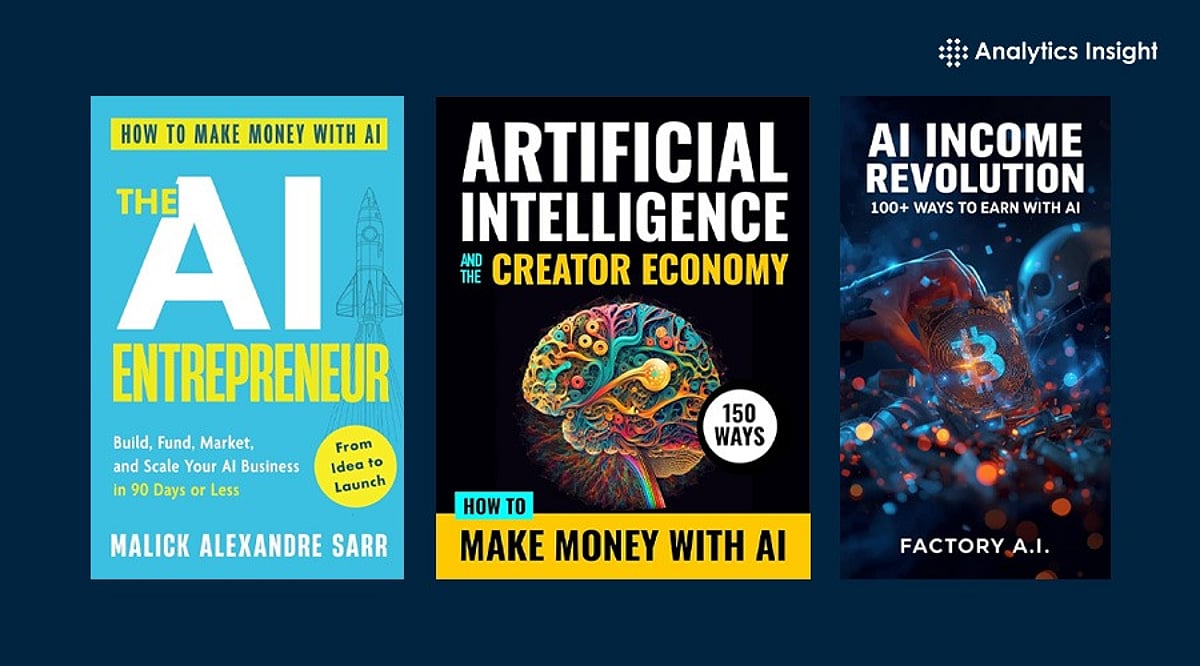
    The world of artificial intelligence has expanded far beyond technologists and large corporations. Today, freelancers, entrepreneurs, marketers, and content creators are leveraging AI to work faster, save time, and increase their earnings. However, simply using AI tools isn’t enough—understanding how they work and how to apply them effectively is crucial.

    Reading well-chosen books remains one of the best ways to build that understanding. Whether you’re a beginner or an experienced professional, the right AI books can sharpen your skills and open new career opportunities. Here are 10 essential AI books that can help you make money in 2026.

    1. Zero to One-Person AI Agency – Abhishek Ashtekar

    This book is ideal for anyone looking to start an AI-powered business. It explains how a single individual can launch and run an AI agency without hiring employees. You’ll learn how to offer AI services, acquire clients, automate workflows, and scale operations. The focus is on practical, actionable advice for turning AI into income.

    Buy Now

    2. The AI Advantage – Thomas H. Davenport

    Davenport explores how organizations are using AI to boost efficiency, cut costs, and make smarter decisions. This book helps professionals and business owners identify where AI can create new opportunities and generate revenue.

    Buy Now

    3. Prediction Machines – Ajay Agrawal, Joshua Gans, Avi Goldfarb

    Written by economics and technology experts, this book explains that AI’s core value lies in its ability to make predictions. It shows how businesses can forecast consumer behavior, market trends, and outcomes—enabling entrepreneurs to discover profitable ventures.

    Buy Now

    4. Architects of Intelligence – Martin Ford

    A collection of interviews with leading AI researchers, this book offers insights into current advances and future developments. While not directly about making money, it helps readers anticipate AI trends that can inform career and investment decisions.

    Buy Now

    5. Machine Learning Yearning – Andrew Ng

    Ng focuses on the practical aspects of building machine learning projects, covering how to plan, refine, and manage AI initiatives. Entrepreneurs and developers will find principles here that help create commercially valuable AI solutions.

    Download Book

    6. Deep Learning – Ian Goodfellow, Yoshua Bengio, Aaron Courville

    This is a comprehensive technical guide to the technology behind modern AI tools. Though advanced, it provides a solid foundation for understanding AI, which can lead to better career opportunities and higher earning potential.

    Buy Now

    7. Superintelligence – Nick Bostrom

    Bostrom examines what might happen when AI surpasses human intelligence. The book discusses risks and benefits, encouraging readers to think about long-term AI trends that could shape business and investment strategies.

    Buy Now

    8. Life 3.0 – Max Tegmark

    Physicist Max Tegmark explores how AI could transform society and the economy. The book presents various future scenarios, helping readers understand upcoming industry changes and identify new job trends and opportunities.

    Buy Now

    9. Human Compatible – Stuart Russell

    As AI becomes more powerful, safety and ethics are critical. This book covers AI safety and its importance, a topic increasingly relevant for companies and governments. Knowledge in this area can lead to careers in AI consultancy and governance.

    Buy Now

    10. You Look Like a Thing, and I Love You – Janelle Shane

    For those who prefer a lighter read, this book explains AI in a fun, accessible way. It covers basic machine learning concepts without technical jargon, making it perfect for beginners.

    Buy Now

    Why Reading AI Books Matters

    The AI industry is growing rapidly, and while videos and online tutorials are helpful, books often provide a deeper, more structured understanding. Reading AI books helps you acquire new skills, stay current with industry trends, and discover innovative ways to leverage AI for profit.

    Final Thoughts

    AI is creating opportunities across nearly every sector. Those who understand AI are better positioned to seize these opportunities. The books listed above offer practical business advice, technical knowledge, and insights into AI’s future. For immediate action, start with Zero to One-Person AI Agency, The AI Advantage, and Prediction Machines. For deeper technical skills, Machine Learning Yearning and Deep Learning are excellent choices. These books will equip you with the skills needed to thrive in the coming years.

    Frequently Asked Questions

    1. Which AI engineering book is best for beginners?

    Beginners can start with Hands-On Large Language Models or AI Engineering: Building Applications with Foundation Models. They explain key concepts and provide hands-on guidance.

    2. Do I need coding experience to read AI engineering books?

    Some books require basic programming knowledge, while others focus on concepts. Familiarity with Python can help you follow examples and implement projects.

    3. Which books are best for learning large language models (LLMs)?

    Hands-On Large Language Models and Build a Large Language Model (From Scratch) are excellent choices, covering how LLMs work, training, and deployment.

    4. Can AI engineering books help me get a job in AI?

    Yes, they build valuable skills in machine learning, deployment, prompt engineering, and AI systems—skills highly sought by employers.

    5. What topics should AI engineers focus on?

    Focus on large language models, prompt engineering, retrieval-augmented generation (RAG), AI agents, MLOps, and deployment—these areas drive the latest AI developments.