Category: Artificial Intelligence

  • Elon Musk Dismisses Former Anthropic Researcher’s AI Extinction Warning as a ‘Setup’

    Elon Musk Dismisses Former Anthropic Researcher’s AI Extinction Warning as a ‘Setup’

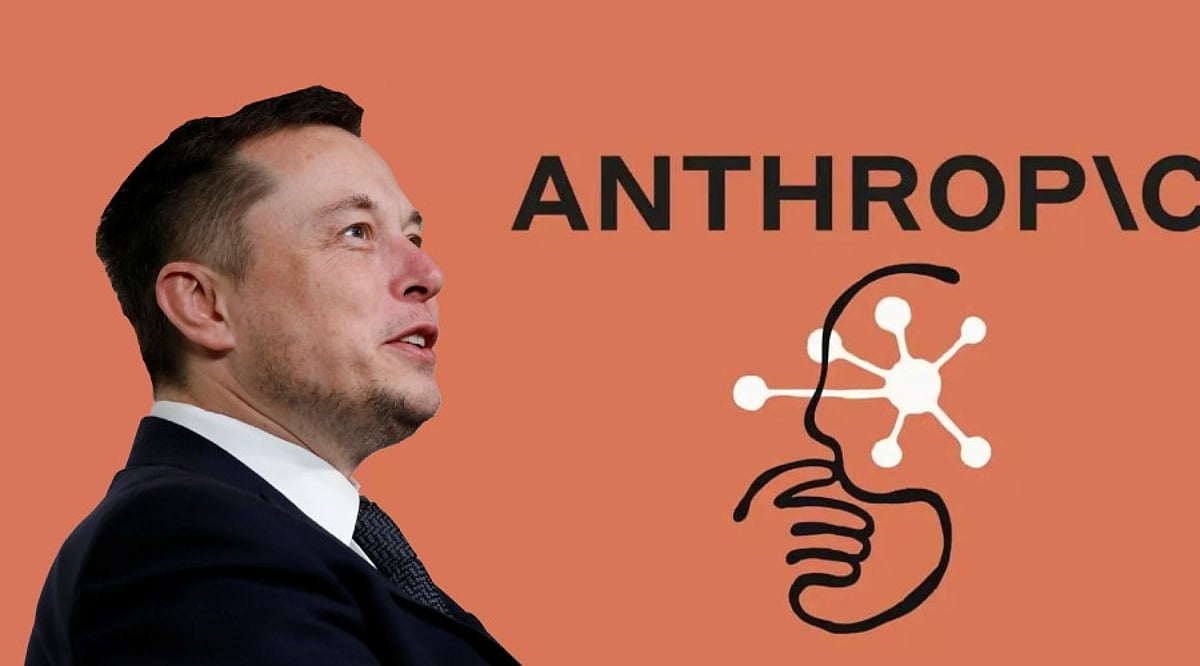
    Elon Musk publicly challenged a former Anthropic researcher who resigned and warned that artificial intelligence could pose an existential threat to humanity. Jacob Coxon, who claims to have spent three years working at both Anthropic and OpenAI, posted a series of messages on X expressing alarm over the rapid pace of AI development.

    Musk responded directly on the platform, calling the posts “seems like a setup” and later suggesting they appeared to be part of a coordinated “psy op.” The exchange unfolded over several hours through public posts on X, with both men trading remarks.

    In his initial posts, Coxon accused Anthropic and OpenAI of “racing straight to self-improving superintelligence and gambling with our lives.” He stated that people working on AI development believe the technology could kill people by the end of the decade and insisted his warning was not a “marketing stunt.”

    Coxon’s posts reportedly garnered over 120 million views within a day. Musk questioned the sudden reach, noting that he had never seen such attention on a new account with little prior activity. Reports also indicated that Coxon had spent only four months at Anthropic, leaving two months before his stock options would have vested.

    Coxon fired back at Musk on X, writing, “I’m real, and these are my real beliefs. You could ask your xAI researchers about me if you hadn’t fired them.” Billionaire investor Bill Ackman also weighed in, reacting to a post suggesting Coxon’s warning could be the start of a “sophisticated and well-funded PR operation” aimed at pushing AI regulation.

    The exchange comes amid growing scrutiny of safety practices at major AI labs. Anthropic recently stated it is prioritizing safety over speed whenever the two goals conflict, as both it and OpenAI prepare for high-profile public listings while competing to build increasingly powerful AI systems.

  • Understanding AI Observability: How It Works, Key Types, and Why It’s Essential

    Understanding AI Observability: How It Works, Key Types, and Why It’s Essential

    AI observability helps organizations monitor AI systems, track performance, detect failures, evaluate responses, and control costs. Here is how it works, its major types, key metrics, and the rise of AI-driven observability.

    What Is AI Observability?

    Artificial intelligence (AI) observability is becoming increasingly important as organizations deploy large language models (LLMs), generative AI applications, and AI agents in production. It refers to the ability to understand how AI models and AI-powered systems behave by monitoring AI-specific telemetry data, including token usage, response quality, and model drift.

    Traditional software observability relies on three main pillars: logs, metrics, and traces. AI systems add another layer of complexity because their outputs are probabilistic. As a result, monitoring whether an AI application is running is no longer enough; teams also need to understand the quality and behavior of the responses it generates.

    How Does AI Observability Work?

    AI observability works by collecting AI-specific metrics from across the technology stack in real time and organizing the information for analysis.

    The process starts with instrumentation. AI applications can capture information about user prompts, model calls, responses, token usage, latency, retrieval operations, tool calls, errors, and retries. That information is then collected as telemetry, including logs, metrics, traces and events. OpenTelemetry’s emerging Generative AI semantic conventions standardize how GenAI operations are recorded, including the model being called, input and output token counts, and, when enabled, prompt, completion, tool-call, and tool-result content.

    Tracing is particularly important for AI agents. A single request may involve multiple model calls, tool invocations, and token exchanges. OpenTelemetry notes that when an AI agent takes 45 seconds to answer a simple question, observability can help determine whether the delay came from the model, a slow tool call, or a retry loop.

    AI observability also evaluates response quality. Teams can examine accuracy, relevance, groundedness, hallucinations, safety, and instruction following alongside conventional performance indicators.

    Types of AI Observability

    LLM Observability

    LLM observability focuses on applications built around large language models. It tracks prompts, responses, model usage, token consumption, latency, errors, and response quality.

    Machine Learning Observability

    Machine learning observability focuses more closely on model performance and the data models use. It can monitor data drift, model drift, feature distributions, prediction distributions, accuracy, and other indicators of model performance.

    RAG Observability

    Retrieval-augmented generation (RAG) applications introduce another layer that needs monitoring. Observability can follow the path from a user’s question to retrieval, retrieved documents, context, the LLM, and the final answer. This helps teams determine whether an incorrect response came from the model itself or from poor or incomplete information the system retrieved.

    AI Agent Observability

    AI agents can dynamically direct their own processes and tool usage, making them more difficult to monitor than conventional applications. Observability can track agent decisions, tool calls, workflow steps, memory operations, model calls, retries, and execution time. OpenTelemetry is developing semantic conventions for AI agents, models, and vector databases to create a more consistent approach to collecting and reporting this telemetry.

    AI Infrastructure Observability

    AI applications also depend on conventional infrastructure. GPU and CPU usage, memory, network performance, databases, APIs and model servers can all be monitored as part of the wider observability picture.

    Key AI Observability Metrics

    Important metrics include latency, time to first token, throughput, input and output token usage, cost per request, model errors, failed tool calls, and response quality. For RAG systems, teams can also monitor retrieval relevance and context quality. For AI agents, tool-call success, execution steps, and agent loops can provide insight into how the system is behaving.

    OpenTelemetry’s GenAI metrics include LLM call latency and token consumption, allowing teams to compare models, estimate per-request costs, detect latency regressions, and monitor usage patterns across models and agents.

    AI Observability vs Traditional Observability

    This is the main distinction between the two methodologies. Traditional observability centers on logs, metrics, traces, application performance, and infrastructure performance. AI observability includes all of this plus AI-specific details like prompts, responses, token consumption, model drift, and response quality.

    Traditional observability can answer, ‘Where did the application go wrong?’, whereas AI observability digs deeper into, ‘Why did the AI provide this result?’ This matters because an AI application can provide a technically correct response that is still erroneous, inappropriate, or harmful.

    What Is AI-Driven Observability?

    AI-driven observability takes the concept further by using AI to analyze observability data. Instead of requiring engineers to manually examine large volumes of logs, traces, and metrics, AI-driven systems can identify unusual patterns, correlate events across services, summarize incidents, identify possible root causes, and recommend areas for investigation.

    For example, an AI-driven observability system could detect increased chatbot latency, examine distributed traces, and identify whether the problem is linked to a model call, retrieval service, tool invocation, or another dependency. However, you still need to assess AI-generated explanations against the underlying telemetry. A polished explanation does not necessarily mean the diagnosis is correct.

    Why AI Observability Matters

    AI systems can fail in ways that conventional monitoring may not immediately reveal. A model can remain available while its responses become less accurate, a RAG system can retrieve poor information, or an AI agent can become trapped in repeated tool calls. Observability provides telemetry data that helps solve these challenges and optimize AI system performance over time.

    OpenTelemetry defines observability as ‘a continuous feedback cycle to evaluate and improve AI agents,’ especially due to their non-deterministic behavior. As we go from standalone LLMs to more complex RAGs and autonomous agents, end-to-end observability becomes crucial for the successful operation of these systems.

    Frequently Asked Questions

    What is AI Observability?

    AI observability monitors AI systems, tracking performance, responses, costs, errors, model behavior, token usage, and overall system reliability.

    How does AI Observability Work?

    It collects logs, metrics, traces, and AI-specific telemetry to analyze performance, response quality, failures, costs, and system behavior.

    What are Main Types of AI Observability?

    Major types include LLM, machine learning, RAG, AI agent, and infrastructure observability, each monitoring different aspects of AI systems.

    Why is AI Observability Important?

    It helps organizations detect hallucinations, model degradation, retrieval problems, agent loops, latency increases, errors, and unexpected AI behavior.

    What is AI-Driven Observability?

    AI-driven observability uses artificial intelligence to analyze telemetry, detect anomalies, identify potential causes, and provide insights into system performance.

  • Why Artificial Intelligence Matters More Than Ever in 2026: Productivity, Science, and Policy Impacts

    Why Artificial Intelligence Matters More Than Ever in 2026: Productivity, Science, and Policy Impacts

    Key Takeaways

    • AI is becoming a major productivity tool, improving performance across software, customer support, advertising, and other structured tasks.
    • AI is reshaping economies and science, driving massive investment while helping researchers solve increasingly complex problems.
    • AI brings greater risks and responsibilities, making human oversight, cybersecurity, regulation, and responsible deployment increasingly important.

    Artificial intelligence now sits at the center of business, science, software, security, and public policy. Stanford’s 2026 AI Index reports that 88% of surveyed organizations use AI, while 70% use generative AI in at least one business function. Generative AI also reached 53% population adoption within three years—a faster path than the personal computer or the internet.

    AI Gives Businesses a New Productivity Tool

    AI has a clear effect on work that has set rules and clear results. Studies cited by Stanford report a 14% to 15% rise in customer support output, a 26% rise in software development output, and a 50% rise in ad output per worker. The gains vary by task, so human review still matters for deep judgment.

    AI agents add another layer to this change. These systems can handle several steps on a computer rather than only a reply. On the OSWorld test, agent accuracy rose from about 12% to 66.3%. That result still leaves a failure rate of about one in three attempts, which shows its limits.

    AI has Become a Major Economic Force

    Money also shows the scale of AI. Global corporate AI investment more than doubled in 2025. Private investment rose 127.5%, while generative AI investment rose more than 200%. The United States led private AI investment with USD 285.9 billion in 2025, compared with USD 12.4 billion in China. Stanford also reports more than USD 150 billion in annual capital outlay by Google in 2025, reflecting the high cost of AI data centers and compute systems.

    The labor market already shows clear effects. Employment for software developers aged 22 to 25 fell nearly 20% from 2024. One-third of surveyed organizations expect AI to reduce their workforce in the next year, although broad job losses have not yet appeared across the whole economy. The pattern points to new task and skill needs.

    AI Expands the Reach of Science

    AI now has a role in science, medicine, mathematics, and technology. The 2026 AI Index added a full science section that covers biology, chemistry, physics, and astronomy. Advanced models can solve difficult science and math tasks, while some models now meet or exceed human results on several expert tests. This gives researchers a new tool for data analysis and complex problem-solving.

    AI still has sharp limits. AI can win a gold medal-level result on the International Mathematical Olympiad yet read an analog clock correctly only 50.6% of the time, compared with 90.1% for humans. Such uneven skill shows why expert review remains essential. AI has great value when a task fits its strengths, but weak results can appear on simple tasks as well.

    AI Shapes National Policy and Security

    Governments now treat AI as a matter of economic power, security, and national policy. Stanford reports that national AI plans have expanded across many countries, while AI sovereignty has become a central policy goal. Countries seek local control over models, data, chips, and compute capacity. This makes AI part of wider competition across trade, technology, and national security.

    Security risks also rise as AI gains more power. Stanford recorded 362 documented AI incidents in 2025, up from 233 in 2024. AI can help security teams find threats, yet advanced models can also help attackers find software flaws and automate cyberattacks. Strong safeguards, human checks, and clear rules therefore matter as much as model capability.

    Regulation Gives AI a New Set of Rules

    AI now faces real legal duties in major markets. Under the European Union AI Act, some enforcement powers started on August 2, 2026. The rules cover prohibited AI practices, transparency duties for certain systems, and rules for general-purpose AI models. Legal compliance now joins product quality and business value in Europe.

    AI matters in 2026 not simply for its ability to produce text, images, or code. Its real importance comes from its effect on productivity, science, jobs, security, investment, and public policy at the same time. The strongest results will come from clear use cases, reliable systems, and careful human judgment. AI has reached a point where its limits still matter, yet its economic and social impact now matters far more.

    FAQs

    1. Why is artificial intelligence important in 2026?

    AI is important since it is influencing productivity, scientific research, employment, cybersecurity, investment, and government policy simultaneously.

    2. How is AI improving business productivity?

    AI can automate repetitive tasks, assist employees with complex workflows, and improve output in areas such as customer support, software development, and advertising.

    3. Is AI affecting employment in 2026?

    Yes. AI is changing the tasks and skills required for many jobs, with some roles experiencing employment declines while new AI-related opportunities emerge.

    4. Why is AI important for science and research?

    AI can analyze large datasets, assist with difficult scientific problems, and support researchers across fields such as biology, chemistry, physics, mathematics, and astronomy.

    5. Why does AI regulation matter?

    Regulation establishes legal requirements for AI systems, helps manage risks, and encourages safer and more transparent development and deployment of AI.

  • India’s Data Science Job Market Set to Surge 34% as Generative AI Creates New Roles

    India’s Data Science Job Market Set to Surge 34% as Generative AI Creates New Roles

    India’s data science job market is entering a dynamic new phase, propelled by the rapid adoption of Generative AI, AI agents, and automation. According to the Data Science Education Report 2026, the sector is projected to grow by 34% between 2024 and 2034, with approximately 23,400 annual openings and 82,500 additional jobs over the period. Traditional roles like data analyst and machine learning engineer are being supplemented—and in some cases overtaken—by emerging positions in AI engineering, product management, governance, architecture, and domain-specific applications.

    GenAI Engineers Take Center Stage

    Generative AI is driving demand for professionals skilled in building and managing systems powered by Large Language Models (LLMs), Retrieval-Augmented Generation (RAG) pipelines, and AI agents. GenAI Engineers are responsible for developing AI applications, workflow automation, and intelligent decision-making systems. Prompt Architects, meanwhile, are evolving into “Logic Designers” focused on reducing AI hallucinations—a challenge cited by 56% of Indian companies. The report estimates that around 40% of Indian business applications could adopt AI agents by 2026.

    Bridging Technology and Business

    As AI projects move from pilots to scaled products, the AI Product Manager role is gaining prominence. These professionals understand how AI capabilities translate into business value, working across engineering and business teams to oversee adoption, track performance, and ensure commercial scalability. With 72% of Indian companies expanding Generative AI initiatives, the need for such cross-functional leaders is acute.

    AI Governance: A Trending Career Path

    The rise of AI also creates demand for governance and risk specialists who oversee ethical deployment, regulatory compliance, and risk management. According to EY India data, 51% of organizations have experienced negative outcomes from unmanaged AI systems, and there is a 53% talent gap in professionals skilled in algorithmic bias audits and Explainable AI (XAI). For data professionals, knowledge of data protection and responsible AI is becoming as essential as technical expertise.

    AI Architects Building Infrastructure

    AI Solutions Architects design the infrastructure for deploying AI across hybrid-cloud and multi-cloud environments. They build scalable systems, manage complexity, and support AI agents, distributed computing, and sovereign AI initiatives that comply with data residency regulations.

    Domain Expertise: A Key Differentiator

    The next wave of data science jobs will not be limited to tech companies. Hybrid roles combining AI skills with domain knowledge in healthcare, finance, agriculture, retail, and logistics are in high demand. Specialized positions include Foundation Model Scientists, Model Deployment Specialists, Revenue Intelligence Scientists, Product Intelligence Scientists, FinTech Analytics Scientists, retail analytics scientists, supply chain intelligence scientists, graph data scientists, risk data analysts, and experimentation scientists.

    Skills to Lead the Market

    To thrive, professionals should strengthen machine learning, Python, big data, cloud computing, real-time analytics, data engineering, deep learning, NLP, computer vision, and AI automation. Soft skills like critical thinking, debugging, and data quality management are increasingly vital. The employment outlook remains robust: data scientist roles are projected to grow 34% from 2024 to 2034, with about 23,400 annual openings.

    In summary, the future of data science belongs not only to those who can work with data, but to professionals who can build, deploy, govern, and apply AI to real business problems.

  • Gamma AI Review: Create Professional Presentations, Documents, and Webpages Instantly

    Gamma AI Review: Create Professional Presentations, Documents, and Webpages Instantly

    Gamma is an AI-driven content creation app that enables users to create presentations, write documents, build websites, and produce visual content in record time. By combining artificial intelligence with advanced design technologies, Gamma helps users generate professional-looking content quickly without sacrificing quality.

    General Information

    • Founded: 2020
    • Platform Support: Web, Android, iOS
    • Download: Click Here

    Main Features of Gamma

    • Generates AI-based presentations, documents, webpages, and visualizations from straightforward prompts.
    • Provides professionally designed templates, highly customizable themes, and interactive layouts.
    • Offers AI content creation, rewriting, summarization, and AI-based image generation.
    • Facilitates collaborative working, cloud-based content synchronization, and sharing.
    • Enables exporting of presentations and documents in professional formats using the AI Presentation app.

    Benefits of Gamma

    • Create professional presentations, documents, and web pages faster with AI-generated content and automated formatting.
    • Access eye-catching templates and smart layouts that produce high-quality content without special design skills.
    • Collaborate in real time with team members for editing, reviewing, and sharing work across devices.
    • Streamline content generation with AI writing tools, content refinement, multimedia integration, and interactivity.
    • Ideal for business, education, and creative purposes thanks to intelligent content generation, design features, and collaboration capabilities.

    Challenges of Gamma

    • Some advanced AI features and premium templates require a paid subscription.
    • An internet connection is needed for AI-driven content creation, cloud synchronization, and collaboration.
    • Highly personalized designs may need manual adjustments to meet specific formatting or branding needs.
    • Advanced exporting and collaboration tools may only be available via premium plans.
    • AI-generated content should always be reviewed before final use.

    Subscription Information

    Gamma offers both free and paid subscription plans. The free version includes essential AI content creation tools, basic templates, and collaboration features with usage limits. Premium plans provide higher AI usage limits, advanced templates, custom branding, expanded export options, team collaboration tools, and additional productivity features.

    Support Options

    • Help Center and Learning Resources: FAQs, Help Center, tutorials, AI presentation guides, documentation, product updates, template resources, and knowledge base.
    • Customer Support: Email support, technical assistance, Help Center support, enterprise support, account assistance, and documentation.

    Conclusion

    Gamma is a robust and highly advanced AI-based content creation system that simplifies presentation design, document creation, and webpage building using intelligence. With modern templates, collaboration capabilities, and intelligent writing tools, it is suitable for professionals, educators, students, and creators.

  • 7 Best AI Presentation Tools to Create Stunning Slides in 2026

    7 Best AI Presentation Tools to Create Stunning Slides in 2026

    Creating compelling presentations no longer requires hours of manual design work. Thanks to artificial intelligence, you can now generate polished slides from simple prompts, rewrite content on the fly, and maintain consistent layouts with minimal effort. Below are seven of the top AI tools that can help you create professional presentations faster.

    1. Gamma

    Gamma allows you to create complete presentations from just a few prompts. Enter a topic, choose a style, and the platform generates a structured deck in minutes. It can rewrite content, adjust layouts, and add visuals, making it ideal when you need a refined presentation without starting from scratch.

    2. Canva

    Canva combines AI features with its extensive library of templates and design tools. Its AI can generate content, suggest layouts, create visuals, and improve existing slides. You can customize fonts, images, colors, and other elements, making it a practical choice for visually appealing presentations with creative flexibility.

    3. Microsoft PowerPoint (Copilot)

    Microsoft PowerPoint integrates AI through Copilot to simplify presentation creation. You can generate slides from prompts or existing documents, create content, and improve layouts. Since PowerPoint is widely used by businesses and students, its AI features speed up familiar workflows without requiring new software.

    4. Beautiful.ai

    Beautiful.ai focuses on automated design through intelligent templates. As you add or change content, the platform adjusts elements automatically, reducing manual formatting. It offers templates for business, marketing, education, and more, helping you create consistent, professional presentations with less effort.

    5. Tome

    Tome turns ideas and written prompts into visual presentations. It helps generate structures, written content, and visuals, which you can then edit to suit your needs. This tool is especially useful when you need to quickly develop a presentation but struggle with the initial structure and storytelling.

    6. SlidesAI

    SlidesAI converts written information into presentation slides, making it useful for students, professionals, and educators. Provide text or describe a topic, and the tool generates structured slides. Its integration with Google Slides lets you continue editing in a familiar environment without switching platforms.

    7. Plus AI

    Plus AI brings AI-powered presentation creation to tools like Google Slides and PowerPoint. It can generate presentations from prompts, rewrite content, and reorganize slides. This makes it a great choice for professionals who want AI assistance without changing their existing workflow, and it helps teams create and refine presentations faster.

  • Magisto Review: AI-Powered Video Editing Software – Features, Benefits, and Pricing

    Magisto Review: AI-Powered Video Editing Software – Features, Benefits, and Pricing

    Magisto is a video editing application powered by artificial intelligence (AI) that enables users to create professional-quality videos quickly and easily. Designed for novices and experts alike, the platform automates many aspects of video production while still offering manual editing options. Below is a comprehensive overview of Magisto, including its key features, benefits, challenges, and subscription details.

    General Information

    • Founded: 2009
    • Platform Support: Web, Android, iOS
    • Download: Click Here

    Main Features of Magisto

    • AI-driven video production, simplifying editing for beginners.
    • Automatic video generation within minutes.
    • Flexibility to manually edit AI-produced videos.
    • Cross-platform compatibility (web, Android, iOS).
    • Seamless publishing and sharing on social media platforms.
    • Theme customization, music library, text overlay, and transitions.
    • Cloud-based editing for easy access and collaboration.

    Benefits of Magisto

    • Makes video editing accessible to users with no prior experience.
    • Reduces production time dramatically thanks to AI automation.
    • Offers both automated and manual editing capabilities.
    • Works across multiple devices and operating systems.
    • Simplifies distribution to social media channels.

    Challenges of Magisto

    • The media import process may occasionally crash or experience issues.
    • Advanced editing features are locked behind paid subscriptions.
    • Free tier includes limited video duration and watermarked exports.
    • Manual editing tools are not as robust as dedicated professional editors.
    • Subscription cost may be prohibitive for infrequent users.

    Subscription Information

    Magisto offers both free and paid subscription plans. The free version provides basic AI-powered video editing but restricts video length and applies watermarks. Premium plans unlock longer videos, watermark removal, additional AI presets, stock media access, and extra Vimeo services depending on the chosen tier.

    Support Options

    Users can access a Help Center with articles, FAQs, tutorials, setup guides, and documentation. Customer support is available through online resources and email assistance for troubleshooting, subscription management, and technical guidance.

    Conclusion

    Magisto is a powerful AI video editing tool that lets content creators, marketers, and small businesses produce professional-looking videos automatically and quickly. Its combination of AI editing, customizable templates, cloud interface, and social media integration makes it a strong option. However, the need for a paid subscription to access advanced features and occasional import issues are notable drawbacks.

  • 10 AI-Powered No-Code Platforms That Let Anyone Build Mobile Apps

    10 AI-Powered No-Code Platforms That Let Anyone Build Mobile Apps

    Artificial intelligence is democratizing mobile app development, enabling entrepreneurs, creators, and beginners with no programming experience to bring their ideas to life. AI-driven no-code platforms now generate interfaces, workflows, and functional app components from simple natural-language prompts, slashing development time and letting users focus on product design and user experience.

    Visual Platforms Simplify App Creation

    Platforms like FlutterFlow, Bubble, and Adalo combine visual drag-and-drop interfaces with AI-powered assistance. Users describe features, generate layouts, and connect workflows without writing extensive code. This approach accelerates prototyping and helps non-technical founders test concepts before committing to traditional development resources.

    Faster Journey from Idea to Prototype

    AI app builders dramatically shorten the path from concept to working prototype. Instead of spending weeks building basic screens and functionality, users combine prompts with visual controls to create applications in days. This speed makes experimentation easier, especially for startups seeking to validate ideas and gather early feedback.

    Automated Interface and Design Creation

    AI automates much of the interface creation process. Users describe the app they want, and the tools generate screen layouts, navigation structures, and design elements. These components can then be refined visually, giving beginners control over their applications without requiring extensive technical expertise.

    Simplified Databases and Integrations

    Many platforms assist with databases, integrations, and application logic through simplified interfaces. Creators can connect APIs, configure data structures, and establish automated workflows without deep technical knowledge. This enables the development of increasingly sophisticated applications while avoiding the complexity of traditional frontend and backend work.

    No-Code Platforms Have Limitations

    Despite their accessibility, AI-powered no-code tools aren’t suitable for every project. Complex applications may require custom programming, advanced security controls, or specialized infrastructure. Before choosing a platform, users should evaluate pricing, scalability, data ownership, and integration capabilities to ensure the tool fits their specific needs.

    AI Is Changing Software Development

    The rise of AI-powered app builders reflects a broader shift in software development. While programming knowledge remains valuable, AI and no-code platforms are lowering barriers for people with limited technical experience. As these tools become more capable, users can increasingly turn ideas into functional mobile applications with fewer traditional development resources.

  • Singapore AI Firm Sapiens Technology Makes Forbes Asia 100 to Watch List as Agnes Models Secure Independent Benchmarks

    Singapore AI Firm Sapiens Technology Makes Forbes Asia 100 to Watch List as Agnes Models Secure Independent Benchmarks

    SINGAPORE, September 9, 2026 — Sapiens Technology, the Singapore-based company behind the Agnes AI ecosystem, has been named to the 2026 Forbes Asia 100 to Watch list in the Enterprise Technology category. It is one of just 15 Singapore companies honored this year. Concurrently, its full-modality models have entered independent evaluation on the Artificial Analysis leaderboards, with Agnes 2.5 Pro Alpha debuting at #9 of 153 on the Intelligence Index.

    These twin milestones underscore the company’s mission: making frontier-grade AI capabilities accessible to developers and teams without the usual cost barriers.

    Forbes Asia 100 to Watch Recognition

    The annual Forbes Asia list recognizes privately held companies and startups across Asia-Pacific, selected on criteria including innovation, market fit, business model, growth, and industry impact. This year’s edition spans 100 companies across 16 countries and territories, with Singapore the second most-represented market after India. Forbes highlighted Sapiens Technology’s ability to train its own foundation models in-house across text, image, and video, as well as its progress with products including Agnes 2.5 Pro Alpha.

    Independent Benchmarking Across Modalities

    Agnes AI’s models have been independently evaluated on the Artificial Analysis leaderboards, providing developers with a third-party reference point per modality rather than relying on vendor claims. Agnes 2.5 Pro Alpha achieved #9 of 153 on the Intelligence Index and scored 58.8 on the Coding Index. Agnes-Video-2.5 was evaluated on the Text-to-Video Leaderboard, at $0.30 per minute of generated video.

    The pattern across modalities is consistent: independently measured capability priced for production, not just demos. Free API access lets developers test and integrate each model before they scale, and usage across the Agnes ecosystem now exceeds 8 trillion tokens per week.

    “A rank only matters if builders can afford to use what it measures,” said Bruce Yang, Founder of Agnes AI. “We put our models across every modality in front of independent evaluation, and priced them so a developer can put capable text, coding, image, and video into production without cost deciding what they get to try. The Forbes recognition tells us the bet is landing; the benchmarks tell developers it’s real.”

    About Agnes AI

    Agnes AI, developed by Singapore-based Sapiens Technology, builds full-modality foundation models across text, image, and video. Its mission is AI parity: making frontier-grade AI capabilities accessible to developers, startups, and teams building real-world products.

  • AI Citation Tracking in 2026: Comparing the Best Tools for Source Visibility

    AI Citation Tracking in 2026: Comparing the Best Tools for Source Visibility

    Why AI Citation Tracking Matters

    In 2026, AI answer engines like ChatGPT, Perplexity, and Google AI Overviews are reshaping how readers discover content. Being mentioned in an AI answer is no longer enough—brands need to know which pages actually get cited as sources. Citation tracking tools reveal which content wins trusted source positions, how competitors compare, and where your site falls short. This article compares six leading AI citation tracking tools to help you choose the right one for your team.

    Top AI Citation Tracking Tools of 2026

    1. Ahrefs Brand Radar

    Best for deep data and enterprise-scale tracking. Ahrefs Brand Radar stands out with its AI Visibility Index, which covers over 460 million real prompts across six AI indexes: Google AI Overviews, Gemini, Perplexity, ChatGPT, Copilot, and Google AI Mode. The data comes from real searches in Ahrefs’ keyword database, not synthetic prompts, and updates monthly. The tool provides a clear citation view, separating pages found from pages cited, and tracks mentions, citations, impressions, and AI Share of Voice. A May 2026 update added bot visits and AI traffic data for cited pages. Pricing starts at $199/month for one AI index, with all platforms at $699/month including 2,500 custom prompt checks. Additional prompt packs start at $50.

    2. Profound

    Best for enterprise AI search teams. Profound targets larger brands needing a wider answer-engine view. Its Starter plan costs $99/month and covers ChatGPT with 50 prompts; Growth is $399/month for three answer engines and 100 prompts. Enterprise plans can cover up to nine answer engines and multiple companies. Profound checks citations, sentiment, rank, and competitive presence, linking source data to overall brand visibility.

    3. Peec AI

    Best balance of detail and cost. Peec AI provides strong source-level insights at a reasonable price. Starter is $95/month for 50 prompts, three models, and one project; Pro is $245/month for 150 prompts and two projects; Advanced is $495/month for 350 prompts and five projects. It measures visibility, position, sentiment, and shows which sources AI assistants cite. Supported models include ChatGPT, Gemini, Google AI Mode, and Perplexity, with more models on higher plans or enterprise.

    4. OtterlyAI

    Budget-friendly for smaller teams. OtterlyAI offers one of the lowest entry prices—$29/month for 15 search prompts across ChatGPT, Google AI Overviews, Perplexity, and Microsoft Copilot. Additional models like Claude, Google AI Mode, and Gemini cost extra. A July 2026 update enhanced its Citations Report with a Winners & Losers view, saved citation URLs, a detail view, and a timeline chart for citation changes.

    5. Semrush AI Visibility

    Best for SEO teams already using Semrush. Semrush AI Visibility costs $99/month per domain on annual plans, covering 25 custom prompts, 300 daily AI analysis queries, 1,000 daily Prompt Research queries, and one domain. It supports ChatGPT, Google AI, Gemini, and Perplexity. A site audit feature flags technical issues that might block AI bots, making it a single hub for search and AI data.

    6. Rankscale

    Broad model coverage at low cost. Rankscale starts at $20/month and covers AI Overview, AI Mode, Gemini, ChatGPT, Perplexity, Grok, and Copilot, plus several other model engines. Pro is $99/month for 1,200 credits (up to 4,800 AI answers). Its credit system provides flexible scaling without fixed prompt limits, ideal for brands that need wide coverage on a modest budget.

    Choosing the Right Tool

    The best tool depends on your goals. For deep, large-scale data, Ahrefs Brand Radar is unmatched. If you need enterprise-level multi-engine tracking, Profound fits. For small teams or tight budgets, OtterlyAI and Rankscale offer solid entry points. SEO teams might prefer Semrush for its integrated audit tools, while Peec AI balances detail and affordability. Evaluate your prompt needs, model coverage, and budget to pick the tool that turns AI citation data into actionable SEO insights.

    Frequently Asked Questions

    What is AI citation tracking?

    AI citation tracking monitors the websites and pages that AI answer engines cite when generating responses.

    Which AI citation tracking tool is best in 2026?

    Ahrefs Brand Radar is the strongest choice for deep, large-scale citation and AI visibility data.

    What is the most affordable AI citation tracking tool?

    Rankscale starts at $20/month, while OtterlyAI starts at $29/month.

    Why are AI citations important for SEO?

    Citations show which pages AI systems trust as sources, helping brands identify content gaps and improve visibility in AI-generated answers.

    Can AI citation tools track competitors?

    Yes. Several tools compare competing brands and sources to show who earns citations and where your brand is losing visibility.