Category: Artificial Intelligence

  • Top AI Tools to Transform Long Videos Into YouTube Shorts in 2026

    Top AI Tools to Transform Long Videos Into YouTube Shorts in 2026

    Producing YouTube Shorts on a consistent schedule is time-intensive. Scripting, recording, editing, and adding captions each demand separate effort. AI video tools now automate most of this workflow. Some generate a short from a simple idea, while others repurpose existing long-form footage into multiple vertical clips. Choosing the right tool can save hours every week.

    Know Your Goal First

    Not every AI video tool does the same job. Before selecting one, ask: Are you creating a video from scratch, or extracting clips from footage you already have?

    • Generating from an idea: You type a prompt, upload a photo, or paste a script, and the tool builds a new video.
    • Repurposing long video: You have a podcast, webinar, or vlog, and the tool identifies the best moments and turns them into short clips.

    These are two distinct tasks. A generator cannot clip an existing podcast, and a repurposing tool cannot create original footage. Confusing them leads to wasted effort.

    What to Check Before You Pick a Tool

    The success of a short video depends on a few essential details:

    • Vertical output: The video must export in true 9:16 format without black bars.
    • Speed: A tool that takes twenty minutes per clip is impractical for daily posting.
    • Automation level: Some tools write the script, add a voice, and place captions automatically. Others leave most work to the user.
    • Input options: Text, images, links, or audio — the more starting points, the more versatile the tool.
    • Captions and sound: Most viewers watch with sound off initially, so captions and music are baseline requirements.
    • Pricing: A flat monthly fee is easier to budget than a credit system that depletes quickly.

    The Two Paths Worth Knowing

    Tools That Build Something New

    Creators working from an idea, script, or photo should consider these:

    • Pexo: Uses a conversational approach — describe the video in plain language, and it writes the script, adds a voice, and assembles the clip in one exchange.
    • Runway and Pika: Focus on visual quality and creative style rather than a complete production workflow.
    • InVideo AI: Suits narration-heavy, faceless channels built around a written angle.
    • Canva: Ideal for creators already familiar with the platform who prefer a template-driven approach.

    Tools That Repurpose Existing Footage

    OpusClip leads this category. It processes a long recording — podcast, livestream, interview — identifies the strongest moments, and edits them into vertical clips with captions and reframing. It also scores each clip by predicted performance. Creators with hours of recorded content can save considerable time using this method.

    How to Choose

    Match the tool to the task. Starting with no footage? Pick a generator. Have long recordings? Choose a repurposing tool. Many creators use both: one for original ideas, another for extracting clips from long recordings.

    Review the free plan first. Every tool listed offers one, though most include a watermark or usage limit. Testing a free tier for a week provides more insight than any comparison article.

    Final Thoughts

    No single tool is the definitive choice — the right option depends on your starting point. For the fastest path from idea to finished vertical clip, Pexo is strong. For visual style over speed, Runway and Pika excel. For those with long recordings already available, OpusClip can turn them into weeks of short-form content. Selecting a tool based on your resources makes the ongoing task of producing Shorts much more manageable.

    Note: Prices change frequently, so check each site directly before committing.

  • Axel Hefer’s Tech-Driven Overhaul of Trivago: AI, Data, and the Future of Hotel Search

    Axel Hefer’s Tech-Driven Overhaul of Trivago: AI, Data, and the Future of Hotel Search

    The Vision Behind Trivago’s Transformation

    Axel Hefer’s tenure as CEO of Trivago marked a pivotal era in which technology, data, and artificial intelligence were placed at the heart of hotel search. Under his leadership, Trivago evolved from a simple price-comparison platform into a metasearch engine that understands traveler intent, processes natural language, and delivers personalized accommodation recommendations.

    Technology as the Core Identity

    Hefer viewed technology not merely as a tool but as the defining element of Trivago’s brand. The company leveraged its massive dataset—covering over 5 million hotels and apartments worldwide—to simplify how users discover and compare options. Rather than forcing travelers to wade through endless filters, Trivago aimed to provide clear, actionable insights that speed up decision-making.

    One of the early innovations was the Trivago Score, which aggregated qualitative review data into a single, easy-to-understand signal. This approach helped users quickly gauge a property’s strengths without reading dozens of reviews.

    Pioneering AI-Powered Search

    The next leap came with generative AI. Trivago’s AI Smart Search allows travelers to describe their ideal hotel in plain language—such as “a quiet boutique hotel near the old town with a rooftop pool and workspace”—and the system interprets the intent, matches it to available properties, and presents relevant results. This marked a shift from filter-based search to intent-driven discovery.

    Hefer championed this direction even before the launch of the product. He often pointed out that AI could analyze hundreds of reviews to extract meaningful signals—like pool quality or location suitability—saving users hours of manual research.

    Beyond the Search Box: Partnerships and Infrastructure

    Hefer also expanded Trivago’s technological reach through strategic partnerships. In 2021, Trivago teamed up with Huawei to power accommodation search within Petal Search and Petal Maps, making its technology accessible to a broader audience. Simultaneously, the company invested in back-end infrastructure to handle the massive data volumes required for real-time price and availability comparisons.

    Post-Hefer, Trivago deepened its relationship with AI travel tech firm Holisto, investing to improve the booking experience through Trivago Book & Go. This move further cemented the data-driven foundation laid during his tenure.

    Hefer’s Enduring Legacy

    Though Axel Hefer stepped down as CEO in May 2023, the technological blueprint he established continues to guide Trivago’s strategy. The company’s current AI initiatives are a direct extension of the principles he championed: using data and machine learning to reduce complexity and deliver smarter hotel search.

    Hefer’s legacy is one of transformation—from a straightforward comparison tool to an AI-powered platform that understands what travelers really want.

    Key Takeaways

    • Hefer placed technology, data, and AI at the center of Trivago’s hotel-search experience.
    • AI Smart Search enables natural-language queries, moving beyond rigid filters.
    • Partnerships with Huawei and Holisto extended Trivago’s tech reach beyond its own site.
    • The Trivago Score exemplifies how AI distills qualitative data into simple signals.
    • Hefer’s vision set the stage for a more intuitive, intent-driven travel search.

    Frequently Asked Questions

    Who is Axel Hefer? Axel Hefer is a German technology executive who served as Trivago’s CEO until May 9, 2023.

    How did Axel Hefer influence Trivago? He focused on technology, data, and artificial intelligence to improve hotel search, comparisons, and traveler experiences across Trivago.

    What technology does Trivago use for hotel search? Trivago uses data, artificial intelligence, and natural language processing to help travelers discover hotels that match their preferences and requirements.

    What is Trivago’s AI Smart Search? AI Smart Search allows travelers to describe hotel preferences naturally, helping to identify properties that match specific requirements, locations, and experiences.

    Who succeeded Axel Hefer as Trivago CEO? Johannes Thomas succeeded Axel Hefer as Trivago CEO on May 9, 2023.

  • OpenAI vs Anthropic: Divergent Paths in the AI Race

    OpenAI vs Anthropic: Divergent Paths in the AI Race

    Two AI Giants, Divergent Visions

    OpenAI and Anthropic have emerged as two of the most influential forces in generative AI. Both develop cutting-edge language models and AI assistants, yet they pursue fundamentally different philosophies, product strategies, and commercial goals. While OpenAI has built a broad ecosystem spanning consumers and developers, Anthropic has carved a niche around safety, reliability, and controllable AI.

    OpenAI: Broad Adoption and Ecosystem Depth

    OpenAI’s approach centers on creating a comprehensive AI ecosystem that includes conversational assistants, developer tools, multimodal systems, and enterprise solutions. ChatGPT remains its flagship product, powering applications in writing, coding, research, and automation. The company’s strategy prioritizes widespread adoption, continuous model advancement, and deep integration across computing platforms.

    Anthropic: Safety-First with Claude

    Anthropic focuses on developing Claude, its primary AI assistant and model family, with a strong emphasis on safety, reliability, and controllability. Its Constitutional AI framework guides model behavior through explicit principles, making Claude particularly popular for writing, analysis, coding, and enterprise tasks that demand dependable AI interactions.

    Model Capabilities: A Moving Target

    Both companies compete on advanced capabilities including reasoning, coding, multimodal understanding, and long-context handling. Their model lineups evolve rapidly, meaning direct comparisons are fleeting. Performance varies by task, model version, and evaluation methodology, so the competition is less about a single winner and more about specialized strengths and practical utility.

    Safety Philosophies: Shared Goals, Different Emphases

    Safety is central to both organizations, but their approaches differ. Anthropic has prominently championed Constitutional AI and alignment research, while OpenAI invests heavily in safety, preparedness, and alignment. Both recognize the need for safeguards, evaluation, and monitoring as systems grow more powerful, though their organizational philosophies and implementation strategies diverge.

    Business Models and Ecosystems

    OpenAI has achieved significant reach through ChatGPT, developer APIs, and partnerships, spanning consumer and enterprise markets. Anthropic has concentrated on Claude, APIs, and business deployments, with partnerships with major tech companies strengthening its infrastructure and distribution. OpenAI’s ecosystem provides a broad platform, while Anthropic focuses on reliability and enterprise trust.

    The Broader AI Race

    The rivalry between OpenAI and Anthropic encapsulates a larger contest over AI’s future. It’s no longer just about chatbot performance—model efficiency, reasoning, safety, enterprise adoption, developer ecosystems, computing infrastructure, and product integration increasingly define leadership. This competition accelerates both innovation and scrutiny across the industry, shaping the trajectory of artificial intelligence for years to come.

  • From Film to AI: The Digital Camera Revolution

    From Film to AI: The Digital Camera Revolution

    Photography was once a painstaking chemical process. Each roll of film offered only a limited number of exposures, and photographers had to wait until development to see their results. Every shot demanded careful exposure and composition, because mistakes could not be corrected in an instant.

    The arrival of digital cameras fundamentally changed this. By replacing film with CCD and CMOS sensors, light was converted into electronic data, allowing images to be stored as digital files. LCD screens provided instant previews, enabling photographers to check, delete, and retake shots immediately.

    Memory cards replaced film rolls, offering unprecedented flexibility. Instead of carrying and developing multiple rolls, photographers could store hundreds or even thousands of images. Digital files could be edited, copied, shared, and backed up with ease.

    As sensors and processors improved, cameras became smarter. Higher resolution, better low-light performance, autofocus, image stabilization, HDR, and noise reduction expanded what photographers could capture. Software editing also moved many traditional darkroom tasks into tools like Photoshop and Lightroom.

    Now, AI is taking digital photography another step forward. Computational photography combines multiple frames to reduce noise, improve dynamic range, and capture more detail. Modern systems can also recognize scenes and subjects to make smarter adjustments automatically.

    AI has also transformed photo editing. Intelligent tools can recognize subjects, remove unwanted elements, improve images, and automate complex adjustments. This makes advanced editing accessible to everyday users, not just experienced photographers.

    From film to digital and now AI, photography has shifted from a chemical process to a computational one. Technology has made images faster and easier to create, but it has also raised a new question: where does photography end and AI-generated imagery begin?

  • OpenAI Introduces GPT-6 Astra: AI That Combines Reasoning with Action

    OpenAI Introduces GPT-6 Astra: AI That Combines Reasoning with Action

    OpenAI has unveiled GPT-6 Astra, its most intelligent and aligned AI model to date. Designed to move beyond simple question-answering, Astra integrates advanced reasoning with practical computer use, coding, scientific research, and professional workflows. The model can plan multi-step actions, use various tools, and adapt to changing requirements, making it capable of completing complex tasks from start to finish.

    Agentic Capabilities

    GPT-6 Astra operates like a computer operator. It can browse websites, fill out forms, update CRM records, organize calendars, create websites, and test software. This agentic ability enables the model to break down tasks into logical steps, leverage different applications, and adjust its approach as conditions evolve—essentially “thinking” and “acting” in a unified system.

    Advanced Reasoning and Problem Solving

    Astra demonstrates significant gains in reasoning and problem-solving. On standardized evaluations, it scored 99.9% on ARC-AGI-3 and 97.6% on FrontierMath Tier 4. OpenAI reports that Astra has also contributed to challenging mathematical research, including investigations into the distribution of gaps between prime numbers.

    Software Development Expertise

    The model is built for large, complex software projects. It can understand extensive codebases, write and debug code, run tests, and refactor multiple files simultaneously. In the Codex environment, Astra preserves useful context across conversation windows, ensuring continuity during long development sessions—an essential feature for enterprise-scale programming.

    Professional and Scientific Applications

    Beyond coding, Astra is tailored for professional and scientific work. It can generate polished documents, spreadsheets, and presentations that adhere to existing templates and brand styles. In research settings, it analyzes scientific data, creates plots, and interfaces with specialized software, helping scientists explore results and decide on next steps.

    Cybersecurity Strengths and Safeguards

    Cybersecurity is one of Astra’s most potent—and potentially risky—capabilities. It achieved a perfect 100% on OpenAI’s ExploitBench evaluation and crossed the company’s “Critical” cybersecurity threshold. To mitigate misuse, OpenAI has implemented stricter safeguards: the launch version refuses certain advanced cyber tasks and continuously monitors for unsafe activity, balancing power with responsibility.

    Availability and Integration

    GPT-6 Astra is rolling out across ChatGPT, the OpenAI API, Microsoft Azure, and AWS Bedrock. Its combination of reasoning and action, coupled with a strong adherence to task boundaries—where internal tests show 0% unauthorized scope violations versus 48% for the previous model, GPT-5.6 Sol—positions it as a transformative tool for industries ranging from software development to scientific research.

  • How Dheemanth Reddy’s Hindi Voice Model Won Over Thousands in a Blind Listening Test

    How Dheemanth Reddy’s Hindi Voice Model Won Over Thousands in a Blind Listening Test

    Thousands of anonymous listeners cast their votes on Voice Arena, comparing Hindi voice samples without knowing which company produced them. The result: Dheemanth Reddy’s Maya 2 claimed the top spot for Hindi, surpassing models from ElevenLabs and Cartesia with over 15,000 blind votes. This public leaderboard gave Reddy an independent measure of the naturalness he had been working to achieve.

    Reddy builds voice AI models designed to sound natural in everyday languages. He believes listeners can detect nuances that no product description can capture. A voice may pronounce every word clearly yet still feel foreign because its rhythm doesn’t match how people actually speak. Blind voting placed that judgment directly with native speakers.

    “You do not have to explain natural speech to someone who has spoken the language their whole life,” Reddy says. “They hear the voice and know whether it feels right.”

    Voice Arena removed brand recognition from the comparison, letting each sample stand on what listeners heard. Voters didn’t know which model Reddy had created, so his name and company couldn’t influence their choices. Each response contributed to a record built by people outside his team.

    The ranking also addressed a core question: What does it mean for a machine to sound native? For Reddy, basic intelligibility is just the starting point. He considers how a sentence flows, how delivery affects meaning, and whether the voice sounds like it belongs in the conversation. These qualities matter most when a model is expected to interact, not just read a script.

    “Native listeners can hear when the words are right but the voice still feels unfamiliar,” he says. “That difference matters.”

    Reddy believes the voice AI field has focused too much on English demonstrations that perform well under limited conditions. Success in one language doesn’t automatically transfer to another. A model built around English patterns may struggle elsewhere because each language has its own cadence and expressive habits. Maya 2 was developed with the expectation that Hindi listeners deserve the same level of care.

    This focus separates Reddy’s work from treating additional languages as afterthoughts. His goal is speech that reflects how people communicate within the language itself. That requires close attention to voice sound and the model’s ability to understand meaning. A system can’t sustain a convincing exchange when the voice feels unnatural or the conversation loses direction.

    “The language cannot feel like an added feature,” Reddy says. “It has to feel like the model was built to speak with that person from the beginning.”

    Voice Arena gave Reddy a public test for that standard. Listeners didn’t respond to the model’s size or the organization’s reputation. They heard samples and selected their preferences. More than 15,000 blind votes contributed to Maya 2’s Hindi ranking, giving the result a basis beyond Reddy’s own assessment.

    He doesn’t present the ranking as proof that every multilingual voice problem is solved. It identifies one area where the model performed strongly under public comparison. It also supports his belief that listening tests should play a key role in evaluating naturalness. People who speak the language bring knowledge that can’t be replaced by a company’s description of its own model.

    “Voice is experienced by hearing it,” he says. “The people listening should have a real role in deciding whether the model works.”

    Maya 2 followed Reddy’s earlier work on Maya 1, an open-weights speech model available for developers. The later model faced a different form of outside judgment through blind listener preference. It had to earn votes without depending on Reddy’s explanation of what the audience was supposed to hear.

    Reddy earned a master’s degree in Computing, Entrepreneurship, and Innovation from New York University. He now serves as co-founder and CEO of Maya Research, where he builds models and directs technical work. He was also awarded an Emergent Ventures grant for developing voice AI that sounds native.

    As co-founder and CEO, Reddy is building that work within a company backed by South Park Commons. His earlier Maya 1 model is one of the world’s top open-weights speech models and the only model from India on the Artificial Analysis / Speech Arena leaderboard. His technical experience has also led to roles outside Maya Research, including serving as a judge at the Cerebral Valley AI hackathon.

    The significance of Maya 2’s Hindi ranking lies in the standard it applies. Reddy wants multilingual models to be evaluated within the languages they claim to speak well. A successful English demonstration says little about whether a Hindi voice will sound familiar to someone who hears the language at home. Each language deserves direct testing by listeners who can recognize its details.

    Reddy expects people to use speech for more tasks that currently require typing or navigating menus. Those interactions will depend on whether the system understands the speaker and responds in a voice that feels appropriate. Poor native-language quality can create distance before the conversation begins. A model that sounds natural helps users focus on the task rather than the interface’s limitations.

    Reddy sees the Hindi leaderboard as one public checkpoint in a much longer technical effort. It showed that Maya 2 could compete through blind listening and placed native speakers at the center of evaluation. For him, that is where judgment of a voice model belongs.

    “People should be able to hear the voice and trust their own judgment,” Reddy says. “That is the standard the model has to meet.”

  • 8 Sci-Fi Technologies That Are Now a Reality

    8 Sci-Fi Technologies That Are Now a Reality

    From Fiction to Function: Technologies That Are Reshaping Our World

    The line between science fiction and reality continues to blur as once-fantastical concepts become part of our everyday lives. From humanoid robots to quantum computers, these eight technologies are no longer just the stuff of movies—they are actively being developed and deployed today. Here’s a closer look at how these innovations are transforming the world around us.

    Humanoid Robots: From Screen to Workspace

    Humanoid robots have made the leap from movie sets to real-world environments, including laboratories, factories, and warehouses. With advances in artificial intelligence, computer vision, and robotics, these machines can now navigate complex spaces and perform tasks that were once thought to be exclusively human. Companies are developing robots that can carry objects, assist human workers, and learn repetitive activities. As these machines become more sophisticated, their eventual integration into homes could revolutionize how we approach daily chores and personal assistance.

    Brain-Computer Interfaces: Mind Meets Machine

    The idea of controlling technology with our thoughts is no longer just a futuristic fantasy. Brain-computer interfaces (BCIs) are making this possible by interpreting neural signals and translating them into digital commands. This technology holds immense potential for individuals with paralysis, enabling them to communicate and operate devices using only their minds. While consumer applications are still a ways off, the medical implications alone could redefine assistive technology and human-computer interaction.

    Self-Driving Cars: The Road to Autonomy

    Autonomous driving has evolved from a science-fiction trope to a technology being tested on real roads around the globe. Modern vehicles are equipped with advanced cameras, sensors, and artificial intelligence systems that assist drivers and perform certain driving functions. While fully autonomous vehicles still face technical, regulatory, and safety hurdles, the ongoing development suggests that transportation will gradually become less reliant on human control, promising a future with fewer accidents and more efficient travel.

    AI Personal Assistants: Your Digital Sidekick

    Fictional computers that can understand and respond to natural language are becoming increasingly realistic, thanks to generative artificial intelligence. Today’s AI assistants can answer questions, summarize information, create content, and perform a variety of digital tasks. As these systems become more capable and integrated with other applications, they are poised to evolve into personalized digital agents that manage schedules, conduct research, facilitate communication, and streamline everyday workflows.

    Quantum Computing: Unlocking Unprecedented Power

    Quantum computing is set to solve complex problems that are currently beyond the reach of conventional computers. By leveraging the principles of quantum mechanics, researchers are developing machines with potential applications in medicine, materials science, optimization, and cybersecurity. Although today’s quantum systems are still experimental and face significant technical challenges, ongoing advances in quantum hardware and error correction are bringing this futuristic technology closer to practical use.

    Artificial Organs: Bridging the Gap in Medicine

    Science fiction has long imagined a world where damaged body parts can be replaced with artificial or laboratory-grown alternatives. Modern medicine is already making this a reality with the development of artificial hearts, advanced prosthetics, tissue engineering, and lab-grown organs. Researchers are focused on making these technologies safer, more durable, and biologically compatible. While fully replacing complex human organs remains a challenge, breakthroughs in regenerative medicine could one day transform transplantation and revolutionize healthcare.

    Augmented Reality Glasses: The Digital Overlay

    Augmented reality (AR) glasses are bringing digital information into our physical surroundings, much like the futuristic interfaces depicted in sci-fi films. Modern AR devices can display navigation cues, digital objects, and contextual instructions while allowing users to interact with virtual content. With improvements in lightweight hardware, displays, sensors, and AI, AR glasses are becoming more practical for use in workplaces, education, entertainment, and everyday communication.

    Conclusion

    These eight technologies are no longer just figments of our imagination—they are real, tangible innovations that are already shaping our present and will continue to define our future. As they evolve and become more integrated into our lives, we can expect to see even more incredible advancements that were once thought impossible. The future is indeed here, and it’s more exciting than we ever imagined.

  • From AutoGen to Agent Framework: The Evolution of Multi-Agent AI Systems

    From AutoGen to Agent Framework: The Evolution of Multi-Agent AI Systems

    Key Takeaways

    • AutoGen is now in maintenance mode, receiving bug fixes, security updates, and documentation rather than new features.
    • Microsoft Agent Framework is the successor, combining AutoGen concepts with Semantic Kernel foundations and production-focused capabilities.
    • New projects should favor Agent Framework, especially when they require workflows, enterprise integration, observability, and long-term Microsoft support.

    Microsoft AutoGen once stood at the center of Microsoft’s multi-agent AI work. Its core idea was simple: several AI agents could take different roles, share messages, call tools, and work through a task as a team. That model helped shape modern agent design, but the current Microsoft roadmap has changed. AutoGen now sits in maintenance mode, while Microsoft Agent Framework has taken its place as the supported platform for new projects.

    AutoGen Still Matters for Multi-Agent Design

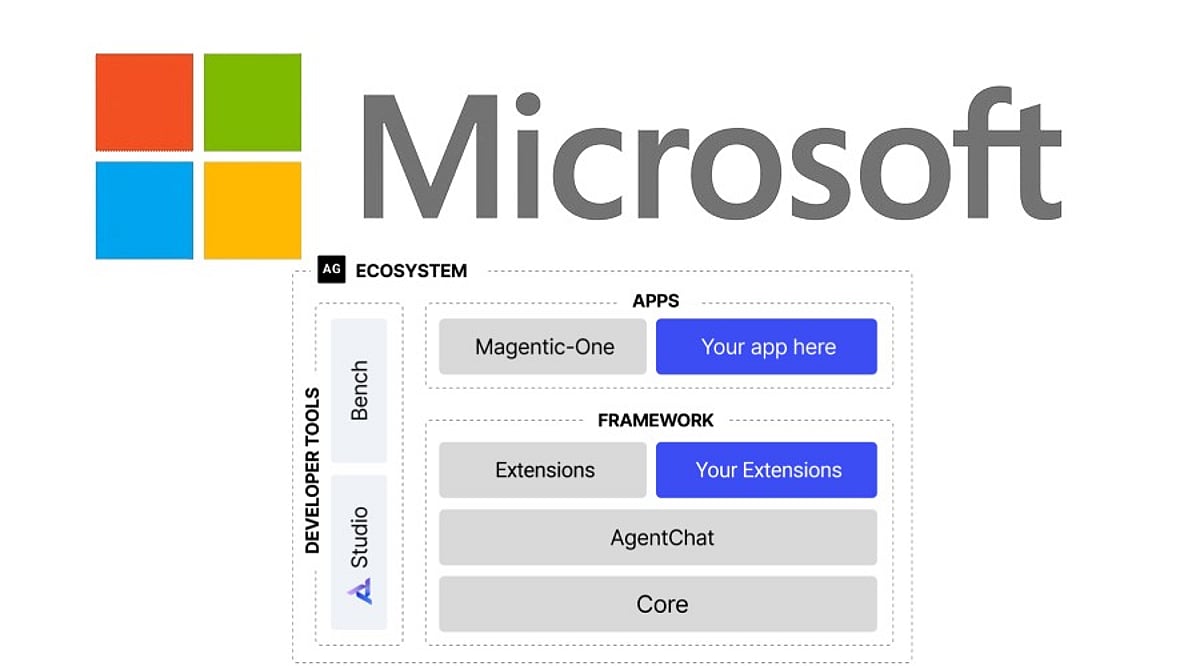
    AutoGen came from Microsoft Research and helped popularize multi-agent orchestration. Its architecture is split into three main layers. The Core API handled message transfer, event-driven agents, and local or distributed runtimes. AgentChat offered a simpler API for common patterns such as two-agent chat and group chat. Extensions added model clients, code execution, and other integrations. AutoGen also included AutoGen Studio, a no-code interface, and AutoGen Bench for agent evaluation.

    AutoGen v0.4 marked a major design step. The release moved toward an asynchronous, event-driven architecture with clearer separation between agents, runtimes, and extensions. That design made multi-agent systems easier to structure at a lower level. Magentic-One also showed what the framework could support: a multi-agent team that could handle web research, code execution, and file tasks.

    Maintenance Mode Changes the Choice

    The key update arrived in 2026. Microsoft now labels AutoGen as a maintenance-mode project. The project will not receive new features or enhancements, and community contributors now handle its development. Work remains focused on bug fixes, security patches, and documentation. Microsoft directs new users toward Microsoft Agent Framework and advises current AutoGen users to follow the migration path.

    That status does not make AutoGen useless. Current applications can continue to run with the AutoGen architecture and tools. The key distinction is project choice: AutoGen remains useful for current systems and for studying multi-agent concepts, while Microsoft Agent Framework is the main path for new Microsoft-based agent work.

    Microsoft Agent Framework Becomes the Successor

    Microsoft Agent Framework reached version 1.0 for both .NET and Python on April 2, 2026. Microsoft describes the release as production-ready, with stable APIs and a long-term support commitment. The framework combines ideas from AutoGen with enterprise foundations from Semantic Kernel. It supports single agents, multi-agent orchestration, multiple model providers, and cross-runtime communication through Agent2Agent (A2A) and Model Context Protocol (MCP).

    The shift also changes the orchestration model. AutoGen paired an event-driven Core with higher-level Teams. Agent Framework places more focus on typed, graph-based Workflows. Data moves across defined edges, and executors act when the required input arrives. This approach gives developers a clearer structure for larger agent systems.

    New Tools Push Agents Toward Real Work

    Microsoft has added several major capabilities around the Agent Framework since version 1.0. At Build 2026, Microsoft introduced Agent Harness, Hosted Agents, and CodeAct. The Agent Harness adds tools, memory, plans, approvals, context control, telemetry, and web search around a model. Hosted Agents provide a managed home inside Microsoft Foundry, with sandboxed sessions, persistent state, observability, and version control.

    CodeAct takes a different route for tool-heavy tasks. Instead of making a separate model call for each tool, CodeAct lets the model write a short Python program that calls several tools in one pass. Microsoft reported a test where CodeAct cut execution time from 27.81 seconds to 13.23 seconds and reduced token use from 6,890 to 2,489. Those figures came from a representative multi-step workload, so they should not serve as a universal benchmark.

    The Migration Path is Now Clear

    Microsoft has a dedicated AutoGen migration guide, updated on August 25, 2026. The guide maps familiar AutoGen ideas to Agent Framework and covers model clients, single-agent features, multi-agent orchestration, and observability. Some concepts stay familiar: agents still use model clients, instructions, and tools. The main change comes in workflow structure, tool APIs, and runtime behavior.

    The result is a clear divide. AutoGen remains a useful foundation for current applications and for the study of multi-agent architecture. Microsoft Agent Framework now holds the stronger case for new systems that need active Microsoft support, stable APIs, enterprise features, and a path toward production. AutoGen therefore does not end with a shutdown. Its ideas have moved into a broader platform that aims to take multi-agent AI from experiments to dependable software.

    FAQs

    1. Is Microsoft AutoGen discontinued? No. AutoGen is in maintenance mode, meaning existing applications can continue using it, but Microsoft is directing new development toward Agent Framework.
    2. What replaced Microsoft AutoGen? Microsoft Agent Framework has become Microsoft’s supported platform for building new AI agents and multi-agent systems.
    3. Should I migrate my existing AutoGen application? Not necessarily immediately. Existing applications can continue running, but migration is worth considering if you need new capabilities or long-term active platform support.
    4. What is the difference between AutoGen and Agent Framework? AutoGen emphasizes event-driven agents and team-based orchestration, while Agent Framework adds typed, graph-based workflows alongside broader enterprise and production capabilities.
    5. Is Microsoft Agent Framework production-ready? Yes. Microsoft Agent Framework 1.0 for .NET and Python was released as a production-ready platform with stable APIs and a long-term support commitment.
  • Why Sensor Fusion and Modular Design Give Yard Robots a Real Engineering Moat

    Why Sensor Fusion and Modular Design Give Yard Robots a Real Engineering Moat

    Most consumer robotics products compete on a spec sheet—more suction, longer battery, a bigger number somewhere. The interesting ones compete on architecture, on decisions made early in the design that are hard for competitors to copy later. In the fast-moving world of autonomous outdoor robotics, the companies building a real technical moat are the ones that got the architecture right, and the modular yard robot is turning into a useful case study in what that actually means.

    The outdoor environment punishes shortcuts. Unlike an indoor robot working on flat, predictable floors, an outdoor autonomous system has to solve localization, perception, traction, and task execution simultaneously, in weather, on slopes, across acres. Getting any one of these wrong makes the product unusable. Getting all of them right, in a way that’s also economically sensible for a homeowner, is the genuine engineering challenge. Here’s how the leading approach tackles it.

    The Localization Problem: Why RTK-GPS Alone Isn’t Enough

    The first hard problem is knowing exactly where the robot is. For an outdoor machine operating without buried boundary wires, positioning has to come from somewhere else, and the somewhere else is usually satellite navigation. But standard GPS, accurate to several meters, is useless when a few inches of error means driving over a flowerbed or off a retaining wall.

    The answer the industry has converged on is RTK-GPS, or Real-Time Kinematic GPS, which uses a fixed base station to correct satellite positioning down to centimeter-level accuracy. That precision is what makes wire-free navigation viable at all. It’s the difference between “somewhere in the yard” and “exactly on the mowing line.”

    But RTK-GPS has obvious drawbacks. Under tree cover, near buildings, or anywhere the sky is obstructed, satellite signal degrades or drops entirely. A system that relies on RTK-GPS alone becomes unreliable exactly where many real yards are most complex. This is the point where architecture separates the serious products from the rest.

    Sensor Fusion as the Real Technical Moat

    The robust solution is not a single better sensor. It’s fusing multiple sensing systems so that the weaknesses of each are covered by the strengths of the others. This is the approach behind Yarbo and its multi-sensor fusion system, which the company calls PPVS.

    PPVS combines RTK-GPS with dual vision cameras and onboard sensors, blending RTK, vision, odometer, collision bar, IMU, and LiDAR (the presence of LiDAR varies by series and version model) into a single continuously updated estimate of where the robot is and what’s around it. When satellite signal drops under a tree canopy, vision and onboard sensing carry the localization load until the signal returns. When vision is challenged by low light or glare, satellite positioning anchors the estimate. The fused system stays reliable in conditions that would break any single sensor working alone.

    This is the kind of engineering that constitutes a real moat, because sensor fusion is genuinely hard to get right. It isn’t a component you can buy off a shelf and bolt on. It’s the accumulated result of tuning how different data streams are weighted, reconciled, and trusted in thousands of edge cases across real terrain. Competitors can buy the same GPS chips and the same cameras. What they can’t easily copy is the fusion logic that makes them work together reliably.

    Traction and Terrain: The Physical Layer of the Problem

    Perception and localization mean nothing if the robot can’t physically go where it needs to. This is where the mechanical architecture matters. Many robotic mowers use wheels, which struggle on slopes and slick or uneven ground. The modular yard robot approach uses tracked mobility instead, distributing weight and gripping terrain in a way that lets the machine handle steep grades and heavy loads.

    The engineering payoff is substantial. Yarbo’s tracked core is rated for slopes as steep as 70 percent and coverage measured in multiple acres, territory that would defeat a conventional wheeled robotic mower. Tracks also matter enormously for the winter use case, where a robotic snow blower has to push through accumulation and maintain traction on surfaces a wheeled machine would simply slip on.

    The Modular Architecture: One Brain, Many Bodies

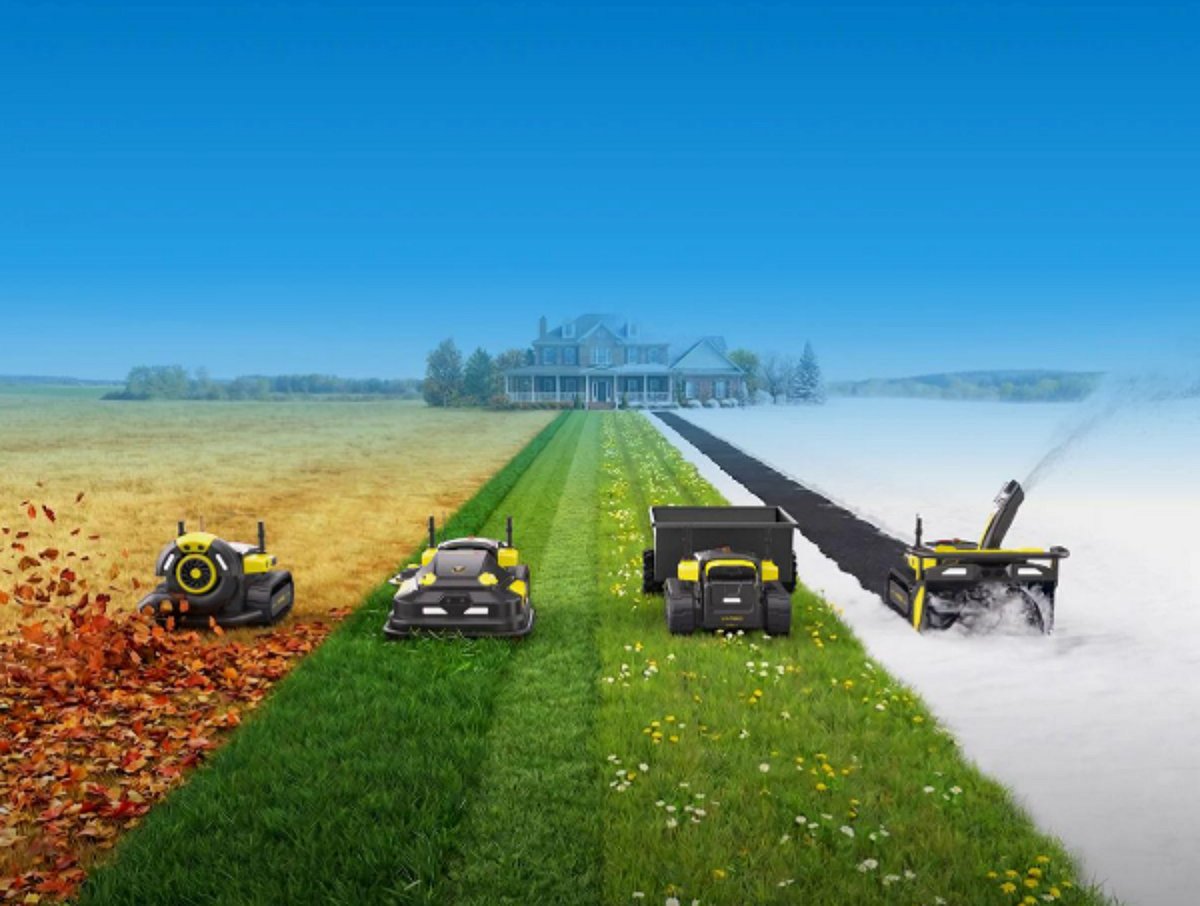
    The final and most distinctive architectural decision is modularity. Rather than building separate robots for separate jobs, the design centers on one intelligent, autonomous core that accepts interchangeable modules. The same core becomes a robot lawn mower, a snow blower, a leaf blower, or a trimmer depending on which module is attached.

    From an engineering standpoint, this is an elegant separation of concerns. The expensive, complex, high-value parts—the navigation stack, the sensor fusion system, the battery platform, the traction system—live in the core and get reused across every task. The modules handle the mechanical specifics of each job. This means the hard-won intelligence is amortized across many functions rather than duplicated in four separate machines, which is both better engineering and better economics.

    It also creates a compounding advantage. Every improvement to the core’s AI and navigation benefits every module simultaneously. A software update that sharpens obstacle detection makes the mower, the snow blower, and every other configuration smarter at once. That’s a platform dynamic, not a product one, and platforms are notoriously difficult for single-product competitors to catch.

    Why the Architecture Is the Product

    Step back and the pattern is clear. The moat here isn’t any individual feature. It’s the combination of centimeter-accurate fused localization, terrain-capable tracked mobility, and a modular core that turns one hard-won intelligent platform into a year-round fleet of functions. Each of those is difficult on its own. Integrated into a coherent whole that a homeowner can actually operate, they represent exactly the kind of architectural depth that’s hard to replicate and slow to erode.

    In autonomous outdoor robotics, the spec sheet is the surface. The architecture is the product.

  • AI and Laser Automation Reshape Small Manufacturing: A 2026 Outlook

    AI and Laser Automation Reshape Small Manufacturing: A 2026 Outlook

    A visit to a one-man fabrication shop in Ohio reveals the true impact of laser automation. The owner, who spent nine years cutting acrylic signs by hand router, switched to a CO2 laser machine eighteen months ago. When asked what changed, he didn’t mention speed or quality first. He said he no longer dreads Monday mornings.

    That response captures a deeper truth about automation in small manufacturing. It’s not just about output numbers—it’s about what happens when a single operator can take on work that once required a three-person team and still finish by dinner.

    By 2026, the laser machine market has matured to the point where access is no longer the barrier. The real question is how small manufacturers are using the technology and what happens when AI starts guiding the process. OMTech, a laser equipment manufacturer based in Anaheim, California, has tracked these shifts across its customer base, revealing consistent patterns across industries.

    What Laser Machines Actually Do in Small Shops

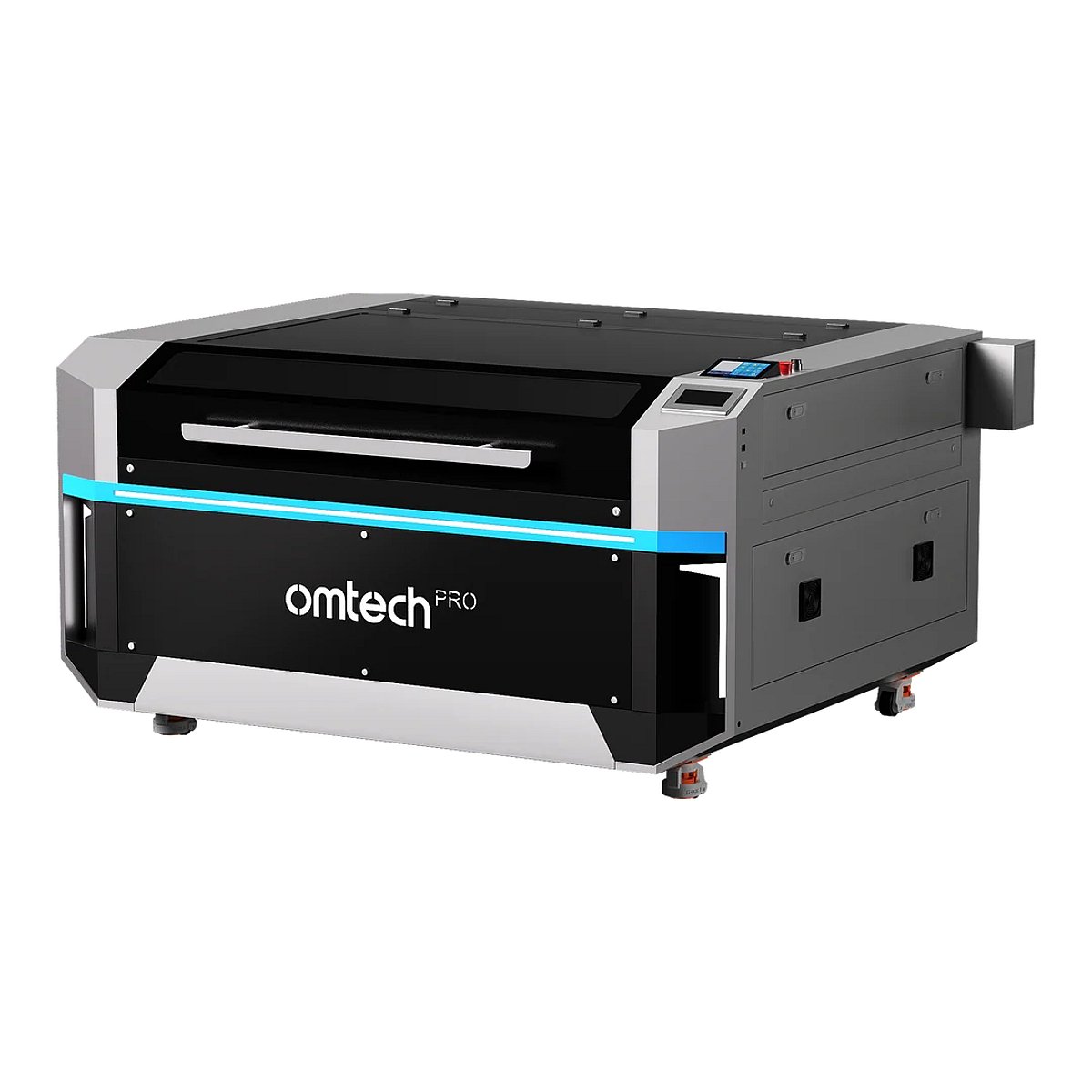
    A laser machine is a precision cutting and marking system that uses a focused beam of light to interact with material. CO2 lasers handle wood, acrylic, leather, and fabric. Fiber lasers handle bare metals. The beam follows a digital design file, so accuracy is as good as the file itself.

    For a small manufacturer, this removes human variability from cutting and marking operations. The machine never has an off day and doesn’t rush at the end of a shift. The five hundredth piece looks like the first one.

    Shops that have integrated laser machines most successfully didn’t necessarily have the biggest budgets. They identified one production bottleneck and targeted it specifically:

    • A sign shop that was routing letters by hand switched to CO2 laser cutting and reduced per-sign labor time from 45 minutes to 8 minutes.
    • A jewelry repair business added a fiber laser engraver and now offers personalization services that account for 40% of monthly revenue.
    • A contract parts supplier added a fiber laser marking machine to bring traceability marking in-house, eliminating $600 per month in outsourcing costs.
    • A home workshop seller on Etsy scaled from 20 orders per month to 180 after switching from hand engraving to a CO2 laser machine.

    Where AI Enters the Laser Machine Workflow

    AI integration in laser manufacturing happens at several levels, many of which aren’t obvious from the outside.

    Automated Material Recognition

    Newer laser systems include sensors and software that automatically identify material type and thickness, then pull recommended cutting parameters from a library. Parameter selection is where most quality problems originate. A beginner operator who once spent two hours on test cuts now spends ten minutes. An experienced operator using AI-suggested parameters iterates faster and wastes less material.

    Nesting Optimization

    Nesting arranges parts on a sheet to minimize waste. AI-driven nesting software now completes in seconds what used to take 15–30 minutes of manual arrangement. Shops report 12–18% reductions in raw material consumption on typical production runs.

    Vision Alignment Systems

    Camera-based alignment systems allow laser machines to position designs on irregular or pre-marked materials without manual measurement. The material goes on the bed, the camera identifies reference points, and the software repositions the design. For businesses engraving on irregular blanks or adding marks to pre-cut parts, this eliminates a step that previously required skill and attention.

    Predictive Maintenance

    Production laser machines now monitor their own operational parameters and flag degradation before it becomes failure—lens contamination, beam alignment drift, cooling system performance. The machine tells the operator what needs attention before a mid-job failure costs time and material. For a small shop with one machine handling all production, unplanned downtime is a serious financial event.

    Emerging Revenue Patterns

    The economic story in 2026 isn’t just about cost reduction. It’s about new revenue categories that were inaccessible before the technology became affordable.

    Personalization at scale is the clearest example. A laser engraver or cutter can produce unique versions of the same product—different names, designs, or text—without changing setups. Personalized products command substantially higher prices. A cutting board that sells for $18 without a name sells for $55–$75 with one.

    On-demand manufacturing allows small shops to produce single pieces or very small batches economically. A customer who needs one custom award or prototype doesn’t need to order fifty to make the economics work.

    Contract services are another pattern. A shop with a laser machine often discovers excess capacity and sells access to other local businesses. Contract laser cutting, engraving, and marking generate revenue from equipment that would otherwise sit idle between production runs.

    What Small Manufacturers Should Evaluate Before Buying

    The laser machine market offers options across price points and capability levels. Before looking at specifications, answer these questions:

    • What materials will you process? CO2 for wood, acrylic, leather, and fabric. Fiber for bare metals. This determines the laser type.
    • What is your realistic production volume? 40-watt for personal/low production; 60–80 watts for most small business needs; 100+ watts for shops running the machine most of the day.
    • What does the full setup cost? Machine price is only the start. Ventilation adds $150–$400. A water chiller for CO2 adds $200–$600.
    • What software does the machine support? LightBurn is the production standard for most CO2 and fiber machines. Verify compatibility before purchase.
    • What support exists? Search the manufacturer name alongside terms like maintenance, parts, and troubleshooting. Active communities and accessible documentation are reliable indicators of long-term ownership.

    The Competitive Reality for Small Manufacturers in 2026

    Businesses not adopting laser machine technology are not standing still—their competitors are. Entry-level production capability has dropped in price to the point where payback is straightforward for almost any shop with a clear application.

    A shop spending $400 per month outsourcing laser work can purchase an in-house system and reach payback in under a year. A shop adding personalization to an existing product line often sees revenue increases that cover equipment cost within six to nine months.

    AI accelerates this: faster parameter development, better material utilization, reduced operator training time. These improvements compound over time. A shop that adopted a laser machine two years ago and has been refining its workflow holds a meaningful operational advantage over one starting today.

    The transformation happening in small manufacturing through laser machine adoption and AI-guided process optimization is not speculative. It is visible in revenue numbers, payback timelines, and the Monday morning attitudes of shop owners who made the switch.

    The technology is accessible. The applications are proven. The competitive pressure is real and increasing. For small manufacturers evaluating their next capital investment, a laser machine with AI-assisted workflow support is one of the clearest paths to both cost reduction and new revenue generation available in 2026.

    OMTech, based in Anaheim, California, designs and builds CO2 laser engravers, fiber laser marking systems, and MOPA fiber lasers for small businesses, production shops, and home workshop users. Their full range of laser engraving and cutting machines is available at OMTech.