Category: Artificial Intelligence

  • Top AI Certifications for Professionals in 2026: Boost Your Career and Salary

    Top AI Certifications for Professionals in 2026: Boost Your Career and Salary

    Artificial intelligence has become an integral part of daily work across industries. Companies now rely on AI for writing, research, customer support, data analysis, software development, and business planning. As a result, many professionals are eager to learn AI and validate their skills with a certification. According to Pearson’s 2026 Value of IT Certification Report, 35% of employees plan to earn an AI certification in 2026—up from just 17% the previous year.

    Why AI Certifications Matter

    Earning an AI certification demonstrates not only knowledge but also practical understanding of AI in the workplace and a commitment to responsible AI practices. Research from Revelio Labs shows that certified AI professionals earn an average of $79,800 per year, compared to $72,300 for non-certified peers—a difference of about $7,500 annually. Additionally, 38.9% of certified professionals reach executive positions, versus 32.5% of those without certification.

    What Employers Want

    Employers now seek professionals who can solve real business problems with AI, not just recite terminology. They value skills such as reviewing AI responses critically, protecting company data, practicing responsible AI, and improving workflows with smart tools. Consequently, modern AI certifications emphasize practical skills like prompt writing, workflow optimization, responsible AI use, and business applications over theoretical knowledge.

    Best AI Certifications for Working Professionals

    Google Generative AI Leader

    Ideal for managers, marketers, product teams, and business professionals. Exam cost: $99. Duration: 50–60 questions. Valid for three years. Covers AI strategy, prompt optimization, business use cases, and Google’s AI ecosystem.

    AWS Certified AI Practitioner

    For IT professionals, business analysts, cloud teams, and project managers. Exam: 65 questions, $100, valid three years. Topics include AI basics, machine learning, generative AI, and responsible AI.

    NVIDIA Certified Associate – Generative AI LLMs

    Designed for developers and AI enthusiasts. Exam cost: $125, valid two years. Covers prompt engineering, large language models, Python, neural networks, and AI application development.

    Databricks Certified Generative AI Engineer Associate

    For AI engineers and ML professionals. Exam: 45 questions, $200. Requires about six months of hands-on experience. Covers advanced generative AI topics.

    Great Choices for Beginners

    No coding experience? No problem. These certifications welcome beginners:

    • Google AI Professional Certificate (Coursera): Seven courses covering AI fundamentals, communication, productivity, research, and responsible AI. No technical prerequisites.
    • IBM Generative AI Engineering Professional Certificate (Coursera): Six-month program covering LLMs, prompt engineering, RAG, AI agents, LangChain, and deployment.
    • IBM AI Developer Professional Certificate: Focuses on Python, chatbots, Watson AI, and generative AI. Also six months.
    • DeepLearning.AI AI for Everyone: Explains AI strategy, business opportunities, and organizational adoption without coding.

    Time and Cost Considerations

    Short AI courses typically take 5–10 hours. Beginner certificates require 10–20 hours. Professional certificate programs take 3–6 months. Cloud certification prep needs 20–40 hours. Exam fees remain affordable: Google Generative AI Leader ($99), AWS AI Practitioner ($100), NVIDIA Associate ($125), Databricks Engineer ($200). Coursera subscriptions vary by pace.

    Long-Term Value

    AI skills demand is growing across sectors. Employers seek talent in prompt engineering, LLMs, responsible AI, automation, cloud AI, LangChain, RAG, machine learning basics, and AI productivity tools. An AI certification provides systematic training and signals competence to employers. The statistics—higher salaries, better promotion rates, and rising employee interest—confirm the value. For working professionals, an AI certification is a practical investment in their future.

    FAQs

    1. Which AI certification is best for beginners?
    Google AI Professional Certificate and DeepLearning.AI’s AI for Everyone are top choices as they require no coding experience.

    2. Do AI certifications increase salary?
    Yes. Certified professionals earn an average of $79,800 vs. $72,300 for non-certified peers.

    3. How long does an AI certification take?
    Short courses: 5–10 hours; professional certificates: 3–6 months.

    4. Which certification is best for developers?
    NVIDIA Certified Associate – Generative AI LLMs, IBM AI Developer Professional Certificate, or Databricks Certified Generative AI Engineer Associate.

    5. Are AI certifications worth it in 2026?
    Yes. As AI adoption accelerates, certifications validate skills, improve job prospects, and prepare for future opportunities.

  • 7 Innovative Ways Camera Robots Are Revolutionizing Key Industries

    7 Innovative Ways Camera Robots Are Revolutionizing Key Industries

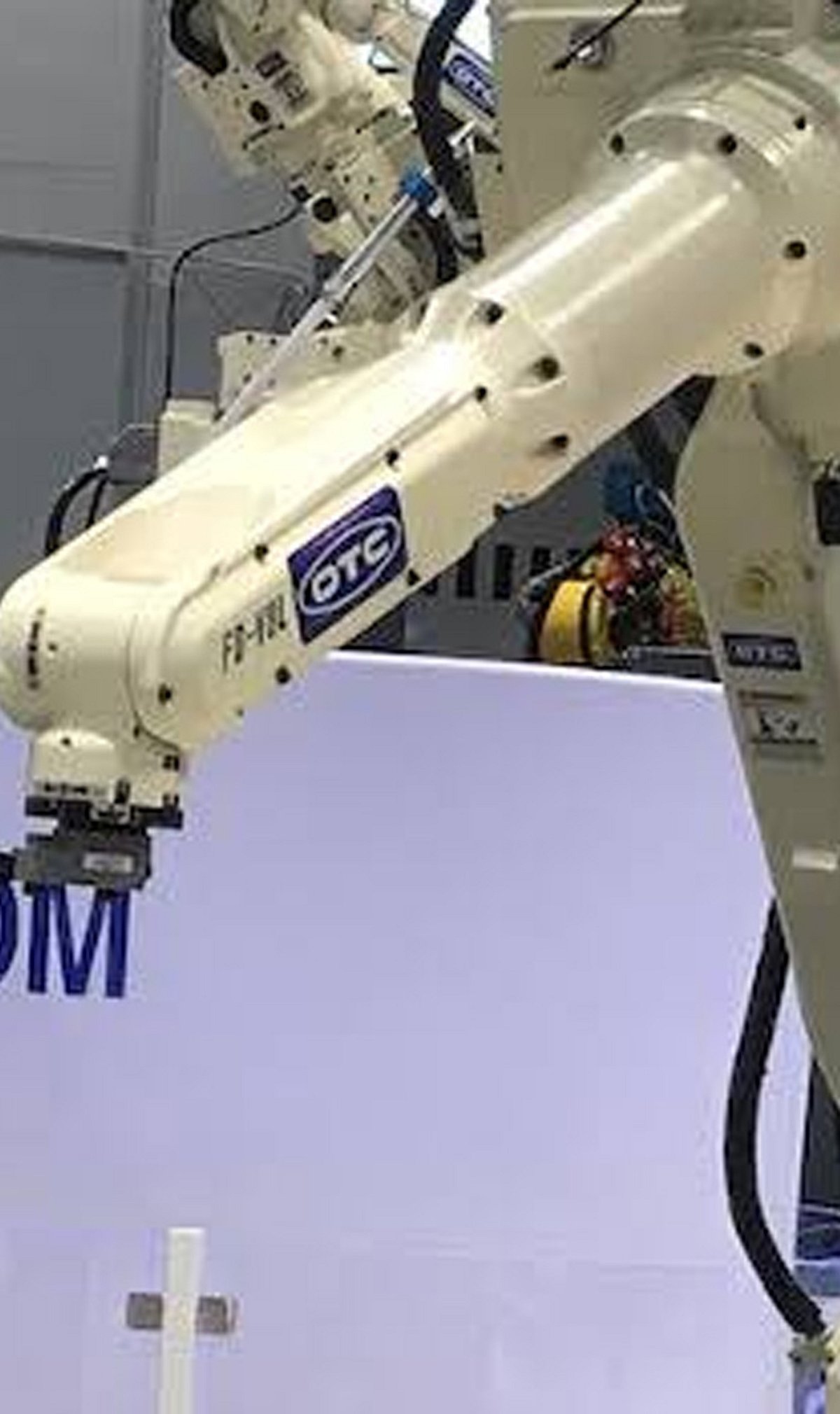
    Camera robots are rapidly transforming how industries operate, from enhancing security to improving medical procedures. By combining artificial intelligence, advanced optics, and autonomous navigation, these machines are delivering unprecedented capabilities across multiple sectors. Below, we explore seven key areas where camera robots are making a significant impact.

    1. Autonomous Surveillance

    Camera robots equipped with AI continuously monitor environments, detecting suspicious activity and improving security in commercial, industrial, and public spaces. Their ability to operate around the clock without fatigue enhances threat detection and response times.

    2. Cinematic Filmmaking

    Advanced robotic camera systems capture smooth, repeatable, and highly precise shots that elevate filmmaking quality. By automating camera movements, they reduce the need for manual operation and allow directors to achieve complex angles with ease.

    3. Infrastructure Inspection

    Camera robots safely inspect bridges, power plants, pipelines, and construction sites. They identify structural issues such as cracks or corrosion without exposing human workers to hazardous environments, thereby improving safety and reducing downtime.

    4. Medical Assistance

    In healthcare, robotic cameras support surgeons by providing enhanced visualization during minimally invasive procedures. This leads to greater precision, smaller incisions, and improved patient outcomes.

    5. Wildlife Observation

    Researchers deploy camera robots to monitor wildlife behavior without disturbing natural habitats. These systems collect valuable ecological data over long periods, aiding conservation studies and biodiversity assessments.

    6. Warehouse Automation

    Robotic cameras track inventory movement, identify misplaced goods, and assist automated logistics systems. This boosts warehouse efficiency, reduces errors, and streamlines supply chain operations.

    7. Disaster Response

    Camera-equipped robots enter dangerous disaster zones—such as collapsed buildings or fire sites—transmitting live visuals that help emergency teams assess damage and locate survivors more effectively.

    Additional applications include sports broadcasting, where robotic cameras deliver dynamic angles and automated tracking, and agricultural monitoring, where farmers use them to assess crop health and optimize irrigation. As technology advances, camera robots will continue to reshape industries by improving accuracy, safety, and productivity.

  • Silicon Valley Divided: US Tech Giants Disagree Over Access to Chinese AI Models

    Silicon Valley Divided: US Tech Giants Disagree Over Access to Chinese AI Models

    Chinese AI models are creating a policy split across Silicon Valley as their cost, access, and technical ability improve. OpenAI and Anthropic want tighter controls on some Chinese systems, while Nvidia, Microsoft, Meta, and other companies support continued access to open models.

    The dispute has grown after Z.ai and Moonshot AI released new systems that compete with leading American products. The debate now covers national security, intellectual property, software access, and competition within the US technology sector.

    Chinese AI Models Raise Security Concerns

    Anthropic has accused DeepSeek, Moonshot AI, and MiniMax of using Claude outputs to improve competing systems. The company said the firms created about 24,000 false accounts and generated more than 16 million exchanges with Claude. Anthropic described the activity as “industrial-scale” extraction. The Chinese companies have not publicly accepted those claims, and the allegations have not been independently proven. Beijing has also rejected similar accusations as “groundless.”

    OpenAI and Anthropic have reportedly urged US officials to consider tighter controls on Chinese open-weight models. Their position treats advanced model files and training methods as valuable technology that needs stronger protection.

    Treasury Secretary Scott Bessent has said the administration may consider sanctions against companies that steal American AI property. White House technology adviser Michael Kratsios has also raised concerns about large-scale copying from US models. Officials have not announced a broad ban.

    Tech Leaders Defend Open Model Access

    Nvidia chief executive Jensen Huang has called for both closed and open frontier models. Microsoft chief executive Satya Nadella has also said open software supports a healthy AI market. Executives from Meta, IBM, and Palantir joined a letter backing open access.

    Their companies benefit when developers can test and deploy many models. Cloud providers gain more computing demand, while chipmakers sell hardware used to run the systems. Startups also use lower-cost models to avoid high fees from closed platforms.

    Supporters say open-weight systems allow developers to inspect, adapt, and host software on their own servers. They also argue that broad restrictions could reduce competition and give large closed-model companies more control over the market.

    Nearly 200 companies linked to the Little Tech Association reportedly asked Washington to avoid blanket restrictions. They supported action against proven intellectual property theft but opposed blocking models already available across global platforms.

    OpenAI appears to support open-weight AI in general while seeking targeted controls on Chinese systems. That position separates wider software access from concerns linked to specific companies and alleged data misuse.

    Chinese Providers Expand Through Lower Costs

    Chinese AI models have gained users through lower prices and open access. Developers can download some models, adjust them, and run them without relying on a single provider. That approach can reduce costs for coding, research, and automated tasks.

    Moonshot AI’s Kimi K3 and Z.ai’s GLM-5.2 have drawn attention after strong benchmark results. Users have also adopted DeepSeek and other Chinese systems for business tasks. Some American companies are testing them to cut operating expenses.

    The models still face limits, as independent evaluators say leading US systems offer stronger performance across a wider range of tasks. Chinese providers also face capacity pressure, financial losses, and export controls on advanced chips.

    Washington now appears to be considering targeted measures instead of a full ban. Such action could focus on companies accused of data theft or security risks. Meanwhile, open-model supporters want the government to protect US technology without limiting lawful access.

  • Top 5 AI and Machine Learning Courses to Enroll in 2026

    Top 5 AI and Machine Learning Courses to Enroll in 2026

    Artificial intelligence and machine learning have become essential skills across industries, from software development and healthcare to finance, manufacturing, and cybersecurity. As organizations continue integrating AI into their products and operations, employers are actively looking for professionals who understand both the theory and practical application of these technologies.

    With hundreds of online courses available, finding one that matches your career goals can be challenging. The best programs combine strong conceptual foundations with hands-on projects, modern AI tools, and industry-recognized certifications. Here are five AI and machine learning courses worth considering in 2026.

    Why Choosing the Right AI Course Matters

    A certificate alone will not land you a job in AI. Today, recruiters seek people who can put machine learning techniques into practice, work within frameworks, and create AI solutions. A well-thought-out curriculum can give you the opportunity to improve your knowledge of math, Python, data analysis, model building, and deployment, and to develop your own projects.

    Prerequisites Before Starting an AI and Machine Learning Course

    You do not need a computer science major to start learning about AI and machine learning, but acquiring some skills beforehand will simplify the process. Basic knowledge of Python programming is very useful since it is widely used in AI platforms. A basic understanding of mathematics—including probability and statistics—will also help you understand how machine learning models operate.

    If you are a beginner, you also need some basic knowledge of handling data, such as working with simple datasets and spreadsheets. If you have no programming experience, it is better to spend a few weeks learning Python basics before starting a machine learning course.

    Top AI and Machine Learning Courses at a Glance

    Course Name Provider Best For Key Features
    Machine Learning Specialization Stanford & DeepLearning.AI Beginners Foundational concepts, hands-on projects
    IBM AI Engineering Professional Certificate IBM via Coursera Beginners to Intermediate Practical skills, industry recognition
    AI for Everyone DeepLearning.AI Non-technical professionals AI strategy, no coding required
    Deep Learning Specialization DeepLearning.AI Intermediate Neural networks, TensorFlow, PyTorch
    Professional Certificate in Machine Learning & AI MIT xPRO Advanced professionals Rigorous curriculum, real-world case studies

    What to Do After Completing Your First AI Course

    Completing the course is just the start. Employers are interested in practical knowledge, not just certifications. Begin by developing small-scale projects—movie recommendation systems, sentiment analysis tools, spam classifiers, chatbots, or image recognition apps—using publicly available datasets.

    Upload your code to GitHub and build a portfolio that showcases your projects. Participating in Kaggle competitions, contributing to open-source AI projects, and gaining experience with frameworks like TensorFlow, PyTorch, and Hugging Face will help your resume stand out.

    How to Choose the Right Course

    The most suitable route depends on your experience level and career goals. Beginners should take programs that cover Python, mathematics, and machine learning before moving to advanced topics like deep learning or large language models.

    Programmers aiming for AI engineering roles should opt for programs that include projects, deployment, cloud computing, and portfolio building. Business professionals may find more value in courses focused on AI strategy and implementation rather than coding.

    Why This Matters

    Artificial intelligence is reshaping almost every industry, but employers increasingly value practical skills over certificates alone. Choosing a course that combines strong fundamentals with hands-on projects gives learners a better opportunity to build confidence, create a portfolio, and stay competitive as AI continues to evolve.

    Final Thoughts

    The field of AI and machine learning continues to transform industries, leading to rising demand for skilled individuals. Taking a good course is a great starting point, but long-term success requires applying those skills. Whether you’re starting your AI journey or advancing your expertise, choosing a course that combines theory with practice will help you build confidence, strengthen your portfolio, and stay competitive.

    FAQs

    Which is the best AI and machine learning course for beginners?

    The IBM AI Engineering Professional Certificate and the Machine Learning Specialization by Stanford & DeepLearning.AI are among the best beginner-friendly programs because they combine foundational concepts with hands-on projects.

    Do I need programming experience before learning AI?

    Not necessarily. However, learning basic Python programming before starting an AI course makes it much easier to understand machine learning concepts and complete practical assignments.

    What prerequisites are required for machine learning courses?

    Most beginner courses recommend basic Python programming, elementary mathematics (including algebra, probability, and statistics), and familiarity with handling datasets using spreadsheets or Python libraries.

    Which AI course is best for working professionals?

    AI for Everyone by DeepLearning.AI is an excellent choice for managers, business leaders, product managers, and professionals who want to understand AI strategy without focusing heavily on coding.

    Which programming language should I learn for AI and machine learning?

    Python is the most widely used programming language for AI and machine learning because of its rich ecosystem of libraries, including TensorFlow, PyTorch, Scikit-learn, Pandas, and NumPy.

  • From Music to AI Literacy: How Steven Jiang Transformed Overture into a School-Focused Education Company

    From Music to AI Literacy: How Steven Jiang Transformed Overture into a School-Focused Education Company

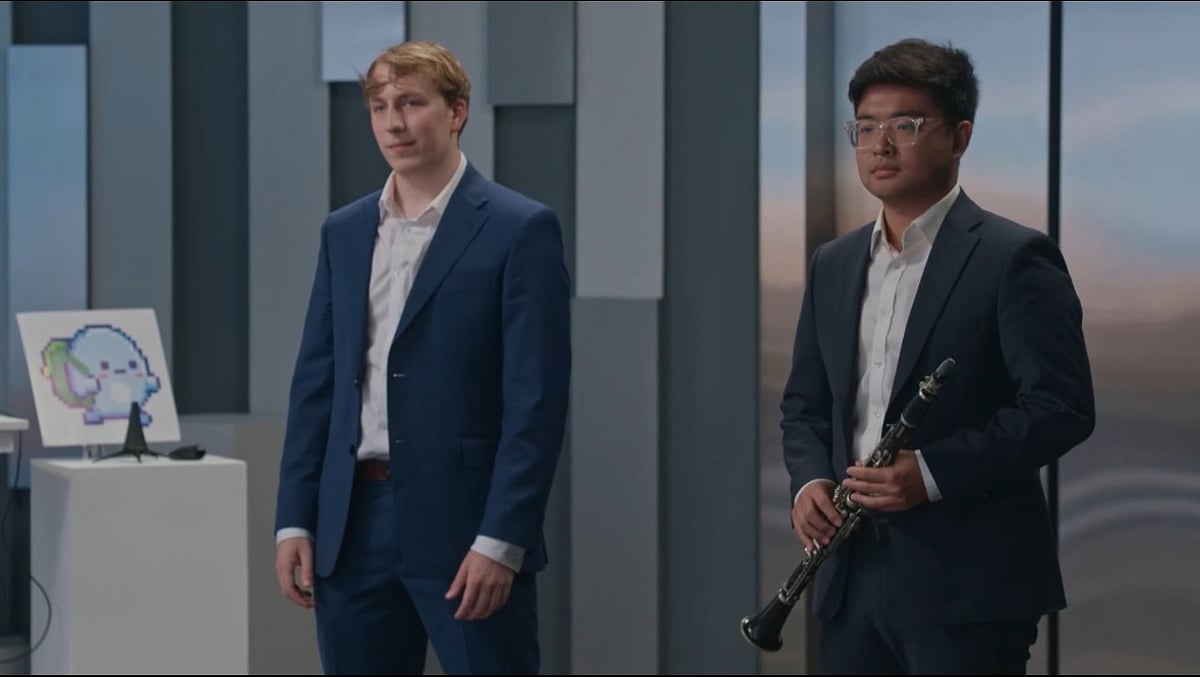
    Steven Jiang, co-founder and COO of Overture, started his entrepreneurial journey not in artificial intelligence but in music. He and his co-founder Aspen Buckingham met while studying music at Northwestern University. Their first venture, launched in 2022, was a video game designed to help children compose music. That early work, though seemingly unrelated to AI, laid the foundation for what Overture has become today: a company that partners with schools to teach AI literacy through hands-on, creative projects.

    The pivot from music education to AI enrichment wasn’t driven by trends. It came from direct feedback from school administrators who were struggling to introduce AI to young students responsibly. Jiang recalls one administrator who expressed fear not about AI’s importance but about the lack of a safe framework for teaching it. That practical concern—how to teach AI without handing children tools they weren’t ready to use—became the new mission for Overture.

    Jiang says the company didn’t pivot because AI was a trend; it pivoted because schools had a real problem and no clear solution. Overture now runs programs in more than 50 schools across Chicago and Boston, with plans to expand to over 120 programs in multiple states. The company’s approach is rooted in active learning, a philosophy Jiang traces back to his music background. “We teach kids to create with it, to make cool things,” he explains. “That’s rooted in how we think as artists: using your imagination and critical thinking to build something awesome.”

    Overture’s programs include a paper-and-pencil AI model for young children, emphasizing that the company builds around school problems rather than a single product. The company also creates part-time teaching jobs for local educators, artists, and musicians. Jiang has been recognized with Forbes 30 Under 30 and Inno 25 Under 25 honors, and he speaks at universities about AI education. His long-term goal is to bring high-quality AI education to every state through mission-aligned partners.

    For Jiang, the evolution of Overture is not a break from its origin but a widening of it. The company began by asking how children could make music in a new way. Now it answers the question that changed everything: how can schools help children meet AI responsibly?

  • Meta AI Upgrades to Muse Spark 1.1: Now Handles Tasks, Presentations, and Multi-Step Workflows

    Meta AI Upgrades to Muse Spark 1.1: Now Handles Tasks, Presentations, and Multi-Step Workflows

    Meta has upgraded its AI assistant with the latest Muse Spark 1.1 model, transforming it into a powerful productivity tool that can plan tasks, create presentations, integrate with apps, and automate multi-step workflows. This update positions Meta AI as a stronger competitor to ChatGPT, Gemini, and Claude, moving beyond simple Q&A to become a true personal superintelligence.

    The enhanced assistant now connects with email and calendar services to organize schedules, prepare daily briefings, and track ongoing tasks. Users can ask Meta AI to plan meetings, manage reminders, generate weekly plans, or coordinate projects without repeatedly entering instructions. The company says the assistant understands context better than before, allowing it to follow through on requests instead of responding to one prompt at a time. It can also automate recurring activities such as meal planning, shopping reminders, or scheduled updates.

    The update introduces deeper research capabilities. Meta AI can collect information from across the web, organize findings into structured reports, and generate presentation slides directly from its research. Users can edit outputs in real time by changing the tone, adding new instructions, or removing sections. All generated content—including reports, slide decks, and plans—is stored in one place for future access and sharing.

    These features run on Muse Spark 1.1, Meta’s latest multimodal reasoning model designed for agentic AI tasks. Earlier this month, Meta introduced the model with improvements in reasoning, coding, tool use, and computer interaction. The company says these capabilities allow the assistant to perform longer, more complex workflows with less human intervention.

    The latest upgrade reflects Meta’s growing focus on productivity as it competes with OpenAI’s ChatGPT, Google’s Gemini, and Anthropic’s Claude. While Meta AI initially focused on social experiences and conversational assistance, it is increasingly positioning itself as an AI assistant capable of handling day-to-day work and personal tasks. The new capabilities are rolling out in select markets through the Meta AI app and the web version, with wider availability across Meta platforms, including WhatsApp, expected in the coming weeks.

  • Global AI Regulations Tighten Oversight: Transparency, Audits, and Compliance

    Global AI Regulations Tighten Oversight: Transparency, Audits, and Compliance

    Governments around the world are rapidly introducing new regulations to audit and oversee artificial intelligence models. These legal frameworks aim to ensure that AI systems are transparent, accountable, and safe for consumers and society at large.

    Transparency Rules

    Companies must now explain how their AI models are trained and how decisions are made. This includes disclosing data sources, algorithmic processes, and potential biases.

    Copyright Compliance

    AI developers face stricter rules regarding the use of copyrighted training data. They must obtain proper licenses or ensure that their training datasets do not infringe on intellectual property rights.

    Risk Assessments

    High-risk AI systems, such as those used in healthcare, finance, or law enforcement, require extensive testing before deployment. Risk assessments help identify potential harms and mitigate them before they affect users.

    Security Audits

    Independent audits are becoming mandatory to identify vulnerabilities and prevent misuse of AI technologies. These audits provide an external check on safety and security practices.

    Consumer Protection

    New laws strengthen user rights, demanding greater accountability from AI providers. Consumers now have the right to know when they are interacting with an AI and to challenge automated decisions.

    Global AI Policies

    Countries are introducing AI regulations at an unprecedented pace, from the European Union’s AI Act to similar initiatives in the United States, China, and beyond. This global movement reflects a shared recognition of the need for governance.

    Enterprise Impact

    Businesses must invest in governance, compliance, and documentation to keep up with evolving legal requirements. Non-compliance can result in heavy fines and reputational damage.

    The Future

    Responsible AI development is no longer optional—it is becoming a legal requirement worldwide. Organizations that embrace transparency and accountability will be better positioned for long-term success.

  • 10 Essential DeepSeek Prompts to Supercharge Your Writing in 2026

    10 Essential DeepSeek Prompts to Supercharge Your Writing in 2026

    AI has become an indispensable tool for modern writers, but the quality of its output hinges on one critical factor: the prompt. Whether you’re a blogger, marketer, copywriter, or technical writer, well-crafted prompts can save hours of editing and produce content that is accurate, engaging, and human-like. Here are ten powerful DeepSeek prompts every writer should have in their toolkit for 2026.

    1. Blog Writing Prompt

    Generate a complete, SEO-friendly article from scratch.
    Act as an experienced content writer. Write a 1,200-word SEO-optimized blog post about [Topic] for [Target Audience]. Use a conversational tone, include an engaging introduction, H2 and H3 headings, practical examples, actionable tips, and a compelling conclusion. Naturally incorporate the primary keyword throughout the article while maintaining readability.

    2. Humanize AI-Generated Content Prompt

    Make robotic text sound natural and engaging.
    Rewrite the following content so it reads like it was written by an experienced human writer. Remove repetitive phrases, improve sentence flow, vary sentence lengths, maintain the original meaning, and use a conversational yet professional tone. Ensure the content passes AI detection while preserving clarity and accuracy.

    3. SEO Optimization Prompt

    Improve existing content without sacrificing readability.
    Optimize the following article for SEO. Improve keyword placement, rewrite headings for better search visibility, enhance readability, suggest internal linking opportunities, and naturally include related keywords without keyword stuffing. Preserve the original meaning and writing style.

    4. Social Media Content Prompt

    Turn one article into multiple platform-specific posts.
    Create engaging social media posts based on the following article. Generate separate versions for LinkedIn, X (Twitter), Facebook, Instagram, and Threads. Each post should include a strong hook, concise messaging, relevant hashtags, and a compelling call to action tailored to the platform.

    5. Email Copywriting Prompt

    Craft professional emails that drive action.
    Write a persuasive marketing email promoting [Product/Service]. Include an attention-grabbing subject line, engaging introduction, key benefits, social proof where appropriate, and a clear call to action. Keep the tone friendly, professional, and customer-focused.

    6. Article Summarization Prompt

    Quickly extract key points from lengthy content.
    Summarize the following article into five key takeaways. Highlight the most important insights, explain them in simple language, and maintain the original context. Present the summary using concise bullet points.

    7. Technical Documentation Prompt

    Create beginner-friendly documentation.
    Act as a technical writer. Create step-by-step documentation explaining how to use [Software/Tool]. Include prerequisites, installation steps, usage instructions, troubleshooting tips, frequently asked questions, and best practices. Use simple language and clear formatting.

    8. Research Assistant Prompt

    Speed up research before writing.
    Act as a research assistant. Gather the latest information on [Topic], summarize current trends, identify key challenges and opportunities, list important statistics, and suggest credible sources for further reading. Organize the findings into clear sections for easy reference.

    9. Creative Storytelling Prompt

    Make content more engaging with narrative.
    Write a compelling story about [Topic] using a relatable character, a realistic challenge, practical solution, and memorable ending. Keep the writing conversational, emotionally engaging, and suitable for an online audience while naturally delivering the intended message.

    10. Proofreading and Editing Prompt

    Give your content a professional polish.
    Act as a professional editor. Review the following content for grammar, spelling, punctuation, readability, consistency, tone, and sentence flow. Correct all errors, improve clarity, eliminate unnecessary words, and preserve the author’s original voice while making the content publication-ready.

    Final Thoughts

    Prompting is the key to unlocking the full value of AI content. These DeepSeek prompts will help you write blogs, marketing copy, social media posts, technical documentation, and summaries faster and more accurately. Instead of staring at a blank page, leverage these templates to get your job done quickly. As AI continues to evolve, mastering prompt engineering will remain one of the most important skills for content creators. Save these prompts and use them to reduce editing time and improve your writing quality.

  • How AI-Powered Machine Vision Transforms Modern Robotics: Capabilities, Challenges, and Future Trends

    How AI-Powered Machine Vision Transforms Modern Robotics: Capabilities, Challenges, and Future Trends

    Overview

    AI-powered machine vision enables robots to perceive, interpret, and respond to real-world environments using advanced sensors, deep learning, and real-time decision-making. Modern vision systems improve robotic capabilities such as adaptive object handling, quality inspection, autonomous navigation, and safe human-robot collaboration across industries. Advances in vision-language-action models, edge AI, and intelligent automation are making robots more flexible, efficient, and capable while addressing increasingly complex tasks.

    From Blind Automation to Visual Intelligence

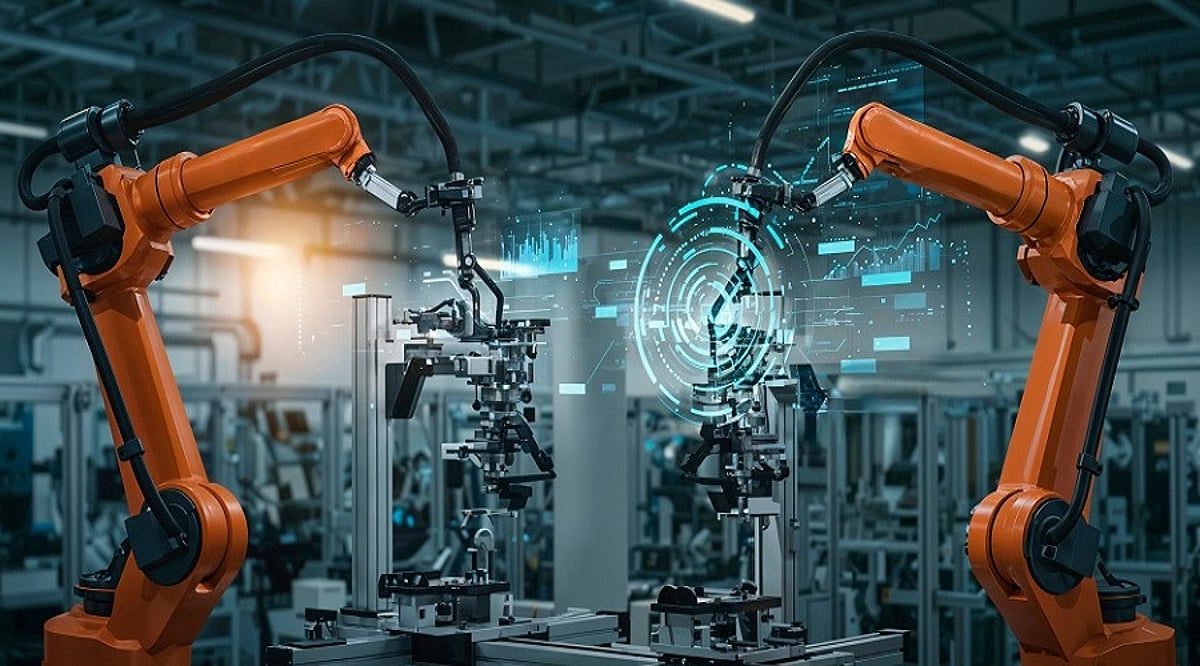
    Traditional robotic cells depend on precision fixtures, fixed trajectories, and tightly structured environments. A part out of place stops the line cold. Modern systems replace that rigidity with cameras, depth sensors, and trained models that estimate an object’s position and orientation in real time. Machine vision has evolved from an optional sensing layer into a core component that directly shapes perception, planning, and control.

    Inside the AI Vision Stack

    Perception in a modern robotic system moves through several layers. Sensors, ranging from 2D cameras to time-of-flight units and lidar, capture raw visual and spatial data. Many systems now push early processing directly into the sensor itself and onto edge devices near the robot. This cuts latency and bandwidth before data ever reaches the main compute unit. Deep learning models handle detection, segmentation, and pose estimation. Most run on convolutional networks or transformer architectures. Robots often mix input types too, pairing RGB cameras with depth sensors and force feedback, so one missed signal does not stop the whole task.

    What sets current systems apart from older automation is the tight link between what a robot sees and what it does next. The system reads what it sees and acts on it right away. It adjusts grip or movement mid-task instead of waiting for a person to check the work first.

    New Capabilities This Unlocks

    • Adaptive pick-and-place: A robot estimates the pose of a randomly oriented part directly from a mixed bin, work that once demanded a custom fixture for every product variant.
    • Inline inspection systems: Built on convolutional networks and vision transformers, they catch scratches, weld defects, and misaligned assemblies that rule-based image checks routinely miss.
    • Safe human-robot collaboration: Cobots track a person’s position and proximity closely enough to slow down before a collision rather than after one, letting them work near people without a safety cage.
    • Autonomous mobile robots: Use vision-based mapping to reroute around a spilled pallet or a parked cart without needing the warehouse floor plan reprogrammed.
    • Vision-language-action models: Such as Figure AI’s Helix and NVIDIA’s GR00T N1, these pair a vision-language backbone with a fast motor-control policy, letting a robot act on an instruction like ‘pick the damaged blue container’ instead of only flagging objects it was separately trained to detect.

    Together, these shifts underpin Industry 4.0, where flexible, data-driven automation replaces fixed programming across a plant floor.

    Where This Shows Up Today

    • Manufacturing: Plants use vision-guided bin picking and defect classification to shorten quality checks and catch problems earlier in the line.
    • Warehousing: Barcodes are read visually, and routes are adjusted around clutter without fixed paths, letting operators redesign storage layouts without reprogramming every route.
    • Agriculture: Robots and drones scan crop rows for early signs of disease.
    • Healthcare and retail: Service robots identify people, signage, and obstacles well enough to navigate spaces never built with a machine in mind.

    Limits and Open Problems

    A model trained on one factory floor or one lighting setup often struggles on another. Closing that gap remains active engineering work, not a solved problem. Creating the labeled datasets needed to train these systems is expensive, so manufacturers increasingly use synthetic images generated from digital twins to reduce data collection costs. Dust, reflections, and sensor failure still test the limits of what a camera-based system can handle reliably. Safety certification for vision-driven decisions has not kept pace with the technology itself, and operators still need clear evidence of what a robot ‘saw’ before trusting its judgment call.

    Final Thoughts

    Vision-language-action models point toward robots that take a spoken instruction and work out the steps themselves—without a specialist rewriting detection rules for every new task. That shift, from programming behavior to describing intent, is the next real test for factories deciding how much autonomy to hand a machine.

  • HCLTech Invests Rs. 14,257 Crore in AI Data Centre and Tech Hub in Odisha’s Sovereign AI Park

    HCLTech Invests Rs. 14,257 Crore in AI Data Centre and Tech Hub in Odisha’s Sovereign AI Park

    India’s push for sovereign AI infrastructure has received a major boost as HCLTech announces a massive Rs. 14,257 crore investment in a new AI data centre in Odisha. The facility will be part of the state’s upcoming Sovereign AI Park in Bhubaneswar, marking one of the largest commitments to domestic AI computing power to date.

    HCLTech is collaborating with Sarvam AI and the Odisha government on the project. Together, they aim to build robust AI compute capacity for government agencies, businesses, and research institutions, reducing India’s reliance on overseas AI infrastructure.

    What the Data Centre Will Deliver

    The new data centre will combine HCLTech’s full suite of AI capabilities with Sarvam AI’s foundational models. This integration will power AI applications and infrastructure for a wide range of users, from public sector entities to private enterprises and academic researchers.

    India’s demand for secure, homegrown computing resources has been accelerating rapidly. This data centre directly addresses that need, signaling a strategic shift away from depending on foreign AI infrastructure.

    A Bigger Push for Odisha

    Beyond the data centre, HCLTech plans to establish a technology delivery hub in Bhubaneswar with a capacity of 5,000 employees. The hub is expected to begin operations by 2028.

    Together, these two projects are anticipated to create thousands of direct and indirect jobs, significantly strengthening Odisha’s technology ecosystem. This investment follows HCLTech’s earlier funding round in Sarvam AI, reflecting the company’s broader strategy to expand into AI infrastructure, models, and enterprise tools.

    Also read: Airtel partners with Google to establish India’s first mega AI hub and data center in Visakhapatnam