Category: Artificial Intelligence

  • Delhi High Court Rules No Copyright Breach in OpenAI’s AI Training Practices

    Delhi High Court Rules No Copyright Breach in OpenAI’s AI Training Practices

    The Delhi High Court has delivered a landmark ruling in favor of OpenAI, stating that the company’s use of copyrighted material to train its artificial intelligence models does not violate copyright law. The decision, announced on Friday, rejected an interim injunction sought by the news agency ANI in its ongoing copyright lawsuit against the AI developer.

    Justice Amit Bansal held that OpenAI’s act of storing ANI’s works for training its Large Language Models (LLMs) does not, by itself, constitute copyright infringement. The court further found that ANI failed to establish a prima facie case that ChatGPT had memorized or reproduced its copyrighted content in its responses.

    “OpenAI’s act of storing ANI’s works does not amount to copyright infringement,” Justice Bansal observed, adding that “ANI had failed to show that any memorization or regurgitation of ANI’s work has happened from responses generated by ChatGPT.”

    ‘Irreparable Injury’ to Public if AI Training is Stopped

    The court emphasized that granting an interim injunction would have wider consequences beyond the parties involved. Justice Bansal highlighted that irreparable injury would be caused not only to OpenAI but also to the public at large if such an injunction were granted. The ruling noted that restricting AI companies from training their models using copyrighted material could adversely affect technological innovation and scientific progress.

    ANI Sought Rs. 2 Crore in Damages

    ANI filed the lawsuit in November 2024, alleging that OpenAI had used its copyrighted news reports without permission to train ChatGPT. The agency sought Rs. 2 crore in damages and asked the court to permanently restrain the company from storing, publishing, reproducing, or using its content. ANI argued that ChatGPT generated responses that were “verbatim or substantially similar” to its reports, and also alleged that the chatbot produced “hallucinated” responses falsely attributed to the agency.

    OpenAI Cited Publicly Available Data

    OpenAI rejected the claims, stating that its AI models are trained based on publicly available data. According to the court, OpenAI informed the court that it had blacklisted the domain name of ANI in October 2024, following which no new content from the website can be used for training any AI model. Senior counsel Amit Sibal, representing OpenAI, argued that “copyright protects the expression of ideas; there is no monopoly on facts” and noted that OpenAI’s servers are located outside India.

    This case represents one of the first landmark decisions in India concerning the use of copyrighted works for training generative AI, setting a significant precedent for the technology sector.

  • AWS AI & ML Certifications: A Guide to Choosing the Right Path in 2026

    AWS AI & ML Certifications: A Guide to Choosing the Right Path in 2026

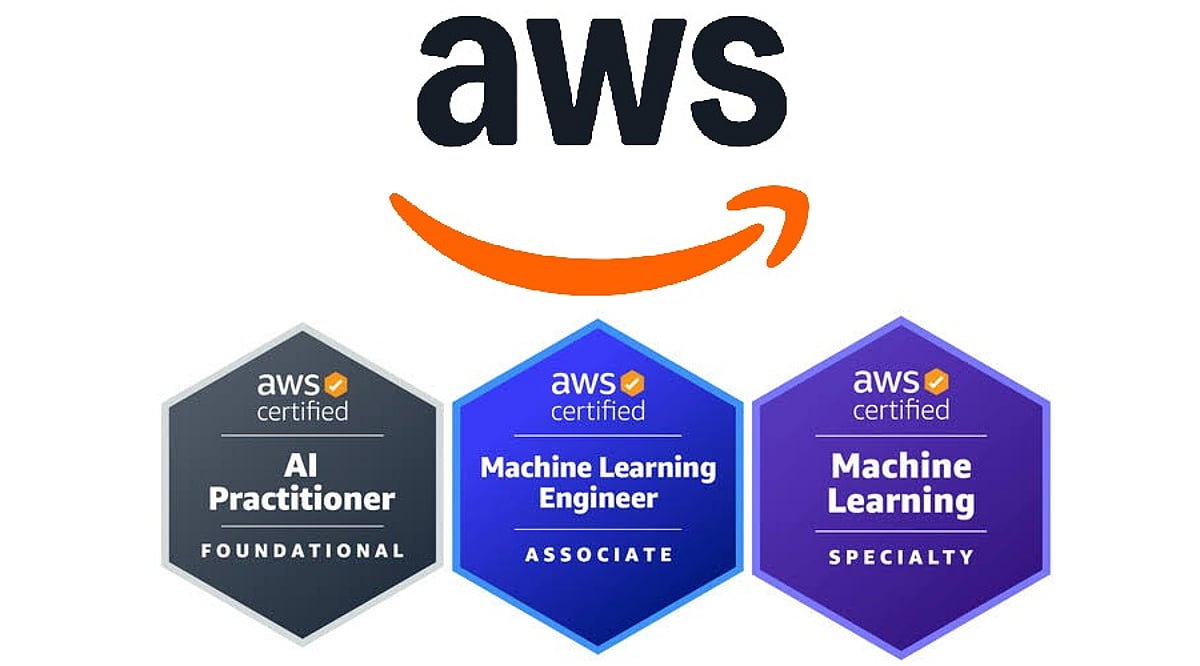
    AWS offers a growing range of AI and machine learning certifications for beginners, developers, data engineers, and experienced AI professionals. Each credential is designed for different skills and career goals. Understanding the certification path makes it easier to choose the right option. This guide compares the key certifications to help you decide which one best fits your career.

    Overview

    AWS offers a role-based AI and machine learning certification portfolio that supports beginners, machine learning engineers, data engineers, and developers building AI-powered applications. The certifications cover AI fundamentals, machine learning model development, MLOps, data engineering, foundation models, retrieval-augmented generation (RAG), and Amazon Bedrock.

    AWS has modernized its certification ecosystem by replacing the legacy Machine Learning – Specialty path with role-specific credentials aligned with today’s AI and generative AI workloads. AWS certifications used to funnel almost everyone toward one exam. This has changed, and the lineup now spans across four credentials, each built for a distinct kind of work. It includes a foundational exam for newcomers, an associate-level path for engineers who build and deploy models, a data-focused associate track, and a professional certification for developers shipping generative AI features.

    The Machine Learning Specialty exam was retired for new candidates on March 31, 2026. Existing holders will keep the certification until its original expiry. More than an administrative change, this shift signals AWS’s move toward role-based certifications that better match candidates’ actual job responsibilities.

    What the Current Lineup Covers

    The active AWS AI and ML certifications include:

    • AWS Certified AI Practitioner (Foundational): Covers core AI and machine learning concepts, responsible AI practices, and how AWS services support common use cases. No coding background is required.
    • AWS Certified Machine Learning Engineer – Associate: Focuses on building, tuning, deploying, and monitoring machine learning models using services such as Amazon SageMaker, Amazon S3, and Amazon CloudWatch. Built for professionals who already have hands-on ML experience.
    • AWS Certified Generative AI Developer – Professional: Validates the ability to integrate large language models into applications, build retrieval-augmented generation (RAG) architectures, and work with vector databases and Amazon Bedrock for production-ready AI solutions.
    • AWS Certified Data Engineer – Associate: Centers on designing and managing data pipelines, storage, and reliable data infrastructure that supports machine learning and generative AI workloads.

    Matching the Exam to the Job

    A newcomer pivoting into AI from another field or a business analyst who needs to speak the same language as an engineering team gets the most value from AI Practitioner. It builds a baseline in AI and ML concepts without demanding coding depth.

    Someone already training and deploying models is better served by ML Engineer – Associate, which centers on data preparation, model tuning, and running workloads in production rather than staying inside a notebook.

    Developers already working with large language models, RAG pipelines, and Bedrock fit the Generative AI Developer – Professional role. This credential expects prior implementation experience rather than theory alone, and choosing it over AI Practitioner or ML Engineer comes down to one question: is the work built around foundation models or traditional ML pipelines?

    Data engineers who feed pipelines into ML systems should look at Data Engineer – Associate, a track that rarely gets the same attention as the AI-branded exams but supports all of them underneath.

    Product managers and stakeholders overseeing AI projects without building them get more practical value from AI Practitioner than from an engineering-level exam, since the goal is informed oversight rather than hands-on implementation.

    Deciding Where to Start

    The simplest approach starts with hands-on experience, not ambition. Someone new to AWS and AI belongs in AI Practitioner first. Someone already building or deploying models can skip straight to ML Engineer – Associate. A developer working with foundation models in production is the right candidate for Generative AI Developer – Professional.

    A common progression looks like AI Practitioner, then ML Engineer – Associate or Data Engineer – Associate depending on the role, then Generative AI Developer – Professional once foundation model work becomes part of the job.

    For those already deep into machine learning specialty prep, finishing it still holds some value, given less than a year remains before it closes to new candidates. For everyone else, moving straight to ML Engineer Associate offers more current coverage and a clearer path forward.

    The strongest certification choice rarely lines up with the most advanced option available. It lines up with what the job actually requires now and with where that job is headed next.

    Final Thoughts

    AWS restructuring its AI credentials around roles rather than a single tiered ladder points to where cloud certification is heading in general. It clarifies that the exam is less about climbing a fixed hierarchy and more about proving specific, current skills tied to specific work. Candidates who treat certification as a career-mapping exercise, rather than a checklist, will likely find their credentials relevant as AWS splits its portfolio.

  • 10 Computer Vision Unicorn Startups Redefining Industries in 2026

    10 Computer Vision Unicorn Startups Redefining Industries in 2026

    Computer vision has become one of the fastest-growing areas of artificial intelligence, enabling machines to interpret images and video like humans. Businesses now leverage this technology to improve factory operations, inspect products, guide autonomous vehicles, detect fraud, monitor workplaces, and assist doctors with medical imaging. As AI advances, computer vision opens new business opportunities across many sectors. Industry reports project the global computer vision market will surpass $30 billion by 2030, and investors continue to back companies building practical AI solutions instead of experimental products.

    Several startups have already achieved unicorn status (valuations above $1 billion). Many have raised fresh funding, signed major enterprise deals, and expanded into new markets. Here are ten computer vision unicorn startups worth watching in 2026.

    Key Takeaways

    • Computer vision unicorns solve real business problems across multiple industries.
    • Strong funding and billion-dollar valuations reflect growing investor confidence.
    • These startups will drive the next phase of enterprise AI adoption.

    Shield AI

    Shield AI is a leading defense-focused AI company founded in 2015. Its Hivemind software enables aircraft to operate without GPS, relying on computer vision and sensors to navigate buildings, roads, and targets. In 2026, Shield AI is valued at nearly $12.6 billion, thanks to new investments and increased defense collaborations. Governments worldwide are expected to boost spending on autonomous defense solutions, positioning Shield AI for further growth.

    Netradyne

    Netradyne transforms commercial fleet safety with AI-powered dashboard cameras that analyze driver behavior in real time. It rewards safe driving and detects distracted driving, phone use, fatigue, harsh braking, lane changes, and road hazards. The company became India’s first unicorn of 2025 after a $90 million Series D round from Point72 Asset Management, Qualcomm Ventures, and Pavilion Capital. Netradyne now processes over 4 trillion sensor data points annually across more than 550,000 connected vehicles, helping logistics companies lower accidents and insurance costs.

    Gecko Robotics

    Gecko Robotics builds robotic inspection systems for large factories, power plants, oil refineries, and defense facilities. Its robots use advanced cameras and AI to detect corrosion, cracks, leaks, and structural damage early. The company crossed unicorn status in 2025 and works with major industrial firms and government organizations. As predictive maintenance investment grows, Gecko Robotics stands out as a top industrial AI company.

    Tractable

    Tractable revolutionizes insurance claims with computer vision. Customers upload photos of damaged vehicles or property, and the AI estimates repair costs in minutes. This speeds up claims, reduces fraud, and improves customer experience. Hundreds of insurers across North America, Europe, and Asia now rely on Tractable, which continues to expand as digital claims become standard.

    Runway

    Runway is a popular AI video creation platform. Its software removes objects, tracks motion, edits clips, changes backgrounds, and generates new videos from simple scripts, saving hours of manual editing. With strong investor backing and partnerships with media companies, Runway is well positioned for growth in enterprise AI.

    Covariant

    Covariant addresses the challenge of robotic grasping in warehouses. Its AI combines computer vision and machine learning to enable robots to identify and handle a wide variety of products, regardless of size, shape, or packaging. This improves efficiency, reduces costs, and speeds up operations. As e-commerce drives warehouse automation, Covariant expects strong revenue growth in 2026.

    Voxel

    Voxel uses computer vision to improve workplace safety. Its AI platform connects to existing security cameras in factories, warehouses, and industrial sites to detect safety violations like improper lifting, forklift hazards, and unauthorized access. By preventing accidents, Voxel helps businesses reduce injuries and financial losses. Stricter safety regulations are driving increased adoption.

    Magic Leap

    Magic Leap develops advanced augmented reality headsets equipped with computer vision that maps rooms, tracks eye movements, recognizes objects, and overlays information. The technology aids medical specialists, factory workers, engineers, and military personnel. Initially known for hardware, Magic Leap’s software has become equally valuable.

    Verkada

    Verkada modernizes enterprise security with cloud-connected AI cameras. Its platform recognizes faces, reads license plates, counts people, tracks occupancy, and detects unusual activity across thousands of cameras. Security teams receive instant alerts. Businesses choose Verkada for smarter security without large on-site infrastructure, making it one of the fastest-growing companies in the market.

    Afresh

    Afresh applies computer vision to grocery store inventory management. The AI analyzes product images and inventory data to predict demand for fresh produce, reducing food waste and improving stock availability. Retailers using Afresh see better profit margins and sustainability, gaining attention across the retail industry.

    Why This Matters

    Computer vision now supports tasks once done manually, helping businesses save time, lower costs, improve safety, and make faster, more accurate decisions. As AI adoption grows, companies leading computer vision innovation will shape the future of healthcare, manufacturing, transportation, retail, defense, and many other sectors.

    Final Thoughts

    Computer vision technology has evolved rapidly, powering unmanned vehicles, warehouse robots, insurance systems, workplace safety, and smart cameras. Companies like Shield AI, Netradyne, Gecko Robotics, Tractable, Runway, Covariant, Voxel, Magic Leap, Verkada, and Afresh are solving real organizational problems with strong funding and billion-dollar valuations, proving market confidence.

    FAQs

    1. What is a computer vision startup? A computer vision startup develops AI software that allows machines to understand and analyze images, videos, and visual data for real-world applications.
    2. What makes a startup a unicorn? A startup becomes a unicorn when its private valuation reaches $1 billion or more.
    3. Which industries use computer vision the most? Healthcare, manufacturing, logistics, retail, automotive, insurance, defense, agriculture, and security are the biggest users.
    4. Why do investors support computer vision startups? These companies build scalable AI solutions that improve efficiency, reduce costs, increase safety, and create long-term business opportunities.
    5. Why should businesses watch these startups in 2026? These companies lead innovation with advanced AI products, strong funding, expanding customer bases, and technologies that will influence enterprise automation.
  • Galaxy AI vs Apple Intelligence: Key Differences in Smartphone AI Approaches

    Galaxy AI vs Apple Intelligence: Key Differences in Smartphone AI Approaches

    Samsung and Apple are pursuing distinct strategies for integrating artificial intelligence into smartphones. Galaxy AI emphasizes practical, user-accessible tools like translation, photo editing, and productivity enhancements. Apple Intelligence, by contrast, takes a more personalized route, embedding AI deeply into the operating system and apps to create a seamless, context-aware experience. Both aim to make smartphones smarter and more useful, but their methods differ significantly.

    Galaxy AI Is Built for Action

    Galaxy AI functions as a broad toolkit of practical features. Users can translate calls in real time, summarize content, edit photos with generative tools, and rewrite text. Samsung also leverages AI to improve search and overall productivity. This approach gives users visible, direct-access features, making Galaxy AI particularly appealing to those who want control and flexibility.

    Apple Intelligence Thinks Contextually

    Apple Intelligence is designed to understand the user’s personal context. Apple integrates AI into Siri, Messages, Mail, and other system-level features. The goal is to make AI feel less like a separate tool and more like an intelligent layer that works across the entire Apple ecosystem.

    AI Assistants Take Different Paths

    Galaxy users benefit from Samsung’s AI features alongside Google’s Gemini ecosystem, giving Android users access to a wide range of AI capabilities. Meanwhile, Apple is upgrading Siri to better understand context and perform more complex tasks. Apple’s long-term vision centers on a more capable assistant deeply integrated with Apple devices.

    Photo and Writing Tools

    Both platforms offer AI-powered writing and image-editing tools. Galaxy AI provides features such as Generative Edit, object removal, summarization, and writing assistance. Apple Intelligence offers tools including Rewrite, proofreading, Clean Up, and AI-generated images. Currently, Samsung feels more feature-heavy, while Apple focuses on seamless system integration.

    Privacy Remains a Key Difference

    Apple has placed privacy at the center of its AI strategy. Apple Intelligence processes many tasks on-device and uses Private Cloud Compute for more complex requests. Galaxy AI also combines on-device and cloud processing, depending on the feature. The key difference lies in how each company positions privacy within its AI ecosystem.

    Which AI Approach Is Better?

    Galaxy AI is better suited to users who want a wide range of practical tools and greater flexibility. Apple Intelligence may appeal more to users invested in Apple’s ecosystem who seek contextual, personalized assistance. The real competition is not simply about features—it is about which company can make AI feel most useful in everyday life.

  • Enterprise Automation 2026: Key Technologies, Top Tools, and Strategic Challenges

    Enterprise Automation 2026: Key Technologies, Top Tools, and Strategic Challenges

    Overview

    Enterprise automation has evolved from a cost-cutting initiative to a strategic imperative. Businesses across sectors—finance, healthcare, manufacturing, retail—are redesigning workflows using AI, RPA, cloud computing, and APIs. This shift enables connected systems for business process automation and faster decision-making.

    Key Technologies Powering Enterprise Automation

    Modern automation relies on a stack of complementary technologies:

    • Robotic Process Automation (RPA): Automates rule-based, repetitive tasks like data entry and reconciliation.
    • Artificial Intelligence and Machine Learning: Identify patterns, make predictions, and enable intelligent decision-making.
    • Intelligent Document Processing (IDP): Extracts and processes information from invoices, contracts, and forms.
    • Process Mining: Detects bottlenecks and inefficiencies from event logs.
    • Low-Code/No-Code Platforms: Empower business users to create workflows without deep coding.
    • APIs: Integrate applications and move data between CRM, ERP, and other systems.
    • Cloud Computing: Provides scalable infrastructure and centralized access to automation services.
    • Generative AI: Processes natural language, identifies exceptions, and adapts workflows dynamically.

    Top Enterprise Automation Tools

    The market offers diverse platforms suited to different ecosystems and maturity levels:

    • Microsoft Power Automate: Ideal for Microsoft 365, Azure, and Dynamics environments.
    • UiPath: Comprehensive RPA, process discovery, orchestration, and AI capabilities.
    • Automation Anywhere: Enterprise-grade RPA with AI-powered automation.
    • SS&C Blue Prism: Designed for regulated industries requiring auditability and central control.
    • ServiceNow: IT service management and cross-functional workflow orchestration.
    • Salesforce Flow: Automation within the Salesforce ecosystem.
    • SAP Build Process Automation: For organizations with heavy SAP investments.
    • IBM watsonx Orchestrate: AI-assisted orchestration in enterprise toolchains.
    • Workato: Integration-led automation across applications and data.
    • Zapier Enterprise: Accessible cross-application workflow automation.

    Choosing the right tool depends on existing systems, governance requirements, process complexity, and automation maturity.

    Benefits of Enterprise Automation

    Automation delivers measurable operational improvements: increased productivity, lower costs, and reduced error rates. In finance, it speeds up account servicing, reconciliation, and compliance. Healthcare simplifies administrative document processing. Manufacturers integrate production data with maintenance and supply chains. Retailers optimize inventory and orders, while logistics companies improve shipment tracking.

    Additional benefits include faster workflows, real-time analytics, greater scalability, and enhanced compliance through standardized logging. Employees can focus on higher-value analytical and customer-facing tasks. However, best results come from redesigning inefficient processes before automating them, not just layering automation on top of broken workflows.

    Challenges and Risks

    Implementing enterprise automation is not without hurdles. High upfront costs for software, integration, data preparation, and skilled labor can be prohibitive. Legacy systems often lack modern APIs, forcing reliance on risky connections or RPA bots. Cybersecurity risks increase as automated systems access critical data and applications.

    Governance is another major challenge. Organizations must define access rules, audit trails, and human oversight for AI-driven decisions. Employee resistance and skill gaps can derail adoption, especially when automation is perceived as a threat rather than a redesign opportunity. Vendor lock-in becomes a concern when tools are deeply embedded in processes.

    Successful automation requires a clear strategy, reliable data, secure integration, change management, and continuous improvement. The best programs combine business process automation with human judgment, treating technology as an enabler rather than a replacement.

    Frequently Asked Questions

    1. What is Enterprise Automation?
    Enterprise automation uses AI, RPA, APIs, cloud platforms, and workflow tools to automate repetitive, complex, and interconnected business processes across departments.

    2. Which technologies power Enterprise Automation?
    Key technologies include AI, ML, RPA, IDP, process mining, APIs, cloud computing, low-code platforms, and generative AI.

    3. What are the main benefits?
    Improved productivity, lower costs, faster workflows, fewer errors, stronger compliance, better customer experiences, and scalable operations.

    4. What challenges do businesses face?
    High implementation costs, legacy integration, cybersecurity risks, governance concerns, employee resistance, skills shortages, and vendor lock-in.

    5. How can businesses successfully implement automation?
    Through strategic planning, process redesign, secure integration, data reliability, employee training, strong governance, and continuous optimization aligned with business goals.

  • How IKEA Transforms Home Shopping with AI-Powered Interior Design Tools

    How IKEA Transforms Home Shopping with AI-Powered Interior Design Tools

    IKEA has taken a bold step into the future of home furnishing with its AI-driven platform, IKEA Kreativ. By combining digital room scanning, 3D furniture previews, and personalized recommendations, the tool helps shoppers visualize and purchase furniture with confidence. The Ingka Group, IKEA’s largest retailer, introduced this innovative solution to make interior shopping more interactive and practical, available on both smartphones and computers.

    Built on technology from Geomagical Labs, IKEA Kreativ allows users to recreate their rooms digitally, experiment with layouts, and see how products will look before buying. This reduces uncertainty and minimizes costly mistakes or unnecessary returns.

    Key Features of IKEA Kreativ

    Explore Products in 3D Interactive Showrooms

    Users can browse over 50 showrooms in 3D, featuring a variety of furnished rooms and design concepts. They can move, spin, substitute, and rearrange products to see how different combinations work together, offering a realistic preview of potential purchases.

    Digitally Create Your Room Design

    The IKEA Kreativ Scene Scanner, integrated into the IKEA app, uses multiple photos to generate a realistic 3D copy of your room. With AI, you can remove existing furniture, insert new IKEA products, and test different design variations—all from your device.

    Save, Share, and Purchase Anytime

    Room designs are saved to your IKEA account in the cloud, allowing you to continue editing from anywhere. You can share designs with family or friends and add desired products directly to your shopping cart for seamless purchasing.

    Billie: IKEA’s AI Shopping Assistant

    Introduced in 2021, Billie is an AI-powered chatbot that handles common customer queries about products, deliveries, returns, and recommendations. It processes around 3.2 million queries and resolves over 47% of them autonomously, freeing human advisers to tackle more complex issues. This improves customer support efficiency and enhances the overall shopping experience.

    Why This Matters

    Buying furniture online can be tricky because it’s hard to know if something will suit your space. IKEA Kreativ addresses this by letting shoppers see furniture in their own rooms before buying, boosting confidence and reducing the chance of returns. The AI strategy focuses on making interior shopping more visual, interactive, and personalized.

    The Bottom Line

    IKEA’s AI-powered tools, including Kreativ and Billie, transform the home furnishing experience. By digitizing room planning, offering realistic 3D previews, and providing instant support, IKEA is setting a new standard for online furniture shopping.

  • How Artificial Intelligence Is Transforming Luxury Fashion Design

    How Artificial Intelligence Is Transforming Luxury Fashion Design

    Artificial intelligence is revolutionizing the luxury fashion industry, from trend forecasting and personalized designs to sustainable production and counterfeit detection. Here are the key ways AI is reinventing luxury fashion design:

    • Trend Forecasting: AI analyzes global fashion trends, consumer behavior, and social media activity to help designers anticipate future style preferences.
    • Personalized Designs: Luxury brands use AI to recommend customized clothing, colors, and styles tailored to individual customer tastes and preferences.
    • Fabric Innovation: Artificial intelligence helps researchers identify advanced materials that improve comfort, durability, and environmental sustainability in luxury apparel.
    • Digital Prototyping: Designers create and test virtual garments before production, reducing development time, material waste, and manufacturing costs significantly.
    • Smart Manufacturing: AI streamlines production planning, quality control, and inventory management, improving efficiency throughout luxury fashion supply chains.
    • Virtual Fashion Shows: Fashion houses increasingly showcase collections through AI-powered virtual presentations, reaching global audiences beyond traditional runway events.
    • Counterfeit Detection: Artificial intelligence helps brands identify fake luxury products by analyzing patterns, materials, and manufacturing inconsistencies more accurately.
    • Customer Experience: AI-powered assistants provide personalized shopping recommendations, styling advice, and product discovery across online and offline retail channels.
    • Sustainable Production: Machine learning reduces fabric waste, predicts demand accurately, and supports responsible sourcing to improve sustainability across luxury fashion.

    These innovations are not only enhancing creativity and efficiency but also driving a more sustainable and personalized future for high-end fashion.

  • PixAI vs Civitai vs Midjourney: Choosing the Right AI Art Platform for Your Creative Workflow

    PixAI vs Civitai vs Midjourney: Choosing the Right AI Art Platform for Your Creative Workflow

    Choosing an AI art platform used to be straightforward: Midjourney for polished output, Stable Diffusion for granular control. But the landscape has evolved into specialized tools, and three names consistently surface in creator discussions: PixAI, Civitai, and Midjourney. Each serves a distinct purpose, making the choice heavily dependent on your specific creative needs and technical comfort.

    Quick Comparison at a Glance

    Pricing reflects publicly listed rates at the time of writing and is subject to change. Always confirm current pricing on each platform’s official website before subscribing.

    What Are PixAI, Civitai, and Midjourney?

    PixAI is an anime-focused AI art platform built for a browser-first workflow. Prompting, LoRA training, editing, and community sharing happen inside the same interface, with no local installation. It excels at character consistency and anime-specific model tuning, making it ideal for original character (OC) creators and anime enthusiasts who want quality without learning Stable Diffusion architecture.

    Civitai functions as a community-driven repository for Stable Diffusion and Flux models. Think of it as an app store for AI models, hosting checkpoints, LoRAs, and embeddings, plus an on-site generator. Users can download models for local use or generate through Civitai’s cloud service. Its strength lies in customization and community contributions.

    Midjourney is a closed, general-purpose image generation platform known for its distinctive painterly aesthetic. Initially Discord-based, it now offers a standalone web interface. It doesn’t expose its underlying model or support external LoRAs; instead, it offers a curated set of style parameters that consistently produce high-quality, artistic results.

    Ease of Use: Which Is Best for Beginners?

    PixAI offers the simplest onboarding. Create an account, browse visual models, and generate anime-style images within minutes — no downloads, no GPU, no complex syntax. Civitai’s learning curve varies: its browser generator is approachable, but deep usage requires understanding Stable Diffusion concepts. Midjourney falls between the two, with a Discord or web interface that uses parameter syntax (aspect ratios, stylization values) that takes some practice but becomes efficient.

    Anime Quality and Model Selection

    PixAI is built specifically for anime and character art, delivering consistent linework, expressive faces, and stable proportions out of the box. Civitai’s massive library includes many high-quality anime models, but consistency varies and finding the right model takes research. Midjourney can approximate anime aesthetics with careful prompting but lacks the dedicated anime tuning of PixAI.

    Model Customization and LoRA Support

    PixAI offers built-in LoRA support with adjustable weights, and creators can train custom LoRAs without external tools. Civitai has the deepest LoRA ecosystem, allowing composition of multiple LoRAs for granular control, but requires more technical setup. Midjourney has no LoRA workflow — customization is limited to style parameters and reference images.

    Pricing and Free Tier Comparison

    PixAI provides a free tier with at least 10,000 daily credits and paid plans starting at $7.99/month (annual billing). Civitai offers a free tier with limited daily generation credits and paid memberships starting around $10/month. Midjourney has no free tier; subscriptions start at $10/month for Basic, with higher tiers up to $120/month. Both PixAI and Civitai allow testing before spending; Midjourney requires commitment upfront.

    Community and Social Features

    PixAI’s community is anime-centric, with galleries, following, comments, and model sharing designed for that audience. Civitai’s community operates like an open marketplace and forum, with model pages featuring ratings, sample images, and prompt metadata for research. Midjourney’s community primarily lives on Discord and its public web feed, providing real-time inspiration but less structured creator profiles.

    Monetization Opportunities

    PixAI supports portfolio building and commission visibility through public galleries and LoRA publishing. Civitai has a formalized creator economy, including a Buzz currency system and a Creator Program for monetizing models and LoRAs. Midjourney offers commercial usage rights on all paid subscriptions, beneficial for selling finished art, but lacks built-in creator-economy features like tipping or model sales.

    Character Consistency and Creative Control

    PixAI’s reference image and LoRA tools keep characters stable across generations — ideal for OC creators and commission artists. Civitai supports character consistency through custom-trained LoRAs but requires manual setup. Midjourney can approximate consistency via reference images but lacks LoRA-level exact repeatability.

    Technical Setup

    PixAI is fully web-based, no installation needed. Civitai offers flexibility: cloud generation or local use with tools like AUTOMATIC1111 or ComfyUI (requires capable hardware). Midjourney is cloud-only, accessed via Discord or web app, with no local installation.

    Learning Curve and Documentation

    PixAI provides in-app guidance and tutorials aimed at quick onboarding. Civitai’s learning resources are distributed across model pages, which serve as documentation but lack a structured beginner path. Midjourney has an official documentation hub and active community for troubleshooting, assuming some baseline comfort with prompt-based tools.

    Which Platform Fits Your Workflow?

    • Beginner anime fan: PixAI — no technical background needed.
    • Advanced Stable Diffusion user: Civitai — deep library and local flexibility.
    • Designer needing quick concept art: Midjourney — fast, polished output.
    • OC creator focused on consistency: PixAI — built-in reference and LoRA tools.
    • Technical LoRA creator: Civitai — ecosystem and Creator Program.

    Platform Stability and Long-Term Outlook

    All three platforms show sustained investment. PixAI expands its anime-specific toolset, Civitai grows its open-model community, and Midjourney remains a recognized name with a stable subscriber base. Evaluate based on current features and community health rather than assuming permanence.

    Should You Use Multiple Platforms?

    Many creators use a combination: Civitai for model discovery and testing, PixAI for anime generation and character consistency, and Midjourney for rapid concept work. Choosing tools per project often yields better results than committing to a single ecosystem.

    Final Thoughts

    PixAI, Civitai, and Midjourney solve different problems. Choose PixAI for anime-focused, accessible creation with built-in community and character consistency. Choose Civitai for maximum customization and the largest model library. Choose Midjourney for a streamlined, cloud-first experience for general artistic generation. The best approach is to pick the platform that matches your skill level and project — no single tool is universally superior.

  • How AI Art and Video Generators Are Reshaping Creative Production in 2026

    How AI Art and Video Generators Are Reshaping Creative Production in 2026

    The creative industry is undergoing a seismic shift. What was once a slow, resource-intensive domain of designers, photographers, and video editors has become a fast, AI-powered ecosystem where anyone can produce professional-quality visuals in minutes. The rise of AI art and video generators is not just changing how content is made—it is redefining who can create, how quickly content reaches audiences, and what businesses expect from creative production.

    In 2026, AI creative tools have moved from novelty to necessity. Industry reports indicate that over 34 million AI-generated images are created daily, and enterprise adoption of these tools has surged by more than 200 percent in the last 18 months. Platforms like ImagineArt have emerged as leaders, offering unified creative suites that combine image, video, ad, film, fashion, drama, and audio generation in one workspace.

    Why AI Art and Video Generators Are Leading the Revolution

    Traditional creative processes required weeks of coordination, thousands of dollars, and multiple experts. AI has compressed that timeline to hours, enabling a single person with the right platform and a prompt to produce what once demanded an entire team. Key drivers include exploding demand for visual content, rising production costs, faster client expectations, the rise of solo creators, enterprise personalization at scale, and the availability of advanced AI models to non-technical users.

    The Rise of Unified Creative Platforms

    Early AI creative tools focused on single-format outputs, leading to fragmentation and subscription overload. In 2026, leading platforms offer full creative suites. ImagineArt, for example, integrates multiple top AI models such as Nano Banana Pro, Imagen, Flux, Recraft, Kling, Seedance, and Runway, giving creators the power to choose the best engine for each task without switching platforms.

    ImagineArt’s Core Studios

    • AI Image Generator – for product visuals, social graphics, and brand imagery
    • AI Video Generator – for cinematic short-form and long-form video
    • AI Ads Studio – for high-converting ad creatives
    • AI Film Studio – for storyboards and short films
    • AI Fashion Studio – for lookbooks and editorial visuals
    • AI Drama Studio – for dialogue scenes and storytelling clips
    • AI Audio Studio – for voice cloning, text-to-speech, and music

    How AI Art Generators Change Visual Design

    AI art generators now serve as the backbone of modern visual design. Marketing teams, small businesses, and creators use them for product photography, social media graphics, ad creatives, brand identity variations, e-commerce banners, concept art, and personalized visuals. The business impact is clear: companies produce 10–20 times more visual content per month at a fraction of the cost.

    How AI Video Generators Transform Motion Content

    Video is the fastest-growing content format in 2026. AI video generators have made creation as fast as writing a prompt. ImagineArt’s AI video generator stands out by offering multi-model support with cinematic camera and lens simulations for ARRI, RED, Sony, Cooke, and Zeiss, enabling studio-grade output without a studio budget. It supports text-to-video and image-to-video generation, aspect ratio presets for all major platforms, and built-in voiceover, music, and captions.

    The Business Impact of AI Creative Tools

    Reported outcomes include 60–80 percent reduction in creative production costs, 3–5 times faster campaign turnaround, higher content variation for testing, reduced dependency on external agencies, increased output without team expansion, and stronger brand consistency. For enterprises, this means faster time-to-market; for solo creators, the ability to compete with larger brands.

    Where the Revolution Is Headed

    The next chapter involves Model Context Protocol (MCP) support, agentic AI workflows, and multi-model orchestration. Platforms like ImagineArt are positioning at the center of this future by combining multi-model access, MCP-ready workflows, and full creative studios. AI agents will soon manage entire pipelines from research to distribution.

    The AI creative revolution is no longer a prediction—it is the reality shaping content creation in 2026. AI art and video generators lead this transformation, and platforms like ImagineArt provide the fastest, smartest way forward for brands, creators, and enterprises alike.

  • How AI-Driven Tools Are Transforming Financial Education for Retail Traders

    How AI-Driven Tools Are Transforming Financial Education for Retail Traders

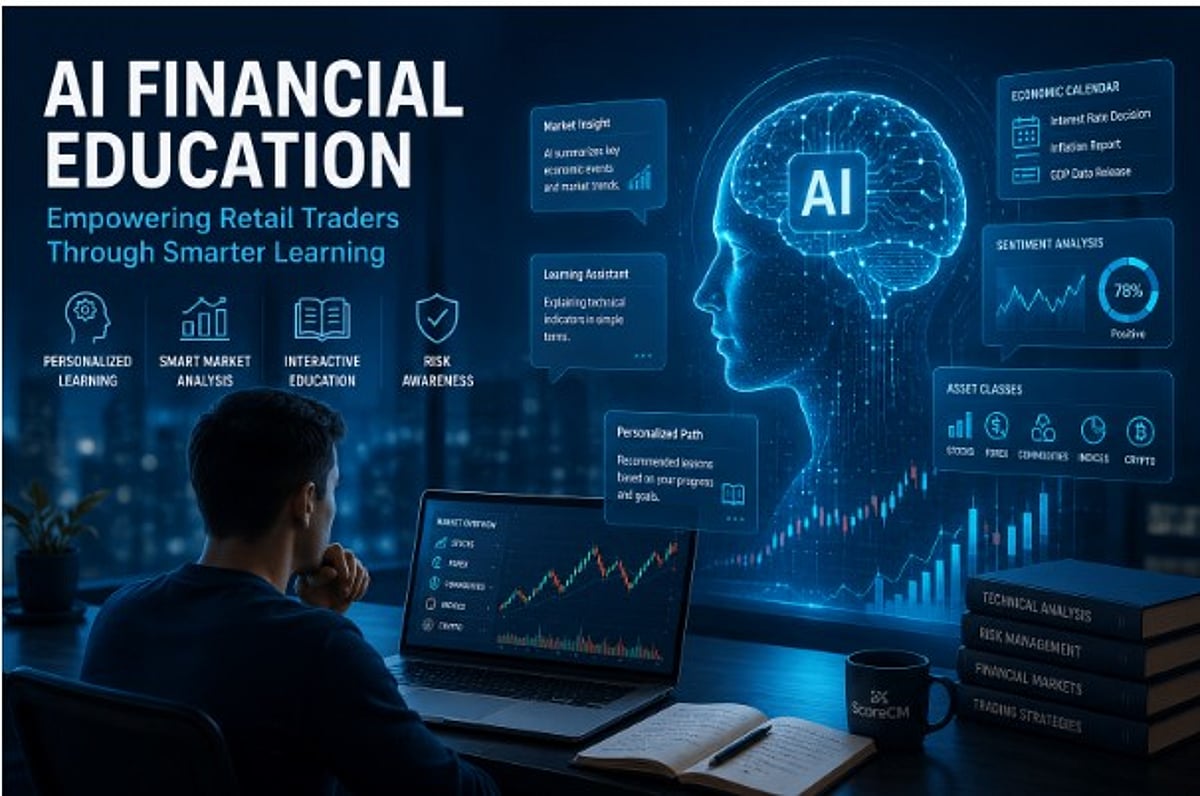
    AI financial education is transforming how people develop the knowledge needed to participate in modern financial markets. In the past, learning about investing often meant reading lengthy textbooks, attending seminars, or spending years gaining experience through trial and error. Today, artificial intelligence is making investment education more interactive, personalized, and accessible to retail traders around the world.

    The rapid growth of financial technology has introduced new ways to understand complex market concepts. AI-powered tools can organize large amounts of financial data, explain technical indicators, summarize economic news, and generate educational content tailored to different experience levels. Instead of searching through dozens of articles, learners can receive structured explanations that match their current understanding.

    As financial markets become increasingly connected and data-driven, AI is helping make financial literacy more achievable for individuals interested in stocks, forex, commodities, indices, and cryptocurrencies.

    Personalized Learning Through Artificial Intelligence

    One of the biggest advantages of artificial intelligence is its ability to personalize education. Every retail trader begins with different levels of knowledge, learning styles, and investment goals. Traditional educational materials often follow a fixed structure that may not suit everyone.

    Machine learning allows educational systems to adapt based on a learner’s progress. Beginners can receive simplified explanations of concepts such as market trends, diversification, or technical analysis, while more experienced traders can explore advanced topics involving macroeconomic indicators, algorithmic trading concepts, or risk management strategies.

    AI-powered learning platforms can also identify knowledge gaps by analyzing quizzes, study habits, and user interactions. Instead of presenting the same lessons to every learner, they can recommend relevant educational materials that strengthen weaker areas.

    At the same time, many investors continue using trusted educational resources alongside AI. As they expand their understanding of financial markets, some also explore ScoreCM to access publicly available market insights and educational materials that support continuous learning without replacing independent research.

    Smarter Market Analysis and Information Processing

    Financial markets generate enormous volumes of information every day. Economic reports, corporate earnings, geopolitical events, central bank announcements, and breaking news all influence market sentiment across multiple asset classes.

    Artificial intelligence is helping retail traders process this information more efficiently. Natural language processing enables AI systems to summarize lengthy reports, identify recurring themes in financial news, and explain how major events could influence different markets.

    For educational purposes, this creates a valuable learning environment. Rather than simply presenting raw data, AI can explain why inflation reports matter, how interest rate decisions affect currencies, or why commodity prices respond to changes in global supply chains.

    This educational approach encourages users to understand relationships between economic events instead of memorizing isolated facts. Whether studying stocks, forex, commodities, indices, or cryptocurrencies, learners gain broader context that improves their overall market awareness.

    Machine learning models can also recognize historical patterns and organize complex datasets into visual formats that are easier to interpret. While these insights should never be treated as predictions, they provide useful educational examples for understanding market behavior.

    AI Should Support Critical Thinking, Not Replace It

    Despite its growing capabilities, AI should be viewed as a learning assistant rather than a substitute for human judgment.

    Artificial intelligence can organize information, explain financial concepts, and highlight patterns within historical data. However, markets remain influenced by human behavior, unexpected geopolitical developments, regulatory changes, and emotional decision-making that cannot always be captured through algorithms.

    Retail traders benefit most when they use AI to strengthen their analytical skills instead of relying on automated conclusions. Critical thinking remains essential when evaluating information, questioning assumptions, and managing investment risk.

    Structured learning continues to play an important role in building these skills. Platforms such as ScoreCM Academy demonstrate how organized educational resources can complement learning by helping traders gradually build stronger market knowledge through structured courses and continuous education.

    Combining AI-generated insights with independent research allows learners to develop confidence while maintaining realistic expectations about the uncertainty of financial markets.

    Financial Literacy Matters More Than Ever

    The growing accessibility of investing has created new opportunities for individuals worldwide. Mobile applications, online trading platforms, and digital financial services have reduced many of the traditional barriers to entering financial markets.

    However, easier access also increases the importance of financial literacy. Understanding concepts such as portfolio diversification, volatility, leverage, inflation, and risk management remains essential regardless of the technology available.

    AI financial education can support this objective by making difficult subjects easier to understand. Interactive explanations, conversational learning tools, personalized quizzes, and real-world examples help learners absorb information more effectively than static educational materials alone.

    Better financial literacy also reduces the likelihood of making decisions based solely on social media trends, rumors, or emotional reactions. As AI continues improving educational accessibility, it can encourage more informed participation across global financial markets.

    The Future of AI in Financial Education

    The possibilities that lay ahead for AI in the field of finance do not just end at automation and analytics. Technology in education can become one of the most important uses of artificial intelligence, especially in cases where retail traders need to acquire practical knowledge before getting involved in the financial markets.

    Learning programs of the future may include elements of conversational AI, adaptive courses, market simulation, multilingual instruction, and visual interaction all within a single digital learning system.

    Concurrently, ethical AI development will be equally important. It is imperative that the educational material provides clear explanations about the underlying concepts and teaches users to double-check the received information using several sources.

    AI will not replace conventional education, but it will help open more opportunities for acquiring knowledge and learning in an efficient manner. Combined with financial literacy and critical thinking, AI can revolutionize the understanding of complex financial markets by retail traders.

    In light of the ongoing technology development, one can say that the most efficient learner will be one who embraces the assistance of AI and makes his/her own judgments independently from it. In that regard, the use of AI for financial education is a combination of technological innovation and steps forward towards improving knowledge of the market.